-1 C
New York
Home Blog Page 558

Shell commits to investment on its first offshore wellhead platform in Malaysia

0

Sarawak Shell Berhad (SSB), a subsidiary of Royal Dutch Shell plc, announced that it has taken a final investment decision (FID) on the Timi gas development project and, together with its partners PETRONAS Carigali Sdn Bhd and Brunei Energy Exploration, look forward to delivering this for Malaysia.

The Timi field is situated approximately 200 kilometres (km) off the coast of Sarawak, in Malaysia. The Timi development features SSB’s first wellhead platform in Malaysia that is powered by a solar and wind hybrid renewable power system. This unmanned platform is approximately 60% lighter than a conventional Tender Assisted Drilling (TAD) wellhead platform. This project also includes the drilling of two wells.

Wael Sawan, Shell Upstream Director, said:

“Timi, which is powered by a solar and wind hybrid power system, demonstrates Shell’s capabilities to innovate and deliver safe, reliable, and sustainable projects, in line with our commitment to achieve net-zero emissions by 2050 in step with society. Shell is pleased to be able to progress this project in a competitive and responsible manner, as part of the vital role Upstream plays in delivering Shell’s strategy and in support of economic growth in Malaysia.”

The Timi development is designed to reach up to 50,000 barrels of oil equivalent per day (boe/d) peak production and will evacuate its gas to the F23 production hub via an 80 km pipeline while supporting the future growth in the central Luconia area, off the coast of Sarawak.

Highly profitable Troll phase 3 project on stream

0

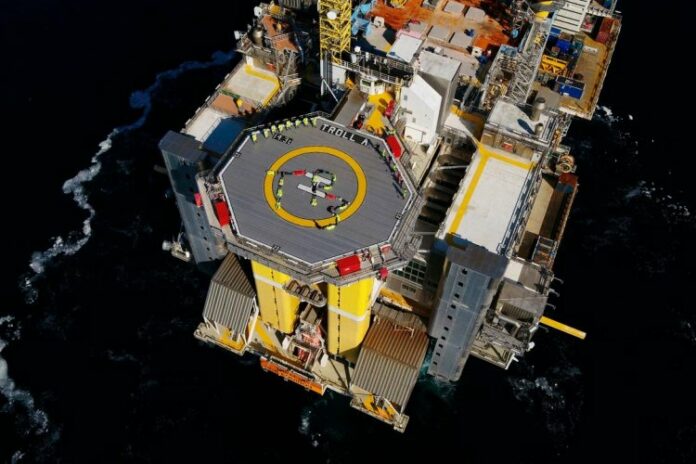
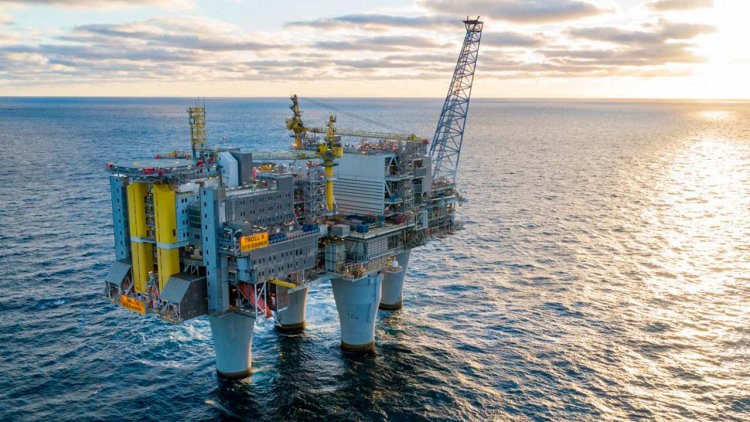
The project has a break-even price below 10 dollars and CO2 emissions of less than 0.1 kg per barrel oil equivalent. The new wells are tied in to the Troll A platform and Troll phase 3 will extend the platform’s life past 2050.  

Recoverable volumes from Troll phase 3, which will produce the Troll West gas cap, are estimated at as much as 347 billion cubic metres of gas. Converted into oil equivalent this amounts to 2.2 billion barrels. Investments are approximately NOK 8 billion.
 
Arne Sigve Nylund, executive vice president of Projects, Drilling and Procurement, says:

“Troll phase 3 is one of the most profitable projects throughout Equinor’s entire history, while at the same time featuring production with record-low CO2 emissions. This is thanks to large gas reserves and a development solution mostly based on existing infrastructure, such as pipelines, the processing plant at Kollsnes and, not least, the Troll A platform which receives power from shore. The project has been executed without serious injuries, which is extremely important.” 

Troll has generated substantial revenues for 25 years and will continue to do so for many years to come. Annual state revenues from the Troll phase 3 project alone are estimated at an average of more than NOK 17 billion (2021).

The Troll phase 3 project consists of eight wells in two templates, a new pipeline and umbilical connecting the templates to Troll A as well as a new gas processing module on the platform.

Around 70 percent of the deliveries to the Troll phase 3 project come from Norwegian suppliers.

The annual export volume from Troll is equivalent to approximately 8% of the EU’s gas consumption, and the further development of the Troll field also reinforces Norway’s ability to secure gas deliveries to Europe in the coming decades.   

 Over the course of 25 years, Troll A has contributed to transforming the energy consumption in Europe from coal to gas, with far lower greenhouse gas emissions. It was also the first platform on the Norwegian continental shelf to be electrified, as early as in 1996. 

Kjetil Hove, Equinor’s executive vice president for Exploration and Production Norway, says:

“Troll phase 3 will extend the life of Troll A and the Kollsnes processing plant beyond 2050, and the plateau period by 5-7 years. This will help secure jobs offshore, at Sandsli and at Kollsnes for both Equinor and its suppliers for several decades into the future.“ 

Like several other projects, Troll phase 3 has also felt the effects of Covid-19. The original start-up date for the project was in the second quarter of 2021, but pandemic-related labour shortages and infection control measures have delayed start-up somewhat.  

Maersk Drilling secures one-well contract extension for Maersk Discoverer

0

CGX Resources Inc., operator and joint venture partner with Frontera Energy Guyana Corp has exercised an option to drill one additional exploration well offshore Guyana.

The work is expected to commence in the first half of 2022 in direct continuation of the semi-submersible rig Maersk Discoverer’s contract with Shell Trinidad. With this option called, Maersk Discoverer is fully booked throughout 2021 and part of 2022.

COO Morten Kelstrup of Maersk Drilling says:

“It’s a pleasure working for CGX. The rig has successfully spudded the first well and we are grateful for the opportunity to support their continued success in Guyana. The region holds great potential and with our multiple active rigs in the area, we are well positioned to tap into the positive outlook for hydrocarbon developments in the Americas.”

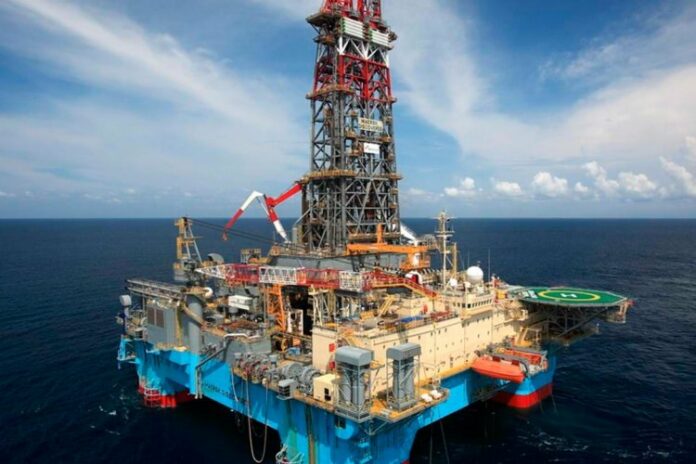
Maersk Discoverer is a DSS-21 column-stabilised dynamically positioned semi-submersible drilling rig, able to operate in water depths up to 10,000 ft. It is currently operating offshore Guyana for CGX Resources Inc. Following the contract with CGX, the rig will commence a contract with BG International, a subsidiary of Shell, in Trinidad and Tobago as stated in Maersk Drilling’s recent fleet status report.

Building artificial islands in the North Sea

0

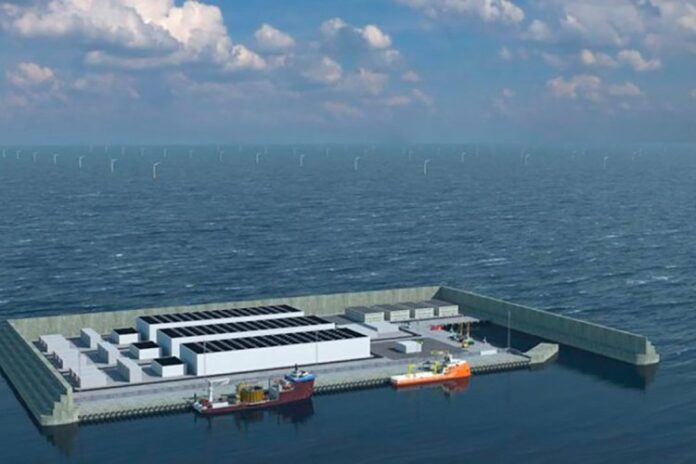
“The North Sea plays a pioneering role in our journey towards a climate-neutral society. Nowhere in the world, more offshore wind turbines will be installed in the coming years. And nowhere more consortia and plans are being proposed for undersea connections between gas and electricity networks, hydrogen production and CO2 storage. With few options left in our overcrowded coastal regions, artificial islands are back.

Building islands has just that little bit more appeal than the ports and canals we build all over the world. Even if the technical challenges are not greater, the engineer’s mind is extra stimulated. Connecting your name to an iconic project that everyone recognises probably plays a part. And the iconoclasts, who don’t think it’s all that great, are rarely absent.

Jan De Nul has been building islands in the Seychelles, Hong Kong, Singapore and Dubai since the 1980s. That new created land gave way to urban expansions, airports, port terminals and industrial estates. The motivation was always the same: population growth in coastal regions puts pressure on every form of housing and infrastructure development. Consequently, land prices rise above the cost price of land reclaimed from the sea.

After the 2008 banking crisis and the collapse in demand for exclusive residences, island construction seemed to be on its way back. With the development of offshore wind farms in the North Sea, a new phase for real estate at sea in which the economic aspect again plays an important role, seems to have started. Green electrons are transported over long distances less expensively with direct current than with alternating current. Direct current also makes it easier to connect different grids because there are no longer any phase differences. Until now, these inverters have been installed on platforms, but for capacities of several gigawatts this becomes difficult.

Compensating for varying wind energy, the so-called grid-stabilizing services, is also a possible driver: transformation and storage of renewable energy in the form of potential, kinetic or chemical energy also requires space. In addition, the long-distance transport of green molecules is cheaper than that of green electrons.
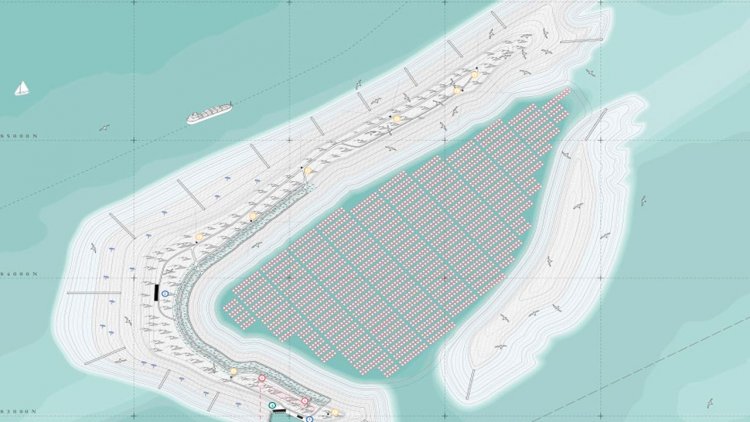
Form follows function and therefore energy islands will most likely not take on an iconic form, there will be no beaches, hotels or other functions. Instead, there will be facilities for cable connections, transformers and a sheltered berth.

The idea of ​​building islands in the North Sea is not new. In the late 1960s, for example, islands were already being designed for oil terminals, waste and nuclear power plants. Projects that were rejected one by one in 1976 by the Commission of Wise Men. But that hasn’t stopped us from designing dozens of islands for Belgium and the rest of the world.

We achieved the best results for our efforts with the Alpha Island. This island was intended to be a power socket at sea that would allow wind farms to connect to the Belgian high-voltage grid. After the tender procedure by Elia in 2014, we had a concept design, a price, a time schedule and a temporary association ready to start construction. We swallowed the loss of invested time and money, but the missed opportunity to realise a pioneering project in Belgium still lingers.

At the moment, things are looking good again. The Netherlands, Denmark and Belgium are all preparing energy islands, each for their own reasons. The Netherlands wants to give gas infrastructure a second life by linking offshore wind to hydrogen production and transport. Denmark owns a vast and windy part of the North Sea and will soon have a surplus of green energy that can be used by other countries. Belgium will have filled up its small part of the North Sea within a few years and will have to rely on green energy from neighbouring countries. It is not yet clear who will be the first to jump, but we are secretly hoping for the scoop.”

Source: Jan De Nul

BP awards Global Maritime Framework Agreement

0

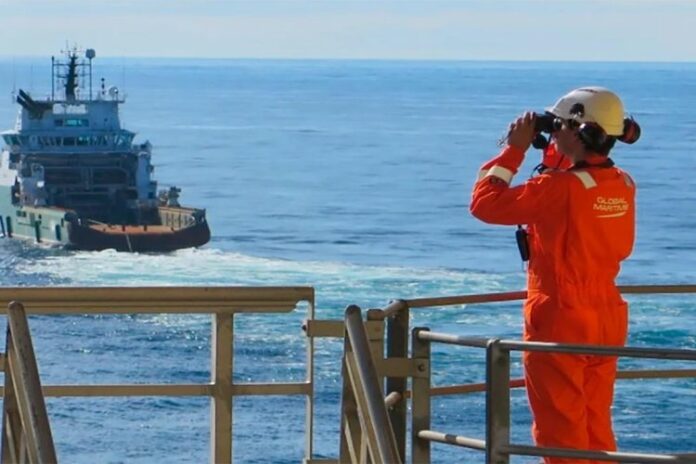
The Framework Agreement (FA) will include marine vessel assurance, engineering, project operations, HSSE and general marine consultancy.

The FA will run for 3 years, starting immediately. The suite of marine services provided by Global Maritime will support BP in their operation of new and existing oil and gas developments as well as upcoming renewable energy projects.

Nick Cranch, BP Solutions Marine Discipline Lead, said:

“I am looking forward to leveraging Global Maritime’s experience to support bp marine operations across our operating regions and help us perform whilst we transform to our zero carbon future.”

Jonny Logan, CEO of Global Maritime, siad:

“For Global Maritime this is a recognition of the marine competency and global operational support network provided by Global Maritime Group. We look forward to working collaboratively with BP to support their marine operations and provide trained, competent and value-adding personnel to meet their current and future project requirements.”

John Butler, Global Lead Energy and Energy Transition, said:

“We are delighted to see this contract award which allows us to build on our existing strong relationship with BP. This is an exciting time within the offshore energy industry, and we look forward to working with bp on their projects in oil and gas as well as their growing renewable energy portfolio.”

VARD helps to pioneer innovative ‘Aqua Semi’ concept

0

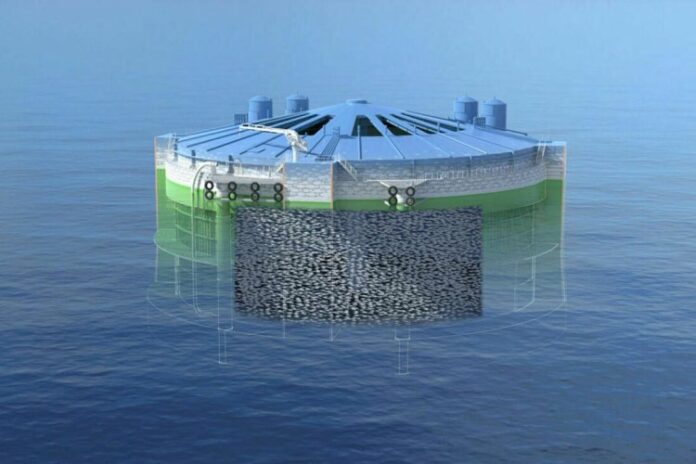
The patented Aqua Semi solution features a partially enclosed, semi-submersible production unit inspired by semi-sub drilling rigs used in the offshore industry. The circular steel hull builds on the same principles, with the buoyancy ring pontoon located well below the water surface to ensure stability. Emptying or filling the pontoon raises or lowers the unit as required.

Designed to withstand higher wave heights, Aqua Semi will be secured in position by anchored double chains and is intended specifically for deployment in rougher waters with strong currents, allowing the use of so far unutilized areas for fish farming. The platform’s steel walls will be solid to a depth of 17 metres, with all operational functionality fully integrated into the structure and giving a total interior tank volume of around 75,000 m3, with a diameter of 67.5 metres and capacity for more than 600,000 fish. Adjustable openings in the hull will allow continuous throughput of fresh and oxygen-rich water, using pumps at times of weaker current and additional oxygen on demand. The base and openings will be covered with a grid of rust-free steel netting.

During the design and verification phase a lot of effort, including fluid dynamics analyses and extensive model testing, has gone into developing a fish farming unit that is fit for purpose with equipment integrated to withstand the harsh conditions and ensure fish welfare.

Comprehensive studies have also been conducted to identify the biological parameters for water quality in a semi-closed unit containing a large amount of biomass.

The design reduces the risk of fish escaping and that of sea lice and other waterborne infections through shielding the fish from the upper water mass and a shorter production cycle of 10 to 11 months. Efficient handling of harvest-ready fish as well as control and management of the growing environment, including light and underwater feeding, will contribute to improved biological performance and growth. VARD is now verifying the design through detailed engineering in order to quality assure the technical solutions.

Senior Naval Architect Thomas Olsvik in VARD’s Conceptual Design division said:

“Being involved in this project means a lot to our team at VARD. Aquaculture is fast-growing industry and a key contributor to a sustainable Blue Ocean economy today and in the future. It’s exciting to use our combined multidisciplinary knowledge to adapt and evolve technology that pushes the boundary of what’s possible. An important aspect is working with collaborators and finding the best possible solutions in concert with them. We believe we have the capacity and experience to bring the Aqua Semi concept into reality.”

Unique Group and AMCS sign agreement to develop USV Coxswain course

0

Leading integrated subsea and offshore solutions provider, Unique Group, has signed a Memorandum of Understanding with AMC Search (AMCS), the training and consultancy division of the Australian Maritime College to jointly develop a maritime industry accredited Unmanned Surface Vessel (USV) Coxswain’s course.

This industry-academia collaboration will see Unique Group provide the latest autonomous survey technology from its pool of autonomous equipment, with AMCS developing a comprehensive training course incorporating collision regulations and navigation considerations for unmanned systems in commercial operations.

As well as being delivered globally by AMCS using Unique Group’s fleet of USVs as training platforms and base stations as training simulators, the course will also be offered to Unique Group’s clients, as a part of the USV product package.

Commenting on the partnership, Sahil Gandhi, Unique Group COO said:

“We are excited to collaborate on building educational and training programs for the emerging autonomous offshore industry. We believe that this emerging technology will become a significant segment within the offshore value chain in the future and as technical experts, providing asset management and knowledge-sharing solutions for our customers globally is the next step for us. We look forward to this successful partnership with AMCS.”

Dean Cook, AMCS CEO, added:

“We have witnessed Unique Group’s USV capabilities first-hand during our Winterfest ’21 event, and we are delighted to partner with them to develop this course. Our mariner’s course, encompassing all the latest technology upgrades available in the USV industry will equip future USV Coxswains with the best knowledge and skills.”

MODEC’s FPSO Carioca MV30 achieves First Oil and starts 21-Year Time Charter

0

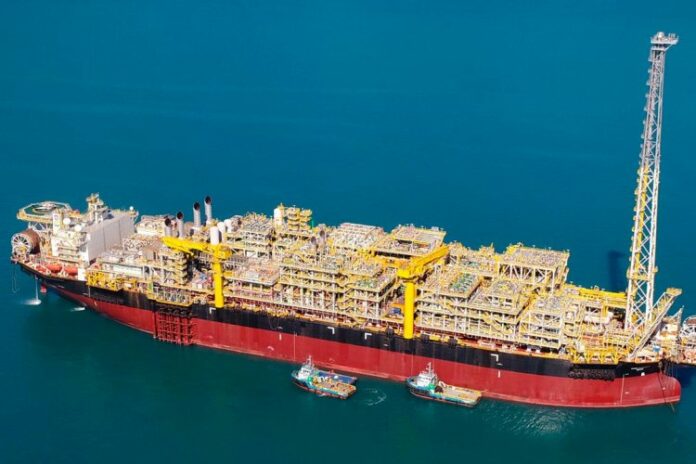
MODEC has announced that the FPSO Carioca MV30, deployed for operations in the Sépia field in the “pre-salt” region of the Santos Basin off the coast of Brazil, achieved the First Oil production on August 23, 2021.

The FPSO is leased on a 21-year time charter contract to Petróleo Brasileiro S.A. (“Petrobras”), the Brazilian state oil company. Moored some 200 kilometers off the coast of Rio de Janeiro, in a water depth of approximately 2,200 meters, the FPSO is capable of processing 180,000 barrels of crude oil per day, 212 million standard cubic feet of gas per day, 240,000 barrels of water injection per day and has storage capacity of 1,400,000 barrels of crude oil.

MODEC was responsible for the engineering, procurement, construction, mobilization and installation of the FPSO, including topsides processing equipment as well as hull and marine systems. SOFEC, Inc., a MODEC group company, designed and provided the spread mooring system of the FPSO.

This is the 13th unit that MODEC has delivered to the Brazilian oil & gas sector, as well as MODEC’s 6th FPSO in the “pre-salt”. MODEC currently operates 10 units in Brazil and has four (4) others under construction for the country.

Takeshi Kanamori, President and CEO of MODEC, commented:

“We are extremely proud of this achievement while facing the difficulties of COVID-19 pandemic. We continue to enhance our fleet in Brazil, with additionally four FPSOs to enter into operations within the coming few years. We are committed to carry out this major and long-term project as well as other ongoing projects by cooperating closely with our clients in order to contribute to the sustainability of the energy industry in Brazil.”

Brazilian tug operator opts for Schottel hybrid solution

0

With a milestone project for South America, the Brazilian towage group Starnav is setting sails to reach the IMO 2030 goals: Starnav has contracted Detroit shipyard in Itajaí, Brazil, for equipping four newly built tugs with SCHOTTEL RudderPropellers. 

One of the 32 metre long and 11.6 metre wide escort tugs will feature the SCHOTTEL patented SYDRIVE-M technology right from start; the other three will be configured to be SYDRIVE-ready. As a mechanical hybrid solution without the costly complexity of common hybrid technology, SYDRIVE-M will ensure lower maintenance costs and less fuel consumption.

SCHOTTEL SYDRIVE-M will enable Starnav to offer more profitable and emission-reduced towing services in Brazilian ports. Beyond this, the towage group contributes to meeting the IMO 2030 and 2050 goals initiated by the International Maritime Organization.

Carlos Eduardo Pereira, CEO at Starnav Serviços Marítimos:

“By making use of SCHOTTEL hybrid solution, we are taking the initiative to increasingly seek a clean operation. Starting now is particularly important: the vessels that are built today will be in the water for decades to come. Our focus has always been the high level of reliability in the equipment, mainly safety and environment care. With 34 vessels propelled by SCHOTTEL in our fleet, we will continue expanding our operations and benefit from a strong partner with extensive know-how in Brazil.”

The main propulsion of each ASD tug consists of two diesel-driven SCHOTTEL RudderPropellers type SRP 490 (2,525 kW each) featuring fixed-pitch propellers with a diameter of 2.8 metres. With this thruster configuration, they will achieve more than 80 tonnes of bollard pull and a maximum speed of 12.5 knots.

SCHOTTEL SYDRIVE-M connects a port and starboard mounted azimuth thruster in one vessel, allowing the thrusters to be driven together by only one of the main engines. In turn, this leads to reduced operating hours of the main engines, resulting in lower maintenance costs as well as less fuel consumption and lower emissions.

The system needs no additional electronical components, which offers many advantages as demonstrated in three main operation modes: Light Operation or Free Sailing Mode, Full Thrust Operation Mode and FiFi-Mode.

TKF secures Baltic Eagle cable contract with Van Oord

0

Iberdrola’s Baltic Eagle project is being developed 30 km northeast of the island of Rügen, located in the German waters of the Baltic Sea.

The contracted scope for TKF in Baltic Eagle includes the manufacturing and delivery of Aluminium conductor inter-array cables and corresponding accessories. Van Oord will transport and install the foundations and ensure the supply, transport and installation of the inter-array cables. The offshore works for the Baltic Eagle project will commence in 2023.

Henk-Jan van Dijk, Project Director Van Oord, said:

“For our Baltic Eagle project, we are once again entering into cooperation with TKF. TKF is a reliable supplier of high quality cables with a tailor-made design which will meet all our client requirements. We look forward to the cooperation with TKF.”

The project, which will cover an area of 40 km2, is expected to be completed in 2024. With a production capacity of 476 MW, the Baltic Eagle wind farm will deliver renewable energy to 475,000 households and at the same time saving nearly 1 million tons of CO₂ annually.

Walter Heerts, Business Line Director Building & Industry, said:

“We are very pleased that Van Oord is once again calling on our expertise, this time for the Baltic Eagle project in the German Baltic Sea. We are proud that we can make a contribution to the European target for CO₂ reduction with our unique Premium Dry cable design”.