-2.8 C
New York
Home Blog Page 557

Advanced weather forecasting unlocked on ABS My Digital Fleet™ platform

0

ABS is adding on-demand, high-resolution historical and forecast weather data on its ABS My Digital Fleet™ risk management platform together with Meteomatics, one of the world’s leading weather service providers. 

This latest addition to the ABS My Digital Fleet Alliance Program unlocks weather data that enables actionable insights for users to help them understand and lower fuel consumption, improving bunker costs and carbon intensity levels. Additionally, the potential structural impacts from weather exposure during a ship’s voyage are also surfaced helping to better understand and reduce risk.

ABS My Digital Fleet is the only customizable risk management platform that seamlessly integrates data to provide real-time insights for driving sustainable operations and reducing operational risks. The ABS My Digital Fleet Alliance Program nurtures an ecosystem of industry-trusted intelligence and technology providers enabling integrated insights for clients on one unified platform.

Smarty Mathew John, ABS Vice President of Digital Solutions, said:

“When it comes to voyage performance and charter party compliance, up-to-date weather data plays a key role. We are now able to overlay the most up-to-date, weather data on the map and have on-demand forecasts for voyages. This allows for operations to react by adjusting timetables and routes, providing efficiencies in fuel consumption, optimizing ordered speed, increasing reliability in arrival times and improving navigational safety.” 

Dr. Martin Fengler, Founder and CEO of Meteomatics, said:

“Meteomatics is the perfect match for ABS due to our powerful hyperlocal weather data with high accuracy forecasts, which when combined with ABS’ machine-learning capabilities on ABS My Digital Fleet, will be a game-changer for the maritime industry in its journey towards digitalization and decarbonization.”
Finnlines’ new ro-ro vessels celebrate launching and keel laying

0

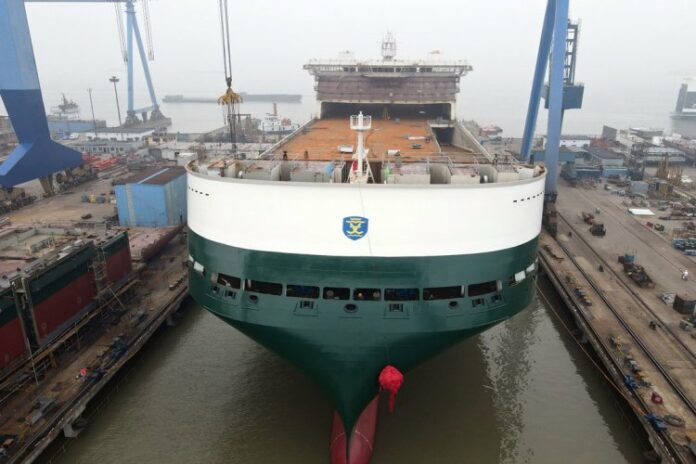
The series of three ro-ro vessels are being built at the Chinese Jinling shipyard located in Nanjing.

The first hybrid ro-ro, Finneco I, is scheduled to sail for sea trials in September to test the speed, manoeuvring, machinery, electrical installations and other critical equipment. Finneco I will start to operate in Finnlines’ service at the end of 2021, the two  sister vessels in 2022. All three vessels will sail under the Finnish flag. 

Finnlines will upgrade its onboard services on the new cargo vessels where lorry drivers are frequent customers. There will be a gym and sauna area, a dining and recreation room and a laundry for drivers to use. To add comfort on board, drivers will be allocated single cabins. 

Compared with the largest vessels in today’s fleet, the cargo carrying capacity of the hybrid newbuilds will increase by nearly 40%. Nevertheless, cargo operations will run smoothly as loading and unloading will be handled through three ramps.

Finnlines’ Newbuilding Programme, an investment which totals EUR 500 million, includes three ro-ro vessels and two ro-pax vessels. Both vessel types will be larger and more eco-friendly than any vessel in the present Finnlines fleet, and than almost any ro-ro/ro-pax in the Baltic and in the world. To enhance energy saving and to reduce emissions and the overall environmental impact, the vessels will be fitted with state-of-the-art engines with emission abatement technology, an air lubrication system, lithium-ion batteries and solar panels. The ro-pax vessels, which will be delivered during 2023, will also have a shore-side electricity connection to attain zero emissions while in port.

Emanuele Grimaldi, CEO of Finnlines, says:

“We are proud that these advanced hybrid ro-ro vessels will join our fleet. They will improve our energy efficiency significantly and enable us to provide more sustainable services than ever before. Shipowners around the world have undertaken to reduce ships’ CO2 emissions by 50% by 2050. We have made major investments in renewing and developing our fleet, using the latest technologies and green innovations available. Our new ships will help us to reach the ambitious reduction goal well in advance.”

Finneco I–III, ship particulars:

  • Length, overall (m) 238.0 
  • Breadth (m) 34.0 
  • Deadweight, metric tons 17,100 
  • Lane length (m) 5,800
  • Ice class 1 A Super
  • Passengers (drivers), max 12
  • Passenger cabins 12
  • Delivery 2021–2022

Van Oord to install Italy’s first Offshore Wind Farm

0

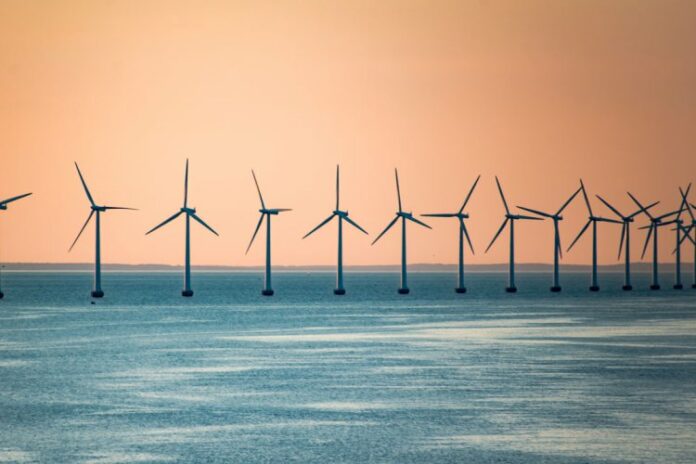
The Taranto Offshore Wind Farm is located near the Taranto harbour in Italy and consists of 10 turbines. This windfarm will be the first offshore wind farm in the Mediterranean Sea. The wind farm will have a capacity of 30 MW and estimated output of 58,000 MWh per year.

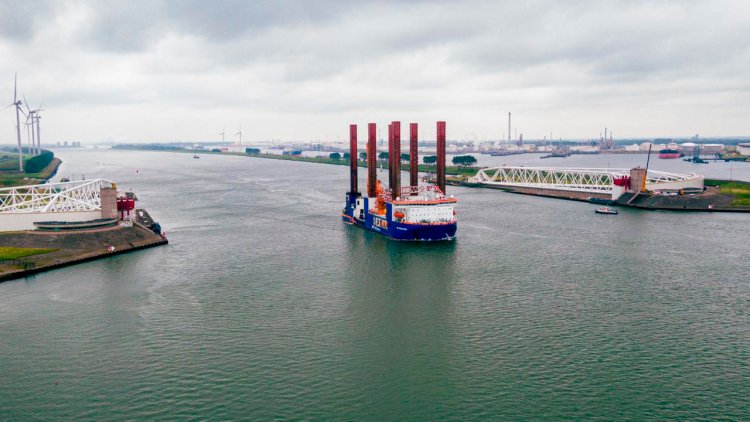
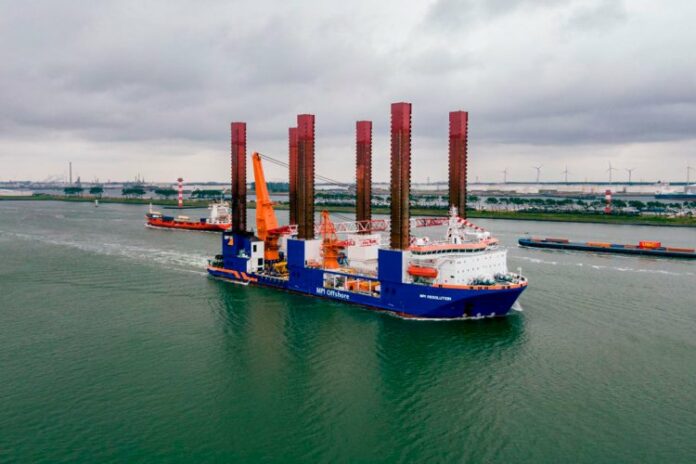
This week the MPI Resolution has set sail to Italy to install the monopiles, secondary steel and the wind turbines generators. The mobilization was prepared in the last two weeks in the Rotterdam area, taking a variety of equipment on board including a Menck hammer, sea fastening, upend tool and lifting equipment. ​​

The vessel is perfectly suitable for the works in the Mediterranean Sea because it can handle both the very shallow and deeper water locations as water depths vary from 4 to 18 metres. During the pile driving activities, Van Oord deploys its innovative FaunaGuard system. This in-house developed acoustic device safely and temporarily deters dolphins by using special underwater acoustics. 

Van Oord signed a contract with Renexia SpA, a subsidiary of Toto Holding, for the transport and installation of the 10 foundations and turbines. The turbines will be provided by Ming Yang Smart Energy.

Study: Extreme sea levels to become much more common

0

Published in Nature Climate Change, the research predicts that because of rising temperatures, extreme sea levels along coastlines across the world will become 100 times more frequent by the end of the century in about half of the 7,283 locations studied.

Co-author of the study, University of Melbourne’s Dr Ebru Kirezci, an ocean engineering researcher said areas where frequency of extreme sea levels are expected to increase faster include the Southern Hemisphere and subtropic areas, the Mediterranean Sea and the Arabian Peninsula, the southern half of North America’s Pacific Coast, and areas including Hawaii, the Caribbean, the Philippines and Indonesia.

Dr Kirezci said:

“What we can also infer from this study, is that most of the eastern, southern and southwestern coastlines of Australia will be the impacted with almost an annual frequency of these extreme sea levels by 2100.”

“This increased frequency of extreme sea levels will occur even with a global temperature increase of 1.5 degrees Celsius. And the changes are likely to come sooner than the end of the century, with many locations experiencing a 100-fold increase in extreme events even by 2070.”

Lead author of the study, climate scientist at the US Department of Energy’s Pacific Northwest National Laboratory, Dr Claudia Tebaldi said it was no surprise that sea level rise will be dramatic even at 1.5 degrees and will have substantial effects on extreme sea level frequencies and magnitude.

Dr Tebaldi said:

“This study gives a more complete picture around the globe. We were able to look at a wider range of warming levels in very fine spatial detail.”

The researchers called for more detailed studies to understand how the changes will impact communities within different countries. They added that the physical changes that the study describes will have varying impacts at local scales, depending on several factors, including how vulnerable the site is to rising waters and how prepared a community is for change.

Dr Kirezci said:

“Public policy makers should take note of these studies and work towards improving coastal protection and mitigation measures. Building dykes and sea walls, retreating from shorelines, and deploying early warning systems are some of the steps which can be taken to adapt to this change.” 

VIKING launches new turbine tower evacuation kit

0

Self-contained evacuation kit for wind turbine tower complements all-in-one VIKING solution for turbines launched earlier this year.

VIKING Life-saving Equipment is maintaining momentum in its development of the most complete range of safety solutions to cover the risks facing wind turbine service technicians, by introducing an easily accessible and self-contained evacuation kit located in the tower.

Following a collaborative design project, VIKING has launched a tower evacuation kit which fits snugly into what is currently an unused space between the platform handrails and the tower’s outer wall. Housed in a PPE chest developed by JoBird, the evacuation kit includes VIKING YouSafe™ HighTide immersion suits with integrated harnesses and Skylotec MILAN descent devices.

Easily accessible via a hinged lid, the polyethylene chest slots into position in the void space at the platform’s edge where it is held in place between railings and tower wall by standard brackets. Each unit can accommodate six sets of evacuation equipment.

Earlier this year, VIKING made a strong market impact with the launch of an all-in-one evacuation kit for technicians working at wind turbine nacelle level, once again featuring a special purpose storage unit from JoBird and Skylotec rescue devices. Located on the helihoist platform, the outside container is built to withstand 100 mph winds for 30 years. In contrast, the new container for the protected lower platform is lightweight and formed to enable drop-in installation.

Bettina Kjærgaard, Global Product Manager, Offshore Wind, VIKING Life-Saving Equipment, says:

“Now, we can offer evacuation solutions that deliver identical ISO-, SOLAS- and Class-approved life-saving equipment to protect wind turbine service technicians from the top to the bottom of the tower. In emergency situations, having immediate access to the right evacuation equipment can be decisive.”

“The latest product evolved out of a dialogue between VIKING and design engineers developing a new wind turbine installation. VIKING is very established offshore but we take it as a welcome indication of our progress in the specialized wind sector that we are being consulted on safety issues at the earliest stages.”

The result is an evacuation kit that is integrated with the tower lay-out and within easy reach of turbine service personnel. With clip hooks to attach to railings, 125m of rope and a speed regulating rescue descender, the integral solution is also suitable for lowering injured or unconscious personnel.  

Kjærgaard says:

“Like many good ideas, the self-contained tower solution is creative and simple, and we have secured our first major contract already. Offshore wind is a growing sector which takes the risks faced by the technicians putting their lives at risk day in, day out very seriously. For highly-skilled offshore professionals, HQSE is a key indicator of employment standards.”

Napier Port launches sustainability strategy and action plan

0

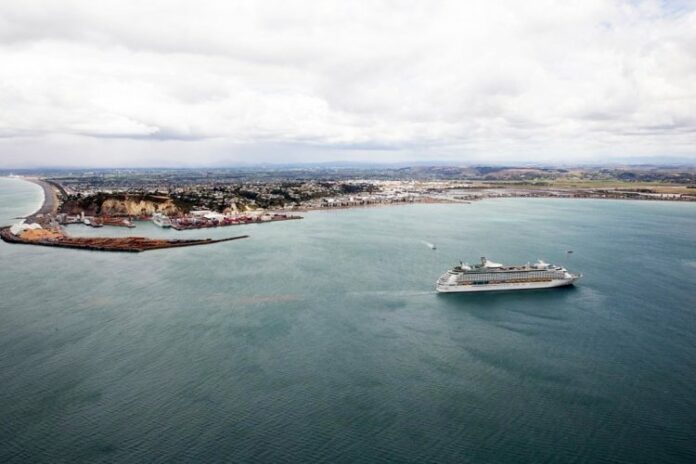
Chief Executive Todd Dawson says  implementing the sustainability strategy is a priority for the business.

He said:

“Advancing sustainability at Napier Port is embedded in our business strategy as a foundation, reflecting the importance of leaving a positive legacy for future generations, while delivering for our customers, community and wider regional economy.

“With more than 100 identified actions it will definitely challenge us, but we didn’t want to take the easy path. We wanted a strategy that will actually enable us to make a difference and one that is authentic to Napier Port and our community.”

The strategy extends out to a 10-year time frame, setting out areas of focus and actions and identifying where further investigations, data collection and measurements are required.

In 2015, the United Nations signed up to 17 Sustainable Development Goals (SDGs), setting out an urgent call for action by all countries in its 2030 Agenda for Sustainable Development. The New Zealand government has incorporated these principles into the country’s legal and regulatory framework and Napier Port has incorporated 14 of the 17 SDGs in its Sustainability Strategy, with an initial emphasis on achievable, local actions.

Napier Port chairman Alasdair MacLeod says, “Focusing on what we can achieve locally and helping others to do the same, means we can make a difference in addressing urgent global challenges like climate change, environmental degradation, prosperity, and wellbeing for people and communities.”

The strategy concentrates firstly on local issues which the business can directly influence and improve, including:

  • promoting healthy reefs and clean oceans locally
  • aiming for zero net emissions by 2050
  • running community projects and good neighbour programmes
  • protecting marine and bird life
  • continuing to build a workplace that embraces diversity and cultural values
  • adopting clean energy solutions, and
  • minimising waste or duplication of resources

Development of the strategy highlighted that a number of existing programmes and policies across Napier Port were already underway and contributing towards greater sustainability. As the strategy evolved, further initiatives were also implemented and as such, good progress has already been made in key areas, including:

  • launching a Marine Cultural Health Programme
  • installing LED floodlight towers
  • reducing carbon emissions
  • creating artificial reefs to increase biodiversity
  • undertaking water quality surveys and monitoring, and
  • the protection of at-risk bird species that make their home at Napier Port

As at August 2021, 48 sustainability actions are underway, with a further 42 in planning. The actions encompass social, economic and environmental initiatives, enabling Napier Port to create a truly sustainable business.

ABB selects Corvus Energy battery for Crowley eWolf all-electric tug

0

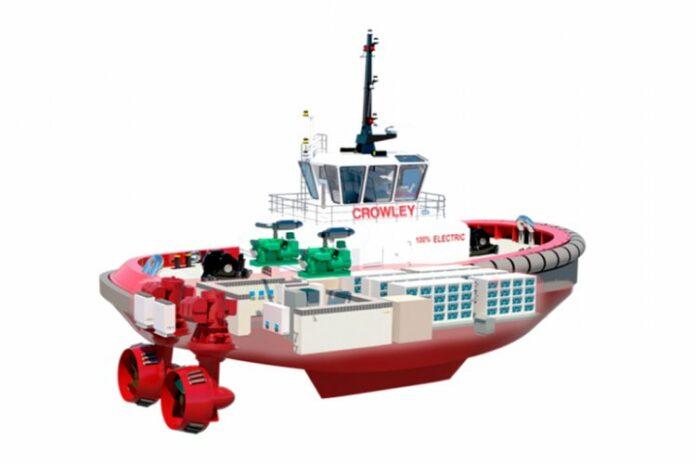
Corvus Energy has been selected by ABB Marine & Ports to supply the energy storage system for the all-electric tug eWolf by Crowley Maritime Corporation. The vessel will be installed with 6.2 MWh of Corvus Orca Energy battery, which will become an essential part of the complete integrated electrical propulsion system delivered by ABB. 

Sveinung Odegard, President of Corvus Energy USA, says:

“We are very pleased to be chosen by ABB for this project and we look forward participating in the building of this innovative vessel.”

“We see increased interest among the tug industry for all-electric propulsion systems. We believe this trend will continue globally due to the proximity to shore and opportunities to eliminate emissions within city limits and harbors. We participated in the first all-electric tug in Europe and are excited to be a part of the efforts by Crowley to build the very first one here in North America.”

Dave Lee, Senior Account Manager, ABB Marine & Ports Division, said:

“Corvus has an impressive track record with marine ESSs and extensive experience on board hybrid and electric vessels. I am pleased to have such a great team of battery experts supporting this breakthrough project.”

Upon delivery, the 82-foot vessel will support shipping activities in Port of San Diego in California. The ship will be built by Master Boat Builders, Inc., in Alabama and delivered to Crowley mid-2023.

Hapag-Lloyd orders another 75,000 TEU standard containers

0

The containers will be manufactured in China and delivered to Hapag-Lloyd within the fourth quarter of 2021.

Adding up all investments into containers since beginning of 2020, Hapag-Lloyd has ordered 625.000 TEU.

Rolf Habben Jansen, CEO of Hapag-Lloyd, says:

“While the normal turnaround time for our containers lies at 50 days, we currently need up to 60 days and more due to massive congestion at ports, terminals and inland operations worldwide. This means that today about 20 percent more containers are bound in shipment while transporting the same amount of cargo before the crisis. With our recent container orders, Hapag-Lloyd is further contributing to ease the challenging situation for our customers worldwide.”

Hapag-Lloyd now has a container fleet of more than 2.8 million TEU, among them 250,000 TEU reefer containers for refrigerated cargo.

World’s first recommended practice to reduce earthquake challenges for wind power plants

0

DNV has published the world’s first recommended practice (RP) to minimize cost, warranty and liability risks and optimize wind power plant design for seismic conditions in emerging wind power markets such as Asia Pacific and the US.    

As wind power grows in the above markets there’s an increasing need to ensure the design of wind turbines and other assets of a wind power plant such as the offshore substation can meet the challenging conditions seen in those regions. Guidance and industry consensus was needed to ensure that wind power development continues to build momentum while maintaining high safety standards and minimizing costs. 

The Recommended Practice DNV-RP-0585 “Seismic design of wind power plants” is a result of a truly global collaborative effort, which saw more than 20 wind industry leaders, including OEMs, project developers, designers, and experts from Asia Pacific, Europe and North America respond to a joint industry project (JIP).    

After 18 months of work the ACE (Alleviating Cyclone and Earthquake Challenges for Wind farms) JIP, has been able to gather enough experiences from cross-industry players to align wind turbine design methodologies for those extreme environmental conditions.    

This Recommended Practice can now be used as a technical reference for seismic design as part of the contract between industry stakeholders. It can serve to link existing local requirements for seismic design of common buildings to international wind energy design practice and facilitate the designer’s work. This will help accelerate discussions and project decisions.     

Marcus Klose, Head of Section for Steel Structures at DNV who initiated and successfully completed this project, commented:

“When DNV became involved in offshore wind farms in Taiwan in 2018, it was clear that earthquakes would be a potential design driver, in a way which had not been experienced in Europe, where offshore wind had its origins and where earthquakes were not a big issue. Projects in other regions, like the US, were suffering from the same uncertainty and DNV launched a joint industry project to tackle this challenge. With the support of 20 partners, we’ve now been able to create a guideline that will bring more transparency and reduce uncertainty in the design of onshore and offshore wind turbines.” 

Lumarine invests in digitalizing maintenance and procurement via SERTICA apps

0

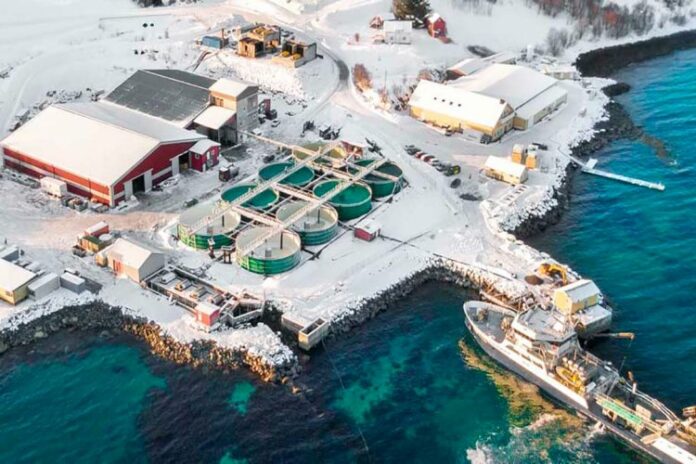
The Norwegian fish farming company Lumarine will be using SERTICA to manage their 3 production sites farming cod, ballan wrasse, lumpfish and post-smolt salmon.

Hans Chr. Jensen, Head of Sales at Logimatic Solutions, says:

“Already in the sales process, it became clear to me that Lumarine AS is a company with clear goals and directions. They know exactly how they want to use SERTICA in relation to quality, maintenance, documentation and procurement. This has made it easy to match and accommodate their needs and requirements and I am convinced they will get maximum value of the SERTICA system and apps.”

Bjørn-Inge Engene, Chief Operating Officer at Lumarine AS, tells:

“Lumarine were looking for a system in line with a ‘One System’ philosophy and we are very pleased with the package offered – especially with the various apps. The employees at our production facilities will work via the SERTICA App meaning all their maintenance jobs, checklists, log forms as well as access to manuals and procedures are at their fingertips – via company iPads.”

“Our staff at the head office will also move towards a more app-based approach with SERTICA Inspection and SERTICA Approval App. The implementation project just started, and we are looking forward to ‘Go Live’ in the not-too-distant future.”