-11.1 C
New York
Home Blog Page 549

Subsea 7 awarded FEED contract in Norway

0

Subsea 7 today announced the award of a contract by Aker BP for the front-end engineering and design (FEED) study for the NOA Fulla development project, offshore Norway. NOA Fulla is located in the southern part of the NOAKA area in the Norwegian North Sea. 

The awarded work is required to finalise the technical definition of the proposed development prior to Aker BP and its partners making the final investment decision (FID) late 2022. The FEED study will begin immediately.

Subsea 7 has recognised the FEED award in its order backlog in the third quarter of 2021. The value of a potential subsequent EPCI contract would only be recognised by Subsea 7 in its backlog upon FID, and would represent a substantial project award.

Project management and engineering will take place in the office in Stavanger, Norway. Offshore installation activities would be scheduled for 2025, 2026 and 2027.

Monica Bjørkmann, Vice President for Subsea 7 Norway said:

“This award continues our long-standing collaboration with Aker BP, through the Aker BP Subsea Alliance. The partnership enables Subsea 7 to engage early in the field development process, optimising design solutions and contributing to the final investment decision. We are delighted to continue our alliance with Aker BP for the NOA Fulla development, which is of significant importance for all partners in the Subsea Alliance. Subsea 7 looks forward to working closely with Aker BP to successfully deliver our scope with safety and quality at the forefront throughout.”

Wärtsilä to supply reliquefaction plants for three new LNG Carrier vessels

0

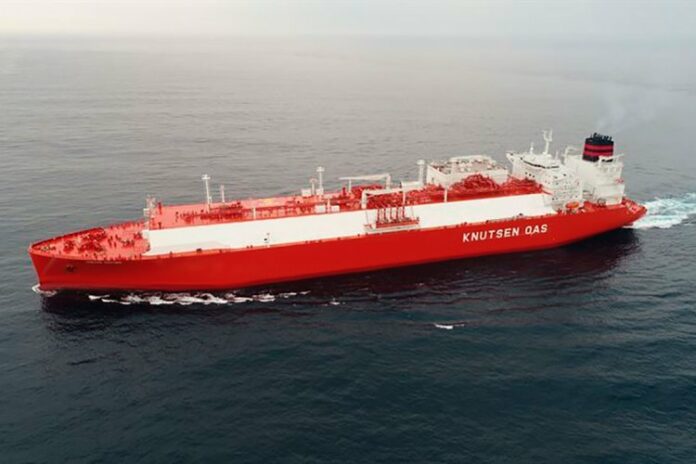
The technology group Wärtsilä will supply three reliquefaction plants, the newly developed Compact Reliq, for three new LNG Carrier vessels.

The ships are being built at the Hyundai Samho Heavy Industries (HSHI) shipyard in South Korea for Norway-based Knutsen OAS Shipping, and represent options taken following an earlier order for two such vessels. The orders for three more systems were booked in July and August 2021 and the deliveries will take place in the autumn of 2022.

The Compact Reliq was introduced to the market in 2020. It features a compact design for easy installation and maintenance on all sizes of carrier vessels, both large and small. Based on the well-proven reversed nitrogen Brayton cycle refrigeration technology, the solution reliquefies the boil-off gas (BOG) and keeps the cargo cool under all operating conditions. It allows a portion of the BOG to be used as fuel for the ship’s engines, with the excess able to be sold as part of the LNG cargo.

Jarle Østenstad Newbuilding Director, Knutsen OAS Shipping, said:

“We have had good experience with Wärtsilä’s reversed nitrogen Brayton cycle reliquefaction plants in the past, and the Compact Reliq is an exciting addition to their portfolio. It makes onboard reliquefaction viable for all sizes of carriers, and is clearly the right choice for our new ships.”

Pål Steinnes, Sales Manager, Wärtsilä Gas Solutions, said:

“We received an order for two systems last year to be delivered to the HSHI yard for installation on Knutsen’s newbuild carriers. There was an option for additional vessels and this option has been taken up with contracts for three new Compact Reliq plants. These are important projects that further strengthen our relationship with both HSHI and Knutsen OAS.”

The Wärtsilä solution uses safe and easily obtainable commercial grade nitrogen. It is instrumented for remote monitoring and online operational support as part of Wärtsilä’s Operational Performance Improvement and Monitoring (OPERIM) programme.

New ocean temperature data help scientists make their hot predictions

0

Now a study from UNSW Sydney and CSIRO researchers has shown that a relatively new ocean temperature measuring program—the Argo system of profiling floats—can help tell us which climate modeling for the 21st century we should be paying attention to the most.

Professor John Church from UNSW’s Climate Change Research Centre in the School of Biological, Earth and Environmental Sciences says the study published today in Nature Climate Change is an attempt to narrow the projected range of future ocean temperature rises to the end of the 21st century using model simulations that are most consistent with the Argo’s findings in the years 2005 to 2019.

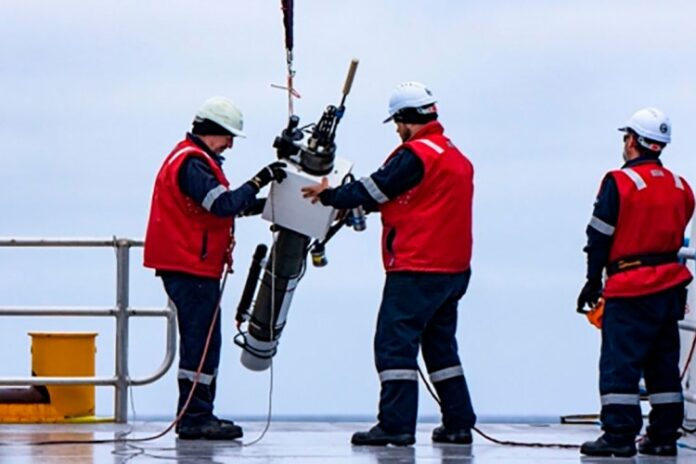
The Argo floats are loaded with high-tech equipment that measures ocean temperatures to depths of up to 2000 meters.

Each Argo float sends measurements to satellites which then beams the results to analysis centers around the world. There are more than 3500 floats dispersed around the globe, with the bulk of them managed by the US (more than 2000) while Australia accounts for the next highest number of floats, numbering 317.

Prof. Church says the Argo floats offer a new level of accuracy in temperature measurement. Not only are the high-tech instruments more reliable than in the past, but the coverage of the planet’s oceans is so much more thorough:

“Previously we depended on research ships making very high accuracy measurements, but only in very restricted areas. Or we would get merchant ships to drop expendable instruments into the water which gave better coverage, but with much less accurate instruments.

“Using these approaches, there were much larger gaps in the Southern Ocean because these waters were less trafficked.”

The ubiquity of the Argo floats offers unprecedented real-time monitoring of ocean temperatures that will help oceanographers and climate scientists constrain their climate projections based on this higher resolution and accuracy of data.

One of the takeaways from the team’s analysis of the Argo data is that land and air temperatures only tell part of the story about the planet’s overall heat absorption. Prof. Church says the apparent stability of temperatures in the early 21st century did not correspond with the Argo’s recording of sea temperatures in the same period.

He says:

“More than 90 percent of the energy trapped by greenhouse gases is stored in the ocean and only about 1 percent in the warming atmosphere.”

“In the first decade of this century, average surface temperature didn’t increase that much. And it created a lot of room for climate skeptics to say ‘what climate change?'” But throughout that period, oceans continued to take up heat—and this is where the 90 percent of the energy in the ocean versus the 1 percent in the atmosphere becomes critically important in the total climate system.

“Projections of climate change to the end of the century all take into account the effects of greenhouse gas emissions which are already responsible for much of the increased temperatures we’ve seen in the 20th and early 21st centuries.

“Even if we take strong steps now to limit emissions to the upper bound of the Paris Agreement target of 2oC global surface warming, ocean temperatures are still projected to rise five to nine times the observed warming by 2081–2100, with 8 to 14cm rise in sea levels from the expansion of warmed ocean waters alone.”

With no concerted efforts to rein in emissions, oceans are set to warm by 11 to 15 times the warming observed by Argo in 2005-2019, with sea levels projected to rise 17 to 26 cm from the expansion of warmed ocean waters alone, and further rises from the addition of water to the ocean from glaciers and ice sheets.

Prof. Church says the Argo data has given scientists much more solid figures to work with when making projections about warming. 

Study reveals Mexico is well placed for driving green shipping fuel production

0

This is according to a new study, conducted by Ricardo and Environmental Defense Fund for the P4G Getting to Zero Coalition Partnership.

Mexico’s potential for renewable energy generation, the location of its ports on busy shipping routes, and strong trading relations make the country well suited as a zero-carbon shipping fuel hub.

The production of green hydrogen-derived shipping fuels could help Mexico meet its decarbonization targets by catalyzing renewable energy generation supply chains, skills, and economies of scale, which support the wider adoption of new technologies.

Well-placed countries like Mexico will only reap the benefits if governments and the shipping industry coordinate efforts for effective climate regulation to expedite the provision of fuels and infrastructure.

The study explores the economic and environmental potential for the implementation of zero carbon shipping fuels through the shipping sector of Mexico. The abundance of renewable energy resources in Mexico means that shipping fuels can be derived from renewable electricity generation.

The study reveals that several zero carbon fuels have the potential to be used to decarbonize maritime shipping. Dr.Santiago Suarez De La Fuente, Lecturer in Energy and Transport at UCL Energy Institute, said:

“The study has identified hydrogen and ammonia as the most suitable options for large commercial vessels such as tankers, containers and bulk carriers, while small vessels such as port service vessels can be supplied through electrification. The renewable energy potential along with the advantageous locations of ports gives Mexico the opportunity to play a crucial role in driving the zero-carbon shipping fuel transition.”

This study is part of the P4G Getting to Zero Coalition Partnership, spotlighting the potential of regional hubs to pioneer zero-carbon shipping fuel development in Mexico, South Africa, and Indonesia.

The Getting to Zero Coalition, a partnership between the Global Maritime Forum, Friends of Ocean Action and World Economic Forum, is a community of ambitious stakeholders from across the maritime, energy, infrastructure and financial sectors, and supported by key governments, IGOs and other stakeholders, who are committed to the decarbonization of shipping.

UMAS played an important role in the study by providing the shipping data analytics based on the latest International Maritime Organization emission inventories. The group also provided important insights in Mexico thanks to the group’s engagement with key stakeholders and reviewing the report.

Ukraine’s losses on the Black Sea shelf amount to $50 billion

0

Roman Saramaga, Deputy Head of State Service of Geology and Subsoil of Ukraine (2020-2021), told Crimea.Realities what damage Ukraine suffered by losing natural resources in Crimea after the Russian occupation of the peninsula.

Roman Saramaga said:

“According to the general figures, according to official data, the losses from the loss of subsoil in the Crimea and on the Black Sea shelf amount to about $ 50 billion. However, in my opinion, these figures are underestimated.”

In particular, according to him, in 2013 Ukraine issued a permit for foreign companies to produce oil in the Black Sea. The agreement called for work until 2063 and an investment of $ 4 billion.

Saramaga noted:

“If we are talking about the Subotine field, the agreement was signed on the distribution of products with ENI, an Italian company. There were also other participants. The agreement provided for the development of the first oil field on the Black Sea shelf. But for obvious reasons – the annexation of Crimea – this project stopped.»

He also noted that in 2013 the Ministry of Energy of Ukraine and Exxon Mobil, Royal Dutch Shell, OMV Petrom signed an agreement on the conclusion of an agreement on the distribution of hydrocarbons in the Scythian section. Due to the annexation of Crimea, investments have also been frozen.

In June, it became known that Ukrainian law enforcement agencies had opened and were investigating criminal proceedings on 20 cases of environmental pollution in Crimea, as well as mining on the peninsula.

Sonardyne’s Sentinel to help protect Middle Eastern Navy

0

Sonardyne’s Sentinel Intruder Detection Sonar (IDS) will be deployed across a number of fixed and floating assets to provide perimeter and mobile protection from threats, including unauthorised divers and unmanned underwater vehicles (UUVs).

More than ten Sentinel sonar systems will be used across the naval sites as part of a 360 degree NiDAR surface and sub-surface waterline surveillance system, developed and supplied by Sonardyne’s long-term maritime security partner, MARSS Group. Integrated into the NiDAR C2, the Sentinel arrays, create some of the largest ever fully integrated underwater security shields around marine infrastructure, delivering a security layer covering in excess of 8 sq km.

In addition to this significant order, a further order for multiple Sentinel sonar systems will also be supplied via MARSS Group in the third quarter of 2021 to protect a vital piece of coastal-facing national infrastructure. A further separate order, with an undisclosed client, will see another Sentinel system used on a vessel for the protection of offshore infrastructure.

Sentinel is the most widely deployed commercial off-the-shelf (COTS) underwater intruder detection sonar technology on the market, with more than 150 installations world-wide. Its proven ability to discriminate between genuine targets and non-threats, such as large fish or pleasure craft, in a wide range of operational environments, makes it the ideal choice for high value or strategic assets such as harbours, jetties, ports, critical national infrastructure and vessels at anchor.

Rob Balloch, VP of Sales at MARSS, said:

“Sentinel’s proven track record, scalability, reliability and ease of use is exactly what our client needed. MARSS Group has partnered with Sonardyne over many years to integrate our NiDAR system into Sentinel to enhance situational awareness around ports, providing vital protection, delivering over 50 fully integrated sonars.”

Ioseba Tena, Sonardyne’s Head of Defence, says:

“As we have seen all too frequently in recent months, port and vessel protection from water borne threats is now more important than ever. With our unrivalled installation track record, our deep experience working in the Middle East and our knowledge and expertise in system integration and easy to use interfaces, we’re confident that the customer’s NiDAR-Sentinel solution will deliver the surveillance capability they need across their assets.”

Newport Shipping and Optimarin teamwork to tackle ‘tsunami’ of BWT system orders

0

Newport Shipping has sold the first ballast water treatment system from key supplier Optimarin under their strategic alliance as the pair target an expected rush of retrofits for such systems, with time running out for shipowners ahead of an IMO deadline for compliance.

Around 35,000 vessels still need to install ballast water treatment (BWT) systems, according to Clarksons Research, with only 36 months remaining until a September 2024 deadline for all ships to comply with the IMO’s so-called D2 standard for ballast water discharges.

Consequently, a reported “tsunami” of retrofit orders is anticipated within this time-frame that would effectively require global yards to carry out 875 BWT system installations per month – a roughly 700% increase on the level of recent years.

This could lead to a massive bottleneck due to limited yard capacity, driving up both equipment and installation costs, and tempt hard-pressed shipowners to select less competent yards and suppliers with sub-standard equipment and a lack of after-sales support in order to get the job done in time.

Lianghui Xia, managing director of UK-based ship repair and retrofit group Newport Shipping, warns:

“Shipowners are running the risk of leaving it too late. There is a real sense of urgency for shipowners to start planning now for installation of BWT systems to avoid a negative impact on price, quality and delivery.”

Anticipating this boom in demand, Newport Shipping has earlier joined forces with Norwegian ballast water treatment specialist Optimarin, a leading global supplier of advanced BWT systems.

This enables Newport Shipping to offer shipowners a turnkey package for BWT system retrofits – from project management to installation and compliance testing – as part of a drydocking stay for repair or class renewal work, with available capacity at its 15 partner yards worldwide for fast turnaround.

The yard-supplier partnership has now secured the first order for the Optimarin Ballast System (OBS) from a well-known German shipowner, with other potential orders in the pipeline.

Optimarin has so far delivered around 800 such systems, with another 400 on order, and the flexible modular design of the OBS makes it easy to install and adaptable for a wide range of ship types, with the supplier able to deliver at short notice within only 10 days of the order date.

Operation and maintenance of the OBS has been significantly enhanced by the recent launch of the OptiLink™ cloud-based digital solution that facilitates remote troubleshooting 24/7 and data analytics for fleet-wide ballast-water management, which is incorporated in a new service frame agreement.

Optimarin’s executive vice president of sales & marketing Tore Andersen says shipowners need to consider not just the price of equipment but also lifecycle costs in selecting a BWT system.

Andersen says:

“Optimarin’s partnership with Newport gives shipowners both flexibility in securing yard capacity for timely BWT retrofits and a proven quality system as part of a turnkey package with strong after-sales follow-up for long-term peace of mind.”

UKHO revamps ADMIRALTY EasyTide with new platform and website

0

The UK Hydrographic Office (UKHO) has successfully launched its new ADMIRALTY EasyTide platform following extensive research on enhancing its tidal product portfolio.

The new ADMIRALTY EasyTide service provides free access to 7-days’ tidal predictions for over 600 UK port locations, displayed as a tide table and tidal curve. The newly launched website has been redesigned to improve usability and built to ensure responsiveness across desktop, mobile and tablet devices whilst users have access to UKHO’s considerable UK tidal database.

The announcement follows the news in April 2021 that EasyTide would become a free-to-use service for the current day plus subsequent six days’ tidal predictions for UK port locations from September 2021.

The design and usability improvements of the new website will support leisure users and enable safer activities at sea, such as watersports, beach going, coastal walking and sailing.

FuelTrust launches new app to deliver transparency in the marine fuel chain

0

FuelTrust, the technology company dedicated to creating a trusted and sustainable fuel ecosystem for the marine industry, today announces the launch of its Bunker Insights application, designed for shipping fleets and fuel suppliers.

Bunker Insights uses a combination of artificial intelligence and blockchain technologies to establish an unalterable record of fuel transactions and to analyse and identify chemical risks and changes in fuel. In doing so, Bunker Insights makes it simple for ship owners and charterers to monitor and manage fuel risk, allowing the industry to adopt more sustainable practices backed by meaningful insights into the fuel lifecycle.

With more than 50% of ship operating costs linked to fuel and fuel-related machinery expense, the quality, quantity and compatibility of fuel across its lifecycle play a significant and critical role in determining fleet and voyage profitability. Additionally, increasing pressure to demonstrate ESG compliance and the omnipresent risk of fuel contamination require owners and operators to be more vigilant about the provenance and quality of the fuels they use – and to document their fuel supply chains more robustly – than ever before.
 
Jonathan Arneault, CEO of FuelTrust commented:

“Today we are delighted to be launching Bunker Insights to help ship owners, operators, and marine fuel suppliers, manage a range of fuels risks and outcomes. Bunker Insights offers an independent, transparent and traceable record of the provenance, quality, and emissions of the fuels they use.”

Bunker Insights offers teams the information they need to identify and avoid fuel risks and makes it easier to monitor and manage a cleaner, greener fleet. By leveraging existing industry-wide standard documentation and commercial information with its patented AI Digital Chemist, FuelTrust provides Bunker Insights users with better intelligence on fuel quantity and quality, machinery compatibility and regulatory compliance. With an overall view of the fuel lifecycle – from well to wake – Bunker Insights provides all transaction parties with an independent assessment of risks.

Tailored to meet the needs of operators and suppliers, Bunker Insights tracks expected and actual emissions from the fuels used and provides a transparent account of regulatory compliance and associated risk. While maintaining an unalterable running ledger of fuel volumes, content, and deliveries for a given vessel, users can monitor and minimise GHG emissions and the risk of fraud in fuel transactions.

Jonathan Arneault, CEO of FuelTrust, continued:

“We believe that making advanced technology accessible and useful can help create a more transparent and traceable fuel ecosystem. As the world continues to meet the challenge of the energy transition, access to reliable data and insight about the fuel lifecycle will be vital for operators, owners and other key stakeholders across the maritime and energy industries.”

Recognizing the industry’s need for transparency and traceability in the bunker fuel lifecycle, FuelTrust worked with key industry stakeholders and advisors – including Stone Oil and The Isle of Man Ship Registry – to deliver a product ready to bring immediate impact to the market.
 
Cameron Mitchell, Director IOM Registry said:

“The Isle of Man Ship Registry is committed to maintaining and developing a high-quality fleet. Working collaboratively with FuelTrust on their Bunker Insights solution, that helps establish a clear baseline of vessel compliance with fuel regulations, and aid shipowners in reducing their CO2 emissions, will help foster a global fleet where owners and operators can more confidently meet these high standards.” 

Tony Odak, COO of Stone Oil, said:

“We value safety, efficiency and trust in everything we do for our clients. Reliable documentation of the quality and provenance of the fuel we supply is a key part of this. By partnering with FuelTrust, we’re digitising and extending the ability to trace fuel up and downstream, gaining and giving insight into fuel quality and ESG impacts. We’re leveraging FuelTrust to help minimise fuel risk from potential fraud, incompatibility, and environmental costs.” 

New report sees growth for US Offshore Wind Cable Market

0

SubCableWorld (SCW) has published a new report and forecast for the US offshore wind cable market.

US Offshore Wind Cable Market, 2019-2030 outlines how the offshore wind market in the United States is witnessing a resurgence of momentum following the Biden Administration’s early focus on growing the renewables industry, and this is already having an immediate impact on the demand for offshore wind cable.

After more than a year of stagnation, the offshore wind cable market in the US is being driven by the new Administration’s first-week pledge to deploy 30 gigawatts of offshore wind energy by 2030. Cable demand, which SubCableWorld defines as the amount of cable represented in supply contract awards, immediately picked up and shows significant potential for future growth.

John Manock, editor of SubCableWorld and author of the report, said:

“Since President Biden signed an executive order to double offshore wind energy production by 2030, the federal government has been moving the market forward at a pace not seen previously. This is a very favorable situation for cable suppliers. The US is still building out its offshore wind supply chain, but progress is being made as investors eye the growing demand for cable.”

SubCableWorld’s report looks at the US offshore wind cable market from several perspectives. It tracks the supply contract awards that have been announced for commercial-scale projects from the inception of the market through the summer of 2021, thus highlighting the most quantifiable metric of cable demand. The report also reviews the steps taken by BOEM, the states and offshore wind farm developers during 2021. These actions do not always necessarily have a direct impact on the cable market, but they fuel the pace of progress for the overall industry, which ultimately will require a steady supply of offshore wind cable. As such, the context around these developments is critical to understanding the market and its potential.

Finally, the report presents three scenarios for future growth based on SubCableWorld’s proprietary model of the market. With a forecast period extending out to 2030, these scenarios present a forecast based on projects already in the pipeline, as well as a moderate and an aggressive growth scenario for later in the decade.

SubCableWorld’s model shows that a rapid development of floating offshore wind technology could drive the offshore wind cable market to a level that has the potential to make the United States a Top 3 global market by 2030, which would position it to continue as a leading global market in the following decade.