-11.1 C
New York
Home Blog Page 548

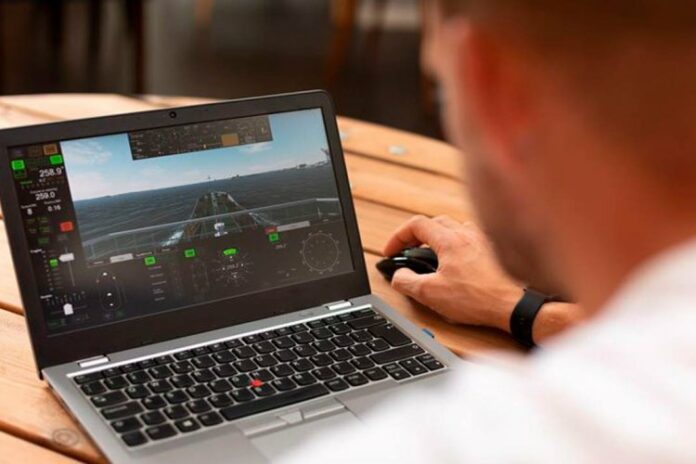
Wärtsilä cloud simulation now available on-demand via OTG’s Ocean Learning Platform

0

The leading provider of smart Simulation and Training Solutions, Wärtsilä Voyage’s Cloud Simulation Solution is now available on maritime knowledge provider Ocean Technologies Group’s (OTG) Ocean Learning Platform.

This includes instructor-led interactive simulation training, automated assessment solutions, and a growing library of self-directed simulation exercises suitable for a wide range of Deck and Engineering learning pathways. It is immediately available to a combined customer pool of over 3,000 shipping companies and training centres, plus over a million seafarers, making training, assessment, and certification possible any time, and from anywhere in the world.

Conversely, Wärtsilä Voyage simulation users will gain access to the Ocean Learning Platforms exemplary online user experience and a wide range of tools to plan, deliver, and report on seafarer training. These include virtual classrooms for remote collaboration in mission brief and debrief, rapid e-learning allowing users to quickly create, publish and distribute e-learning content from within the Ocean Learning Platform (OLP), and the industry’s broadest library of maritime training content found in the Ocean Learning Library.

The two companies had announced their strategic partnership earlier this year in February to share their expertise and resources and provide all maritime learning stakeholders – shipping companies, maritime training providers, manning agencies and seafarers – with a unique end-to-end learning platform by bringing all stakeholders together in one ecosystem that enables seamless collaboration and growth.

Neil Bennett, Business Development Director, Global Simulation, Wärtsilä Voyage, said:

“In just six months since our collaboration was announced, we have been able to bring our innovative teams together to design, plan and deliver a truly unique solution that combines our   complementary technologies to provide tangible benefits to maritime training – accessibility, flexibility, cost efficiencies, and importantly, new possibilities such as bringing advanced simulation-based training closer to the flow of work.”

The experiential learning platform aims to provide the industry with the broadest and most comprehensive range of maritime specific digital learning solutions available under one roof.

With online access to both instructor-led simulator training and self-directed simulated scenarios, Wärtsilä Voyage’s Cloud Simulation reduces the cost and time, creating immediate and tangible benefits for all stakeholders alike.

Bennett added:

“It represents another important incremental step towards creating a more connected maritime learning ecosystem, bringing stakeholders closer together and consolidating more seafarers learning data all in one place for performance analysis and insights.”

As the industry rapidly moves towards digitalisation and decarbonisation, the platform also aims to support mariners to continually and conveniently upgrade their competence in a commercially viable way. Smart solutions and green technology will flat if mariners are not trained properly to handle the new systems and processes. And providing high-quality training and assessment using only traditional techniques will pose a significant commercial challenge.

Bennett said:

“This is just the beginning of a very exciting and potentially game-changing collaboration that can help to support developing more competent, efficient, safer, and environmentally aware mariners able to succeed in our rapidly changing, digitised maritime industry.” 
ABL to develop green hydrogen production barge concept for Harbour use

0

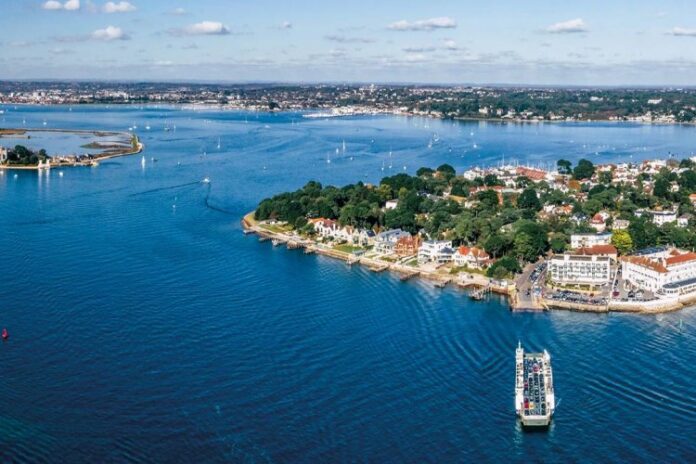
AqualisBraemar LOC Group (ABL Group) has been awarded an innovative research and development (R&D) project to develop a green hydrogen production barge under the Clean Maritime Demonstration Competition (CMDC).

The CMDC is funded by the Department for Transport and delivered in partnership with Innovate UK.

ABL Group, including group company Longitude Engineering, will work in a consortium with Green Hydrogen Solutions and Poole Harbour Commissioners on the concept development and feasibility study for a moored barge to generate, store and provide hydrogen to vessels bunkering at the same port. The port will store hydrogen produced via electrolysis using onshore renewables. Poole harbour will be used as a case study for demonstrating the environmental and commercial viability of the concept.

Dr RV Ahilan, chief energy transition officer at ABL Group, says:

“We are really excited to embark on this innovative project. The maritime industry contributes to three percent of all greenhouse gas emissions and is a hard to abate sector. Technical demonstration of CO2-free powering of ships, when combined with scale, will blaze a trail for the net zero future.”

The work will make a techno-economic analysis of the feasibility of green hydrogen as an alternative fuel to power ships, as well as establishing the commercial viability for such an application and its potential for expansion to other ports.

Dean Goves, Longitude Engineering’s managing director for marine vessel design, defence and small craft, says:

“This project is aimed at providing rapid infrastructure for hydrogen production at the point of requirement. Providing ready availability of hydrogen will support its adoption as a viable alternative marine fuel and contribute to the reduction of the sectors’ emissions.”

Announced in March 2020, and part of the Prime Minister’s Ten Point Plan to position the UK at the forefront of green shipbuilding and maritime technology, the CMDC is a £20m investment from government alongside a further c.£10m from industry to reduce emissions from the maritime sector.

The programme is supporting 55 projects across the UK, including projects in Scotland, Northern Ireland and from the South West to the North East of England, including ABL Group’s project

As set out in the Clean Maritime Plan (2019), Government funding has been used to support early stage research relating to clean maritime. The programme will be used to support the research, design and development of zero emission technology and infrastructure solutions for maritime and to accelerate decarbonisation in the sector.

This award follows the appointment of ABL operations in Aberdeen, Scotland this year to a project with Caledonian Maritime Assets Ltd. (CMAL) to design and emission-free fuel-cell sea-going passenger and car ferry. 

Successful completion of Lille Prinsen appraisal wells in the Norwegian North Sea

0

Lundin Energy AB announces that its wholly owned subsidiary Lundin Energy Norway AS (together Lundin Energy) has successfully completed appraisal wells on the Lille Prinsen discovery, north of the Edvard Grieg field. The two wells have confirmed a combined updated gross resource range of 12 – 60 million barrels of oil equivalent (MMboe) and the discoveries are being matured for possible project sanction before the end of 2022.

The wells in PL167 on the Utsira High, 15 km north of the Edvard Grieg platform, aimed to verify the hydrocarbon potential in the Lille Prinsen discovery, in order to progress the discovery towards a potential development. The 16/1-34 A well was seeking to prove reservoir and production properties in the carbonate sediments of the Permian aged, Zechstein formation and well 16/1-34 S was targeting an oil leg in the Paleocene aged, Heimdal formation. Results confirmed a gross resource range of 10-50 MMboe in the Lille Prinsen discovery, where a drill stem test proved very good reservoir properties, with 33 API oil, tested at a facilities constrained rate of 3,580 barrels of oil per day. A further discovery estimated at 2-10 MMboe was made in the Heimdal formation, with a 7m oil column in a 50m thick sand package, with good reservoir quality.

The partnership will now progress development studies in order to potentially submit a plan for development and operation (PDO) by the end of 2022, to meet the temporary tax incentives put in place by the Norwegian Government in July 2020. With the additional discovery in the Heimdal formation and further prospectivity in the surrounding licence areas, there is potential to add additional phases of development from further discoveries.

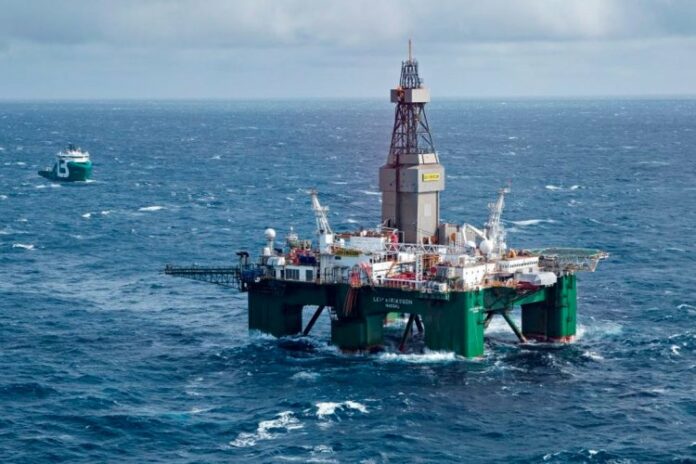
The wells were drilled by the Deepsea Stavanger semi-submersible drilling rig. Lundin Energy is the operator of PL167 with a 40 percent working interest and the partners are Equinor Energy AS with 30 percent, Spirit Energy Norway AS with 20 percent, and AkerBP ASA with 10 percent working interests.

The Deepsea Stavanger rig will now proceed to the Merckx exploration prospect in PL981, immediately to the southwest of the Solveig field also on the Utsira High. Well 16/4-12 will target Paleocene aged sandstones and Permian aged carbonates, estimated to hold gross unrisked prospective resources of 152 MMboe. Lundin Energy is the operator with a 60 percent working interest and AkerBP ASA is the partner, with a 40 percent working interest.

Nautilus Labs expands partnership with TotalEnergies

0

TotalEnergies was looking for a technology partner to visualize and analyze fleet data in order to optimize overall operational efficiency and cut emissions. The charterer works with various owners and therefore requires a solution that can easily and seamlessly integrate with all existing ship-to-shore systems. The partnership with Nautilus Labs started in November 2020 and has since been expanded to the full long-term chartered fleet.

Nautilus Labs leverages high frequency sensor data and builds machine learning models to predict true vessel performance, normalized for environmental factors, allowing TotalEnergies to reduce emissions along with fuel consumption and increase voyage outcomes. TotalEnergies, founder signatory of the Sea Cargo Charter, leverages Nautilus Platform to improve, streamline, and automate emissions monitoring and reporting, including CII tracking, to comply with binding and non-binding regulations, ultimately striving for their goal of carbon neutrality.

Jerome Cousin, Vice President LNG Shipping at TotalEnergies, commented on the partnership:

“As a charterer, your systems and partners have to be flexible, smart, being able to adapt to new requirements and regulations. In Nautilus we found a solution that can work with any owner and seamlessly integrates all data sets, helping us optimize performance and decisions made during voyages, to ultimately cut greenhouse gas emissions. Furthermore, we leverage Nautilus Platform to ease and streamline the process of emissions monitoring and reporting. Nautilus is an important partner for us to achieve our ‘Net Zero by 2050’ goal.”

Matt Heider, CEO at Nautilus Labs, added:

“We’re excited to work with TotalEnergies, supporting their path towards carbon neutrality. We often see siloed data and stakeholders in the industry, resulting in fuel waste and excess emissions. Nautilus Platform supports TotalEnergies in breaking down those barriers and embracing open collaboration. Our solution provides actionable insights, rooted in machine learning and naval architecture to help the industry drive towards maximum efficiency and decarbonization.”

Eric Lepesan, Head of LNG Shipping Operations at TotalEnergies, said:

“TotalEnergies and Nautilus partner to optimize total LNG consumption through dynamic operational recommendations. Nautilus’s machine learning-based voyage optimizations will soon include recommendations for management of cargo temperature and pressure to minimize boil-off gas, allowing us to cut down fuel consumption and greenhouse gas emissions.”

Julia Mason, Vice President Client Success at Nautilus Labs mentioned:

“Collaboration is key in today’s environment. As an interoperable solution, we support TotalEnergies’ relationships with vessel owners, enhance transparency, and drive accountability. Our Platform allows TotalEnergies to understand vessel performance in order to benchmark, compare, and ultimately improve individual and fleet-wide operational efficiency.”

Evergreen Marine renews its 22-year LTSSP contract with KDI for another decade

0

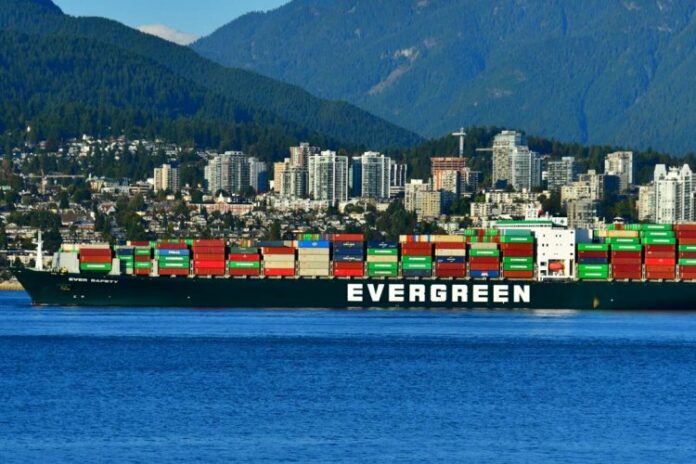
Kongsberg Digital (KDI) has announced that its already well-established LTSSP (Long Term System Support Program) contract with the Evergreen Marine Corporation has been renewed for another 10 years.

The leading Taiwanese shipping company, one of the largest of its kind in the world, has used KONGSBERG simulators for crew training for over 20 years, with the first maritime simulator delivered to the firm’s training center in 1999. Since then, Evergreen Marine Corp. has used KONGSBERG simulator solutions to train its crews to an exceptionally high level, and the renewal of the agreement between the two companies will secure this commitment for another decade.

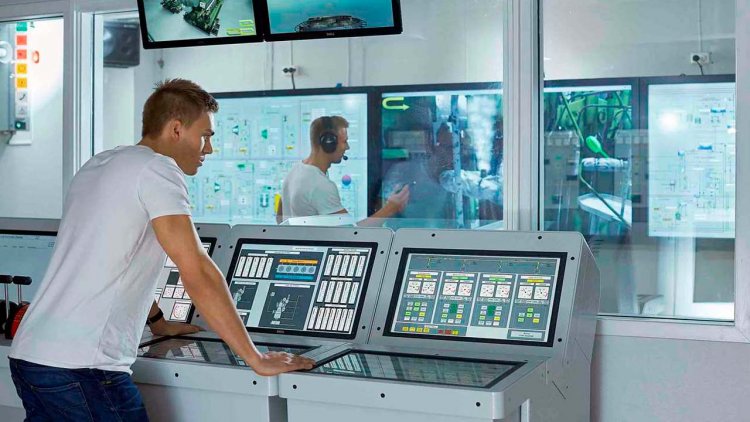
The new LTSSP contract commits KDI to upgrading the majority of the K-Sim bridge consoles and hardware in the Evergreen Marine Training Center. The center’s ECDIS lab will also be treated to an upgrade, while its Polaris simulator will be succeeded by the latest, next-generation K-Sim Navigation model, offering enhanced accuracy and increased realism for optimal crew training and convincingly immersive simulation.

This thorough overhaul of the center’s simulation technology will also encompass an upgrade of its existing full mission engine simulator to a state-of-the-art K-Sim Engine type, complete with a new MAN 6S70ME engine model. Equipped with a scrubber system and KONGSBERG’s patented IAS (Integrated Automation System), it typifies the level of detail provided by next-generation KDI simulators, enabling Evergreen Marine to refresh its curriculum and continue training its crew to achieve the highest standard of operational and navigational competence.

Eddie Pai, Junior Vice President, Evergreen Marine Corp., says:

“Our fleet consists of very large vessels which routinely have to sail in extreme weather conditions, so it’s vital for our crews to be fully prepared to meet any challenges. Over the past 20 years, the Evergreen Seafarer Training Center has worked tirelessly to improve the professional skillsets of crew members, broadening their knowledge base and sparing no effort in the drive to prevent accidents at sea and combat marine pollution. We are very glad to be progressing into another decade with KDI, providing us with the most advanced simulation training equipment and any maintenance support we could ever require.”

Andreas Jagtøyen, Executive Vice President Digital Ocean, Kongsberg Digital, adds:

“The new 10-year contract renewal indicates Evergreen Marine’s confidence and trust in KDI’s maritime simulation training solutions. At completion of this contract, KONGSBERG will have delivered technological continuity to Evergreen Marine for more than 30 years. This is clear evidence of our long-term commitment to support the maritime industry, delivered by the combination of our simulators’ long product lifecycle and the extensive service provided by our 24/7 support network.”

Ampelmann first to deploy motion compensated gangway in Chinese renewables market

0

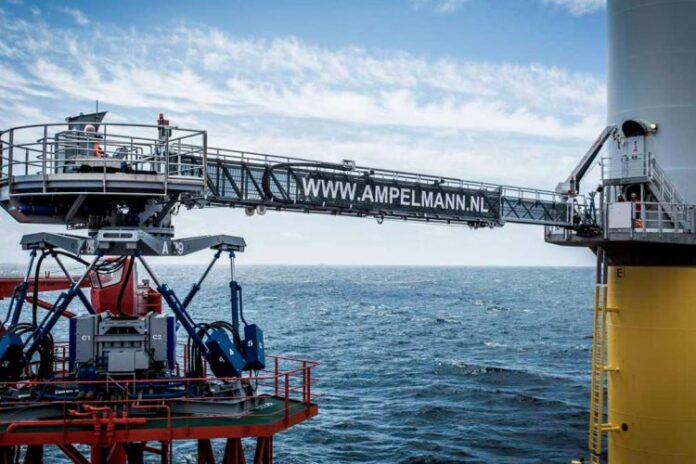
The company will provide the A-type gangway, one of its flagship systems, to Guangdong Safety New Energy for the offshore wind works off Guangdong province. It was able to secure this project with the support of its local partner in the region Leading Marine (HK) CO. Limited.

In line with the need for a global energy transition, many governments have set ambitious targets for generating green energy, and so has China. In the Guangdong area, where the project with Ampelmann is located, China plans to install 10GW by 2030, which is part of the plan to achieve 40GW nationwide by that same year.

By the end of October 2021, Ampelmann will provide the A-type on the client’s new 60m Service Operation Vessel (SOV) named “MV Guang An Yun Wei 88”. It will be first the SOV equipped with a motion compensated gangway in China. The system will enable the safe and efficient transfer of personnel at Guangdong Yangjiang offshore Wind Farm, which is the largest wind farm in Guangdong and is located 40 nautical miles offshore where turbines will be installed at a depth of around 40m.

Guangdong Safety New Energy is a wholly-owned subsidiary of Guangdong Yuean Shipping. Their venture with Ampelmann will be for a minimum period of six months and could possibly be extended for another half a year. The project will mark Yuean’s first step in the offshore wind operations and maintenance sector. In addition, it will be the first time a proven full motion compensated gangway is used in a Chinese offshore access operation.

Vincent Chua, Business Developer at Ampelmann, said:

“We are very excited about this opportunity. With it we can show the value of our systems and raise the standard of both safety and efficiency of offshore access operations in the area.”

To further improve the efficiency of offshore operations, the company provides multiple services to maintain technical reliability and increase workability. Services include 24/7 operations support and digital tools that give their clients insight into the workability of their operations.

European Commission backs Orbital floating tidal energy FORWARD-2030 project

0

The innovative Scottish technology developer, Orbital Marine Power (Orbital) will lead a pan-European consortium to deliver the €26.7m FORWARD-2030 project, set up to accelerate the commercial deployment of floating tidal energy.

The FORWARD-2030 project consortium will receive €20.5m of grant support from the European Union’s Horizon 2020 research and innovation programme to develop a multi-vector energy system for the future. This system will combine predictable floating tidal energy, wind generation, grid export, battery storage and green hydrogen production.

The project will see the installation of the next iteration of the Orbital turbine, integrated with a hydrogen production facility and battery storage at EMEC in Orkney. Project partners will design options for integrating large scale tidal power into future net zero energy systems, whilst developing environmental monitoring and marine spatial planning tools for large floating tidal arrays.

Orbital will act as project coordinator as well as lead technology developer for the FORWARD-2030 project.

During the project, Orbital will advance the company’s pioneering floating tidal turbine design, with support from technical partner SKF, who will design and build an optimised fully integrated power train solution, designed for volume manufacture. The partners will deliver several technical innovations targeting increased rated power, enhanced turbine performance and array integration solutions. These innovations will reduce the cost of Orbital’s sector-leading technology even further.

The next generation turbine will be deployed at EMEC’s Fall of Warness tidal test site off Eday in Orkney, where the company has already installed the O2, the world’s most powerful floating turbine, this summer. Once installed next to the O2, the new turbine will be part of the world’s most powerful floating tidal array.

EMEC will host the demonstration, facilitate hydrogen production, deliver a comprehensive environmental monitoring programme, and develop a live environmental monitoring system and test programme.

LABORELEC will assess large scale integration of tidal energy to the European energy system, develop a smart energy management system and an operational forecasting tool. The University of Edinburgh will deliver techno-economic analysis of tidal energy, and the MaREI Centre at University College Cork will be responsible for addressing marine spatial planning issues for wide scale uptake of tidal energy.

Commenting on the award, Oliver Wragg, Orbital’s Commercial Director said:

“This endorsement of the Orbital technology by the European Commission is a huge vote of confidence in our capability to deliver commercially viable tidal energy. We now have a focused and highly experienced consortium dedicated to the delivery of tidal energy and committed to accelerating its future uptake. This alignment of interest sets FORWARD-2030 on course to have a meaningful impact as we build towards large scale commercially viable tidal energy projects.”

Rob Flynn, Commercial Manager of EMEC said:

“FORWARD-2030 will show what the energy system of the future looks like by combining offshore renewable generation, with onshore wind and EMEC’s onshore hydrogen and storage facilities – all done in the novel context of an island grid.”

Matthijs Soede, Senior Policy Officer at European Commission DG Research and Innovation said:

“The FORWARD-2030 project has the potential to accelerate the commercial deployment of tidal energy, whilst firming up Europe’s position as a leader in tidal energy, this fits perfectly with our aim to realise the Green Deal. The FORWARD-2030 consortium shows a great ambition in tidal energy development itself, by clearly putting the large scale development of the tidal energy market for 2030 in mind. Its success will be a milestone for the ocean energy sector and will support the clean energy transition in the long-term.”

Commenting on the award, Remi Gruet, CEO of Ocean Energy Europe, said:

“FORWARD-2030 showcases the extraordinary value of continued EU-UK collaboration in ocean energy. This pan-European team saw off stiff competition and will now deliver the world’s first floating tidal farm – an important win for the entire sector.

“With UK participation in Horizon Europe now confirmed, I’m looking forward to even more winning partnerships over the next seven years.”

The Fast-tracking Offshore Renewable energy With Advanced Research to Deploy 2030MW of tidal energy before 2030 (FORWARD-2030) project will run from 2021 to 2025.

In addition to the partnership, two project developers and two utilities have committed to join the project Advisory Board. Between the Advisory Board and Consortium members, 2030MW of tidal energy sites have already been identified and are under various stages of development.

De Beers’ latest diamond recovery vessel departs Damen Shipyards Mangalia

0

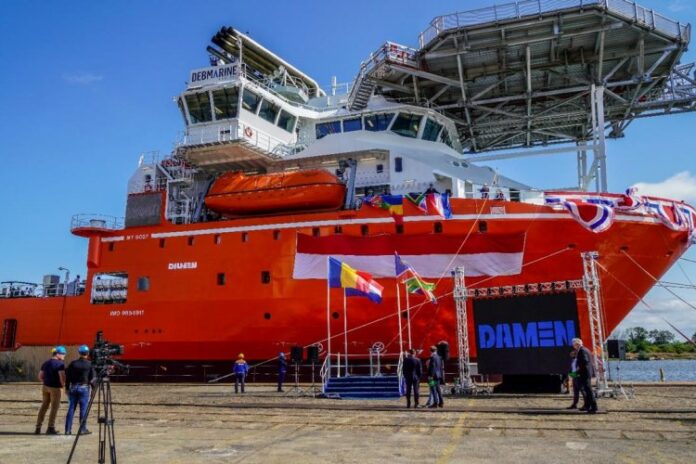
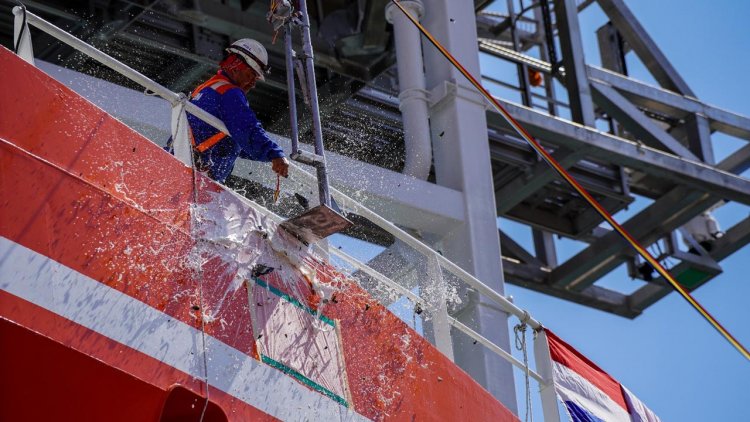
Following the official handover held on the 18th and 19th of August at Damen Shipyards Mangalia, Debmarine Namibia’s new diamond recovery vessel departed on a four-week long maiden voyage to the Port of Cape Town, South Africa, where it will be fitted with mission equipment before beginning operations off the coast of Namibia early next year.

The successful delivery marks the end of the shipbuilding phase of a landmark project that began over three years ago. It is the first vessel to be delivered by Damen Shipyards Mangalia, the Romanian yard that joined the Damen group in 2018, to take on large and complex, engineered to order projects under the banner of the Mid-Sized Vessels division.

Debmarine Namibia is a subsidiary of the well-known diamond mining and jewellery company De Beers, owned in equal shares with the Government of the Republic of Namibia. The Additional Mining Vessel (AMV#3) as it is technically known, will use sub-sea crawling extraction techniques to retrieve diamonds from the seabed off the coast of Namibia. These will then be processed on board. 177 metres in length, it is now the largest diamond recovery vessel in the world and the new flagship of the Debmarine Namibia fleet. The vessel is expected to operate for at least 30 years.

The build involved many challenges, ranging from the onset of COVID-19 early in the project to the management of many subcontractors, each contributing their specialist skills and products. Engineering challenges included the installation of a DP2 dynamic positioning system based on a seven-thruster propulsion system powered by six generators, to enable greater flexibility in the vessel’s operations. Project management was undertaken by De Beers Marine South Africa (Pty) Ltd.

With the constraints of COVID-19 Damen also undertook the complete commissioning process, implementing incremental ways of working to ensure that it was all completed on time. 

Michael Curtis, Head of the AMV3 Project, said:

“De Beers celebrates the completion of the vessel which, after a long period of design, construction and testing has now proceeded to sea. The vessel build has been a truly multinational effort which has converged successfully at Damen Shipyards Mangalia. The build of this magnificent ship has enjoyed a high profile in Namibia as the largest ever single investment in the history of marine diamond recovery.

“Today marks a significant milestone in the project and for our company as the vessel starts its journey to Cape Town where it will be outfitted with the mission equipment. Damen’s dedication to building this high-quality and complex vessel, under very difficult circumstances and to do so with an excellent safety record is acknowledged and the quality of the ship is a testament to the skills of all who have been involved.”

Siemens Gamesa inaugurates new offshore nacelle assembly facility

0

Siemens Gamesa Renewable Energy has officially inaugurated its new offshore facility in Taichung. This is the company’s first offshore nacelle assembly facility outside of Europe.  

As announced in 2019, the facility will now be starting regular operations, after having already completed Taiwan’s very first local offshore wind turbine nacelle assembly in early August 2021. 

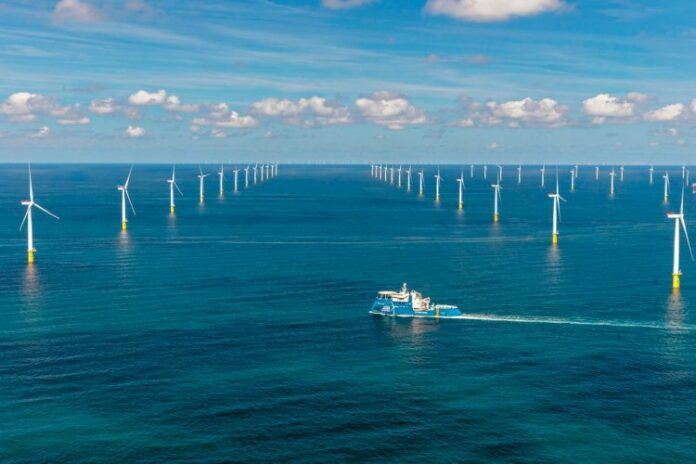
The piece of land developed in Taichung measures over 30,000 square meters, and is currently used for nacelle assembly, testing, warehousing, office buildings, and outdoor storage. Construction started in April 2020 and was completed in Q3 this year. It will support Ørsted’s 900 MW Greater Changhua 1 & 2a Offshore Wind Farms, which will employ SG 8.0-167 DD offshore wind turbines. It will also provide an option for future projects in Taiwan and in the rest of the promising region.

Niels Steenberg, General Manager of Siemens Gamesa Offshore for Asia-Pacific, says:

“We are very proud to once again deliver on our promises in Taiwan, together with our client Ørsted, our contractors, central and local authorities who have contributed and guided us throughout the process. We are confident that with the right policy framework on offshore wind, we will help Taiwan realize a cleaner and more sustainable future. We are looking forward to leveraging this local footprint to serve this purpose and deliver offshore wind nacelles to projects in the region.”

Matthias Bausenwein, President of Ørsted Asia-Pacific, says:

“Ørsted is spearheading offshore wind development in Asia-Pacific, leveraging more than 30 years of experience in this industry. In Taiwan, we have, from day one, taken solid steps in building an offshore wind eco-system. This nacelle assembly facility well demonstrates that it takes projects with scale, thorough planning and preparation, and commitment of significant and experienced resources to build a strong supply chain, consisting of competitive local suppliers and international best-in-class suppliers, who are determined to invest in Taiwan.”

Siemens Gamesa was awarded the firm order to supply 111 SG 8.0-167 DD offshore wind turbines to Ørsted’s Greater Changhua 1 & 2a projects in January 2019. This order accelerated the development of the now-inaugurated offshore nacelle assembly facility.

Christy Wang, General Manager of Ørsted Taiwan, remarks:

”As part of the ramp-up program of the facility, Siemens Gamesa committed to supporting local offshore wind professionals, and developing their skills to match world-class manufacturing standards. Since May 2021, approximately 80 nacelle technicians received Siemens Gamesa Technical Trainings through a partnership with the Metal Industries Research & Development Centre. This dedicated training plan was crucial to enabling the on-time production start in August 2021.

SK Group to build South Korea`s hydrogen port

0

The two entities have signed a deal to build a port hydrogen complex station, port mobility and ship hydrogen fuel conversation, and a blue hydrogen production facility.

SK said it would build the first port-type hydrogen complex station in Yeosu Gwangyang Port by 2023.

The blue hydrogen production facility would have an annual capacity of 200,000 to 300,000 tons with some of the hydrogen produced to be processed into liquid hydrogen and supplied to nearby ports, SK said.

The Ministry says the plans could mean that 60% of Korea’s total hydrogen consumption is supplied through hydrogen ports by 2040.

Minister of Oceans and Fisheries Moon Seong-hyeok said the hydrogen port ecosystem would be build in stages by 2040 to realise carbon neutrality by 2050.

He emphasised that the government will “spare no effort in administrative and policy support” so that “corporate investment in hydrogen ports can be revitalised”.