-10.3 C
New York
Home Blog Page 547

Island Offshore to digitize its entire fleet

0

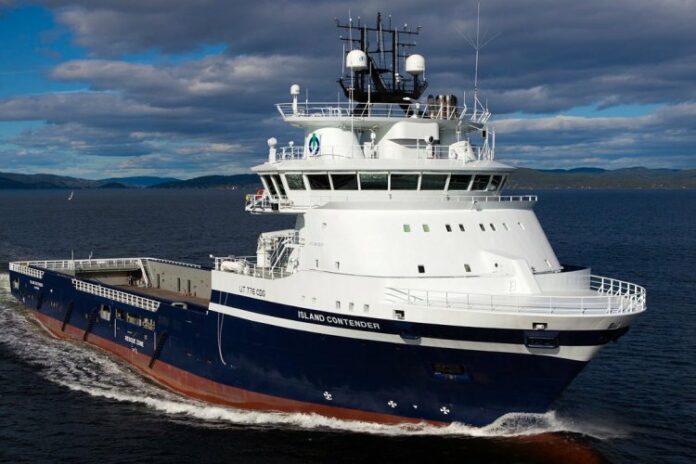
By installing the Vessel Insight infrastructure, we will collect all data from our fleet on one common platform. The data collected will enable us to use advanced decision support tools and benchmark our vessels by comparing operational data from all vessels to reduce fuel consumption and emissions, as well as automate the reporting processes.   

Andreas Jagtøyen, Executive Vice President of Digital Ocean at Kongsberg Digital, says:

“We are very pleased to contribute to further strengthening KONGSBERG’s collaboration with Island Offshore. We look forward to working closely with Island Offshore to deliver and further develop solutions that can help give them a competitive advantage in the market, as well as help them achieve their goals for safety, efficiency and sustainability.”

Four vessels in our fleet are already connected to the Vessel Insight platform, and Kongsberg Digital is continuously working on installation on the remaining vessels in the fleet. For the first vessels we have already used the Vessel Performance application from Kongsberg Maritime and the partner application Yxney Maritimes MARESS, which is available in Vessel Insight’s Maritime Ecosystem. This has in a short time led to the four vessels now going from manual to automated reporting.

Technical Manager Trond Hauge, in a press release issued by Kongsberg Digital, says:

“By collecting all data on one common platform, we get a correct and efficient starting point to analyze our operations and compare all our vessels in the fleet. In this way we can share experiences between the vessels and ensure that we operate as efficiently and safely as possible. Our fleet will be even more sustainable by reducing fuel consumption and thus the attractiveness in the market will increase. With increasing demands for reporting, going from a manual to an automate reporting process will save us a lot of work.”
 

bp and NYK Line join forces to help decarbonise hard-to-abate sectors

0

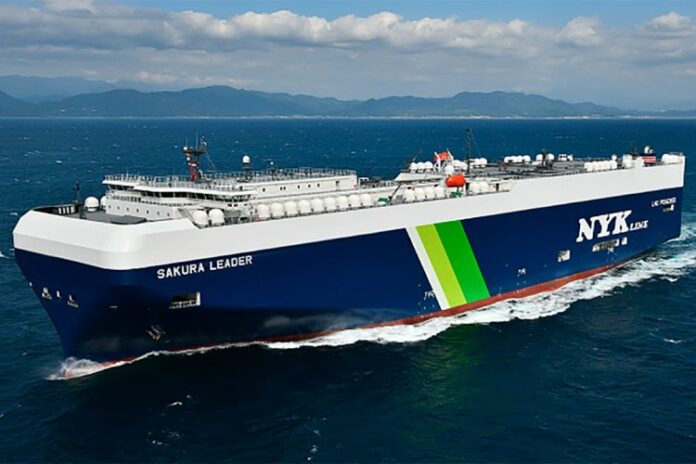
For shipping, the companies will collaborate and identify opportunities to help transition from current marine fuels to alternatives such as LNG, biofuels, and methanol, and to develop future fuels such as ammonia and hydrogen. Getting this journey right will be critical to enabling the shipping industry to meet its long-term decarbonisation ambitions.

For other hard-to-abate industrial sectors, the two companies will also consider potential marine transportation and other solutions for carbon dioxide, and explore participation in the supply chains for ammonia and hydrogen to be used in heavy industry and power generation, to help those sectors to decarbonise.

Shipping is core to global trading activities. For the world to decarbonise, shipping must decarbonise, and as one of the world’s largest shipping and logistics companies, NYK Line is seeking to lead decarbonisation efforts in the industry through collaboration with bp.

bp is focusing on working with corporates in key industrial sectors that have significant carbon emissions to manage, to help them to decarbonise. The company’s ambition is to be a net zero company by 2050 or sooner, and to help the world to get to net zero.

William Lin, EVP regions, cities and solutions, bp:

“bp and NYK Line have a combined experience of almost 250 years working in the shipping sector, strong existing relationships and a shared understanding of the need for the marine industry to decarbonise. By bringing together our technical expertise, understanding of the supply chain, and insights from our customers, I am confident that together we can do more to drive change at pace in hard-to-abate sectors.”

Akira Kono, Senior Managing Executive Officer-Chief Executive of Energy Division, NYK Line:

“We are very pleased to enter into a strategic partnership with bp. We look forward to developing even more valuable solutions in the field of decarbonisation. By combining bp’s technological expertise and worldwide network in integrated energy with NYK Line’s expertise and technology as one of the world’s largest shipping and logistics companies, we hope to become a leader in the decarbonisation of the shipping industry.”

Parkwind selects Port of Mukran to become the O&M base for Arcadis Ost 1 wind farm

0

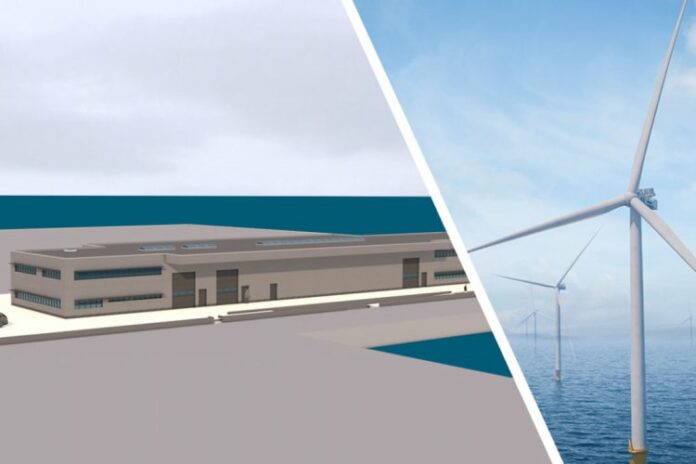
The signing ceremony, in the presence of the Minister of Energy, Infrastructure and Digitalization of Mecklenburg-Vorpommern, Christian Pegel, marks the beginning of the building development where up to 40 professionals will oversee and service the operations of the 257 MW wind farm Arcadis Ost 1.

The signing of the agreement closely follows the Arcadis Ost 1 financial close signed earlier this summer. The wind farm will be located in the German territorial waters of the Baltic Sea, northeast of the island of Rügen. It will generate green energy to power the equivalent of up to 290,000 households. Offshore installation works are due to begin in 2022 and the wind farm is expected to be fully operational in 2023.

Christian Pegel, the state’s energy minister, said:

“I am really pleased that Port Mukran will now also become the base port for maintenance and service of the Arkadis Ost 1 wind farm. The companies’ decision to opt for the Port of Sassnitz cements its position as a key location for the offshore industry. But it also demonstrates that Mecklenburg-Western Pomerania’s commitment to the generation of wind energy off its coast is not just a win for climate change mitigation, but also for the local economy – in the long term.” 

Hauke Groeneveld, Head of Port & Logistics Services at EMO, explains:

“The favourable location with the shortest distance to the wind farm, and a good logistical infrastructure make Sassnitz-Mukran the perfect base for the operation and maintenance of Arcadis Ost and other projects in the Baltic Sea region. Our project partners can rely on our experience and know-how when it comes to building and operating a modern service base. We are looking forward to working together.”

EMO Managing Director Marcel Diekmann said:

“Together with Vestas and Parkwind as strong partners, we are focusing on an offshore service base designed for sustainability in the future. As an experienced service company, we are ready for current and future projects in the Baltic Sea.”

Eric Antoons, co-CEO of Parkwind, commented:

“We are delighted that the Port of Mukran will become the Arcadis Ost 1 O&M base. Their understanding of our industry and experience in offshore projects make them the ideal choice . Today, with our distinguished partners and in the presence of Minister Pegel, we are able to demonstrate the effects offshore wind development brings to the local economy in terms of jobs and infrastructure.”

RE2 Robotics receives contract to develop underwater autonomous system

0

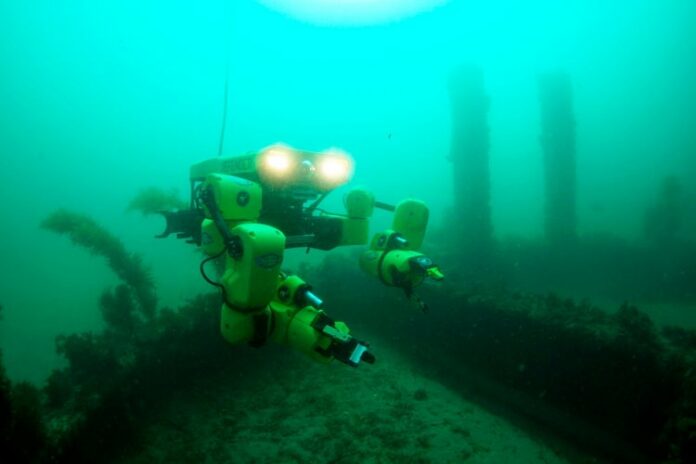
RE2 Robotics has received a $9.5 million contract from the Office of Naval Research to create an underwater robotic system for the autonomous neutralization of underwater mines for the U.S. Navy. The program, called Maritime Mine Neutralization System (M2NS), will utilize the RE2 Sapien™ Sea Class system to precisely place and attach neutralization devices to underwater mines and water-borne improvised explosive devices (WBIEDs).

RE2 will serve as the systems integrator for this program. In addition to RE2 Sapien Sea Class, the M2NS will use components, including RE2’s advanced computer vision and autonomy software, RE2 Detect™ and RE2 Intellect™, to enable the precise, autonomous, and clandestine neutralization of a target.

Jorgen Pedersen, president and CEO of RE2 Robotics, said:

“The detection and neutralization of WBIEDs and other underwater explosives is a critically dangerous task for Navy divers. Consistent with our mission of improving worker safety, the M2NS will enable the Navy to find and autonomously neutralize targets in deep ocean waters, while experienced divers supervise from a safe distance.”

The M2NS comprises best-in-class technologies such as RE2’s Sapien Sea Class arms and VideoRay’s Defender remotely operated vehicle (ROV), which both exhibit unprecedented power density.  In particular, RE2 Sapien Sea Class arms, which were originally designed and developed for the ONR, feature a compact, strong, electromechanical design with human-like dexterity (7-function per arm) that is neutrally buoyant.  The fusion of these key technologies provides superior strength and precision while manipulating neutralization devices.

Dr. Amanda Sgroi, director of computer vision and autonomy at RE2, said:

“The M2NS will use RE2 Detect computer vision software to locate targets underwater, and RE2 Intellect to autonomously and precisely place devices on those targets. We also will integrate new sensors to provide situational awareness and aid autonomy, allowing the system to potentially navigate to extended depths in the ocean.”

In addition to defense tasks, the human-like capability of the M2NS allows it to be used for complex offshore infrastructure and maintenance applications in the oil & gas and renewable wind industries. For example, M2NS can be used for weld inspection of rig piles, ships and FPSO (Floating Production Storage and Offloading) systems; mooring inspection and measurement; and valve inspection and manipulation.

FUELSAVE secures €3.4M to accelerate deployment of emissions reduction technology

0

Two tranches of fresh funding led by Dreamcraft Ventures will enable FUELSAVE to scale up production of FS MARINE+, which immediately cuts primary fuel consumption and emissions for the merchant vessel fleet and is compatible with current and future fuels.  

German cleantech provider FUELSAVE has secured €3.4M in fresh funding to expand its team and scale up the production of its advanced combustion conditioning technology FS MARINE+. Led by Dreamcraft Ventures and supported by legal advisors Poellath+Partners, the new funding will enable FUELSAVE to meet the growing demand for its high impact retrofit solution, which is capable of immediately reducing emissions from shipping.

FUELSAVE’s FS MARINE+ optimises combustion through the dynamic injection of hydrogen, oxygen, water and methanol through the air intake. This technology, referred to as advanced combustion conditioning, makes combustion leaner, cleaner and more efficient, thereby reducing fuel consumption and reducing greenhouse gas (GHG) emissions such as NOX by 30 to 80%. Furthermore, the system can be easily, safely and quickly retrofitted, as it does not require any modifications to the parts or working principles of the engine. FS MARINE+ also pays for itself through OPEX savings from fuel economies, lower maintenance costs and carbon reduction schemes and subsidy programs. 

Advanced combustion conditioning is among the low-hanging fruits that shipowners can seize now to progress towards sustainability, a move which is also driven by ESG goals of ship owners, operators and charterers, as they face greater pressure from consumers and markets, all while endeavouring to remain profitable and competitive. Furthermore, the deployment of FS MARINE+ will also have a wider impact, supporting the introduction of methanol as a marine fuel and facilitating the establishment of critical supply chains for this new fuel. 

The investment will play a key role in supporting FUELSAVE’s growth as it enters a new chapter of its development. The company has announced the establishment of new headquarters in Hamburg, Neuland, Germany, where a new production line will deliver over 50 largescale FS MARINE+ systems every year as a first step. This will also lead to the creation of dozens of jobs in Germany and beyond in the coming years.  

FUELSAVE’s CEO Marc Sima said:

“Although not a silver bullet, advanced combustion conditioning has the potential to truly contribute to building a low-carbon future for shipping and is one of the few ways in which shipowners can reduce their emissions now, without requiring major changes to their engines and vessels. The technology will support operators as they face numerous operational and environmental challenges. It is also future-proof, as it can work with current fossil and future clean fuel alternatives, whether liquid or gaseous, including drop-in certified biodiesel, ammonia and methanol.”

Dreamcraft’s General Partner and Investment Manager Carsten Salling said:

“While shipowners would typically expect to spend large amounts of money to decarbonise their activities, FS MARINE+ has a unique value proposition, enabling shipowners to reduce their emissions while also saving in fuel costs. This is a unique opportunity to kill two birds with one stone, by protecting shipowners’ bottom lines as well as the environment.”

This investment round is comprised of two tranches, with the first completed and the second set to close shortly with more value-adding investors.

Naval Group begins deconstruction of third French ex-SSBNs

0

The deconstruction program for France’s former nuclear-powered ballistic missile submarines (ex-SSBNs) which was launched in September 2018 at the Naval Group site in Cherbourg passed a new milestone on Thursday, September 9, 2021.

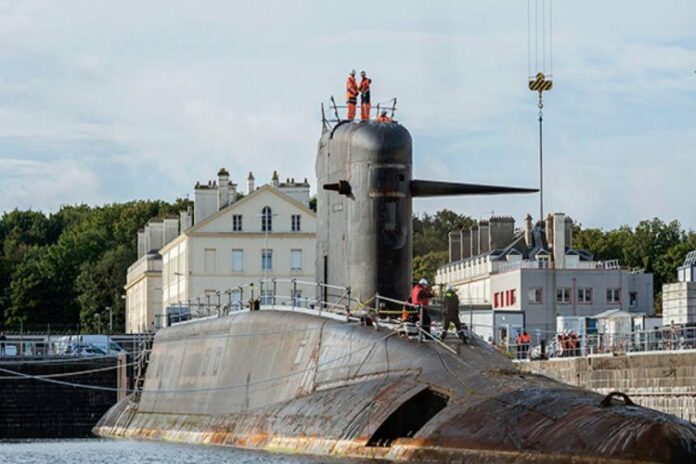
After Le Tonnant and L’Indomptable, a third hull named Le Foudroyant entered into pool 5. The contract to deconstruct the hulls of these previously dismantled ex-SSBNs (of the Le Redoutable type) was notified by the French procurement agency to Naval Group on 24 October 2016.

A little more than 47 years after its entry into active service in the French Navy (in June 1974) and 23 years after its withdrawal from active service (in April 1998), the time has come for the deconstruction of Le Foudroyant, the third in the series of the first generation of French SSBNs which were all assembled in Cherbourg.  The 120-metre long and 6,000-ton hull entered dock 5 at the Naval Group site in Cherbourg on Thursday 9 September in order to be completely dismantled.

Olivier Lezin, director of the ex-SSBN deconstruction program, said:

“As a pioneer in naval submarine technologies, Naval Group has mastered the entire life cycle of SSBNs: design, production, maintenance/upgrades, dismantling and deconstruction. Thanks to this strong expertise, Naval Group is proud to be pursuing a program that is completely new in France, together with its partners and on behalf of its customer, the French procurement agency.”

About 60 people are mobilised on the deconstruction site: production, project management, steering and general organization. Veolia and NEOM (a subsidiary of Vinci Construction France) are the two main partner companies of Naval Group, which is the sole project manager for the entire operation.

Le Tonnant, first ex-SSBN of the program, was deconstructed between September 2018 and February 2020 and was followed by L’Indomptable between March 2020 and August 2021. The three remaining ex-SSBNs will be deconstructed one after the other until 2026, the end date of the program.

VICT completes its automation upgrade of Navis’ N4 TOS

0

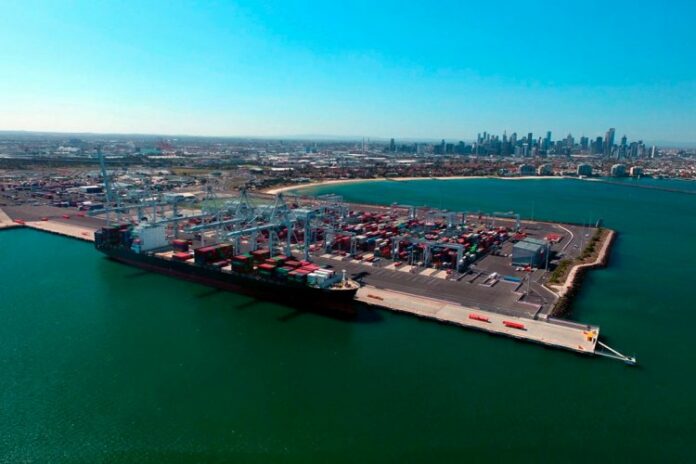
Navis, the provider of operational technologies and services that unlock greater performance and efficiency for leading organizations throughout the global shipping industry, announced that Victoria International Container Terminal (VICT) – the first fully automated terminal in Australia – has completed its automation upgrade of Navis’ N4 TOS. 

VICT is located at Webb Dock in the Port of Melbourne, the largest container port in Australia. The terminal’s owner, International Container Terminal Services Inc. (ICTSI), implemented N4 at its state-of-the-art greenfield project to help power its planned, fully automated container terminal. Since becoming operational, the terminal has continued to set benchmarks handling the largest vessel in capacity, highest exchange in a single call and the longest vessel to call at the port. 

Jon Wheeler, COO at VICT, said:

“By continuing to optimize through automation upgrades and continuous improvement analysis, VICT strives to deliver the best possible service to our customers. By upgrading our TOS through constant collaboration between Navis and our internal automation team, VICT’s focus is to consistently improve operational safety and productivity efficiencies for all our stakeholders. Since the upgrade, we have seen continuity in uptime, reduced exception handling, berth productivity improvement, and greater efficiencies with our industry leading landside operation of multiple containers.”

The latest enhancements at VICT include an upgrade to N4 3.8 AutoShuttle scheduler which improves the user experience, reducing exception handling by automating workflows. Additional benefits include an optimal AutoShuttle dispatch, increased system robustness and uptime and shortened truck turnaround time for trucks with multiple transactions.

Charles Gerard, Vice President and General Manager Asia Pacific, Navis, said:

“It is truly incredible to see how far VICT has come in just a few short years, from greenfield site to a leading powerhouse, setting the standard for automation for container terminals globally. The industry continues to battle disruption and constraints as fallout from the pandemic and VICT remains committed to doing its part to facilitate trade. The terminal is ensuring that vessels are processed in a timely manner and essential goods coming through the port get where they are needed most. Using the most advanced technology, including N4, to fully automate its processes and deliver extra capacity to the port, VICT acts as a safe and reliable gateway to keep goods flowing in and out of the country.”

World’s first green submarine among winners of the UK’s clean maritime competition

0

The first ever green submarine study has been named as one of 55 winning projects of a £23 million government-funded R&D competition, announced today (15 September 2021) by Transport Secretary Grant Shapps, in Greenwich, as part of the greenest ever London International Shipping Week.  

The Clean Maritime Demonstration Competition, announced as part of the Prime Minister’s 10 point plan for green industrial revolution, is supporting the development of innovative technology to propel the government’s commitment to have zero emission ships operating commercially by 2025.

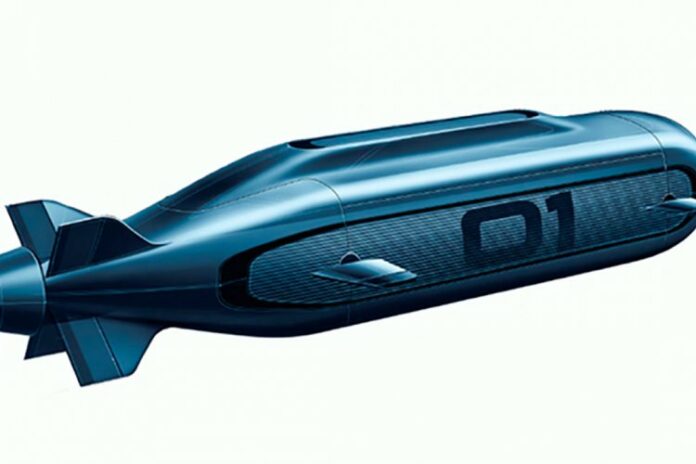
A fully automated net positive submarine fleet, powered entirely on green hydrogen, could help cleanse the oceans of toxic pollution by collecting microplastics on its pilot route between Glasgow and Belfast. While transporting cargo shipments, the fleet could secure significant emission savings of 27 tonnes of carbon dioxide (CO2) emissions in the first year of operation, with an overall mission to reduce 300 million tonnes of CO2 emissions as the fleet grows.

Also among the winners is an all-electric charge-point connected to an offshore wind turbine. The charge-points will be able to power boats using 100% renewable energy generated from the turbine. This offers potential savings of up to 131,100 tonnes of carbon dioxide equivalent (CO2e) emissions a year – the equivalent of removing over 62,000 cars from our roads.

Similar to roadside electric vehicle chargepoints, these will be operated by semi-automated control, meaning that sailors can moor up by the wind turbine chargepoint, plug in, charge up, then sail on.

Two new Liebherr cranes arrive to enhance Dover Cargo’s operation

0

They strengthen the excellent collection of facilities that enable the Port to successfully handle and distribute every range of cargo using the world’s busiest shipping lane.

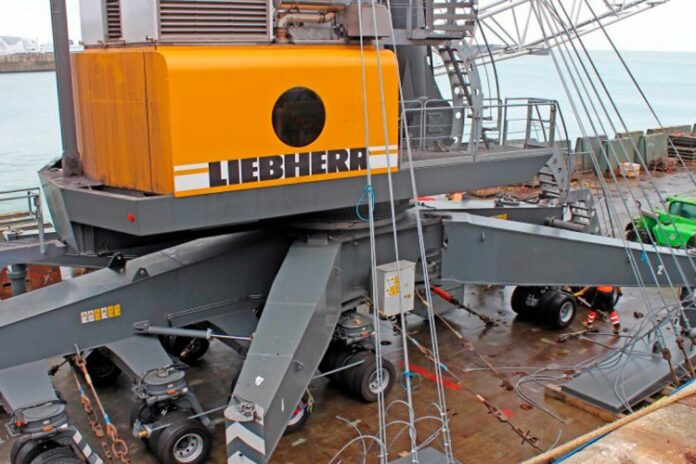
The larger of the two is an LHM 550 Mobile Harbour crane, capable of lifting 104 tonnes and with a maximum outreach of 54 metres. The second unit, an LHM 280 Mobile Harbour crane can lift 84 tonnes with an outreach of 40 metres, meaning they can handle steel, breakbulk, containers, palletised fruit and more. The hydrostatic drive concept in connection with the closed hydraulic circuits guarantees immediate release reaction times for rapid and safe working.

Karen Hayes, Commercial and Divisional Manager at Port of Dover Cargo said:

“Our strategic location with fast, dedicated and direct access to the wider UK and Europe will forever make our operation unrivalled. We are delighted that the exceptional facilities available in our brand-new terminal provide customers with another reason to choose Dover as the best place to handle their cargo. 

Since our new terminal in the Western Docks opened just over a year and a half ago, our business has flourished. We have continued to adapt to the latest technologies and techniques, enabling the team to process every range of cargo in the industry and expand our customer base even further.”

In March of this year, Soreidom & Caribbean Line become the Port’s first scheduled breakbulk customer. This followed on from the terminal becoming fully temperature controlled at the end of 2020 and the Port processing bulk aggregate for the first time with Aggregate Industries (AI) visit to Dover in May 2020. Duferco’s SVS Vega marked the Port’s debut steel rebar call at the end of 2019.

Port of Dover Cargo Ltd also has HACCP certification, the 360 Quality Code and organic accreditation from the Organic Food Federation and full AEO status (Authorised Economic Operator) in customs and security.

Döhle Group partners with Navarino in a major technology and connectivity project

0

Döhle Group, one of the major ship owning & management companies in the world, has partnered  with Navarino in a major technology and connectivity project that will see Inmarsat Fleet Xpress (FX) and Infinity rolled out on more than 100 vessels.

The company has selected Navarino to combine the high-speed connectivity of FX with the advanced digitalization tools of Infinity across several of its managed fleets in order to provide them with a major technology upgrade. Intellian is the chosen antenna manufacturer with the NX series model. Up to now more than 90 vessels have been installed.

Dimitrios Chatzitzanos, Navarino’s Managing Director for its German office, said:

‘We are excited and proud to be working on a project with Döhle Group who are among the top ship owner/managers in Germany and globally. I’m confident that FX combined with infinity will meet all the complex bandwidth and networking requirements that Döhle Group has.

We had to overcome the logistical challenge of installing a significant number of units in a short time frame, but thanks to excellent cooperation between our two organisations this was successfully completed. We are now looking forward to a long term, productive and successful cooperation.’

Mr Benjamin Weltz, Head of Fleet IT at Döhle Group said:

‘Inmarsat’s FX and Navarino’s Infinity were proven successful during sea trials. We decided to migrate our fleet because we needed a reliable and fast connectivity solution in order to meet the increased bandwidth demand, while at the same time allowing us to control our costs. Furthermore, the solution helps us to provide a higher level of crew connectivity, allowing them to stay in touch with family and friends as if they were ashore.’