-15.1 C
New York
Home Blog Page 536

Equinor pilots autonomous glider survey to map fish presence and biomass quantity

0

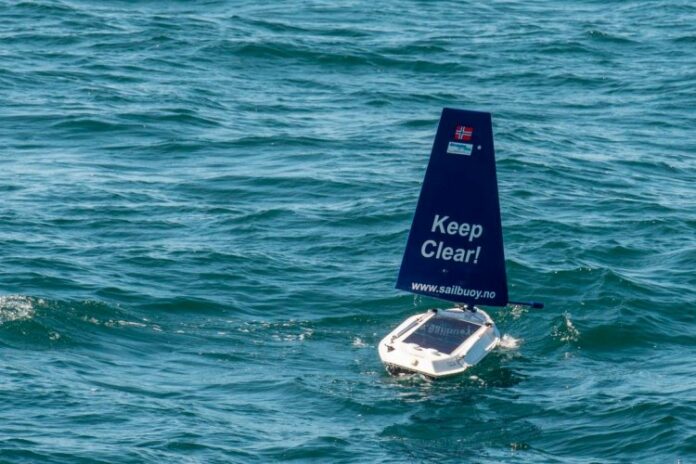
Equinor, operator of the world’s first floating offshore wind farm, Hywind Scotland, has pioneered a novel method of data collection for offshore wind, using an autonomous Sailbuoy.

Powered by the wind and sun, the glider travelled on its own from Bergen, Norway, to the wind farm just off the coast of Peterhead, Scotland, where it used acoustic sensors to map fish presence and biomass quantity.

The Sailbuoy, operated by Akvaplan-niva, is equipped with an echosounder to identify adult fish. Equinor hopes the results will provide further insight on interactions between floating offshore wind farms and marine life.

Beate Myking, SVP Renewable Solutions said:

“Following the success of fixed-bottom offshore wind, the global industry is extremely excited about floating offshore wind as it opens up new markets with deeper coastlines, allowing countries to access homegrown renewable energy. As the developer with the most experience in floating offshore wind, we want to use Hywind Scotland as much as possible to undertake studies, learn and share information about how the substructures interact with marine life.

“There are several benefits from using an autonomous vehicle when mapping an area for fish biomass; safety risk for personnel is reduced to zero, no CO2 emissions, it’s extremely cost-effective as no support vessel is needed and can travel over long distances. In the current circumstances, the unmanned vehicle also had the advantage of being exempted from quarantine!

“This study was particularly exciting because to our knowledge an autonomous glider has never been used to survey biomass in an offshore wind farm before. As well as the site-specific results, we hope this paves the way for other autonomous studies across industry, which will become more important as wind farms are built further from shore.”

As well as the echo sounder the Sailbuoy is equipped with a temperature and salinity sensor along with a fluorescence sensor. This allows measurement of the fluorescence of chlorophyll, which is good indicator of the presence of a bloom, and therefore food availability to the zooplankton often eaten by fish.

In order to ensure a smooth journey the Sailbuoy was pre-programmed with a mission plan, including positions of the wind turbines to avoid collision. It communicates to shore via satellite, meaning it can be deployed from shore with no vessel needed. GPS means it can be tracked throughout the journey, which took approximately three weeks in total each way. Data was collected on site for around 30 days.

Akvaplan-niva will now analyse the data, and Equinor will use it to understand more about the populations of fish around the wind farm.

In order to progress the development of floating offshore wind, Equinor is gathering all kinds of information from the original floating wind farm, Hywind Scotland, including a collaborative study with Marine Scotland on safe fishing methods, and an e-DNA study in collaboration with NORCE Research.

Facts about the Sailbuoy

  • Akvaplan-niva provided and operated the Sailbuoy for the study and will analyse the data on behalf of Equinor. 
  • It weighs just 60kg and is 2m in length.
  • The journey from Bergen to Hywind Scotland took around three weeks
  • It has a long track record, including crossing the Northern Atlantic from Newfoundland to Bergen successfully in 2018. 
  • The Sailbuoy is weatherproof, shockproof and collision proof
Floating sensors predict plastic on Galapagos beaches

0

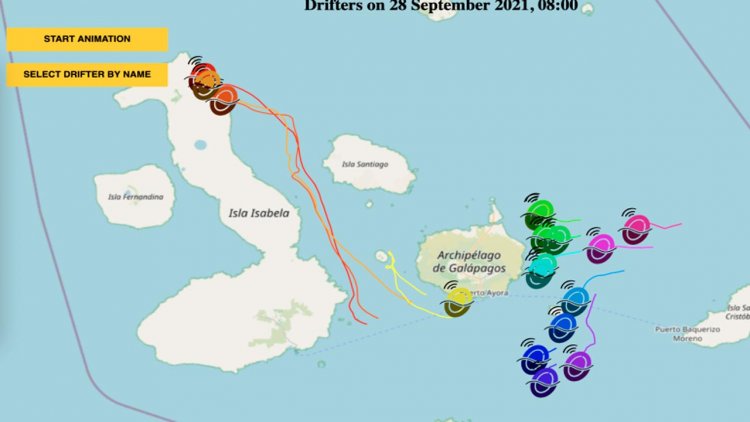
Physicists Stefanie Ypma and Erik van Sebille (Institute for Marine and Atmospheric research Utrecht, IMAU) use drifters, or ‘floating sensors’, to create a model of the complicated ocean currents in and around the archipelago. The first batch of drifters was put to sea from a boat this week. The location of the drifters can be followed live on an interactive map external link. The project is part of the Plastic Pollution Free Galapagos  external link collaboration with the Galapagos Conservation Trust and partners.

Stefany Ypma explains:

“We’d originally planned on travelling to the Galapagos Islands to deploy the drifters last autumn. But we couldn’t go to the islands ourselves because of the pandemic. It turned out to be much more complicated than we’d imagined to arrange for the drifters to end up in the right place. I spent weeks sending e-mails and making telephone calls.”

After months of administrative detours, the time has finally come to put the drifters out to sea. 

Stefany Ypma says:

“This is a really important moment for the project: now we can actually start collecting data. It’s a bit of a pity that we can’t be there in person, but fortunately we’re getting help from Inti Keith from the Charles Darwin Foundation, who is on location on the islands. She’s making sure the drifters end up in the sea. I’ve drawn up a map of the most suitable locations for releasing the drifters, so it’s just a matter of turning on the drifter and throwing it overboard. Preferably in pairs, because it’s interesting to see how far away from each other the two drifters end up. That distance is an important ingredient in our model.”

The drifters can be followed in real-time via an interactive map  external link.

Stefany adds:

“We can configure each drifter remotely to tell it how often to save its GPS location and how often it should send the data to the satellite. The more GPS measurements, the more accurate the map. But that also runs down the battery faster. So we’re looking for a good balance. The drifters don’t have a large battery, because they have to be fairly small and lightweight. The more they look like ‘real’ ocean plastic, the better it is for our model.” 

The drifters are the size of a small stack of breakfast plates, about 20 centimetres across and 5 centimetres thick, and weigh half a kilo each. The drifters’ GPS locations are automatically entered into a machine learning model that ‘learns’ how the ocean currents move in and around the archipelago.

As the model begins collecting data, the researchers are already working on expanding it with other factors that are important to accurately predict where the most plastic will wash ashore, such as the direction and speed of the wind and tides.

Stefany Ypma says:

“If we want to give the park rangers good advice on picking up plastic, then there are even more things we need to take into consideration. Like all sorts of characteristics of the coastal areas. The islands have many different types of coastlines, from beaches and mangroves to rocky cliffs. And some of them are more easily accessible than others. The plastic has a larger environmental impact in some places, so it’s more urgent that they be cleaned up quickly. But there are other areas where cleanup activities would disturb the local fauna, so we don’t want to send the park rangers there as often.”

“We’re actually approaching it the same way we often do when developing software: first we create the basics, and then we add extra features as we go along. We also collaborate a lot with students who can add a new feature to the model as a graduation project.”

Other items on the wish list include more drifters and research during other seasons. The research budget and the U-fonds crowdfunding campaign  external linkallowed the researchers to purchase 50 drifters. 

Scientists say:

“We’re extremely pleased with that. But the more drifters there are, the more accurate our model becomes. And we know that the seasons also affect the ocean currents. So I hope that we’ll be able to release another batch of drifters in a year and a half, in order to continue refining our model.”

World’s first bunkering of containership with renewable synthetic natural gas

0

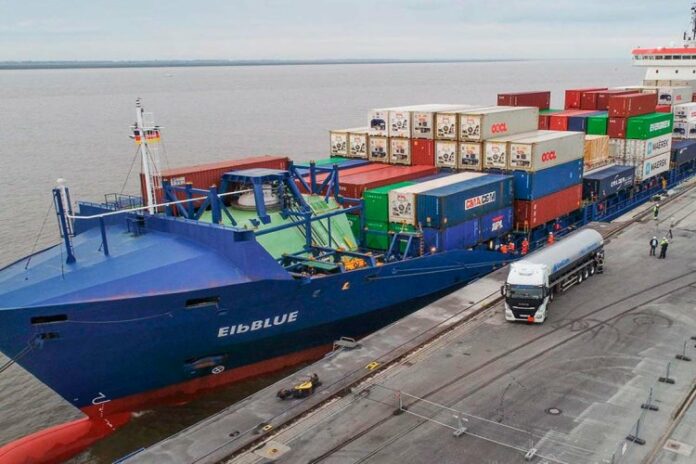
In a world-first for the maritime sector, the containership, ‘ElbBLUE’ – owned by German shipowner Elbdeich Reederei and operated by charterer Unifeeder – has bunkered some 20 tons of green SNG (Synthetic Natural Gas) at the Elbe port in Brunsbüttel, Germany. 

MAN Energy Solutions held a ceremony to mark the event, which marks the first time ever that synthetic fuel – generated from 100% renewable energy via power-to-X technology – has been employed in commercial shipping. 

Formerly known as the ‘Wes Amelie’, the 1,036-teu feeder container ship previously made headlines in 2017 when its MAN 8L48/60B main engine was retrofitted to its current, four-stroke MAN 51/60DF unit to enable dual-fuel operation. The first such conversion of its type globally, it showed that existing engines could be converted to LNG operation with a tremendous effect on exhaust emissions and the environment. The ElbBLUE sails in the North and Baltic Seas.

Stefan Eefting – Senior Vice President and Head of MAN PrimeServ, Augsburg –said:

“This is a crucial step on the road to decarbonising shipping and, in Elbdeich, we have the perfect partner. In reducing or even eliminating future emissions generated by the global supply-chain, synthetic fuels and engine retrofits have a crucial role to play. While a retrofit instantly reduces a ship’s emission-levels, synthetic fuels like SNG can enable it to run 100% climate-neutrally. Today, we are demonstrating that any LNG-retrofitted ship can also run on fuels generated by power-to-X technology, and even as a mix of fuels depending on availability.”

The liquefied SNG was produced in a power-to-gas facility in Werlte, Germany, owned by kiwi AG. It is generated using 100% renewable energy. The ElbBLUE is now set to continue its journey under the supervision of engineers from MAN PrimeServ, MAN Energy Solutions’ after-sales division. As a result, the vessel’s direct CO2 emissions are expected to decline by 56 tons for this coming trip.

Timm Niebergall, Shortsea Director Unifeeder, said:

“This is a great technology showcase and we are excited to be part of this. From the perspective of a charterer and as a leading operator of Feeder & Shortsea services in Europe and around the globe, we think that the future availability of green(er) fuels will be essential. Our customers in Europe and beyond are expecting innovative solutions for improving our, and thereby also their, carbon footprint – green SNG is an interesting product and we are therefore very proud to be the first Feeder & Shortsea operator testing this new fuel on one of our vessels.”

Hermann Pengg-Buehrlen, CEO of kiwi AG, said:

“Our e-gas facility was the world’s first multi-megawatt installation to generate synthetic natural gas from CO2 and renewable electricity. The liquefaction unit taken into operation in 2021 was especially designed for the liquefaction of SNG.” 

Port of Blyth decom partner awarded NORM Treatment Permit

0

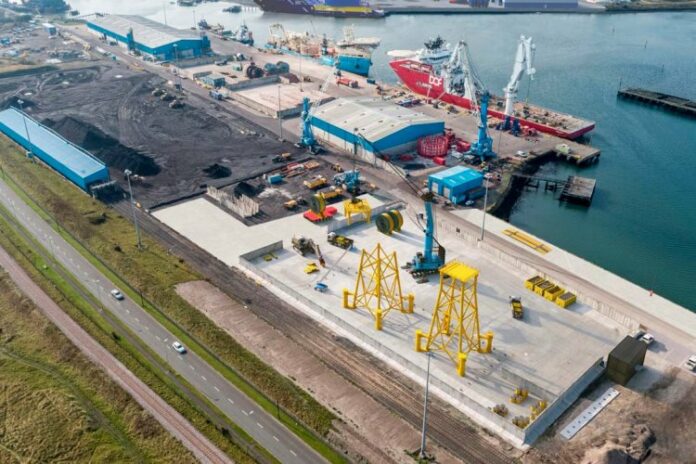
The licence runs alongside the Port’s Environmental Permit for receiving and handling up to 50,000 tonne throughput of Oil & Gas assets per year including the handling of NORM contaminated materials.

The successful application for the NORM treatment licence is a critical step towards providing customers with a ‘one-stop-shop’ for onshore decommissioning operations, in support of their ongoing and future decommissioning plans.

In addition, operation of the new NORM Treatment Facility located on-site will remove the requirement to transport NORM contaminated materials to other facilities in the UK and will therefore help to reduce carbon emissions in support of the UK’s Net Zero aspirations.

Alan Todd, Port Director at the Port of Blyth, said:

“We’re delighted to that Thompsons of Prudhoe were successful in their application for an Environment Agency licence to treat NORM contaminated waste as it simplifies the process of supporting our customers’ decommissioning needs and helps make Blyth an even more attractive option for our clients. It also enhances the partnership between the Port and Thompsons of Prudhoe, with both sides bringing vast experience and competency in a range of complementary areas.”

Construction of the Treatment Facility is progressing well and is due for completion in November 2021.

China’s first purpose-built catamaran CTV is under construction at AFAI

0

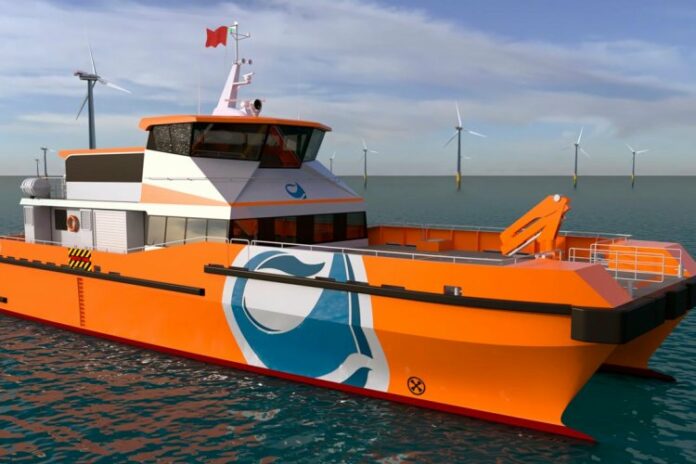
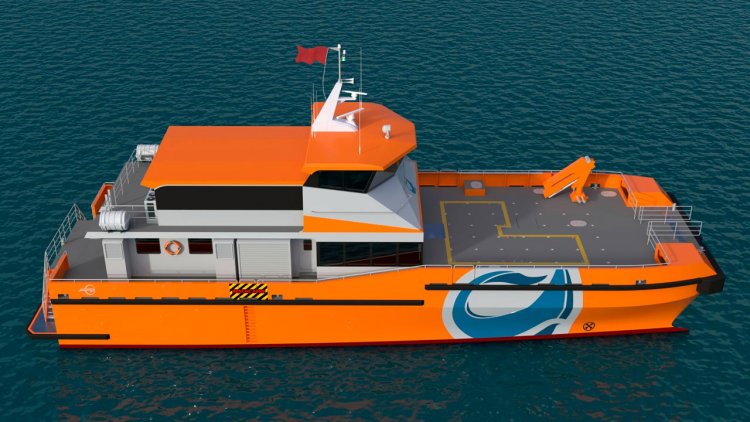
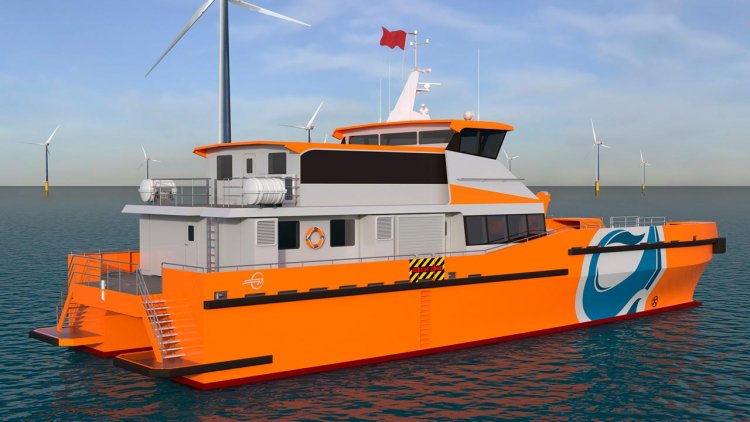
To be operated by Goldsea Marine & Offshore Engineering (Shanghai) Co Ltd, the vessel will support China’s growing offshore wind farm sector.

The Incat Crowther 32 will represent a step-change in vessel capability in the area, offering stability, performance and functionality unmatched by vessels currently serving the industry.

Incat Crowther has collaborated with the operator to develop a bespoke design, based on a semi-SWATH platform. The platform offers stability in big seas and a comfortable ride for personnel.  The vessel will be propelled with controllable-pitch propellers offering excellent fuel economy and 20t bollard pull.

Comfort is further enhanced by a resiliently-mounted cabin and fitment of suspension seats for 12 technicians. The main deck features four single cabins, two bathrooms, a locker and change area and a storage area for lift bags. There is also a refreshment area and adjacent settee.

The upper deck has two single cabins, a bathroom and a pantry and mess area. The wheelhouse is elevated, providing excellent visibility over the bow, including with containers on deck.

The vast foredeck offers enormous loading flexibility, with twist-lock container securing, cargo tie-down points and a deck crane capable of 2 tonnes @ 10m reach. Numerous deck lockers are situated around the main deck.

Incat Crowther’s Resilient Bow Technology minimises impact loads at the wind turbine boat landings and reduces onboard accelerations.  This combined with the high bollard pull will provide a transfer waveheight in excess of 2m.

Below decks are a workshop and a utility room, housing storage and laundry facilities.

The vessel will be powered by twin MAN D2862LE466 main engines, each producing 1,029kW, driving controllable-pitch propellers. The vessel will have a service speed of 20knots, with a maximum speed of in excess of 25 knots.

BOEM to conduct environmental review of two Atlantic Shores projects

0

As part of the Biden-Harris administration’s goal to deploy 30 gigawatts (GW) of offshore wind energy by 2030, the Department of the Interior today announced that the Bureau of Ocean Energy Management (BOEM) will conduct an environmental review of two proposed wind energy development projects offshore New Jersey.

Secretary of the Interior Deb Haaland said:

“The Interior Department is moving rapidly to develop a clean energy future with good-paying union jobs. Offshore wind holds enormous potential for our nation, and the wind resources offshore New Jersey are no exception. As we kick off this process, the Department will continue to do our part to ensure the development of our offshore renewable energy resources is done responsibly and sustainably.”

Atlantic Shores Offshore Wind LLC (Atlantic Shores) submitted a plan to construct and operate two commercial-scale offshore wind projects in federal waters approximately 8.7 miles from the New Jersey shoreline. The first of the two projects will have a capacity of 1,510 megawatts, enough to power over 700,000 homes. Throughout their lifecycles, the projects are expected to generate over 22,290 jobs. The projects could also help New Jersey meet its ambitious goal to develop 7.5 GW of offshore wind energy generation by 2035. 

BOEM will publish a Notice of Intent (NOI) to prepare an Environmental Impact Statement (EIS) in the Federal Register on Sept. 30, 2021. Publication of the NOI will open a 30-day public comment period. During this time, BOEM will hold three virtual public meetings and accept comments to inform the preparation of the EIS. These meetings and public comments will help BOEM determine the scope of the important resources and issues, impact-producing factors, reasonable alternatives, and potential mitigating measures that should be analyzed in the EIS. 

BOEM Director Amanda Lefton said:

“We are committed to facilitating a transparent and inclusive process for every offshore energy development project. Public input plays an essential role for identifying and mitigating potential impacts from proposed energy development activities. That is why BOEM is committed to working closely with ocean users, such as commercial fishermen, as well as industry, Tribes, government partners, and conservation organizations, to make sure offshore wind development is done in an environmentally safe and responsible way.”  

Lundin Energy announces first oil from the Solveig field

0

Lundin Energy AB (Lundin Energy) announces first oil from the operated Solveig field was achieved on Thursday 30 September 2021.

The Solveig field in PL359, is located 15 km south of the Edvard Grieg field and the Phase 1 development consists of a five well subsea tie-back to the Edvard Grieg platform. Phase 1 has gross proved plus probable (2P) reserves of 57 million barrels of oil equivalent (MMboe) and with gross peak plateau production of 30 thousand barrels of oil equivalent per day (Mboepd) it will be a significant contributor to the extension of the plateau production period at Edvard Grieg, which has already been extended by five years to the end of 2023. First oil has been delivered on schedule and in line with the budget estimate of USD 810 million gross, and with a breakeven oil price of below USD 20 per boe. 

Solveig Phase 1 drilling results to date have been above expectations, with two of the five development wells already completed. With further discovered resources in the area, such as Segment D, and further upside potential being de-risked by the Phase 1 development drilling data and production performance, a Plan for Development and Operation (PDO) for a Phase 2 development could be submitted by the end of 2022. The total gross resource potential for Solveig, including upsides, is up to 100 MMboe. In combination with the results from the Rolvsnes extended well test, currently on stream, the plateau production period at the Edvard Grieg platform could be further extended beyond 2023. 

Lundin Energy is operator of both the PL359 (Solveig) and PL338 (Edvard Grieg) licences with a 65 percent working interest and the partners are OMV and Wintershall Dea with 20 and 15 percent working interests respectively. This alignment of ownership allows for optimisation of production and maximises value for all partners. 

Nick Walker, President and CEO of Lundin Energy, commented:

”I am very pleased to announce first oil from our Solveig development, a key pillar of our strategy to extend the plateau production period at Edvard Grieg. The development has been executed on time and on budget and the breakeven cost is below USD 20 per boe, making these barrels highly valuable for us. I am also confident that there is significant potential to bring additional resources on stream in the area, to extend the plateau production period even further at Edvard Grieg.”

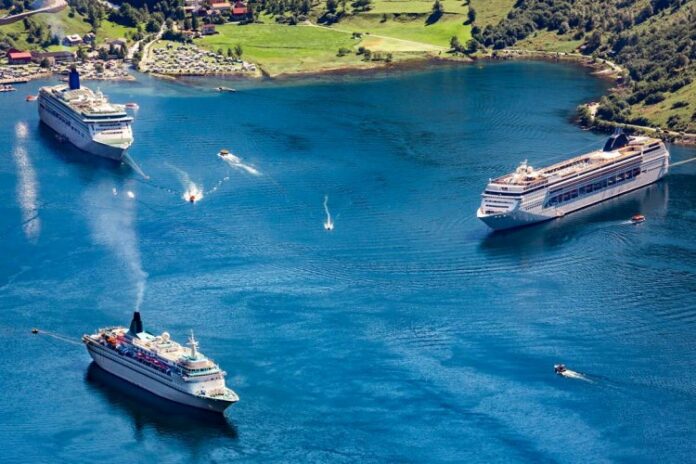
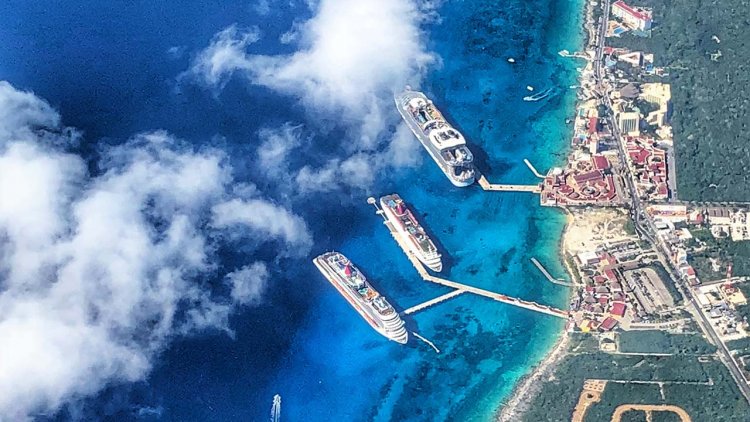
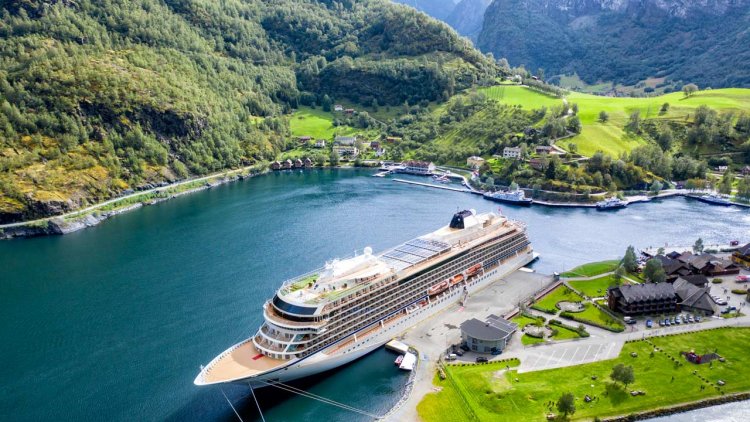
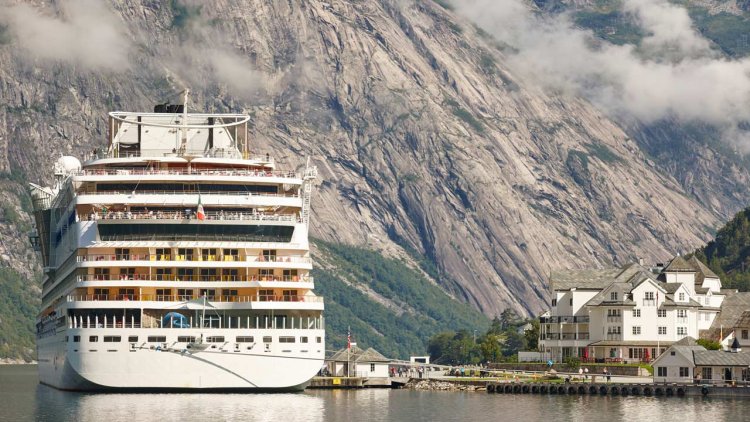
Cruise ships must be effectively regulated to minimise serious environment impact

0

An international research team led the most comprehensive research review ever conducted on what was one of the fastest growing industries in tourism before the pandemic.

The review, published in Marine Pollution Bulletin, finds that cruising is a major source of environmental pollution and degradation, with air, water, soil, fragile habitats and areas and wildlife affected.

The research also finds that the cruise ship industry is a potential source of physical and mental human health risks, to passengers, staff and land-based residents who live near ports or work in shipyards. Risks to specific groups include the spread of infectious diseases, including COVID-19 outbreaks widely reported on some cruise ships. The review also found evidence of the impacts of noise and air pollution on health, and difficult working environments for boat and shipyard staff potentially resulting in injury and mental health issues.

The review combines evidence from more than 200 research papers on the health of people and the environment in different oceans and seas around the world. The research was conducted by a collaboration spanning Spain, Croatia and the UK.

First author Dr. Josep Lloret, of the University of Girona, said:

“Up until now, most studies have looked at aspects of this in isolation. Our review is the most comprehensive to date to combine these research fields and take a holistic view of how cruising damage our environments and our health. We now need global legislation to minimise damage on both our oceans and our health.”

Professor Lora Fleming, of the University of Exeter, an author of the review, said:

“Cruise tourism is a was rapidly expanding pre COVID-19, and our research shows it causes major impacts on the environment and on human health and wellbeing. We need much better monitoring to generate more robust data for the true picture of these impacts. Without new and strictly enforced national and international standardised rules, the cruise industry is likely to continue causing these serious health and environmental hazards.”

The review combined research papers on a range of factors which have environmental or health impacts, or both. In one example, they synthesised six papers on carbon dioxide emissions, which have significant impacts on both human and environmental health, through contributing to global warming. Available research suggest that a large cruise ship can have a carbon footprint greater than 12,000 cars. Passengers on an Antarctic cruise can produce as much CO2 emissions while on an average seven day voyage as the average European in an entire year. Within the Mediterranean, cruise and ferry ship CO2 emissions are estimated to be up to 10 percent of all ship emissions.

A 2007 study found that emissions factors for cruise ships journeying to New Zealand were at least three times higher than emissions factors relating to international aviation. Energy use for stating overnight on a cruise vessels was 12 times larger than the value for a land-based hotel.

The paper also includes research on solid waste as example of an activity from cruise ships which impacts both health and environment. Reducing plastics and marine littler are major global challenges, and a total amount of rubbish produced by a cruise ship carrying 2,700 passengers can exceed a ton per day. While cruise vessels make up only a small percentage of the global shipping industry, it is estimated that around 24 percent of all waste produced by shipping comes from this sector.

Figures calculated for cruise ship visits to Southampton during August 2005 indicated that 75 percent of garbage being generated by passengers on board was incinerated and disposed of at sea, with a number of reports of illegal waste disposal reported in the Southern Ocean.

Co-author Dr. Hrvoje Carić, of the Institute for Tourism in Croatia, said:

“When environmental standards between cruisers and land-based polluters are compared, it becomes clear that there is a lot of room for improvement. We’ve long known that cruise ships cause damage to the environment, however it’s hugely important to incorporate the impact on human health into that picture. We hope that research like this will prompt action to help cruise industry become more environmentally sustainable.”

The article is “Environmental and Human Health Impacts of Cruise Tourism: a Review,” by Josep Lloret, Arnau Carreño Hrvoje Carić, Joan San, Lora E. Fleming. It appears in Marine Pollution Bulletin, Volume 173, (September 2021).

Neptune Energy begins Dugong Tail drilling campaign

0

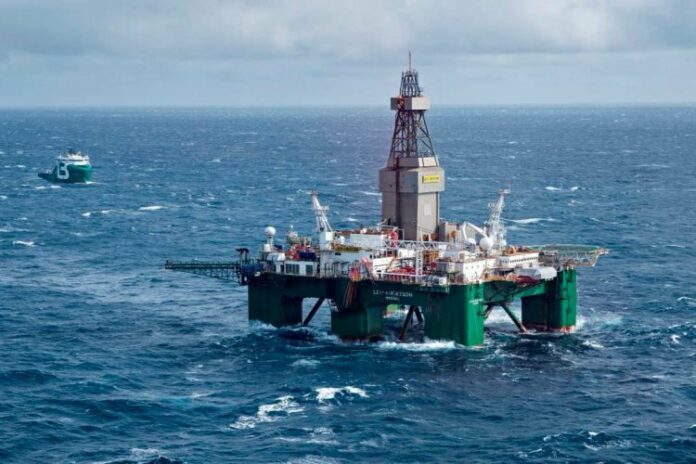
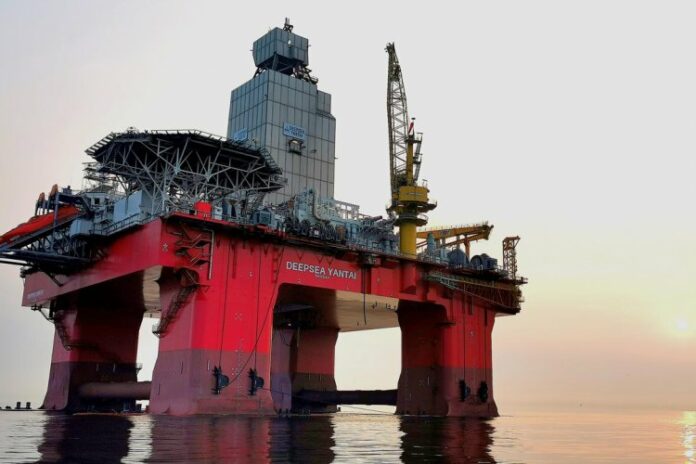
The Dugong Tail is being drilled by the Deepsea Yantai, a semi-submersible rig, owned by CIMC and operated by Odfjell Drilling. It is located within the Neptune-operated Dugong Production Licence (882).

Neptune Energy’s Director of Exploration & Development in Norway, Steinar Meland, said:

“Dugong Tail represents an important geophysical calibration point for the licence, with the potential to unlock further prospectivity in the region.

“This positive activity demonstrates Neptune’s commitment to investing in Norway, underlining the importance of the country to our global portfolio.”

Dugong Tail is located 120 kilometres west of Florø, Norway, at a water depth of 320 metres, and is close to the existing production facilities of the Snorre field. The reservoir lies at a depth of 3,200 – 3,500 metres.

The drilling program comprises a main bore with the potential for sidetracks, should hydrocarbons be encountered.

Dugong was one of the largest discoveries on the NCS last year. A recent Drill Stem Test (DST) of Dugong has now been completed and is currently under evaluation.

Van Oord orders mega ship to install 20 MW offshore wind foundations

0

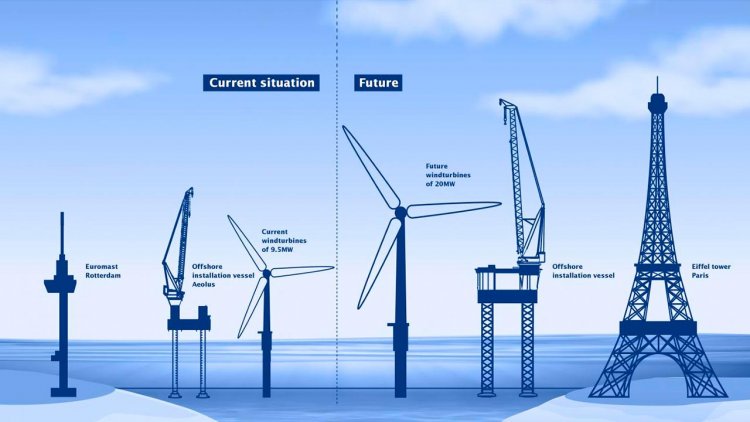
The jack-up vessel can operate on methanol and install up to 20 MW wind turbines at sea with a very low CO2 footprint. The investment is in line with the increasing global demand for offshore wind farms. The ship is expected to enter the market in 2024.

Offshore wind is a key contributor to achieving climate change targets around the world. Since its initial involvement in wind farm installation in 2002, Van Oord has become a frontrunner in this industry. In the Netherlands, Van Oord was one of the first offshore companies (first time mover) to invest in Offshore Wind. As a result, Van Oord makes a significant contribution to the transition to sustainable energy in the Netherlands. It has also been involved in projects including the Princess Amalia Wind Farm, Eneco Luchterduinen Wind Farm, Gemini, Borssele III & IV, and this will be followed in the next few years by Hollandse Kust (North). Van Oord also operates outside Europe, including as an EPCI contractor (engineering, procurement, construction and installation) for the Sofia Offshore Wind Farm being built on the Dogger Bank in the middle of the North Sea.

Since 2002, Van Oord has contributed to the installation of a cumulative renewable energy capacity of 14.5 GW. That represents 40% of the total installed capacity of approximately 35 GW of offshore wind worldwide at the end of 2020. In 2020, Van Oord worked on and completed offshore wind projects that provide sustainable energy to more than 2.5 million households. The demand for offshore wind farms remains high. The European Union aims to install 300 GW of offshore wind capacity by 2050, and worldwide this is expected to be 2000 GW of offshore wind energy. In the Netherlands, the goal is to realise 20 GW up to 2030 and another 20 GW of offshore wind energy in the next decade. Wind turbines at sea are also rapidly getting bigger. In 2002 there were wind turbines of 2 MW, nowadays turbines of 14 MW are installed. The rotor blades are already well over a hundred metres long and the transport and installation requires larger ships. Van Oord is investing in a new vessel to transport and install the next generation of 20 MW wind turbines.

Pieter van Oord, CEO Van Oord, said:

‘This investment prepares us for the increase in scale in the offshore wind industry and allows us to maintain our leadership position.’

Van Oord is committed to reducing CO2 emissions and to becoming carbon-neutral by 2050, in line with the Paris Agreement. This investment is an example of the energy transition within the company. Marine fuels are becoming cleaner and, thanks to cleaner engines, emissions are reduced. Van Oord has already ordered three LNG-fuelled trailing suction hopper dredgers, which will be completed in 2022. The new installation vessel will be able to run on the future fuel methanol. Running on methanol, reduces the ship’s CO2 footprint by more than 78%. In addition, the vessel will be equipped with an advanced active emissions control technology (Selective Catalytic Reduction) to reduce the NOx emission to an absolute minimum. An installed 5,000 kWh battery pack can take the peak loads and regenerate energy to reduce the fuel consumption (and corresponding emissions) even further.

The vessel is being built by the Yantai CIMC Raffles Shipyard in China. The design is by Knud E Hansen. Components such as the Huisman crane and other technical systems are delivered to the yard by the various suppliers and integrated on site. The ship is expected to enter the market in 2024 and will work under the Dutch flag. Van Oord has also taken an option on a second vessel.

Arnoud Kuis, Managing Director Offshore Wind of Van Oord, said:

‘We are going one step further – the new ship will be the largest of its kind. Compared to the Aeolus, this new version has 88% more deck space and over 80% more lifting capacity.’

Jaap de Jong, Director Ship Management of Van Oord, said:

‘To become carbon neutral by 2050, we look for new fuel technologies. We see methanol as one of the alternatives to meet the industry’s goals to reduce its environmental impact. Similar steps have already been made in our investment programme with the construction of three LNG-fuelled trailing suction hopper dredgers and the ordering of a new green cable-laying vessel.’