-9.2 C
New York
Home Blog Page 529

iXblue launches new ROTV to enhance autonomous survey scope

0

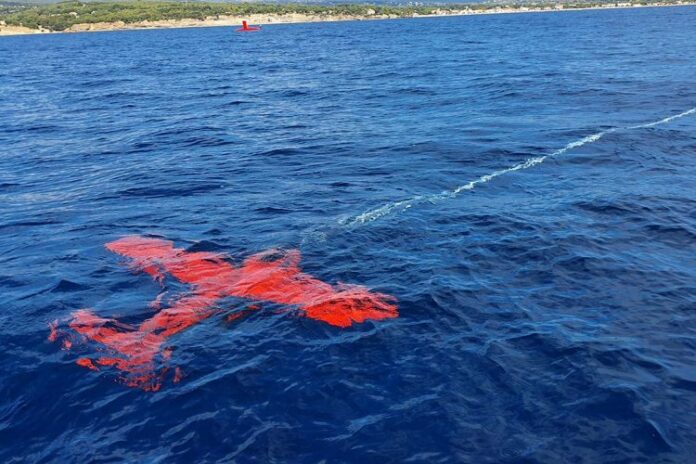
iXblue announces the launch of its first Remotely Operated Towed Vehicle (ROTV): FlipiX. 

Designed to be operated autonomously from iXblue DriX Uncrewed Surface Vehicle (USV) or from a light vessel, FlipiX enhances autonomous survey capabilities and allows to conduct multi-sensor operations in a single run.

Leveraging advanced motion control and a reduced operational footprint, FlipiX is a unique conveyance platform for Side Scan Sonars (SSS) and magnetometers. Operating at towing speeds up to 7 knots, the FlipiX ROTV altitude, pitch and roll are autonomously controlled to maintain measuring instruments at a fixed altitude and constant attitude. This active motion control bestows the ROTV with increased stability and maneuverability, even during U-turns, resulting in enhanced measurement quality in the most challenging maritime environments and in reduced survey time.

When combined with the DriX USV, FlipiX can operate down to 50 meters water depths in its standard version and provides optimal positioning of measurement instruments for a data acquisition as close to the seabed as needed.

Stéphane Vannuffelen, Marine Autonomy Technical Director at iXblue, comments:

“As a key actor of the maritime industry and a pioneer in the field of autonomy, iXblue has the ambition to support the industry in its transition towards autonomous operations, and FlipiX does just that. Leveraging our unique expertise in navigation, robotics and shipbuilding, and benefitting from our extensive return on experience deploying our DriX USV on major projects for energy companies and hydrographic institute worldwide, we are committed to offer operators with a more comprehensive ecosystem for autonomous surveying. We’re convinced that our FlipiX ROTV combined with our DriX USV will bring high efficiency and cost-effectiveness to the industry. It has already gathered a strong interest from major actors from the industry confirming the strong relevance of our new autonomous solution.”
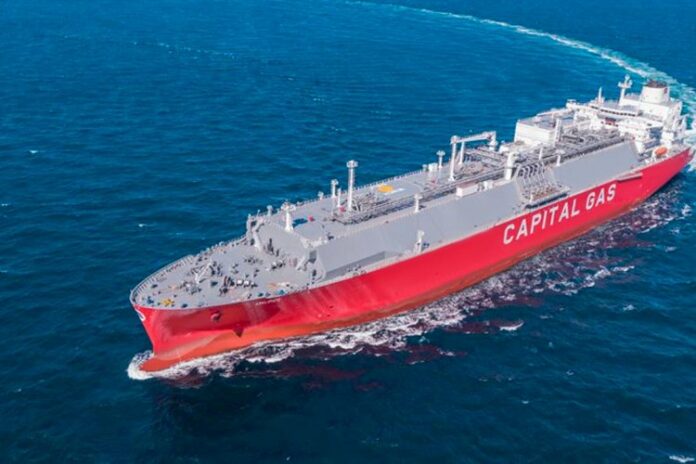
Two new LNG Carriers will feature Wärtsilä’s shaft generator systems

0

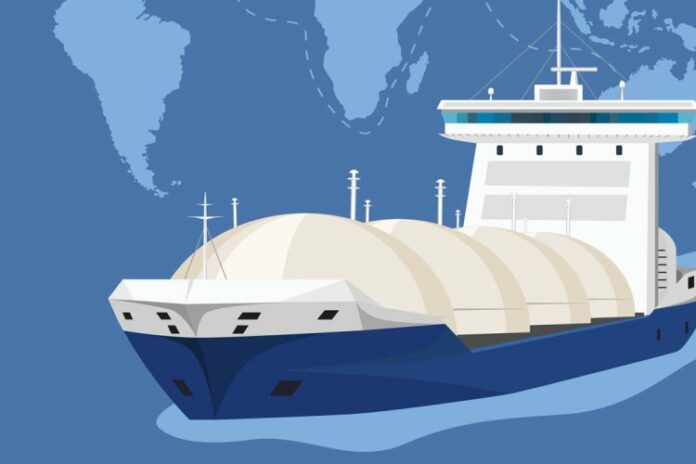
The technology group Wärtsilä will supply four shaft generator systems to provide power take-off from the main engines for two LNG Carrier vessels.

The ships are being built at the Hyundai Heavy Industries (HHI) shipyard in Korea for the Greek ship management service provider Capital Gas Ship Management Corp. The order with Wärtsilä was placed in August 2021.

With installations in more than 600 vessels, Wärtsilä has the shipping industry’s most extensive track record in supplying shaft generator systems. By enabling power take-off, the systems allow the main engine to generate electricity for onboard use, thereby reducing fuel consumption, lowering emission levels, and improving both the vessels Energy Efficiency Design Index (EEDI) and future Carbon Intensity index (CII).

Miltos Zisis, Managing Director of Capital Gas Ship Management Corp., says:

“In aiming to continue improving our fleet efficiency and reduce our environmental footprint, we have decided to adopt the latest available technologies. The installation of advanced shaft generator systems was one of the investments we are making in this direction. Wärtsilä has a depth of experience, and with the reliability and quality of their solutions, is the ideal partner for such a project.”

Yiannis Christopoulos, General Manager Sales, Wärtsilä Marine Power, says:

“We are committed to delivering products, systems, and solutions that contribute to the decarbonisation of the maritime sector. Our highly efficient shaft generator systems utilise the latest technology to make a significant contribution to this ambition, while at the same time lowering operating costs for the customer.”

Each of the two 174,000 cbm capacity vessels will be fitted with two 1.9 MW Wärtsilä shaft generators. The equipment is scheduled for delivery to the yard in 2022.

New report highlights acceleration in digitalisation of maritime industry

0

Written by maritime innovation consultancy Thetius and sponsored by the Inmarsat Research Programme, ‘A Changed World: The state of digital transformation in a post-COVID-19 maritime industry’ captures a sector fast-tracking IoT-based solutions from November 2019. It characterises COVID-19 as a “universal disruptor and catalyst for digital transformation”.

The report finds that, as COVID-19 emerged and global travel restrictions took hold, surging demand for crew connectivity was echoed in uptake for other digital services needed to keep ships running.

The report says:

“The impact of COVID-19 on ship operations is evidenced by a massive increase in the use of remote services such as pilotage and surveying. Similarly, crew training and officer examinations went fully online for the first time ever in some jurisdictions. More broadly, global trade facilitation saw an explosion in the use of digital tools, including massive growth in consumer demand for e-commerce and the use of online booking platforms for shipping freight.”

Inmarsat’s own data covering commercial shipping during the pandemic period showed that the average daily data consumption per vessel nearly tripled, from 3.4 to 9.8 gigabytes between January 2020 and March 2021. In a further significant shift, the authors project the global maritime digital products and services market in 2021 as being worth $159bn – 18% ahead of pre-pandemic forecasts. Thetius predicts that, by 2022, market turnover will be three years ahead of pre-pandemic forecasts.

Valaris drillship achieves ABS enhanced electrical system notation in world first

0

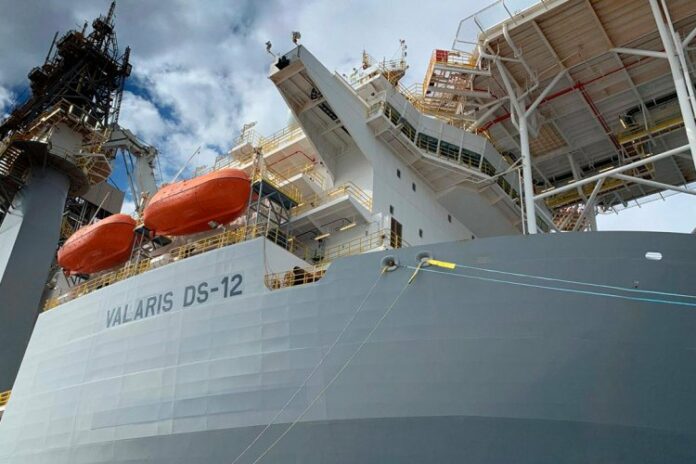
Valaris upgraded the vessel’s electrical system to secure the notation, which recognizes sophisticated system design to improve reliability and enhance protection. The Valaris electrical system is specifically designed to allow the drillship to optimize powerplant performance, enabling operations on fewer generators and reducing emissions.

Valaris Senior Vice President and Chief Operating Officer Gilles Luca, said:

“With this enhanced notation, VALARIS DS-12 exemplifies our company’s purpose of providing responsible solutions that deliver energy to the world. I want to recognize our engineers, our partner ABS and thank our customer BP, for their support. This is truly a remarkable team achievement that paves the way to more sustainable deepwater drilling.”

Matt Tremblay, ABS Vice President, Global Offshore, said:

“It is great to see Valaris become the first to secure this notation, which recognizes their commitment to sustainable operations and investment in advanced electrical systems to increase efficiency. As the world’s leading global offshore Class, ABS is well placed to help forward thinking operators such as Valaris achieve next generation operations.”

ABS has surveyed the upgraded system and tested it to ensure it can operate on reduced generator power. The short circuit and fault ride through capability was demonstrated on board the vessel with ABS in attendance.

NOC and Subsea 7 launch research alliance

0

Until now, it has not been possible for researchers to assess deep waters at the frequencies or range needed to better understand global ocean processes. 

BORA Blue Ocean Research Alliance™ will accelerate this knowledge through a number of projects which will utilise the NOC’s world-class scientific research and expertise in technology development, combined with Subsea 7’s ability to reach areas of deep marine waters on a global scale and established track record in innovative marine technology and project management.

BORA Blue Ocean Research Alliance™ will help bridge the gap between industry and science to support sustainable research and development, providing researchers access to hard-to-reach areas and sharing open access scientific data and knowledge at every step of the way.

BORA Blue Ocean Research Alliance’s™ initial projects will include measuring Essential Ocean Variables in usually inaccessible areas through the use of sensor boxes. Fitted to Subsea 7’s global fleet of vessels and Remote Operating Vehicles (ROVs), they will enhance the global scale of ocean observations. The alliance will help accelerate the development of critical ocean sensing technologies aimed at addressing global issues such as climate change. Open data gathered by the suites of sensors can then be analysed by scientists worldwide or used to support wider observing initiatives and datasets shaping major global ocean health assessments.

Other key projects involve using ROV technology to search for and obtain footage of undiscovered sea creatures that inhabit remote locations and unexplored ocean depths. Subsea 7’s unique operational access to unchartered waters enables the close monitoring of different ocean characteristics which will then be analysed by scientists at the NOC. 

Huw Gullick, Associate Director Strategic Business Development at the National Oceanography Centre, said: “BORA Blue Ocean Research Alliance™ will bring together ground-breaking global projects under one umbrella to ultimately provide open access data to scientists across the world to address the complex challenges associated with our oceans. Facing these ocean and societal challenges requires experts throughout the ocean economy to work together to ensure access to large volumes of high-quality information about ocean health in near real-time and at a low cost.

“With innovation at its heart, BORA Blue Ocean Research Alliance™ will help push the limits of scientific knowledge, setting the standard for collaboration between the industrial and scientific communities and delivering meaningful research on a global scale that will provide benefits for all communities.”

Emma Stephen, Director of Sustainability at Subsea 7, added:

“It is the responsibility of all of us to contribute and ensure the preservation of this most valuable natural resource. Our relationship with BORA Blue Ocean Research Alliance™ supports Subsea 7’s value of sustainability, where we will use our global reach and technology to collect and share data to understand more about protecting our seas and marine ecosystems for future generations. We look forward to working with organisations, and businesses to support scientific projects that will make a real impact on our oceans for a sustainable future.”

BORA Blue Ocean Research Alliance™, which was officially launched at Ocean Business 2021 on 13 October 2021, will develop a number of new projects and grow the diversity of marine research and technology development initiatives.

Scandlines prepares next ferry for installation of Norsepower Rotor Sail

0

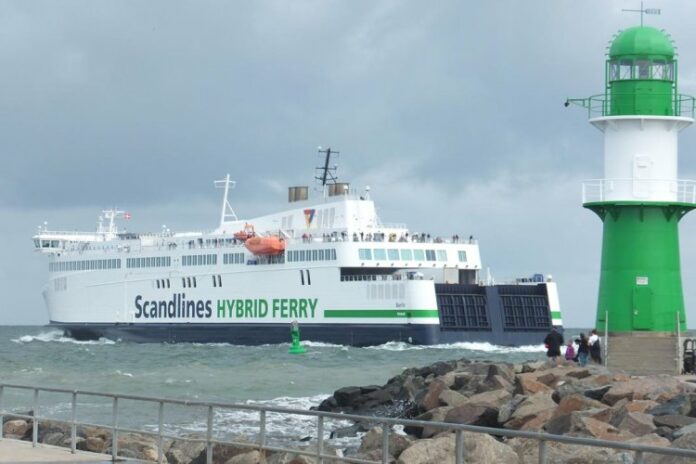
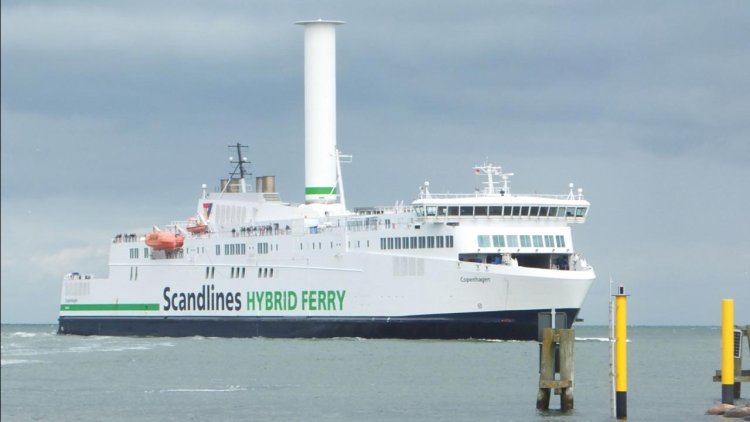
Following the successful installation of the Norsepower Rotor Sail on the hybrid ferry M/V Copenhagen in 2020, and a year of demonstrated results, Scandlines has prepared the sister ferry M/V Berlin for its own Rotor Sail installation. The hybrid ferry, M/V Berlin, also operates on the Rostock-Gedser route but, unlike M/V Copenhagen, is flagged by Germany.

When Scandlines decided to install a Rotor Sail on the hybrid ferry M/V Copenhagen in 2019, the decision was based on technical data from the provider Norsepower Oy Ltd, a few other shipping companies’ experiences as well as its own studies and calculations. The Norsepower Rotor Sail was then installed in May 2020. Now, Scandlines has had more than a year to collect data on how the Rotor Sail works on M/V Copenhagen, and what effect it has on the route between Rostock to the south and Gedser to the north.

Scandlines’ COO, Michael Guldmann Petersen, commented:

“We expected the M/V Copenhagen Rotor Sail to provide a 4 – 5% CO2 reduction. That expectation has been met, so we have now taken the next step and prepared the sister ferry M/V Berlin for installation.”

The M/V Berlin operates the route between Rostock and Gedser. The route is perfectly located to meet the requirement that gives the greatest benefit of the Rotor Sail for propulsion, namely that the wind must be perpendicular to the sail.

The satisfied Chief Operating Officer says:

“Our route across the Baltic Sea is north/south bound, and the prevailing wind is from the west or east. In other words, our Rotor Sails have optimal conditions.”

Several of Scandlines’ other green initiatives on the way to emission-free ferries are not visible to the outside world, as they are below the water surface. A Rotor Sail that protrudes 30 metres into the air, on the other hand, is a very clear signal of a green vision.

Petersen says:

“There has generally been a lot of interest in the Rotor Sail – and in the beginning even wonder among the passengers about the ‘chimney.’ Most of the crew are now also masters of technical explanations that are easy to understand.”

Tuomas Riski, CEO of Norsepower, said:

“We are delighted that Scandlines is expanding its use of our Rotor Sail technology after achieving its CO2 emissions reduction targets on its first vessel, the M/V Copenhagen. Our Rotor Sail technology is technically applicable to approximately 30,000 vessels in the current global fleet of ships and we hope that this is a further signal to ship owners and operators that confidence is growing in wind propulsion technology.”  

The preparation for the Rotor Sail includes building a steel foundation on the ferry, on which the Rotor Sail will be fixed. The initial work took place when the M/V Berlin was on a planned yard stay at Remontowa in Poland at the end of May. The installation of the Rotor Sail itself is scheduled for 2022.

MarTrust launches new e-wallet and card to enhance seafarers’ welfare

0

This enables crews to be paid quicker, compared to the traditional banking routes, and provides them with complete control of their funds and online purchases with reduced risks and lower transaction costs.

The ability to quickly transfer money to anyone they need to at any time – in particular sending much-needed financial support back to their families – will alleviate some of the monetary challenges of being at sea for extended periods, enhancing their welfare and wellbeing.

For ship owners and operators, MarTrust’s e-wallet and corporate card also reduce the Cash-to-Master (CTM) requirement by as much as 80%, and therefore the amount of cash that is needed on board a vessel. This mitigates the security risk for the asset and crew, as well as significantly improving working capital.  Digitalising and simplifying the payroll and CTM process reduces significant costs and time, ensures compliance, and online transactions are protected with the latest 3D, industry-grade security features.

Currently, the shipping industry relies upon multiple urgent, cross-currency and cross border microtransactions to ensure smooth and reliable trading.  In conjunction with this, the regulatory landscape and sanctions on Anti-Money Laundering (AML) and Combatting the Financing of Terrorism (CFT) are becoming increasingly complex. In addition, the current, outdated system that vessels use for paying salaries to crews and invoices for ship chandlers, agents and other suppliers require a significant amount of cash to be stored on board. This generates a considerable security risk, as well as creating administrative overheads, including expensive transaction and foreign exchange (FX) costs, which can be as much as 3% to 5%.

The e-wallet can be accessed via a web portal or mobile app anywhere and at any time and can be seamlessly integrated into existing systems. From there, funds can be transferred direct to crew to pay salaries, bonuses, overtime and cash advances.

The e-wallet and debit card also reduce the need for seafarers to manage or store significant amounts of cash, providing increased security and peace of mind that their funds are safe. By using the debit card, cash can be accessed at any Mastercard supported ATM or bank teller around the world, and the card can be topped up in up to eight different currencies providing complete flexibility. The e-wallet will also include a new Salary on Demand service, which enables seafarers to track and use their income at anytime and anywhere, and align it with their expenses, further improving their financial wellbeing and welfare. Additionally, it also helps shipping companies optimise their cash flow, eliminate the administrative costs and pains associated with maintaining salary advances, and save money on banking transfer fees and other charges associated with CTM payments to advance salaries to seafarers.
 

ICEYE to take part in world’s largest satellite Earth observation programme

0

ICEYE, the global leader in persistent monitoring of the Earth with radar satellite imaging, today announced the signature of an agreement to become a Contributing Mission to the Copernicus Programme, the largest satellite Earth observation programme in the world. 

Copernicus services will now receive access to ICEYE’s synthetic-aperture radar (SAR) imagery that can be used to enhance public safety, border control, security and maritime domain awareness.

The Copernicus Contributing Mission Activity, as part of the Copernicus Programme, is managed by the European Space Agency (ESA) on-behalf of the European Commission. The activity aims to provide very high resolution optical and SAR commercial satellite imagery from mission partners for use by the six Copernicus services and mainly by the Land, Emergency, Security and Marine services. These services are the primary users while other users, such as public authorities in Europe, can also benefit from the data. The new partnership with ICEYE will be funded by the European Commission and operated by ESA.

As a Contributing Mission, ICEYE will provide imaging data to all of Copernicus services enhancing their assessment and planning capacities. The data can be used for monitoring land use, marine and international border surveillance as well as improving public security.

Toni Tolker-Nielsen, the acting Director of Earth Observation Programmes at the European Space Agency, says:

“We are particularly proud at ESA to work with ICEYE, which is one the few New Space companies that we have in Europe in the field of Earth Observation. This is really exciting as it will help to complement the existing commercial Copernicus Contributing Mission data offer with further innovative SAR data from the ICEYE satellite constellation.”

Rafal Modrzewski, CEO and co-founder of ICEYE, says:

“This programme is a phenomenal tool for data users and shows European collaboration at its best. Copernicus services, research projects funded by the European Commission and public authority organizations in Europe will now be able to access some of our imagery through the Copernicus Contributing Mission programme.”

Unlike a traditional Earth imaging satellite, ICEYE’s constellation of SAR satellites bounce a powerful radar beam off the surface of the earth from approximately 550 kilometers in space, thereby painting a picture of what is happening on the ground below. The technology can see through clouds, smoke and even image the ground at night. This provides customers with persistent coverage of fast breaking events on the ground in all weather conditions.

U-Ming takes onboard Jotun’s Hull Skating Solutions for bulker newbuild

0

U-Ming, SWS and Jotun have signed commercial agreement for the groundbreaking Jotun Hull Skating Solutions (HSS) for U-Ming’s 190,000 dwt dual fuel bulk carrier newbuilding project at Shanghai Waigaoqiao Shipyard (SWS) in Shanghai, China. 

The agreement was signed during a signing ceremony on Teams.

Mr. C.K. Ong, President of U-Ming, said:

“As part of our decarbonization strategy, we have been involved in many initiatives driving meaningful changes to reduce emissions. The recent IMO requirements on EEXI and CII is an opportunity to differentiate ourselves by offering our customers highly efficient vessels with significantly reduced operating fuel costs and greenhouse gas emissions. Collaboration with stakeholders is the key to accelerate maritime decarbonization and the Hull Skating Solutions offered by Jotun certainly supports and enhances our green ambitions.”

Jotun’s HSS combines the Hull Skater, an underwater robotic device with hull inspection and cleaning capabilities, and SeaQuantum Skate, a purpose developed antifouling coating. The solution will be fitted on one of U-Ming’s four LNG dual- fuel Tier III 190,000 dwt bulk carriers to be built by Shanghai Waigaoqiao Shipbuilding (SWS) to support the long term charter with mining giant Anglo American.

Mr. Zhang Qi Peng, Vice General Manager of SWS, said:

“It is a groundbreaking technology and fits well into our program for Green Capesize bulk carriers developed by SWS. This development adds on to our green and modern shipbuilding model and coheres with our pursuit of sustainable development and environmental protection.”

Mr. Morten Sten Johansen, Regional Marine Director, North East Asia for Jotun, said:

“With HSS we can deliver the promise of an “always clean hull” from day one, helping our customers to maximize the benefits of lower fuel costs, full flexibility in operations and effective biofouling management. Bulk carriers have sailing patterns that are highly dependent on market forces. Shifts in global commodity markets can change the expected idling time, geographical routes and port calls, exposing the vessel to high risks of biofouling that coatings alone may not be sufficient to address. On top of the advanced robotics, Jotun’s HSS also includes proactive condition monitoring – using vessel data, oceanographic assessments and predictive algorithms to adapt the system on the fly.”

U-Ming’s vessels are expected to be delivered throughout 2022/2023.

Royal Navy sailors to get Canadian polar training

0

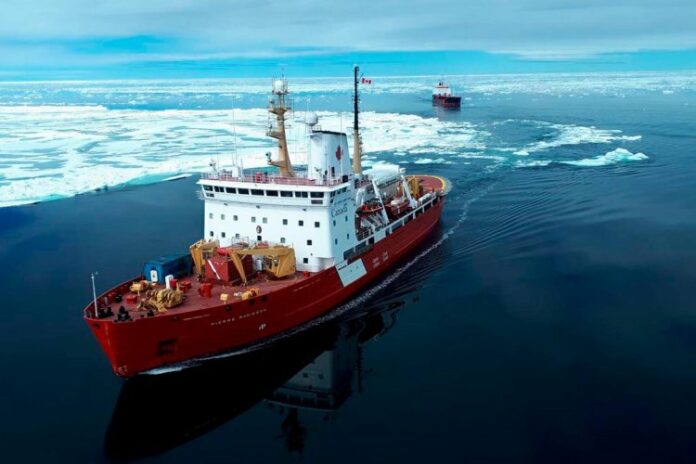
Its sailors will benefit from Canadian training in navigating through icy waters, breaking sheets of ice where necessary, while Canadian Coast Guard personnel will have operational training opportunities and gain experience with crewless technology with the Royal Navy.

The agreement was signed between the two NATO nations at the Canadian Coast Guard’s (CCG) headquarters in Ottawa by its Commissioner, Mario Pelletier, and Second Sea Lord Vice Admiral Nick Hine.

The agreement follows an initiative in early 2020 which saw several watchkeeping officers from HMS Protector, the UK’s sole ice patrol ship, gain valuable experience in ice operations aboard a CCG vessel. 

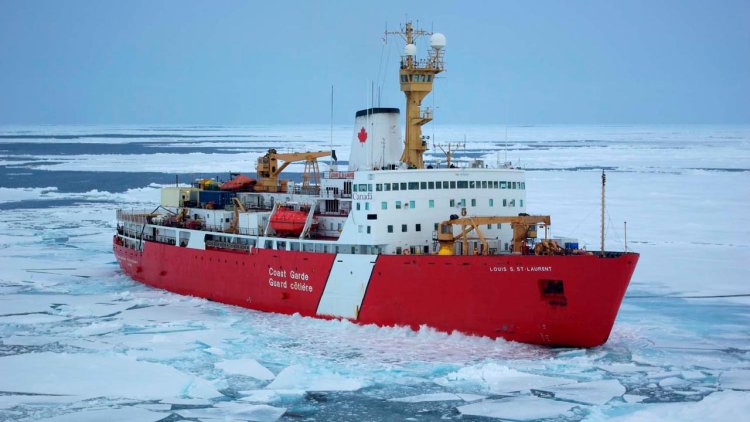
The Canadian Coast Guard maintains a constant presence in Arctic waters during the navigable season, and in 2020 alone its icebreaking fleet collectively sailed the equivalent of nearly five and a half times around the world through the waters of the perilous region.

The Canadians have a large fleet of around 20 icebreaking vessels, from hovercraft to heavy and light icebreaking and long endurance ships, to keep marine traffic moving safely through or around ice-covered waters.

Their fleet of icebreakers helps keep Canadian ports open for business year-round, freeing vessels beset in ice, maintaining routes, escorting ships through ice-covered waters and organising convoys in favourable conditions among other responsibilities.