-9.2 C
New York
Home Blog Page 528

Maersk Drilling named preferred contractor for Project Greensand

0

In extension of its commitment to participating in Phase 2 of the Greensand offshore carbon storage project, Maersk Drilling has entered a framework agreement with the Nini Joint Venture, operated by INEOS Oil & Gas Denmark and Wintershall Dea, covering the supply of drilling rigs for the project offshore Denmark.

The agreement confirms Maersk Drilling as the preferred contractor with a right to all drilling rig work involved in Project Greensand on market-rate terms until the end of 2027. The agreement is subject to the project obtaining the necessary funding and final investment decision.

Project Greensand is the most mature carbon capture and storage project inside Danish jurisdiction and targets the development of capacity to permanently store up to 8 million tonnes CO2 per year from 2030, thereby potentially accounting for all the CO2 storage proposed in the Danish Climate Program as presented by the Danish government in 2020. The CO2 will be captured onshore and transported to sea to be injected into discontinued oil and gas reservoirs beneath the Danish North Sea.

In Greensand Phase 1, the four initial consortium partners including Maersk Drilling demonstrated the conceptual feasibility of developing an offshore CO2 storage site at the Nini West field. This assessment was independently certified by the DNV classification society. Following the successful completion of Phase 1, Greensand Phase 2 was announced in August 2021, now involving an expanded consortium of 29 companies, research institutes and universities that represent all parts of the prospective carbon capture and storage value chain.

During Phase 2, the project will enter the pilot phase where the first on-site injection test is expected to commence offshore in the end of 2022, if the necessary aid for the execution of the pilot is granted via Denmark’s Energy Technology Development and Demonstration Program. The goal is to have the first fully operational injection wells with an annual injection capacity of 0.5-1.5 million tonnes CO2 ready in 2025, pending the final investment decision and regulatory implementation of the agreements outlined in the December 2020 Danish North Sea Agreement. Maersk Drilling will contribute knowhow, manpower and a cash investment to Greensand Phase 2, as well as supplying a drilling rig to assist with the pilot test.

Marika Reis, Chief Innovation Officer, Maersk Drilling, says:

“We’re thrilled to see Greensand move into Phase 2 where we will be headed out to sea to test the concept in practice. We now have confirmation that the Danish North Sea is very well suited for permanent CO2 storage due to its geological structure and reservoir properties, and we believe that a highly interesting carbon management market is in the early stages of development with activities in many offshore regions. There are obviously still technological, financial and regulatory hurdles to overcome, but carbon capture and storage has a clear potential to effectively deliver significant positive impact for the climate, and Maersk Drilling’s competencies and capabilities are a very good match for this.”
Innovez One to digitalise boat services for Cast Marine Offshore in Singapore

0

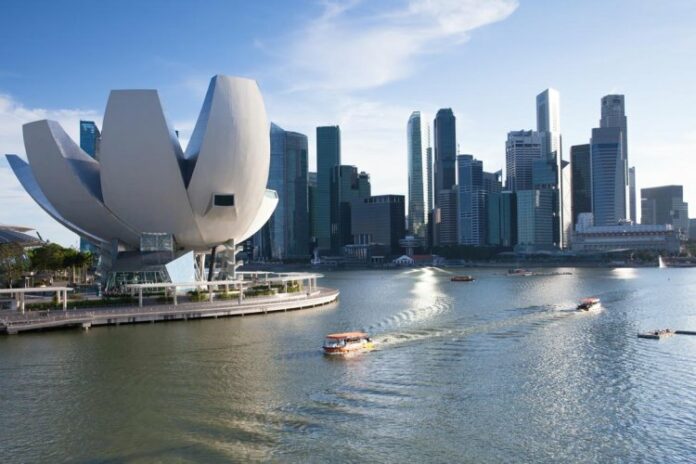
Innovez One will supply its MarineM digital platform to Cast Marine Offshore Pte. Ltd., a well-established provider of passenger and equipment ferrying services based in Singapore.

Powered by artificial intelligence, MarineM will enable Cast Marine Offshore to optimise the operations and improve the efficiency of its 20-vessel fleet. Using GPS and AIS tracking, the state-of-the-art software will monitor the position of each vessel and the status of jobs in real time. This will ensure that jobs are allocated as efficiently as possible and that any last-minute requests are handled seamlessly.

Through its new features for generating e-tickets and e-vouchers, MarineM will also automate a number of operations. Electronic receipts and invoices for completed jobs will replace the current paper-based billing processes, which can take up to three days to complete as it requires printed documents to be signed and stamped. Sending electronic documents will eliminate this waiting time and greatly facilitate accounting processes. Furthermore, the system will issue e-tickets for passengers, who will be able to access boarding information from their smartphones, check-in more easily, and be informed instantly of any last-minute changes.

David Yeo, CEO and founder of Innovez One, said:

“We are delighted to support Cast Marine Offshore in their transition away from manual processes and towards digitised solutions that will unlock efficiencies and reduce fuel costs and emissions. This new partnership demonstrates once more that digital solutions needn’t be the preserve of larger ports, and smaller and mid-sized actors can also become fully-fledged members of the global smart ports network.

“As we have experienced in recent months, the first and the last mile of a journey at sea is often a weak link in the global supply chains, and even small delays can lead to a domino effect which only exacerbates port congestion. The adoption of digital solutions by the multiple actors involved will ensure that all pieces fall into place to welcome a ship when it arrives in a port and facilitate its swift departure when it is ready to leave.”

Slyvia Lim, Director of Cast Marine Offshore said:

“We believe in the potential of digital technologies to increase our efficiency and provide the best possible service to our clients. Crucially, MarineM will ensure that accurate and up-to-date information flows seamlessly between the different actors involved. It will also enable us to offer more transparency to shipping agents, who will receive real-time updates on the progress of jobs. Embracing digital solutions will enable us to remain relevant and competitive as a service provider, now and in the future.”

The project has received funding from the Maritime and Port Authority of Singapore (MPA).

Ørsted sets up joint venture with ZE PAK for Baltic Sea offshore leases in Poland

0

ZE PAK, Poland’s largest privately owned energy producer who is currently implementing a shift from coal to renewables, and Ørsted, global leader in offshore wind with 30 years of experience, have signed a letter of intent to participate in the upcoming auction for seabed leases in the Polish part of the Baltic Sea.

Next step for ZE PAK and Ørsted is to create a 50/50 joint venture which will be subject to merger clearance. The two companies will jointly participate in the upcoming auction for seabed leases in the Polish Baltic Sea. If successful in the lease auction, the partners intend to jointly bid into Poland’s future offshore wind CfD auctions planned for 2025 and 2027 to further expand their footprint and investments to support Poland on the country’s journey towards climate neutrality.

Zygmunt Solorz, main shareholder and Chairman of the Supervisory Board of ZE PAK, says:

“Wind energy is one of the pillars of ZE PAK’s strategy to switch to zero-emission energy production and I am glad that we have the opportunity to cooperate with Ørsted. If you are serious about offshore wind energy, then Ørsted, the world’s no. 1 in this field, is the best possible partner. The potential, achievements and experience of Ørsted in the production of clean energy are impressive and can undoubtedly support the energy transformation of both ZE PAK and the entire Polish energy sector.”

Martin Neubert, Chief Commercial Officer and Deputy Group CEO of Ørsted, says:

“With offshore wind as the backbone, Poland has made the bold decision to transform its energy system to reduce carbon emissions and to make sure that sufficient and cost-competitive renewable power supply is available for Polish businesses and households in the coming decades as coal-fired power stations are being retired. ZE PAK and Ørsted can support Poland in making the transition from fossil-based to renewable energy sources happen while creating thousands of local jobs and re-skilling and up-skilling the workforce from the coal industry to renewables.”

Poland has announced an ambition to diversify the country’s energy mix through a large-scale build-out of renewables, thus reducing coal’s share of the power generation from approximately 70% today to 11-28 % by 2040. There are currently no offshore wind farms in Poland, but as part of its transition to a low-emission energy system, Poland aims to install 5.9 GW offshore wind by 2030 and 11 GW by 2040.

ZE PAK is Poland’s fifth largest power producer. Listed on the Warsaw stock exchange, ZE PAK has started its transition from fossil-based to renewable energy generation. ZE PAK has decided to phase out coal-fired power generation no later than 2030 and intends to join the bourgeoning market for renewable hydrogen to help decarbonize other sectors such as heavy transportation and heavy industry.

Piotr Woźny, President of the Management Board of ZE PAK, says:

“At ZE PAK, we try to work with concrete opportunities and take real actions to switch to clean energy production and reduce carbon emissions. Like Ørsted, we have our ’best’ and ’first’ – we have just completed the construction of the largest solar farm in Poland, we will be the first to start producing green hydrogen, we are a leader in reducing carbon emissions and most importantly we will be the first in Poland to move away from coal. Offshore wind energy will be an important part of ZE PAK’s transformation into a producer of clean and green energy.”

Rasmus Errboe, Head of Region Continental Europe at Ørsted, says:

“Poland is a strategically important market for Ørsted, and we hope to further expand our presence and investments to help Poland harvest the clean energy resources that are abundantly available in the Baltic Sea.”

The consortium of Ørsted and ZE PAK guarantees a strong financial base, world-leading experience and a clear ambition to help Polish companies become part of a global growth industry.

ABS and Kongsberg join forces to power maritime digitalization and decarbonization

0

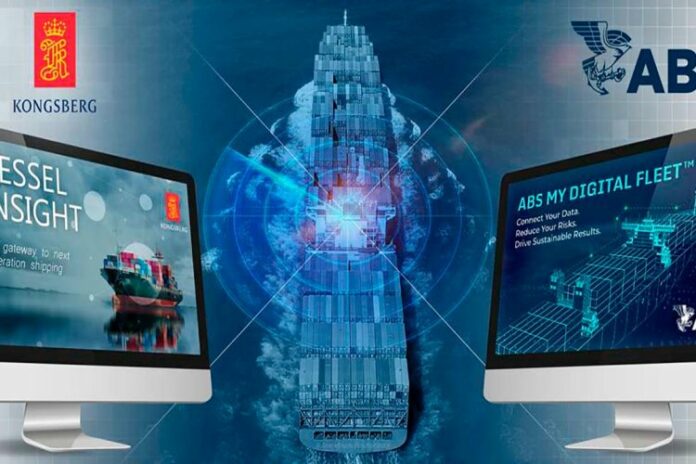
Two of the maritime industry’s digital service providers have joined forces through the product integration of Kongsberg Digital’s Vessel Insight and the ABS My Digital Fleet™ platform.

The alliance brings together data acquisition capabilities from Kongsberg Digital and ABS’ business intelligence capabilities to offer shipowners, ship managers and charterers seamless access to the industry’s most powerful analytics services. It unlocks simplified access, both on board the vessel and at shoreside, to AI-powered insights that support voyage optimization through reduced fuel consumption, lower bunker cost, lower carbon intensity and improved charter party compliance.

ABS My Digital Fleet is the only customizable risk management platform that seamlessly integrates data to provide real-time insights for driving sustainable operations and reducing operational risks.

Kongsberg Digital’s Vessel Insight vessel-to-cloud data infrastructure captures, aggregates, and contextualizes all data derived from a vessel’s sensors and other assets, transferring it for storage in the cloud through the proprietary Kongsberg network – ‘Kognifai Cloud’ – a specialized VPN solution. The data collected through Vessel Insight will be made accessible to the ABS My Digital Fleet platform for the development of analytics services.

As part of the ABS My Digital Fleet Alliance Program, ABS will now offer Kongsberg Digital’s Vessel Insight infrastructure as an integrated service with ABS My Digital Fleet. Kongsberg Digital’s Kognifai open digital Marketplace, which offers third party solutions fully integrated with their Vessel Insight infrastructure, will now offer ABS My Digital Fleet. The ABS My Digital Fleet Alliance Program nurtures an ecosystem of industry-trusted intelligence and technology providers enabling integrated insights for clients on one unified platform.

John McDonald, ABS Executive Vice President and Chief Operating Officer, said:

“The potential of digital technologies to advance the cause of safety and operational excellence, not to mention the decarbonization of our industry, is significant. That’s why this is such a key announcement for the digitalization of shipping. Together, Kongsberg Digital and ABS are putting more power in the hands of our users; widening access to deep operational insights and making it simpler to realize the huge benefits offered by advanced data analytics.”

Andreas Jagtøyen, Executive Vice President of Digital Ocean, Kongsberg Digital, said:

“The maritime industry is facing stricter environmental regulations and demands. Collecting data to analyze, predict and improve processes for vessels and fleets is key to meet the new regulations while gaining a competitive edge. By combining ABS’ unique data integration and analytics platform with the Vessel Insight data capturing infrastructure, we are strengthening our position to offer an even better integrated service of high value for the industry. We believe this alliance will further spark the incentives for existing and prospective Vessel Insight subscribers to utilize the benefits of digitalization within the maritime industry.”

Wärtsilä delivers its new navigational simulator for Singapore’s CEMS

0

Wärtsilä Voyage will deliver the next generation navigational simulator for Singapore’s Centre of Excellence in Maritime Safety (CEMS) to prepare seafarers for shore-based remote management of vessels and autonomous ship operations. 

CEMS is a collaboration between the Singapore Maritime Institute (SMI) and Singapore Polytechnic, supported by the Maritime and Port Authority of Singapore. The next generation simulation platform will be based on the Wärtsilä NTPRO (Navi-Trainer Professional 5000) Navigational Simulator in a shore-based operational configuration.

CEMS will execute research and development in multiple skills with the support of augmented, mixed, and virtual reality. The project will focus on new modelling and simulation tools that enhance marine and navigational safety, the development of a complex port environment, as well as validation of new operational concepts, particularly with smart and autonomous ships.

Chris Chung, Director, Ecosystem Development, Wärtsilä Voyage, said:

“This is a strategically important partnership as CEMS and Wärtsilä Voyage share common objectives of introducing next-generation smart marine technologies safely and with a human-centric approach, both on the vessel and on the shore side. We look forward to working with CEMS and link-minded global partners to advance this important topic.”

Daniel Zhang, Centre Director, CEMS at Singapore Polytechnic, said:

“As the maritime industry gets more digitally connected, it is opportunity to embark on a journey to identify and define new skillsets that could be radically different from today. CEMS shares a common vision with Wärtsilä Voyage to embrace technologies and prepare our workforce to be future ready through research and innovation.”

Wärtsilä Voyage’s collaboration with CEMS covers three core disciplines of seascape, landscape and mathematical modelling of all relevant vessel types for training shore-based navigation officers, as well as the development of training material for remote operations. These include areas such as assistive technologies for use onboard ships and during training, simulators to study human behaviour and competency to enhance the safety of navigation, infusing wearable technologies, and co-develop scenario-based “Standards Validation” simulation for autonomous vessel research. The research concepts and projects will be conducted over the next two years.

Recognizing the long-term need of creating an environment to promote data-driven innovation and developments in the maritime sectors, the Singapore Maritime Institute has also signed a Memorandum of Understanding agreement with Wärtsilä Voyage. Under this, the two parties will continue to cooperate and identify industry challenges that can be resolved through data-driven tools, applications, and technologies, as well as provide researchers with relevant and anonymised data to support their work under SMI’s Maritime AI R&D Programme.

Pierre Guillemin, Vice President, Technology at Wärtsilä Voyage, said:

“The project is of high significance as it paves the way for future collaborations and projects not only in the Asia-Pacific region but with the global industry where Wärtsilä Voyage’s simulation platforms can act as safe testbeds for validating all kinds of smart marine and autonomy technologies.”

Guillemin added:

“AI and simulation tools not only provide us with the unique platform to safely test and validate a myriad of situations and environments before going for actual sea trails, but they also give mariners ample opportunity to get used to the new technology without any risk. We, therefore, see this collaboration as the perfect opportunity and example of how different stakeholders within the industry can come together to leverage big data and combine their expertise to develop and implement smarter technologies faster, and catapult shipping’s transition towards sustainability.”

MAN Energy Solutions and DP World sign cooperation agreement

0

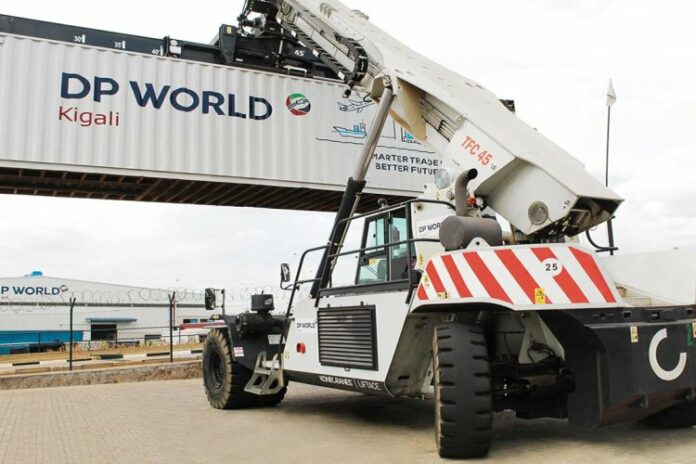
Effective immediately, the agreement targets common progress in the field of decarbonisation and is scheduled to run for five years with an option to extend thereafter.

Wayne Jones OBE – Chief Sales Officer, and Gaby Hanna – Senior Vice President and Head of Region – Middle East & Africa, acted as signatories for MAN Energy Solutions; while Sultan Ahmed Bin Sulayem – Group Chairman & CEO, signed on behalf of DP World.

Captain Rado Antolovic,PhD, CEO, Drydocks World, said:

“To achieve net zero emissions, we must recognize the importance of taking urgent and immediate steps to decarbonize shipping and the way to do that is by identifying opportunities to forge partnerships with leading industry players and governments to develop solutions that will allow us to reap tangible results.”

Jones said:

“We have worked closely with DP World on many projects over the years and are very happy to enter into this formal agreement. In the transition towards a carbon-neutral future, we aim to achieve sustainable value-creation by addressing the challenges inherent to the marine, energy and industrial sectors. Ultimately, we intend to develop pioneering solutions to the issues posed by decarbonisation and will work with selected partners to achieve this.”

Mutual areas of interest for the two companies include green-fuels infrastructure, future-proof conversions (LNG, methanol, ammonia, etc.), hybrid drives, electric engines R&D and training, and investigation of their respective, global footprints to further reduce the environmental impact of shipping traffic in terms of fuel consumption and emissions.

MAN Energy Solutions has previously collaborated with the DP World Group on many occasions. The most recent of these was in September 2021 when the ‘ElbBLUE’, a containership operated by charterer Unifeeder – part of the DP World Group – bunkered 20 tons of green SNG (Synthetic Natural Gas) at Brunsbüttel, Germany. In a first for commercial shipping, the fuel was generated from 100% renewable energy via power-to-X technology.

TECO 2030 signs supply frame agreement with Chemgas Shipping

0

Norwegian maritime cleantech company TECO 2030 ASA has signed a supply frame agreement with the Dutch shipowner Chemgas Shipping BV. 

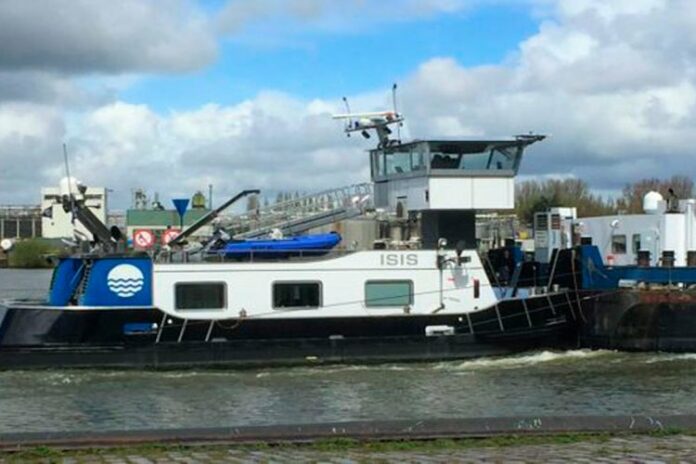
The modules are to be installed on Chemgas Shipping’s new hydrogen-powered tugboats and transport barges which will operate on the Danube River, Europe’s second longest river and the longest river in the EU. The fuel cells will enable these boats to sail emissions-free.

Chemgas Shipping plans to install fuel cell modules from TECO 2030 on up to 120 transport barges and between 40-60 tugboats. The exact number remains to be decided, and purchase orders outlining the price and delivery time for the fuel cells will be signed for each individual ship over the next few years.

Tore Enger, CEO of TECO 2030 ASA, says:

“We are thrilled that Chemgas Shipping has chosen to cooperate with TECO 2030 on this ambitious and important project, and that we have now been able to progress from a letter of intent to a supply frame agreement. The economic potential of this framework agreement is large for TECO 2030 and may lead to revenues of up to 150 million Euros over the next three to eight years.”

The vessels the fuel cell modules are planned to be installed on, will be used to transport green hydrogen produced from solar and wind energy in Romania emissions-free along the Danube to industrial buyers in Austria and Germany as part of the Green Hydrogen @ Blue Danube project.

The Green Hydrogen @ Blue Danube project is led by the Austrian energy utility Verbund, one of Europe’s biggest hydropower producers. 

The project’s goal is to create a trans-European green hydrogen value chain – from production and transportation to purchase by industrial and mobility customers. The first phase of the project focuses on the production and use of green hydrogen in Austria and in the southern part Germany.

The second phase will focus on the production of green hydrogen from renewable electricity in south-eastern Europe. Here, wind, solar and hydropower will be converted into hydrogen which will then be transported along the Danube River to industrial users in Austria and Germany.

TECO 2030 and Chemgas Shipping are among the partners involved in the project, and the letter of intent between the two companies for the delivery of fuel cells was signed in September 2020.

The first fuel cell delivery is planned to take place in spring 2023, and this will be a pilot version. Deliveries will continue over the following years, with most of them planned to occur after 2025.

The fuel cells will be installed both on the transport barges that will be used to transport green hydrogen from Romania to Austria and Germany, and on the tugboats that will transport these barges on their journey along the Danube.

Gunther Jaegers, managing partner of Chemgas Shipping, says:

“The TECO 2030 marine fuel cell is the proper solution for inland waterway navigation. We have to deal with low water situations where heavy batteries are not acceptable.”

Hydrogen fuel cells are the engines of tomorrow and convert hydrogen into electricity while emitting nothing but water vapour and warm air. By installing hydrogen fuel cells, ships can use hydrogen as fuel and become emissions-free.

Hydrogen fuel cells offer a zero-emission alternative for applications for which batteries are not a good option, for example due to weight issues. Fuel cells have a longer range, weigh less, and take up less space than batteries. They do not need to be recharged, and can instead be refuelled with hydrogen, almost in the same way as with traditional fossil fuels.  

TECO 2030 is together with the Austrian powertrain technology company AVL currently developing the first fuel cell system in the world that is specifically designed for use onboard ships and on other heavy-duty applications.

The TECO 2030 Marine Fuel Cell System and Fuel Cell Module FCM400TM have received an “Approval in Principle” (AiP) by DNV, one of the world’s leading classification and certification bodies, confirming that these are safe to use onboard ships.

The TECO 2030 Marine Fuel Cell will be produced at the company’s new combined innovation center and factory in Narvik in northern Norway, where production is due to start towards the end of 2022.

ABB to deliver A200-L turbochargers for six new LNG carriers

0

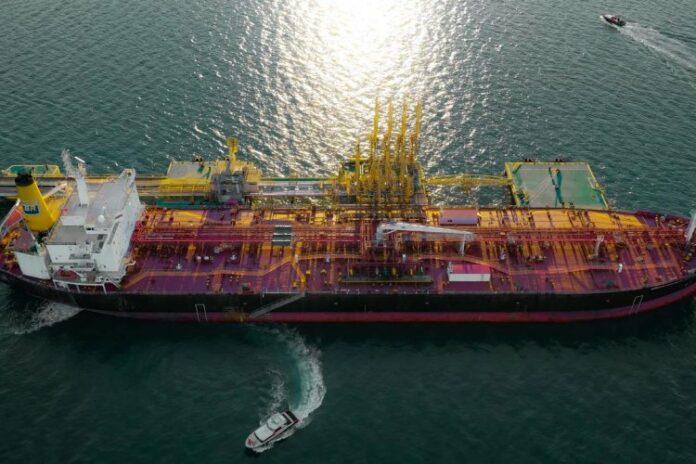
ABB’s A200-L turbochargers will be used on MAN Energy Solutions’ 5G70ME-C10.5-GA engines destined for six 174,000m3 LNG carriers ordered by four shipowners – Korea Line Corp, PAN Ocean, Knutsen OAS and JP Morgan – under a long-term charter agreement with Shell.

The ME-GA is MAN’s first low-pressure dual-fuel two-stroke engine. It sits alongside MAN’s well-established high-pressure ME-GI engines, offering LNG carriers and other vessels an alternative way to cut greenhouse gas emissions and minimize air pollution at lower capital cost. The gas-fueled engine can also operate on synthetic or biomass-derived LNG as it becomes available, either for full use or as part of a fuel blend, further reducing climate impact.

Turbocharger performance is particularly important for dual-fuel engines. High turbocharging efficiency ensures that a high air-fuel ratio is maintained during high-load operations, reducing potential fast combustion, which can adversely affect operation and emissions. The A100/A200-L series is ABB’s most advanced single-stage turbocharger technology for two-stroke engines, using the latest thermodynamic and aerodynamic expertise to pack the highest pressure ratios and efficiency currently available into a compact unit. The small footprint also translates into a lower cost of ownership as spare parts are smaller and more economical and the turbocharger itself is easier to handle for servicing.

Alexandros Karamitsos, Head of Global Sales Low-Speed Turbochargers, ABB, said:

“When engine designers and OEMs want reliable high performance to support new engine technologies, they look to ABB turbochargers. I am confident that shipowners will increasingly value our combination of technology leadership and global service coverage as incoming emission regulations encourage them to explore new fuels and engine concepts. We are delighted to be involved in this groundbreaking project and grateful for MAN’s trust in our engineering expertise.”

ABB Turbocharging will also provide turbochargers for the auxiliary engines on each vessel.

DOE announces $13.5 m for sustainable development of offshore wind

0

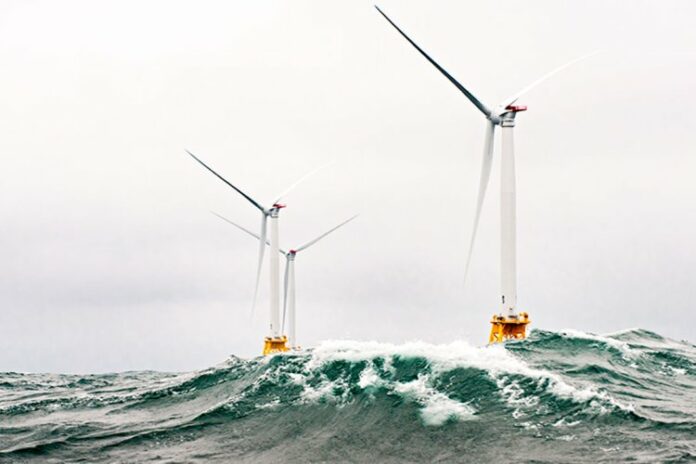
In support of a joint interagency goal to develop 30 gigawatts of offshore wind by 2030, DOE is funding four projects that will inform offshore wind siting, permitting and help protect wildlife and fisheries as offshore wind deployment increases. This latest funding announcement aligns with President Biden’s agenda to catalyze offshore wind energy, strengthen the domestic supply chain, and create good-paying, union jobs. 

Secretary of Energy Jennifer M. Granholm said:

“Harnessing the incredible potential that exists within offshore wind energy is an essential piece of reaching a net-zero carbon future. In order for Americans living in coastal areas to see the benefits of offshore wind, we must ensure that it’s done with care for the surrounding ecosystem by co-existing with fisheries and marine life – and that’s exactly what this investment will do.”

Increased deployment of offshore wind means more clean energy on the grid—which can contribute significantly to the Biden Administration’s goals of 100% carbon-free electricity by 2035 and a net-zero emission economy by 2050. While wind energy will provide significant national economic and environmental benefits, its development and operation may have impacts on the environment and wildlife that need to be assessed.  

Two selected projects will support wildlife and fisheries monitoring efforts on the East Coast. The other two projects are focused on preparing the West Coast for floating offshore wind development by collecting wildlife distribution data and developing tools to monitor the environmental effects of floating offshore wind energy. 

U.S. Senator Ed Markey (MA) said:

“These grants will help ensure that our clean energy transition in Massachusetts and along the East Coast works hand-in-hand with maintaining the biodiversity of our waters and understanding the relationship between wind and commercial fisheries.” 

U.S. Senator Ron Wyden (OR), author of the Clean Energy for America Act said:

“Offshore wind presents a key piece of a greener future, and I’m thrilled that OSU has earned this federal investment to apply its top-notch research in Newport to this clean energy source. I’m glad the Energy Department has recognized Oregon State can provide the research and data to ensure the development of this clean and sustainable energy source doesn’t hurt our state’s world-renowned coastal fisheries and wildlife.” 

U.S. Representative David Price (NC-4) said:

“I am pleased that Duke University will receive $7.5 million from the Department of Energy to expand ongoing research into offshore wind and its impact on the environment and wildlife. Offshore wind has the potential to create substantial economic and environmental benefits, and this research will ensure we are properly assessing and mitigating possible effects of development and production on the surrounding environment. As a senior member of the House Appropriations Committee, I will continue to advocate for robust federal funding towards research that enables a more environmentally sustainable future.” 

Vår Energi confirms oil and gas discovery in the Barents Sea

0

The exploration well proved successful with the latest preliminary estimates showing volumes between 9-12 million barrels of recoverable oil equivalents.

The discovery is significant for the area says Torger Rød, Vår Energi CEO:

“With the Rødhette result, Vår Energi celebrates a sixth exploration discovery this year, as the exploration team continue a successful 2021 campaign. The licensees will now assess the discovery, as well as maturing other targets in the license and the surrounding area in order to add resources for a future tie-back to Goliat.”

The exploration well is located approximately 30 kilometers north of the Goliat field and 5 kilometers south of the Tornerose discovery.

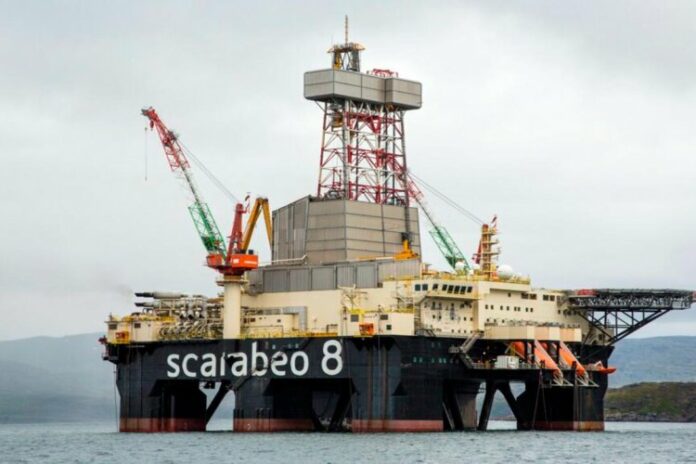
Rødhette was drilled in PL 901 by Scarabeo 8. The well encountered an oil & gas column of about 28 meters in the Realgrunnen subgroup within good to moderate reservoir sandstones (1882 meters below sea level).

Preliminary estimates of the size of the discovery are between 22-31 million mboe of hydrocarbon in place. Following extensive data acquisition and sampling, the well is now permanently plugged and abandoned.

Vår Energi AS (operator) holds a 50% stake of the license, with Longboat Energy (20%), Concedo (20%) & Equinor (10%) making up the rest of the JV.