-10.8 C
New York
Home Blog Page 526

Port of València will install a hydrogen supply station in January

0

The hydrogen plant is part of H2Ports, a project led by the Valenciaport Foundation and the Valencia Port Authority.

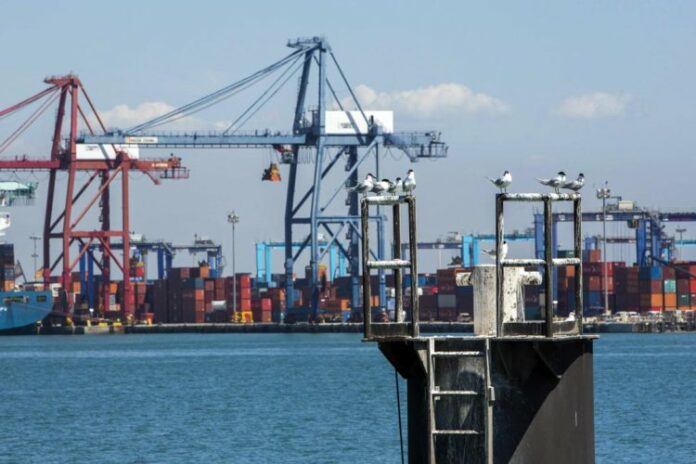
From January, the Port of Valencia will have a “hydrogen station” or green hydrogen supply station. The station will be mobile and will provide the necessary fuel, in the appropriate conditions and quantities to guarantee the continuous working cycles of the equipment forming part of the H2Ports project. The first of this equipment will be the machine or prototype of the Reach Stacker vehicle or “container stacker” which will be powered by this energy and which will be tested at MSC Terminal Valencia.  The second piece of equipment to be serviced by the hydrogen plant will be a 4×4 tractor unit equipped with a fuel cell stack for testing in loading/unloading operations at Grimaldi Group’s Valencia Terminal Europa.

Federico Torres, the head of Ecological Transition of the APV, explains:

“These are very important machines in the Port of Valencia because they are in operation 24 hours a day, 365 days a year and within our objectives and calculations of emissions, the terminal machinery represents almost 25% of the emissions that we want to reduce through this type of energy.”

The hydrogen supply station (HRS) is being developed at the National Hydrogen Centre, and will include a fixed part that will be dedicated to receiving and storing hydrogen from an external supplier and compressing it to delivery pressure, and a mobile part that will store the compressed hydrogen and include a hydrogen dispenser for refuelling the port machinery. The HRS will consist of three main components: a low-pressure hydrogen tank into which the hydrogen supplier will discharge, a two-stage water-cooled piston hydrogen compressor with heat exchangers integrated into the system, and a mobile high-pressure hydrogen storage and supply unit, consisting of two hydrogen storage stages at 300 and 450 bar and a 350 bar dispenser for heavy vehicle with communications.

Aurelio Martínez, the president of the PAV, Aurelio Martínez, said:

 “We are currently coordinating with the National Hydrogen Centre the location of this facility in the Port of Valencia. The work will begin in January, so once again we will be pioneering and taking a step forward with this type of infrastructure, in our commitment to sustainability”.

The European project that will enable Valencia and its port to work and move port machinery with hydrogen is called “H2PORTS – Implementing Fuel Cells and Hydrogen Technologies in Ports”. It is a development coordinated by the Valenciaport Foundation in close collaboration with the Port Authority, and is financed by the European Union’s Fuel Cell and Hydrogen Joint Undertaking (FCH JU) programme. Its main objective is to test and validate hydrogen technologies on port machinery to provide applicable and real solutions without affecting the performance and safety of port operations and producing zero local emissions.

The H2Ports project will involve a total investment of 4 million euros and involves, in addition to the Valenciaport Foundation and the Valencia Port Authority, the National Hydrogen Centre and the private companies MSC Terminal Valencia, Grimaldi Group, Hyster-Yale, Atena Distretto Alta Tecnologia Energia Ambiente, Ballard Power Systems Europe and Enagás.

Hexagon Purus joins project to develop hydrogen value chain for maritime apps

0

Hexagon Purus joins the work package Zero Emission Compressed Hydrogen (ZECH) which is part of the ZeroCoaster project study coordinated by Vard, a major global ship design and shipbuilding company. 

This study aims to research, evaluate and present zero emission ship design solutions using alternative fuel systems.

The ZeroCoaster represents coastal bulk cargo operations in Norway. Systems and component solutions revealed in the project are applicable for scaling and reconfiguring for other maritime applications.

The project study is funded by The Research Council of Norway. One of the main objectives is to evaluate and challenge bunkering technologies and logistics operations, with a focus on safety, cost, and capacity. Hexagon Purus will contribute with its knowledge and expertise in storage and distribution of compressed hydrogen gas using Type 4 composite cylinder technology.

Sharing knowledge to accelerate zero emission maritime solutions

Norway has set a target to reduce emissions with 50 % by 2030, and there is a growing national demand for zero emission vessels along the Norwegian coast. If Norway’s target for cutting emissions by 2030 is to be implemented, 700 low-emission and approximately 400 zero-emission ships will be required, of these; 450 bulk and cargo ships.

This project aims to research and propose a cost competitive hydrogen value chain that can support and accelerate the transition to zero emission shipping solutions.

Håvard Stave, Technical Sales Manager Maritime, Hexagon Purus, says:

“We see wide benefits of working with Vard and the project partners. We have the technology needed to store and distribute compressed hydrogen in a large scale and look forward to sharing our expertise. It is an excellent opportunity for us to learn from each other, while driving the transition to zero emission maritime applications.”

The project will be conducted using an already developed concept design platform of the ZeroCoaster cargo ship prepared by Vard. By using simulation-driven-ship-design, the project will develop economic and technical key performance indicators for the use of alternative fuels on ships.

The project is scheduled for completion by end of 2021.

Empire Wind selects turbine supplier for two offshore wind projects

0

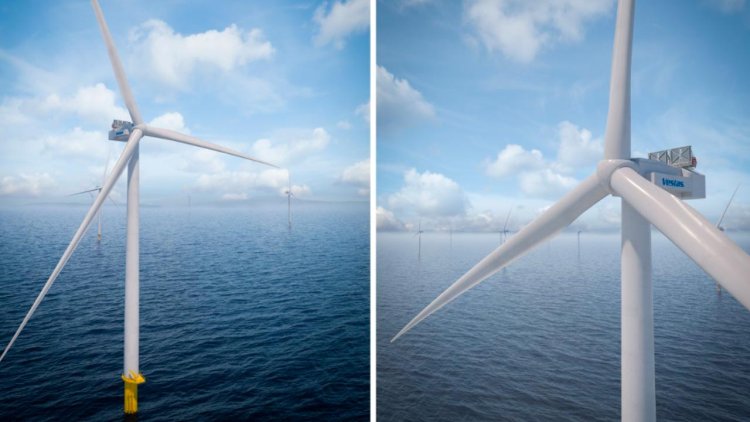
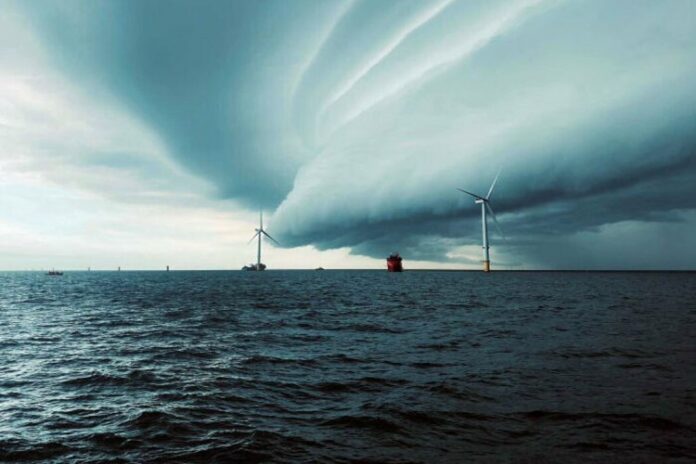
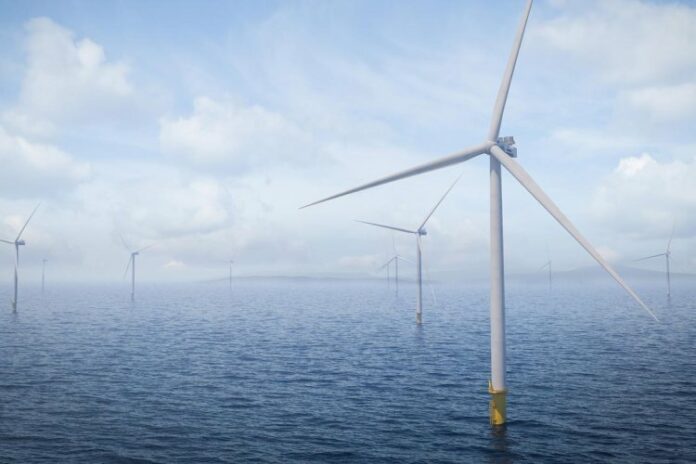
Empire Offshore Wind, a joint venture between Equinor and bp, has selected Vestas as its preferred supplier for wind turbine generators for both Empire Wind I and Empire Wind II, one of the largest offshore wind projects in the US.

The preferred supplier agreement – one of the largest of its kind to be announced in the US, is a key milestone for Empire Wind, an important step towards delivering its goal of providing offshore wind energy at scale to the state of New York.

The deal would see Vestas deliver 138 V236-15MW wind turbine generators with a total generating capacity of around 2GW – for the two Empire Wind developments. Each rotation of a 15MW turbine will be capable of powering a New York home for about 1.5 days.

Arne Sigve Nylund, executive vice president for Projects, Drilling & Procurement in Equinor, says:

“We are delighted to select our preferred supplier for what will be the largest contract in the Empire Wind project. The turbines have the highest rated capacity available in the market today, which is a great fit for the high ambitions we have in this project. We have chosen the technology which will provide the best value for Empire Wind from the world’s largest turbine manufacturer. This is state of the art technology moving the boundaries of wind energy production.”

Doreen M. Harris, president and CEO, New York State Energy Research and Development Authority (NYSERDA), said:

“The selection of a preferred turbine supplier for New York State’s Empire Wind I and Empire Wind II offshore wind projects is providing a clear signal that the advancement of New York’s nation-leading 9 gigawatts goal of offshore wind by 2035 is on pace to deliver clean energy for New Yorkers.”

“Through the utilization of New York’s various ports, these types of partnerships will tap into local companies and manufacturing to further establish New York as the hub for the nation’s offshore wind industry.”

Siri Espedal Kindem, president of Equinor Wind US, says:

“Through this preferred supplier agreement, we are leading the development of a rapidly growing offshore wind industry in the US. This is just a starting point as we continue to progress the projects and harness the local supply chain. Empire Wind is a flagship offshore wind development, shaping the future of this industry. Today’s announcement brings us one step further, as we work together with our partner bp, the State of New York and NYSERDA, and all stakeholders to develop Empire Wind, which will play an important role in producing renewable electricity to deliver on critical climate ambitions for the state, the nation and Equinor’s target of reaching net zero by 2050.” 

Felipe Arbelaez, bp’s senior vice president of zero carbon energy, added:

“Major renewable energy developments like Empire Offshore Wind not only deliver clean energy to power homes, but also build important supply chains and create jobs. Empire I and Empire II can be transformational for how New York State gets its energy. bp and Equinor together have the technical and commercial abilities to get these important projects moving forward -and moving fast. We continue to seek opportunities to build out our business as we pursue our net zero ambition, and support cities such as New York on their net zero journey.”

Empire Wind continues to support the wider offshore wind supply chain development with the planned tower manufacturing plant in upstate New York. The tower sections for Empire Wind will be manufactured at Marmen and Welcon’s new plant in Port of Albany and will be supplied by Vestas. The tower manufacturing plant is expected to be operational by the end of 2023, creating up to 350 direct local jobs. The plan is for towers to be transported down the Hudson River to the South Brooklyn Marine Terminal (SBMT). At SBMT staging of the turbine components is planned to take place before transport offshore to the Empire Wind lease area for installation, contributing to several hundred renewables jobs in New York.

The turbine supply and service and warranty contract awards are conditional upon final agreement on the contract conditions and signing of the Empire Wind II purchase and sales agreement between Empire Offshore Wind LLC and NYSERDA.

Stena Drilling teams up with Cambridge-based blockchain technology start-up

0

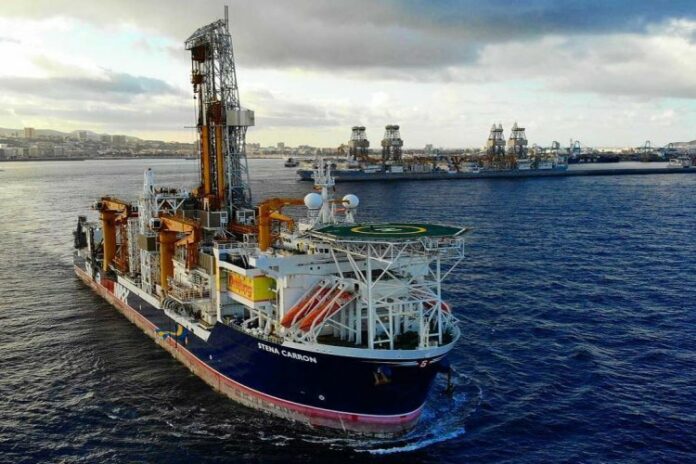
The announcement follows a six-month proof of value project, where Stena Drilling applied the power of SCS’ ClearDapp™, a blockchain and smart contract technology, to reduce and eventually eliminate complex transactions related to IADC reporting and payment-for-rig-performance.

Now, the companies will work together to further develop smart contract solutions for the energy sector. With aims to automate and execute the payment cycle, the technology partnership will offer the energy industry new contractual models based on milestones such as drilling speed, carbon intensity or fuel usage – all automatically validated through data.

Colin Dawson, Digital Business Transformation Manager of Stena Drilling said:

“We’re delighted to enter a technology partnership with SCS. Over the past six months, it has become clear that blockchain smart contract technology has the potential to transform how the energy sector does business.”

“We have a unique vantage point for this technology development as we continue to advance our own digital transformation. The sector faces tighter scrutiny around ESG from investors and society as the energy transition takes hold, and smart contract solutions offer a transparent way to demonstrate impact via tracking Scope 1 emissions at the rig, for example. We’re proud to play our part in progressing the sector.”

John Hanson, CEO of SCS said:

“Stena Drilling is the perfect partner for us, given its world class fleet and forward-thinking approach to digitalisation. There’s a huge opportunity for those in the sector that adopt blockchain technology to reduce admin burden, track transparency and reduce cost. Together, over the next twelve months, we will work very closely with the Stena Drilling team to fundamentally change business models in the energy sector, particularly those based on drilling performance.”

The companies are scheduled to trial the ClearDapp solution with live data in Q4 2021, in collaboration with a major oilfield operator. ClearDapp is built on R3’s Corda platform, and in Q1 2022, SCS will deliver peer-to-peer transactions via the beta version of Corda’s ‘payment’ module/SDK.

DeepSea launches The 10% Initiative to supercharge energy efficiency technology implementation

0

DeepSea Technologies has announced the launch of The 10% Initiative, a new project that helps ship owners and operators to incrementally implement the latest optimisation technologies across their fleets. With DeepSea’s technology, it is possible to unlock energy efficiency improvements of at least 10% across almost any fleet in 12 months. The new framework sets this as the ultimate target, but is focused on promoting a gradual, data-driven approach that is sensitive to the differing requirements of every shipping company.

The initiative will leverage a combination of AI-driven vessel performance insights and optimisation to help participants embrace optimum energy efficiency strategies for their assets. Containership owner Euroseas Ltd., as well as Dry Bulk owner EuroDry, have already signed up their full fleets to the initiative and are currently working closely with DeepSea to reduce emissions through the adoption of energy efficiency technologies.

The 10% initiative is open to any company regardless of their digital or decarbonisation transformation status and aims to empower participants to play a leading role in decarbonising their fleets, the shipping industry and the planet. DeepSea will work closely with every company in The 10% Initiative to deploy, monitor, optimise and, critically, measure the impact of their efforts across time, as well as feedback to companies what energy efficiencies and fuel savings they have achieved. 

The 10% energy efficiency enhancement set out in the Initiative is both realistic and achievable. It is in line with the results achieved by ship owners and operators using DeepSea’s weather routing and voyage optimisation software, Pythia, which was recently proven to have achieved reductions in fuel consumption of up to 12% over a series of voyages earlier this year. Further efficiency gains are also possible by deploying AI-driven vessel performance platforms which help to identify ideal operating procedures tailored to individual vessels, give early warnings of issues, and provide a comprehensive overview of fuel consumption.

DeepSea’s launch of The 10% Initiative comes just weeks before the critical COP26 climate summit in Glasgow, UK, where a palpable sense of urgency is expected to pile further pressure on the shipping industry to accelerate its decarbonisation efforts. The Initiative reflects DeepSea’s genuine desire to collaborate with the industry in generating an ambitious and meaningful response to climate change. The 10% target set could have a dramatic impact, when considered in the context of this year’s IMO efficiency target, which is just 1%. It could also generate considerable financial savings, in an era where ship owners and operators face rapidly spiralling costs to comply with increasingly stringent environmental regulations. For example, a 10% energy efficiency improvement is also an estimated $500k annual fuel saving per year on a VLCC (assuming it travels 330 days per year).

Commenting on the announcement, Angus Whiston, Commercial Director, DeepSea Technologies, said:

“We’re delighted to say that we have the proven technology to make this kind of efficiency improvement across a fleet. The industry challenge is now all about implementation. There are many shipping companies out there that aspire to engage with this kind of technology, but may not know how to approach it. This initiative is aimed at those companies – as well as those that are already leading the field in terms of decarbonisation strategies and want to push further. We are providing a realistic, accessible and effective framework to support the implementation of these technologies at the pace required by each different company.

“In addition to creating a real impact in the fight against climate change, we envisage The 10% Initiative playing a pivotal role in supporting the energy efficiency solutions of tomorrow. By moving to a data-driven way of working, ship owners and operators can make business-critical decisions on the implementation of new technologies with greater confidence, as well as providing a perfect environment to further develop our own approaches in partnership with The 10% Initiative members.”

Symeon Pariaros, Chief Administrative Officer of ESEA and EDRY, added:

“We are very pleased to announce that we have joined The 10% Initiative, which comes as a natural step for us following our preexisting relationship and work with our partners at DeepSea. This collaboration adheres perfectly to our ESG commitments of having a more environment-friendly fleet and keeping the environmental implications of our business at the core of our operations.

“As mentioned in our latest Sustainability Report, we are committed to continuing our sustainability journey and doing our part to contribute to the decarbonisation of shipping. Energy efficiency technologies will continue to play a crucial role in this, and we believe that collaborating more closely with DeepSea will not only bring fuel savings and emissions reductions to our fleet, but also additional value to our stakeholders in the mid and long term as a result of the sustainable growth that energy efficiency will enable.”

Related news:  Opinion: Decarbonisation of fleets is crucial, and digitalisation is the way to achieve it

BSM and KIMFT cooperate to promote Korean seafarers for global shipping trades

0

Bernhard Schulte Shipmanagement (BSM) signed a Memorandum of Understanding (MoU) with Korea Institute of Maritime and Fisheries Technologies (KIMFT), a maritime education and research institute operated by the government of South Korea. 

Within the framework of the “Global Employment Project for Young Korean Seafarers” BSM and KIMFT will cooperate to boost careers at sea in a multinational and multicultural work environment by jointly creating highly competent and passionate maritime manpower.

Eva Rodriguez, Director HR Marine at BSM says:

“Our partnership with KIMFT is in line with our aim to secure the most competent seafarers for a sustainable future. It will offer great opportunities to young Korean officers within our highly diversified fleet.”

Eun-kyu Jang, Director of Education at KIMFT says:

“The signing of this MoU symbolizes a partnership which we believe will lead to excellent job opportunities for competent Korean seafarers in the years ahead.”

With the support from the Korean government, a number of national maritime universities, maritime high schools, and vocational institutions have yearly produced more than 2,000 deck and engineering officers who are fully charged to commence their career at sea.

X1 Wind completes rotor assembly for pioneering ‘downwind’ floating platform

0

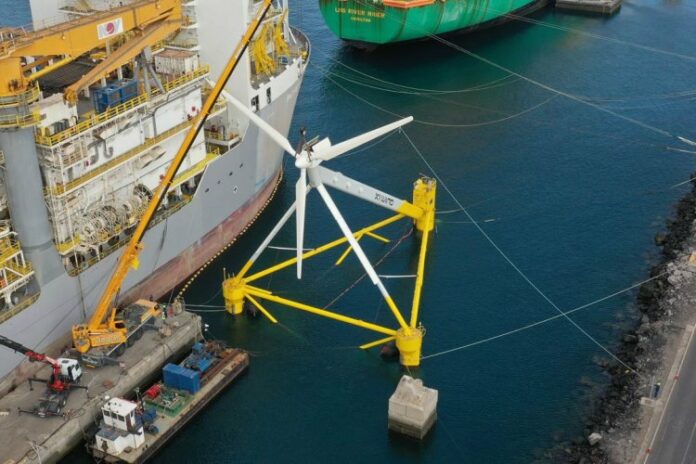
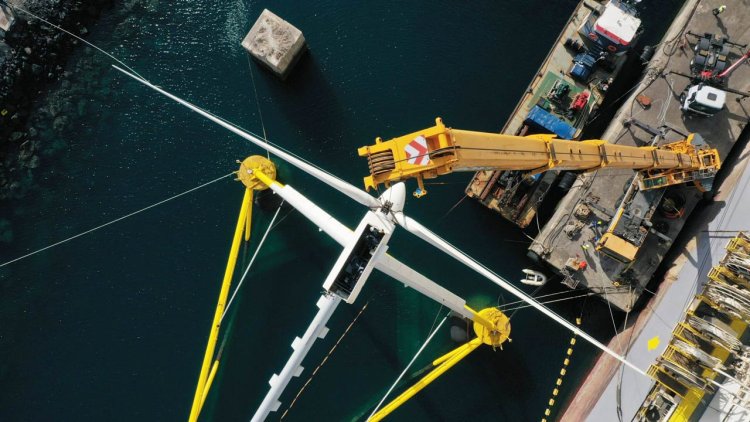
Fitted with a specially adapted V29 Vestas turbine, the unique ‘downwind’ system is able to ‘weathervane’ and orientate passively with the wind to maximise energy yields.

The novel ‘tripod-like’ platform also features greater structural efficiency, with a lighter and more scalable design, while minimising environmental impact on the ocean.

Alex Raventos, X1 Wind CEO, said:

“The rotor assembly represents a symbolic moment in this project, fitting the blades which will ultimately harness the wind and demonstrate our downwind design. Strong summer trade winds in Gran Canaria brought minor delays after the initial load-out, but this exciting period brings the assembly process to fruition. In the coming weeks, we will engage in cable and anchor installations before the platform is stationed at a 50m water depth for final commissioning.

From the outset, X1 Wind has been committed to find a more efficient structural approach for floating wind compared to more traditional systems. We believe we have now developed the technology to take full advantage of the marine environment, while respecting the future sustainability of the ocean. Our system will drive greater structural efficiency, reducing loads, especially the bending moments at the base of the tower, allowing for a lighter design.”

X1 Wind says that its platform utilizes the best features of a semi-submersible – with a low draft – and the ability to reach deeper waters by a Tension Leg Platform (TLP) mooring system – with a small seabed footprint.

Co-founder Carlos Casanovas said the industry-wide approach for land-based turbines has traditionally focused on upwind rotors to avoid the so-called ‘tower shadow’ effect. However, upwind configurations require specific measures to prevent tower strikes, with the challenge increasing as turbine blades get longer.

Mr Casanovas said:

“With 100m plus blades becoming more prevalent in offshore environments, significant measures are needed to avoid tower strikes. This typically involves increasing the distance between the blades and tower applying a tilt and cone angle, and designing more costly pre-bent and stiffer blades, which also makes them heavier.

However, these measures come with increased manufacturing complexity, cost and potential loss of power generation. Using a downwind configuration reduces the risk of tower strikes, opening up the possibility of using lighter, more flexible and therefore cheaper large-scale wind turbine designs. These are key characteristics which will enable the development of future ‘extreme-scale’ downwind structures with research already being conducted on 200m blades and 50MW power ratings.”

X1 Wind’s X30 deployment is being delivered in conjunction with the ground-breaking PivotBuoy Project backed by a pan-European consortium including leading companies EDP NEW, DNV, INTECSEA, ESM and DEGIMA and world-class research centres WavEC, DTU and PLOCAN.

Supported by €4million from the European Commission H2020 Program, PivotBuoy aims to substantially reduce the current Levelized Cost Of Electricity (LCOE) of floating wind. Key advantages of the PivotBuoy system include a reduced floater weight, faster and cheaper installation processes and the ability to reach deeper waters with minimal seabed footprint thanks to the TLP mooring system.

Nemport in Turkey orders fleet of Konecranes Noell RTGs

0

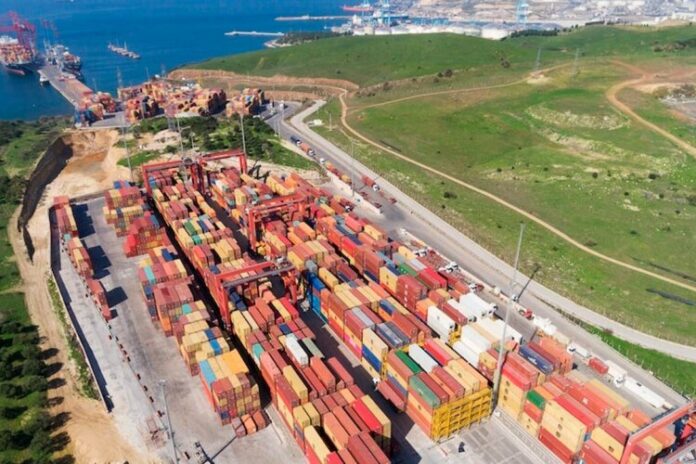
NEMPORT LÌMAN ÌŞLETMELERI (Nemport) in Izmir, Turkey, has ordered 10 Konecranes Noell Rubber-Tired Gantry (RTG) cranes to handle growing container traffic. The order was booked in July and the cranes will be delivered in October 2022.

Nemport said:

“Nemport is experiencing growing container traffic. We are building a new container yard and a new berth for mega container vessels, and the new RTGs will be fundamental to its productivity. As usual, Konecranes was very proactive in providing the solution, carefully evaluated by Nemport. We are confident that the Konecranes Noell RTGs will give us the performance and reliability we need. From the beginning, we have been operating Konecranes RTGs and Konecranes Gottwald Mobile Harbor Cranes with great success.”

Adel Issa, Sales Manager Region EMEA, Konecranes Port Cranes, said:

“Konecranes is committed to meeting Nemport’s needs in every way. We are a good fit with Nemport’s entrepreneurial spirit. The Konecranes Noell RTGs on order will help Nemport to expertly serve its customers as the growing trade gateway of the Aegean region.”  

A strong focus on customers and commitment to business growth and continuous improvement make Konecranes a lifting industry leader. This is underpinned by investments in digitalization and technology, plus our work to make material flows more efficient with solutions that decarbonize the economy and advance circularity and safety.

Port of Long Beach: Dredging projects would improve safety, boost commerce

0

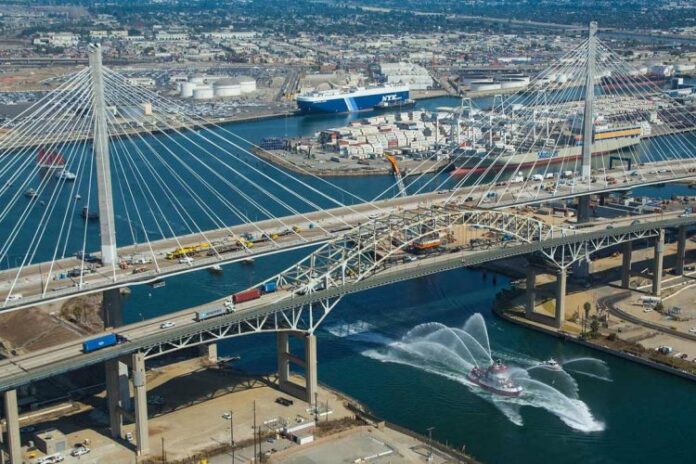
The Chief of Engineers of the U.S. Army Corps of Engineers, Lt. Gen. Scott A. Spellmon has signed the Port of Long Beach Deep Draft Navigation Study. 

This multi-year federal study shows deepening and widening channels in the harbor would lead to air pollution reductions, improved vessel navigation and national economic benefits of almost $21 million annually.

Port of Long Beach Executive Director Mario Cordero said:

“The deepening and widening of these channels is of vital importance to the nation’s economy. Keep in mind, we are the nation’s second-busiest port by container volume. Increasing the efficiency and speed that cargo is handled here has benefits to the whole supply chain reaching far beyond Southern California.”

Long Beach Harbor Commission President Steven Neal said:

“This study took a lot of hard work and dedication, and we thank the Army Corps of Engineers and all of the stakeholders who participated. These projects would help move cargo faster and save transportation costs. We look forward to working with our federal partners to make them a reality.”

U.S. Rep. Alan Lowenthal, who represents the area including the port, said:

“This is an absolutely critical project for the port and for our supply chain system. The expansion of the navigation channels at the port will allow larger vessels to maneuver safely in the port and berth in areas previously unavailable. More berthing space means more efficient and quicker loading and unloading of cargo, thus increasing the capacity and efficiency of supply chains overall. This project will not just help the port, not just our communities by reducing emissions, not just our environment – but businesses and communities at every point along the supply chain system. I will work in Congress to make sure that the Deep Draft Navigation project moves forward without delay.”

Among other features, the study recommends deepening the Approach Channel from 76 feet to 80 feet, constructing an approach channel to Pier J South to a depth of 55 feet, deepening portions of the West Basin from 50 feet to 55 feet, and performing structural improvements to breakwaters at Pier J to allow for depths of 55 feet. The study can be found here.

Vestas to install V236-15.0 MW prototype turbine at Østerild in Denmark

0

The installation of the prototype turbine will take place in the second half of 2022 and its first kWh is planned for the fourth quarter of that year. Stretching 280m into the air with a production output of 80 GWh/year, the prototype will be the tallest and most powerful wind turbine in the world once installed.

Anders Nielsen, Vestas Chief Technology Officer, says:

“Colleagues across Vestas have worked very hard and collaborated closely to ensure the rapid progress in developing and assembling the V236-15.0 MW prototype, and this announcement is an important step forward for Vestas and our customers. Getting the prototype turbine in the ground will underline how the V236-15.0 MW will raise the bar in terms of technological innovation, industrialisation and scale in the wind energy industry”.

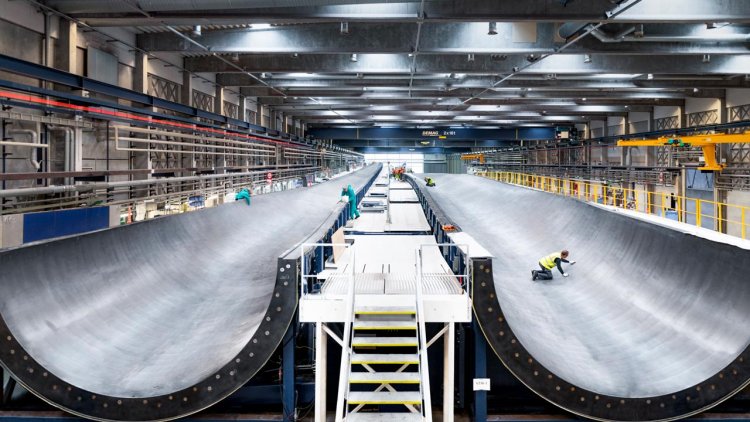
The prototype development work has already progressed across Vestas’ R&D and production sites in Denmark. The blade moulds have been developed at Vestas’ blade factory in Lem and the 115.5m long prototype blades will begin manufacturing later this year at Vestas’ offshore blade factory in Nakskov. The nacelle will be developed and assembled at the offshore nacelle factory in Lindø port of Odense. All large components will be preassembled and transported to Østerild, where installation will take place.

The prototype will be installed onshore to facilitate easy access for testing prior to installation, and the main prototype components will already have undergone thorough testing and verification at Vestas’ and our partners’ test facilities. During the initial period of operations, Vestas will collect data needed to obtain a Type Certificate, which is a key step in reaching serial production of the turbine in 2024.

With a swept area exceeding 43,000 m2, the V236-15.0 MW delivers industry-leading performance and moves the boundaries of wind energy production to around 80 GWh/year, enough to power around 20,000 European households and displace more than 38,000 tonnes of CO2, which is the equivalent to removing 25,000 passenger cars from the road every year.

The V235-15.0 MW is designed to deliver excellent performance while reducing the number of turbines at park level, strengthening the project business case. The globally applicable offshore turbine offers 65 percent higher annual energy production than the V174-9.5 MW, and for a 900 MW wind park it increases production by five percent with 34 fewer turbines. It offers excellent partial-load production, resulting in a more stable energy production, and a capacity factor over 60 percent depending on site-specific conditions.

Launched in February 2021, Vestas secured its first pre-selected tenderer status for the V236-15.0 MW turbine in July 2021 for the 900 MW He Dreiht project in Germany.