-4.8 C
New York
Home Blog Page 511

Shell and Baker Hughes sign broad collaboration agreement

0

Shell Global Solutions BV (Shell) and energy technology company Baker Hughes (BKR: NYSE) have signed a broad strategic collaboration agreement to accelerate the global energy transition by helping each other achieve their respective commitments for net-zero carbon emissions and advancing solutions to decarbonize energy and industrial sectors.

The memorandum of understanding (MoU) intends to build on the existing relationship between Shell and Baker Hughes in key areas:

  • Shell will initially provide selected Baker Hughes U.S. sites with power and renewable energy credits and the companies will negotiate renewable power for Baker Hughes’ sites in Europe and Singapore.
  • Shell and Baker Hughes also agreed to broader collaboration to identify other opportunities to accelerate each other’s transition to net-zero carbon emissions by 2050, such as Baker Hughes providing low-carbon technology solutions for Shell’s LNG fleet.
  • The two companies will further explore potential opportunities to co-invest and participate in new models to decarbonize energy and industrial sectors.

Lorenzo Simonelli, Baker Hughes chairman and CEO, said:

“Our agreement with Shell is another example of how we are collaborating in new ways to meet net-zero targets for our company and for our customers. The urgency around the energy transition to meet Paris Agreement goals requires collaboration to accelerate actionable steps to reduce emissions in various ways.”

Harry Brekelmans, Projects & Technology director at Shell, said:

“Shell and Baker Hughes both have clear ambitions to decarbonize and have already made progress through technical innovations. I’m proud of the work that has been done so far, and with this new agreement, we are taking it one step further. It will enable us – and our partners – to push the boundaries of what can be achieved and move even closer toward our net-zero targets.”

As a first step in the collaboration, the parties seek to finalize Shell’s supply of certain Baker Hughes U.S. facilities with power and renewable energy credits for a two-year period. In 2021, Baker Hughes’ global renewable electricity consumption was 22%, and with this agreement, it is expected to grow by 2% to 24% annually. Shell and Baker Hughes will also negotiate supply of up to 100 GWh of renewable power for Baker Hughes facilities in Europe and explore the development of an on-site solar solution for Baker Hughes’ chemical blending plant in Singapore.

Shell and Baker Hughes will further collaborate to explore additional opportunities to help Baker Hughes accelerate its transition to net-zero carbon equivalent emissions, including Shell providing low-carbon transportation and fuel solutions for Baker Hughes.

In turn, Shell will evaluate opportunities for Baker Hughes to provide low-carbon solutions for Shell’s LNG fleet through technology upgrades and compressor re-bundles. Baker Hughes will also help Shell develop digital solutions to accelerate decarbonization across Shell’s global assets and operations.

In addition to advancing each other’s own emissions reductions, Shell and Baker Hughes will collaborate to explore opportunities to offer solutions for hard to abate industries globally.
Fugro launches new generation of uncrewed surface vessels in the Netherlands

0

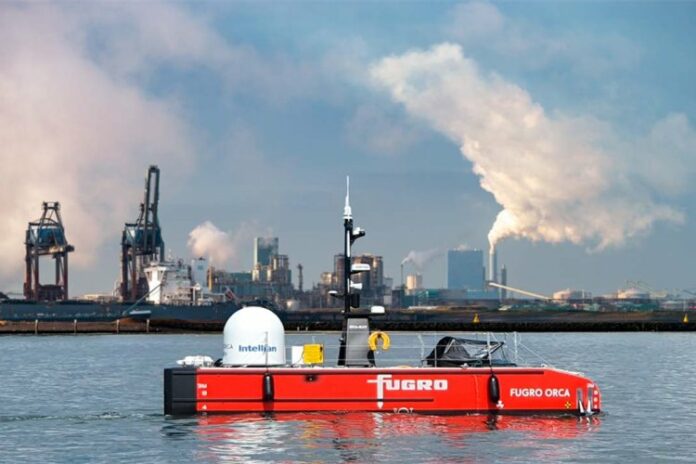
During operations the vessel is controlled from an onshore remote operations centre (ROC) via a satellite connection and will be used for the inspection of offshore assets, construction support services, and hydrographic and geophysical surveys.

USVs play an important role in the future of the maritime sector by improving safety, reducing carbon emissions, and delivering data more efficiently. USV operations remove personnel from high-risk offshore environments to an onshore ROC and reduce carbon footprint by 95 % when compared to traditional survey methods. Cloud-based data processing allows near real-time data delivery, leading to faster and more informed decision making.

René de Vries, Harbour Master of the Rotterdam Port Authority, said:

“We welcome this special vessel in our port. It’s the first time a remotely controlled uncrewed vessel will go to the North Sea from the port of Rotterdam to carry out a project without any personnel on board. We are proud that this project will be executed safely due to the careful preparation of all parties involved. We expect the development of digitalisation in the shipping sector will improve the safety and accessibility of the Rotterdam port.”

Erik-Jan Bijvank, Group Director Europe and Africa at Fugro, said:

“Fugro is a leader in the operation of USVs. Since 2020, Fugro has been deploying its Blue Shadow USV fleet for medium- to large-scale hydrographic survey applications. Recently, Fugro’s first Blue Essence has completed its first remote inspection, in Asia Pacific. I am excited that we now also have this newest generation of USVs available for European clients. Over the coming years, Fugro will further expand its fleet of USVs for safer, more sustainable solutions for marine operations.”

Cable laying for offshore wind grid connection in the Baltic Sea completed

0

Around 170 kilometres of cable have been laid at sea and on land over the past months to connect two offshore wind farms to the German extra-high voltage grid. Now the last section of the submarine cable is being laid on schedule to complete the second of the total of three 220 kV cable systems.

Stefan Kapferer, CEO of 50Hertz, says:

“Five years ago we announced that we would complete the two cable systems in 2021. Back then, we moved forward ambitiously – and today we can say: we show results! Our Ostwind 2 project is right on schedule. Taking into account that we had to do pioneering work in many places to develop the Baltic Sea as a German offshore wind location, this target was certainly ambitious in 2016. The fact that we are now reaching this crucial milestone as planned not only shows to our project partners that you can rely on 50Hertz.”

The Belgian offshore wind farm operator Parkwind will operate the Arcadis Ost 1 wind farm. Parkwind and 50Hertz will operate a joint offshore platform for the wind farm. The installation in the Baltic Sea takes place next summer. The two companies agreed on this in a memorandum of understanding in 2019.

The successful cross-border cooperation was also the focus of the visit of Flemish Prime Minister Jan Jambon and a Flemish delegation to 50Hertz’s headquarters in Berlin last Friday. 

Clément Helbig de Balzac, Project Manager of the Arcadis Ost 1 project at Parkwind, said:

“We are pleased about the visit of the Flemish Prime Minister to Germany. This is a good opportunity for Parkwind to talk about our first German offshore wind farm Arcadis Ost 1, which will be built with a capacity of 257 MW in the German Baltic Sea. With ten years of experience in the Belgian market and with the support of strong partners such as 50Hertz and DEME Offshore, Parkwind is able to deliver a highly innovative project that sets a new standard for offshore wind power.”

With the grid connection project Ostwind 2, 50Hertz is connecting the two Baltic Sea wind farms Arcadis Ost 1 and Baltic Eagle in Lubmin to the German extra-high voltage grid. The wind farms are located between 20 and 30 kilometres northeast off the island of Rügen. Three cable systems will be laid in the Ostwind 2 project: Two cables lead to the Baltic Eagle wind farm, one cable to the Arcadis Ost 1 wind farm. The installation of the third cable system, which is already in production, will begin in 2022.

Berg to provide systems integration capability for Yaskawa/The Switch

0

Berg Propulsion has signed a key supplier and cooperation agreement to provide systems integration capability for Yaskawa Environmental Energy / The Switch permanent magnet (PM) and power electronics products. The cooperation creates a new and combined force offering the robustness and efficiency of propulsion systems where electric motors directly drive the propeller shaft, consolidating Berg’s growing presence in electric propulsion.
 
Stefan Sedersten, CEO, Berg Propulsion, said:

“This is the latest step in Berg’s strategy to become a fully-fledged electrical propulsion systems integrator. This unique cooperation underlines the mainstream role we envisage for electric ship propulsion in the coming years, based on its efficiency and its ability to reduce emissions. Yaskawa/The Switch offer an innovative approach and a portfolio which provides an excellent match with Berg products and expertise. This is a partnership ready to deliver high-performance solutions in a market ripe for change.”

Berg’s integrator role would see the company take primary responsibility for complete system definition, installation, commissioning and customer care, said Sedersten. Yaskawa Environmental Energy / The Switch will provide  permanent magnet (PM) machines and power electronics products, proven in the marine market over the past decade, also offering technical and training support. The partners envisage working together on solution development to meet the demands of the rapidly evolving large-vessel market and carry out joint marketing activities.

Miika Reinikka, Yaskawa Environmental Energy / The Switch Division President, said:

“The direct-drive electric propulsion market for large ships based on PM technology is right now in its infancy. Strengthening our collaboration will enable us to influence the trajectory of the market by electrification and to provide energy-efficient, flexible and future-proof electric propulsion and power generation solutions. This will allow shipping companies to meet demanding emission reduction targets.”

Jonas Nyberg, Managing Director West, Berg Propulsion, said:

“Formalising this arrangement will allow us to build on the success of a number of electrical integration and hybrid vessel projects Berg has already overseen. Systems integration has become a core activity for Berg and is our fastest growing business area marketed and sold through our global sales and distribution network.”

Samskip kickstarts biofuel trial on Samskip Innovator

0

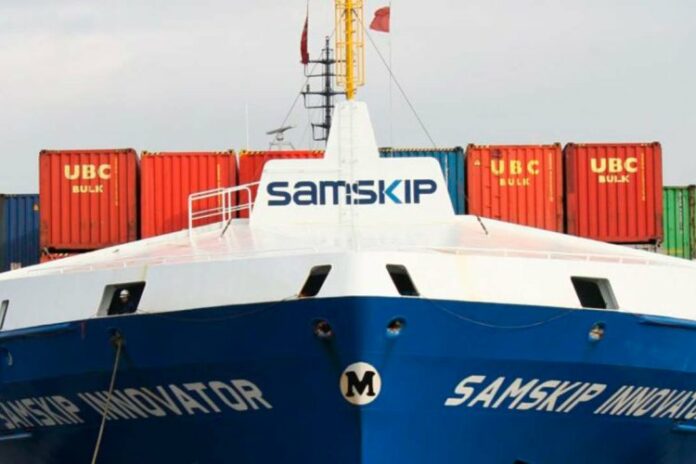
Following last week’s news that the Samskip Endeavour will use sustainable biofuels as its new standard, Samskip is further strengthening its commitment to greener shipping by bunkering the M/V Samskip Innovator with biofuel.  

The Samskip Innovator, an 800TEU containership that normally runs on traditional fuel, has started a trial to run on biofuel until mid-December. The usage of biofuel on the vessel will be extended given a successful trial run.

This fuel, MDF1-100, is produced from used cooking oils, which can now serve as raw materials for high-quality sustainable biofuels. The number 100 stands for the proportion made from renewable raw materials, meaning that MDF1-100 consists of 100 percent organic waste products.

Frédéric Leca, Chief Operating Officer at Samskip, says:

“We are highly motivated to reduce our carbon footprint and are taking concrete actions. By using biofuels on a larger scale, we are putting old oils to a climate-friendly use. By saving more than 80 percent on CO2 emissions compared to conventional fossil fuel, the reduction of the emission is substantial. Making use of this sustainable marine biofuel is the future-proof way to go. We call out all carriers in our industry to take concrete actions to reduce their carbon footprint, no matter how big or small it might be. Only together can we achieve a better future for our planet.’’

The fuel is produced and delivered by the Samskip’s longtime partner GoodFuels.

Babcock, Elbit Systems UK and QinetiQ win Royal Navy EW contract

0

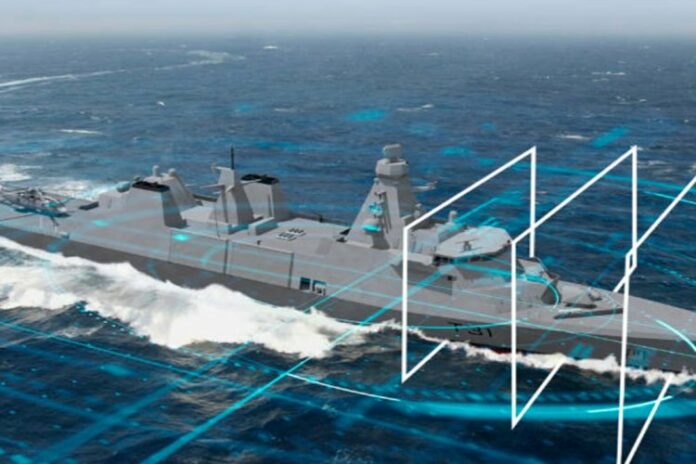
Babcock International Group (Babcock), the defence, security and aerospace company has been awarded a c.£100m, 13-year contract by the UK’s Defence Equipment and Support (DE&S)  for the design, manufacture, delivery/commisioning and in-service support to the Maritime Electronic Warfare Systems Integrated Capability (MEWSIC) Increment 1. Babcock will deliver the programme together with its collaboration partners, Elbit Systems UK (ESUK) and QinetiQ.

Part of the Maritime Electronic Warfare Programme, MEWSIC Increment 1 covers the acquisition, integration and through-life support of a sensor suite and a command & control system and its associated systems for in-scope Royal Navy platforms. The solution includes provision of training solutions, technical test and integration facilities alongside the support services.

Babcock is the prime contractor within the BEQ collaboration of Babcock, ESUK and QinetiQ, who will all work together on the programme. The collaboration will operate as a single team to deliver an innovative world leading solution, based upon proven operational technology providing in-depth knowledge of the platforms and experience in delivering digital Electronic Support Measures on a global basis.

The programme will see upgrades to the Radar Electronic Support Measure and Electronic Warfare Command and Control capabilities for maritime platforms. This capability will support the execution of all military tasks that exploit electromagnetic energy to enable enhanced shared situational awareness, informed command support, effective decision support and force protection.  

David Lockwood, Babcock CEO said:

“Babcock is delighted to be supporting the Royal Navy on this programme. As technology advances, operational advantage through electronic warfare capabilities is more important than ever to our armed forces, and this programme will play a key part in its delivery at sea. We will work closely with our collaboration partners and DE&S customer to enhance information dominance for the Royal Navy and its wider allies.”

Ben Wallace, Defence Secretary said:

“In a world of rapidly evolving threats, these enhancements will upgrade the Royal Navy with pioneering radar detection capabilities maintaining the UK’s operational advantage at sea.

“The £100-million investment with key industry partners will underpin vital defence outputs whilst supporting jobs and investment in the South-West of England.”

Sovereignty and Freedom of Action will be assured by the BEQ collaboration through their ongoing significant investment in technology and infrastructure in the UK, and throughout the life of the contract, creating new skilled jobs in manufacturing and software development. Furthermore all ship fits will be undertaken in the UK as will all new development activity.

Scotland’s companies team up to turbo charge the tidal energy industry

0

Nova Innovation and Atlantis Energy demonstrate the huge international and domestic tidal energy opportunity to SNP Westminster Leader Ian Blackford, and call on the UK Government to back an industry that delivers jobs, investment, and homegrown renewable power.

The focus initially is on the commitment to deliver Nova and Atlantis turbines at the MeyGen site. The Atlantis owned, operated, and developed MeyGen site is the largest fully consented and operational tidal stream site in the world.

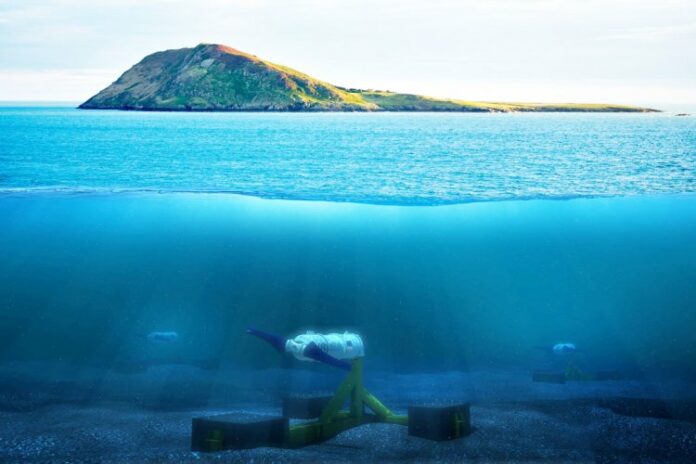
This collaboration will see the world’s leading tidal energy developers, Nova Innovation (Nova) and Atlantis Energy (Atlantis), work together to deliver their complementary technologies for the tidal industry, Scotland and the UK. Collectively, Atlantis and Nova operate the world’s first offshore tidal array (installed by Nova in Shetland in 2016) and the world’s largest tidal array (6MW Meygen array installed by Atlantis in the Pentland Firth).

Between the companies, they have delivered over half of the tidal stream devices operational worldwide and are developing sites in the UK, Canada, Japan and France. Both companies deploy subsea turbines which generate predictable, renewable power with no visual impact.

Meygen is the largest consented tidal stream site in the world with a potential capacity of nearly 400MW. The MeyGen site has all the necessary consents to deploy a further 80MW of tidal power and all that is needed to unlock this potential is a route to market.

Nova and Atlantis look forward to working with all stakeholders to help unlock this exciting opportunity and see further Scottish-made turbines deployed at the world-leading site.

Nova and Atlantis hosted the Leader of the SNP in Westminster, Ian Blackford MP, and his colleagues, Steven Flynn MP, Alan Brown MP, and Deirdre Brock MP, at Nova’s headquarters and manufacturing facility in Leith, Scotland. During the visit the MPs were shown the control room for Nova’s operational tidal array in Shetland, and their current manufacturing line.  Over the next 12 months, Nova’s turbines will be installed in North America and mainland Europe.

The MPs were also briefed by Nova and Atlantis on how the collaboration will deliver jobs and investment if the tidal energy sector receives that all important route to market from Westminster. This is an industry that, according to an independent report released this month by the Royal Society, can deliver over 11GW of predictable, renewable power in the UK creating thousands of jobs across the country. However, it needs the right support from Westminster to enable the next phase of deployment that will see the industry delivering scale while driving down costs.

SNP Westminster Leader Ian Blackford MP said:

“Tidal stream energy has the potential to be a major Scottish success story, and a key part of Scotland’s renewable energy revolution.

“The collaboration between these two world-leading tidal companies will allow them to build on their successes and deliver more turbines into the water.

“The UK government must now match this ambition and deliver the dedicated ring-fenced funding required to secure the future of this vital green industry.”

Simon Forrest CEO of Nova Innovation said:

“We were delighted to welcome Ian and his Westminster team to discuss the huge opportunity that the tidal industry presents to Scotland and the UK.

At Nova, we are doing all we can to deliver this, and our collaboration with Atlantis to develop the MeyGen site is a key milestone for us and the industry. In working together to develop the MeyGen site, we are cementing Scotland’s place as the world leader for tidal energy.”

Graham Reid, CEO of Atlantis Energy, added:

“Collaboration is a core value at Atlantis Energy and our work with our partners has been key to delivering so many of the milestones for our company. I am delighted to be working with Simon and the Nova team to deliver on our clear commitment of deploying Scottish-built turbines from both Atlantis and Nova at the MeyGen site.”

Vattenfall considers Siemens Gamesa turbines for Norfolk offshore wind project

0

The nominated preferred supplier agreement between Siemens Gamesa and Vattenfall is subject to the UK Government’s Contract for Difference Round 4 auction award in calendar year 2022 and subsequent final investment decision by Vattenfall.

Marc Becker, CEO of the Siemens Gamesa Offshore Business Unit, says:

“The Siemens Gamesa – Vattenfall partnership has been fruitful for a great number of years across numerous markets. With this Nominated Preferred Supplier agreement for the Norfolk projects, we aim to add another 3.6 GW to our joint portfolio. Developing an even larger rotor for our flagship offshore wind turbine is an example of how we are always seeking to innovate and improve. We can increase blade length and incorporate the solution on our existing design. We are committed to leading the offshore revolution, adding value to our customer’s projects and unlocking the potential of wind power.”

Catrin Jung, Head of Business Unit Offshore at Vattenfall, says:

“Vattenfall’s Norfolk projects will form one of the largest offshore wind zones in the world when they are completed, generating enough renewable electricity to power the equivalent of 4 million homes. We’re very pleased to be able to announce Siemens Gamesa as the Nominated Preferred Supplier for Norfolk Vanguard and Norfolk Boreas. We want to accelerate fossil free living in an affordable way for our customers, and we are always aiming for the right partners to make this happen. I am looking forward to the next steps on this grand journey,” 

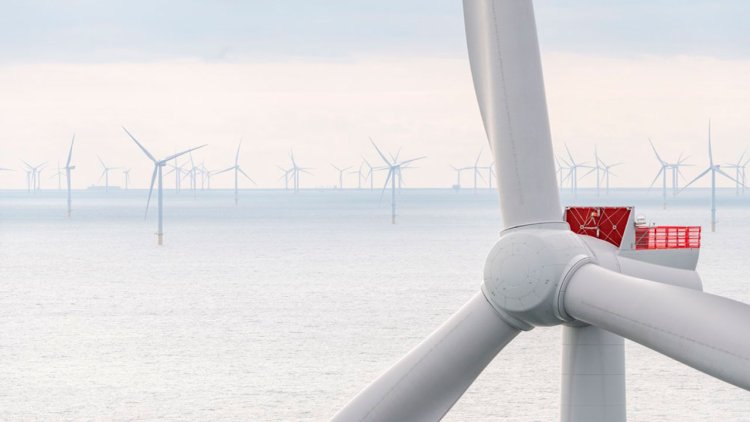
The newest Siemens Gamesa wind turbine features a 236-meter diameter rotor using Siemens Gamesa IntegralBlades, with an astounding 43,500 m2 swept area. This allows the SG 14-236 DD to provide an increase of more than 30% in Annual Energy Production compared to the SG 11.0-200 DD offshore wind turbine. Furthermore, the machine can reach an impressive 15 MW capacity including the company’s Power Boost function. As it is built on sound technology, the new machine otherwise remains unchanged in relation to the SG 14-222 DD offshore wind turbine.

The prototype SG 14-222 DD machine has already been installed at the Danish National Test Center for Large Wind Turbines in Østerild, Denmark. Final commissioning and full operation is expected before the end of calendar year 2021. This milestone will greatly expedite the installation of the SG 14-236 DD prototype in calendar year 2022.

Patented Siemens Gamesa RecyclableBlades will be available as options for customers selecting the SG 14-236 DD machine. The world’s first recyclable wind turbine blades ready for commercial use offshore have already been produced.

Extending on the proven offshore direct drive track record, the SG 14-236 DD is based on Siemens Gamesa’s deep understanding and expertise gained over five product generations since the platform was launched in 2011. Key components such as safety systems, hub and tower concepts, operations and maintenance solutions, along with a strong, qualified supply chain form the basis of the new offshore wind turbine.

Over 1,400 Siemens Gamesa Direct Drive offshore wind turbines have been installed in all major offshore wind markets globally. They include the UK, Germany, Denmark, The Netherlands, Belgium, Taiwan, and the USA, among others. With over 18 GW of installed capacity globally, Siemens Gamesa is the world’s leading supplier of offshore wind turbines. More than 18 additional GW of capacity are in the company’s pipeline, with installations planned for the markets mentioned above and new offshore markets including the USA and France.

Exploring renewable hydrogen opportunities at the Port of Newcastle

0

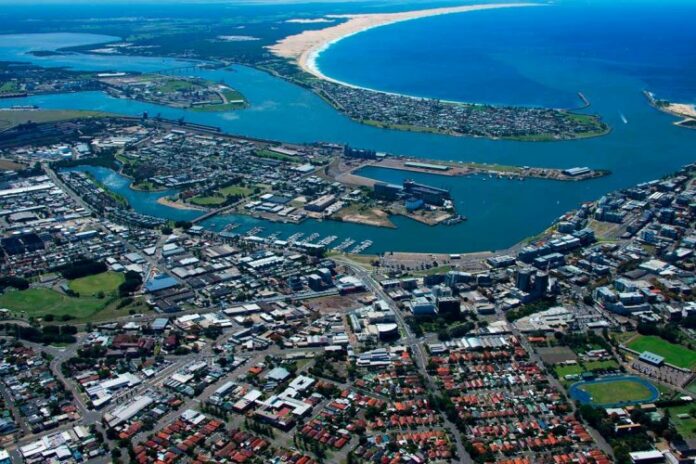
On behalf of the Australian Government, the Australian Renewable Energy Agency (ARENA) has announced $1.5 million in funding to support a feasibility study into the development of a 40 MW hydrogen hub located at Port of Newcastle in New South Wales.

The $3 million study will be led by Port of Newcastle and Macquarie’s Green Investment Group and supported by project partners Idemitsu, Keolis Downer, Lake Macquarie, Snowy Hydro, Jemena and project collaborators Macquarie Agriculture and University of Newcastle. It will determine a broad and comprehensive range of potential use cases for green hydrogen, including customer-led studies into mobility, bunkering, energy production, and industrial applications such as renewable ammonia at scale for domestic fertiliser use.

The project will benefit from the deep expertise of the joint developers, project partners, collaborators and globally recognised specialist consultants. The study will ultimately determine the optimal site within the Port for the hub as a springboard for renewable hydrogen to flow within the region and future export.

The study will also investigate the potential to scale up hydrogen production for export, leveraging the Port of Newcastle’s existing domestic and international supply chain links. While stage one of the project is underpinned by a 40 MW electrolyser, the study will also consider the future staged scale up of an electrolyser to around 1 GW with the ability to produce up to 150,000 tonnes of hydrogen per year for domestic and export use.

Port of Newcastle is the largest port on Australia’s east coast and currently handles approximately 4,400 ship movements and over 160 million tonnes of cargo annually whilst only utilising less than 50 per cent of its channel capacity. Newcastle is an ideal location for a hydrogen hub due to the existing industries, infrastructure, access to a deep-water port, and a highly skilled workforce. Port of Newcastle’s existing export routes to Japan and Korea represent potential renewable hydrogen export markets in the future.

Since the release of Australia’s National Hydrogen Strategy by the Council of Australian Government’s (COAG) Energy Council in November 2019, the Australian Government has been advancing international collaborations, undertaking national coordination and supporting priority industry projects to grow a clean, innovative, safe and competitive hydrogen industry.

The development of clean hydrogen is one of the key stretch goals outlined in the Australian Government’s Low Emissions Technology Statement. The stretch goal is to produce hydrogen for less than $2 per kg, or ‘H2 under 2’, which is the price where hydrogen is expected to become competitive with other energy sources for industry and transport.

ARENA has also recently launched its new 2021 Investment Plan with the project strongly aligned with the strategic priority of commercialising clean hydrogen, which aims to support a viable domestic and international clean hydrogen economy.

ARENA CEO Darren Miller said if the study proved the project to be feasible, it could enable Newcastle to become a major player in producing clean hydrogen:

“We’re excited to be a part of this feasibility study which presents an opportunity to accelerate the diversification of Port of Newcastle which is crucial as Australia starts its journey to net zero by 2050.

Newcastle is an ideal location for this project due to existing infrastructure and skilled workforce, both of which will be so important as we scale up. With the backing of Macquarie’s Green Investment Group, Newcastle could become a hub for the production and use of hydrogen for domestic and export opportunities for Australia.”

ARENA recently approved $103 million in funding to support three 10 MW electrolyser projects through the Renewable Hydrogen Deployment Funding Round. Since 2018, ARENA has also invested $60 million to support pre-commercial activities across 36 projects, including a number of feasibility studies focusing on smaller scale deployments with domestic end-use cases.

The project represents ARENA’s second feasibility study for a large-scale hydrogen production project. With funding previously announced for Stanwell to complete a feasibility study for a proposed hydrogen export market located in Gladstone, Queensland.

World’s first two-stroke hydrogen-fuelled marine engine to be trialled

0

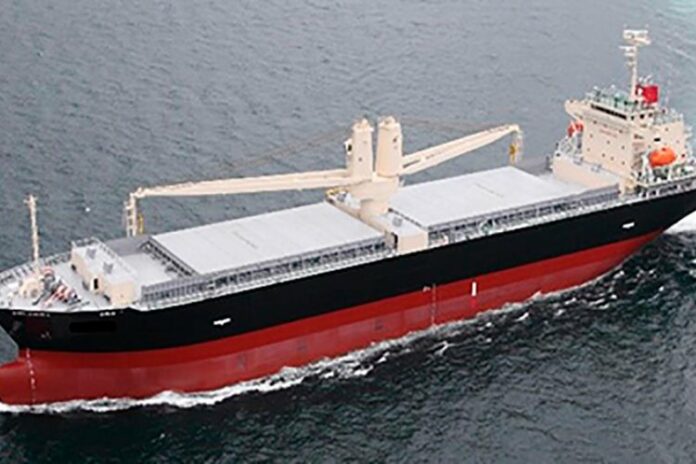
Mitsui O.S.K. Lines, Ltd. (MOL), MOL Drybulk, Ltd., and Japan Engine Corporation (J-ENG) today announced the signing of a basic agreement to cooperate in a trial of hydrogen-fueled engine equipped on an in-service vessel. The ship will be operated by MOL and MOL Drybulk, and the engine—the world’s first low-speed, two-stroke hydrogen-fueled marine engine—will be developed by J-ENG.

While accelerating efforts to reduce greenhouse gas (GHG) emissions as measures to address climate change, the ocean shipping industry has also promoted a shift to environment-friendly, next-generation fuels.

In the future, hydrogen supply chains are expected to expand globally in response to progress in the use and adoption of hydrogen in various fields such as power generation and mobility. Even in the ocean shipping industry, hydrogen fuel is drawing considerable attention as a promising next-generation fuel.

In cooperation with Kawasaki Heavy Industries, Ltd. and Yanmar Power Technology Co., Ltd., J-ENG will develop the hydrogen-fueled engine, which will be the world’s first main engine for large ocean-going or coastal vessels. The engine development was selected for a government-subsidized project by the New Energy and Industrial Technology Development Organization (NEDO), part of Green Innovation Funding Program.

The MOL Group aims to deploy net zero emissions ocean-going vessels in the 2020s and achieve net zero GHG emissions by 2050, as set out in the “MOL Group Environmental Vision 2.1.”

Through this agreement, MOL, MOL Drybulk, and J-ENG will conduct a trial with an in-service vessel equipped with hydrogen-fueled engine, aiming to commercialize net zero hydrogen-powered vessels and promote their wide adoption in the ocean shipping industry.