-0.7 C
New York
Home Blog Page 507

NOAA considers marine sanctuary off Hawaiian Islands

0

This designation would build on existing management in the marine portions of the monument by adding the conservation benefits and enhanced long-term protection of a national marine sanctuary. 

The United States Senate Committee on Appropriations, Subcommittee on Commerce, Justice, Science, and Related Agencies Report for Fiscal Year 2021 directed NOAA to initiate the process to designate the Papahānaumokuākea Marine National Monument as a national marine sanctuary to supplement and complement, rather than supplant, existing authorities. Stakeholders and partners, including the Northwestern Hawaiian Islands Coral Reef Ecosystem Reserve Advisory Council and the State of Hawai’i, supportoffsite link the current sanctuary designation process.

Since the designation of the site as the Northwestern Hawaiian Islands Coral Reef Ecosystem Reserve by President Clinton in 2000, the designation as a marine national monument by President Bush in 2006, and the expansion of the monument by President Obama in 2016, NOAA’s Office of National Marine Sanctuaries has been a key partner and co-managing agency in the management of Papahānaumokuākea. NOAA, the U.S. Fish and Wildlife Service, State of Hawaiʻi and the Office of Hawaiian Affairs co-manage the monument, and that hallmark co-management structure will continue. This initiative is being conducted in cooperation with the co-trustees. 

Rick Spinrad, Ph.D., NOAA Administrator, said:

“Papahānaumokuākea’s ecosystems are increasingly under pressure from threats such as marine debris, invasive species, and climate change. Designation of the monument’s waters as a national marine sanctuary would complement the efforts of the four co-trustees to safeguard the monument’s natural, cultural, and historic values.”
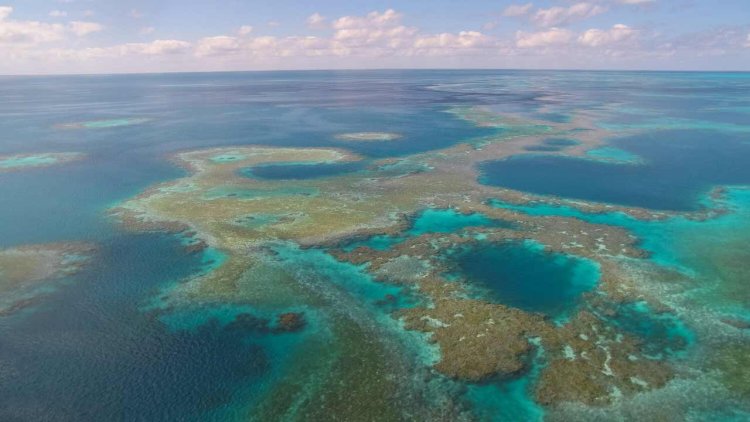
Papahānaumokuākea Marine National Monument is the largest contiguous fully-protected conservation area under the U.S. flag, encompassing an area of 582,578 square miles of the Pacific Ocean—an area larger than all the country’s national parks combined. Home to the highly endangered Hawaiian monk seal, threatened green turtles, extensive coral reef habitat, and many species found nowhere else on earth, the complex and highly productive marine ecosystems of the monument are significant contributors to the biological diversity of the ocean.

Papahānaumokuākea is of great importance to Native Hawaiians. Throughout the expanse of the monument, there are many wahi pana (places of great cultural significance and practice) where Native Hawaiian cultural practitioners of today reconnect with their ancestors and gods. The monument is also home to a variety of post-Western-contact historic resources, such as those associated with the Battle of Midway and 19th century commercial whaling.

Many of the monument’s extensive education, outreach, and research accomplishments have been executed under the authority of the National Marine Sanctuaries Act. Sanctuary designation would enhance the benefits and expertise offered by the National Marine Sanctuary System and NOAA staff.

Designation would also allow NOAA to apply additional regulatory and non-regulatory tools to augment and strengthen existing protections for Papahānaumokuākea ecosystems, wildlife, and cultural and maritime heritage resources. The sanctuary designation would not include any terrestrial areas or change the monument designation. 

NOAA is accepting public comment on the proposal through Jan. 31, 2022. 
OWA launches app developed to optimise offshore vessel performance

0

Improved operating efficiency reduces costs, drives down vessel emissions, and supports mission to accelerate move to Net Zero.

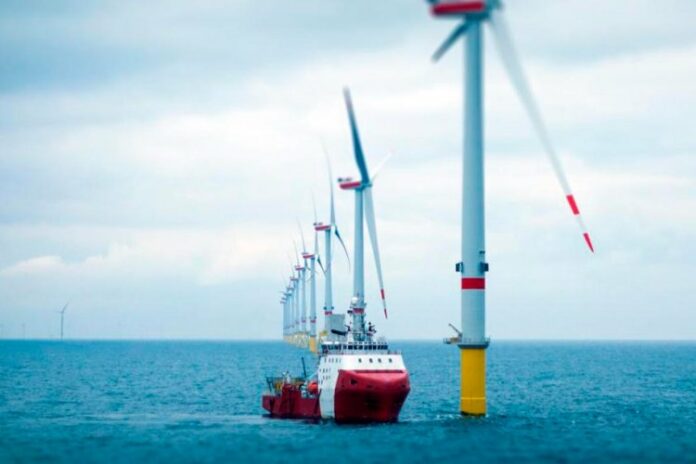
The Carbon Trust’s Offshore Wind Accelerator (OWA) has launched a new dedicated app, designed to estimate the motion and performance of seagoing vessels by using the in-built sensors within a smartphone or tablet device. The app will help improve operating efficiency by reducing costs, driving down vessel emissions, and ultimately accelerate the move to a decarbonised future.

The Vessel Motion Monitoring App (VMMA) has been developed through the OWA, the Carbon Trust’s flagship collaborative research, development and demonstration (RD&D) programme, with support from Enigma Interactive and Seaspeed Marine Consultants.

The VMMA will measure and compare the performance of crew transfer vessels (CTV’s) in different sea states, when transporting wind farm technicians offshore, and when transferring between offshore structures. Having this data will facilitate the optimisation of operations and maintenance (O&M).

Previous OWA research undertaken in 2014 established performance plots, or ‘P-Plots’, as a method of quantifying and displaying the performance of vessels operating on offshore wind farms. However, generating P-Plots is time consuming. Understanding the impact that P-Plots have in optimising the industry’s operations led the OWA to pioneer an app that would rapidly produce P-Plots efficiently and effectively by using the motion sensors built into a smartphone or tablet device.

Anders Wikborg, Marine Operations Manager at Equinor, commented:

“The VMMA is a handy tool to measure and compare transit and transfer performance of CTVs and Daughter Crafts. It will be particularly useful for offshore sea trials of vessels and can complement a permanent onboard measurement system (VMMS).”

Alistair Morris, Associate (Offshore Wind) at the Carbon Trust, added:

“The release of the VMMA signifies the completion of an extensive collaborative project between the OWA partners, Enigma interactive and Seaspeed Marine Consultants. The VMMA will allow a wide range of offshore wind, and broader maritime users to better understand the motion and thus performance of vessels.  This can in turn improve health and safety, operational planning and help reduce carbon emissions of vessels.”    

This app is designed primarily for the offshore wind industry, with a dedicated login feature that allows pre-approved users to record, share and connect specific ‘transit’ and ‘transfer’ P-Plots through the app and associated web portal. Users can evaluate a CTV’s motion and performance in various sea states. The VMMA also has the potential for numerous applications across the wider maritime industry. The basic functionality of the app (which does not require a dedicated login) allows a user to display and record vessel attitude, acceleration, speed, position, and course using the sensors within a smartphone or tablet device. This data can then be saved and exported to be further analysed by the user. 

The accuracy of the data provided by the app has been validated against a permanent Vessel Motion Monitoring System, through a rigorous offshore testing process at Rhyl Flats windfarm (RWE) onboard the NSL Excalibur CTV. It is however not intended to replace these dedicated systems or be used for contractual purposes. 

The VMMA can be downloaded in the App store or Google Play by searching VMMA, or by using the QR code provided below.

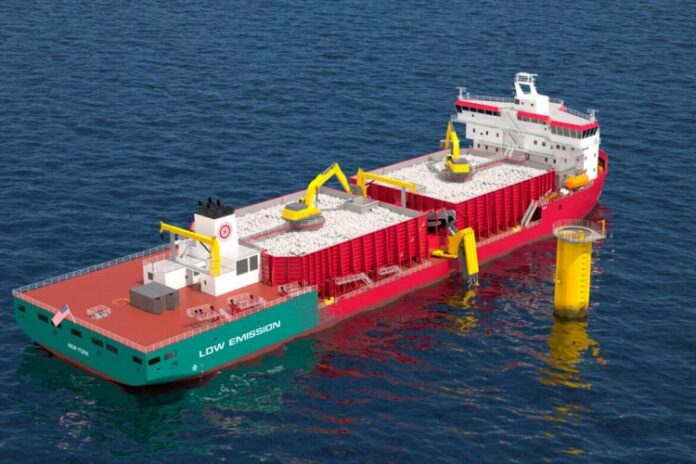
Ulstein designed subsea rock installation vessel for GLDD will be America’s first

0

The vessel, an ULSTEIN S211 design, has been developed by Rotterdam based Ulstein Design & Solutions B.V. and will be constructed by Philly Shipyard. The contract includes the option for a second vessel.

Great Lakes Dredge & Dock Co. LLC (GLDD) is the U.S. leading dredging company. The first vessel will be constructed by Philly Shipyard and is expected to enter operations by Q4 2024 to serve the U.S. offshore wind market.

Eleni Beyko, Great Lakes Dredge & Dock’s Senior Vice President Offshore Wind, states:

“World-renowned engineering firm Ulstein Design and Solutions B.V. was commissioned by us to design the vessel using state-of-the-art technology, equipment and automation. The design was reviewed and approved by the American Bureau of Shipping (“ABS”) and will be built with best-in-class safety and low emissions standards.”

To reach the low emission and sustainability goals, the vessel design includes EPA Tier 4 engines, plug-in shore power connection for loading in ports and battery packs for peak-shaving. The vessel is also able to run on biofuel to reduce its CO2 footprint and is equipped with active emission control technology to minimise NOx emissions.

In the concept phase, the Ulstein Blended Design method was used to enhance cargo efficiency, boost the GLDD business case, and reduce overall fuel consumption.

Ko Stroo, lead designer in Ulstein Design & Solutions B.V., says:

“It is a privilege to work together with the GLDD newbuilding team. Their vast experience in U.S. shipbuilding, combined with our expertise of rock installation vessel design, was essential in creating this unique vessel for U.S. offshore wind sector.”

Main dimensions of the vessel are:

  • Loa 140.5 m / 461 ft
  • Lpp 134.9 m / 442 ft
  • Beam (moulded) 34.1 m / 112 ft
  • Depth (main deck) 10.7 m / 35 ft
  • Draught (operational) 7.0 m / 23 ft
  • Service speed 12 kn
  • Installed power 2 x 3,150 kW – 2 x 2,250 kW
  • Propulsion thrusters 2 x 2,500 kW
  • Retractable thruster 2 x 1,200 kW
  • Tunnel thrusters (fwd) 2 x 900 kW
  • Positioning system DP 2
  • Class ABS
  • Rock hold capacity 20,000 t
  • Complement 45 P

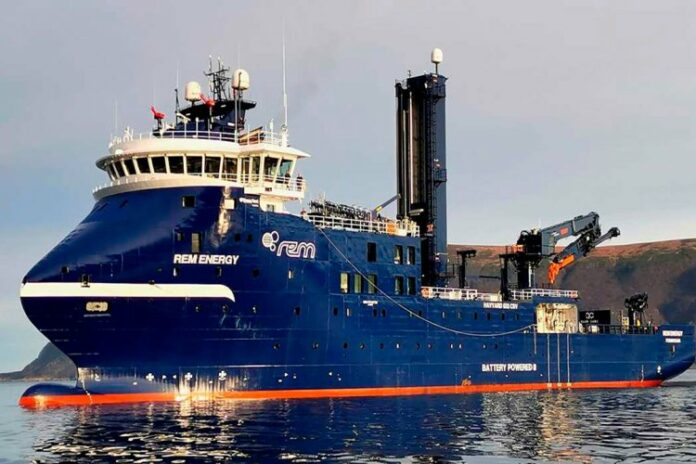
Rem Offshore selects Vessel Insight from Kongsberg Digital

0

The first vessel will be completed at Green Yard Kleven in November, while the other two are under construction at Vard, with completion in 2023 and 2024, respectively.

By installing the infrastructure service Vessel Insight, Rem Offshore will collect data from the vessels and enable the use of applications to optimize operations. An important part of the delivery is two applications from Kongsberg Maritime. Vessel Performance supports fuel consumption and emissions reduction, as well as automates reporting processes and eFSOG an advanced decision support tool (DSS). Kongsberg Digital is in the process of installing Vessel Insight on the first vessel, REM Energy, with this equipment, and the process will be finalized before the vessel leaves quay on November 29th.

Andreas Jagtøyen, Executive Vice President for Digital Ocean in Kongsberg Digital, says:

“We are very happy to have entered into this contract with Rem Offshore. By installing Vessel Insight on newbuilds before they leave the dock for the first time, the shipping companies will benefit by being able to use the data gathered to optimize their operations faster than what has been the norm up until now.”

Ronny Pål Kvalsvik, Commercial & Technical Manager in Rem Offshore, says:

“The Contract with Kongsberg Digital for our renewables fleet for data collection, vessel performance, and decision support gives us advantages for optimizing our operation & reducing emissions. Particularly the eFSOG/Decision support system will make a big step for us as a shipowner within the renewables sector for supporting our clients.”

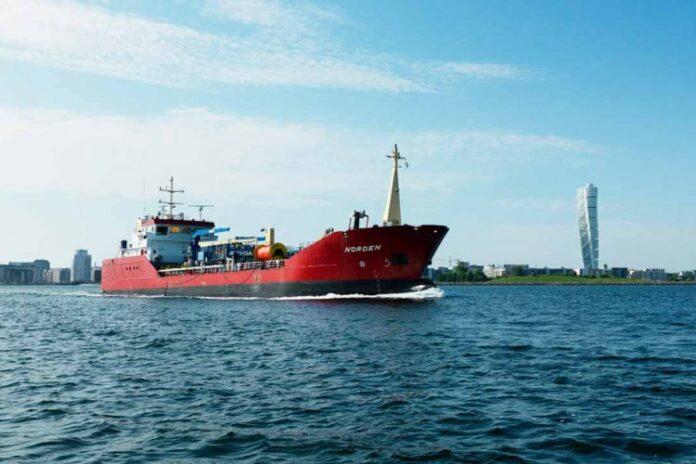
OljOla Shipping increases digitisation through Cloud Fleet Manager

0

OljOla Shipping, an operator of modern tankers based in Donsö, an island located in the southern archipelago of Gothenburg in Sweden, has implemented Hanseaticsoft`s Cloud Fleet Manager to improve their efficiencies, automate tasks and drive down costs.

Family run business OljOla Shipping operates three modern bunker vessels which focus on safe bunker deliveries, as well as assuming technical management for a highly sophisticated oil terminal in Frederikshavn, Denmark. The company is always looking for new ways to improve its business and is committed to improving the safety and security of its staff and their operations. Its ambition is to prevent all accidents, injuries, and occupational illnesses through the active participation of each employee.

Tom Nilsson, Fleet Manager, OljOla Shipping said:

“We wanted to free up more time for vessel personnel to focus on their core tasks. We wanted to introduce technology to streamline and automate resource-intensive tasks such as maintenance management, purchasing and even crew management.

“We did a thorough evaluation of 20 software vendors and selected Hanseaticsoft because it is very well established, and the software has great all-round features and functionality. It is also very easy to use and completely intuitive – it doesn’t require any staff training and because it is a cloud solution, it is highly secure. Our staff can access the system using any device at any time and access accurate up to date information, which is improving crew communications.”

Cloud Fleet Manager is a software solution specifically designed for shipping companies and ship managers. Offering a single, cloud-based source of real-time information for employees, crews at sea and external partners, Cloud Fleet Manager accelerates the speed of data exchange. OljOla has adopted several applications including CFM Maintenance which enables maintenance jobs across the fleet to be planned, assigned, and tracked in the system, CFM Crewing to manage all crew related procedures centrally including planning working and rest hours and CFM Purchase which enables the central management of all purchasing processes. Several apps for mobile devices additionally provide access to relevant information and enable management tasks to be handled – all on the go.

Tom Nilsson added:

“We implemented Cloud Fleet Manager during the summer, and we are already seeing our business improvements. Our shore personnel are spending far less time on administration, and we are reducing down costs. The software is changing the way we are working, automating key tasks and we expect to adopt more Cloud Fleet Manager modules in the future.”

“Another benefit the system provides is access to really good data and business intelligence. I used to spend several days pulling together data for my quarterly reports which I can now extract easily from Cloud Fleet Manager with a few clicks – this is improving our reporting and analysis.”

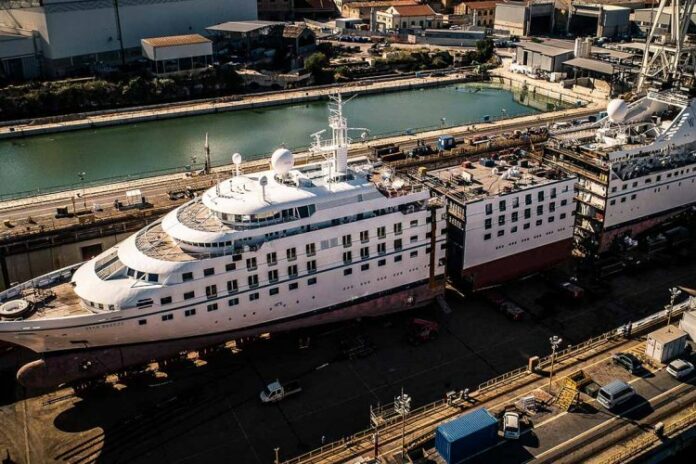
Wärtsilä and Fincantieri complete project to renovate three Windstar Cruises vessels

0

The conversions were led by the Fincantieri yard starting in 2019 with the first of the three sister vessels, the ‘Star Breeze’, being completed in 2020. This was followed by the ‘Star Legend’ in mid- 2020, and finally the ‘Star Pride’ in October 2021. The renovation included the ships being extended in length from 135 metres (443 feet) to 160.6 metres (527 feet). The project was part of Windstar’s USD 250 million Star Plus initiative.

The ships were each cut in half at Fincantieri’s shipyard in Palermo, Italy and a new 25.6 metre (84 feet) section added in the middle, thus providing an extra 50 staterooms accommodating 100 more passengers. At the same time, the ships’ engines were removed and replaced to provide greater efficiency, better environmental performance, and extended range for the vessels. The new Wärtsilä engines will run on distillate fuels for compliance with the 2020 sulphur cap regulations.

Andrew Toso, Deputy Director, Services, Fincantieri, says:

“This successful technical cooperation with Wärtsilä has enabled our two companies to achieve a successful renovation and the smooth functioning of the joint project.”

Ivan Catalfamo General Manager Project Sales, Wärtsilä, says:

“As the technical partner for this very large conversion project, it is extremely satisfying to have it concluded in a way that meets all the objectives. The renovations represented the largest portfolio of products and systems that we have ever assembled for a single service project. We have worked closely with Fincantieri for a number of years, and this project will certainly strengthen our relationship.” 

Chris Prelog, President, Windstar Cruises, added:

“Our thanks to both Wärtsilä and Fincantieri for their completion of a complex remodel that turned out beautifully. The stretching and renovation of these three all-suite yachts not only expands our guest capacity from 212 to 312, it also upgrades our environmental sustainability and operating efficiency, all of which are important to us.”

Wärtsilä’s scope of supply for each of the three vessels included two Wärtsilä 26 main engines, two Wärtsilä 26 auxiliary engines, four Wärtsilä customised selective catalytic reduction (SCR) systems for emissions control, gear boxes, power take-off solutions, and controllable pitch propeller control upgrading. Wärtsilä also re-engineered the alarm, monitoring and automation system, and the power management system, as well as retrofitting the existing onboard systems. Extensive renovation work was also carried out to the entire electrical and automation network.

JF Renewables completes first phase of UXO identification at Sofia OWF

0

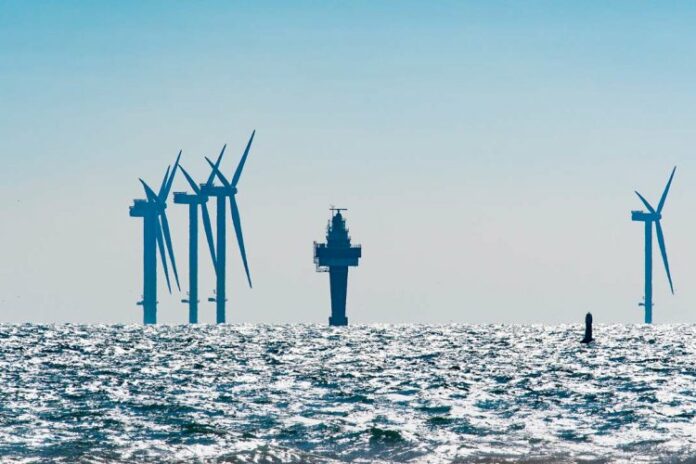
James Fisher Renewables (JF Renewables) has completed the first part of a two-phase contract to investigate unexploded ordnance (UXO) and potential archaeological features ahead of the installation of export cables for RWE’s Sofia Offshore Wind Farm (OWF), located off the north-east coast of the UK.

During September and October 2021, JF Renewables investigated 35 near shore targets to assess the need for disposal. Observation and work-class remotely operated underwater vehicles were successfully launched from a small vessel to facilitate a diver-less operation, delivering reduced risk, increased accuracy and improved efficiency. As the UK seeks to expedite the construction of offshore wind to achieve its target of generating 40GW of electricity using this method by 2030, efficient, cost-effective, and environmentally sensitive UXO disposal solutions that mitigate risk will become increasingly important.

From May 2022 onwards, up to 125 deep water targets will be investigated using the same proven approach. Any confirmed UXO targets will be removed using an innovative ‘low order’ disposal technique to minimise the noise from the removal and therefore also reduce the risk of harm to marine mammals and sea life.

Wayne Mulhall, managing director at James Fisher Renewables, said:

“We are delighted to be continuing our established and successful relationship with RWE on the Sofia Offshore Wind Farm. Following a thorough investigation of this particular route, we successfully confirmed all scoped targets as non-UXO.

“Our expertise gained from performing more than 3,000 UXO investigations around the globe enabled us to identify additional targets requiring survey, helping us to ensure phase one of the work was completed to the highest standard with the greatest regard for safety for all those involved. We look forward to completing phase two during 2022.”

RWE’s Matthew Swanwick, project director for Sofia Offshore Wind Farm said:

“James Fisher Renewables has successfully completed the first of two campaigns to identify nearshore unexploded ordnances (UXO) and archaeological anomalies for Sofia Offshore Wind Farm. Their expertise made them the right company for this job and we were pleased with the efficient way they carried out phase one of the work off the Teesside coast. The experienced team provided professional support throughout, ensuring that the project was delivered safely and on time.”

JF Renewables was previously contracted by RWE in 2020 to work on UXO investigation for the Triton Knoll Offshore Wind Farm off the coast of Lincolnshire, UK.

Sofia, located on Dogger Bank in the North Sea, is set to become one of the world’s largest offshore wind farms – as well as one of the farthest from shore. Upon reaching full capacity, estimated to take place in 2026, it will generate enough electricity to power as the equivalent of 1.2 million UK homes.

MacGregor to deliver oceanographic overboard handling systems for MBARI’s vessel

0

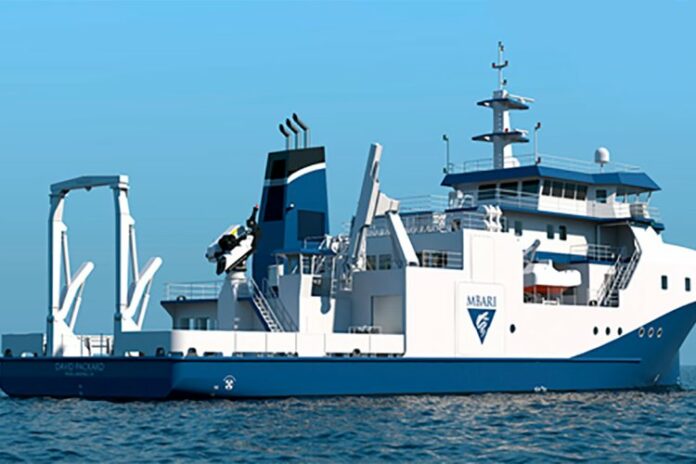
MacGregor, part of Cargotec, will deliver a suite of advanced overboard handling systems, for the new oceanographic research vessel David Packard owned by Monterey Bay Aquarium Research Institute (MBARI), a private, non-profit oceanographic research center based in California, USA. 

Founded in 1987 by David Packard, MBARI’s mission is to advance marine science and technology to understand a changing ocean. The David Packard is designed by naval architecture firm Glosten, and is currently under construction at Freire Shipyard in Vigo, Spain.

The order was booked into Cargotec’s third quarter 2021 order intake, with planned delivery of the vessel in the middle of 2023.

The David Packard will replace the vessel Western Flyer, and continue its work to study the depths of Monterey Bay and beyond. The David Packard will be 50.0 meters (164 feet) long and 12.8 meters (42 feet) wide with a draft of 3.7 meters (12 feet).

MacGregor will be delivering a traction winch system and overhead crane that will constitute the ROV Launch & Recovery System (LARS), a deck mounted davit and winch that will constitute the CTD LARS, a stern A-frame, and a main crane with an integrated AUV docking head. The LARS systems will include integrated control systems that will provide smooth operation between the winch and handling system, and AHC (Active Heave Compensation) on the winches will allow for operations in higher sea states.

MacGregor worked with the vessel owner MBARI and the ship designer Glosten during the earlier design stage of the project to provide input on equipment performance requirements, arrangement and wire routing. MacGregor will continue the detailed design efforts with Freire Shipyard.

Michael Kelly, MBARI Director of Marine Operations, says:

“As MBARI’s new flagship vessel, the David Packard will enhance our research capabilities to better understand the largest living space on Earth. We’re excited to incorporate MacGregor’s technology to enable launch and recovery of MBARI’s diverse research tools.”

Daniel Lundberg, Director of Fishery and Research, MacGregor, says:

“Our involvement at an early stage in the project, together with the owner’s emphasis on high-quality systems and in-service support, is enabling MacGregor to provide a tailor-made solution that fully meets operational requirements, including an integrated control capability.”

MHI launches second MRRV for the Philippine Coast Guard

0

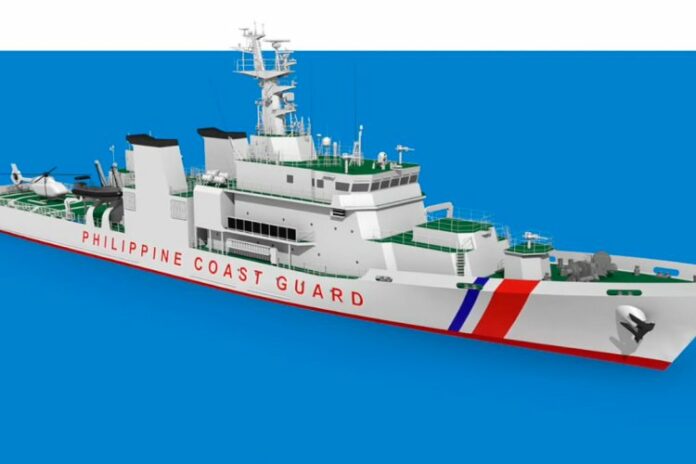
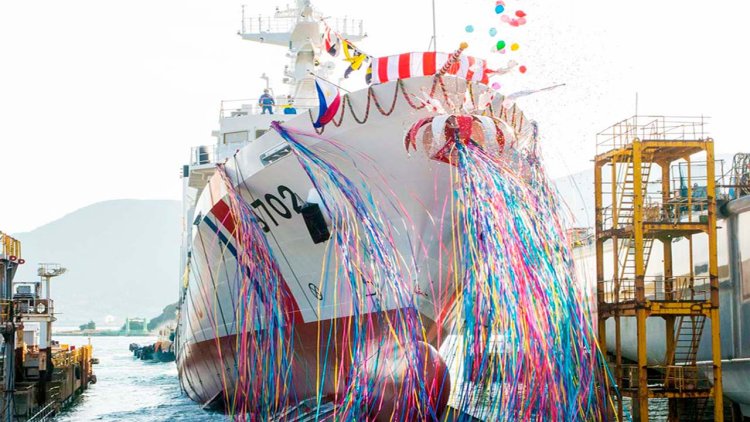
Mitsubishi Shipbuilding Co., Ltd., a part of Mitsubishi Heavy Industries (MHI) Group, has launched ceremony for the second of two large multi-role response vessels (MRRVs) being built to order for the Department of Transportation in the Republic of the Philippines.

The ceremony took place at the Enoura Plant at MHI’s Shimonoseki Shipyard & Machinery Works in Yamaguchi Prefecture. The christening and handover of this vessel is planned for September 2022 after cruised to Manilla in May 2022. Additionally, the christening and handover of the first vessel is scheduled for May 2022 after cruised to Manilla in early March, following outfitting work and trial runs.

MRRVs play an important role in severe-weather rescue missions and patrolling in offshore and coastal zones. This vessel has an overall length of approximately 96.6 meters, with a maximum speed of 24 knots and a cruising range of up to 4,000 nautical miles. 

It is equipped with secure communication systems for Exclusive Economic Zone (EEZ) surveillance, a helideck and hangar for helicopter operations, an underwater remotely operated vehicle for subsurface search and survey, high-speed rubber boats and other essential equipment for maritime domain awareness and maritime law enforcement operations. The ship will make a significant contribution to enhancing the speed of response to maritime accidents or crimes on the Philippines EEZ and high seas.

This project is being financed by the Japanese government under a yen loan agreement corresponding to Phase II of the Maritime Safety Capability Improvement Project concluded between the Republic of the Philippines and Japan in October 2016. The project terms call for application of Japanese technology, notably expertise in shipbuilding.

McDermott and SBM Offshore to deliver fourth FPSO in Guyana

0

McDermott International and SBM Offshore have established a special purpose company to perform Front End Engineering and Design (FEED) for a Floating Production, Storage and Offloading (FPSO) vessel under contracts for the Yellowtail development project.

Through the special purpose company, McDermott and SBM Offshore will design and construct the FPSO project, which will follow the FEED and is subject to government approvals in Guyana of the development plan, project sanction including final investment decision by ExxonMobil and Esso Exploration and Production Guyana Limited’s (EEPGL) release of the second phase of work.

The FPSO will be the fourth to be deployed in Guyana and will be designed to produce 250,000 barrels of oil per day, will have associated gas treatment capacity of 450 million cubic feet per day and water injection capacity of 300,000 barrels per day. The FPSO will be spread moored in water depth of about 5,900 feet (1,800 meters) and will be able to store around two million barrels of crude oil.

Samik Mukherjee, McDermott Executive Vice President and Chief Operating Officer, said:

“McDermott brings unrivaled project execution, integrated engineering and modularization and industry leadership to this important project.”

Tareq Kawash, McDermott Senior Vice President, Europe, Middle East, Africa, said:

“We will leverage our worldwide engineering centers and access the modularization design and fabrication expertise of our Qingdao McDermott Wuchuan (QMW) fabrication yard in China. This—and our shared vision with SBM Offshore for integrated solutions, optimized efficiency and delivery assurance—will enable success.”

McDermott and SBM Offshore will provide project management, basic design, procurement, engineering, integration and commissioning services. SBM Offshore will manage the transport and installation and then lease the FPSO and operate it for a period of up to two years.