0.5 C
New York
Home Blog Page 496

Eagle Bulk partners with GoodFuels to take on first biofuels

0

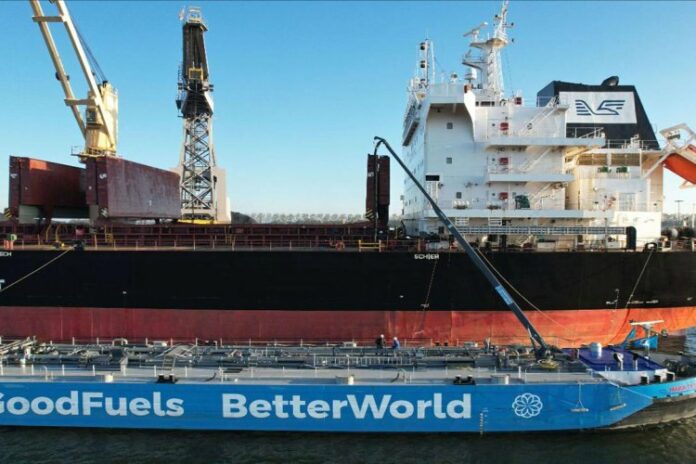
As part of Eagle Bulk Shipping’s ambitions to improve the environmental performance of its fleet, the 63,529 DWT bulk carrier Sydney Eagle was bunkered with GoodFuels’ advanced marine biofuel for the first time during its call at Terneuzen, the Netherlands. Eagle Bulk Shipping’s carbon footprint is substantially reduced when using GoodFuels’ sustainable marine biofuel, which enables an 80-90% well-to-exhaust CO2 reduction. 

GoodFuels’ biofuels are produced from certified renewable feedstocks labelled as 100% waste or residue that cannot be used for any higher quality application or recycling, such as used cooking oil and waste animal fats. The biofuels “drop in” to tanks without any alterations to the fuel infrastructure or marine engines, and ensure compliance with the International Maritime Organization’s (IMO) Sulphur Cap as they are virtually free of all SOX emissions. 

The maritime industry faces an urgent need to reduce its Greenhouse Gas emissions and commit to sustainable shipping. Owners and operators, such as Eagle Bulk Shipping, are already required to meet the 0.5% sulphur limit as enforced in January 2020, and recently adopted regulation will require ships to improve their energy efficiency, in line with the IMO’s target to reduce the average carbon intensity of shipping by at least 40% by 2030, and 70% by 2050. 

Sustainable biofuels are a leading contender for marine decarbonisation due to their drop-in characteristics, well-tuned infrastructure, and ability to enable stakeholders to comply with current and imminent environmental legislation. They are also one of the few solutions that already exist on the market today and are available for all vessel types.

Isabel Welten, Chief Commercial Officer at GoodFuels, said: 

“This announcement is the latest step in scaling our low-carbon biofuels for wider commercial use within the maritime industry. With our ambition to become the principal sustainable fuel supplier for the global transport industry, and our offer of mature 100% biofuels, GoodFuels is perfectly positioned to facilitate the energy transition for owners and operators. 

“We hope more organisations will follow Eagle Bulk Shipping’s footsteps in embracing our credible near-zero carbon alternative to fossil fuels, as the industry steps up its efforts to meet its environmental regulatory targets in the near future.”
INPEX to acquire shares of offshore wind power generation company in the Netherlands

0

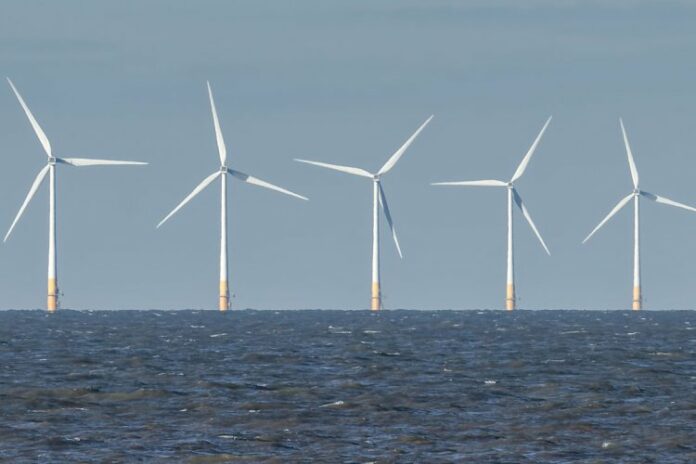
INPEX CORPORATION (“INPEX”) has agreed to enter a stock transfer agreement with Diamond Generating Europe B.V., a Dutch registered, wholly owned second generation subsidiary of Mitsubishi Corporation, and acquire a 50% stake in the Luchterduinen offshore wind farm and a 15% stake in the Borssele III/IV offshore wind farm operating off the coast of the Netherlands. 

This agreement was made through INPEX Renewable Energy Europe Limited (“INPEX enewable”), newly established in the United Kingdom with the aim of promoting INPEX’s renewable energy business in Europe. The completion of the agreement is subject to the fulfillment of conditions precedent determined by the stock transfer agreement including approvals by Dutch authorities and others.

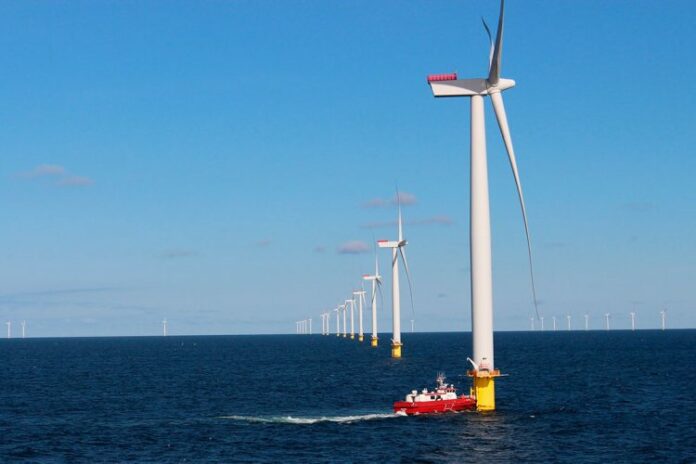
The Luchterduinen offshore wind farm is located 23 kilometers offshore Noordwijk and has been in commercial operation since September 2015 with an output scale of 129 megawatts produced by 43 3-megawatt units.

The Borssele III/IV offshore wind farm is located 22 kilometers off the coast of Westkapelle and has been in commercial operation since January 2021 with an output scale of 731.5 megawatts produced by 77 9.5-megawatt units.

Wärtsilä to supply thrusters for new Wind Turbine Installation Vessel

0

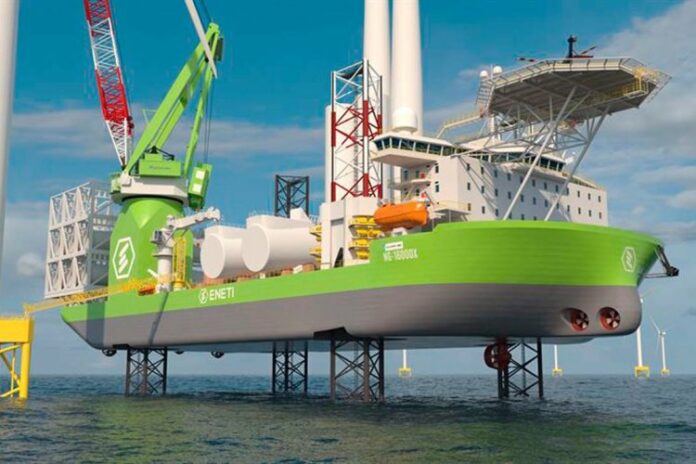
The technology group Wärtsilä will supply the seven thrusters required for a new Wind Turbine Installation Vessel (WTIV) being built at the Daewoo Shipbuilding & Marine yard in South Korea for Eneti Inc. By providing outstanding thrust, robust station-keeping capability and efficient transit operation, the Wärtsilä thrusters will enable optimal propulsion performance for the vessel. The order with Wärtsilä was placed in October 2021. There is an option for a second vessel.

The next-generation vessel features a Gusto 16000X design and will have advanced lifting capabilities and high energy efficiency. Wärtsilä’s advanced lightweight thruster configuration meets the design parameters’ performance standards.  

In particular, Wärtsilä’s proven retraction system combined with an energy efficient 8-degree tilt are key factors in the thrusters’ enablement of effective and reliable station-keeping performance. The tilt delivers up to 23 percent higher effective thrust than non-tilted thrusters, while reducing the power requirement and fuel consumption. The retractable thrusters have a combined electric steering and retraction system which saves space and weight, and which has fewer components for greater reliability.

Min Yun, The head of DSME Offshore Machinery Procurement Department, says:

“We are very familiar with the quality and efficiency of Wärtsilä’s thrusters. They can be trusted to ensure performance in all sea conditions, which is essential in a vessel of this type.”

Emanuele A. Lauro, Eneti Chairman & CEO, says:

“In line with our commitment to environmental sustainability, our focus today is on highly efficient technologies capable of delivering excellent performance. We are assured that the Wärtsilä solutions meet this requirement.”

Roger Holm, President Marine Power & EVP Wärtsilä Corporation, says:

“Safety and reliability are central needs for modern jack-up WTIVs, and our thruster package is optimised to deliver them. Furthermore, by ensuring efficient free sailing and outstanding dynamic positioning, regardless of the sea conditions, we are contributing to the decarbonisation of the maritime sector.”

The scope includes six Wärtsilä WST-32 thrusters fitted with a modern electric steering system for a lower lifecycle cost, high reliability, and reduced energy consumption, and one Wärtsilä WTT-36 thruster All seven comply with applicable environmental regulations with the use of Environmentally Acceptable Lubricants (EAL), and are scheduled for delivery to the yard during the first quarter of 2023. The vessel is expected to be delivered to the owner in the latter part of 2024.

Nexans to connect Oseberg Field Centre with renewable energy

0

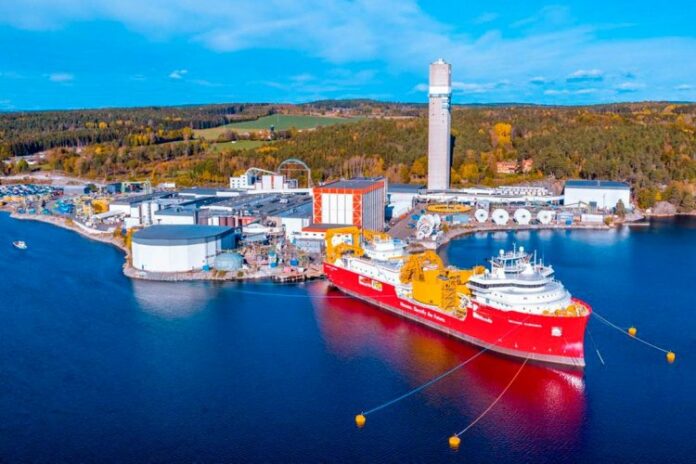
Nexans has won a more than 80 million euros contract to manufacture and install a power cable system that will deliver electricity directly from the Norwegian power grid to its Oseberg Field Centre. 

The cable system will provide renewable energy to the field and the contract is an important part of Equinor’s ongoing commitment to reduce its carbon footprint.

Oseberg is located in the North Sea, around 140 kilometers north-west of Bergen. Nexans’ tailor-made power cable solution will be installed through Nexans’ Aurora vessel, which has the industry-leading capability to lay the cables in one compact installation. Not only does this save time and lower costs, it also reduces the environmental impact of the operation due to smaller transport distances.

The cable system consists of a one 3-core 132kV AC cable with the capacity to transport and supply 180 MW  to the main platform at Oseberg. The power cables will include two fiber optic cables, each fitted with 48 SM fiber optic elements. They will be connected to a central DTS system which crucially allows operators to detect early warning signs of any technical issues in the cables. The cables will be manufactured at Nexans’ plant in Halden, Norway. Installation is due to start in 2023.

Nexans is Equinor’s long-term partner in renewable energy projects and provides expertise and technology to connect Oseberg with renewable energy power. Nexans cabling system will allow Oseberg to operate using renewable energy harnessed from hydropower and achieve about 50% reduction in greenhouse gas emissions in those areas of the field.

Ragnhild Katteland, Executive Vice President, Nexans subsea & Land Systems Business Group, said:

“Electrifying business operations in the energy sector plays an important part in reducing CO₂ emissions and supporting the global transition to net zero. Equinor continues to make strong progress in achieving this, and our ongoing partnership with them is just another step in Nexans’ ongoing journey to electrify the future.”

ClassNK issues AiP for new concept design of ammonia fueled car carrier

0

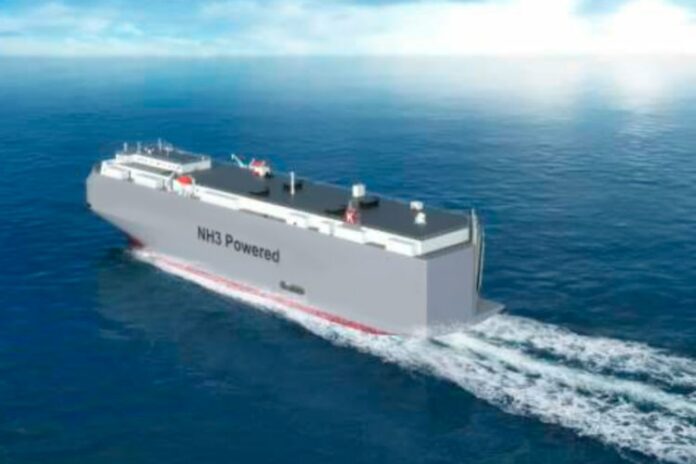
Kawasaki Kisen Kaisha (“K” Line) and Shin Kurushima Dock have joint AIP for the concept design of Ammonia Fueled Car Carrier from NIPPON KAIJI KYOKAI (herein called ClassNK).

As ammonia fuel does not emit carbon dioxide (CO2) during combustion, it is attracting attention as a next-generation marine fuel that will greatly contribute to the International Maritime Organization’s (IMO) strategic goal of GHG reduction by 2050, which is to reduce total GHG emissions by 50% from the 2008 level.

In this joint study, Shin Kurushima Dock, ClassNK and “K” Line formulated a potential risk assessment and safety measures for using ammonia as a fuel. Based on the safety evaluation of ammonia fuel, Shin Kurushima Dock and “K” Line worked on the development of a ship that can both reduce environmental impact and meet actual operational requirements.

Five partners join forces to develop innovative CTV

0

Safety, performance, improved comfort and staff security, reduction in GHG emissions and atmospheric pollutants … these are the main objectives that Louis Dreyfus Armateurs, Mauric, Barillec Marine, SEAir and ADV Propulse aim for thanks to the ZEST industrial consortium. 

The 5 partners have been working for 3 months on the development of a prototype CTV which is safer when transferring personnel and tends towards “zero emissions”.

Thanks to the ZEST project, a new type of innovative and more energy-efficient CTV will emerge in 2025. This CTV will provide a safer and more efficient transfer of wind turbine maintenance personnel, due to its excellent sea navigation characteristics and the integration of sea state monitoring systems.

In comparison to the current market for wind turbine maintenance personnel transfer vessels, it will offer a more suitable and secure solution for transfer operations at sea, will be more manageable and better suited to maintenance operations.

ZEST will operate with low energy consumption and greenhouse gas (GHG) emissions thanks to the combination of innovative technological bricks and an optimized architecture. The use of recyclable composite materials will improve the environmental impact from the construction of the ship until its dismantling. All of these impacts will be assessed through a Life Cycle Analysis.

By getting closer to zero GHG emission while gaining operational and safety capacities, the CTV ZEST will therefore have a privileged spot in a growing market. By becoming the new standard for CTVs, with very high operational and environmental performance and relying on the skills of the French maritime industry, the CTV ZEST will generate several tens of millions of euros in turnover and create nearly a hundred jobs by 2030 for the French maritime industry (equipment manufacturers, architects, shipyards, shipowners).

Thanks to the establishment of this consortium, the design studies of the ship and the associated technological bricks are currently being carried out, in parallel with a technical and economic study.

The technological building blocks of the project are as follows:

  • An innovative CTV architecture with foils;
  • Innovative trochoidal thrusters;
  • The integration of “Zero emission” GHG energy system solutions;
  • An innovative energy consumption management system;
  • A wave monitoring and floating object detection system;
  • Depending on market needs, an adapted dynamic positioning system.

At the end of this study phase, the consortium will aim for a first commercial order which will allow the construction of a demonstrator. This demonstrator will be tested in real conditions over a period of 6 months to validate its level of operational safety and its technical, economic and environmental performances.

Jan De Nul to install 41 wind turbines of 8.4 MW at the Danish West coast

0

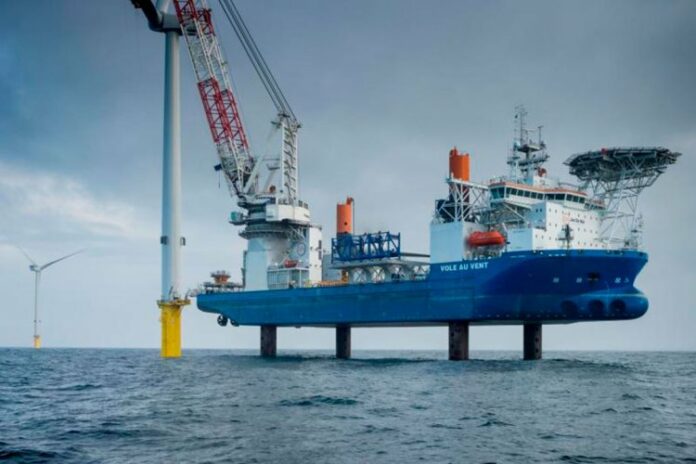
For the offshore wind farm Vesterhav Nord & Syd in Denmark, Jan De Nul Group will transport and install a total of 41 wind turbines of 8.4 MW each on behalf of Vattenfall Denmark. All together, these turbines will produce enough green electricity for the annual needs of approximately 380,000 Danish households. Jan De Nul’s jack-up installation vessel Vole au vent will be mobilised for this installation project.

The contract between Jan De Nul and Vattenfall includes the design, engineering, manufacturing, procurement and delivery of the Sea-Fastening. Jan De Nul will also be responsible for the engineering of the RAMS for the marine operations related to the wind turbine installation, as well as the transport and installation of the 41 Siemens Gamesa wind turbines with the jack-up installation vessel Vole au vent.

Jan Van Impe, Area Manager Offshore Renewables Jan De Nul Group, said:

“We are very pleased and honoured with this contract award as it confirms once more that Jan De Nul is a trustworthy and experienced partner in offshore wind. After the successful installation of 72 wind turbines for the 604 MW Kriegers Flak wind farm – the largest in Denmark – we are very pleased with the opportunity to build further on our experience together with Vattenfall.”

Both offshore wind farms are located in the Eastern part of the Danish North Sea. The Vesterhav Nord Offshore Wind Farm is based west of the coast of  Vejlbi, and the Vesterhav Syd Offshore Wind Farm is located close to the Sondervig coast.

The two offshore wind farms are expected to be fully operational by the end of 2023.

Bart Willems, Head of Commercial Offshore Wind of Jan De Nul Group, said:

“We are proud to contribute to the energy transition in Europe, more specifically with this ambitious project in Denmark. After the successful commissioning of other Danish wind farms this is another milestone for the production of green electricity for the Danish households. Jan De Nul has the equipment, the experience and the commitment to complete this project successfully.”

Hydrogen viability at Portsmouth International Port to be explored

0

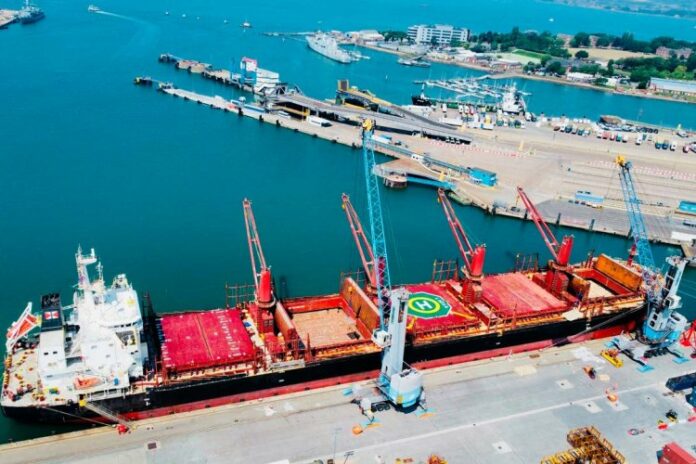
With hydrogen’s potential within the maritime industry, Cox Powertrain has joined a new UK-based consortium to convert a diesel engine to operate as a dual fuel hydrogen variant and implement hydrogen into Portsmouth International Port (PIP).

Dual fuel hydrogen engines hold particular promise within the shipping community with the sector recognised as a key area to decarbonise in order to reach net zero targets.

With weight and energy density key aspects of the shipping community and because of this, many within the maritime sector perceive hydrogen as a key zero-emission fuel to explore with its unique properties leveraging these demands.

Cox Powertrain recognises its potential and has said that the conversion and demonstration will form part of the wider Shipping, Hydrogen and Port Ecosystems UK (SHAPE UK) project that is targeting an achievable modular green hydrogen generation system within (PIP).

By introducing hydrogen technologies into one of the UK’s largest international ports, the nation is gearing up for increasing demand for hydrogen technologies both within the maritime sector and in other industrial sectors across the UK.

In fact, ports can be recognised as potential hydrogen hubs in themselves with many operations within the port able to utilise hydrogen as well as existing infrastructure in place to build hydrogen out.

The SHAPE UK project aims to support this particular intention with the project setting out several key aims for the PIP.

Included within this is assessing the viability of local hydrogen infrastructure by implementing a modular hydrogen electrolyser which could provide domestically produced hydrogen for both the port and the local area.

As well as this, a demonstration case for portside hydrogen is set to be explored through the partnership with Cox Powertrain and this could provide a foundation to accelerate the adoption of hydrogen technologies at PIP.

Speaking on this development, Tim Routsis, CEO of Cox Powertrain, said:

“I see development of effective and useable hydrogen-based marine propulsion systems as essential if we are to drive down emissions while continuing to provide essential transportation systems.

“This is an area where the UK is excellently placed to develop the technologies and infrastructure which will both reduce pollutants and give birth to a vibrant new UK based economic sector.”

James Eatwell, Head of Research and Development for Cox Powertrain and SHAPE project lead for Cox Powertrain, said:

“The maritime sector as a whole and Cox in particular, recognise the need to make a positive contribution to the significant challenges of reducing worldwide CO2 emissions.

“From Cox’s perspective, hydrogen represents a highly promising option for the reduction of marine CO2 emissions, and we are delighted to be a part of this exciting project, bringing together as it does such a comprehensive range of expertise from across industry.”

Hurtigruten launches more West African and South American expedition cruises

0

Hurtigruten Expeditions launches even more West African expedition cruises for 2023/24 – including one of the least visited destinations and national parks on the planet. 

Hurtigruten Expeditions has rapidly expanded its global offering of small-ship expedition cruises in recent years, adding destinations such as the Galapagos, West Africa, the Caribbean, and the only year-round expedition cruises directly from Germany and UK to the Norwegian coast.

The 2023/24 season will be the most extensive in the company’s 125 years of exploration. Some of the new highlights includes:

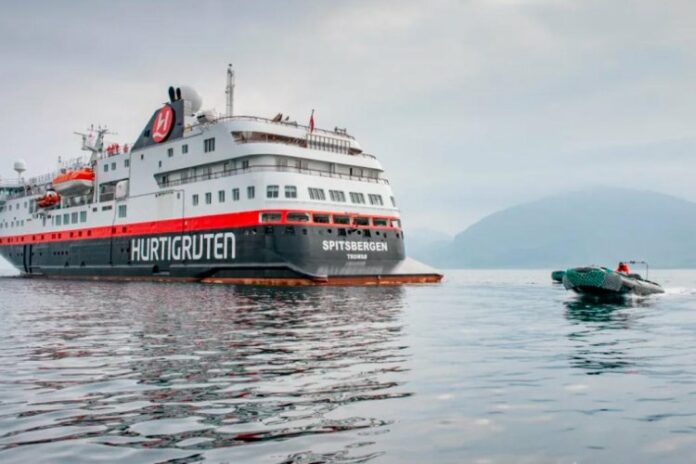
  • Exploration of the remote and rarely visited parts of West Africa including Cape Verde and the Bissagos Island. The itineraries include four countries: Cape Verde, The Gambia, Guinea-Bissau, and Senegal, with MS Spitsbergen based out of Dakar, one of Africa’s most bustling cities.
  • North American national parks galore – visiting stunning natural reserves both on the east and west coasts of the United States.
  • Even greener exploration on board the recently elected “World’s Most Sustainable Cruise Ship” MS Fridtjof Nansen – and identical sister ship MS Roald Amundsen.
  • A brand-new, ten-day expedition cruise from Panama to Barbados.
  • A total of 32 expedition cruise packages where small-ship expedition cruising can be combined with land-based exploration of world renowned destinations such as Machu Picchu, Lake Titicaca, the Galapagos Islands, and Parque Nacional Manuel Antonio.

Stena Line launches new route between Stockholm Norvik and Hanko

0

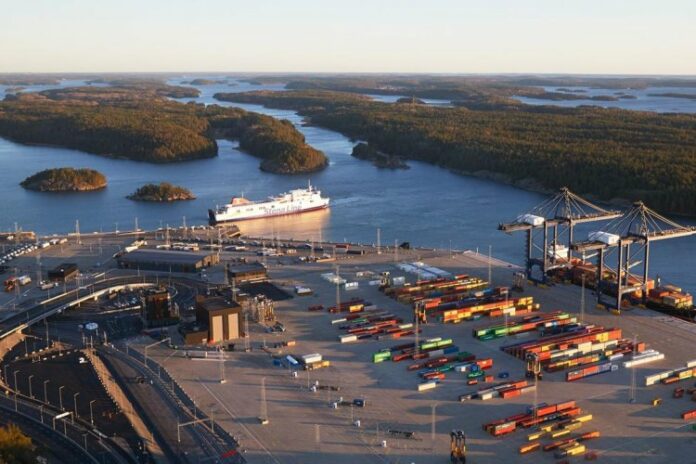
Stena Line is continuing to expand in the Baltic Sea together with Ports of Stockholm. As early as February next year, the shipping company will introduce a brand new route between Stockholm Norvik Port and Hanko in Finland.

From 1st February the vessel Urd will come into service on the new route. A second vessel, Stena Gothica, will be added to the route in May, providing daily departures from both ports. Both vessels have a cargo footage capacity of 1,600 metres and can carry 186 passengers.

Niclas Mårtensson, CEO Stena Line, says:

“With our new daily route between Hanko and Stockholm Norvik we heavily expand and strengthen our position in the Baltic Sea. We are very happy to offer our freight customers in Stockholm Norvik a new connection to one of the most dynamic countries in Europe, Finland, and to the Port of Hanko as one of the most efficient ports of the region. By setting up the route in Stockholm Norvik, we follow our ambition to improve our existing reliable partnership with Ports of Stockholm further and grow together.”

Stena Line has already committed in a major way to Stockholm Norvik Port. This year the shipping company introduced two extended vessels on the Ventspils – Stockholm Norvik Port route. During 2022 they will expand operations even further by exchanging these vessels for two larger, newly built vessels on the same route.

Johan Wallén, Marketing and Sales Manager at Ports of Stockholm, explains:

“The commitment of Stena Line in introducing yet another route from Stockholm Norvik Port emphasises how important the newly built port is for the sustainable supply of goods to Sweden’s largest consumer area. The port has been open for less than two years and we are already growing with the introduction of a new route. This has exceeded our expectations and shows that it was the right decision to invest in building Stockholm Norvik.”