4 C
New York
Home Blog Page 490

Fugro’s new environmental lander technology deployed in the Red Sea

0

The yearlong effort is being performed in collaboration with King Abdullah University of Science and Technology (KAUST) to better understand the local ecosystem and support Saudi Vision 2030, the country’s social and economic framework for a sustainable future.

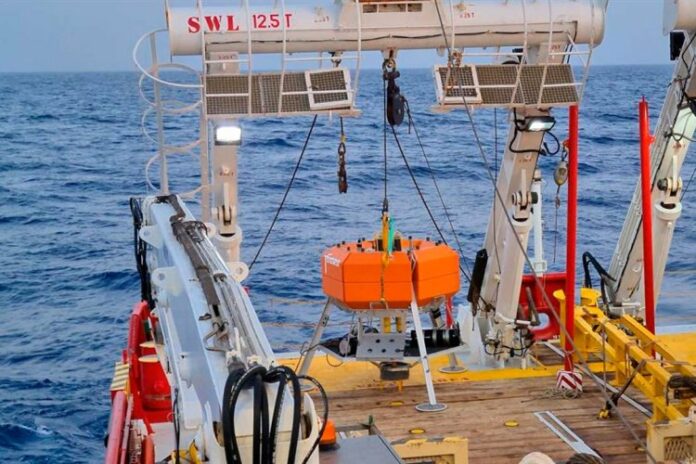
The KAUST Red Sea programme represents Fugro’s first use of the new lander technology in the Middle East. Built in partnership with philanthropic and commercial investment organisation Ocean Data Solutions (ODS), the deepwater landers are a cost-effective, reusable and reconfigurable platform, making them ideal for obtaining large volumes of oceanographic data in waters that are historically understudied. The landers can host multiple sensors to monitor and measure a variety of environmental parameters for months at a time in water depths of 10 m to 6000 m.

Remarking on the Red Sea deployment, ODS President Katherine Hall said:

“ODS was founded on the belief that a healthy ocean determines our global capability to sustain healthy populations, robust economies, and our future on this planet. A known and healthy ocean is needed to understand and mitigate challenges like sea-level rise and food security, and to scale-up solutions for renewable ocean energy and sustainable aquaculture, among others. We are confident that our partnership with Fugro on the deepwater lander programme and the collaboration with KAUST will allow us to make deeper impacts and contributions to our mission.”

Youssef Atmani, Regional Metocean Manager for Fugro also commented:

“We value this strategic collaboration with ODS and KAUST, as the autonomous technology moves Fugro closer to our goal of safe and efficient operations in support of clean energy projects, more sustainable infrastructure and climate resilience. We believe the efficiencies of our new deepwater lander systems will help unlock a new era of ocean data collection, strengthening our contributions to a safe and liveable world.”
AqualisBraemar LOC Group completes OSD-IMT acquisition

0

Energy and marine consultancy AqualisBraemar LOC Group (ABL Group) has successfully completed the acquisition of the UK operations of ship design and marine consultancy company OSD-IMT, from Damen Shipyard Group.

OSD-IMT is a specialist consultancy in ship design for newbuild, refit and conversion projects. The company operates in all key marine markets – including the renewables, maritime, defence and oil and gas sectors. Its expert knowledge covers a broad selection of vessel types and a wide range of technologies, including design and engineering for alternative fuels. The company in particular specialises in newbuild construction, support and supply vessels for the offshore energy industry, dredger and dredging support vessels, and marine survey vessels.

OSD-IMT, which has launched more than 150 designs to date, will become part of ABL Group company Longitude Engineering, which specialises in marine operations engineering and marine design, conversion and upgrade of specialised vessels. Further, Longitude has a solid track-record in the design and development of clean shipping technology, with experience in hybrid-propulsion, LNG and hydrogen fueled-vessels.

Jake Anderson, Group MD for Engineering Services at ABL Group and Managing Director of Longitude Engineering, said:

“Our plan is to combine OSD-IMT’s ship design track record with Longitude’s specialist expertise in marine design, consultancy and operations. While OSD-IMT have traditionally focused more on newbuild ship design, Longitude’s legacy is rooted in specialist consultancy services including advanced analysis, hybrid power systems and procurement support. The combination is an excellent match.”

Dean Goves, Managing Director Maritime, Longitude Engineering, said:

“With maritime decarbonisation accelerating into focus, bringing together OSD-IMT and Longitude’s portfolios in alternative fuel-powered vessel design, will significantly reinforce our offering to support a wide range of maritime stakeholders on the path to net-zero.”

Longitude Engineering specialises in independent engineering, design and analysis for renewables, maritime, defence, oil and gas and infrastructure market sectors. It primarily supports clients with marine operations engineering and marine design, conversion and upgrade, supporting marine projects and assets throughout their development lifecycle.

RiverCell’s hydrogen fuel cell hybrid set to be used for inland shipping

0

Offering a unique hybrid design, the fuel cell system will operate for inland vessels providing a method to decarbonise this sector of European transportation.

The system itself features energy storage combined with sustainable fuel cell-powered energy production that can both increase safety and efficiency within the shipping sector.

As part of the demonstration to showcase the systems safety aspect, a section of a river cruise vessel was set up on dryland at Neptun Werft, Germany, where a protype of the system was successfully integrated.

Included within the consortium developing this fuel cell system is DNV, HADAG, Helm Proman Methanol, Neptun Werft, Pella Sietas, Technische Universität Berlin, Viking River Technical Cruises, and Advent Technologies.

By bringing a new fuel cell system specifically for the maritime sector, it enables the optimisation of the hybrid system to ensure that it can bolster the inland shipping sector.

This will ultimately make fuel cells more attractive to fossil fuel engine variants and support the EU in achieving its net zero goals by 2050.

Ragnar Christenson, Project Manager for the RiverCell consortium from Meyer Werft, said: 

“The maritime industry needs to find new ways to reduce all its emissions. Not only in the long run, but starting immediately, the shipping industry needs to deploy sustainable technologies and in particular speed up the change to renewable fuel sources.

“By RiverCell, we have demonstrated how fuel cell technology can be a safe, clean and efficient alternative to today’s diesel gensets in marine use. We have also been able to demonstrate how hydrogen for fuel cells, in the form of methanol, can be safely and efficiently stored on ships.

“The HT PEM fuel cells developed and manufactured by Advent Technologies can use methanol, carrier of hydrogen, as the fuel source, and we consider methanol one of the most promising and practical future fuels for the shipping sector.

“At Meyer Werft, we are happy to pioneer alongside our partners with our demonstrations of fuel cell technology, both to gain a competitive edge but also to influence global standards, paving the way for this sustainable alternative.”

Reef experiment set to answer big reef restoration questions

0

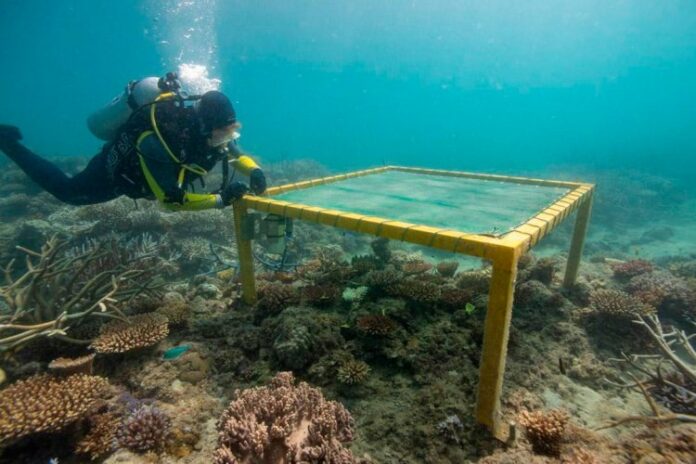
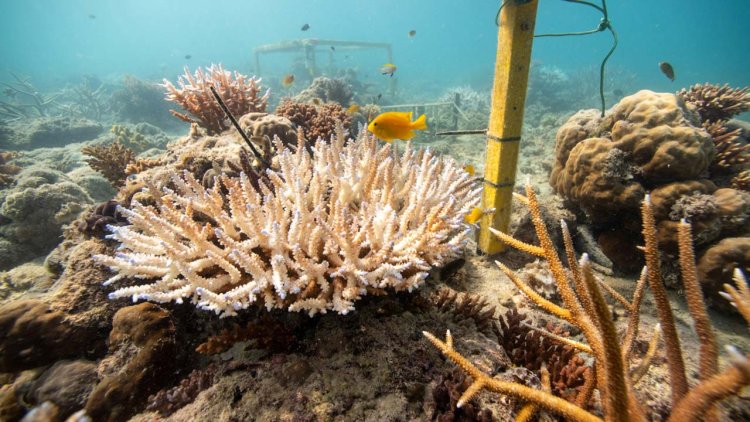
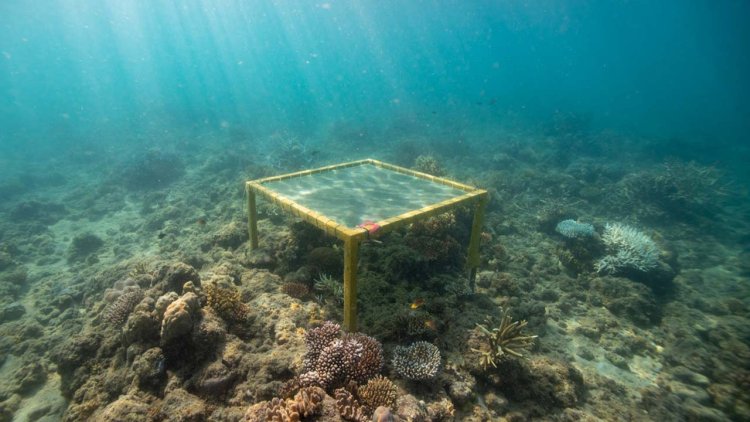
Last summer, following localised bleaching near Lizard Island, a science team from the Australian Institute of Marine Science (AIMS) installed three levels of underwater shade structures over areas of bleaching coral colonies experiencing heat stress.  

The team returned to Lizard Island Research Station, in the far northern Great Barrier Reef, in spring to survey the sites to see how recovery of bleached colonies compared between the shaded and unshaded reef communities.  

The experiment is set to determine if reducing light intensity can help corals survive severe heatwaves as well as answer other important reef restoration questions.

AIMS coral ecophysiologist and project leader Dr Neal Cantin said apart from water temperature, there were three main drivers that raised the risk of coral mortality during a heatwave: intense sunlight, water clarity and the speed of water flow through the reef.  

He said:

“If we can eliminate one of these main drivers of bleaching, such as intense sunlight during peak heat wave conditions, we might be able to ease the corals’ stress level enough to help reduce mortality. This shading experiment will provide critical information to tell us the best way we can intervene and help corals survive future bleaching events. It’s allowing us to see in real-time, under real-world reef conditions, how corals respond to these high stress periods.”

The intention of the experiment is not to trial shade structures as an intervention, but rather to inform the bigger engineering approaches to reduce light on a larger scale, such as cloud brightening or fogging.  

The cloud brightening intervention, led by Southern Cross University’s Dr Dan Harrison, involves spraying trillions of nano-sized ocean salt crystals into the air to reflect sunlight away from the ocean surface and cool coral reefs.  

Dr Harrison said:

“Cloud brightening is one of the most promising interventions that could potentially be applied to the entire Great Barrier Reef during a coral bleaching event. This AIMS shading experiment is filling key knowledge gaps and providing essential data to ensure the successful development and implementation of cloud brightening.”

AIMS Research Program Director Dr Britta Schaffelke said marine heatwaves were predicted to become more intense and more frequent due to climate change.  

She said:

“This means higher temperatures will last longer across greater areas of the Reef, leading to more bleaching more often. If we can engineer approaches that can reduce the intensity of sunlight over reefs during the peak summer periods that drive bleaching, we might be able to reduce the bleaching related mortality.  

“While reducing emissions is the most critical long-term solution to protect coral reefs, restoration and adaptation initiatives can play a significant role in protecting the reefs from the escalating effects of climate change.”  

The AIMS project is part of the Australian Government’s Reef Restoration and Adaptation Program with the Great Barrier Reef Foundation – a program fast-tracking interventions to help reefs resist, adapt and recover from the effects of climate change. 

Ecochlor Announces USCG Type Approval for its Filterless EcoOne™ BWMS

0

The EcoOne™ BWMS has been tested extensively to ensure that it works effectively as a single-step treatment, without a filter, under all operating conditions in brackish and marine waters in accordance with the USCG, Standards for Living organisms in Ship’s Ballast Discharged Waters, Final Rule (Final Rule).

The IMO Type Approval Certificate was awarded in September 2021 demonstrating compliance with one of the most recent, stringent testing standards available in the industry.

Leif Melhus, Senior Engineering Manager, said:

“All of our arrangements for the USCG Type Approval came together quickly due to some very hard work by our engineering team and with the great help of our partners in this endeavor – DNV, Golden Bear Research Facility, DHI and Maran Tankers. This is due to everyone staying focused and following through on every little detail in a timely fashion. It is a fantastic achievement and a credit to each and every person who worked on the team.”

Andrew Marshall, CEO, said:

“Our EcoOne™ and EcoOne™ Hybrid BWMSs with both IMO and USCG Type Approval have revolutionized the BWMS industry. Whilst we acknowledge that there isn’t any single BWMS that will fit all applications for every trade route, we now offer three variations of BWMSs – a filtered, filterless and hybrid version. Add to that our powerful chlorine dioxide (ClO2) treatment technology – which is effective in all water conditions without any need for the crew to adjust operating parameters – and low cost. Accordingly, shipowners will no longer have to install BWMSs that are not optimal for their vessel or trade routes. The Ecochlor systems, already having a strong reputation for reliability, make an especially attractive option for any shipowner focused on compliance.” 

Ecochlor’s three products incorporate ClO2 technology in different ways to provide shipowners flexibility in the installation and operation of their BWMS. Benefits to every Ecochlor system includes few main components to minimize breakdowns, no TRO sensors, no complex power or electrodes, no retreatment or neutralization at discharge, high flow rates (16,200 m3/h), an option to gravity ballast, and the lowest power requirements in the industry.

Mr. Marshall stated: “Many of our new contracts are with current clients on their “second wave” of BWMS installations and most of them are purchasing an EcoOne™ or EcoOne™ Hybrid this time around. This is due in part to the lower CAPEX and OPEX costs for the shipowner, positive feedback from their crew regarding our previously installed systems, high operability (98%) of Ecochlor system, and the excellent service support programs we offer to them.”

Fincantieri to build second LSS unit for the Italian Navy

0

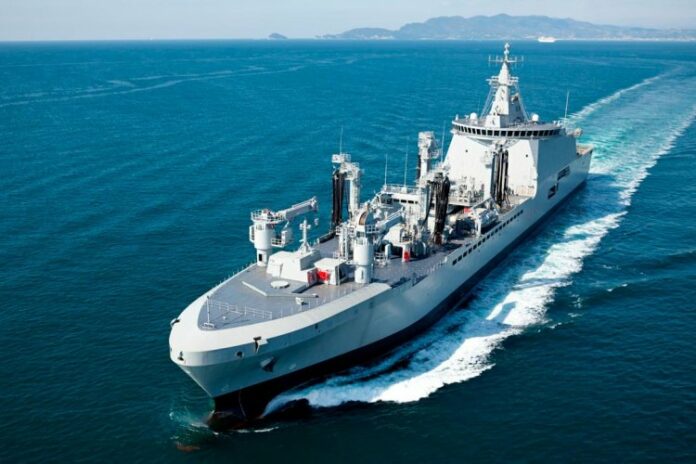
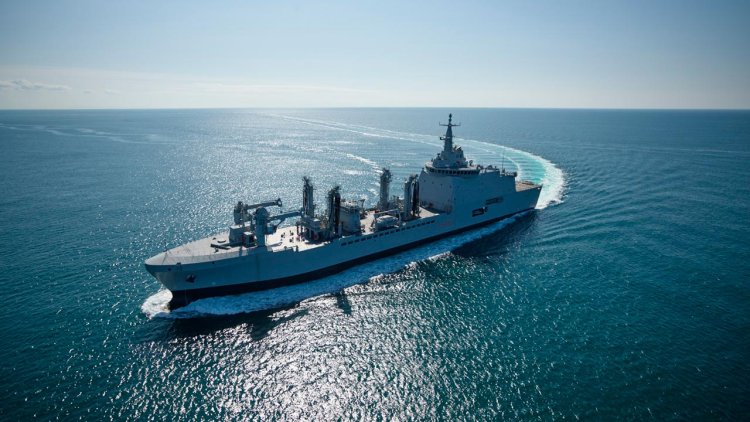
The consortium – Raggruppamento Temporaneo di Impresa (RTI) – led by Fincantieri has signed with OCCAR (Organisation Conjointe de Cooperation sur l’Armement, the international organization for joint armament cooperation) a contract for the construction of a second Logistic Support Ship (LSS) for the Italian Navy, which also includes the option for a third ship.

The LSS will be entirely built at the Castellammare di Stabia shipyard, with delivery scheduled for 2025. The value of the contract is approx. 410 million euros including the combat system.

The order also includes the provision of support over the lifecycle of the vessel in the first ten years, divided into logistics and in-service support (maintenance), as well as the supply of naval components and machinery produced by Fincantieri Mechanical Systems and Components Unit, including shaft lines, steering system, manoeuvring thrusters, fin stabilizers and other handling systems.

As part of the multi-year program aimed at safeguarding Italy’s Defence at-sea capacity (known as the “Naval Act”), Fincantieri is currently building seven multi-purpose offshore patrol vessels (PPA) and the “Trieste” Landing Helicopter Dock (LHD). Last March, it delivered the “Vulcano” LSS, a project that was also acquired by the French Navy for the definition of the Flotlog programme, a series of units built in partnership with the Castellammare di Stabia shipyard.

The basic characteristic common to all three classes of ships is their very high level of innovation, which makes them extremely flexible in their various profiles of use with a high degree of efficiency. Most importantly, it will be possible to use these units in a complementary way even for non-military-related activities, such as, for example, supporting civil protection in humanitarian assistance and disaster relief. Moreover, their environmental impact is low, thanks to advanced low pollution emission generators and electric-drive propulsion motors and biological waste control systems.

The LSS is a vessel that provides logistics support to the fleet, endowed with hospital and healthcare capabilities thanks to the presence of a fully equipped hospital of approximately 800 square metres, which includes: 2 operating rooms with pre-anaesthesia, a radiology room, a dentist’s office, a gynecological office, 2 emergency rooms, a clinical diagnosis lab and blood bank, an intensive care room, a CT scan room, and a burns room. The ship combines the ability to transport and transfer to other transport vessels liquid cargo (diesel fuel, jet fuel, fresh water) and solid cargo (spare parts, food and ammunitions) and to perform at sea repairs and maintenance work for other vessels. The defence systems are limited to the capacity of command and control in tactical scenarios, communications, and non-lethal dissuasive defence systems. The LSS is also capable of embarking more complex defence systems and becoming a platform for intelligence and electronic warfare systems.

  • 193 metres long
  • Top speed approx. 20 knots
  • 235 persons including crew and specialists
  • Capacity to supply drinking water to land for approx. 6,000 people
  • Capacity to provide electricity to land with 2,500 kW of power
  • Possibility of embarking up to 28 ISO 20 modules, including residential and healthcare modules
  • Capacity to perform rescues at sea, through recovery and seabed operations (the ship is equipped with two 30-tonne offshore cranes)
  • Base for rescue operations via 2 helicopters and special vessels (2 RHIBs and 2 tenders)

Kongsberg Maritime Improves the Safety of Alvheim FPSO

0

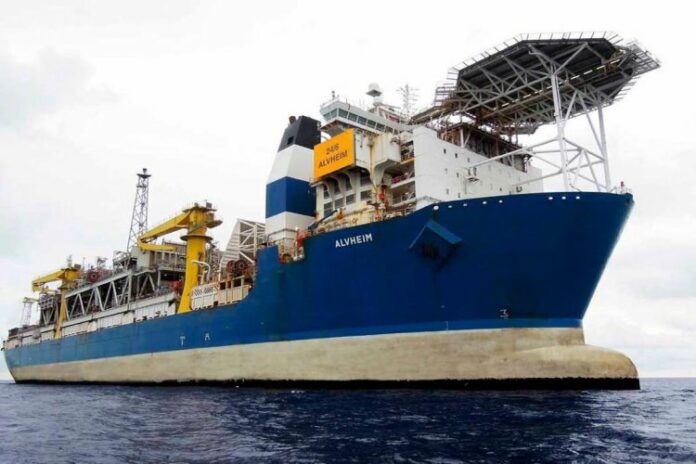
A dedicated Kongsberg Maritime project team has successfully carried out a major upgrade of the Safety and Automation Systems on a Floating Production Storage and Offloading (FPSO) vessel belonging to the Norwegian oil exploration and development company Aker BP.

Formerly a tanker named Odin, the vessel was converted into an FPSO in 2008 and renamed Alvheim in recognition of the oil field in which it operates, located in the central part of the North Sea. However, its hull system was not upgraded during this process. Given that the hull system was now reaching the end of its working life, with outmoded software and hardware plus an increasing difficulty in sourcing spare parts, an upgrade was seen to be a sensible solution.

After studying all existing Safety and Automation Systems controllers and comparing potential upgrade methods, Kongsberg Maritime’s team organised the full-scale replacement of 19 SAS controllers as an EPCI (Engineering, Procurement, Construction and Installation) project. KM’s scope of supply encompassed everything from engineering, procurement, fabrication and documentation to testing, offshore installation and commissioning of the hull SAS cabinets. The project proceeded with a procurement order from Aker BP in February 2020 and culminated in October 2021 with the successful live field test on the last controller offshore.

The project deliveries were completed according to Aker BP’s HSE and quality requirements, on time and well within the budget frame set for the project at the height of the pandemic. Lockdown restrictions required the team to think digitally and operate remotely, which they did successfully. No HSE incidents were reported during the project – a testament to the consistently high health & safety standards adhered to by everyone in the team.

RRS Sir David Attenborough arrives in Antarctica for the first time

0

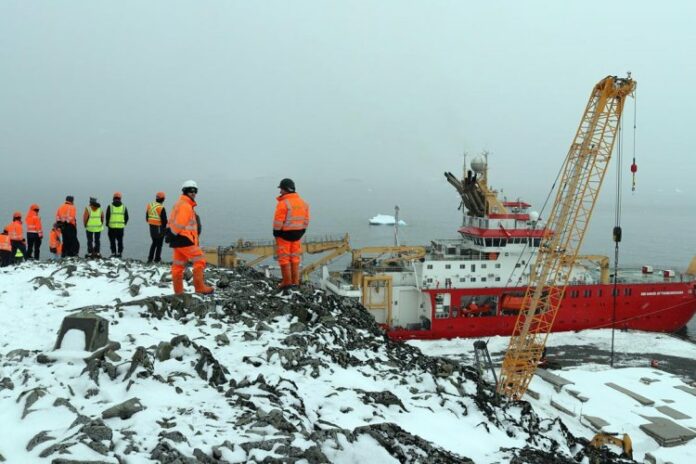
Britain’s new polar research vessel, the RRS Sir David Attenborough, has travelled to Antarctica on its maiden voyage, with its first call today (17 December) at Rothera Research Station – the UK’s largest Antarctic research station on the continent.

The RRS Sir David Attenborough departed the UK in November, arriving in the Falkland Islands three-and-a-half weeks later. From there, the ship continued its voyage, officially entering Antarctica on 13 December. The ship has now arrived at British Antarctic Survey’s largest research facility, transporting station personnel, food, fuel and cargo.

The RRS Sir David Attenborough’s arrival at Rothera Research Station also marks the first time the new purpose-built £40m wharf has been used to berth the ship. The 74-metre wharf was completed in 2020 by the Antarctic Infrastructure Modernisation (AIMP). It enables Britain’s new polar research ship to berth safely and help the station run more efficiently with a new crane to launch small science boats, a personnel gangway and a floating pontoon to deploy scientific instruments. The wharf achieved the first sustainability CEEQUAL award in Antarctica for construction projects last July, gaining the highest rating available of ‘Excellent’ by BRE.

The RRS Sir David Attenborough’s arrival also marks the start of the new construction season with activity on the Discovery Building for the third year in a row – a new state of the art, science and operations facility for Rothera Research Station. Due to the harsh, cold Antarctic environment, construction can only take place during the Antarctic summer months. Over 50 members of a specialist construction team arrived last month and will work until April on erecting the main steel structure, installation of ground floor pre-cast concrete slabs, ground drainage and site wide services.

WinGD expands engine technology investment with Global Test Centre

0

The new test centre which opened on the 16 December, is a collaboration with CSPI (China Shipbuilding Power Engineering Institute Co., Ltd.) for the advancement of a decarbonized future through sustainable fuel and combustion research and innovation.    

The role of R&D has come into sharp focus as part of the strategy to help ships reach the IMO’s 2050 target. The success of the industry reaching these targets relies on a focus well beyond alternate fuels. 

This new Global Test Centre will encompass research and innovation around future fuel propulsion solutions, holistic energy management systems, and power generation based on new energy converters. For the development of new technologies and products, the Global Test Centre comprises of two 2-stroke test engines and several test rigs for the validation of sub-systems such as fuel injection, pumps or gas admission valves. With future demands in mind, testing will focus on new fuels including methanol and ammonia, and on the further development of WinGD’s low pressure dual-fuel technology. The test centre will also be equipped with an electrical grid representing modern vessels, including a DC grid laboratory and dynamometers instead of water brakes, a perfectly suited infrastructure to test and demonstrate hybrid propulsion systems in the future. 

WinGD Vice President Research & Development Dominik Schneiter said:

“The pace at which we need to act as an industry to reach a carbon free future requires all players to step up with significant commitment. By considerably expanding our test engine infrastructure, we are confirming our commitment to accelerate the energy transition in shipping. The future is a multi-fuel landscape where deep knowledge of the combustion properties of all fuels is required. Our collaboration with our CSSC family of companies allows us to bring the full weight of our shared expertise towards this goal.”

Subsea 7 awarded contract offshore Australia

0

Subsea 7 has announced the award of a large1 contract to Subsea Integration Alliance2 by Woodside, as Operator for and on behalf of the Scarborough Joint Venture3, for the Scarborough project, located approximately 380km offshore North West Australia.

The project work scope covers the engineering, procurement, construction, and installation (EPCI) of subsea pipelines and production systems. The development will include 45 kilometres of rigid flowlines, six flexible flowline risers, 42 kilometres of umbilicals and eight trees, as well as associated subsea equipment, in water depths of approximately 950 metres.

The Subsea Integration Alliance team established during the initial front-end engineering and design (“FEED”) phase, awarded in January 2019, will now transition into the full EPCI phase. Project management and engineering will take place in Perth, Australia, with support from Subsea 7’s Global Project Centre’s offices in Malaysia, UK and France and various OneSubsea® offices.

Offshore activities are targeted to take place from 2023 to 2025 using Subsea 7’s reel-lay and flex- lay vessels.

Olivier Blaringhem, CEO Subsea Integration Alliance said:

“This award is the result of a strong and collaborative early engagement process with Woodside, working with a high level of transparency and cooperation during the pre-tender and FEED phases. It demonstrates the potential value of Subsea Integration Alliance and its optimised and integrated offering capacity. We look forward to working with Woodside to deliver the project successfully and safely while maximising the client’s production objectives.”

David Bertin, Vice President for Subsea 7 Global Projects Centre and Asia Pacific said:

“We are proud to be awarded this contract by Woodside. This builds on our long-standing relationship with the client and our successful track record of projects executed offshore Australia. Our local office in Perth will be supported by Subsea 7’s Global Projects Centre, underlining the strength and breadth of our project management capabilities and the capacity to deliver complex projects worldwide.”