0.5 C
New York
Home Blog Page 483

Kongsberg delivers innovative propulsion technology to VARD for vessel newbuilds

0

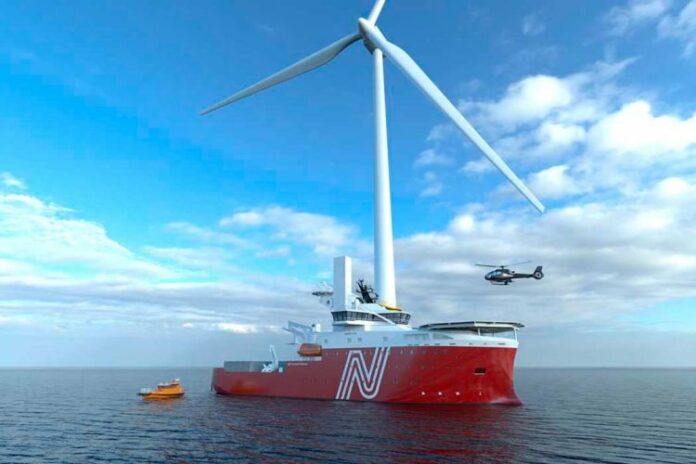
Kongsberg Maritime’s scope of delivery encompasses a combination of systems which will enable the operator to maximise operational windows whilst minimising overall energy consumption.

Key to this is the propulsion technology, which for the CSOVs will include new permanent magnet (PM) PMAZ 2600PM azimuth thrusters, PM tunnel thrusters and a retractable azimuth thruster. The return of investment is greater propulsion efficiency and manoeuvrability with reduced operational noise, lower emissions and compact dimensions.

These units are part of an environmentally-focused range of propulsion units developed by KONGSBERG over the last decade, all based on the company’s in-house PM technology. With only one rotating component in the underwater unit, low oil volume and no requirement for lubrication pumps or inboard cooling systems, PM thrusters experience reduced wear and tear and consequently deliver substantial savings in lifecycle cost. They also benefit from significant reductions in energy consumption, emissions and oil spill risk when compared with conventional azimuth thrusters, and are designed to meet stringent noise and vibration requirements, both on board the vessel and regarding emissions to sea (URN).

Svein Leon Aure, CEO of Norwind Offshore, says:

“We are investing in this state-of-the-art technology from KONGSBERG in full confidence that it will pay off in the long term. Our operational expenditures will be considerably reduced in comparison to using conventional thrusters, and the same goes for our environmental footprint. This provides us with purpose-built vessels, designed for the future of advanced maritime operations in the offshore wind market.”

Ottar Ristesund, SVP Sales Propulsion & Engines, Kongsberg Maritime, adds:

“It’s a pleasure for us to know that our high-end products perform such a central role in the contract for this new and innovative player in the offshore wind market. We share our objectives to enable safer, more economical and greener operations at sea with both VARD and Norwind Offshore, and it will be rewarding for everyone concerned to put these principles into practice in such a direct and practical way.”

The first of the new CSOVs of VARD 4 19 design will be delivered from VARD in 2Q 2023. The second vessel is scheduled for delivery in 3Q 2024.
Stena Line and Gothenburg Port Authority sign MOU on relocation to Arendal

0

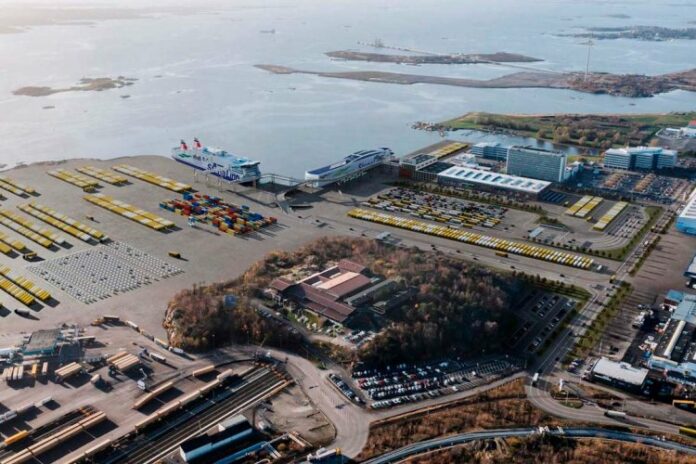
Stena Line and Gothenburg Port Authority have signed a Memorandum of Understanding, committing themselves to make efforts to move the ferry operator’s terminals and port operations to a new location in Arendal, in the outskirts of the harbour. 

The ambition is to strengthen Gothenburg as a key sustainable Nordic cargo hub, in line with the joint vision of sustainable shipping and port handling, and to support the City’s plans to develop a dense mixed-use urban area along the riverbanks. The idea is that Stena Line shall be able to take up a 25-year lease agreement latest 1 January 2027.

Niclas Mårtensson, CEO Stena Line, says:

”We want to be a forerunner within sustainable shipping and grow together with Gothenburg. We enter the discussions on a new localisation for our port and terminals with a positive mindset because we think it can give both us and the entire trade an opportunity to speed up the transition to green operations.”

Stena Line, the City of Gothenburg and Gothenburg Port Authority work closely together since many years. The lease agreements for the plots where Stena Line’s terminals for the ferries to Denmark and Germany are currently situated have been extended until 2035. The parties have however agreed that an earlier termination can come into play if this should be called upon by the urban development, and this is now the case because of the City’s decision to go through with the Lindholmen tunnel.

Elvir Dzanic, CEO Gothenburg Port Authority, says:

”After the Port Authority has secured the grounds as well as agreements with surrounding businesses, there is now a suitable place and a basic layout. Thus, we have together created preconditions and can continue discussing a localization that supports Stena Line’s operations, fits with the ambition of the Port Authority to consolidate operations in the outer harbour area, and at the same time gives the City access to central areas for urban development.”

Vår Energi and Equinor cooperating on North Sea logistics

0

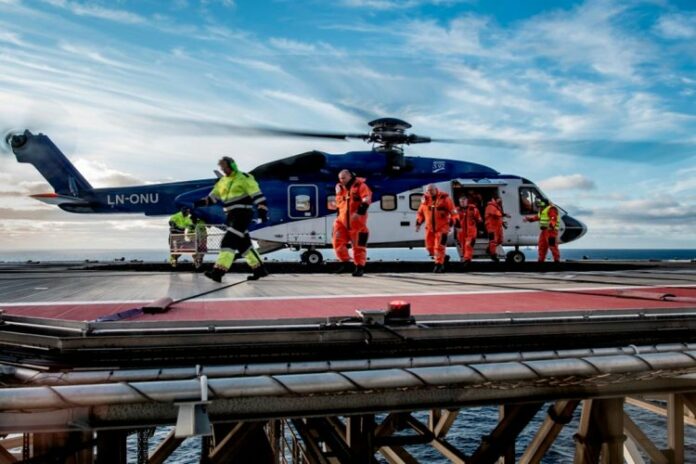
The agreement for assigning helicopters was effective from 1 January 2022. It follows an earlier helicopter-sharing initiative between Vår Energi and Equinor in the Barents Sea and reflects the strong established cooperation between two leading oil and gas companies on the Norwegian Continental Shelf.   

Vår Energi CEO, Torger Rød, says:

“Vår Energi aims to be an active and preferred partner. This includes capturing opportunities for sharing and collaboration to deliver more efficient operations and to reduce greenhouse gas emissions for long-term sustainable production of oil and gas from the Norwegian shelf”.  

Vår Energi operates 12 regular North Sea flights per week with an average of 180 passengers in total. The company is the operator of the Balder FPU (production vessel) and the Ringhorne platform in the North Sea, as well as for the West Phoenix rig, which is drilling new wells on the Balder Future project.  

By coordinating and sharing helicopters and vacant seats, Vår Energi and Equinor seek to optimise the use of the jointly available transport capacity. Eivind Espe, the Operations Support Manager at Vår Energi explains: 

“Safe and efficient transport of personnel to and from the offshore installations is one of the key logistic operations associated with oil and gas production on the Norwegian shelf. Based on the success in north, it was natural to look at expanding our collaboration – a win-win-situation for both operators”.  

Espe informs that Vår Energi is exploring opportunities to establish similar collaborations within other logistics operations, such as supply services where vessel-sharing. 

Maersk Drilling and Aker BP to rig swap for extended scope offshore Norway

0

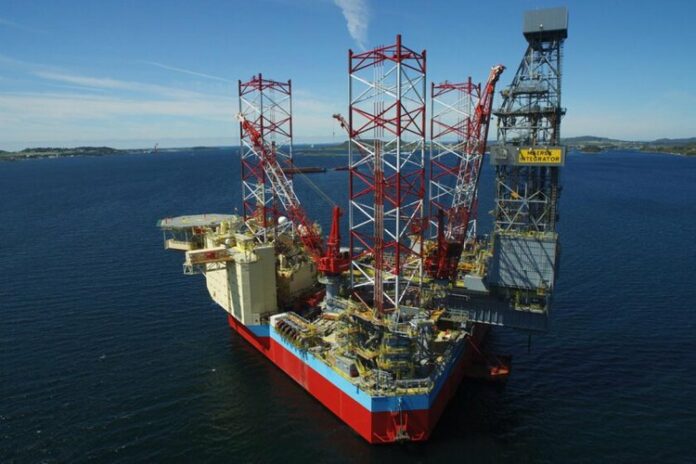
Maersk Drilling and Aker BP have entered into a rig swap agreement whereby the jack-up rig Maersk Reacher is to be replaced by the low-emission jack-up rig Maersk Integrator offshore Norway end-February/early March 2022. 

Maersk Integrator will be prepared for well intervention and stimulation activities at the Valhall and Hod fields. The previously announced Maersk Reacher work scope will accordingly be transferred on to the Maersk Integrator with an added scope estimated to eight months, which means that Maersk Integrator will be employed until January 2023. 

COO Morten Kelstrup of Maersk Drilling says:

“We’re delighted to confirm this contract following the news in December 2021 about our agreement to renew the frame agreement with Aker BP. Maersk Integrator will be employed to assist with the continued development of the Valhall and Hod fields, building on the excellent groundwork laid by the Maersk Reacher team in our collaboration with Aker BP. Our collaboration has provided ample proof that by working closely together based on shared incentives, we’re able to produce remarkable efficiency gains to the benefit of all parties, lowering emissions and cost per barrel.”

Tommy Sigmundstad, SVP Drilling & Wells in Aker BP, says:

“Aker BP’s commitment to this rig swap arrangement and contract for Maersk Integrator means we expect a further increase in efficiency for the intervention and stimulation activities at the Valhall and Hod fields. The contract is another testament to the joint team’s ability to find a win-win solution in the current market conditions.”

Maersk Integrator is an ultra-harsh environment CJ70 XLE jack-up rig, designed for year-round operations in the North Sea and featuring hybrid, low-emission upgrades. It was delivered in 2015 and is currently warm-stacked in Åmøyfjorden outside Stavanger, Norway after completing a drilling campaign for Aker BP in November 2021.

Viking marks float out of newest ocean ship

0

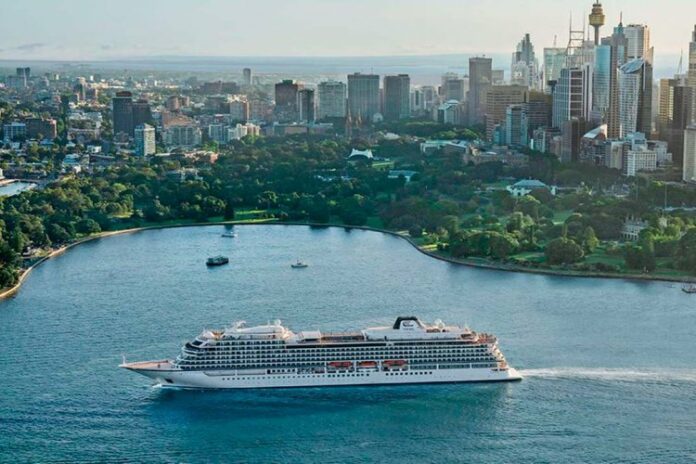
Viking® has announced its newest ocean ship – the 930-guest Viking Neptune® – was “floated out,” marking a major construction milestone and the first time the ship has touched water.

Set to debut in November 2022, the Viking Neptune will spend her maiden season sailing itineraries in the Mediterranean before embarking on the company’s 2023-2024 Viking World Cruise, a journey from Fort Lauderdale to London that spans 138 days, 28 countries and 57 ports, with overnight stays in 11 cities.

Torstein Hagen, Chairman of Viking, said:

“It is always a special day when a new ship meets water for the first time, and we look forward to welcoming guests on board the Viking Neptune this fall. Together with Fincantieri we have built the world’s most elegant vessels, which truly allow our guests to explore the world in comfort. We are marking several milestones in 2022, including our 25th anniversary and the 10th year since starting our ocean project. With the arrival of the Viking Neptune and her identical sister ship, the Viking Mars, this year—along with the debut of our two new expedition ships and new river ships—we are proud to firmly establish Viking as the leading small ship travel company.”

The traditional float out ceremony took place at Fincantieri’s Ancona shipyard and is significant because it denotes a ship moving into its final stage of construction. The float out of Viking Neptune began at approximately 11:00 a.m. local time when a member of the Viking team cut a cord that signaled water to begin flowing into the ship’s building dock. Following a two-day process that will set Viking Neptune afloat, she will then be moved to a nearby outfitting dock for final construction and interior build-out.

Jones Act Subsea Rock Installation Vessel built to ABS Class

0

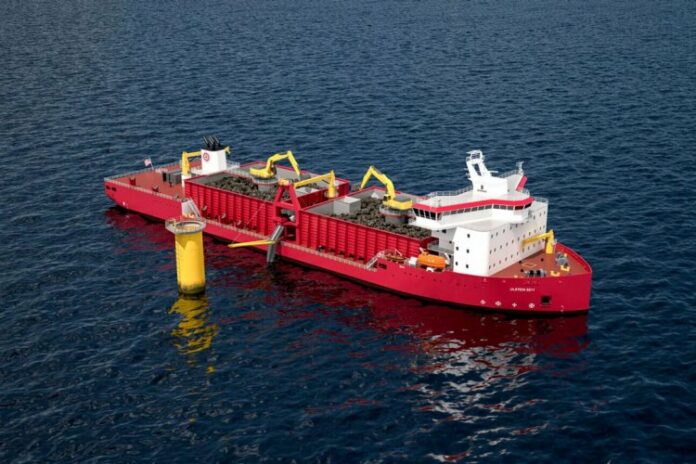
A Jones Act-compliant Subsea Rock Installation Vessel, the first such ship to enter the U.S. market, is to be built to ABS Class by Philly Shipyard, Inc. (PSI) for the Great Lakes Dredge & Dock Company, LLC (GLDD).

The vessel will transport and strategically deposit loads of up to 20,000 MT of rock on the seabed, laying scour protection for offshore wind farm foundations, cables and other structures. It will be awarded the ABS SUSTAIN-2 Notation, recognizing adherence to certain UN Sustainable Development Goals related to vessel design, outfitting and layout. The ABS SUSTAIN Notations establish a pathway for sustainability certification and reporting.

ABS has been supporting the project since 2020, most recently with review of the 140.5-meter basic design. The vessel will install EPA Tier 4 engines and plug-in capability to obtain power from shore while loading. The vessel will be able to run on biofuel, which reduces the ship’s CO2 footprint and is equipped with active emissions control technology to reduce NOx emissions to a minimum. The installed battery pack will shave peak loads to reduce fuel consumption and emissions.

Matt Tremblay, ABS Vice President, Global Offshore, said:

“This will be a critical asset in the development of the U.S. offshore wind market and ABS is proud to be able to support its development. ABS is the ideal partner for a highly specialized Jones Act project such as this, not only thanks to our extensive knowledge of U.S. regulations but our deep involvement with the entire offshore wind supply chain here in the U.S., where we are headquartered, and internationally, with our global team.”

Lasse Petterson, Great Lakes Dredge & Dock’s President and Chief Executive Officer, said:

“This contract, valued at approximately $197 million, marks a milestone for our company, the U.S. offshore wind industry and our nation. Offshore wind will play a crucial role in helping the U.S. meet its decarbonization and clean energy goals. The unique, technologically advanced vessel we are constructing is an essential step towards building the marine infrastructure required for this new industry, which holds so much promise for our nation economically and environmentally.”

Thomas Grunwald, Vice President and lead manager of U.S. offshore wind strategy and business development at Philly Shipyard, said:

“Philly Shipyard is proud to contribute to the delivery of a vessel which will be essential in achieving the nation’s ambitious offshore wind targets. It is monumental for our shipyard to win this contract for Great Lakes.”

The Subsea Rock Installation Vessel is the latest asset designed specifically for U.S. operations to be built to ABS Class. Charybdis, the first Jones Act-compliant WTIV is now under construction to ABS Class. The first U.S.-flagged Jones Act offshore wind farm service operation vessel (SOV) ever ordered will be built to ABS Class. These vessels will join the first ABS-classed crew transfer vessel (CTV) in the U.S., Windserve Odyssey. ABS has also issued AIPs for a series of wind support vessels from European designers.

Equinor and bp achieve key step in advancing offshore wind for New York

0

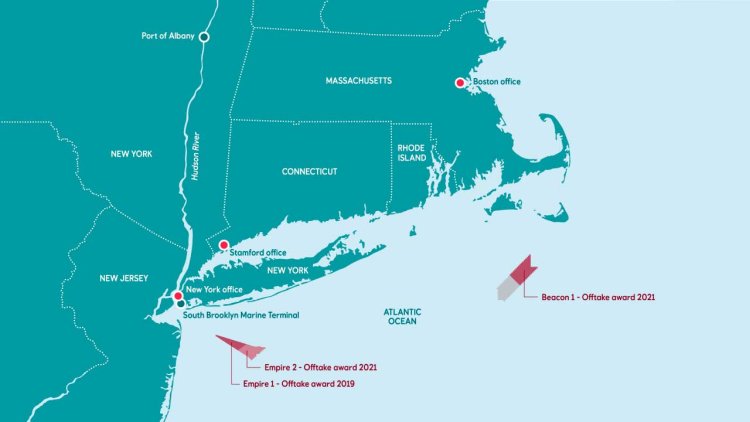
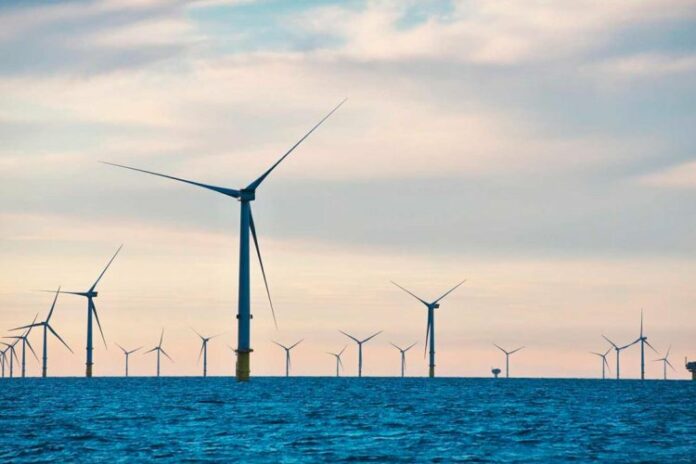
Today, at an event with U.S. Secretary of Energy Jennifer Granholm, New York Governor Kathy Hochul and U.S. Representative Paul Tonko, Equinor and bp announced the finalization of the Purchase and Sale Agreements (PSAs) with the New York State Energy Research and Development Authority (NYSERDA), for Empire Wind 2 and Beacon Wind 1. The PSAs set the terms under which these projects will supply homegrown, renewable power to New York and inject significant economic investments into the state’s economy.

The finalization of the PSAs concludes the contracts awarded in January 2021, when Equinor and bp were selected to provide New York State with offshore wind power in one of the largest renewable energy procurements in the U.S. to date.

Once completed, Equinor and bp’s portfolio of active offshore wind projects (Empire Wind 1, Empire Wind 2 and Beacon Wind 1) will produce enough electricity to power about 2 million New York homes, and will help generate more than $1 billion in economic output to New York State. This includes investments in ports and infrastructure that will reinforce New York’s position as the regional offshore wind industry hub—and a leading example of economic activity driven by the energy transition.

The offshore wind projects on the US east coast are key building blocks to accelerate profitable growth in renewables and our ambition to install 12-16 GW of renewables capacity by 2030. Equinor expects to deliver these projects within the return guidance communicated at the last Capital Markets Update in June 2021.

The completion of the PSA represents a major milestone and enables the start of project execution for the Equinor-bp partnership.

Siri Espedal Kindem, President of Equinor Wind US, said:

“Today’s announcement sets Equinor and bp on the path to provide over 3.3 gigawatts (GW) of offshore wind power for New York. It also offers a large-scale, tangible demonstration of the incredible economic activity and carbon reduction potential being driven by New York’s green energy transition.”

Doreen M. Harris, President and CEO, NYSERDA, said:

“Offshore wind is bringing unprecedented investment to New York State, and we are proud to further cement ourselves as the offshore wind hub of the nation. Meeting our nation-leading offshore wind goal of 9,000 megawatts by 2035 will be an essential economic driver for the state, and these projects will help transform our energy system while providing thousands of family-sustaining jobs to bolster our growing green economy.”

Felipe Arbelaez, bp’s senior vice president for zero carbon energy, added:

“These are world class assets and we are moving quickly and safely to get them producing the energy people need in the way that they want it – all the while creating positive ripple effects for the surrounding communities and industry. Today’s milestone is a critical step forward and we will continue to work hard to deliver the Empire Wind and Beacon Wind projects, providing clean energy and stable returns for decades to come.”

The PSAs agreed to with New York State finalizes the terms under which Equinor and bp will provide generation capacity of 1,260 megawatts (MW) of renewable offshore wind power from Empire Wind 2, and another 1,230 MW of power from Beacon Wind 1, while making substantial investments in New York’s infrastructure.

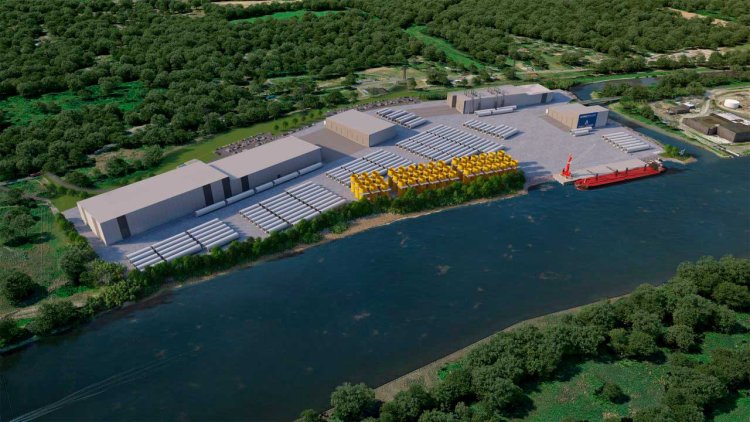
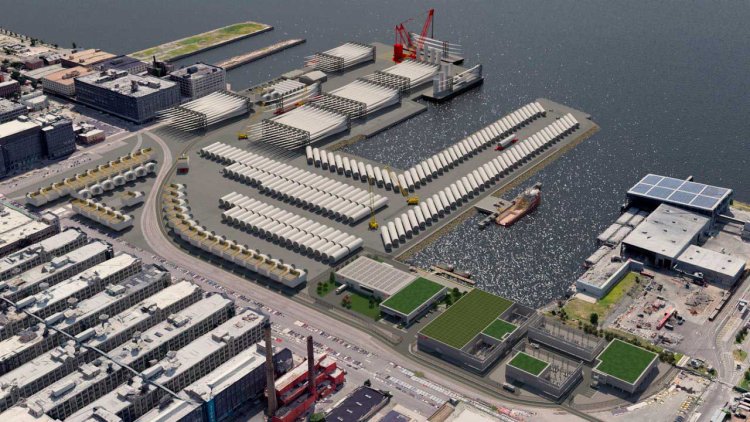
The projects include port upgrades to transform South Brooklyn Marine Terminal into a major staging and assembly facility for the industry, as well as an operations and maintenance base for the projects. Equinor recently announced the opening of a New York project office located in Sunset Park, Brooklyn, opposite the South Brooklyn Marine Terminal.  The partnership will also invest in the Port of Albany, making it America’s first offshore wind tower and transition piece manufacturing facility.

Maersk Drilling awarded one-well extension for Maersk Valiant

0

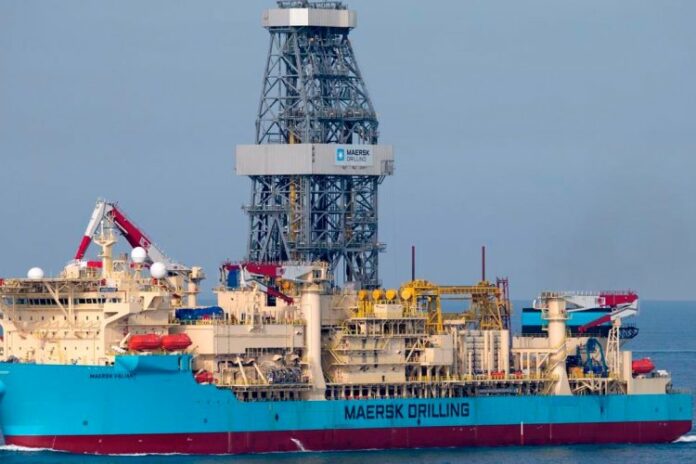
TotalEnergies E&P Suriname, Suriname Branch has exercised an option to add the drilling of one additional well in Block 58 offshore Suriname to the work scope of the drillship Maersk Valiant. 

The contract extension has an estimated duration of 100 days, with work expected to commence in March 2022 in direct continuation of the rig’s previously agreed work scope. 

The contract value of the extension is approximately USD 20.5m, including integrated services provided. Two one-well options remain on Maersk Valiant’s contract with TotalEnergies.

Maersk Valiant is a high-specification 7th generation drillship with integrated Managed Pressure Drilling capability which was delivered in 2013. It is currently operating for TotalEnergies offshore Suriname.

RWE announces further milestone for Triton Knoll Offshore Wind Farm

0

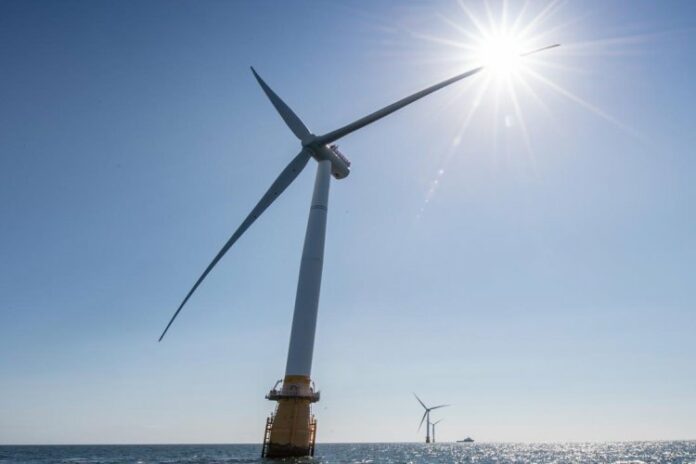
Turbine commissioning at Triton Knoll Offshore Wind Farm has been successfully completed. The wind farm, constructed by RWE on behalf the project partners, has reached this milestone on time, overcoming the challenges posed by the global pandemic.

Once fully operational, the power output of Triton Knoll will be 857 megawatts (MW), making it one of the world’s largest offshore wind farms. Standing at 164 meters tall, full operations of the 90 turbines are expected in the first quarter of 2022. Triton Knoll will make an important contribution to the UK’s energy system, generating sufficient electricity to meet the needs of around 800,000 homes each year.

RWE is #2 in the world for offshore wind and is driving the development of the largest offshore wind pipeline in the UK. It has committed to investing €50 billion gross through to 2030 to expand its powerful and green generation capacity to 50 gigawatts, with around £15 billion earmarked for the UK.

Julian Garnsey, Project Director for RWE and Triton Knoll added:

“I am very proud of the Triton Knoll team’s achievement in completing the commissioning of the turbines on this nationally significant infrastructure project. The construction team has shown a huge amount of resilience in reaching this milestone. I want to thank our supply chain partners and all those that have worked so hard on our sites to keep the project on track, despite the many challenges posed by the coronavirus pandemic .”

The project represents an investment of around £2 billion that includes construction of the wind farm and the grid connection. Triton Knoll is jointly owned by RWE (59%), J-Power (25%) and Kansai Electric Power (16%). RWE led the wind farm’s development as well as construction and will also operate and maintain it on behalf of the project partners.

Opsealog and Identec Solutions team up to optimise support vessel operations

0

French performance management company Opsealog and Austrian wireless solutions provider Identec Solutions have announced a partnership to enhance their services to the offshore oil and gas sector. This will help companies further optimise the operations of their support fleets, reducing their emissions and maximising safety and security in harsh environments.

The partnership combines Identec Solutions’ GPS trackers with Opsealog’s data integration and analysis service, Marinsights. The GPS trackers collect precise and real-time data on the positioning of each vessel, which is processed and analysed by the Marinsights platform to provide meaningful insights that can improve safety, optimise operations, and reduce fuel consumption.  

The combined solution was successfully tested during a pilot project which was completed in collaboration with Shell companies Nigeria. Nine vessels were equipped with an i-Q350LX GPS-SAT removable transponder of Identec Solutions. These were configured to send the vessel position automatically every 30 minutes through the Globalstar network. This helped Shell overcome the challenges related to the tracking of its support vessel fleet in the winding rivers of the Niger delta, where in addition to the unavailability of the Automatic Identification System (AIS), bad weather conditions can pose a challenge for satellite reception.

The data was then analysed by Opsealog’s marine consultants and presented on the Marinsights platform, which enabled the company to visualise its fleet on a map in real time, with specific information for each vessel. The software also generated reports on routes and position quality, as well as alerts when a vessel was immobilized for a certain duration or when it crossed a geofenced area.

Opsealog’s founder and managing director Arnaud Dianoux said:

“The remarkable results of this pilot project with Identec Solutions for Shell Nigeria demonstrate the power of digital solutions and illustrate what can be achieved when a wealth of high-quality data combines with state-of-the-art performance management service. Having a comprehensive portrait of support vessels operations is an essential component of a strong security strategy, and can also unlock efficiencies that support companies’ decarbonisation efforts.”

Dr. Urban Siller, CEO at Identec Solutions stated:

“We strongly believe that good visibility of onshore and offshore operations delivers safety and productivity. As the industry seeks to become safer, greener and more efficient, having a precise understanding of the activities of each vessel is vital. This is where our cutting-edge technology comes into play, and we are proud to partner with Opsealog on this journey that will support the offshore oil and gas sector as it moves towards sustainability.”