-0.4 C
New York
Home Blog Page 482

iXblue delivers the synthetic aperture sonar dedicated to Ifremer’s AUV

0

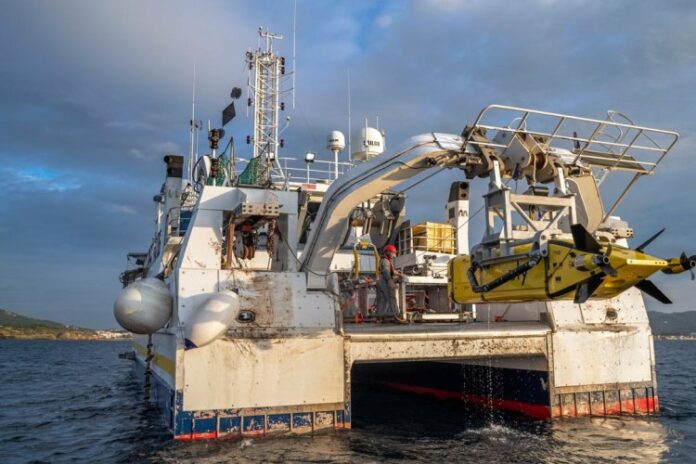
It will equip the institute’s new 6000m-rated Autonomous Underwater Vehicle (AUV) dedicated to deep sea exploration.

This synthetic aperture sonar, the Sams-150, offers a unique seabed mapping solution perfectly suited to deep-sea autonomous vehicles. Benefiting from more than 20 years of development within iXblue, this technology is already being operated by world-class navies and scientific institutes. This interferometric SAS sonar allows for simultaneous real-time imaging and high-resolution bathymetric mapping of the seabed.

Bertrand Chemisky, head of civil activities at iXblue Sonar division, explains:

“With a swath width of 500m for a constant resolution of 6cm, our new Sams-150 sonar optimizes the compromise between the resolution and range of imaging solutions. Thanks to its interferometric processing, a high-resolution bathymetric model can be generated simultaneously with the production of the imaging data, thus ensuring a coverage equivalent to more than 10 times the height of water under the sensor. Our SAS technology, coupled with an inertial navigation system and an acoustic positioning system, will ensure precise geo-referencing of each pixel, thus enabling the creation of homogeneous maps over large areas.”

The Sams (Synthetic Aperture Mapping Sonar) solution as designed by iXblue responds to the operational objective of significantly reducing the duration of operations at sea and therefore the cost of data acquisition. Following these same considerations, iXblue Sams sonar aims at optimizing the autonomy of underwater vehicles by seeking the best compromise between mapping coverage and energy consumption.

Jan Opderbecke, project manager for the development of the UlyX system at Ifremer, explains:

“The UlyX AUV is capable of diving down to 6,000 m and navigating on mapping profiles or in quasi-stationary flight near the bottom. It is equipped with a suite of state-of-the-art sensors to produce a set of data on the explored area: high-resolution imagery-bathymetry data with the Sams-150, multi-beam bathymetry, and optical images aided by a laser profiler for photogrammetry. The AUV also implements a set of modular scientific sensors adapted to the scientific mission: physical parameters, chemical analysis, magnetometry, etc. Sams-150 has been selected based on its specifications for integration and use on the UlyX AUV: size, survey parameters such as altitude, resolution and swath. The unprecedented performance of the sonar and the data processing software chain are real assets. By combining imagery and bathymetry, the data from the Sams-150 sea trials show a significant potential that will bring scientific exploration to a whole new level.”

Bertrand Chemisky adds:

“We are very proud to contribute to this technological breakthrough in deep-sea exploration alongside Ifremer and to be able to participate, at our level, to France’s leadership in deep-sea exploration.”
 

NYK to order four LNG-fueled capesize bulk carriers

0

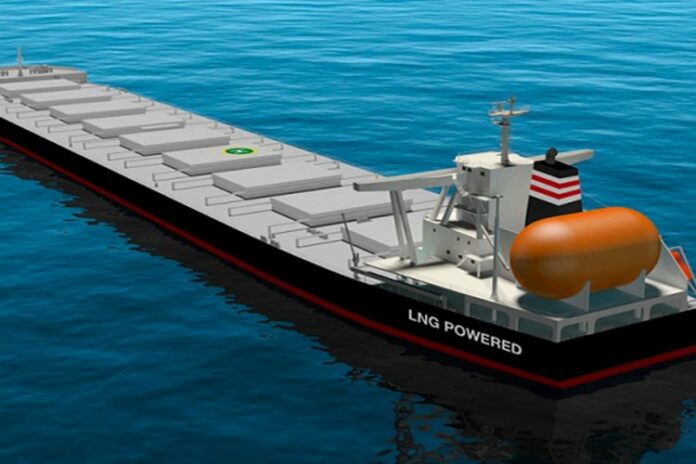
NYK has decided to order four new LNG-fueled capesize bulk carriers — two from Nihon Shipyard Co., Ltd. (NSY) and one each from Namura Shipbuilding Co., Ltd. (Namura) and Shanghai Waigaoqiao Shipbuilding Co., Ltd. (SWS), the latter of which is a subsidiary of China State Shipbuilding Corporation Limited (CSSC). The vessels are scheduled to be delivered sequentially from fiscal 2024 to fiscal 2025.

These ship orders are part of a capesize bulk carrier fleet development aimed at achieving net-zero greenhouse gas (GHG) emissions in the NYK Group’s oceangoing businesses by 2050. The four ships will emit approximately no sulfur oxides (SOx), 85% less NOx, and 40% less carbon dioxide (CO2) compared to existing conventional heavy oil-fueled vessels. Additionally, the vessels will be compliant with the IMO’s NOx (nitrogen oxide) emission regulations (Tier III).

NYK is positioning LNG fuel as a bridge solution until future zero emission ships can be realized and has already decided to build the world’s first LNG-fueled large coal carrier in 2019 and its first LNG-fueled capesize bulk carrier in 2021.

Opinion: Global subsea tie-back leader Norway set for $6.5 billion inflation hit

0

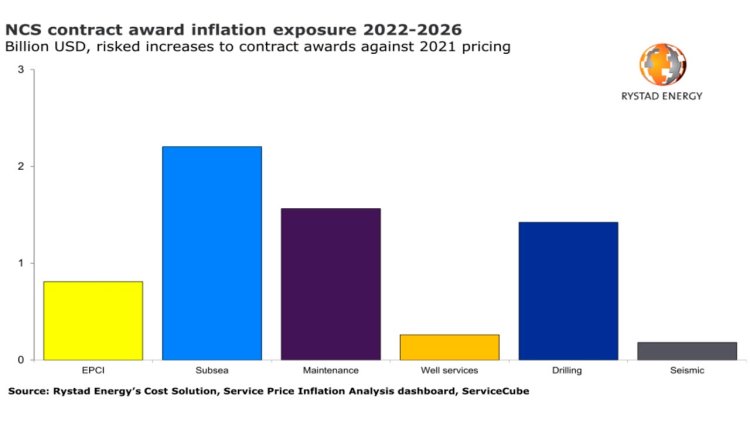
Norway, the world’s top market for subsea tie-back projects in coming years, is facing an inflation-driven cost increase of $6.5 billion on upcoming contract awards for goods and services in the offshore oil and gas industry through 2026, a Rystad Energy report reveals. About 275 subsea trees are expected to be ordered in Norway during the five-year period and – given that such projects are sensitive to materials and labor cost increases – they will be the main driver for the added bill that operators will have to swallow in the country.

Based on 2021 pricing, Norway’s oil and gas industry would have to pay some $91 billion for all upcoming contract awards through 2026, according to Rystad Energy data. Instead, inflation will drive the total five-year cost to $97.5 billion, implying that some of the biggest oil and gas firms active in Norwegian waters – including Equinor, ConocoPhillips, Aker BP, Vår Energy and Shell – will need to reassess their budgets, as old break-even calculations will no longer be accurate.

Norway will be the global leader for awards related to subsea tie-backs during the next five years, as their collective value are projected to reach a lucrative $55 billion for suppliers – based on 2021 pricing. The US subsea market is the second largest with $44 billion of new contracts anticipated, followed by the UK with $29 billion, Russia with $25 billion and Brazil with $24 billion.

While added subsea costs will account for over $2.2 billion of the total extra $6.5 billion that Norway faces, other supply segments have also been hit by inflation. The maintenance sector is facing $1.6 billion in added costs, with drilling following at $1.4 billion and with EPCI completing the top-four segments with $0.8 billion.

Matthew Fitzsimmons, senior vice president at Rystad Energy and head of cost and price research, says:

“Norway’s oil and gas industry will really feel the inflation hit in coming years, due to the nature of its upcoming contract awards. Subsea equipment prices for Norwegian projects have already climbed by more than 10% since mid-2020 and are set to be challenged further as demand keeps rising and the global subsea supply chain remains saturated.”

Subsea and maintenance contracts give operators the largest risk. However, that’s not to say other segments aren’t without their fair share of inflationary challenges. Take well services and commodities, for example: sub-segments like OCTG are expected to see some long-term relief after steel prices surged in 2021, while other sub-segments like drilling services have not yet plateaued.

Looking back, Norway’s drilling services segment has not been immune to inflation during the pandemic, with a 5% increase registered in 2021. While increased equipment and labor costs have been universal culprits when it comes to climbing prices, prices have behaved differently in the drilling services sub-sectors. Conventional drilling services in the NCS region plummeted in the first quarter of 2020 to a trough in April that year – before rebounding sharply and adding 20% through 2021. Conversely, directional drilling services took longer to rebound from a low in mid-2020, with no material increase until the third quarter of 2021 and with current costs still below 2019 levels.

Rystad Energy expects NCS drilling services pricing to continue climbing in 2022, driven by a continued ramp-up in activity, both locally in the North Sea and internationally. A recent uptick in activity will create 4% growth year-on-year for active wells on the NCS in 2022. Oil prices to decline into 2023, and so too will regional drilling services activity levels, with regional drilling days set to drop by more than 12% in 2023 from 2022. This should create some pricing relief in the segment, before additional activity picks up in 2024 and beyond.

While short-term price increases might challenge new work, long-term cost challenges are rooted in labor shortages. With more fields coming online, and legacy assets not getting any younger, maintenance labor will be in high demand in coming years. Given this backdrop, many segments are likely to see greater imbalances between demand and supply. For example, by 2025, the demand relative to overall supply for instrument repairers in the oil and gas industry will rise by 18% compared with the demand versus supply balance in 2021.

The traditional industry impulse to solve such a labor shortage results in higher wages. However, increasing labor rates won’t solve all the issues presented by such a labor shortage. After years of down-cycles and negative public sentiment against the petroleum industry, experienced personnel have been leaving the sector while it has also become more difficult to recruit new, energized talent.

Suppliers and operators alike will be challenged by the resulting decrease in labor productivity as much as by rising labor rates. This gives both sides a mutual interest to decrease project management redundancy so as to avoid situations where operators, suppliers and subcontractors are forced to compete against each other for the same limited human resources. Players unable to act against these rising cost pressures will undoubtably find themselves writing larger checks for energy services over the coming years.

Huisman signs 2,600mt Leg Encircling Crane contract for Eneti’s vessel

0

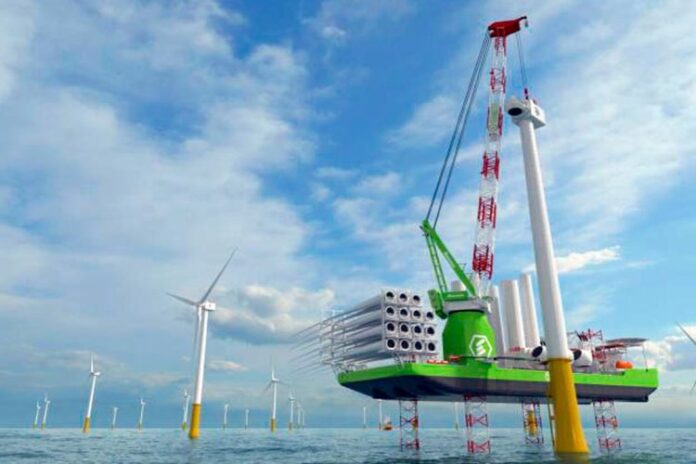
This follows a previous order, in July last year, for a similar crane. This crane will be installed on the second Wind Turbine Installation Vessel ordered by Eneti and constructed by DSME.

The LEC will be outfitted with a 155m boom, which – similar to the first crane – was extended to reach an unparalleled lifting height of 174m above deck. This brings the hook height to approx. 215m above LAT. This, combined with its 2,600mt lifting capacity, gives the crane a degree of future-proofing, preparing it for handling the next generation of wind turbine, with up to 20MW capacity.

Huisman has designed its LECs to meet the requirements of the continually developing offshore renewables sector. The cranes are lightweight, have high positioning accuracy and are highly energy efficient, contributing to a reduced emissions footprint during operations.

The crane features a small tail swing, offering optimal deck space. The theme of efficiency is continued in the design of the slew bearing. Its construction in multiple segments ensures ease of inspection and maintenance.

Furthermore, the entire construction and the majority of the main equipment are securely housed, offering protection from the harsh marine environment for utmost reliability and low maintenance.

Huisman will carry out the design, engineering and construction of the LEC, including its pedestal adapter.

Min Yun, Head of DSME Offshore Machinery Procurement:

“We at DSME are very proud to build the second Wind Turbine Installation Vessel for Eneti and feel grateful to have another important opportunity for further strengthening the relationship with our valuable partner, Huisman. We feel confident that Huisman will also take up the important role in this remarkable project and will spare no effort to help construct the world’s highest-class vessel on time.”

Emanuele A Lauro, Chairman and CEO of Eneti:

“We are delighted to extend the cooperation with Huisman and DSME and look forward to working together in the years to come.”

David Roodenburg, Huisman CEO:

“We are grateful to DSME and to Eneti for their continued trust in Huisman with this second order for a Leg Encircling Crane. Like Eneti, Huisman is committed to advancing sustainable energy solutions. Therefore, we have developed this crane to support the efficient construction of offshore wind farms. The LEC is designed with both reliability and scalability in mind. It is able to handle not only the current generation, but also the larger, higher capacity turbines anticipated in the future.”

GIG, TotalEnergies and RIDG win 2 GW in ScotWind

0

The joint venture between TotalEnergies (38.25%), Macquarie’s Green Investment Group (GIG) (46.75%) and RIDG (15%), a scottish developer in offshore wind, successfully secured rights in the N1 area to develop a 2 GW offshore windfarm project in the ScotWind leasing round. The West of Orkney Windfarm will be located 30km off the west coast of Orkney in Scotland.

This project, which aims to start producing renewable power by 2030, represents potentially more than GBP£4 billion of investment. 

As part of this development, the partners will unlock a £140m initiative to support the development of the local supply chain, including the enhancement of ports and harbor infrastructure in Orkney and Caithness. This will ensure high levels of local content and actively promote employment and innovation in the region.

The consortium has already undertaken extensive site investigations, especially in relation to the environment, to ensure that the project fully meets its sustainable development objectives. The consortium has also finalized a grid connection agreement with National Grid.

Once built, the windfarm could also deliver renewable power to the Flotta Hydrogen Hub, a proposed large-scale green hydrogen production facility in Orkney.

Patrick Pouyanné, Chairman and CEO of TotalEnergies said:

“We are very proud to have been awarded by Crown Estate Scotland the leasing rights to develop this offshore wind farm, TotalEnergies’ largest renewables project in Europe to date. This project, which will complement our traditional activities in Scotland, is a perfect example of the transformation of our Company.

We will provide all our resources from our new UK Offshore Wind Hub in Aberdeen, which will draw on the expertise and supply chain of our oil and gas activities and on Scottish industry, all in close collaboration with the local communities. This project further demonstrates our commitment to the sustainable development of offshore wind and will contribute to our goal of reaching 100 GW of renewable generation capacity by 2030.”  

The West of Orkney Windfarm is the fourth major offshore wind project that TotalEnergies has embarked on in the UK since 2020. The Company now has interests in projects with around 5 GW of potential capacity under development and construction in the UK. These projects will come on stream between 2023 and 2030.  

Mark Dooley, Global Head of GIG, said:

“We have been a long-term investor in the UK offshore wind sector, with an established Scottish footprint – and we are delighted that our commitment to these markets has been recognized. We believe this option agreement will be truly transformational for the wider Scottish economy, unlocking new ways to accelerate the transition to Net Zero and creating hundreds of green jobs. We look forward to working with our stakeholders and all the winning bidders to seize this new opportunity for Scotland.”

To date, Macquarie and GIG have supported more than half of UK offshore wind generation capacity in operation. GIG has invested in over 30 green energy projects in Scotland, supporting hundreds of sustainable Scottish jobs. 

Mike Hay, RIDG Director, said:

“It’s fantastic that Crown Estate Scotland share our vision for the West of Orkney Windfarm, a project that has been designed specifically around this location to benefit local communities, transition Scottish workers from oil and gas into renewables, and to act as a catalyst for supply chain growth. Since submitting our bid we have continued to advance development and supply chain activities to ensure that we deliver on the objectives set out within it, and to maximize the economic opportunity from the expansion of offshore wind and green hydrogen in Scotland.”

Fugro secures cable route survey contract for Denmark’s Energy Islands

0

The Energy Island will serve as an offshore power plant distributing up to 10 GW of offshore wind to Denmark and other neighbouring markets. Fugro will perform a combination of geophysical, geotechnical services and laboratory testing to provide valuable insight into the ground engineering challenges along the cable route from the Danish landfalls to the future artificial island location.

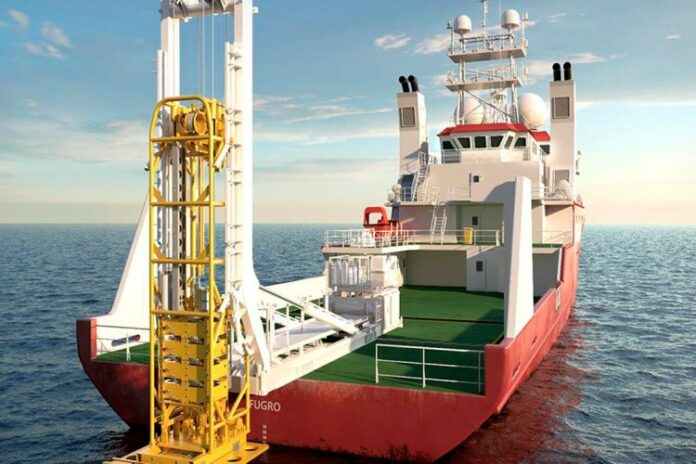
Fugro’s dedicated survey vessels will mobilise to site in March 2022 to begin the geophysical and geotechnical surveys. This will include remotely operated vehicle (ROV) inspections and shallow geotechnical investigations using Fugro’s innovative Blue Snake geotechnical system.

The Blue Snake integrates cone penetration testing (CPT) and sampling technology to enable data to be captured in a single pass with testing completed consecutively at fixed distances along the cable route. The system integrates a high performance vibrocorer and 10 ton CPT into a single frame with a customised launch and recovery system – minimising manual handling and improving workability in difficult weather conditions. This innovative technology optimises data correlation, improving design and engineering for future cable installation works.

Søren Stricker Mathiasen Contract Manager for Energinet’s work on the future energy islands in Danish waters, said:

”Energinet is looking forward to take another important step with the Cable Route Survey to the North Sea Energy Island together with the experienced team from Fugro. ” 

Mathijs Hogerwerf, Commercial Manager at Fugro said:

“Energinet will benefit from our integrated services by enhanced safety and improved project efficiency. Our vessels, equipment, planning, and execution methods meet the needs of such a complex assignment and will also help us manage difficult metocean conditions.”

Sven Plasman, Fugro’s Principal Commercial Manager added:  “With our team of expert geoconsultants and the latest innovative technology, such as Fugro Blue Snake, we’re able to provide clients with the best possible Geo-data to support the attainment of their sustainability goals.” 

This Energy Island contract follows on from two geotechnical site investigation contracts as well as a marine site characterisation contract awarded to Fugro earlier this year. Fugro is also supporting Energinet with wind-resource mapping after installing and operating wind lidar buoys in both the Baltic Sea and North Sea.

Research: Shipping container market revenue to extend humungously by 2028

0

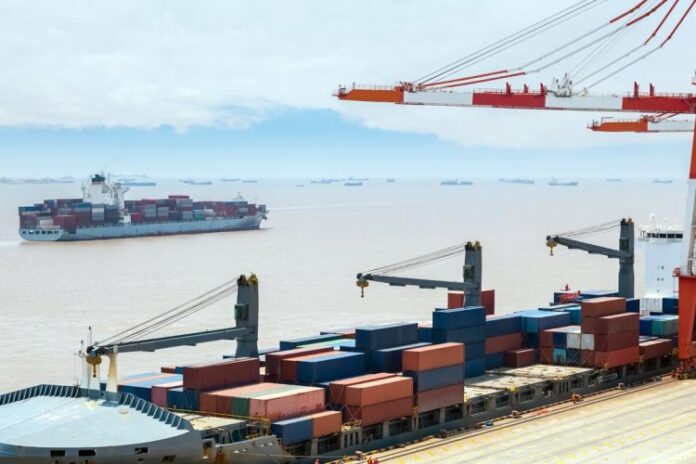
As per study of Zion Market Research, Shipping Container industry accumulated proceeds worth nearly US$ 6.45 billion in 2020 and is anticipated to accrue returns of approximately US$ 16.01 billion by 2028. 

Growth of shipping container market over forecast period can be credited to thriving transport & logistics sector along with rise in trading activities through sea and land routes. In addition to this, escalating demand for convenience and affordability has converted into huge product penetration in various sectors. 

Apart from this, need for storing huge volume of goods is predicted to embellish expansion of shipping container industry over ensuing years. Easy availing of shipping containers in myriad forms such as dry storage containers and refrigerated containers will establish a strong base for shipping container market growth across globe in coming years.  

Citing an instance, Reefer – a form of refrigerated container- is utilized for transporting perishable items such as fish, vegetables, alcoholic drinks, pharmaceuticals, fruits, meat, sea food, and flowers.

Expansion of dry storage containers segment over assessment period is subject to its reduced costs, easy availability, and extensive usage. In addition to this, they are airtight and can prevent goods damage due to extreme temperatures. Furthermore, they are utilized for packing drums, boxes, cartons, sacks, pallets, and barrels.

Growth of consumer goods segment over anticipated timespan can be credited to rise in transport of electronic equipment, toys, and furniture through shipping containers. Additionally, rise in consumer product import in emerging economies will further pave way for demand of shipping containers for transporting the product, thereby driving segmental surge. Thriving online retail & e-commerce activities will provide impetus to massive product penetration in consumer goods segment.

Expansion of shipping container industry in Asia Pacific zone over assessment period is owing to high maritime trade and shipping activities witnessed in sub-continent. In addition to this, presence of giant producers in Japan, India, and China will further contribute towards regional market size. Expansion of manufacturing base in India and China will accelerate growth of shipping container industry in Asia Pacific.

Key players influencing market growth and profiled in report are Maersk Container Industry, TLS Offshore Containers International, OEG OFFSHORE LIMITED, Sea Box, Inc., YMC Container Solutions, CXIC Group Containers Company Limited, Marine Containers Co., Ltd., CARU Containers B.V., Singamas Container Holdings Limited, China International and W&K Container.

Maersk Tankers to launch decarbonisation hub

0

The decarbonisation hub will bring experts, shipowners, cargo customers and other stakeholders together to develop a suite of solutions that will reduce emissions from cargo customers’ supply chains and shipowners’ operations. It will gather and share external and internal intelligence on regulations and developments in tanker shipping’s decarbonisation, and provide emission transparency on the transportation of cargoes. 

Christian M. Ingerslev, CEO at Maersk Tankers, says:

“There is an immediate need for shipping to change its emissions trajectory. The decarbonisation hub is part of our commitment to create a more sustainable path for shipping through sector-wide collaboration.”

The hub will be headed by Frederik Pind, Head of Decarbonisation at Maersk Tankers, and will be staffed by a specialist, cross-disciplinary team. They will work with external and internal stakeholders to support the establishment of commercial and regulatory means to cut emissions. The team is anchored in the Commercial department at Maersk Tankers. 

Eva Birgitte Bisgaard, Chief Commercial Officer at Maersk Tankers, says:

“Shipowners have to deal with complex regulatory requirements and changing customer demand stemming from the need to decarbonise shipping. With the hub, we are bringing together stakeholders to use our combined expertise to simplify, provide transparency and create new solutions that will help both shipowners and cargo customers reduce emissions.”

The decarbonisation hub, which will liaise with external stakeholders including global associations working to decarbonise shipping, is expected to be fully established during the coming months.

Yemen’s Houthis reject UN call to free UAE-flagged ship

0

Yemeni Houthi rebels have rejected a UN request to release an Emirati-flagged vessel they seized earlier this month, along with its 11-member crew, saying the ship was carrying “military assets”.

The United Arab Emirates (UAE) has described the Rwabee as a “civilian cargo vessel” that was leased by a Saudi company and had been in international waters carrying equipment to be used at a field hospital.

Houthi official Hussein al-Azzi has claimed it was transporting military assets. 

He told the Houthis’ Al Masirah television:

“The Rwabee vessel was not carrying… toys for children but weapons for extremists.”

The UN Security Council on Friday demanded the “immediate release” of the Rwabee and its crew and stressed “the importance of freedom of navigation in the Gulf of Aden and Red Sea”, a strategic route for international shipping.

In a statement drafted by the United Kingdom and adopted unanimously, the 15-member Security Council demanded “the immediate release of the vessel and its crew” and underscored “the necessity of ensuring the crew’s safety and well-being”.

It also called on “all parties to de-escalate the situation in Yemen”, including by working with the UN’s special envoy to return to the negotiating table.

Al-Azzi responded by accusing the UN of siding with “murderers who violate international laws”.

A Saudi-led military coalition intervened in Yemen in March 2015 to support the internationally recognised government after the Houthis captured the capital, Sanaa, the previous year.

The Iran-backed Houthis seized the Rwabee on January 3, off the Red Sea port of Hodeidah, and then released a video purportedly showing military equipment on board, including military-style inflatable rafts, trucks and other vehicles and what appeared to be a collection of rifles.

Yahia Sare’e, a Houthi military spokesman, said it was “completely obvious today that the information that this ship was carrying a civilian field hospital is not correct. This is clearly military equipment.”

A statement from the Saudi-led coalition accused the Houthis of committing an act of “armed piracy” and said the ship was carrying medical equipment from a dismantled Saudi field hospital in Yemen’s distant island of Socotra, without offering evidence.

Saudi state television has accused the Houthis of transferring weapons onto the ship.

The UAE is part of the Saudi-led coalition, though it withdrew its troops in 2019. In a letter to the UN, Abu Dhabi noted that the Rwabee’s crew consisted of 11 members, including seven Indians and others from Ethiopia, Indonesia, Myanmar and the Philippines.

The Security Council has condemned the increasing number of incidents off the coast of Yemen, including attacks on civilian and commercial ships, “which pose a significant risk to the maritime security of vessels in the Gulf of Aden and Red Sea”.

The United Nations Mission to Support the Hodeida Agreement (UNMHA) said the port was vital for the impoverished country. UNMHA, which aims to preserve a 2018 ceasefire for the port, has requested a mandate to undertake inspections to ensure that it is not being militarised by the Houthi group.

Yemen has been engulfed in civil war since 2014 when the Houthis took the capital, Sanaa, and much of the northern part of the country, forcing the government to flee to the south, then to Saudi Arabia.

Source: Al Jazeera 

Shell and ScottishPower win bids to develop 5 GW of floating wind power in the UK

0

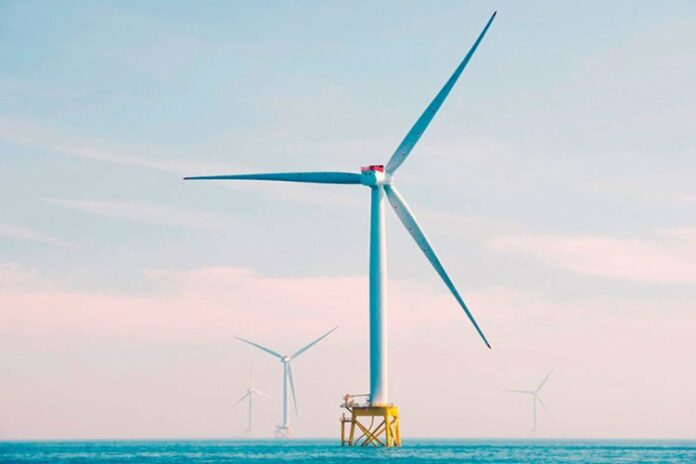
Shell and ScottishPower have secured joint offers for seabed rights to develop large-scale floating wind farms as part of Crown Estate Scotland’s ScotWind leasing. The partners have won two sites representing a total of 5 gigawatts (GW) off the east and north-east coast of Scotland.

The new wind farms will be delivered through two joint ventures called MarramWind and CampionWind. They bring together ScottishPower’s and Shell’s decades of experience working offshore and significant presence in Scotland, as well as their strong innovation capabilities for delivering world-class offshore energy projects.

The development, construction and operation of ScotWind projects is set to bring new skilled jobs and manufacturing opportunities and boost local supply chains.

Wael Sawan, Integrated Gas and Renewables and Energy Solutions Director at Shell, said:

“Shell and ScottishPower can now look forward to generating floating wind power at significant scale in the UK to accelerate the country’s transition towards net zero. Floating wind plays to our strengths in deeper offshore projects, and we are well placed to help advance the wider take-up of this important clean energy source. Renewable electricity will play an increasingly important role in our customer-focused strategy, as we provide more low-carbon products and services customers need for their own journey to net zero.”

Keith Anderson, CEO of ScottishPower, said:

“Offshore wind is set to become the backbone of the UK’s energy mix and will do the heavy lifting as we ramp up the production of clean electricity on the journey to Net Zero. Our ScotWind projects will make the best use of our fantastic natural resources to help power the UK’s transition from fossil fuels to renewables and a better future, quicker.

“They will also deliver investment, support jobs and boost supply chains – particularly in areas like the north-east that play a key role in the energy sector – opening up immense opportunities for businesses and institutions across the country. This is a pivotal moment that will reinforce the UK’s position as the global leader in offshore wind and give a significant boost to the economy. We’re excited to have the green light to kick start our plans and look forward to working with Shell and our supply chain partners – who can get in touch now – to bring the world’s first large-scale floating windfarms to UK waters.”

Once built, MarramWind’s and CampionWind’s floating wind projects could accommodate a total generation capacity of around 3 GW and 2 GW, respectively, bringing clean energy to power the equivalent of 6 million homes in Scotland. This is more than double the number of homes in Scotland today.

The joint ventures have already started initial development planning and will continue to work at pace towards final investment decisions.

Floating offshore wind is suitable for use in deeper water zones, where fixed foundations are not feasible, making it ideal for Scottish waters. Almost 80% of Europe’s offshore wind resource is situated in waters too deep for conventional bottom-fixed wind turbines. Floating wind platforms are a proven technology to unlock these deeper waters but this will be the first time they are planned to be deployed at this scale anywhere in the world.