-0.4 C
New York
Home Blog Page 481

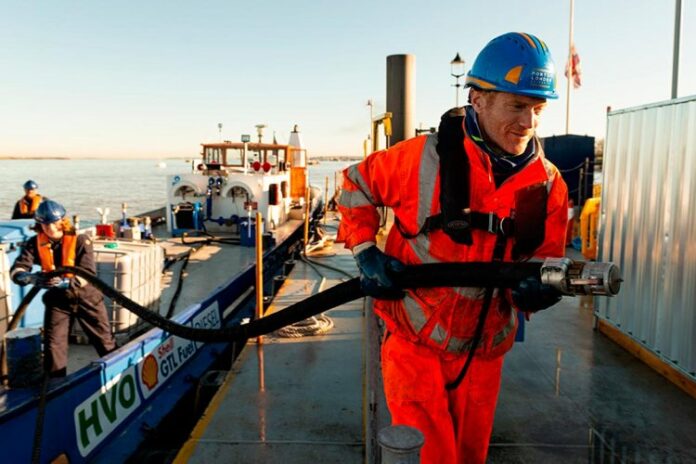
New tanks for cleaner fuels speed PLA progress towards Net Zero

0

Part of a commitment to achieve Net Zero by 2040, a pair of three-tonne, steel tanks, installed out of sight at Royal Terrace Pier, next to the PLA’s London River House headquarters, have a capacity to store 20,000 litres of pollution-busting hydrotreated vegetable oil (HVO).

By 2025, the PLA is targeting a 50% reduction in the 2,054 tonnes of carbon emitted across its entire operations in 2014. Currently, fuel used by its vessels is responsible for more than 75% of the PLA’s total carbon emissions.

Two more similar tanks for storing green fuels are due to be installed at Barrier Gardens Pier in Woolwich this spring, completing a major refurbishment to make it both safer and more sustainable.

Steven Clapperton, who leads the PLA’s newly-created directorate of Sustainable Marine Operations, said:

“This is a major step forward in our plan to decarbonise our round-the-clock work to keep the tidal Thames safe for all its users, from Teddington to the North Sea. The introduction of HVO is positive news for both carbon emissions and air quality. Our trials show it reduces emissions of nitrogen oxides and particulates by at least 50%, compared to conventional diesel.”

Thames Marine Services Ltd (TMSL) has been appointed as the PLA’s HVO supplier, following a competitive tender process. Business director Robert Dwan said: 

“Supplying all types of vessels – from house and passenger boats, to tugs, container and navy ships – we have invested to modify our barges to carry more environmentally-friendly fuels.”

Contractors Taylor Fuel Controls and ET Marine have helped the PLA design and install the new tanks.

Maersk Drilling secures 21-month contract with TotalEnergies

0

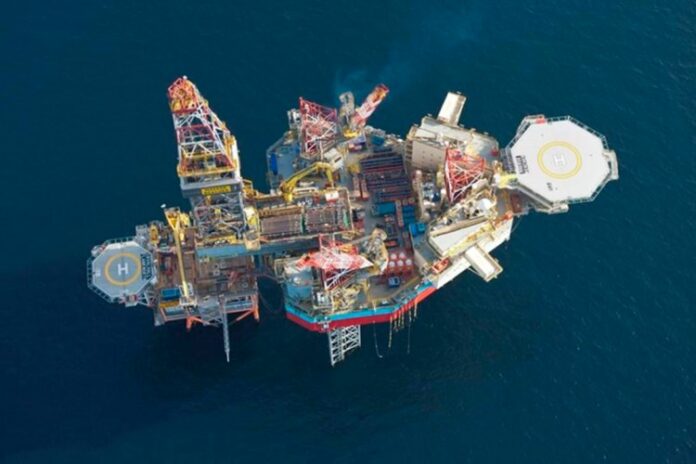
The contract is expected to commence in July 2022, with a duration of 21 months. The contract includes options to extend the duration by up to 27 additional months.

Claus Bachmann, Head of North Sea Division in Maersk Drilling, says:

“We’re happy to build further on our long-standing collaboration with TotalEnergies by adding this long-term contract which means that two of our rigs will be working for TotalEnergies in Danish waters this year. Maersk Reacher will be available for the job after being released from its current work scope in Norway through the planned rig swap with Maersk Integrator.”

Maersk Reacher is a 350ft, Gusto-engineered MSC CJ50 high-efficiency jack-up rig which was delivered in 2009. It is currently operating offshore Norway where it is scheduled to be replaced in a rig swap with Maersk Integrator end-February/early March 2022. Maersk Reacher will undergo a special periodic survey prior to commencing the contract with TotalEnergies.

Scientists predict Tonga ash-seawater cocktail will be toxic hazard

0

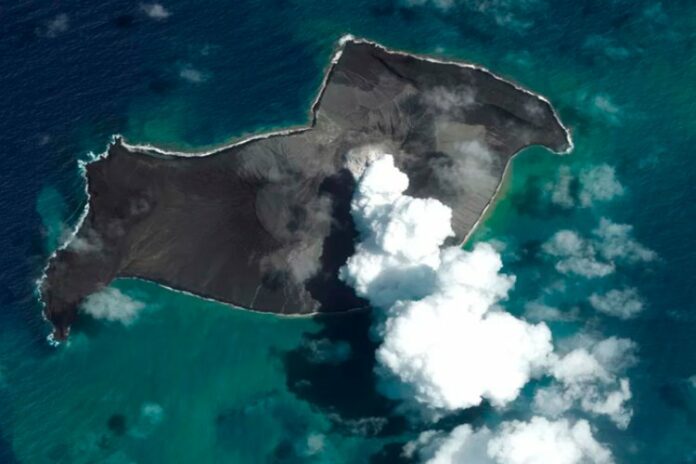
Cornell University scientists leading NASA-funded research into volcanic ash impacts warn that in addition to the direct damage to infrastructure from the ash layer and tsunami, the thick ash blanket presents extraordinary health and environmental hazards—amplified by seawater’s interaction with the ash particles.

The researchers warn drinking water may be contaminated and medium-term impacts to small-scale agriculture may cause acute and chronic threats to health and livelihood on Tonga.

Adrian Hornby, a postdoctoral research associate on the NASA project, says the presence of seawater in a volcanic eruption can create toxic elements in ash.

Hornby says:

“The involvement of seawater in the eruption releases enormous amounts of volatile species, for example, chlorine, into the ash plume. Together with gases released from the magma, this creates a cocktail that readily forms salts and acidic brines on the ash particles.

“Previous studies at Hunga Tonga-Hunga Haʻapai have shown that the ash carries some of the highest burdens of salts ever recorded, which may contain highly toxic species such as sulfer, chlorine and fluorine. These salts get deposited with the ash and can be easily leached by rainfall, causing an immediate hazard to water quality, agriculture and the natural environment.”

Matthew Pritchard, professor of remote sensing and a co-principal investigator on the NASA project, says water and magma also produce very fine ash particles that can spread over a broad region:

“There are preliminary reports that hydrogen chloride concentrations have been detected by satellite at higher than usual levels in the atmosphere over Tonga. Since water-magma interaction produces very fine volcanic ash and the ash plume appears to have reached at least 20 km altitude, I expect the ash will disperse over a much broader region than previous eruptions.”

Natalie Mahowald, professor of engineering and principle investigator on the NASA project, says previous eruptions have produced iron-rich ash and the release of iron and other elements into terrestrial and marine environments can cause dramatic ecological impacts. “Volcanic ash can contain both pollutants and nutrients, which can shift the ecosystems in dramatic ways.”

Esteban Gazel, professor of geochemistry and a co-principal investigator on the NASA project, says that when volcanoes erupt underwater—known as a Surtseyan eruption—it usually creates small ash clouds, but this is “something very different.” He says:

“We expect Surtseyan eruptions to produce relatively small ash clouds since the eruptions are generated by single violent explosions when seawater vaporizes on contact with magma, but we are seeing something very different from the Hunga Tonga-Hunga Haʻapai eruption. Satellite data and images from across Tonga show that a lot of ash that was propelled 20-30 km height in the atmosphere and has left a thick blanket across Tonga.

“We are studying the composition and chemistry of dozens of ash samples and linking these to their environmental effects. Examining ash from the Hunga Tonga-Hunga Haʻapai offers the opportunity to rapidly assess the hazards and impact of this extraordinary eruption.

“Volcanic eruptions are a major force of creation and destruction and their impact on society crosses political boundaries. To avoid surprises in the future, there needs to be an effort to instrument every volcano on the planet. This will provide the data needed to asset the risk, monitor activity, and forecast eruptions in the future.”

South Fork offshore wind project approved to start construction

0

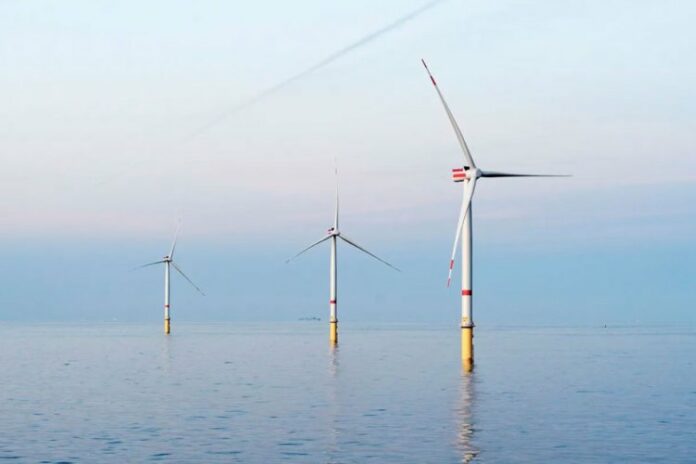
South Fork Wind, New York’s first offshore wind farm, has received approval of the project’s Construction and Operations Plan (COP) from the U.S. Department of the Interior’s Bureau of Ocean Energy Management (BOEM), which is the final decision needed from the agency to move the project toward the start of construction.  

The COP approval outlines the project’s one nautical mile turbine spacing, the requirements on the construction methodology for all work occurring in federal ocean waters, and mitigation measures to protect marine habitats and species.

BOEM’s final approval of the COP follows the agency’s November 2021 issuance of its Record of Decision, which concluded the thorough BOEM-led environmental review of the project. Ørsted and Eversource reached these provisions and protections working closely with a range of external organizations and experts, a commitment the companies carry to all stakeholder relationships to help ensure coexistence.

The project will kickstart New York’s offshore wind industry and power approximately 70,000 New York homes with clean, offshore wind energy when it begins operations at the end of 2023.

David Hardy, Chief Executive Officer of Ørsted Offshore North America, said:

“As New York’s first offshore wind farm, South Fork Wind is already contributing to a new statewide and U.S. manufacturing era and maritime industry, including good-paying union jobs through our labor partnerships and vision for the industry.”

Paul D. Tonko, U.S. Representative, said:

“Offshore wind presents a tremendous opportunity to lower energy costs and reduce pollution all while promoting regional job creation and economic growth.”

Suffolk County Executive Bellone said:

“Suffolk County stands ready to serve as the epicenter of the emerging offshore wind industry by leveraging our world-class research institutions to serve as a hub of workforce development for the jobs of the future.”

Pacific Basin chooses PortLog to solve the ‘unpaid time’ challenge in ports

0

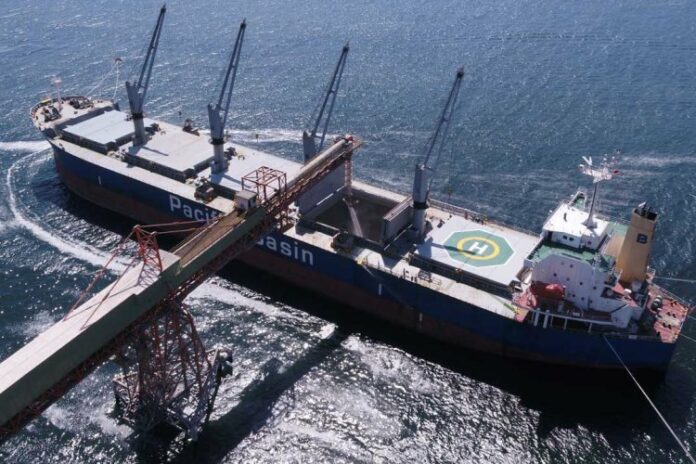
The PortLog platform will be utilised across all of Pacific Basin’s over 260 owned and chartered vessels, which make over 5,000 port calls every year in around 600 ports across 100 countries. This will enable the company to dramatically reduce the risks and costs associated with time spent in ports, as well as driving operational, cost and environmental efficiencies within the port environment and ‘last mile’ of the supply chain.

The development also plays a part in Pacific Basin’s wider sustainability strategy; increasing their vessels’ operational efficiencies thereby reducing fuel consumption and associated emissions within the port environment. This not only supports the wider industry drive to meet the International Maritime Organization’s (IMO) decarbonisation targets, but also increases Pacific Basin’s competitiveness in the eyes of customers as an efficient and progressive operator.

PortLog is a single platform and digital solution combining standardised Statement of Fact (SoF) data with AIS, weather, and berth-level restriction data, which will enable Pacific Basin to measure and analyse its vessels’ turnaround times in ports, and deliver insights into costs, berth-level restrictions and productivity.

Using PortLog, Pacific Basin will be able to estimate ports costs (including potential discounts and tariffs), reduce risks and identify opportunities related to port stays by predicting port time and delays at a terminal level, having up-to-date information on real-time terminal restrictions, weather and rain impact as well as port holidays.

Through adopting PortLog’s knowledge management infrastructure, the ‘Learning Loop’, Pacific Basin will have the capability to share key insights at terminal level across the company and its entire fleet, starting with the more than 1,400 Marcura Observations available in the platform from day one. The PortLog team will also work with Pacific Basin to ensure customised implementation of the solution for chartering managers and operations managers, enabling the powerful analysis of specific data to drive usage and set KPIs, as well as developing intelligence and insights from Pacific Basin’s port calls.

Much progress has been made within the shipping industry to increase operational efficiencies within seaborne trade through vessel optimisation, digitalisation and clean technologies. However, there is a significant latent efficiency within ports where vessels will spend as much as 40% of their time, incurring large costs, unplanned downtime and an increase in unnecessary and avoidable emissions.

Commenting on the development, Kristian Helt, Chartering Director, Pacific Basin, said: 

“The shipping industry is rapidly transforming, becoming increasingly complex and rightly focusing on how it can reduce emissions and meet IMO decarbonisation regulations. We embrace the challenge of decarbonisation and have integrated sustainability into our business and strategy. We are investing in digitalisation and state-of-the-art systems and digital solutions that are needed to drive greater operational and cost efficiencies and reduce our environmental impact. In conjunction with this, harnessing data to provide real insight and intelligence enables better decision making. Utilising an advanced platform like PortLog is representative of our strategy and commitment to such investments and to delivering a more optimised and efficient freight service in our customers’ supply chain. This enhances our competitive advantage, provides more value for our customers and supports the decarbonisation of the shipping industry.”

Jens Poulsen, Group CEO, Marcura, said: 

“There are a host of tools within the market available to help ship owners and operators optimise and drive efficiencies while at sea. It is now clear that the opportunity for tramp shipping to further improve efficiencies and reduce costs and emissions now lies within the port environment; with PortLog we are helping companies solve this crucial last piece of the voyage optimisation puzzle. We are delighted that a company with a market leading reputation like Pacific Basin has chosen to partner with us. We are confident that we will be able to make a significant and sustainable difference to their operations, enabling them to better estimate their time spent in ports, increase efficiencies, reduce risks and emissions and solve the unpaid time problem that many owners and operators are currently suffering from.”

Wärtsilä to supply engines for seven new Arctic Shuttle Tankers

0

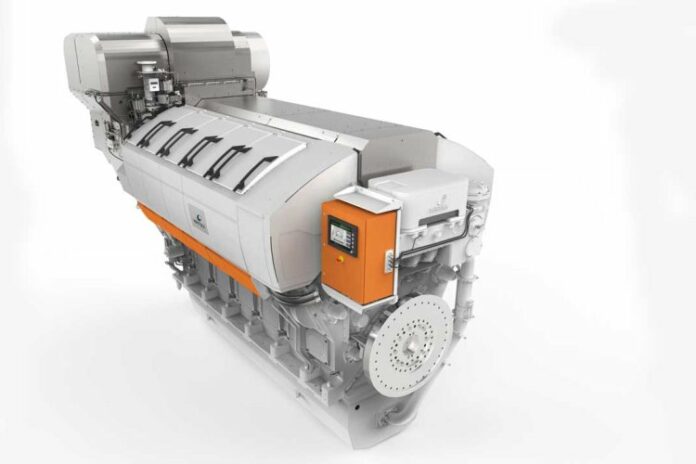
The technology group Wärtsilä will supply the main and harbour engines for a series of seven new Arctic Shuttle Tanker vessels being built at the Samsung Heavy Industries (SHI) yard in South Korea. The order, which is valued at more than EUR 100 million, was placed with Wärtsilä in December 2021.

The vessels will each feature six highly efficient Wärtsilä 31DF dual-fuel main engines operating primarily on liquefied natural gas (LNG) fuel, and two Wärtsilä 20 harbour engines. All will be fitted with selective catalytic reduction (SCR) systems for emissions abatement. By selecting Wärtsilä as the sole supplier for this large scope package, system compatibility and procurement interfacing is simplified, which in turn eases installation work and reduces project risk.

Östen Lindell, Sales Director East Asia & China, Wärtsilä Marine Power, says:

“The Wärtsilä 31 series of engines has set a benchmark in efficiency for the industry. The diesel version has been recognised by Guinness World Records as the world’s most efficient 4-stroke diesel engine, and all versions of the Wärtsilä 31 engine series have the same high focus on efficiency. This is important for vessels such as these operating in Arctic waters, where operational reliability and environmental sustainability are of critical importance.”

Youngkyu Ahn, Vice President, Samsung Heavy Industries, says:

“We are delighted to work with Wärtsilä to provide main and auxiliary power as well as emissions abatement for this series of highly capable vessels.”

The 120,000 DWT vessels are Arc 7 classified and have icebreaking capability. The Wärtsilä engines are designed to operate reliably at temperatures as low as minus 45 degrees C. SHI has considerable experience in building ships of this type.

The Wärtsilä equipment is scheduled for delivery to the yard commencing in Q4 2022, and the ships are expected to be ready for commissioning between 2024 and 2027.

First GAC company to calculate and establish its emissions

0

GAC Bunker Fuels’ Greenhouse Gas (GHG) emissions calculations have been verified by Bureau Veritas UK Limited, the world leader in audit and certification services, crossing a new milestone in its goal to be net carbon zero by 2030.

Carbon emissions are classified into categories or “scopes”. GAC Bunker Fuels is assured for indirect emissions from electricity and air-conditioning under Scope 2, and other indirect emissions that occur along the value chain, particularly associated to business travel and the use of sold products under Scope 3 were verified. The bunker company does not have Scope 1 direct emissions from owned or controlled sources.

Kelly Rump, GAC Bunker Fuel’s Head of Sustainability, says:

“Knowing what our emissions are today marks an important step towards emissions reduction and offsetting with the aim of achieving zero oil-based bunker sales and net carbon zero by 1 January 2030.”

NYK and Knutsen Group establish new company

0

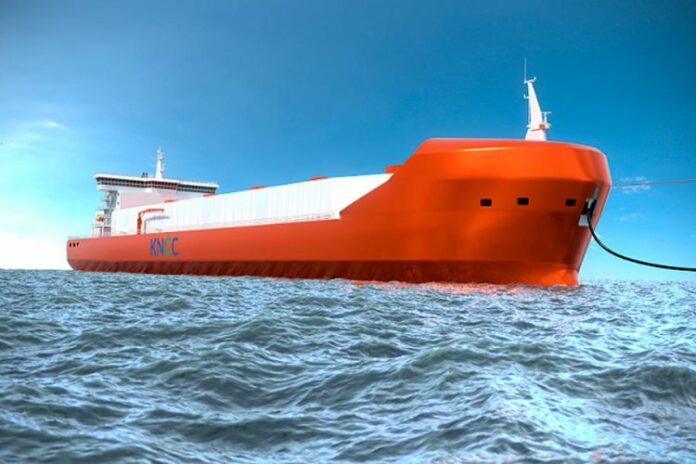
NYK and the Knutsen Group of Norway have established a joint venture company for the commercial development of a liquefied CO2 marine transportation and storage business worldwide using the Knutsen developed technology PCO2® which allows transport of liquified CO2 at ambient temperatures.

NYK and the Knutsen Group, will each hold 50% stake in the new company, which has been named Knutsen NYK Carbon Carriers AS (KNCC). KNCC will also build and operate low/mid pressure vessels based on other technologies.

Carbon capture, utilization and storage (CCUS) is an effective and necessary concept for realizing a carbon-neutral society. In this value chain, liquefied CO2 carriers play an essential role in transporting liquefied CO2 to the sites where it is stored and/or utilized. The demand for liquefied CO2 carriers is expected to grow rapidly going forward.

The Knutsen Group and NYK have an innovative approach towards using and further developing new technology to meet a carbon neutral future. Being part of the same group as the world leading operator of Shuttle tankers through Knutsen NYK Offshore Tankers (KNOT), KNCC will provide customers with a unique competence for advanced transport including liquefied CO2 loading and offloading onshore and offshore. Through KNCC we will combine our extensive knowledge of ship operation and management to achieve the early realization of not only small and medium-sized vessels but also large liquefied CO2 vessel operations. The establishment of this joint venture will be an important foothold for participation in the CCUS value chain.

Svein Steimler, president and CEO of NYK Group Europe Ltd. and Trygve Seglem, owner and president of the Knutsen Group, will be the chair and vice-chair of the Board of Directors of KNCC. Anders Lepsøe has been appointed chief executive officer of the company. He has a broad international business background with extensive experience from the oil & gas-, financing-, and shipping industries.

Svein Steimler commented as follows:

“Establishing KNCC enables NYK to offer marine transportation of liquefied CO2 which is an important milestone for reaching the targets set out in the Paris Agreement, and in line with NYK’s strategy and green business plan”.

Trygve Seglem commented as follows:

“We are pleased to have developed a solution that is key to reach the ambitious climate goals. Combining the PCO2® technology with our first-class competence and experience within offshore operations enables us to offer a safe and regular marine transportation of liquefied CO2 to existing and new customers”.

ABS, SDTR and SDARI develop methanol-fueled bulker

0

SDTR supplied key operational data and SDARI developed the design with ABS support and review. ABS also provided an analysis of methanol as fuel market outlook, including a vessel performance evaluation in various operating scenarios including under the European Union Emissions Trading System (Fuel EU, ETS).

Pier Carazzai, ABS Vice President, Pacific Regional Business Development, said:

“Methanol is a fuel which has genuine potential to contribute to shipping’s decarbonization goals. ABS is working on industry-leading projects together with committed partners focused on delivering innovative solutions for the benefit of people, business and the environment. We are delighted to be able to use our experience to support this project.”

Gao Dehui, CEO of SDTR Marine Pte Ltd., said:

“Continuous innovation to be a greener company is one of SDTR Marine Pte Ltd’s key objectives and goal. As a professional and responsible Dry Bulk owner, we strive to continuously upgrade and innovate our Kamsarmax fleet to improve their energy efficiency to contribute towards the decarbonization of the shipping industry. The joint development of the Methanol-Fueled 85,000 DWT bulker with SDARI and ABS is an important step for SDTR in our process in achieving a zero-carbon fleet in the future.”

Wang GangYi, Chief Engineer of SDARI, said:

“As one of the popular neo-Panamax bulk carriers, the 85,000 DWT BC designed by SDARI has achieved good market response. As of 2021, 37 construction contracts have been signed. Taking into account the decarbonization requirements of the shipping industry, SDARI has developed a series of new energy fuel solutions for bulk carriers. The 85,000 DWT BC, which uses methanol as fuel, is one of them. The advantages of methanol are mainly reflected in the lower transformation cost, and through the ratio of gray methanol and green methanol, it can meet the requirements of GHG emission reduction in 2050.”

METIS adds new tools to cloud-based platform to enhance decarbonisation

0

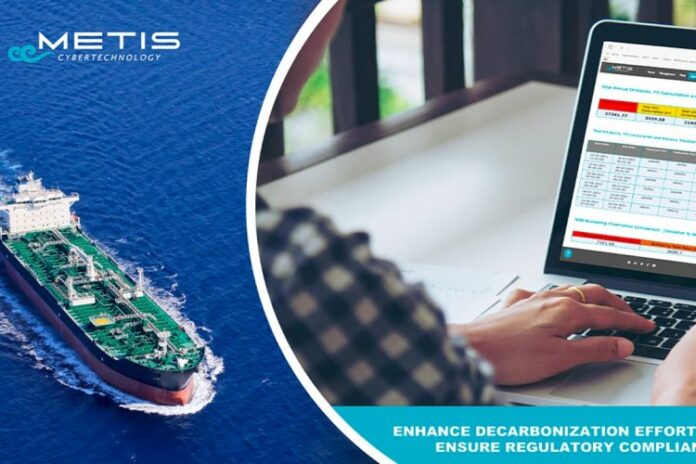
Comprising three distinct but related applications – AER Monitoring & Analysis, CII Monitoring & Analysis and MRV & DCS Compliance Documentation and Reporting – the new functionality helps shipowners to keep pace with an evolving maritime regulatory landscape for which environmental concerns are a primary driver.

The tools allow owners to monitor and analyse their fleets’ greenhouse gas emissions against industry metrics including the AER (annual efficiency ratio) and the International Maritime Organization’s forthcoming CII (carbon intensity indicator) regulation. They also facilitate the reporting of GHG emissions and the preparation of documentation in line with the European Union’s MRV (monitoring, reporting and valuation) and the IMO’s DCS (Documentation Collection System) requirements.

In addition to helping shipowners demonstrate regulatory compliance, the solutions support efforts to improve environmental performance in the long term, says Andreas Symeonidis, Marketing Manager, METIS Cyberspace Technology. 

He explains:

“The new layers of functionality will assist shipowners not only in proving their compliance with regulations but also in achieving compliance in the first place and, crucially, maintaining it. Users will be able to visualise emissions over time based on accurate trend lines, determine what they need to change to reduce those emissions and evaluate the efficacy of the actions they are taking to achieve the necessary reductions.”

With METIS’s automated data-acquisition system ensuring data quality, frequency and availability, the new applications further enrich a digital platform that already offers functionality for route-cost optimisation, weather forecasting, electric power profiling, port operations analysis and more. 

Symeonidis adds:

“At METIS, we follow industry developments closely and rapidly deploy additional functionality to our cloud-based platform as emerging requirements dictate. The result is the most comprehensive manufacturer-independent platform on the market, providing end-to-end support for owners transitioning towards digital and environmentally friendly shipping operations.”