0.9 C
New York
Home Blog Page 480

KSOE & HHI receive AiP for BV Cyber Managed Prepared Notation

0

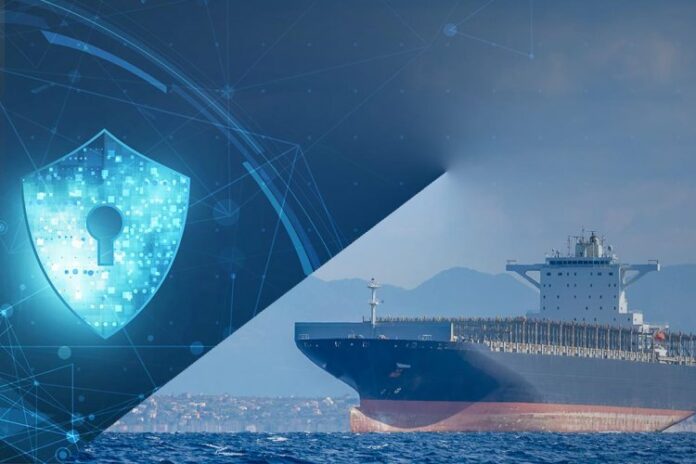
Bureau Veritas (BV), a world leader in testing, inspection, and certification, has delivered an Approval in Principle (AiP) for BV’s ‘Cyber Managed Prepared’ notation to Hyundai Heavy Industries Co., Ltd. (HHI) and Korea Shipbuilding & Offshore Engineering Co., Ltd. (KSOE) for its vessel design. 

The certificate was delivered to Won Ho Joo, Senior Executive Vice President and Chief Technical Officer of HHI, by Christophe Capitant, Country Chief Executive of BV Korea, at a ceremony held at HHI’s Shipbuilding Management’s offices in Ulsan, Republic of Korea.

The maritime industry is growing ever more connected, with the majority of newbuild vessels today being built with integrated digital systems onboard. While this increased digitalization enables ship owners and managers to collect data and exchange information with their vessels, it also leaves ships vulnerable to cyber risks. To help ship owners protect their vessels, Bureau Veritas has developed key rules, guidelines and notations for cyber security and safety. BV supports clients in meeting cyber security requirements for design and construction, and ensuring compliance with guidelines for newbuilding vessels, including IACS Recommendation 166. The advantage of undertaking cyber security for newbuilds is that ship owners can begin protecting their vessels from the design phase and continue throughout construction, where shipyards ensure the implementation of cyber security measures onboard.

Won Ho Joo, Senior Executive Vice President and Chief Technical Officer at HHI, said:

“Cyber security is one of the most important technologies in the process of moving beyond smart ships to autonomous ships. It is very meaningful that the cyber safety of our ships, which has been built through continuous development, has been verified once again in this collaboration with BV. We look forward to continuing our collaborative research with BV, so we can create more safe ships.”

Christophe Capitant, Country Chief Executive of Bureau Veritas Marine & Offshore Korea, commented:

“Bureau Veritas is proud to see the successful completion of this AiP with Korea Shipbuilding & Offshore Engineering Co., Ltd. and Hyundai Heavy Industries Co., Ltd. for vessel design with Bureau Veritas’ ‘Cyber Managed Prepared’ notation. We are excited to continue the close cooperation between KSOE, HHI and BV related to the development of key technology for smart and autonomous ships as the future framework of shipping.” 
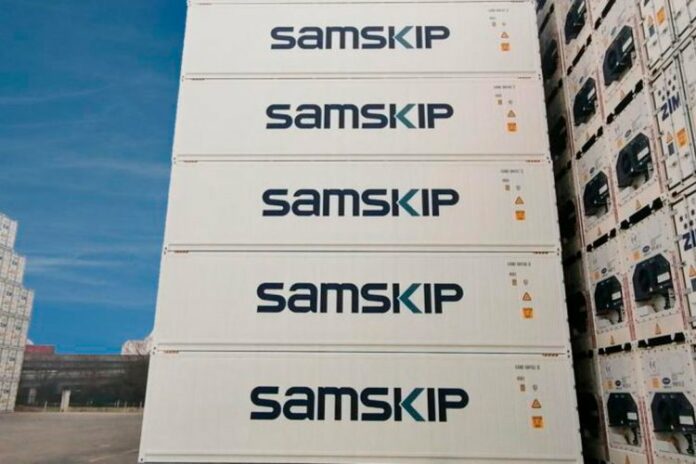
Samskip adds 150 new sustainable reefer containers to its fleet

0

Samskip added 150 brand new 45ft high cube reefer containers to its fleet, further enhancing its capability to ship high value, temperature-controlled and perishable goods across the European markets and the rest of the world. 

Equipped with the most advanced cooling and freezing functionalities, the reefer containers will be included in the company’s rotation over the course of the coming months.

These reefer units come with new waterborne paint, meeting Samskip’s sustainability goals. These units are more sustainable as they have better weather durability due to having a stronger anti-corrosion layer and have better impact resistance, despite being the lightest unit on the market (410kg). 

These next-generation reefers offer a flat composite inner lining and thus are lighter and stronger allowing a smoother (un)loading process. Each unit includes a state-of-the-art generator set, designed specifically for long-distance transportation of deep-frozen, frozen, chilled, or heated cargo in a temperature range of -30°C to +30°C.

Viðar Örn Traustason, Head of Equipment at Samskip, says:

‘’Adding new reefer containers enable us to serve our clientele with new and fresh stock and also meet the large demand for new containers and equipment availability in the current market.”

Hyon to support expansion of its hydrogen bunkering solutions for shipping

0

HYON announces an intention to list the company on Euronext Growth. 

Jørn Kristian Lindtvedt, Chief Executive Officer of HYON, says:

“The private placement was oversubscribed and attracted strong investor interest. The placement and potential listing will allow HYON to continue the growth and development to leverage on the leading position in the market for maritime hydrogen fueling solutions. We will deliver bunkering technology to the world’s first commercial-scale filling station for pressurized hydrogen for the maritime sector at the Hellesylt Hydrogen Hub, showcasing our solutions to the numerous maritime hydrogen projects set to commence construction over the next years.” 

HYON has completed a private placement of 21,367,521 shares at a price of NOK 2.34 per share raising gross proceeds of NOK 50 million. The private placement values the company, based on the shares outstanding following the private placement and the offer price, at approximately NOK 130 million. 

Bjørn Simonsen, Chief Executive Officer of Saga Pure and Member of the Board of Directors of HYON, says:

“We are pleased with the strong interest in HYON. With the company’s focus on developing leading hydrogen bunkering technologies, a strong team and exciting projects in the pipeline, we see them contributing to shaping the future of hydrogen in the maritime sector.” 

The net proceeds from the private placement will be used to fund growth and scale on investments made, and to strengthen the balance sheet for general corporate purposes. 

Jon André Løkke, Chief Executive Officer of Nel, says:

“HYON is filling an important gap in the value chain critical in making hydrogen a success within maritime applications, both domestically in Norway and beyond. We therefore look forward to supporting HYON and working with them to realize this important market which has a huge future growth potential.”

HYON has an intention to have its shares shortly admitted to trading on Euronext Growth.

Sanmar Shipyards delivers fourth powerful compact tug to SAAM Towage

0

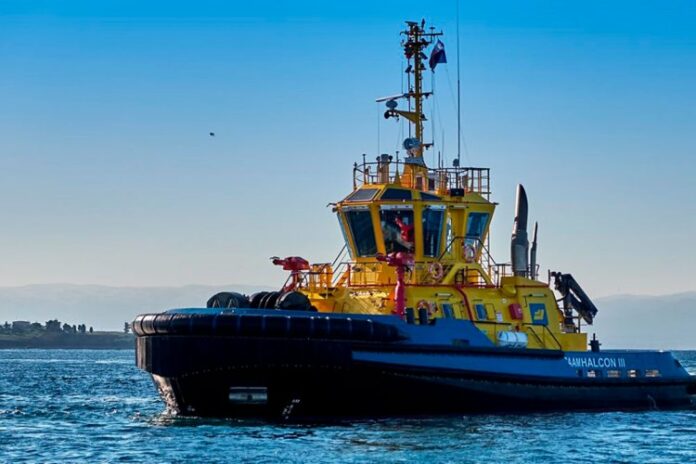
Like its three sisters SAAM VALPARAISO, SAAM PALENQUE and ALBATROS, Bogacay XLVIII, which its new owners have renamed HALCON lll, is based on the exclusive-to-Sanmar RAmparts 2400SX design from Canadian naval architects Robert Allan Ltd. She will be the first Sanmar-built tug to operate in SAAM Towage’s home country of Chile.

Meauring 24.4m LOA excluding fender, with a moulded breadth of 11.25m, moulded depth of 4.38m and maximum operating depth of 5.6m, the Z-drive HALCON lll is powered by two Caterpillar 3516C main engines each producing 2100 kW at 1.600 rev/min to achieve and impressive for its size bollard pull of 70 tonnes. The tug has Rolls-Royce US 255 FP azimuth thrusters. With accommodation for a crew of up to six, HALCON lll has a free running speed of a minimum of 12 knots and carries 72.400 ltrs of fuel oil and 10.800 ltrs of fresh water.

Pablo Caceres, Technical Director of SAAM Towage, said:

“The HALCON III is the fourth BOGACAY series that we have received from SANMAR SHIPYARDS. It must be said that the proven relation between the size and hull form of the vessel, together with the introduced power, is an evident sample of energy efficiency in the operations delivered for our customers throughout America. We are certain that the introduction of the HALCON III to our operations in Chile will represent a relevant sustainability value addition for our ports and clients.”

Ruchan Civgin, Commercial Director of Sanmar Shipyards, said:

“The exclusive RAmparts 2400SX design of tugs is an extremely popular choice, combining the benefits of the manoeuvrability of a compact design with the power and strength associated with a larger tug. We have worked closely with our long-term clients SAAM Towage to ensure that we can meet their specific operational needs, and I am delighted that this has paid off to our mutual advantage. A client coming back for more of the same is always pleasing.”

thyssenkrupp to build three new submarines for Israel

0

After extensive negotiations, all parties involved agreed to the technical content and contractual provisions on Thursday.

Dr Rolf Wirtz, CEO thyssenkrupp Marine Systems, said:

“We, as thyssenkrupp Marine Systems and Germans, are honoured and proud to continue the long cooperation – spanning decades – with the Israeli Ministry of Defence and the Israeli Navy. The new class of submarine will provide Israel with the most advanced capabilities, based on an innovative, cutting-edge technology.

This agreement demonstrates the deep commitment of thyssenkrupp Marine Systems to guarantee Israel’s long-term security. It was signed after a thorough and extensive groundwork process, and I would like to thank our partners in the Ministry of Defence and the Israeli Navy for their commitment and professionalism.”

The Dakar class will be of a completely new design, which is to be specifically engineered to fulfil the operational requirements of the Israeli Navy. The three submarines will replace the first batch of Dolphin-class submarines.

Dr Rolf Wirtz said:

“In the last joint project with the Israeli Navy, the SA’AR-6 project, we delivered four corvettes on time and within budget. In this respect, we are very much looking forward to working with our longstanding partner again.”

Before the contract comes into effect, thyssenkrupp Marine Systems will have to hold intensive talks with its suppliers.

In preparation for the expected order, thyssenkrupp had already agreed to investments of about 250 million euro for thyssenkrupp Marine Systems in 2019. Kiel is thus securing its location as an international centre of competence for conventional submarine construction. Construction of a new shipbuilding hall and a fuel-cell production facility is already visible on the shipyard site.

Maersk Supply Service awarded Fugro subsea survey contract

0

Maersk Supply Service has awarded Fugro a subsea survey and positioning contract to support installation of an anchoring system for the floating production storage and offloading (FPSO) vessel Sepetiba in Petrobras’ deepwater Mero 2 project, offshore Brazil.

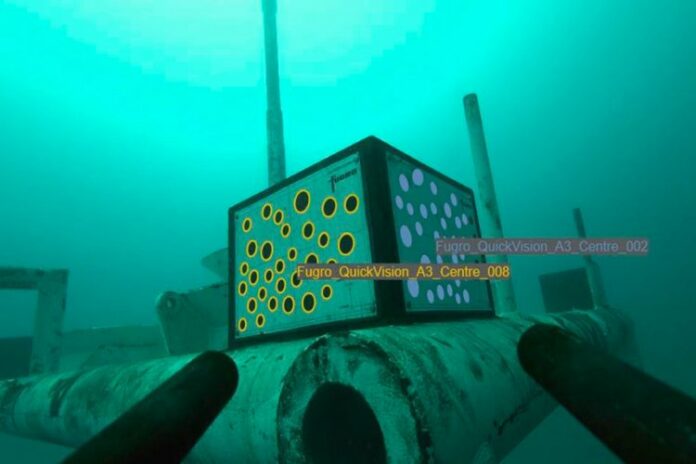
These operations are scheduled to begin in Q1 2022 and last approximately 4 months. Fugro will accomplish the work using their QuickVision® augmented reality camera, a touchless, vision-based approach proven in Petrobras’ Mero 1 deepwater project last year.

QuickVision® is part of Fugro’s strategy to make offshore operations safer, more efficient and more sustainable. Integrated with Fugro’s Starfix® navigation suite, the camera system eliminates the need for staff to mount sensors on subsea assets, which in turn reduces offshore personnel needs, vessel time and carbon emissions. For the Mero 2 project, Fugro will use the technology to help guide installation of 24 subsea torpedo piles and mooring lines, as well as to support real-time positioning for additional subsea installation and construction activities.

John Chatten, Business Development Manager for Fugro’s marine operations in Brazil stated:

“We are delighted to be working with Maersk Supply Service on their Mero 2 project for Petrobras following the successful deployment of our QuickVision® technology on the Mero 1 project. It is Fugro’s goal to be the partner of choice for subsea services, delivering innovative solutions for complex installation and construction projects that contribute to the responsible development of Brazil’s energy assets.”

Mero 1 and Mero 2 projects are part of the Mero field under Libra Consortium responsibility, in which Petrobras is the operator (40 %) with the following partners: Shell Brasil (20 %), TotalEnergies (20 %), CNODC (10 %) and CNOOC Limited (10 %), together with stated owned company Pré-sal Petróleo S.A. – PPSA – as the manager of the production sharing contract.

Satellites show ‘mega-iceberg’ released 152 billion tons of fresh water into ocean

0

152 billion tons of fresh water—equivalent to 20 times the volume of Loch Ness or 61 million Olympic-sized swimming pools, entered the seas around the sub-Antarctic island of South Georgia when the megaberg A68A melted over three months in 2020/2021, according to a new study.

In July 2017, the A68A iceberg snapped off the Larsen-C Ice Shelf on the Antarctic Peninsula and began its epic 3.5-year, 4,000-km journey across the Southern Ocean. At 5719 square kilometers in extent—one-quarter the size of Wales—it was the biggest iceberg on Earth when it formed and the sixth largest on record. Around Christmas 2020, the berg received widespread attention as it drifted worryingly close to South Georgia, raising concerns it could harm the island’s fragile ecosystem.

Researchers from the Centre for Polar Observation and Modelling (CPOM) and British Antarctic Survey (BAS) used satellite measurements to chart the A68A iceberg’s area and thickness change throughout its life cycle. The authors show that the berg had melted enough as it drifted to avoid damaging the sea floor around South Georgia by running aground. However, a side effect of the melting was the release of a colossal 152 billion tons of fresh water in close proximity to the island—a disturbance that could have a profound impact on the island’s marine habitat.

For the first two years of its life, A68A stayed close to Antarctica in the cold waters of the Weddell Sea and experienced little in the way of melting. However, once it began its northward journey across Drake Passage, it traveled through increasingly warm waters and began to melt. Altogether, the iceberg thinned by 67 meters from its initial 235-meter thickness, with the rate of melting rising sharply as the berg drifted in the Scotia Sea around South Georgia.

Laura Gerrish, GIS and mapping specialist at BAS and co-author of the study said:

“A68 was an absolutely fascinating iceberg to track all the way from its creation to its end. Frequent measurements allowed us to follow every move and break-up of the berg as it moved slowly northward through iceberg alley and into the Scotia Sea, where it then gained speed and approached the island of South Georgia very closely.”

If an iceberg’s keel is too deep, it can get stuck on the sea floor. This can be disruptive in several ways: The scour marks can destroy fauna, and the berg itself can block ocean currents and predator foraging routes. All of these potential outcomes were feared when A68A approached South Georgia. However, this new study reveals that it collided only briefly with the sea floor and broke apart shortly afterward, making it less of a risk in terms of blockage. By the time it reached the shallow waters around South Georgia, the iceberg’s keel had reduced to 141 meters below the ocean surface, shallow enough to avoid the seabed which is around 150 meters deep.

Nevertheless, the ecosystem and wildlife around South Georgia will certainly have felt the impact of the colossal iceberg’s visit. When icebergs detach from ice shelves, they drift with the ocean currents and wind while releasing cold fresh meltwater and nutrients as they melt. This process influences the local ocean circulation and fosters biological production around the iceberg. At its peak, the iceberg was melting at a rate of 7 meters per month, and in total, it released a staggering 152 billion tons of fresh water and nutrients.

Anne Braakmann-Folgmann, a researcher at CPOM and Ph.D. candidate at the University of Leeds’ School of Earth and Environment, is lead author of the study. She said:

“This is a huge amount of melt water, and the next thing we want to learn is whether it had a positive or negative impact on the ecosystem around South Georgia. Because A68A took a common route across the Drake Passage, we hope to learn more about icebergs taking a similar trajectory, and how they influence the polar oceans.”

The journey of A68A has been charted using observations from five satellites. The iceberg’s area change was recorded using a combination of Sentinel-1, Sentinel-3 and MODIS imagery. Meanwhile, the iceberg’s thickness change was measured using CryoSat-2 and ICESat-2 altimetry. By combining these measurements, the iceberg’s area, thickness, and volume change were determined.

Tommaso Parrinello, CryoSat Mission Manager at the European Space Agency, said:

“Our ability to study every move of the iceberg in such detail is thanks to advances in satellite techniques and the use of a variety of measurements. Imaging satellites record the location and shape of the iceberg and data from altimetry missions add a third dimension as they measure the height of surfaces underneath the satellites and can therefore observe how an iceberg melts.”

ClassNK issues AiP for ammonia-fueled Panamax bulk carrier developed

0

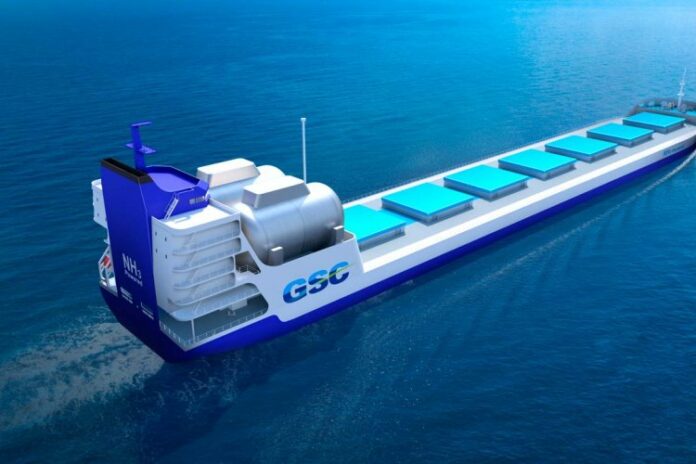
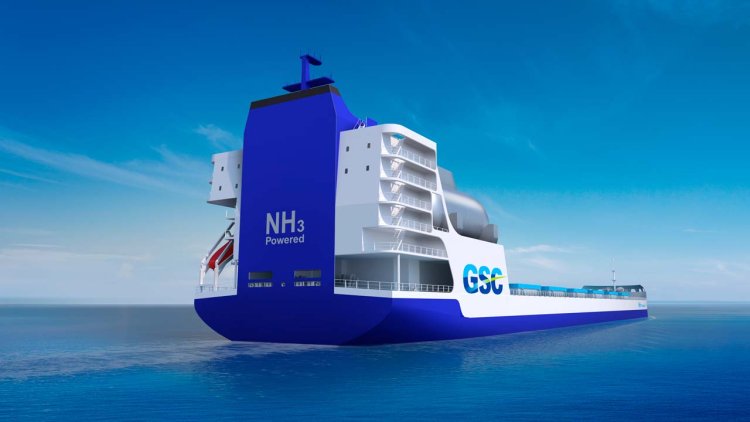
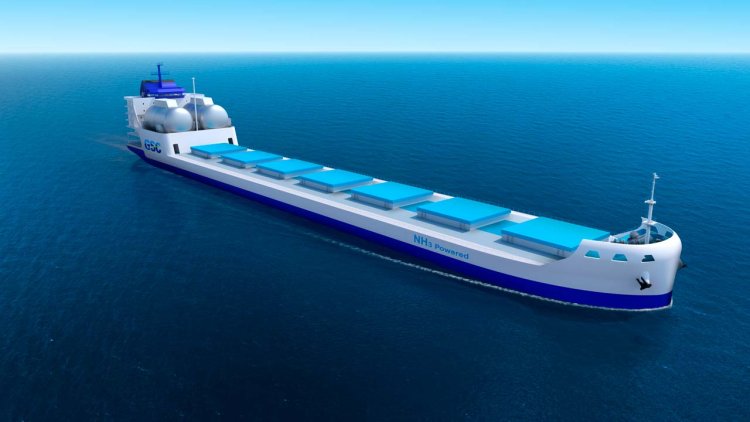
Ammonia is expected to be used as decarbonized fuel for ships since it does not emit CO2 when burned, however, taking adequate safety measures are impartial due to its characteristics of being toxic to humans and corrosive against materials. 

While international standards for using ammonia as ship fuel are yet to be developed, ClassNK published its “Guidelines for Ships Using Alternative Fuels” in August 2021 to minimize the risks related to ammonia-fueled ships for the ships, crew, and environment by stipulating requirements for installation, controls, and safety devices.

For the design developed by GSC, ClassNK reviewed the ammonia treatment measures, piping diagram of the fuel supply system, identification of hazardous area taking into account the flammability and toxicity of ammonia, and evacuation routes in case of emergency in line with the Guidelines. Verifying the conformity to their requirements, ClassNK has issued the AiP. 

GSC member shipbuilders in Japan are expected to utilize the approved basic design information for their upcoming product development of ammonia-fueled bulk carriers.

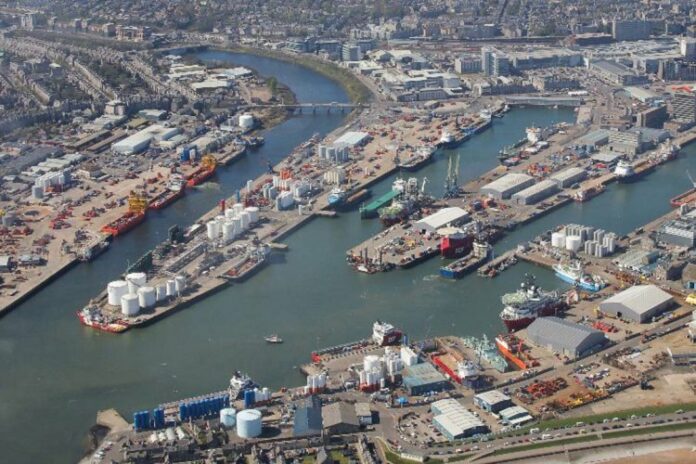
Aberdeen Harbour and bp to collaborate on decarbonising port operations

0

Under the memorandum of understanding, the harbour and bp will explore opportunities in service of their net zero ambitions, including the potential for:

  • A pilot project to supply shore power (quayside electrification) allowing vessels to turn off main engines while in port to reduce emissions and noise.
  • Supply of a zero or low carbon power supply to all vessels in port, over time.
  • Exploring the use of hydrogen as a clean marine fuel.
  • Helping to position the harbour to support offshore wind developments and their associated operations and maintenance phase.

bp was also recently announced as the preferred bidder to form a new hydrogen hub joint venture with Aberdeen City Council following a competitive procurement process. The hub aims to create Scotland’s first scalable hydrogen production facility, incorporating solar power, green hydrogen production and a refuelling facility for public transport.

Support for ports and harbours is also a key component of bp and partner EnBW’s transformational bid in the ScotWind offshore wind leasing round. If successful, this project would see the development of 2.9 gigawatts (GW) of clean energy as well as significant investment to accelerate Scotland’s energy transition.

Bob Sanguinetti, Chief Executive of Aberdeen Harbour Board, said:

“This collaboration with bp comes at a significant time for Aberdeen Harbour, and combined with our multi-million-pound investments into our infrastructure and established three-stranded Green Port strategy, propels us into being Scotland’s leading port for energy transition.

“Reducing emissions from vessels berthed in the port and providing low carbon power supplies will be critical to achieving a green maritime industry and requires innovative thinking and practices.

“We look forward to working with bp and our stakeholders to further realise net zero ambitions, combine our expertise and ultimately bring prosperity to the north-east of Scotland and the wider maritime and energy industry.”

bp North Sea Senior Vice President Emeka Emembolu added:

“For nearly 30 years, Aberdeen Harbour has provided bp with world-class facilities in support of our North Sea oil and gas operations. We are delighted to be strengthening that relationship in a way that we believe will help further the net zero ambitions of both organisations.

“We will be bringing bp’s core skills in solving complex energy problems to a progressive and highly capable port that is uniquely positioned to play an integral part in Scotland’s energy transition.”

Southern Hemisphere’s first fully electric passenger ferry launches in New Zealand

0

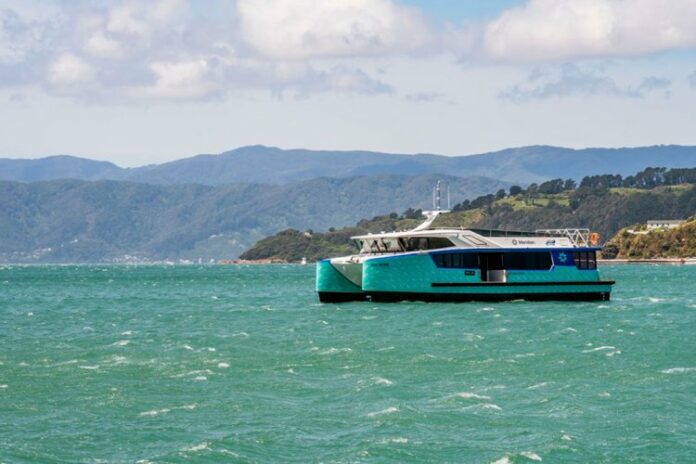
Danfoss’ Editron marine drivetrain system is powering the Southern Hemisphere’s first fully electric passenger ferry, after the East by West Ferries service officially launched the Ika Rere zero-emission vessel in Wellington, New Zealand.

Research by the New Zealand Government has found that domestic ships such as ferries and freighters emit close to 300,000 tons of CO2 every year. In Wellington, nearly 50% of the city’s emissions were produced from the transportation sector in 2020. With the local council committing to becoming a net-zero-carbon city by 2050, introducing alternative energy forms of transportation is crucial.

The 19-meter-long Ika Rere ferry can carry up to 132 passengers on journeys across Wellington Harbor at an operational speed of 20 knots. It has been designed and built to complete one return run of 25 kilometers before charging dockside at a rate of one megawatt for 15 minutes while passengers disembark and board. The ferry will be charged from a 300 kilowatt charger at its overnight berth during its first year of operation. It is anticipated that the Ika Rere ferry will save approximately 640 tons of CO2 annually compared to a similar-sized diesel alternative.

New Zealand electrical company McKay acted as the project’s lead electrical designer and system integrator, choosing one of Danfoss’ Editron drivetrain systems to power the ferry. The system consists of two propulsion motors, two grid solutions for the AC network and six DC/DC converters connected to the vessel’s batteries. All of these components operate via a DC cabinet and are controlled via an electronic control system.

Erno Tenhunen, marine director of Danfoss’ Editron division, said:

“As companies, cities and countries around the world continue to set CO2 reduction targets, the demand for zero-emission vessels and machines continues to grow. Our Editron marine system provides outstanding efficiencies within a power range of up to six megawatts. It is also compact and lightweight, enabling space and weight savings and increasing design freedom. These savings ultimately benefit passengers, as operators can provide a greater level of comfort.”

Jeremy Ward, managing director of East by West Ferries, commented:

“While Ika Rere has cost more than an equivalent-sized diesel boat, we will make savings back over time thanks to its cheaper running costs. The ferry’s electric motors, provided by Danfoss’ Editron division, require less maintenance than traditional diesel versions. The cost of charging the vessel’s batteries is also significantly less than filling it up with diesel.”

The Ika Rere ferry will complete survey sea trials before entering a commissioning stage with East by West Ferries. It will undertake a number of public sailings during the commissioning phase before being released into full service by the end of Q1 in 2022.