0.9 C
New York
Home Blog Page 479

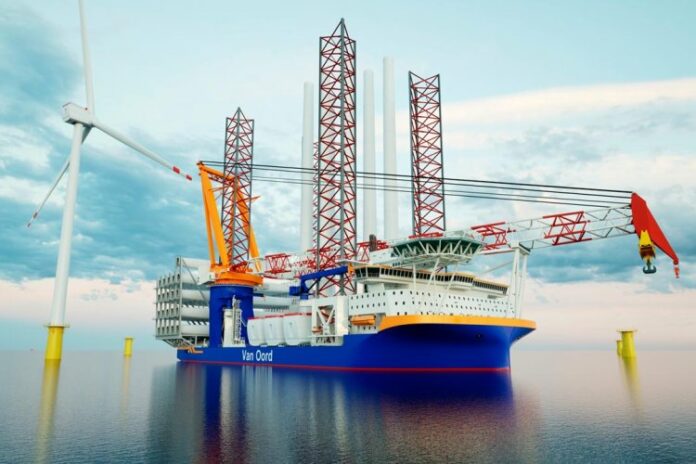
New Van Oord vessel will be powered by five Wärtsilä 32 engines

0

A new Offshore Wind Installation Vessel (WIV) being built for Dutch contracting company Van Oord at Yantai CIMC Raffles shipyard in China will be powered by five Wärtsilä 32 engines capable of operating with methanol.

The order, which includes the methanol fuel supply system, was placed in November 2021, with delivery of the equipment scheduled for early 2023.

The methanol engine order extends Wärtsilä’s leading position in support of the maritime industry’s decarbonisation ambitions, and in the use of the fuel. Wärtsilä has over half a decade’s experience with methanol, having converted the first of four engines on Stena Germanica to use the fuel in 2015.

Harold Linssen, Project Director, Van Oord, said:

“We see methanol as one of the alternatives to meet the industry’s goals to reduce its environmental impact. We are pleased to be the pioneer of Wärtsilä’s latest methanol-fuelled engine technology.”

‘Green’ methanol is among the potential and most promising future fuel candidates. It is made using hydrogen from renewable-sourced electricity and recaptured carbon. The benefits of methanol are that it is relatively inexpensive to produce, is widely available, and easy to store. Furthermore, the global supply infrastructure is already established.

In line with its strategy to meet future development needs through collaboration with key stakeholders, Wärtsilä recently signed a long-term strategic cooperation agreement with Chinese shipyard Yantai CIMC Raffles. The cooperation is aimed at the design and development of future-proof solutions for newbuild vessels. This will include the use of future carbon-free fuels and other integrated technology solutions.

Following the agreement, Yantai CIMC Raffles awarded Wärtsilä the honorary title of “Excellent Partner” in recognition of its long-term support and cooperation.

Li Minggao, Vice President, CIMC Raffles, said:

“Leveraging the combined strengths of Yantai CIMC Raffles and Wärtsilä will ensure that we can deliver the best solutions to support our customers on their path to lower emissions.”

Roger Holm, President, Wärtsilä Marine Power, said:

“Enabling the use of methanol fuel is an important step along the path towards decarbonised operations. These cooperations will speed the work in bringing these fuels to the market, and in building ships that meet and exceed the regulatory and operational requirements for the coming decades.”

During the coming few years, Wärtsilä will commercialise engine technologies that allow the use of all alternative fuels currently under discussion. Given the modularity of modern engines, this means that owners can already today future-proof their existing assets and plan for the use of new fuels as and when they become available.

Wärtsilä will also supply a package of leading-edge thrusters to the Van Oord vessel for efficient station keeping. This marks the seventh order for Wärtsilä thrusters for WTIVs in 2021 and highlights the company’s leading position in the offshore wind segment.
ARC adds two new ships to the U.S.-flag fleet

0

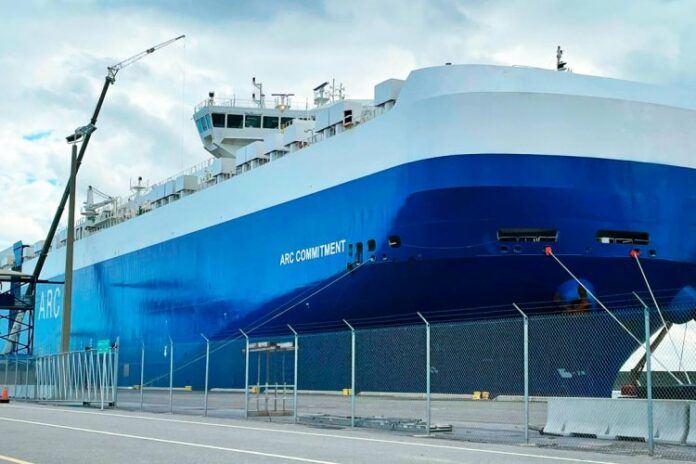
The two vessels are ARC’s latest additions to its U.S.-flag fleet, having recently been reflagged with the U.S. Coast Guard to American-flag registry in Jacksonville, Florida in December 2021 and January 2022 respectively.

Both ships are enrolled in the Maritime Security Program (MSP), the bedrock Congressional maritime readiness program that maintains a modern, active fleet of U.S.-flag, privately-owned ships that are available upon request by the Secretary of Defense to provide sealift capacity and support to the military and other federal agencies in times of need (war, national emergencies, humanitarian crises).

Eric Ebeling, ARC President & CEO, said:

“These tremendously capable and flexible U.S.-flag assets stand ready to support America’s national defense and economic security through trade, and further strengthen ARC’s position as the leading U.S.-flag Ro-Ro carrier.”

M/V ARC Commitment is 227.80m long with a 6.50m high stern opening and a stern ramp rated for cargo weighing up to 320 MT. It is the company’s third U.S.-flag LCTC (large car truck carrier) vessel. M/V ARC Defender is 199.99m long with a 5.20m high stern opening and a stern ramp rated for cargo weighing up to 237 MT. It is a sister ship to ARC’s M/V Liberty.

These two vessels are among the most capable and militarily useful vessels in the U.S.-flag commercial fleet, able to carry tracked and wheeled vehicles, helicopters, and other high and heavy project cargoes. ARC owns and operates nine roll-on roll-off (Ro-Ro) vessels in the international trades and is the largest U.S.-flag Ro-Ro operator.

AD Ports Group creates logistics base at Mugharraq Port for Eni Abu Dhabi

0

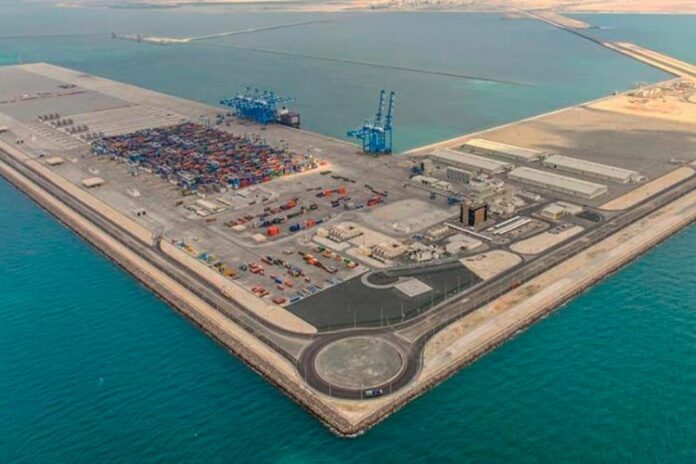
AD Ports Group has signed a new agreement with Eni Abu Dhabi B.V., the Abu Dhabi-based branch of the world-renowned Italian Integrated Energy Company, to establish a marine logistics base at Mugharraq Port supporting offshore drilling operations in the heart of Al Dhafra region.

Mugharraq Port’s ultra-modern infrastructure and its strategic location close to the region’s offshore oil and gas facilities will be made available to Eni Abu Dhabi operations.

In addition to being provided a dedicated quay wall, marshalling yard, as well as manpower and logistical equipment, the company will also have access to liquid mud and bulk plant facilities onsite.

Saif Al Mazrouei, Head of Ports Cluster, AD Ports Group, said:

“Utilising the industry-leading infrastructure and service capability that we have on offer at Mugharraq Port, Eni will be able to operate in proximity to its offshore drilling facilities benefiting operational efficiency.”

Mubarak Al Mazrouei, Port Director – Al Dhafra Region, AD Ports Group, said:

“Mugharraq Port has a rich history as a leading maritime facility in Al Dhafra region that has long supported a wide-range of offshore, general cargo, bulk and break-bulk, and commercial logistics operations.

“With enhanced capabilities to serve the GCC’s oil and gas market, as well as the recent recognition as an international port facility, Mugharraq Port is now well equipped to meet both the regional and global requirements of the Middle East’s leading energy players.”

A high-performing commercial maritime facility, Mugharraq Port has undergone extensive modernisation in recent years with AD Ports Group investing heavily in the development of the port’s logistical infrastructure and capabilities, as well as enhancing its capacity to meet the evolving needs of the region’s fast-developing offshore oil and gas segment.

Sequoia receives NSF grant to develop carbon uptake sensor for profiling floats

0

Sequoia Scientific, Inc. has been awarded a National Science Foundation (NSF) Small Business Technology Transfer (STTR) Phase I grant for $254,110 to conduct research and development (R&D) work developing a bio-optical sensor for direct detection of sinking marine particles. 

Sequoia’s Vice President of Science and Technology, Dr. Wayne Slade, will lead the development as principal investigator, collaborating with Dr. Meg Estapa at the University of Maine, School of Marine Sciences.

Almost 4,000 ocean profiling floats are in operation globally. Hundreds of new floats are deployed each year, measuring a wide range of ocean science and climate change parameters. Scientists and policymakers are increasingly interested in measuring biogeochemical parameters that provide key data on biological ocean carbon uptake, which helps the ocean store carbon dioxide, but could be impacted by climate change.

Within the scientific community, there is significant interest in development of new technology to measure the flux of carbon by particles settling out of the surface ocean. With the new NSF grant, Sequoia and UMaine will work on developing an “optical sediment trap” sensor that can directly measure the settling particles that carry the greatest amount of biological carbon into the deep ocean. The sensor will be small and power-efficient to address the challenges of multiple-year deployments from autonomous profiling floats and scaling to a global float array.

Dr. Wayne Slade, Sequoia’s Vice President of Science and Technology, said:

“Sequoia is honored to receive this grant that will lead to the development of a new sensor that will make a critical biogeochemical measurement – on a challenging platform – and will further our understanding of how climate change impacts the ocean.” 

Dr. Meg Estapa, the University of Maine, School of Marine Sciences, said:

“This new sensor is meant to take advantage of the rapid expansion in the number of profiling floats measuring biogeochemical processes.”

Once a small business is awarded a Phase I SBIR/STTR grant (up to $275,000), it becomes eligible to apply for a Phase II (up to $1,000,000). Small businesses with Phase II funding are eligible to receive up to $500,000 in additional matching funds with qualifying third-party investment or sales. During Phase I, Sequoia and University of Maine will focus on sensor optical, power, and fluid dynamics modeling. The modeling results will guide a series of laboratory test and prototype concept development. An actual prototype and in-situ test on deployed floats would be part of an eventual Phase II award (24 months duration) and a commercial instrument would be ready immediately after Phase II.

Startups or entrepreneurs who submit a written Project Pitch will know within one month if they meet the program’s objectives to support innovative technologies that show promise of commercial and/or societal impact and involve a level of technical risk. Small businesses with innovative science and technology solutions, and commercial potential are encouraged to apply. All proposals submitted to the NSF SBIR/STTR program, also known as America’s Seed Fund powered by NSF, undergo a rigorous merit-based review process. 

Twin Taiwan TRAktors take Robert Allan Ltd. into new territory

0

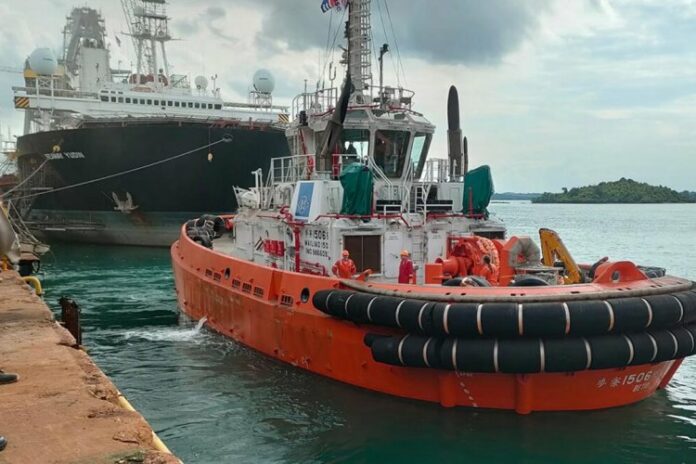
Robert Allan Ltd. has announced that Mailiao 1505 and Mailiao 1506 have been delivered to the Formosa Plastic Corp., Taiwan, by PaxOcean Engineering Pte. Ltd. in December 2021. The vessels will be operated by the Mailiao Harbour Administration Corp., a subsidiary of Formosa Plastic Corp.

These identical sister ships are 31.8 metre versions of the well-proven TRAktor-V series high performance VSP tractor tugs and will replace aging tugs in the current fleet. Operating in Mailiao Port, Taiwan, the tugs will assist in berthing and un-berthing operations, provide protection/security services in the designated area, and support external fire-fighting operations. 

The vessels were built concurrently at PaxOcean’s Shipyard in Batam, Indonesia (PT. Graha Trisaka Industri).  Despite delays during construction and commissioning due to the global COVID-19 pandemic, the vessels successfully completed sea trials in May 2021.

These TRAktor 3100-Vs feature a flush main deck with crew accommodations below deck forward of the VSP compartment, and additional cabins for the Master and Chief Engineer on the deckhouse level.  Twin Voith VSP 28R5/210-2 units are installed at the bow in tractor configuration, driven by medium speed resiliently mounted Niigata 6L28HX engines rated for 1897 kW at 750 rpm.

The wheelhouse is configured for stern first operations with the main control console located at the aft end of the house offering better visibility for the operator over the stern and to essential equipment on the aft main deck.  For this reason, the stern also features a heavy duty fendering system comprised of a double row of cylindrical fenders and tires.  Fire-fighting monitors are arranged on the aft bridge deck.

To fulfill owner’s requirements for the manoeuvrability of the tugs, Robert Allan Ltd. completed numerous CFD simulations of the tug’s directional stability characteristics during the design phase.

Key particulars of the TRAktor 3100-V are:

  • Length, overall: 31.8 m
  • Beam, moulded: 11.48 m
  • Depth, least moulded: 4.65 m
  • Maximum draft (navigational): 5.20 m
  • Gross Tonnage: 452

The tugs were designed and constructed to the following CR notation:

CR100, +E Tug, CMS+, Coastal Service, BP [50], Fire Fighting Ship 1

The deckhouse contains an engine watch room, the galley, lounge/mess, two officer cabins and a wet room area. The lower deck contains two double berth cabins and two stores spaces. The wheelhouse is designed with a Voith style control console which can be operated in both the ahead and astern positions.

Trial results were as follows:

  • Bollard pull, ahead: Both Mailiao 1505 & Mailiao 1506 exceeded the designed bollard pull of 50 tonnes
  • Free running speed, ahead: > 12.0 kts

TotalEnergies and CMA CGM launch ship-to-ship LNG bunkering in Marseille

0

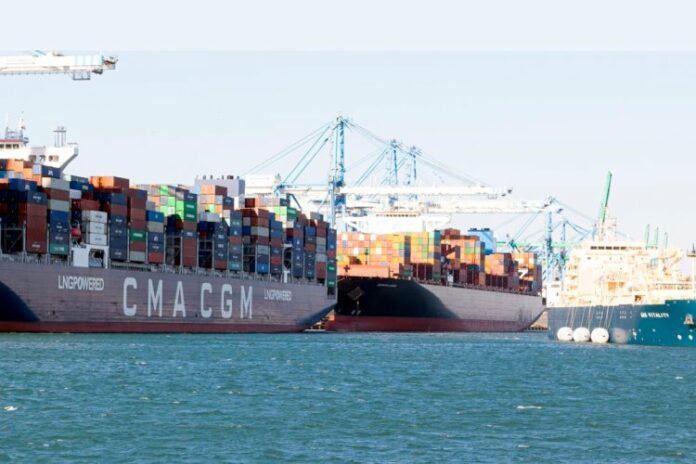
CMA CGM BALI, a 15,000 TEU LNG-powered containership is deployed on the MEX 1 service, connecting Asia and South Europe. She is being refuelled by TotalEnergies’ Gas Vitality, the first LNG bunker vessel based in France, with around 6,000m3 of LNG, by means of a ship-toship transfer alongside the Eurofos container terminal, while the containership carried out cargo operations simultaneously. The Gas Vitality is TotalEnergies’ second chartered LNG bunker vessel and owned by Mitsui O.S.K. Lines, Ltd (MOL).

This entire operation underlines a solid collaborative teamwork across the French maritime industry, the excellence of its value chain and the involvement of local port authorities to enable the vessels’ safe operatorship.

In November of 2017, Rodolphe Saadé, CMA CGM Group’s Chairman and Chief Executive Officer, decided to make CMA CGM the first ship-owner in the world to equip its flagship 23,000-TEU vessels with engines using liquefied natural gas (LNG) – a first in the history of shipping for Ultra Large Container Vessels. CMA CGM has chosen TotalEnergies as part of a major industrial partnership to supply them with gas in Rotterdam, Singapore and Marseille. 

Thereby making CMA CGM the initiator in structuring a genuine LNG field of excellence in maritime transport. Marseille is the first LNG bunkering hub in France for shipping, for all the Mediterranean and South Europe area, and CMA CGM’s third one to be created after Rotterdam and Singapore.

By the end of 2024, the CMA CGM Group will have a fleet of 44 LNG-powered vessels, “emethane ready” of various sizes and 24 are already in service. The engines deployed on these vessels already have the technical capability of using bio-methane (already in use) and emethane, a carbon-neutral fuel, making them simultaneously an immediate and a long-term solution to the challenge of decarbonization.

Prior to this bunkering operation, the Gas Vitality was loaded with LNG at Elengy’s Fos Cavaou LNG terminal on December 28, 2021, which also marks the terminal’s first loading of a small-scale LNG carrier.

Christine Cabau, Executive Vice President Operations and Assets of the CMA CGM Group said:

“This LNG bunkering operation is an important milestone for our group, in many ways. It sets France and Marseille maritime and port cluster on the frontline for the decarbonization of shipping. It enhances LNG solutions as the first step of a broader industrial strategy that will take us to alternative fuels such as biomethane and e-methane”.

Jérôme Leprince-Ringuet, Vice-President Marine Fuels at TotalEnergies, said:

“TotalEnergies is delighted to successfully complete Marseille’s first LNG bunkering operation of a containership via the Gas Vitality. Her deployment underscores the Company’s commitment to support the French port’s ambition to be an LNG bunkering hub for the Mediterranean region. This landmark operation also demonstrates our continued support to the growing role of LNG in shipping’s energy transition.”

Hervé Martel, CEO, Port of Marseille Fos, said:

“This is a new milestone for the port of Marseille Fos, which is undoubtedly an essential LNG hub in the Mediterranean. The energy transition operated at Marseille Fos involves all the partners. The port is resolutely committed to this path: that of environmental excellence. This operation is proof of effective joint work and an additional attractiveness argument for our port.”

Norside buys the platform supply vessel ‘Farland’ for offshore wind

0

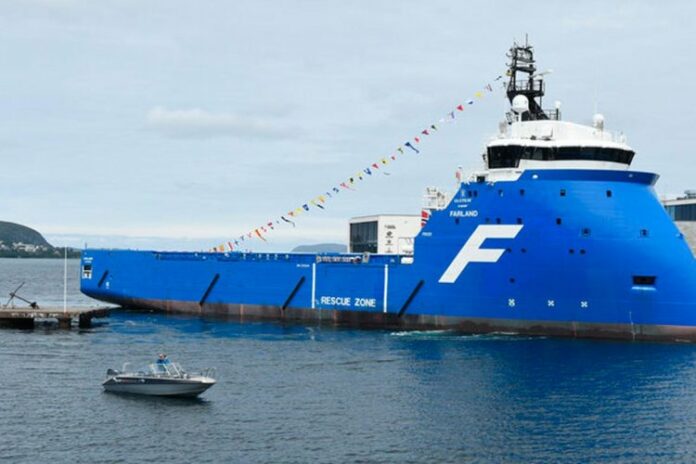
The PX121 design by Ulstein has once more proven to be a preferred design for conversions into new segments, and ‘Farland’ is about to transfer from the offshore oil & gas industry to the offshore wind industry.

CEO Hans Martin Gravdal in Norside says:

“The ship has currently accommodation for 22 people, and will, after the conversion, have accommodation for totally 60 persons. A new accommodation module will be installed, and a battery package as well as a gangway and cranes.”

The vessel is a PX121 design by Ulstein, a flexible design that combines a transit effective hull with large deck space. This translates to lower fuel consumption, and thus, reduced harmful emissions while maintaining high operability.

CEO Cathrine Kristiseter Marti at Ulstein says:

“We are pleased that a PX121 design will be converted for use in the growing offshore wind industry, giving the vessel a new life in the renewable segment.”

OSM Offshore Bergen/Vestland Offshore will have the management of the vessel, which will operate under the new name ‘Norside Cetus’. The vessel was originally built by Ulstein Verft and delivered under the name ‘Blue King’ in 2016.

Jiangsu to make four car carrier vessels for Höegh Autoliners

0

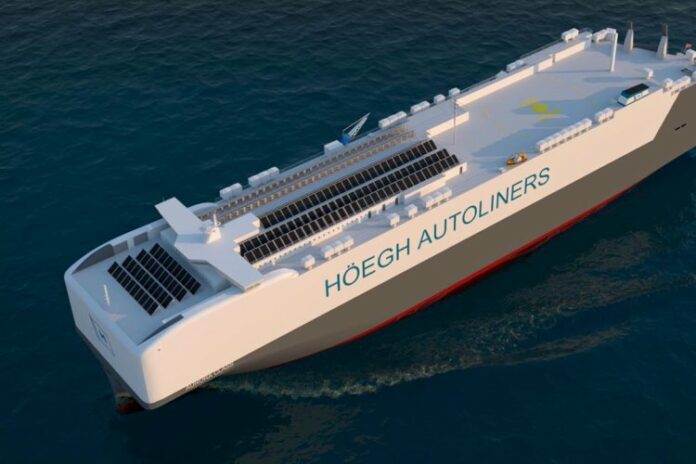
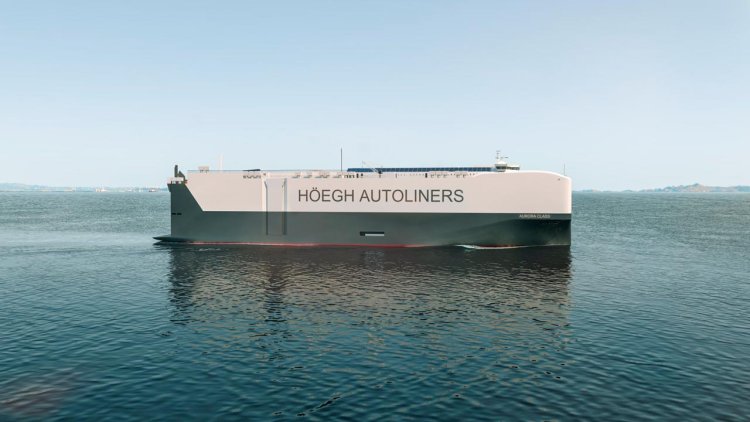
Höegh Autoliners has entered into a contract with China Merchants Heavy Industry (Jiangsu) Co., Ltd. (CMHI) for four fixed and eight optional multi-fuel and zero carbon ready Aurora class vessels.

Under the terms of the contract, the first two vessels will be delivered in the second half of 2024 and the next two vessels in the first half of 2025. In addition, Höegh Autoliners has options for another four plus four Aurora class vessels.

The Aurora class will have DNV’s ammonia and methanol ready notation. The vessel will be the first in the PCTC segment to operate on zero carbon ammonia. Together with the capacity to carry up to 9,100 cars, the industry leading Aurora class will be the world’s largest and most sustainable car carriers. 

Leif O. Høegh, Höegh Autoliners Chair said:

“We are proud to partner with one of the largest and most reputable shipbuilders in China. The collaboration with China Merchants Industry represents a breakthrough in reaching our ambitious net zero emissions target by 2040. The innovative design of the zero carbon ready Aurora class will enable our customers to decarbonise their supply chain. Together with CMHI we are leading the way towards a net zero emissions future for our industry.”

The transformational newbuilding program will accelerate the Company’s green transition, expand the fleet, and deliver market leading low-to-zero emission transportation services to its customers. 

Andreas Enger, Höegh Autoliners CEO comments:

“We are excited to partner with China Merchants Heavy Industry and secure the delivery of the world’s largest and most environmentally friendly PCTC vessels already by 2024. The Aurora class represents the future of our business. It will further strengthen our service offering, accelerate our path to zero and put us in the forefront of sustainable shipping.”   

China Merchants Industry has been expanding its shipbuilding business over the past two years and it is now the largest PCTC builder and one of the largest shipbuilding groups in China. China Merchants Industry own Deltamarin, which has designed the new Höegh Autoliners Aurora class.

Mei Zhonghua, CMHI general manager comments:

“We look forward to working together and providing Höegh Autoliners with these state-of-the-art and environmentally friendly PCTC vessels.”

The Aurora class is designed to transport the cargo of the future. The vessel’s strengthened decks and enhanced internal ramp systems enable Electric Vehicles on all decks and provides more flexibility for heavier project cargo.

The vessel’s multi-fuel engine can run on marine gas oil (MGO) and LNG. With modifications, the vessel can transition to use future zero carbon fuels including ammonia or methanol.  

Kongsberg Digital joins the NorthWind project

0

Kongsberg Digital (KDI) has joined The Centre for Environment-friendly Energy Research (FME) on Wind Energy called NorthWind to contribute to the development of a Digital Twin Technology for offshore wind infrastructure.

The main objective for NorthWind is to do research and innovation to reduce the cost of wind energy, facilitate its sustainable development, create jobs, grow exports and bring value to the partners, their clients and society at large. NorthWind will address challenges and opportunities regarding the use of wind power both onshore and offshore, in close collaboration with the research partners SINTEF, NTNU, UiO, NGI and NINA. 

Kongsberg Digital will join a prominent group of industry partners, such as ABB, Fred Olsen Seawind, Statkraft and Energi Norge, to mention a few, which have also joined the project with their expertise.

As part of KONGSBERG, a technology company delivering advanced technology and solutions from deep sea to outer space, Kongsberg Digital is intended to expand and complement a rapidly growing portfolio of KONGSBERG products and services for offshore wind. Current KONGSBERG offerings include subsea-, seabed- and environmental survey solutions, field surveillance, construction- and logistics vessels and -systems and a range of sensors and components for fixed and floating turbines.

Lasse Jamt, Head of Renewables and Utilities in Kongsberg Digital, says:

“We share the environmental concerns we are facing and is, therefore, determined to share our knowledge and expertise to do research, develop and establish sustainable infrastructure and enable the energy transition. Kongsberg Digital believes the planned activities of NorthWind will provide an excellent basis for innovation and generation of added value. The opportunity to increase the knowledge regarding energy-related technology for a sustainable future is one of the main reasons we join this project.”

“To reach the Net Zero goal, the establishment of research centres such as the NorthWind holds one of the main keys to a sustainable future, and we will take great pride in joining the consortium as a dedicated and active partner.”

Keel laid for SunStone’s next Ulstein designed expedition cruise vessel

0

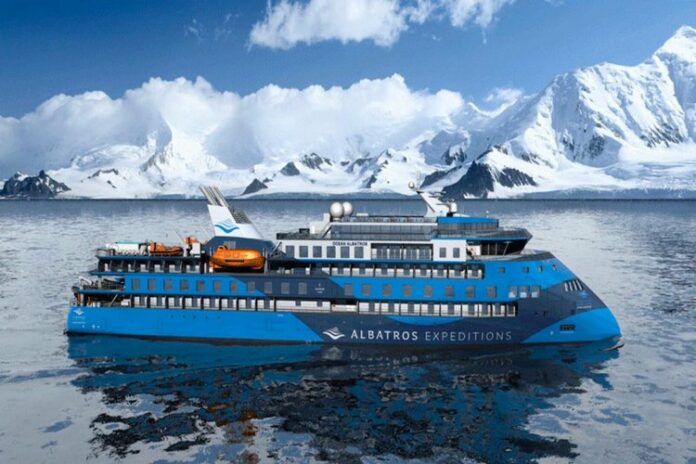
A keel-laying ceremony has been held for the ‘Ocean Albatros’, SunStone Ships’ new expedition cruise vessel, at the CMHI shipyard, China, on 20 January 2022. 

SunStone Ships has ordered a series of small-ship expedition cruise vessels of the ULSTEIN CX103 design for construction at CMHI. These are the first China-built cruise vessels, and also the first to introduce the X-BOW® feature in their design, to increase comfort for the passengers. They are designed for low-energy consumption and reduced emissions. The vessels are chartered to travel operators. Several of the vessels have already been delivered and are in operation, while some are currently under construction.

The vessel offers a total of 95 staterooms and suites, all with unobstructed sea views, most with their own balcony. The vessel holds the Polar Code 6 (Ice Class 1A) for voyages to destinations such as Antarctica and the Arctic. The X-BOW hull line design and zero-speed stabilizers provide smooth movements. The Safe Return to Port (SOLAS regulation) facilitates a safe return to port in case of an unwanted incident.

In addition to the ship design, Ulstein has also delivered a comprehensive equipment package to this vessel.