2.2 C
New York
Home Blog Page 478

Høglund to supply automation and hybrid systems for Finland’s vessels

0

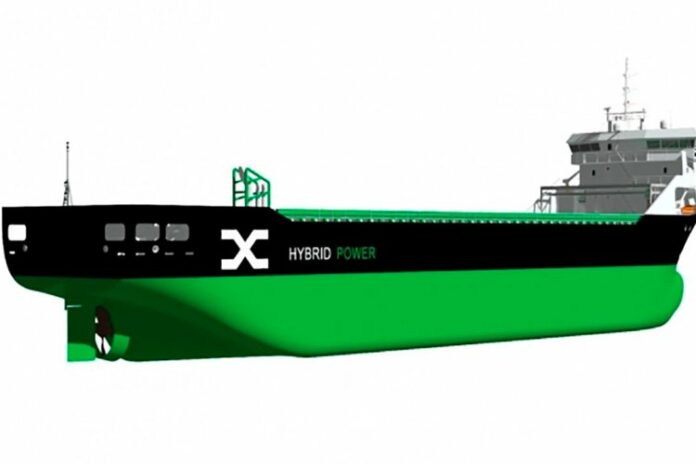
Høglund has announced that it has been commissioned to supply advanced hybrid and automation systems to six hybrid bulk vessels, with potential for six more, on order for Finland’s AtoB@C Shipping, a leading carrier of dry bulk cargoes in the Baltic region.

These 1A ice class bulk vessels will reduce GHG emissions, including CO2, per cargo unit transported by almost 50% compared to AtoB@C Shipping existing ships, making the vessels the most efficient in the world in their class.

The vessels will use batteries, shore-side electricity solutions and electric hybrid solutions to enable completely emission-free and noise-free port calls, being able to arrive and leave port with electric power alone.

Høglund will supply automation and hybrid systems for these vessels. Its Integrated Automation Systems (IAS) will seamlessly link alarm monitoring, control and power management systems, giving crew and shoreside teams supreme reliability and control over the vessel’s systems. The IAS will integrate with Høglund’s cloud-based ship performance monitor (SPM), using data from the automation systems to monitor performance in real time. Høglund’s hybrid systems include a 1000kWh battery for each vessel.

Høglund CEO, Børge Nogva said:

“We are excited to be working on another hybrid project, which demonstrates how quickly the industry is embracing this technology. Our systems will not just be helping to drastically reduce emissions but will also give crew and shoreside teams far better insight into their vessel performance, as our SPM uses data from the automation system to give a clear picture of vessel operations and ensure reliability for the long term.”

AtoB@C Shipping Technical Director, Janne Eklöf said:

“We chose to work with Høglund because of their track record in delivering high quality hybrid and automation systems, and their ability to work flexibly. We have worked closely with naval architects on the design of these vessels to create the most efficient ships of their type, and as such, we needed specialist expertise when it came to the systems that will make these vessels work. Through this collaboration we’re excited to debut a new generation of bulk vessels and set a new standard for energy efficiency.”

The new vessels will be built at Chowgule and Company Private Limited shipyard in India and will be delivered starting from the third quarter of 2023.
Rolls-Royce to deliver automation solutions for new German Navy frigates

0

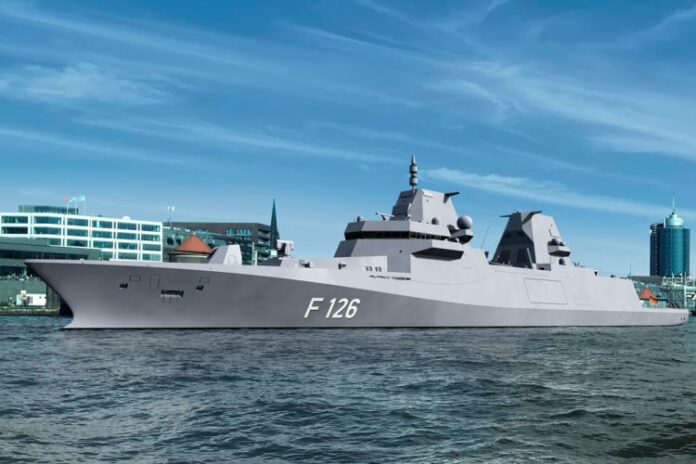
Rolls-Royce business unit Power Systems, headquartered in Friedrichshafen, Germany, will deliver the automation solutions (in German FüSAS – Führungssystem Automation Schiffstechnik) for the four new F126 frigates for the German Navy.

The scope consists of an Integrated Platform Management System (IPMS) and a Condition Monitoring System (CMS). For this solution, Rolls-Royce will deliver its mtu NautIQ Master and mtu NautIQ Foresight products. The contract with the main contractor Damen Naval was concluded on 21 January 2022. The fire alarm, personnel locator and CCTV systems are also part of the contract. This is the first naval order for mtu NautIQ products since Rolls-Royce launched its extended automation solutions portfolio, which now combines mtu and Servowatch technologies under one brand. Rolls-Royce acquired Servowatch, a supplier of integrated marine automation solutions, in 2020.

Hein van Ameijden, Managing Director of Damen Naval, said:

“With Rolls-Royce and its mtu automation products we have found the right partner for the integrated systems for the automation of the command systems. This is high-tech, made in Germany. It will enable the most efficient operation of the vessels and ensure optimal uptime, giving the German Navy the means to fulfil their missions anytime and anywhere, thanks to the know-how and experience of the engineers and developers of Rolls-Royce business unit Power Systems.” 

Knut Müller, Vice President Global Governmental at Rolls-Royce business unit Power Systems, said:

“This order is a significant milestone for our proven and newly renamed mtu NautIQ automation solutions portfolio. It proves that our strategy of delivering solutions from bridge to propeller is the correct path. We are the only engine manufacturer in the world that can also supply the automation platform to monitor and control the entire ship and we are proud that Damen and the German Armed Forces have chosen us for this important and prestigious project.”

mtu NautIQ Master is the newest iteration of Rolls-Royce’s Integrated Platform Management System, combining the advantages of proven mtu and Servowatch products. It offers the same base functionalities as the previous version with enhanced features on a much more flexible and future-proof platform. mtu NautIQ Foresight is Rolls-Royce’s Equipment Health Management System for marine applications. Rolls-Royce has successfully positioned its ship automation products in the global market and delivered solutions to customers across a wide variety of applications worldwide over the past two and a half decades. With mtu NautIQ it is offering a future-proof portfolio of enhanced solutions for the complete vessel.

Damen and Rolls-Royce have a long-standing cooperation in shipbuilding. Among other projects, Rolls-Royce supplied the diesel engines for the Joint Support Ship HNLMS Karel Doorman, used by both the Royal Netherlands and German navies, and the support and research vessel Nuyina, which Damen delivered to the Australian Antarctic Division in August.

Damen Naval is building the four F126 class frigates together with its partners Blohm+Voss and Thales, after the partners were selected as successful bidders in 2020 following a European tender process spanning several years. The first ship is expected to be delivered to the German Navy in Hamburg in 2028. All building work will be carried out in German shipyards in Hamburg, Kiel and Wolgast.

New report outlines how UK oceanographic infrastructure can reach net zero

0

A new review has outlined how the UK’s oceanographic research infrastructure must transition to become net zero by 2040. The report supports UK Research and Innovation’s (UKRI) target of becoming net zero by 2040. It was led by the National Oceanography Centre (NOC) working with seven other leading UK institutions.

It provides recommendations that will lay the foundations for ongoing reductions in carbon equivalent (CO2e) emissions from the current research infrastructure and embed sustainability across key parts of oceanographic research.

Dr. Kate Hendry, lead scientist for the project from the University of Bristol, said:

“Marine science faces a critical dilemma in the next few years. As ocean scientists, our work is going to be essential in addressing global net zero objectives, with ship-based observations a key component of understanding how the ocean is changing as a source or sink of atmospheric carbon. But at the moment, sea-going research vessels use considerable amounts of fossil fuels. So, we have to achieve net zero, at the same time as maintaining and building our marine science capability in a fair and equitable way. Working on the NZOC project has shown me that this is going to be a challenge, but it can be done, and co-design of new approaches and emerging technologies are going to play a major part.”

The report identifies a range of options for developing an exceptional oceanographic capability with a zero-carbon footprint. Key findings highlighted the need for a re-wired oceanographic ecosystem using lean-crewed, green-fuelled vessels capable of deploying large and energy intensive equipment. These would act as a hub within the wider ecosystem of autonomous platforms, will be a key enabler for future marine scientific research.

The review was led by Leigh Storey, Associate Director for National Marine Facilities at NOC. He said:

“Large research vessels will remain a part of the mix but operated very differently and powered using green fuels. That is only possible by scaling up the use of alternative platforms (satellites, uncrewed surface vessels, autonomous underwater vehicles and floats) to deliver on the vision of a global observing network across the ocean. Novel sensors and digitisation of the ocean will underpin this transition.”

Dr. Iain Williams, Director of Strategic Partnerships at NERC, part of UKRI, said:

“This report clearly demonstrates the importance of readying our marine research operations to meet the UKRI’s net zero carbon emissions target by 2040. Oceanographic research helps us better understand our climate and weather systems, important ecosystems and sustainable maritime economic growth. By embedding sustainability across all our marine operations, we can continue to support world-leading research while working to achieve net zero. The report also shows the opportunity that working towards net zero oceanography presents to enhance collaboration across the global marine science community, increase diversity and accessibility of ocean science, and to harness new and emerging tools and technologies that will increase our research capability.”

Petrofac extends relationship with NEO Energy

0

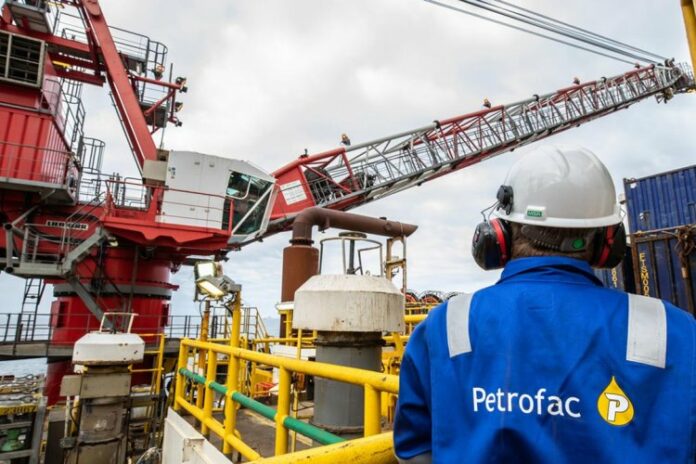
Petrofac will provide a five-year framework for Well Management and Well Operator support for 27 wells across the Affleck, Balloch, Dumbarton, Lochranza and Finlaggan fields located in the Central North Sea, UK. 

The contract also positions Petrofac to support future well construction and intervention campaigns.

Nick Shorten, Chief Operating Officer for Petrofac’s Asset Solutions business, said:

“As Well Operator for over 50 wells on behalf of seven clients, including NEO Energy, this award allows us to build on our exemplary track record of delivering Well Operator services in the UKCS.

“Unlocking long-term value for our clients is of the utmost importance to Petrofac. Since taking on Well Management and Well Operator responsibilities on behalf of NEO in 2020, we have proactively managed the integrity of existing well stock, supported the successful startup of the Finlaggan Field and continued to plan and prepared for execution of production enhancing intervention and new well construction campaigns in 2022/23. We have achieved this thanks to our close working relationship with NEO and our commitment to enhancing value and delivery excellence.”

Today’s announcement builds on Petrofac’s previously awarded Integrated Services Contract for NEO Energy. The contract, which began in 2020 and was extended early in 2021, involves provision of ongoing operational, maintenance, engineering, and construction support for the Operator’s UK activities while retaining direct procurement and managing sub-contracted services.

Scientists warn that ocean microplastic pollution may be greater than estimated

0

The great diversity of scientific techniques and methods used in the study of marine microplastics pollution limits the current knowledge of this serious environmental problem threatening our ecosystems.

This is the main conclusion of a study carried out by the Institute of Environmental Science and Technology of the Universitat Autònoma de Barcelona (ICTA-UAB) that reviews the research carried out to measure the presence of microplastics in the coastal areas and seawater of the Mediterranean Sea, both in the sea surface water, seawater column and in marine sediments. The conclusions show that the levels of microplastics in the Mediterranean are probably higher than estimated, but the methods used are not capable of recording them.

Microplastic pollution is one of the environmental problems threatening our ecosystems, with a growing interest for society. Specifically, the Mediterranean Sea is one of the world’s greatest plastic accumulation areas and presents pollution levels similar to the “great marine garbage patch” of the Pacific Ocean, since the large population that inhabits the area and the marine dynamics mean that floating plastics are trapped in the basin, with few possibilities of escaping into the Atlantic Ocean.

The scientific field that studies this problem is relatively new and its methods are constantly evolving, making it difficult to define the most appropriate terms and techniques with which to identify them. 

Laura Simon, ICTA-UAB researcher and first author of the study, published in the scientific journal Environmental Pollution, explains:

“Plastic materials are numerous and very diverse, with different characteristics that complicate having a standard framework to analyze them all in the same way. Moreover, additives such as pigments or retardants add further complexity.”

The study states that the methods used in laboratories for sampling are very diverse, “and although this has made much progress in this scientific field, it has also meant that many of the data produced so far cannot be compared,” she adds and acknowledges that this affects the current knowledge the scientific community has of this problem.

According to the research, of the 3,000 samples collected in the past decade, 82.8 percent were taken in coastal areas, so scientists have less evidence to understand the distribution of microplastics in the open sea. Also, nets with a mesh size of 200 microns or more were used to sample surface waters, so therefore smaller particles cannot be captured. Studies conducted to date estimate that the Mediterranean Sea contains 84,800 microplastics per km2 in its surface waters, around 300 microplastics per kilogram of marine sediment, and 59 microplastics per kilogram of beach sand. 

Dr. Patrizia Ziveri, head of the research line at ICTA-UAB, explains:

“The number of microplastics in the natural environment increases as their size decreases, therefore, the levels of microplastics in the Mediterranean are probably higher, but because of the methods used we are not able to record them.”

Most plastics float in the sea. However, the seabed is considered the final dumping ground where microplastics are expected to accumulate. 

Dr. Michael Grelaud, researcher at ICTA-UAB, says:

“We still have very little knowledge on the mechanisms that export microplastics from surface waters to the seafloor, for which we need more studies in the water column.”

Therefore, they stress the importance of defining a common framework to compare results and combine methods to be able to characterize the broad spectrum of plastic pollutants in the Mediterranean Sea and their potential impacts. They also call for greater international collaboration between Mediterranean countries, as currently the eastern part of the basin and North Africa have been sampled to a lesser extent.

Wärtsilä will provide dual-fuel engines to three vessels for Stena RoRo

0

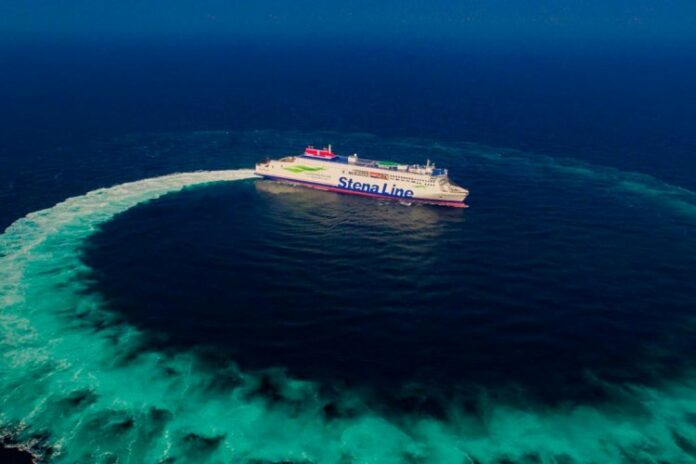
The ships are under construction at China Merchants Jinling (Weihai) Shipyard and will operate with Wärtsilä engines and propulsion machinery when delivered in 2024 and 2025. The order was booked with Wärtsilä in Q4 2021.

Having a single supplier of a large scope package provides multiple benefits in the form of system compatibility, and seamless interfacing during the procurement phase of the project. This notably lessens the risk of project delays.

Per Westling, Managing Director, Stena RoRo, says:

“We are very familiar with Wärtsilä’s ability to supply reliable and highly efficient solutions in line with our operational and sustainability requirements. In particular, their experience and leading know-how in LNG technologies is especially important to us as we move to decarbonise our services.”

Ni Weisong, Vice General Manager, China Merchants Jinling (Weihai) Shipyard, said:

“We are delighted to help Stena RoRo bring the latest new vessels in its E-Flexer series to market, and to work once again with Wärtsilä to ensure these vessels have highly efficient and environmentally sustainable propulsion.”

Roger Holm, President, Wärtsilä Marine Power, says:

“We have earlier supplied a similar scope of solutions for Stena newbuild projects, and it is especially gratifying to receive this repeat order. The cooperation between our companies and with the shipyard has been excellent, and we look forward to another successful outcome.” 

The vessels, each around 200 metres long, are part of a series of E-Flexer class ferries ordered by Stena RoRo for European line service. For each ship Wärtsilä will supply Wärtsilä 46DF dual-fuel main engines, Wärtsilä 20DF dual-fuel auxiliary engines, two gearboxes, two controllable pitch propellers (CPP), the tunnel thrusters, and the fuel gas supply system.

The use of LNG as a marine fuel is viewed by Wärtsilä as being an important transitional solution in the drive towards decarbonising shipping. LNG bridges the gap between conventional diesel fuels and future zero-carbon alternatives yet to be widely available, a decarbonisation strategy fully supported by both Wärtsilä and Stena Line.

Wärtsilä is working closely with Stena RoRo to ensure that one of the vessels meets DNV’s Silent-E class notification. This recognises that underwater noise from the vessel is controlled to protect vulnerable environments and involves careful configuration and design of propulsion and onboard equipment to offer low noise while maintaining high efficiency.

Wärtsilä will also supply the ships with Nacos navigation and automation, as well as integrated control alarm and monitoring system MCS Platinum together with the performance monitoring system. The vessels will also feature Wärtsilä’s Smart Panoramic Edge Camera System, eliminating blind spots and creating a 360°, birds-eye view of the ships surroundings, offering a significant advantage when docking.

The equipment is scheduled for delivery to the yard commencing in Q4 2022.

Port of Los Angeles launches first-of-its-kind Cyber Resilience Center

0

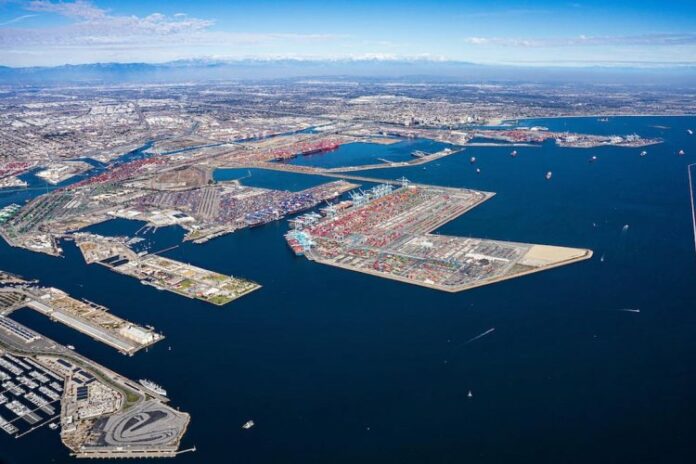
The Port of Los Angeles has debuted its Cyber Resilience Center (CRC), a state-of-the-art port community cyber defense solution created to improve the cybersecurity readiness of the Port and enhance its threat-sharing and recovery capabilities among supply chain stakeholders.  The CRC was designed through a collaborative process with participating stakeholders and will be operated by International Business Machines (IBM).

Port of Los Angeles Executive Director Gene Seroka, said:

“We must take every precaution against potential cyber incidents, particularly those that could threaten or disrupt the flow of cargo. This new Cyber Resilience Center provides a new level of awareness for our stakeholders by providing enhanced intelligence, better collective knowledge sharing and heightened protection against cyber threats within our supply chain community.”  

Christopher McCurdy, General Manager, IBM Security Services, said:

“The past year has proven the vital role that ports hold to our nation’s critical infrastructure, supply chains and economy, underscoring that it’s paramount we secure this ecosystem. The Port of Los Angeles is setting a new industry standard with a first-of-its-kind initiative to increase cyber readiness across the maritime community. With IBM’s cutting-edge technologies in cloud and AI fueling the CRC, we’re able to provide the maritime ecosystem with the threat insights necessary to stay ahead of cyber threats and improve response time.”

Envisioned as a “system of systems,” the CRC enables participating stakeholders to automatically share cyber threat indicators and potential defensive measures with each other. This collaborative approach centralizes threat information for the Port’s stakeholders and helps prevent cyber disruption of the supply chain. The platform serves as a hub for the Port to receive, analyze and share information among its stakeholders who handle cargo, such as terminal operators, shipping lines, truck, rail and others, among its cross-sector stakeholders who provide essential support services, and from external intelligence sources. The CRC is also available to participating stakeholders as an advisory resource to assist with recovery.

The first group of approximately 20 participating stakeholders are now using the new system and gaining access to IBM X-Force Threat Intelligence and more groups are expected to join every six months. As part of its operations, the CRC will be conducting tabletop exercises with participating stakeholders and providing them with annual cybersecurity training.

In 2014, the Port of Los Angeles set the maritime industry standard for cyber security when it established a Cyber Security Operations Center designed to help protect the Port’s internal networks. The newly-designed CRC builds upon that technology infrastructure by improving the quality, quantity and speed of cyber information sharing among Port stakeholders and leveraging the CRC’s security model to creating a more inclusive maritime community.
 

PGS takes the lead as preferred partner for carbon storage

0

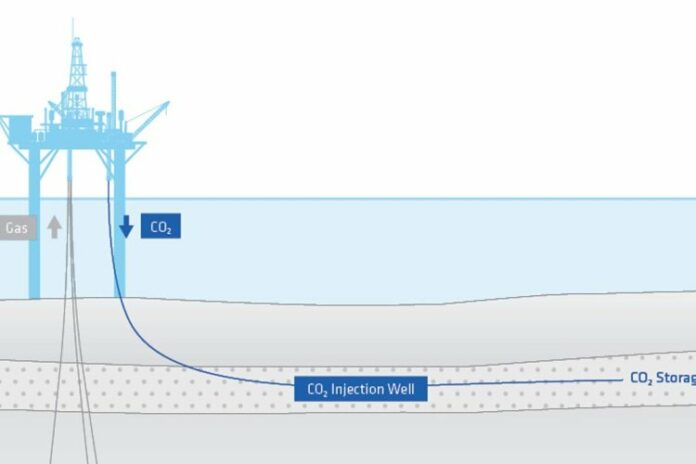
CO2 storage is essential to reduce carbon emissions and meet net-zero targets. The company has been supporting CCS projects with reliable geophysical data for some time and is committed to enabling the energy transition.

A new case study about a PGS collaboration with Equinor on long-term monitoring of the Sleipner field in the North Sea, demonstrates how a team of geophysics experts from both companies has been leading the way with broadband seismic monitoring of CO2 sites.

Julien Oukili, Geophysical Support Manager at PGS says:

”In the early days of CO2 monitoring, it was claimed that the CO2 plume was ‘easy to see’ but more recent investigations have revealed that may not be true – it seems high-quality broadband data is needed to deliver accurate CCS monitoring and measure plume and overburden evolution over time.”

DP World launches single window digital solution for border authorities

0

DP World has announced the launch of its new digital compliance and revenue platform, CARGOES Customs. The platform facilitates completely paperless trade easing the flow of the customs process using innovative technology solutions, including an Artificial Intelligence driven risk engine and smart valuation. 

Its advanced classification wizard, based on machine learning, vastly reduces classification issues. It is designed and supported by customs experts and digital transformation leaders, and is backed by more than 40 years of experience in logistics to solve challenges in the supply chain.

CARGOES Customs provides an intelligence-enabled, unified customs operating model that optimizes border management and revenue collection activities. The system empowers customs agencies to facilitate trade, secure global supply chains, and increase compliance. At the same time, it minimizes revenue leakage for government agencies. The platform is built to assist global customs organizations in reforming and modernizing processes by streamlining digital transformation through the latest technology and tools.

The CARGOES Customs platform is based on the belief that with technology as a foundation, any customs organization can vastly improve its digital capabilities and better integrate with key agencies and other countries, while also satisfying any regional agreements. The CARGOES Customs system is further enhanced by its powerful risk engine which detects revenue leakages. This technology improves visibility and traceability, and is based on WCO best practices, thereby optimising the customs clearance process. As an intelligent risk engine, it helps enforce compliance and promotes seamless collaboration between authorities, government departments and stakeholders.

Offering a single window interface, CARGOES Customs is configurable and uses a template-based design which means customs organizations can update or roll-out new services at the click of a button. It supports all file formats commonly used in customs, and is WCO, WTO and SAFE framework compliant.

Sultan Ahmed bin Sulayem, Group Chairman and Chief Executive Officer of DP World said:

“Trade is a key driver to help economies around the world to recover fairly and sustainably from the economic shock of the pandemic. At DP World, we are doing our part to make trade flow as smoothly and seamlessly as possible, and with CARGOES Customs we really help customs authorities around the world to become dramatically more efficient – now and for the long term. This new digital solution connects customs officials and traders through an easy-to-use interface and a suite of custom-built tools.”

Pradeep Desai, Chief Technology Officer, DP World concluded:

“Demand for digital solutions has never been higher and will only keep growing. We are leveraging technology to create value for our customers and help drive growth. CARGOES Customs by DP World is part of the broader CARGOES software suite of products. DP World created CARGOES to solve pressing challenges caused by supply chain related inefficiencies. It’s a holistic solution powered by technology targeting all aspects of global trade including Finance, ERP, Tracking, Terminal Operating System, Customs software and enabling end-to-end logistics.”

Deltamarin signs an engineering contract for Höegh Autoliners Aurora Class PCTCs

0

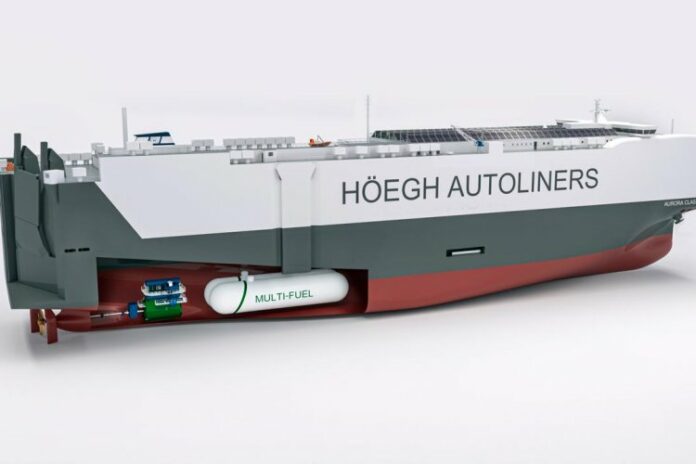
Deltamarin has signed an agreement with China Merchants Industry (Jiangsu) Co., Ltd. for the design and engineering of the new series of Höegh Autoliners Aurora Class Pure Car & Truck Carriers (PCTCs).

Deltamarin has recently the completed conceptual design of the ships for Höegh Autoliners. The engineering contract signed with the builder, CMI Jiangsu shipyard, is a direct continuation of the work and includes complete basic and detail design of the vessels.

The Aurora class ships will be the world’s largest and most environmentally friendly car carriers ever built. The ships will be powered by marine gas oil (MGO) and LNG and prepared with readiness for operation on zero carbon fuels such as ammonia or methanol once these become more widely available. Several other features are also included in the design to minimise the environmental footprint of the ships. Combining economy of scale with optimised and future-proofed ship concept results in the lowest greenhouse gas footprint per transported car in the industry, and a clear path to zero-emission operation.

The new vessels will be built by China Merchants Industry (Jiangsu) Co., Ltd. shipyard in Haimen. China Merchants Group has been expanding its shipbuilding business over the past years and is now within the three largest shipbuilding groups in China.

Janne Uotila, the CEO of Deltamarin, says:

“We at Deltamarin are very pleased with the contract for two main reasons. Firstly, we are proud that Höegh Autoliners trusts our ability to support them in renewing their fleet and enabling their path towards zero emission operations. Secondly, we look forward to further developing the cooperation with CMI Jiangsu shipyard, providing them with engineering services and supporting them in the execution of this industry-leading newbuild programme of Höegh Autoliners.”

Mei Zhonghua, General Manager of CMI Jiangsu shipyard comments:

“We look forward to working together with Deltamarin to provide Höegh Autoliners with these state-of-the art ships.”

Andreas Enger, the CEO of Höegh Autoliners continues:

“We are excited to partner with Deltamarin and China Merchants Industry to secure the delivery of the world’s largest and most environmentally friendly PCTC vessels already by 2024. The zero carbon ready Aurora class represents the future of our business and together with our trusted partners, we will make a significant contribution to a more sustainable maritime industry.”

The work will be carried out at Deltamarin’s offices in Finland, Poland and China and will have a significant impact on Deltamarin Group’s workload. The project will start immediately and continue until the delivery of the first vessel in the second half of 2024.