-0.2 C
New York
Home Blog Page 477

ABS grants AIP to innovative WTIV integrated feeder barge

0

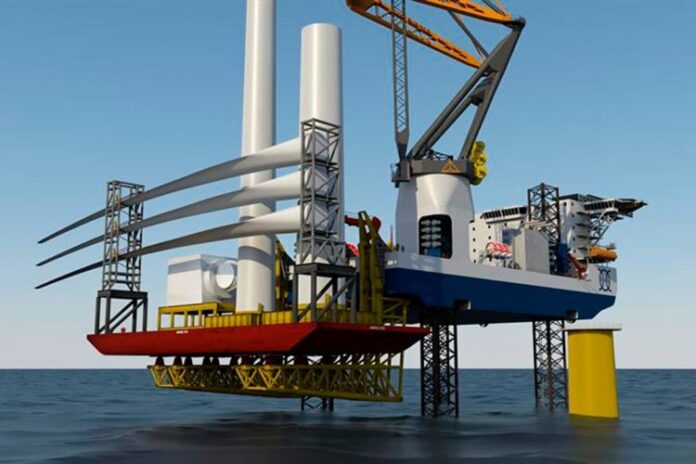
American Bureau of Shipping (ABS) has granted Approval in Principle to a coordinated design for a wind turbine installation vessel (WTIV) in conjunction with the innovative BargeRack feeder barge system by Friede and Goldman (F&G).

The design enables the Jones Act-compliant barge in a lifting system that F&G says reduces motion and increases the window of operational time. The design was reviewed in accordance with the ABS 2017 Guidance Notes on Review and Approval of Novel Concepts.

Greg Lennon, ABS Vice President, Global Offshore Wind, said:

“To achieve the scale of U.S. offshore wind market by 2030, the industry will be reliant on the delivery of the variety of vessels that will be needed to install and maintain the turbines, while navigating various port constraints. ABS has been at the forefront of supporting this process, facilitating a succession of vessel developments that will prove critical to the future of this industry. This design from F&G is the latest where we are proud to be able to assist with our extensive knowledge of U.S. regulations and our deep involvement with the entire offshore wind supply chain here in the U.S.”

Robert Clague, Vice President of Engineering at F&G, said:

“F&G has developed a superior feeder vessel solution.  Typical feeder solutions are inherently risky due to feeder vessel motions with the impact on equipment transfer. We’ve solved this problem by completely eliminating the feeder vessel motion, as well as reducing the feeder vessel cost by an order of magnitude compared to other feeder vessels.”

Development of the BargeRack WTIV is the latest vessel designed specifically for U.S. offshore wind operations to be supported by ABS. A subsea rock installation vessel is to be built to ABS Class and Charybdis, the first Jones Act-compliant WTIV, is also now under construction to ABS Class. The first U.S.-flagged Jones Act offshore wind farm service operation vessel (SOV) ever ordered will be built to ABS Class. These vessels will join the first ABS-classed crew transfer vessel (CTV) in the U.S., Windserve Odyssey. ABS has also issued AIPs for a series of wind support vessels from various designers.
Subsea 7 awarded project offshore US Gulf of Mexico

0

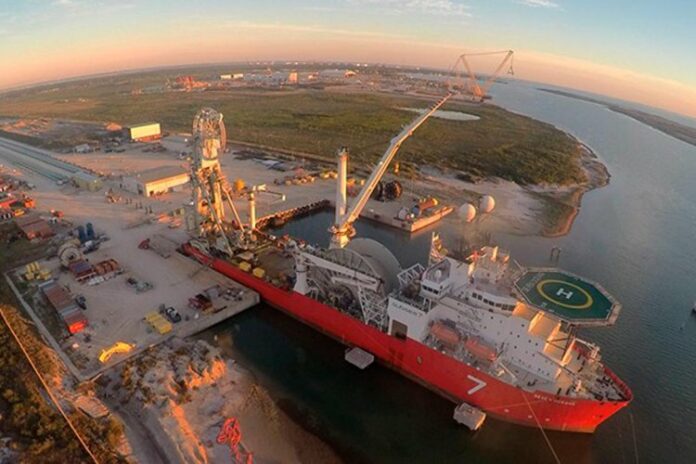
Subsea 7 has announced the award of a substantial1 project for subsea installation services related to Beacon Offshore Energy LLC’s Shenandoah Development, located offshore Gulf of Mexico in water depths up to 6,300 feet.

The project covers the tie-back of four subsea wells to the Shenandoah host facility through a subsea manifold with dual flowlines and risers. The work scope includes engineering, procurement, construction, installation (“EPIC”) and commissioning of the subsea equipment including structures, umbilicals, and production and gas export flowlines. Subsea 7’s scope also includes the wet tow and hook-up of the semi-submersible FPS to the field and mooring system installation.

Project management and engineering will commence immediately at Subsea 7’s offices in Houston, Texas. Fabrication of the flowlines and risers will take place at Subsea 7’s spoolbase in Ingleside, Texas, with offshore operations scheduled for 2024.

Craig Broussard, Vice President for Subsea 7 US, said:

“We are pleased to have been selected as a partner for the delivery of the Shenandoah development.  This project allows Subsea 7 to demonstrate the full capacity of our offering, including our extensive involvement in mooring and installation of host facilities, EPIC activities related to the flowline system, and utilizing our industry leading experience and welding capabilities to support the development of high-pressure fields.

We look forward to building on the collaborative approach demonstrated by the Shenandoah project to form a long-term cooperative relationship in support of Beacon Offshore Energy’s future growth plans.”

KM to supply 20 state of-the-art Azimuth thruster units to Sanmar Shipyards

0

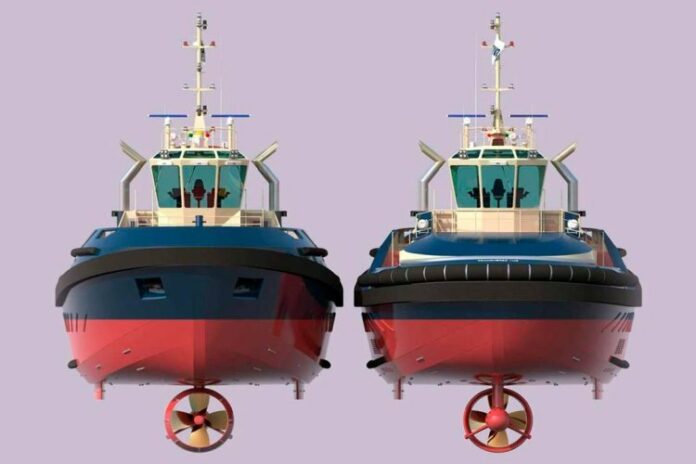
Kongsberg Maritime has just signed a sizeable contract with Sanmar Shipyards in Turkey to deliver 20 high-performance, future-proof US205FP and US255FP thruster units for installation on new Azimuth Stern Drive (ASD) tugboats.

This contract win is particularly significant as one of the tugs, a 60-ton Bollard Pull (BP) vessel, is the first of a game-changing, next-generation design by the renowned towage company Svitzer and the internationally recognized naval architects Robert Allan Ltd. This new first-in-class TRAnsverse 2600 tug can generate higher steering forces than other tugs of a similar size, and is uniquely capable of pushing, pulling and maneuvering in all directions.

KM’s reputation for customer flexibility is underlined by the bespoke adaptations to its US205S FP (Fixed Pitch) azimuth thrusters which have been agreed with Svitzer for this order. To begin with, the requested power is higher than the US205S units routinely provide, so KM has deployed High-Performance Gear (HPG) in this project to meet the customer’s requirements. Similarly, KM has increased the thrusters’ speed to 5rpm for this delivery, in line with the TRAnsverse Tug’s enhanced reactivity and maneuverability. The thrusters are also equipped with state-of-the-art Integrated HD clutches, which have already been sold to more than 100 tugs worldwide.

Meanwhile, KM’s concerted drive to reduce maintenance and lifecycle costs is reflected in the inclusion of a Condition Monitoring system which will enable customers to extend the vessel’s dry-docking period from five years to seven-and-a-half years, lowering the likelihood of component issues arising which require unplanned maintenance intervals. Additional peace of mind arises from a Remote Access function connected to the Aquapilot Thruster Control system, through which KM can connect to the system remotely to carry out fault diagnostics and change parameters if necessary.

KM is also supplying full sets of deck machinery for this project. The DM delivery includes a hydraulic, high-pressure, fully auto-tensioned escort towing winch with two rope drums equipped with band brakes and friction clutches. Also included is an anchor capstan with an electric frequency controller and an anchor lowering system which can be operated from the wheelhouse.

Kongsberg Maritime staff maintained a close dialogue with all parties, Sanmar Shipyards, Svitzer and Robert Allan Ltd, throughout the entire sales process to ensure that the appropriate thrusters were selected for the project, and that they would perform to everyone’s satisfaction. KM’s US series thrusters offer project-specific Computation Fluid Dynamics (CFD) modelling capabilities, while the range of achievable propeller and nozzle combinations ensures the highest possible standard of operational efficiency.

Hakan Tunc, Engineering Director of Sanmar Shipyards, said:

“The excellent collaboration between Sanmar, Svitzer and Kongsberg Maritime’s technical and commercial departments has resulted in optimization at every stage of the development of this innovative TRANSVERSE 2600 tugboat design, including its power, crew safety and environmental impact.”

Tomi Venttola, Sales Manager – Propulsion & Engines of Kongsberg Maritime, added:

“We are very happy to be involved in this innovative project, one which has also challenged us to further develop our products and services. It has truly been a joint effort from the tug team that led to this great result. The TRAnsverse Tug is set to form the basis for a carbon-neutral methanol fuel cell tug which is currently in development, and the future-proof design of our thrusters means they’re already good to go when newbuilds of this nature start to appear.”

NAPA and MOL roll out cloud-based solution on over 700 of MOL’s ships

0

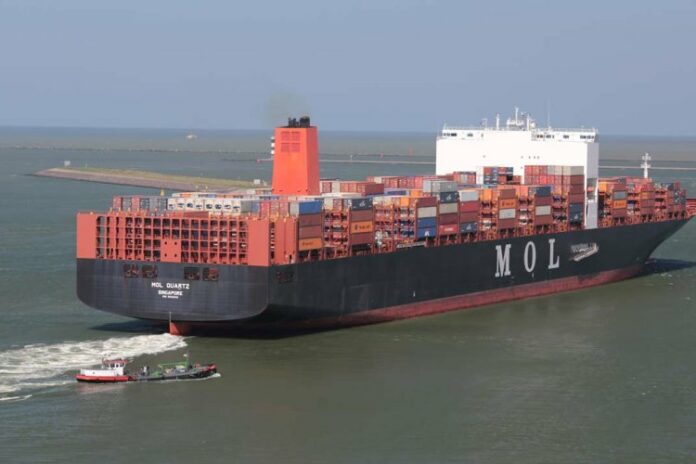
NAPA, the leading maritime software, services, and data analysis provider, Mitsui O.S.K. Lines, Ltd. (MOL), one of the largest shipping companies in the world, and class society ClassNK have jointly developed a navigational risk monitoring system, which has been adopted in MOL’s fleet of over 700 ships.

Building on the combined expertise of all three partners in fields of ship operations, safe routing, and risk analysis, the solution aims to increase safety across MOL’s fleet by predicting the risk of grounding in advance and alerting the shoreside teams, giving them greater situational awareness of navigation risks. 

The solution is based on NAPA’s cloud-based monitoring platform, NAPA Fleet Intelligence, which does not require any onboard hardware installation or crew input. By combining several data sources, such as position data, ship data, sea depth, and navigational charts, with NAPA’s data on typical operational patterns, the solution provides users with a robust, reliable, easy-to-use fleet-wide platform to reduce mainly grounding risk. The system also incorporates carefully calculated alerts and notifications to shore-based safety operations teams whenever the increased navigational risk is detected, in turn, enhancing the ability to avoid and mitigate incidents.   

Commenting on the solution, Pekka Pakkanen, EVP Shipping Solutions at NAPA, said:

“We’re proud to see the evolution of this project and the culmination of our efforts into a solution that has the potential to increase safety standards across the industry. The deployment of the solution to a global fleet of over 700 vessels truly shows how far cloud-based solutions have come in recent years. It also shows the benefit they can bring to solving critical operational issues, with the ability to roll out throughout a large fleet without any additional hardware installation.” 

Naoki Mizutani, Managing Director, NAPA Japan, concludes:

“This collaboration also demonstrates how shipping’s digital innovators can collaborate to address critical safety challenges quickly and effectively – in this instance, by combining MOL’s strong safety culture with the possibilities of state-of-the-art data analysis capabilities at NAPA, and ClassNK’s expertise on safety.”

Satoshi Fujii, General Manager of Smart Shipping Division at MOL, commented:

“With this project, our Smart Shipping Division has demonstrated its ability to drive collaboration with other tech leaders in the industry and to improve safety and performance at scale. We believe that the sure management of navigational risks is the absolute necessity for maritime industries, and this system does that, both analyzing grounding risks and alerting on it. We believe that it will help to prevent accidental grounding during ocean voyages.”

Dr. Toshiro Arima, Corporate Officer and General Manager of Digital Transformation Center at ClassNK, added:

“We are very pleased to be part of the project and contribute to the technology that will lead to robust and sustainable seaborne trade. This is a perfect example of a collaborative approach, and ClassNK will continue working with the frontrunners of the industry to solve shipping’s various challenges.”

Irish fishermen plan to disrupt Russian navy exercises

0

Irish fishing boats are planning to peacefully disrupt military exercises by the Russian navy, Patrick Murphy, chief executive of the Irish South and West Fish Producers Organisation, said Tuesday.

The military drills are to take place in international waters 240 kilometers off Ireland’s southwest coast next month. But Irish fishermen are claiming that the drills threaten a crucial area for marine life and an important fishing region. According to the Russian ambassador to Ireland, Yuri Filatov, the drill would be “a small exercise — maybe three or four ships, not more.”

Fishermen are not impressed.

Murphy told RTE radio Tuesday:

“This is the livelihoods of fishermen and fishing families all around the coastline here. It’s our waters. Can you imagine if the Russians were applying to go onto the mainland of Ireland to go launching rockets, how far would they get with that?”

According to Murphy, there are half a billion tonnes of blue whiting in the area where the Russian military drills would take place. He also fears seismic shocks that could be created by missiles fired during the drills as they could change the migration pattern of tuna for years.

Murphy announced:

“We want to act. We’re not going to face down boats, we’re not going to take them on that way, but we are definitely making a point here and we want our government to do something for us.”

Murphy told POLITICO about his disruptive plans.

Murphy said:

“Our boats will be going out to that area on the first of February to go fishing. When one boat needs to return to port, another will head out so there is a continuous presence on the water. If that is in proximity to where the [military] exercise is going, we are expecting that the Russian naval services abide by the anti-collision regulations.”  

On Monday, Irish Foreign Minister Simon Coveney said that Russia’s military plans are “not welcome.” The drills at the start of next month will take place in international waters — but within Ireland’s airspace and exclusive economic zone.

Russian ambassador Filatov said he was unaware if missiles will be fired or whether submarines would be involved in the exercises. Russia has informed Ireland’s aviation authorities of the planned drills.

Source: POLITICO 

Video: MSNBC

Evergreen and Navis enter into a new partnership

0

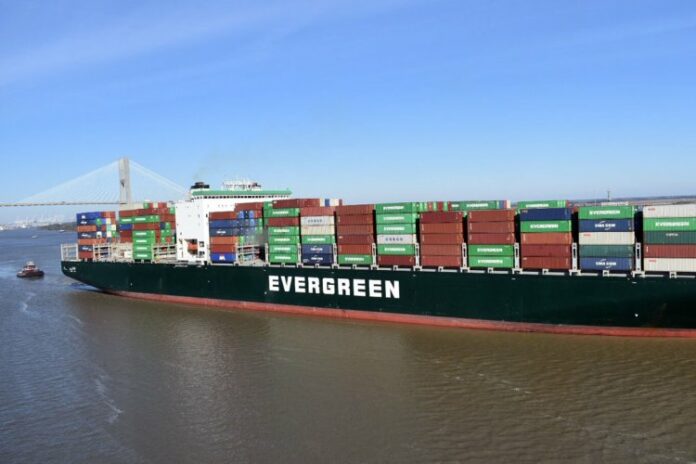
Evergreen has signed a multiyear subscription agreement for Navis’ StowMan Control Center and Distributed Services and Vessel Pool to optimize their stowage operations by leveraging the advantages of using a full suite of Navis Carrier and Vessel Solution products. 

Evergreen finds high value in now having the most advanced lashing calculations in the market available inside their stowage planning tool. The Navis solution not only provides cargo capacity management, but also the safest possible sailing for the vessel in all situations.

Captain Y.S. Hwang, Deputy Senior VP Operation Department at Evergreen Marine Corp. (Taiwan) Ltd., said:

“With the ever increasing complexity in the seaborne trade and the accelerated needs for larger volumes of cargo on ships, it is of utmost importance for us to find a balance between capacity maximization and safe vessel operations in daily and in extraordinary situations. With the Navis Stowage Planning solution we are able to save time and costs by providing a fully integrated tool for more efficient and flexible operations to our central planner teams and their global collaboration.”

StowMan uses the full scope of the stability and stress calculations, slot definitions and highly advanced lashing calculations of the onboard Navis loading computer, currently making it the most integrated and comprehensive stowage system in the container industry. StowMan Control Center and Distributed Services provides a scalable framework to transform the stand-alone tool, StowMan, into a connected client-server setup, while maintaining full offline planning capabilities. Vessel Pool allows planners to always work with up-to-date ship profiles.

Ajay Bharadwaj, Senior Director Product Management at Navis, said:

“The challenging situations that we have seen at sea in the past few months require a new approach to marine cargo transportation in order to address the variety of demands that ocean carriers are facing. The Navis stowage solution has been set up to help liners focus on dynamic, efficient and profitable operations while providing the safest sailing possible for their vessels.” 
 

Konecranes provides 17 cranes for Port of Felixstowe

0

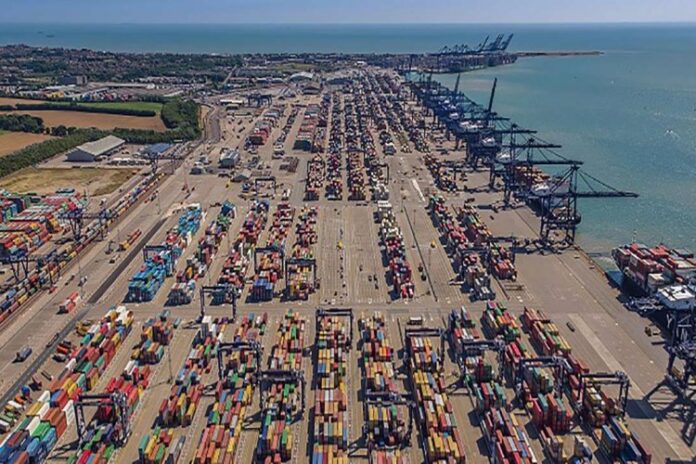
The order was booked in Q4 2021. The ARTGs will be delivered and commissioned in a project covering 3 phases starting in Q2 2023. Completion and go-live is scheduled for Q4 2025. The new ARTGs will be fully electric, powered by busbars, and delivered as carbon neutral.

This order marks the first Konecranes ARTGs to be delivered to the United Kingdom, and the first Konecranes ARTGs ordered by Hutchison Ports. To date, it is the largest order of Konecranes ARTGs for a single terminal or project.

The project consists of three phases. The first phase will start in the second quarter of 2023 with the delivery of 6 ARTGs. The remaining ARTGs will be delivered in two batches. By the fourth quarter of 2025, all 17 ARTGs will be handed over. Electrified and automated container movements will help to make Felixstowe’s large container throughput more efficient. They are also part of a major decarbonization investment by Felixstowe, which plays a key role in the British economy and international trade. Felixstowe’s eight existing ARTGs will be integrated with the new Konecranes ARTGs and Remote Operating Stations as part of a single automated system.

The fully electric ARTGs will give a big boost to productivity and decarbonization efforts at Felixstowe, the busiest container port in Britain. Konecranes ARTG technology, introduced in 2013, has been successfully implemented around the world. This case also brings our integration expertise to the fore. “Konecranes will integrate Felixstowe’s existing ARTGs with the Konecranes ARTGs in a harmonized automation platform” says Darryn Scheepers, Sales Manager EMEA, Port Solutions, Konecranes.

The automation harmonization will be accomplished by integrating the existing ARTGs with the Konecranes Remote Operating Stations (ROSs) and the Konecranes Crane Task Management System. A Konecranes Crane Adapter Module will adapt the controls to the Konecranes ROS and give the work orders to the existing cranes. A single operator at a Konecranes ROS will be able to remotely handle up to five ARTGs simultaneously across the yard. The Konecranes’ “street bogie” solution will enable fully automated gantry travel, using proven safety technologies for obstacle detection. Konecranes TRUCONNECT® remote monitoring is included, providing remote crane diagnostics.

Hutchison Ports has a network of 48 container ports around the world, including the Port of Felixstowe, on the east coast of England. With many shipping routes to Europe and beyond, it’s the busiest container port in Britain, handling more than 4 million twenty-foot equivalent units (TEU) per year.

ScanReach collaborates with KVH Watch Cloud Connect for maritime IoT

0

KVH Industries has announced that ScanReach, an innovator in onboard wireless connectivity solutions designed specifically for the steel vessel environment, has joined the KVH Watch Solution Partner program and will offer KVH Watch Cloud Connect services. 

ScanReach’s breakthrough onboard wireless connectivity technology enables data to travel anywhere on the vessel without cabling; combined with KVH Watch Cloud Connect, the data will travel to the cloud for useful data analysis to improve vessel performance.

Jacob Grieg Eide, chief business development officer for ScanReach, says:

“This collaboration between ScanReach and KVH Watch Cloud Connect means that for the first time, the commercial maritime industry can work with two tech leaders in the market and make one end-to-end wireless solution all the way from onboard sensors and data sources up to the cloud and to the different analysts, making extremely useful applications based on the data.”

Sven Brooks, senior director of IoT business development for KVH, says:

“We are thrilled to partner with ScanReach and be able to offer shipowners, OEMs, and service technicians a totally sensor to cloud wireless connectivity solution for vessel performance using data from all the equipment onboard today’s complex vessels.”

The ability to transfer data wirelessly through a steel vessel is one more example of the digitalization that is transforming the maritime industry. ScanReach’s wireless technology enables data from sensors on a vessel’s cargo, equipment, or even personnel to provide real-time information with multiple uses from safety to vessel performance. For example, ScanReach recently participated in a trial to improve animal welfare onboard livestock vessels by using its wireless nodes to collect and transfer data from the livestock to the vessel bridge and to the cloud. ScanReach also offers a personnel safety solution so that seafarers can be located quickly in case of an onboard emergency.

KVH recently expanded its suite of KVH Watch maritime IoT solutions with Cloud Connect, a service designed to address the complexity of managing data from hundreds of onboard sensors with a comprehensive package containing data source definitions, data mappings, and associated dashboards. An onboard Cloud Connect Edge Server aggregates and processes data from vessel sensors and provides a containerized, hybrid cloud architecture to enable downsampling, data storage, and data access for analysis, cloud-based data reporting, and dynamic visualizations.

Cloud Connect is part of the KVH Watch maritime IoT suite, which includes the ability to perform on-demand Remote Expert Interventions using video, voice, or text via KVH’s global HTS network. KVH Watch is designed with stakeholder budgets in mind as a Connectivity as a Service (CaaS) program offered for an all-inclusive monthly fee with no equipment purchase CAPEX or maintenance costs for the Watch terminal, Cloud Connect equipment, or Remote Expert Intervention equipment for the subscription duration. For cybersecurity, the KVH Watch antenna provides an isolated-for-purpose LAN, data connectivity at the sensor level, a secure Wi-Fi network for SOLAS-regulated spaces, and a dedicated connectivity solution separating IT and OT as recommended by IMO 2021.

Maersk Supply Service launches new venture company

0

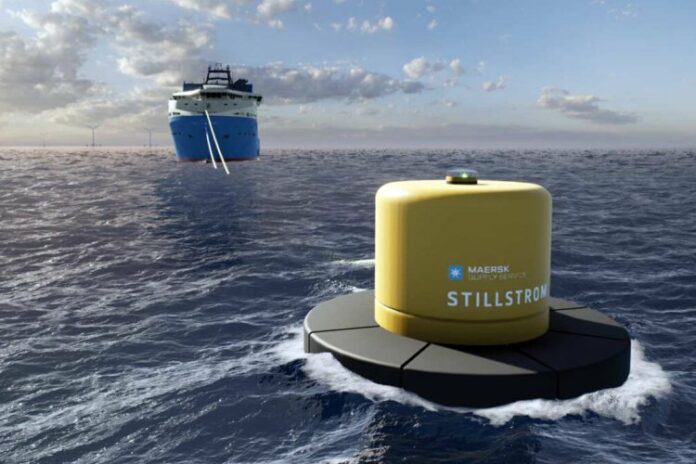
Maersk Supply Service, a part of A.P. Moller-Maersk, is launching its offshore vessel-charging venture, Stillstrom, to support the decarbonisation of the maritime industry by eliminating idle emissions. 

Maersk Supply Service’s pioneering new company will deliver offshore electric charging solutions to vessels at ports, hubs and offshore energy operations. “Stillstrom”, meaning “quiet power” in Danish, is an early-stage technology spin-out, whose full-scale product launch will be the first-to-market in offshore charging, enabling idle vessels to power from clean electricity.

Offshore charging for idle vessels is critical to facilitating the decarbonisation of the maritime industry, since it allows vessel owners to replace fossil fuels with electricity while being safely moored to the charging buoy.

The first full-scale charging buoy will, as previously announced, be demonstrated with offshore wind leader Ørsted in Q3 2022. The power buoy will supply overnight power to one of Ørsted’s Service Operations Vessels (SOV), thereby supporting Ørsted’s target of climate-neutral operations in 2025. Ørsted will be responsible for the grid integration of the charging buoy.

Ørsted intends to make publicly available any intellectual property generated during the design of the buoy’s integration into the offshore wind asset, to maximise the potential uptake of this carbon-reducing innovation across the offshore wind sector.

The charging buoy itself is large enough to charge an SOV-sized battery- or hybrid-electric vessel. The same solution will be scaled and adapted to supply power to larger vessels, enabling vessels of all sizes to turn off their engines when lying idle. By substituting fossil-based fuels with green electricity, virtually all emissions and noise pollution are eliminated while the buoy is in use.

Steen S. Karstensen, CEO of Maersk Supply Service, says:

“Stillstrom is part of our commitment to solving the energy challenges of tomorrow. By investing in this ocean cleantech space at an early stage, we can help lead the green transition of the maritime industry. Stillstrom has been developed within Maersk Supply Service and the timing is right to create a venture that will be focused on delivering offshore charging solutions.”

Sebastian Klasterer Toft, Venture Programme Manager at Maersk Supply Service, says:

“Our vision at Stillstrom is to enable maritime decarbonisation, by providing the infrastructure that will allow vessels to charge from clean energy when idle offshore. The mission is to remove 5.5 million tons of CO2 within five years of commercial rollout, additionally eliminating particulate matter, NOx, and SOx.”

Stillstrom is fully owned by Maersk Supply Service and has received funding support from the Danish Maritime Fund and EUDP.

$8 million allocated to ease big ship passage at Port of Long Beach

0

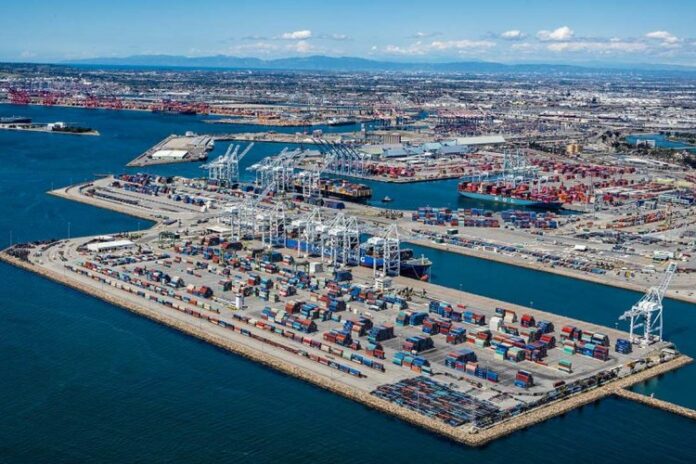
Officials announced recently that the U.S. Army Corps of Engineers is receiving $8 million in Bipartisan Infrastructure Law funding help to make navigational efficiency improvements to Port of Long Beach waterways that will allow visiting ships to transit the harbor faster, reduce transportation costs and cut pollution.

Mayor Robert Garcia said:

“The federal bipartisan infrastructure bill President Biden signed last month is having a direct impact in Long Beach. With $8 million in direct funding to the Port of Long Beach, we continue our partnership with the federal government to address supply chain challenges. I am proud of the work we will be doing to enable larger ships to enter our port and move goods faster.”

Port of Long Beach Executive Director Mario Cordero said:

“Long Beach is home to the second-busiest container port in the nation. Improving the ability of ships to navigate channels here will have economic benefits for the entire country. Locally, creating navigational efficiencies will move ships through the harbor faster, reducing air pollution.”

Long Beach Harbor Commission President Steven Neal said:

“The Port of Long Beach is the gateway to the trans-Pacific route, the nation’s most important trade corridor. Investments made here have big benefits to the Port’s operations, reduce emissions for our communities, and move goods faster to businesses across America.”

Col. Julie Balten, commander of the U.S. Army Corps of Engineers Los Angeles District, said:

“We have a long-standing relationship with the Port of Long Beach and are pleased that this supplemental funding under the Infrastructure Investment and Jobs Act will assist the Port by keeping our federal waterways safe and navigable, and promoting economic stability for the region and our country. We look forward to continuing our partnership with the port to increase transportation efficiencies for container and liquid bulk vessels, for both the current and future fleet, and improve conditions for vessel operations and safety.”

Last October, the U.S. Army Corps of Engineers signed a Chief’s Report showing deepening and widening channels in the harbor would lead to air pollution reductions, improved vessel navigation and national economic benefits of almost $21 million each year.

Among other features, the recommended plan includes deepening the Approach Channel from 76 feet to 80 feet, constructing an approach channel to Pier J South to a depth of 55 feet, deepening portions of the West Basin from 50 feet to 55 feet, and performing structural improvements to breakwaters at Pier J to allow for depths of 55 feet.