-0.2 C
New York
Home Blog Page 476

The electrification of the docks of the Port of València is closer to completion

0

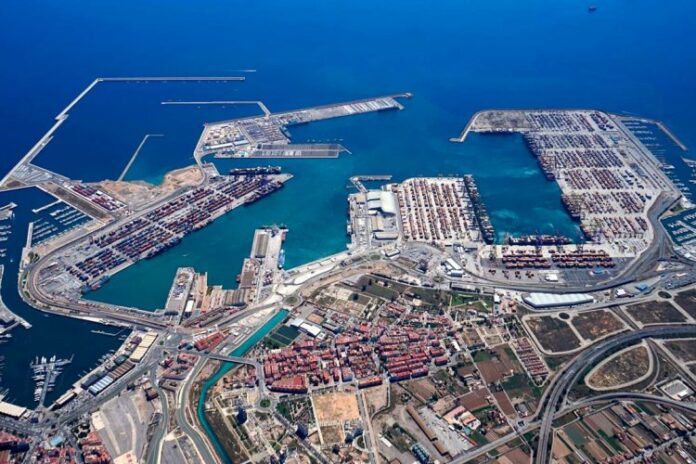
The Port of València is getting closer and closer to electrifying its docks so that the ships that dock there will produce zero emissions during their stay. The Port Authority of Valencia (PAV) has awarded the works of the new electrical substation that will begin to be executed in the coming weeks.

Valenciaport is thus making progress in the Spanish Government’s commitment to achieve 100% electrification of the ports by 2030. An objective which, in the case of Valenciaport, goes even further to move from an eco-efficient port to a completely green port by 2030.

To this end, in addition to the electrification of the quays, projects such as the use of hydrogen in the port installations, the implementation of photovoltaic panels or the use of wind turbines to obtain electrical energy are being carried out. This commitment is also present in the infrastructures being developed by the PAV, such as the new north container terminal and the passenger terminal, which will be a model of environmental sustainability.

Specifically, the PAV has already awarded the construction of the electrical substation to the company Cobra Instalaciones y Servicios for 5,143,487 euros and a completion period of 24 months; the connection to supply 132 kV voltage to the new substation for 2,257,250 euros to the company Eiffage Energía, with a completion period of 8 months; and the site management and health and safety coordination to Gesman-Coseltel for 408,538 euros. The substation will make it possible for ships to connect to the general electricity grid once they are docked at the quay, using clean energy. This will eliminate thousands of tonnes of greenhouse gases per year and significantly reduce emissions of other particulates.

The electrification of the terminals is one of the actions being carried out by the world’s most important port facilities and is in addition to the commitment being made by maritime transport to reduce emissions and combat climate change with specific actions. These include the use of non-polluting fuels such as hydrogen or carbon-neutral methanol in ships.

The project involves the installation – in two stages – of two transformers with a total apparent power of 60 Mega Voltamperes (30 MVA each), which will reduce the voltage received at 132 kV (132,000 volts, or 132 Kilo Volts) to 20 kV (20,000 volts, or 20 Kilo Volts), as a preliminary step in order to deliver this voltage to the different points of the APV’s installations. These include the terminal docks to facilitate the connection of ships to the grid. In addition, this infrastructure will guarantee significant reductions in emissions and operational costs for ships calling at the port of València.

The new electrical substation is supported by the European Commission through the Connecting Europe Facility (CEF) Committee which is funding the project EALINGWorks Valenciaport: Preparation of the electrical grid of the Port of Valencia for Onshore Powel Supply, to prepare the port’s electrical grid for the supply of OPS to container ships, ferries and cruise ships at the new terminals of the Port of València.
Commissioning of 12 new RTG cranes commences at APM Terminals Algeciras

0

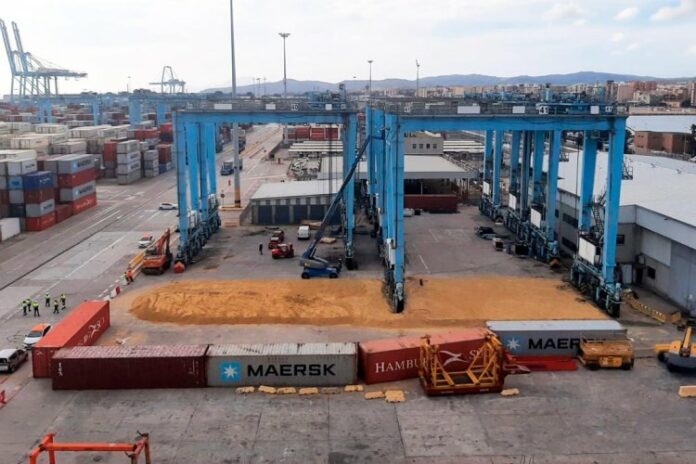
Over the coming weeks, APM Terminals Algeciras will bring 12 new Konecranes Rubber Tired Gantry (RTG) cranes into operation. The equipment arrived at the terminal last July for assembly.

José Miguel Carreño, Head of Asset Maintenance, said:

“Entry into operation of the new cranes will result in a leap in quality for yard operations, both at a technical and safety level, and also in terms of ergonomics and support for operators.” 

For the disassembly of the old Noell and ZPMC RTGs being replaced, the Asset Maintenance team has selected a controlled lowering system, a safer method that avoids disassembly work at height, and reduces disassembly time.

Juan Jesús Lara, responsible for the project, explained:

“The main advantage of this method by lowering RTGs is in safety because we reduce working at height to a maximum of two hours, when the usual method takes several days. This process entails a complex structural calculation, to determine the mechanical conditions of the manoeuvre. This way the disassembly of each crane is carried out in two days inside the terminal, and enables us to segregate and recycle matierals.”

The new Konecranes RTGs offer improved features for loading and unloading containers in the stacks of APM Terminals’ transshipment hub yard located in the Strait of Gibraltar. New features result in environmental, equipment and safety improvements.

The new RTGs also offer numerous features for the operator, for positioning and operations. These include a new system of cameras and sensors, as well as new functionalities, such as the “anti-truck lifting” mechanism, which detects if a container has not been released from the truck chassis correctly.

CRP Subsea delivers rotating buoyancy solution to protect Gulf of Mexico flowlines

0

CRP Subsea has successfully delivered contracts providing more than 500 Rotating Buoyancy Modules (RBMs), which adds to previous deliveries that have been installed and successfully operating for the past 3 years. They will also be attached to deepwater high-temperature, high-pressure flowlines to mitigate pipeline buckling on the seabed.

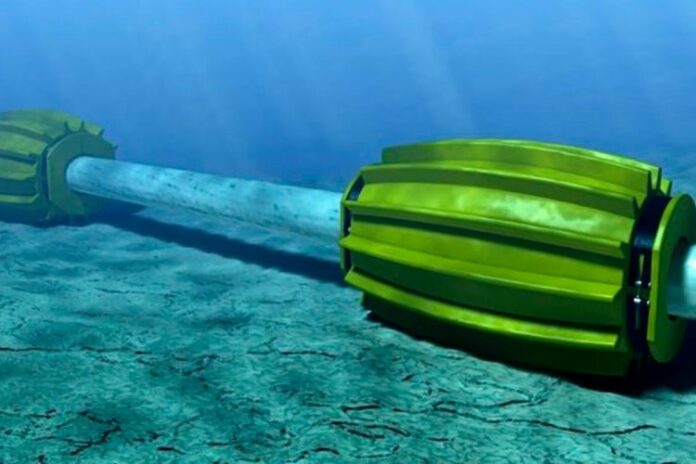
The RBMs will protect the pipeline by allowing it to roll on the seabed reducing lateral friction and berm creation, thus eliminating rogue buckles and reducing axial walking in the pipeline. Using this innovative buckling mitigation buoyancy solution will reduce the risk of pipeline failure and increasing the lifetime of the field.

Steve Bray, Sales Team Manager at CRP Subsea states:

“Our advanced rotating buoyancy solution is engineered to reduce lateral friction and berm creation, thereby generating repeatable and predictable pipeline behaviour. In addition, the rotating buoyancy design reduces the number of modules needed along the pipeline, significantly lowering overall project costs for operators. We are delighted to have been chosen to supply rotating buoyancy for these innovative projects and look forward to collaborating further in the future.”

Manufactured at CRP Subsea’s state-of-the-art manufacturing facility in Skelmersdale, England, these RBMs are their latest delivery of what is now a growing track record over recent years.

Rotating Buoyancy Modules (RBMs) are used to mitigate buckling in seabed pipelines. Buckling occurs during start-up and shutdown sequences as the thermal fluctuations cause pipelines to expand and contract, leading to problematic buckling along its length. Traditionally non-rotating cylindrical buoyancy modules have been installed along sections of the pipeline to reduce the weight and friction in that section and promote controlled bending. However, in certain conditions the modules have displaced seabed material to build ridges (berms) that have then restricted the lateral movement that the modules were installed to promote. The RBMs roll on the seabed, thereby reducing lateral friction and berm creation.

MAN Energy Solutions delivers engines to Chantiers de l’Atlantique

0

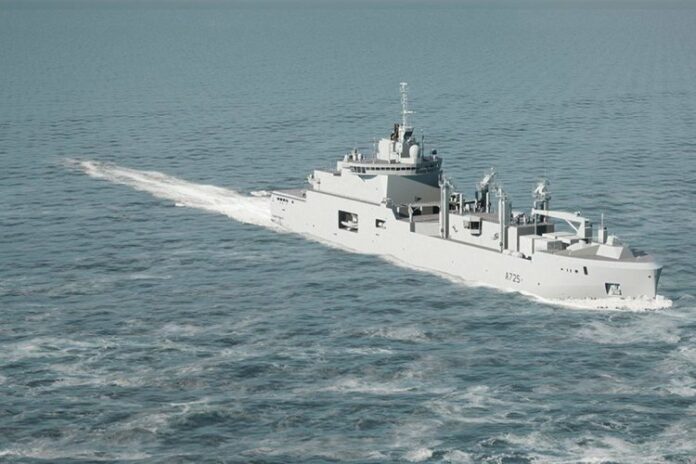
MAN Energy Solutions has announced the delivery of four engines – 2 × MAN 12V32/44CR engines (2 × 7,200 kW) + 2 × MAN 8L32/44CR engines (2 × 4,800 kW) – bound for a BRF (naval supply vessel) set to enter service in early 2023.

The BRF is the first in a series of four such vessels, the contract for whose construction was awarded to Groupement Momentané d’Entreprises (GME) –formed by French shipyard, Chantiers de l’Atlantique and French defence contractor, Naval Group – in 2019. 

GME is itself part of the Franco-Italian LSS (Logistics Support Ship) cooperation programme led by OCCAR, an international organization for armaments cooperation, on behalf of French defense procurement agency, DGA. 

Under the terms of the contract, MAN Energy Solutions will supply all BRF engines to Chantiers de l’Atlantique by 2029.

Finnlines introduces a larger vessel to operate between Finland and Sweden

0

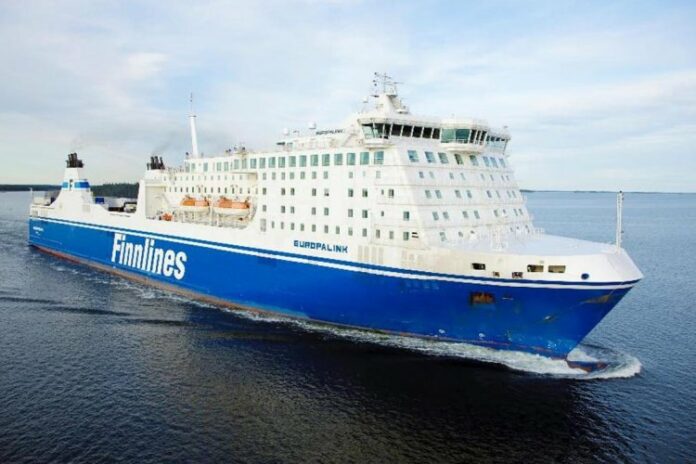
The Star class ro-pax vessels Finnswan and Europalink will jointly start  on the Naantali–Långnäs–Kapellskär route.

The ro-pax vessels Finnswan and Europalink have started on the Naantali–Långnäs–Kapellskär route under the Finnish flag on Thursday 27 January. The successful Finnlines’ route is one of the vital maritime links for Finland’s security of supply.

The cargo capacity will increase by 1,200 lane meters and passenger capacity by over 100 up to 554. In addition to a significant increase in capacity, the refurbishment of public areas will further increase travel comfort and onboard services as well as a stronger commitment to the freight industry to meet their needs at any time of the year.

Europalink have joined the sister vessel Finnswan which has been operating on the route since 2018. The entry of Europalink means that both morning and evening departures offer the same capacity and a uniform service concept and facilities for all customers.

Finnfellow will move from Naantali to the Malmö–Travemünde route. 

Damen Shipyards to build four RoPax ferries for Penang Port Sdn

0

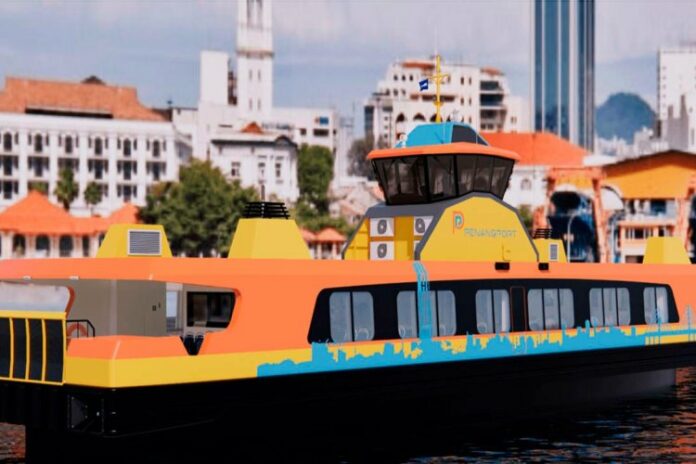
The new vessels have been specially designed to meet the requirements of the client and its passengers. They will operate on the ferry route that links the Malaysian Peninsula (Butterworth) with Penang Island and its city of George Town, Malaysia’s third largest, just a ten minute journey away.

Designated the Damen Ferry 3508, the new class is designed to carry a maximum of 250 passengers both sitting and standing and 50 vehicles (scooters and motor bikes) in a mix of air-conditioned and open but sheltered areas.

Damen has worked closely with Penang Port Sdn. Bhd. to ensure that their new vessels are configured to meet the needs of their customers in the most efficient and cost-effective way possible. To achieve this Damen conducted a thorough assessment not only of their operations and infrastructure, but also their customers’ wishes.

The new fleet will deliver a combined passenger and vehicular service with departures every 15 minutes in peak periods while, at quieter times of day, it will be perfectly feasible to take a ferry out of service, bringing further cost savings with minimal inconvenience to the travelling public.

Standardising the design also delivers a wide range of operational efficiencies when it comes to redundancy, maintenance, spare parts, crew training and operating costs, not to mention the cost and duration of the build itself without any compromise on performance or quality.

The new ferries will, pandemics permitting, be delivered in mid-2023 ready to serve an estimated 2.5 million pedestrians and 1.5 million two-wheeler vehicles each year. Damen will also be assisting in upgrading the ferry terminals with time-saving technology such as auto berthing and berthing pontoons with fast ramp control.

As part of the overall package, Damen will provide one year’s technical support for Penang Port Sdn. Bhd’s new fleet once it is delivered. To ensure 24/7 operability, Damen will establish a local maintenance hub to keep the vessels in top working condition. Over time personnel will be recruited and trained so that  local engineers will have all the skills and knowledge necessary to maintain the vessels into the future.

Gysbert Boersma, Damen’s Regional Director Malaysia, said:

“In a joint effort with Penang Port we have achieved a cost-efficient solution while maintaining the daily schedule of the ferries, and we look forward to seeing them making a significant contribution to the area’s transport infrastructure. Furthermore, our maintenance hub will bring local employment and a transfer of skills that will make a positive contribution to the regional maritime sector.”

NYK delivers methanol-fueled chemical tanker

0

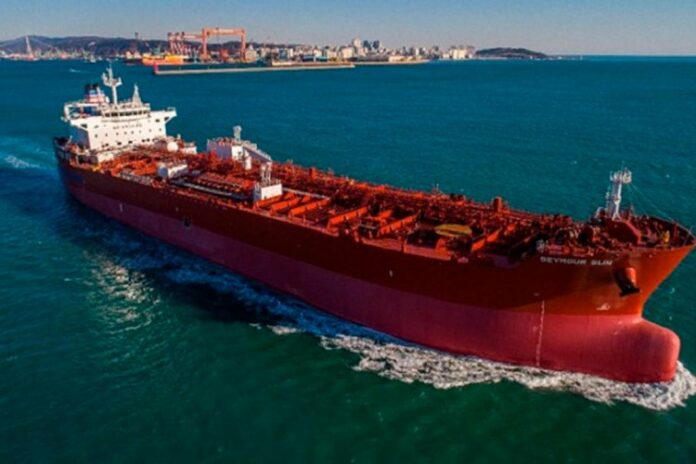
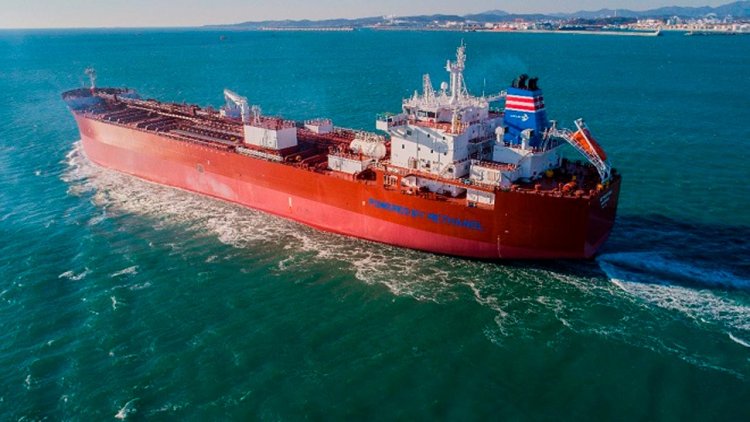
The methanol-fueled chemical tanker Seymour Sun, owned by NYK Bulkship (Asia) Pte. Ltd., an NYK Group company based in Singapore, was delivered on January 27. 

Seymour Sun has been equipped with a dual-fuel engine that can use not only heavy fuel oil but also methanol. Furthermore, when navigating using methanol as fuel, the vessel has a new technology that suppresses the production of NOx (nitrogen oxides) by adding water to methanol to lower its temperature during combustion. As a result, the vessel can comply with the IMO’s stringent Tier III NOx emission standard and contribute to environment-friendly transportation without the need for an exhaust gas recirculation (EGR) system and a selective catalytic reduction (SCR) device.

Under the management of NYK Shipmanagement Pte. Ltd., an NYK Group company, the vessel will be engaged in a long-term charter contract with Waterfront Shipping Limited, which is a subsidiary company of Methanex Corporation, the world’s largest methanol producer.

Rhode Island Shipyards to build five new offshore wind crew vessels

0

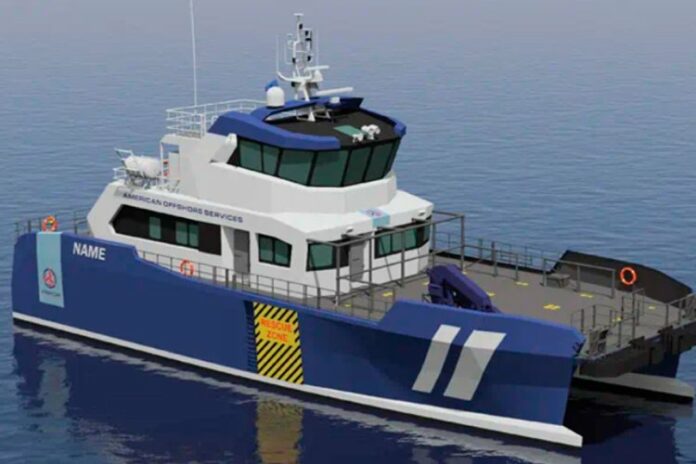
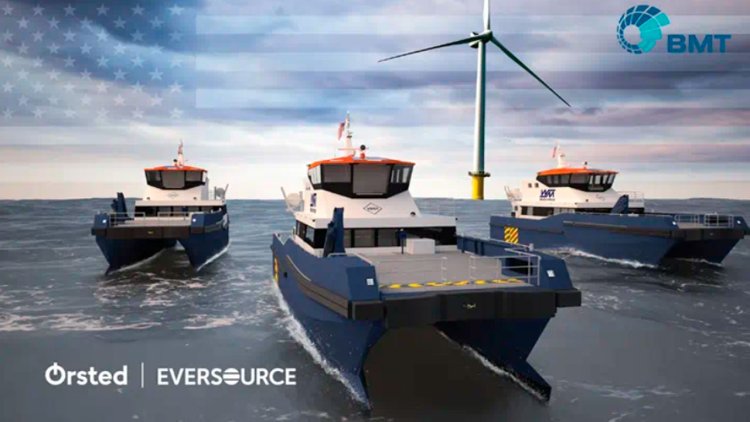
Joint venture partners Ørsted and Eversource will charter five new offshore wind CTVs from New York-based, WindServe Marine and Massachusetts-based, American Offshore Services (AOS). WindServe Marine’s affiliate shipyard, Senesco Marine, at Quonset Point in North Kingstown, R.I., will build three of the vessels and AOS is partnering with Blount Boats & Shipyard, of Warren, to build another two vessels. 

Ørsted and Eversource’s chartering of the vessels will create about 80 local construction jobs at Senesco and Blount Boats, plus another approximately 48 jobs for captains and crew who will work aboard the vessels, primarily during the wind farms’ construction. A number of regional suppliers will provide vessel components, such as electronics, engines, cranes, aluminum, and safety equipment.

U.S. Senator Sheldon Whitehouse, a longtime champion for Rhode Island’s marine trades industry, said:

“The first state to get steel in the water, Rhode Island is becoming a hub for the growing offshore wind industry. Strategic federal investments at Quonset and in our local maritime trades helped attract these jobs to the Ocean State and will continue to pay dividends as offshore wind ramps up.” 

U.S. Representative David N. Cicilline, said:

“With Rhode Island’s blue economy continuing to grow, and as we shift our reliance from gas and oil to clean energy and wind, we will continue to see more of these investments and jobs. With the infusion of infrastructure investments from the bipartisan infrastructure bill, we can continue to develop our ports and pave the way for Rhode Island’s future.” 

These purpose-built vessels are designed to handle the unique offshore conditions at the wind farms, which will be located 15 miles off the Southern New England coast, and to transport technicians and materials safely to and from the wind farms and local ports.

Construction work is expected to start early this year at Senesco on the 88-foot long WindServe vessels and at Blount Boats on the 101-foot long AOS vessels. All five vessels will be built over the next two years, ready to provide crew transfer support during the construction phases of the Ørsted and Eversource joint venture’s three Northeast projects. The first vessel will be completed by early 2023.

David Kristensson, owner of Northern Offshore Services, a co-owner of AOS, said:

“The AOS newbuild program for Ørsted and Eversource will bring over 40 skilled shipyard jobs to Rhode Island. In addition, this partnership will give dozens of U.S. merchant mariners the opportunity to embark on a new and exciting career path, throughout the Northeast.”

In December 2016, Ørsted and Eversource teamed up to launch a new clean energy industry in the Northeast. This partnership has now grown to include three offshore wind farms including the 704-megawatt Revolution Wind project serving Rhode Island and Connecticut; the 130-megawatt South Fork Wind serving Long Island, and the 924-megawatt Sunrise Wind project serving New York. All together, these projects will generate 1,760 megawatts of clean, renewable energy – enough for more than 1 million homes. The JV has the potential to more than double its existing portfolio within its current jointly-owned uncontracted offshore wind energy lease areas.

The two shipyards are leaders in building offshore wind crew transfer vessels: Blount Boats built the country’s first-ever offshore wind crew transfer vessel, the Atlantic Pioneer, which has served Ørsted’s Block Island Wind Farm since the American-first offshore wind farm began operations in 2016. Senesco built the WINDSERVE JOURNEY crew transfer vessel, which began operations in 2020 at the Coastal Virginia Offshore Wind project; Ørsted supported the engineering, procurement and construction of that offshore wind farm.

Among the largest offshore wind partnerships in the United States, the Ørsted and Eversource joint venture is playing a unique role in the development of a domestic offshore wind supply chain. 

In December 2016, Ørsted and Eversource teamed up to launch a new clean energy industry in the Northeast. This partnership has now grown to include three offshore wind farms including the 704-megawatt Revolution Wind project serving Rhode Island and Connecticut; the 130-megawatt South Fork Wind serving Long Island, and the 924-megawatt Sunrise Wind project serving New York. All together, these projects will generate 1,760 megawatts of clean, renewable energy – enough for more than 1 million homes. The JV has the potential to more than double its existing portfolio within its current jointly-owned uncontracted offshore wind energy lease areas.


RWE signs agreement to build Denmark’s hitherto largest offshore wind farm

0

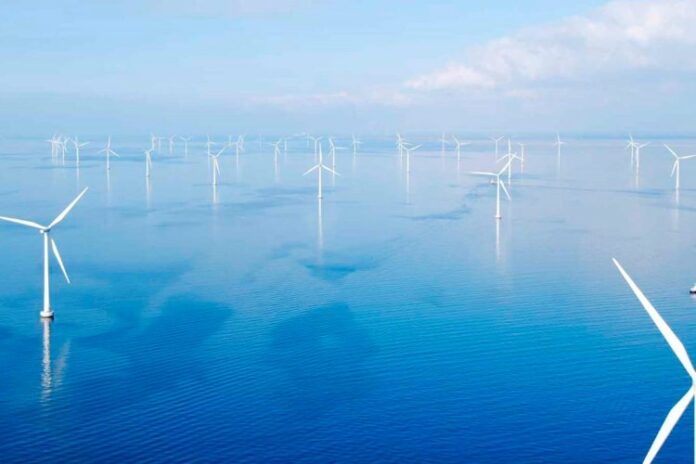
RWE has signed a concession agreement with the Danish Energy Agency (Energistyrelsen). The concession grants the right to construct and operate the Thor offshore wind farm for 30 years. 

With a planned capacity of around 1,000 megawatts Thor will be Denmark’s largest offshore wind farm to date. The wind farm will be built off the Danish west coast and is scheduled to reach full operation in 2027. Once fully operational, Thor would be capable of producing enough green electricity to supply the equivalent of more than one million Danish households.

Pål Coldevin, Executive Vice President for Offshore Development Nordics, Poland and Baltics at RWE Renewables, said:

“Scandinavia, and Denmark in particular, are important strategic growth markets for us. Denmark not only has very favourable wind conditions, the country also has ambitions to deploy even more offshore wind power. We are looking forward to working with the Danish Government and other partners, and in the upcoming months we will be starting our preliminary surveys. With Thor, we have two projects off the Danish coast and this means that we are making a major contribution to Denmark’s green energy transition.”

The Thor project will help support the RWE’s goal to triple its global offshore wind capacity from 2.4 to 8 gigawatts by 2030. RWE is already involved in the Danish Rødsand 2 offshore wind farm, which is located south of the Danish island of Lolland, approximately 10 kilometres southeast of Rødbyhavn. The wind farm has an installed capacity of 207 MW (RWE share: 20%) and has been in operation since 2010.

Neptune Energy increases production from Gjøa platform

0

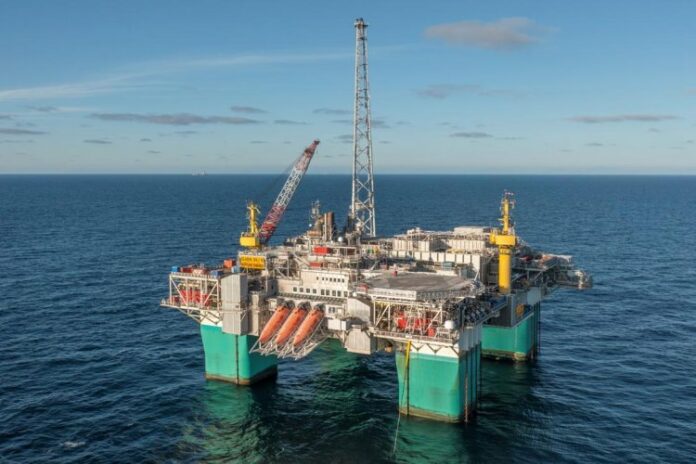
Gross production over the Gjøa platform ended on 42 million boe in 2021, compared with 40 million boe in 2020.  76% of the production was gas, all of which is exported through the FLAGS pipeline to the St. Fergus Gas Terminal in the UK.  

The increased production was due mainly to production start-up from the Gjøa P1 infill development in February and the Duva field tie-back in August. In addition, production from the tie-back field Vega, operated by Wintershall Dea, and the Gjøa field itself, has been better than expected. Estimated reserves on the Gjøa field have increased by 38% since the Plan for Development and Production was approved in 2007.

Neptune Energy’s Head of Operations in Norway, Martin Borthne, said:

“Our ambition to develop the Gjøa platform into a host facility and a hub for nearby discoveries has succeeded. This has not only prolonged the life of the Gjøa platform itself, but has resulted in far higher value creation than expected at start-up. Successful utilisation of the Gjøa infrastructure as a hub is further seen as a critical enabler for continued exploration and development in this part of the North Sea.”

Borthne added:

“This year we expect to bring on stream a fourth tie-in field to the Gjøa facilities – Wintershall Dea’s Nova field. In addition, we plan to drill two exploration wells in the area and continue to mature other nearby discoveries and exploration opportunities as tie-in candidates. We have high expectations that the Gjøa hub will be in operation to 2040 and continue to create value in this area of the North Sea for many years to come.”

Electrified with hydropower from shore, carbon emissions from the Gjøa platform are 3kg CO2/boe, less than half the average on the Norwegian Continental Shelf.