-3.4 C
New York
Home Blog Page 474

Inmarsat agrees Fleet LTE contract with Golden Energy Offshore

0

Inmarsat has secured a new contract for its flexible, three-in-one network service Fleet LTE from independent Norwegian owner Golden Energy Offshore.

Using Fleet LTE, three modern Global Energy Offshore support vessels can switch between Fleet Xpress (Ka-band), FleetBroadband (L-band), and 4G coverage, depending on the strongest available signal. Band selection will be made automatically, in a seamless process developed to ensure stability.

Per Ivar Fagervoll, CEO, Golden Energy Offshore, said:

“Fleet LTE provides flexibility to tailor connectivity needs for our internal use, for the needs of charterers, and for each person on board. It will enhance crew welfare by supporting day-to-day needs such as banking and keeping in contact with families. It will support data-intensive activities such as video conferencing, replication, and real-time data transfer. And, as an ISO 50001 certified company committed to green operations, Golden Energy Offshore sees it as essential to fully utilize performance analysis software to maintain our environmental focus.

“We also have plans to move forward with class societies and customers on remote inspections and equipment servicing. Installation of Fleet LTE allows us to do all this most effectively while making significant cost savings, which are always welcome.”

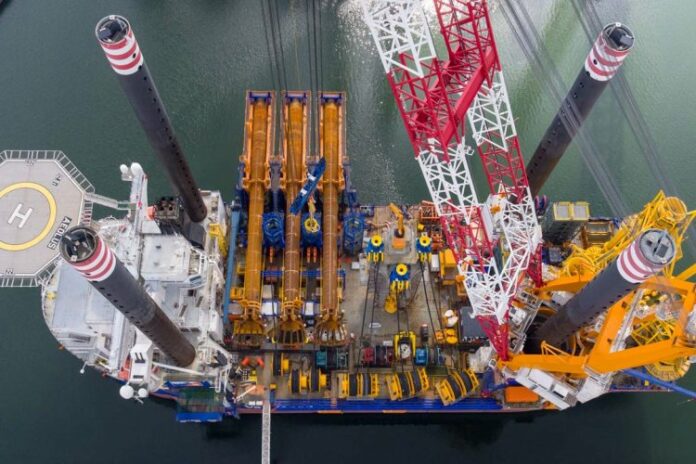
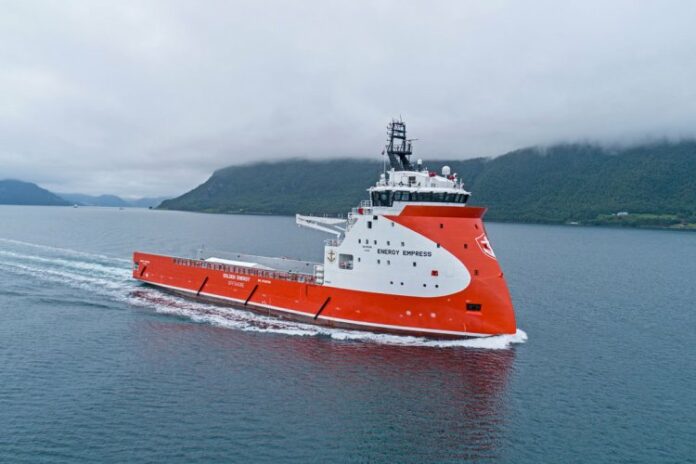
A long-term Inmarsat customer, Golden Energy Offshore has also been a longstanding user of the satellite operator’s VSAT services. The switch to Fleet LTE will involve straightforward integrations of 4G connectivity onboard Energy Duchess, Energy Empress, and Energy Swan, with installations scheduled as part of forthcoming port calls.

Conventionally, Offshore vessel operators buy their LTE and VSAT services separately, using LTE when within the range of networks available ashore, or to rigs and wind farms, but relying on the crew to switch to VSAT beyond 4G limits. In contrast, the algorithms within the Fleet LTE router switch between LTE and VSAT automatically, so that high-speed data transfer and low latency are always optimised. The ‘plug and play’ service provides a one-stop-shop for 4G, Ka-band, and L-band without the complication of dual billing or the risk of disconnection.

Eric Griffin, VP of Offshore and Fishing, Inmarsat Maritime, said:

“Vessel data consumption in the offshore space is doubling every 18 months. Costs can be hard to control when connectivity services are billed separately, while manual switchovers can mean suboptimal signals or service interruptions. Inmarsat Fleet LTE’s ability to ensure that network capacity is at its highest and latency at its lowest continuously delivers a competitive advantage to corporate and independent operators alike.”

Initially launching Fleet LTE coverage to North Sea customers in 2020, Inmarsat is expanding service availability to include 4G antennas in other parts of Northern Europe and has plans for comparable service in the Gulf of Mexico. Part of far wider investment plans for maritime, the seamless integration of multiple technologies into one cohesive solution also introduces stakeholders to the type of thinking that has inspired ORCHESTRA, Inmarsat’s communications network of the future.

Inmarsat ORCHESTRA is a unique ‘dynamic mesh network’ that will bring together existing geosynchronous (GEO) satellites including ELERA (L-band) and Global Xpress (Ka-band) with low earth orbit satellites (LEO) and terrestrial 5G into an integrated, high-performance solution. By offering the lowest average latency and fastest average speeds available, ORCHESTRA will eliminate the industry-wide challenge of congested network ‘hot spots’, including busy ports and shipping lanes.
Svitzer acquires two tugboats from Med Marine

0

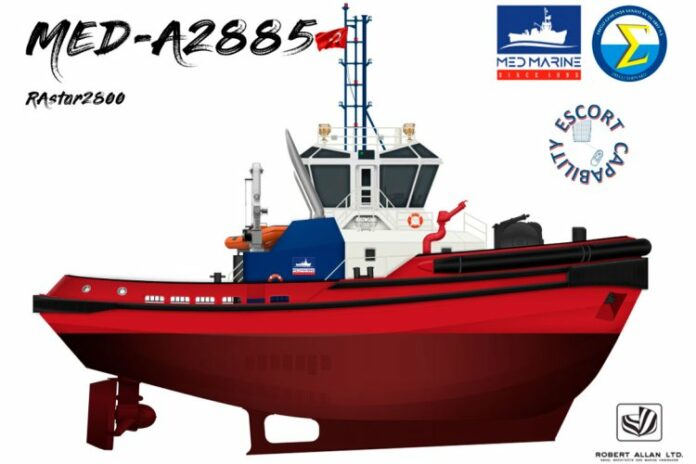
Svitzer has announced extending the current contract with the Suez Canal Authority (SCA) to provide services and Med Marine will supply two Robert Allan Ltd-designed MED-A 2885 series RAstar 2800 tugs with firefighting and escort notations, delivering 75 tons of bollard pull.

With this new contract, Svitzer will be operating six vessels in the Suez Canal and these two newly joined tugboats will be operating in Port Said and Port Suez.

Med Marine is scheduled to deliver the new RAstar 2800 tugs to Svitzer by the end of May 2022 from its Eregli Shipyard on Turkey’s Black Sea coast.

Commenting on the contract, Melis Üçüncü, Sales Manager of Med Marine, said:

“We are thrilled to be delivering our most favorable tugs to Svitzer. Deliveries of these boats are as exciting as the other projects we have with our valuable client. We are very excited about for the contract and being able deliver state of the art units to Svitzer.”

The tugboat’s specifications include:

  • LENGTH O.A.                           28,40 m
  • BEAM                                        13,00 m
  • DEPTH                                      5,40 m
  • DRAFT BASELINE                    4,10 m
  • DRAFT EXTREME                    5,70 m
  • GROSS TONNAGE                   < 500
  • BOLLARD PULL                       75 tons
  • SPEED                                     12 knots (approx.)
  • MAIN ENGINES                       CATERPILLAR 3516C/ 2×2100 kW @ 1600 rpm
  • EMISSION STANDARD            IMO Tier II
  • ASD PROPOLSION UNITS       2X KONGSBERG US 255S FP 2800 mm DIA with slipping clutch for FIFI 1
  • ACCOMMODATION                  10 people with  MLC Compliant

Mitsubishi Shipbuilding establishes new organization for marine decarbonization

0

Mitsubishi Shipbuilding Co., Ltd., a part of Mitsubishi Heavy Industries (MHI) Group, has established Marine Decarbonation Business Development Group responding to the energy transition strategy promoted by MHI Group. 

This new organization, by consolidating a range of functions, from technology development and market research to the formulation and implementation of business strategies, will utilize the advanced technologies accumulated by the company over its long history of shipbuilding, in order to accelerate technological development and new business creation in the marine decarbonization field, and respond promptly to global trends and market needs to realize a carbon neutral world.

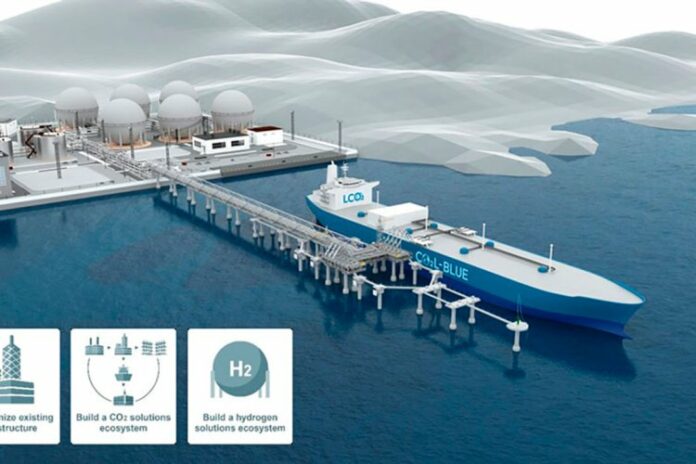
MHI/Mitsubishi Shipbuilding has built more than 5,000 vessels since its founding in 1884, actively adopting new technologies as a pioneer in the construction of energy carriers, including coal carriers, oil tankers, and liquified gas carriers (LPG and LNG carriers). The recent drive for decarbonization will require a transition to new energy, and premised on global trade, demand is expected to increase for clean energy carriers for ammonia and other materials, as well as LCO2 carriers to support reverse logistics for fossil fuels. In response, Mitsubishi Shipbuilding, by bringing together the many types of products and technologies for both land and sea from across MHI Group, and providing customers and partners aiming to decarbonize with its differentiated technologies, products, systems, and comprehensive solutions, will contribute to the realization of decarbonized world.

Commenting on the establishment of Marine Decarbonation Business Development Group, Toru Kitamura, President and CEO of Mitsubishi Shipbuilding said:

“We have received numerous inquiries from customers regarding growth sectors such as LCO2 carriers and ammonia fuel vessels and we need a dedicated organization to coordinate the technological innovation and handle this business. The establishment of the Marine Decarbonation Business Development Group will accelerate the pioneering of new businesses that utilize and apply the oil and gas technologies possessed by Mitsubishi Shipbuilding, and in combination with conventional shipbuilding technologies, allow us to achieve ‘organizational ambidexterity.’”

As part of the energy transition strategy promoted by MHI Group, Mitsubishi Shipbuilding has set a growth strategy called “MARINE FUTURE STREAM,” focused on the ship and marine sector. In this strategy, the company has set goals for the decarbonization of the maritime economy through clean energy and the carbon cycle, the effective utilization of the marine space with digitalization and electrification, and the generation of new ideas through marine-related innovation. 

Vestdavit crosses Finnish line to win first naval order

0

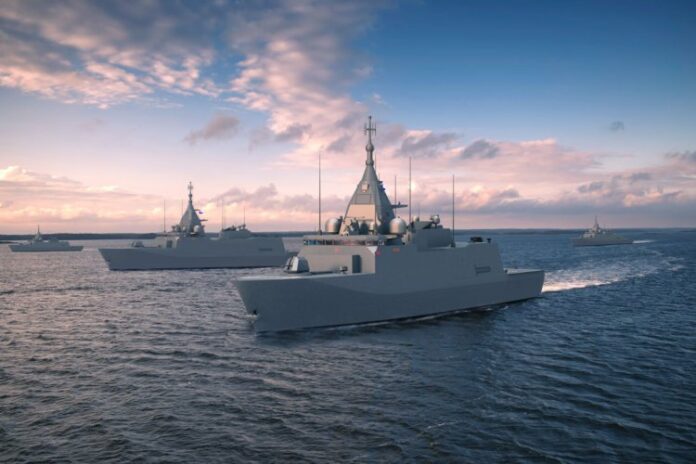
The Pohjanmaa-class corvettes are to be constructed at RMC’s shipyard in Rauma, Finland as part of the navy’s €1.23bn ($1.36bn) Squadron 2020 project to replace seven ageing vessels and each will be equipped with two of Vestdavit’s high-specification davits.

The advanced warships, with a length of 114m and beam of 16m, have an ice-strengthened hull for work in ice-bound waters and will be deployed on a diversity of missions including anti-surface warfare, anti-air warfare, anti-submarine warfare, surveillance and mine-laying.

Consequently, they required efficient davits with a high level of reliability and redundancy for rapid-response launch and recovery of interceptor and life-saving boats intended for such tasks. 

Vestdavit area sales manager Martin Sundgot Hansen says:

“Adaptability to work in harsh environments with high sea states and compliance with shock requirements were important criteria in winning this major davit award on one of the Finnish Navy’s biggest newbuild projects to date. It is very positive for us to be chosen to supply davits for an entire new class of ship and demonstrates both RMC’s and the navy’s confidence in our ability to deliver mission-critical equipment.”

Vestdavit will supply a total of eight high-performing telescopic davits for the corvette quartet.

The groundwork for this key davit contract was actually laid around four years ago when Vestdavit first started working with RMC on the project, according to Hansen:

“Being able to enter the project at an early stage has enabled us to better understand the navy’s davit requirements on the newbuilds and tailor davit designs according to its specific needs.”

Hansen says RMC required an “extensive volume” of information on davit specifications in advance of the contract award and Vestdavit was able to call on its available resources based on an extensive track record of similar naval deliveries over the past three decades.

He says:

“These deliveries have enabled us to develop standardized documentation for RMC and this gives us a competitive advantage as we can provide the required information without prolonging the preliminary contractual process.

“Investing these resources in the early phase provides confidence for RMC that we can deliver a turnkey solution in line with the proposed cost and workscope, which saves time both in the vessel planning and construction phases.”

Alewijnse and Tree C develop maritime digital twins of the future

0

Electrical systems integrator Alewijnse and 3D simulation specialist Tree C Technology have joined forces to develop innovative digital twins for the maritime manufacturing industry. Together, they now offer new 3D simulation applications for the future that simulate the operating environment of mission equipment in a realistic way and optimise every phase a ship’s life cycle. 

Simulations and digital twins are revolutionising the manufacturing industry. The technology is there, and its development in the maritime field is in progress. Alewijnse and Tree C are leading the way by jointly offering new 3D digital twin applications that can simulate specific mission equipment of vessels in their working environment in a physically correct way.

This brings a wide range of benefits, such as the ability to design and test systems in a more efficient way, optimising training in a physical correct 3D environment, and offering the best remote service. This results in the performance of systems improving tremendously and customers making substantial savings in both time and costs. In this way, shipbuilders, owners and crew can reap the benefits of the latest high-end systems and techniques.

By combining their expertise, Alewijnse and Tree C are building on their years of experience with simulation and digital twins. For example, Alewijnse previously developed ECR consoles that allow advanced 2D simulation training for onboard tool handling.

Another recent innovation is the unique Alewijnse virtualisation and visualisation platform AlViVi, a control concept based on a central, redundant server system on which all process-related systems on board are centrally virtualised and integrated. These systems can also be visualised and operated from all the connected screens on a ship. This innovative platform additionally provides unique simulation capabilities for training and testing during the design phase of on-board automation systems.

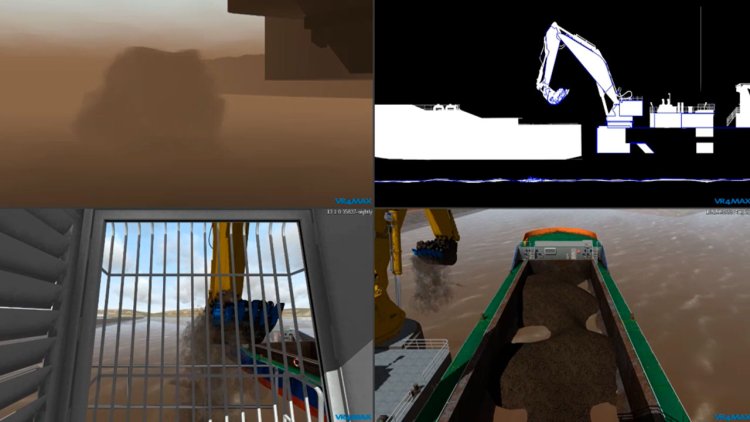
Through its collaboration with Tree C, Alewijnse is taking this a step further. The specialist software of Tree C adds 3D realism to the simulation of interactions with the environment and the forces at play. This provides a realistic experience for trainee operators and makes the virtual environment suitable as an accurate test environment for new equipment and control systems.

The new simulation system from Tree C and Alewijnse is comprised of an instruction desk for controlling the simulator, an operator console for controlling the ship’s equipment, a captain console for managing the thrusters, two screens for the view from the ship and two CCTVs for four simulation cameras. This creates unique opportunities for training, engineering, surveys and live monitoring service using visualisation and augmented reality.

The two companies have already received several requests from the market, partly the result of the promotion of their successful cooperation at the Alewijnse booth during the Europort exhibition in November 2021. Both companies see a lot of simulation opportunities for ship systems at large and small shipping companies and shipyards, and look forward to continuing to build the maritime digital twins of the future.

Equinor presents Wisting impact assessment

0

Equinor has today, on behalf of the partners, presented an impact assessment for development and operation of Wisting. The plan for development and operation (PDO) is scheduled to be finalised at the end of 2022.

The impact assessment to be issued for public consultation is covering both the development phase and the operations phase of the Wisting project in the Barents Sea. In December, Equinor entered into an agreement with Lundin, whereby Equinor will continue its Wisting operatorship into the operations phase.

The Wisting discovery is of considerable size, containing close to 500 million barrels of oil equivalent. Expected investments are in the range of NOK 60 – 75 billion.

A development and operation of Wisting will have major positive impacts on society locally, regionally and nationally. Both the development phase and the operations phase will help create substantial value in Northern Norway and for Norwegian society.

Siv Irene Skadsem, vice president for new assets on the Norwegian continental shelf (NCS), says:

“The Wisting field development will be a large and complex project, utilizing necessary experience and expertise both in the company and the industry. The chosen concept is robust and adapted to Barents Sea operation, while at the same time well suited for Norwegian suppliers to be able to compete for major assignments.”

The Norwegian share of goods and service deliveries to the field development is calculated to be more than NOK 35 billion, representing minimum 50 per cent of total investments. These calculations have been made before all contracts are awarded. Equinor aims to increase the Norwegian share as contracts are awarded.

There will also be major spinoffs in the operations phase, and the Norwegian share of the operating costs is estimated to total around NOK 1.7 billion per year over 30 years, which is the expected field life.

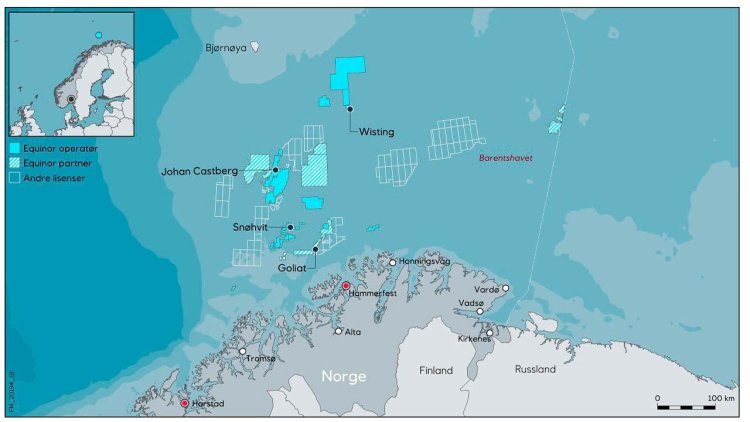
Plans call for both the supply base and the helicopter base to be established in Hammerfest. Distance and sailing time to the field, access to existing infrastructure and expertise as well as capacity and synergies with existing users are conditions that have been emphasized in the selection.

Kristin Westvik, Equinor’s senior vice president for exploration and production north operations, says:

“When considering the location of operational support functions, it has been important to us to find a robust industrial solution that utilizes and builds on existing competence communities in Hammerfest and Harstad in a good and balanced way with a long-term perspective.”

“To build on the communities that Equinor already has in Northern Norway, we want to split the operating model between Harstad and Hammerfest. We plan to establish an onshore control room and operational support tasks in Hammerfest, while functions related to administrative operation and other technical functions are to be in Harstad.”

The plans are being further detailed towards an investment decision to be made at the end of this year.

Adopted in 2020, the management plan for the Barents Sea forms a framework for activities in the area. Equinor is in close contact with various regulatory bodies to ensure that technical and operational solutions meet relevant requirements and expectations.

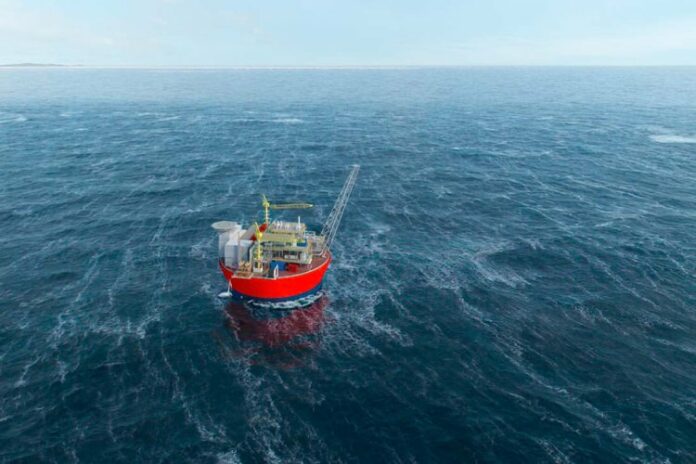
The concept chosen for the Wisting development consists of a circular, floating production and storage unit (FPSO), with power from shore as an integrated part of the technical solution. The oil will be processed and stored on the FPSO before it is shipped to the market.

Equinor and the industry have ambitious plans for reducing greenhouse gas emissions from NCS activities, and the Wisting partners focus on reducing the carbon footprint of production to the lowest extent feasible. There is not enough gas in the reservoir to use own gas to power the field throughout its life, and gas import is both technically demanding and costly. Electrification is therefore the best solution, as it will also have the lowest emissions during the production period.

In the operations phase the Wisting power demand will be around 80 MW. The power cable will be around 340 km long.

The impact assessment process is an open process, and its purpose is to ensure that players with an opinion on the development have an opportunity to express their view. The deadline for the consultation process is 12 weeks from publication.

Wisting licence partners: Equinor Energy AS (35%), Lundin Energy Norway AS (35%), Petoro AS (20%) and INPEX Idemitsu Norge AS (10%).

Trial confirms positive reduction in carbon emissions of biofuel B30 blend

0

The results of the trials showed that the biofuel B30 blend is a viable solution to comply with EU Fuel regulations being introduced from 1 January 2025 on the use of renewable and low-carbon fuels in maritime transport.

The joint industry project launched in June 2021 to test biofuel blend (B30) derived from renewable feedstock to power a d’Amico Group LR1 product tanker, showed very positive findings in terms of the reduction of CO2 emissions, reduced carbon intensity, and stable NOx emissions. 

The results of the trials showed that the biofuel B30 blend is a viable solution to comply with EU Fuel regulations being introduced from 1 January 2025 on the use of renewable and low-carbon fuels in maritime transport.  The trials also showed that depending on the scale up of feedstock production worldwide, adding the biofuel blend as a “drop in” to traditional maritime fuels is a viable measure to reduce emissions.

Following these results and ahead of the new regulations, the d’Amico Group has certified through the Flag administration all its LR1 vessels to operate permanently with the B30 biofuel blend. The Group also intends to certify its entire fleet and to test biofuel B40 and B50 following the same methodology during 2022.

The trial followed the appropriate EU Fuel regulations/guidelines on calculating CO2 emissions using well-to-wake analysis. The results were:

  • a 4.3% reduction of CO2 emissions per ton of fuel and a resulting CII (gCO2/dwt tonne mile) of 3.99, with an improvement of 3.5% using very low sulphur fuel oils allowing an “A” vessel rating until 2026.
  • confirmation from class and flag state that the biofuel blend B30 does not affect the Tier II certification of the engines for NOx compliance. Both main engines and diesel generators were tested for NOx compliance using the data measured allowed by the NOx technical code.
  • an effective CO2 emissions reduction per ton of fuel by 3%, applying the Defra methodology. This methodology was used in anticipation of the approval of the WTW analysis framework by the International Maritime Organization (IMO) and awaiting from the IMO clear indications on which methodology will be applied.

The trials were conducted from June 19th to July 6th,2021 on board the d’Amico Group LR1 product tanker vessel M/T Cielo di Rotterdam. The biofuel blend B30 was supplied by Trafigura maritime fuel supply and procurement joint venture TFG Marine in the Amsterdam-Rotterdam-Antwerp (ARA) region.

Salvatore d’Amico, Fleet Director at d’Amico Group, said:

“Biofuel is one of the decarbonization strategies we are exploring in d’Amico for the existing tonnage. While we are closely monitoring the development of alternative fuels of the future, new technology for the propulsion and continue to invest in innovative digital solutions, we do believe that using the biofuel blend can speed up the decarbonization of the maritime transportation with an immediate effect on the existing tonnage”.

Cesare D’Api, Deputy Technical Director at d’Amico Group, said:

“While there are currently a lot constraints about the green fuel of the future in terms of availability and scale up, the main two regulatory body EU and IMO has not yet lined up the strategy to account for GHG emissions and few technologies to burn the green fuel  of the future  are still under development, we have the possibility to give  an immediate and  practical contribution to the reduction of CO2 footprint using the so called “drop in” solutions. 

The biofuel blends in this respect have the potentiality to comply with forthcoming EU FUEL regulation and to bridge the gap to 2050 as a “Hybrid” low carbon fuel provided availability and incentives to uptake it worldwide. Our joint industry project has demonstrated that using the lifecycle analysis, the saving of CO2 is relevant with a good effect also on the short-term measures adopted by the IMO.  NOx emissions are not an issue, handling and management are easier.  Our LR1 fleet is now ready and certified permanently to burn B30. Our outstanding team is ready to certify the entire fleet.”

Georgios Plevrakis, ABS Director, Global Sustainability, said:

“Carbon-neutral biofuels could offer significant benefits to the marine sector’s drive to decarbonize operations. This trailblazing project will make a vital contribution to our understanding of the potential of biofuels in shipping, its implications for equipment and their impact on decarbonization efforts. ABS is investing significantly in services to speed the decarbonization of shipping and is committed to supporting the industry in the safe adoption of alternative fuels.”

Giosuè Vezzuto, EVP Marine at RINA Services, said:

“Biofuels will certainly be in the mix of solutions to achieve the IMO 2030 and FUEL EU targets to reduce greenhouse gas emissions. No technology can be ruled out at this stage and the positive results of the trial show that this approach can be made effective in a short space of time on the existing fleet. Decarbonizing the shipping sector is a challenge that no player can win alone and initiatives as d’Amico’s set the pace”.

N-KOM and ABS JDP to explore using remote survey techniques

0

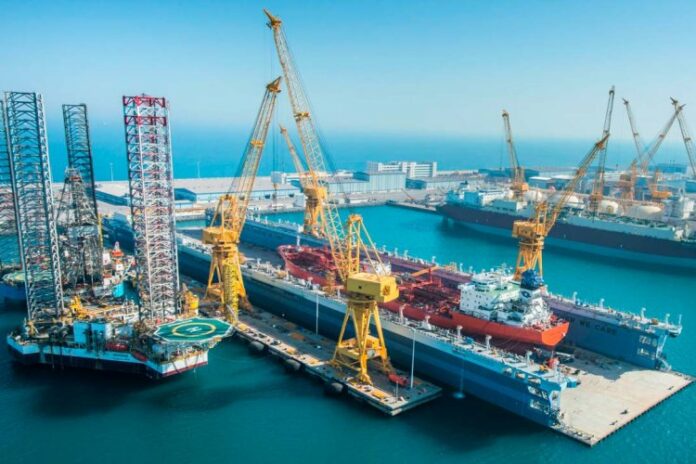
A pioneering joint development project (JDP) between ABS and Nakilat – Keppel Offshore & Marine Ltd. (N-KOM) will examine how techniques developed by ABS for its industry-leading program of remote survey of vessels in service can be applied to surveys and inspections in the shipyard.

Remote inspection technologies will be applied to six Class surveys for this trial, to test how they can then be used to verify the required survey or inspection by ABS Surveyors to optimize scheduling and minimize downtime for both the shipyard, vessels and ABS.

The JDP will examine how remote techniques can be carried out on rudder clearance inspection; stern tube weardown inspection; rudder plug opening inspection; boiler safety valve testing; fit-up inspections prior to welding and final weld visual inspection of non-critical items.

N-KOM Chief Executive Officer Damir Glavan said:

“As one of the leading shipyards in the Middle East, N-KOM is committed to providing value-added services and solutions to our customers. In this spirit, we have worked closely with ABS to develop the remote inspection technique which would enhance our operational efficiency during the vessel repair and maintenance process. This will enable us to meet Class inspections requirements and fulfill our delivery commitment to clients while upholding our commitment to provide safe, time-saving and quality services.”

Patrick Ryan, ABS Senior Vice President, Global Engineering and Technology, said:

“We are taking our leadership in remote survey of operational vessels and applying that experience and insight to the shipyard. Together with our partners, we are committed to advancing safety and efficiency to augment Surveys after construction with the application of the latest digital techniques. The potential of these technologies is significant and while we will begin with these initial six survey items, over time, as the approach is proven, we can potentially expand the scope.”

Maersk Drilling secures contract extensions for Maersk Viking in Malaysia

0

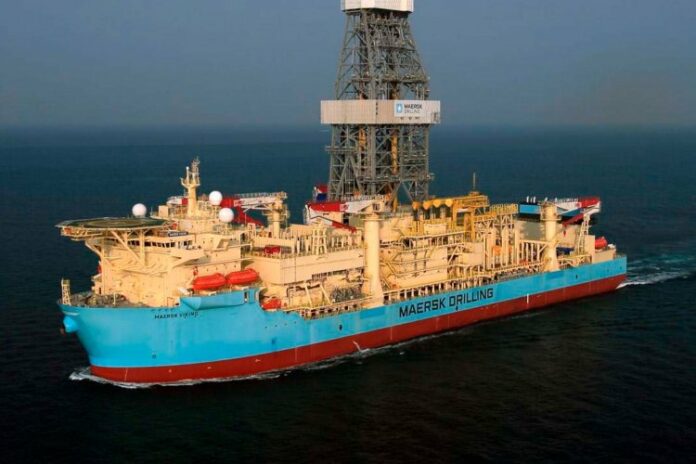
Sarawak Shell Berhad/Sabah Shell Petroleum Corporation (SSB/SSPC) has executed two options on the previously announced contract that will employ the 7th generation drillship Maersk Viking offshore Malaysia. 

The first option will be novated to TotalEnergies EP Malaysia for the drilling of one deepwater well at the Tepat project, while the second option will be novated to PETRONAS Carigali Sdn. Bhd., a subsidiary of PETRONAS, for the drilling of one deepwater well at the Layang-Layang project; both projects are located off the coast of Sabah.

The extensions have a total estimated duration of 120 days and are expected to commence in July 2022, in direct continuation of the rig’s prior work scope with SSB/SSPC. The total contract value of the extensions is approximately USD 32m, including fees for the use of managed pressure drilling. Three one-well options remain on the contract with Shell Malaysia.

COO Morten Kelstrup of Maersk Drilling says:

“We’re delighted to confirm these contract extensions for Maersk Viking to continue operating in Malaysia, and to be able to support three different operators in a coordinated schedule which will drive efficiency and reduce waste for everyone involved. This will allow the rig’s high-performance crew to build further regional expertise as they continue to deliver safe and efficient wells for the customers involved.” 

Maersk Viking is a high-spec ultra-deepwater drillship which was delivered in 2013. It is currently mobilising for the contract in Malaysia after completing a drilling campaign offshore Gabon in end-2021.

Van Oord deploys iXblue solution for offshore wind farm piles installation

0

Already used on major Oil&Gas and Renewables projects, iXblue Canopus transponders, Ramses transceivers and Delph Subsea Positioning Software have been used by Van Oord to conduct metrology operations. Those aimed to ensure the laid-out piles had been positioned as per the requested specifications.

Instant pile positioning verification was made possible by installing the Canopus LBL transponders on top of a centering frame which was placed on top of each of the pile that made up the wind turbine foundations. (3 piles per turbine). The Canopus transponders then measured and logged the distance separating them by sending acoustic interrogations to each other. The logged data was then transferred to the Ramses LBL transceiver and sent back to Delph Subsea Positioning global supervision software that generated reports from all received baselines.

Hans-Willem Deleeuw, Sales Manager at iXblue, explains:

“Thanks to our global subsea positioning solution, Van Oord was able to retrieve highly accurate measurement data only 20 minutes after the Canopus transponders had been installed on the piles. This enabled the overall baseline measurement to be conducted in less than 3 hours for all four piles installed at the time.”

Delivering operational efficiency and flexibility, iXblue LBL subsea positioning solution indeed offers plug & play, easy to deploy and to operate systems. Versatile, they can be used on multiple offshore applications such as metrology or ROV/AUV positioning and are easy to integrate to existing pool of equipment thanks to their open protocols. When used in combination with iXblue Inertial Navigation Systems, innovative SLAM and Sparse LBL modes can be used, deploying a reduced number of transponders, and thus enhancing operational efficiency and cost-effectiveness.

Hans-Willem continues:

“The intrinsic qualities of our LBL solutions, together with the comprehensive remote training of Van Oord personnel, as well as 24/7 support from the iXblue teams made this wind farm metrology operation a real success. We would like to thank Van Oord for once again trusting our technology and are now looking forward to our next deep water subsea positioning project with them providing cost-effective LBL and sparse LBL operations.”