-4.6 C
New York
Home Blog Page 471

Euroports and Navis join forces to implement solutions for break-bulk terminals

0

Initial roll-out of the Master Terminal by Navis SaaS solution will span bulk and break-bulk terminals across Euroports’ network providing more efficient reporting and greater visibility into operational profitability to optimize network-wide decision making

Navis has announced a new partnership agreement with Euroports, consisting of a multi-terminal implementation of Master Terminal by Navis. The initial 5 year Master Terminal by Navis plus managed services subscription agreement includes a three-phased plan for several terminals with a targeted go live within 3 years. With a focus on Euroports’ break-bulk facilities, the Navis TOS will replace legacy systems, applying standardization for greater consistency and efficiency across Euroports’ network.

Euroports’ core business centers around port operations in strategically located terminal areas that allow producers and shippers to reach key consumer markets across Europe and China. Currently, Euroports is seeking an integrated, real-time view of all operations and data, consolidating performance results on a group level. With Master Terminal, Euroports will be able to address the complex challenges of managing break-bulk and bulk-cargo, better track operations and increase efficiency in administration and communication, allowing them to make smarter decisions faster for improved productivity and operational efficiency across the entire organization.

Jacques Marchetti, VP & General Manager, Navis EMEA, said:

“Break-bulk terminals face a unique set of challenges when it comes to managing cargo. Having the entire Euroports global network on one central system will offer invaluable insights into the real time moves and data, not just at the ground level of each terminal, ultimately enabling business improvements network-wide.”
Varo and Unifeeder in first 100% biofuel bunkering

0

This is the first biofuel collaboration between Unifeeder and VARO, which supports both companies’ ambition to significantly reduce the carbon footprint of European transportation and improve the environmental impact of the shipping industry.

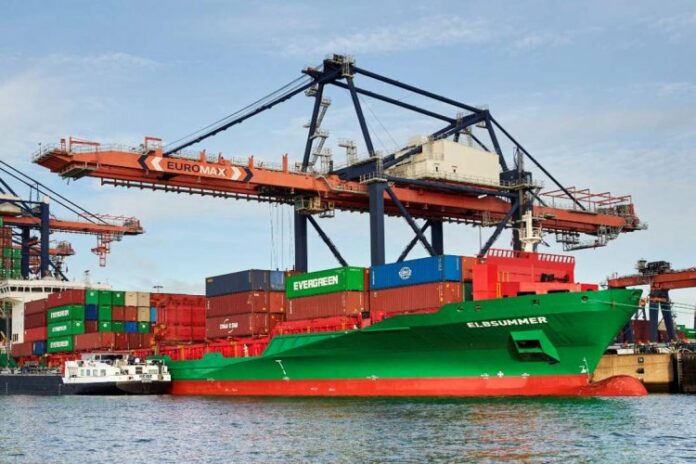
In September 2021, feeder vessel Elbsummer was bunkered biofuel B50 (50% biofuel / 50% MGO). It then underwent a scheduled main engine overhaul, which allowed the biofuel B100 (100% biofuel) to be trialed. Unifeeder has now bunkered 400 mt of VARO’s Advanced Renewable Biofuel B100A during Elbsummer’s recent call to the Port of Rotterdam.

VARO’s advanced biofuels are produced from certified feedstocks labeled as waste or residue. Biofuel B100 reduces CO2 emissions up to 90% well-to-exhaust and eliminates SOX emissions almost entirely.

Unifeeder – which is owned by global leading supply chain solutions firm, DP World – is positioning itself as a frontrunner for sustainability in shipping and is fully dedicated to reducing greenhouse-gas emissions for its fleet by at least 50% by 2040.

Hans Staal, Director, Fuel Supply at Unifeeder, said:

“Being able to operate our vessels on 100% biofuel is a true game-changer and a major stepping stone on Unifeeder’s journey towards net-zero emissions. We applaud the support and constructive approach seen from the vessel’s owners, Elbdeich Reederei, and look forward to implementing biofuels on many other vessels in our fleet during 2022.”

Dev Sanyal, CEO VARO, commented:

“This is the energy transition in action. A fundamental part of our strategy is to enable our customers to decarbonize by providing solutions for their cleaner energy needs. By working together with them and by providing new, cleaner energy products we can together accelerate the transition to new solutions the world needs.”

ABB wins systems order for Eneti’s offshore wind turbine installation vessels

0

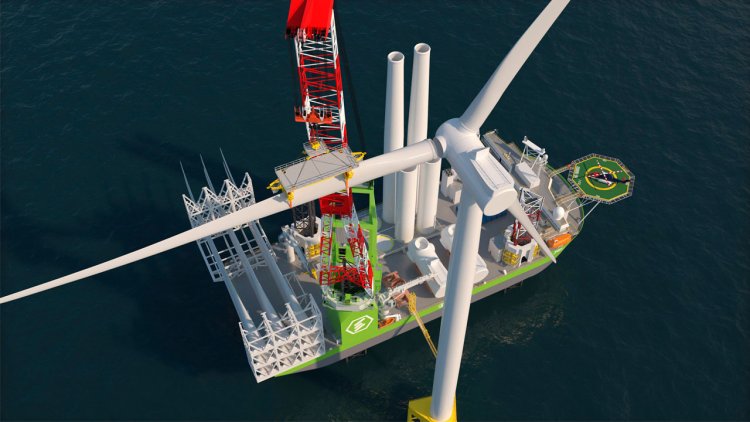
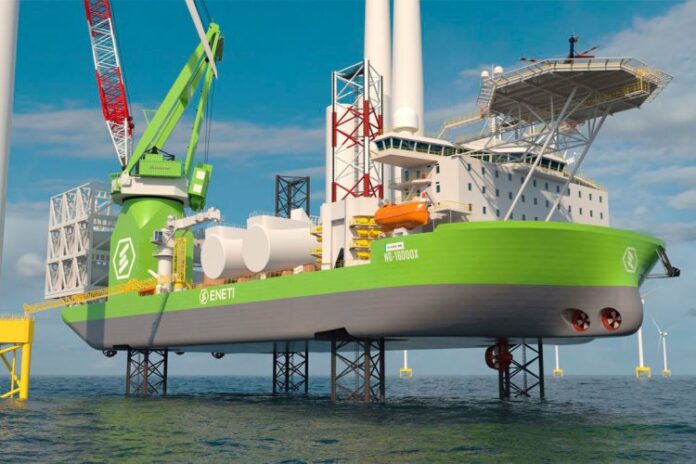
The two $330 million wind turbine installation vessels (WTIV) will be delivered to Monaco-based offshore wind construction player Eneti Inc. from the South Korean shipyard Daewoo Shipbuilding & Marine Engineering (DSME) in Q3 2024 – Q2 2025 featuring advanced power, automation and control systems, real-time performance analytics and electric propulsion from ABB. The ABB orders for the two vessels were booked in Q3 2021 and Q1 2022, respectively.

The future-proof newbuild vessels will be capable of installing the next generation of turbines offshore at depths of up to 65 meters, and will be able to get upgraded for operation with zero carbon fuels. The vessels will feature a battery installation from ABB for enhanced sustainability of operations, including also energy recovery from vessel operation.

With rising demand for wind power, there is an increased need for WTIVs that can serve this growing segment efficiently and sustainably. In 2020, offshore wind generation grew by almost 30 percent, with capacity additions of 6 GW1. In its ‘Net Zero by 2050’ roadmap, the International Energy Agency forecasts 310 GW in wind energy sources, of which 80 GW offshore, would need to be added to the global energy mix each year for the world to achieve carbon neutrality by mid-century.

Rune Braastad, Business Line Manager, Marine Systems, ABB Marine & Ports, said:

“This contract further confirms that our solutions meet the needs of a very demanding market and are recognized for their operational and environmental performance. The Eneti ‘seal of approval‘ acknowledges their preference for our sustainable hybrid propulsion technology and extensive experience with dynamically positioned (DP) vessels, and WTIVs in particular.”

The new vessels’ capabilities will rely on ABB’s integrated automation, power and electric propulsion systems, including closed-ring and closed-bus solutions. The closed bus-tie DP2 system’s enhanced fault resistance ensures precise positioning as well as safe and predictable performance during operation. Closed-bus solutions are less sensitive to network disturbances and reduce risks of power and propulsion loss. They also achieve better running engine utilization to improve efficiency and support advanced remote diagnostics.

ABB will also integrate an energy storage system, which will reduce fuel consumption, wear and tear, and engine running hours. Battery power enhances the WTIVs’ operational flexibility by providing ‘spinning reserve’ backup power, ‘peak shaving’ for short-term load variation, recovery of regenerative energy, and enhanced dynamic performance supporting instant power demands.

The newbuild WTIVs will benefit from increased profitability due to higher availability enabled by ABB’s digital solutions. ABB Ability™ Marine Remote Diagnostic System reduces the need for on-site service and improves system performance, while ABB Ability™ Octopus – Marine Advisory System provides motion and response forecasting, helping the vessels to optimize its operational window.

Jet stream models help inform US offshore wind development

0

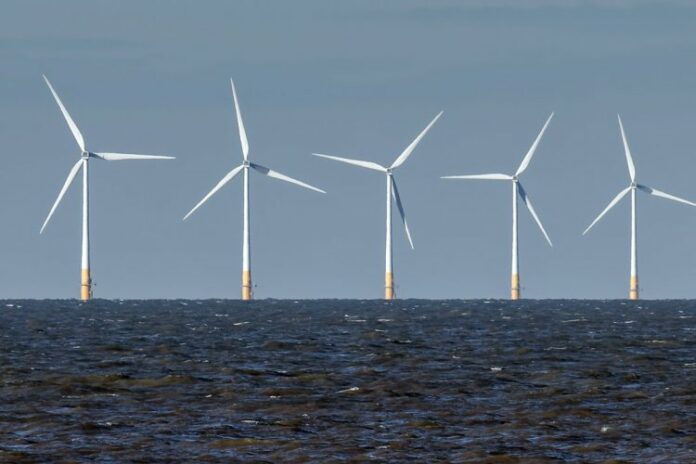
With the federal government planning to hold the largest sale of offshore wind farm leases in the nation’s history, a new Cornell University study could help inform the development of offshore wind farms by providing detailed models characterizing the frequency, intensity and height of low-level jet streams over the U.S. Atlantic coastal zone.

The research was published in the journal Energies. The study finds that jet streams do occur low enough to reach wind turbine rotor planes at planned wind farms offshore from the U.S. East Coast, according to co-author Jeanie Aird, doctoral student in the Barthelmie Wind Energy Laboratory at Cornell.

Low-level jets—fast-moving currents of air in the lowest 2 kilometers of the atmosphere—can have pros and cons for wind turbines. They usually result in an increase in wind speed which can improve turbine performance, such as power output, but they can also increase the loads on turbine blades and towers with higher wind shear and turbulence. Understanding their occurrence is important for planning wind turbine longevity and power production.

Aird analyzed two years of simulations from the Weather Research and Forecasting (WRF) model provided by Sara C. Pryor, professor in the Department of Earth and Atmospheric Sciences at Cornell. She found that low-level jets occur more frequently at the offshore wind energy lease areas south of Massachusetts than those in the New York Bight (stretching roughly from coastal New Jersey to eastern Long Island) and further south.

Aird said:

“Our study specifically focuses on low-level jets that occur with maxima at approximately 500 meters or below, since at lower heights they are more likely to interact with wind turbines.”

Aird found that the low-level jets can occur at approximately 150 meters above sea level, which means that they are likely to interact with offshore wind turbines planned for the U.S. East Coast. For example, turbines selected for the Vineyard Wind farm off the coast of Massachusetts have a hub height of 140 meters.

Aird said:

“Our analysis provides maps of low-level jet occurrence showing these phenomena occur up to 12% of the time in the late spring and early summer when there are strong horizontal temperature gradients. We hope this research will assist offshore wind farm developers and we are working to develop a predictive method for low-level jet occurrence.”

Prior to this research there was uncertainty about how frequently low-level jets would occur in this area, or their speeds and heights, due to a relative lack of wind climatology measurements for the East Coast. This study is unique in that the team utilized two years of high-resolution WRF data over a wide geographical domain, covering 13 of the 16 planned offshore lease areas to analyze the low-level jets.

Royal Wagenborg expands long term fleet connectivity with Castor Marine

0

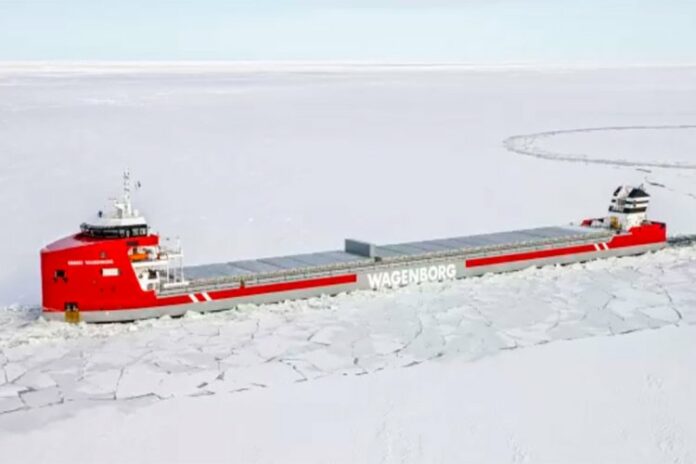
This guarantees onboard internet connectivity, readying their fleet for future safe and efficient journeys. Since 1898 the Dutch family-owned shipping company has been crossing the oceans, developing to a modern environment-friendly fleet operator with about 200 vessels. 

Besides the extension of 52 Global Ku VSAT contracts, Castor Marine will equip an additional 15 Wagenborg vessels, currently on 4G, with VSAT. 

To support Wagenborg’s strategy of smart shipping and being able to operate the global fleet more efficient and environmentally friendly, the bandwidth for the 52 vessels has been increased. This will also improve the onboard crew welfare system, as provided by Castor Marine for several years. VSAT for European trading vessels Wagenborg vessels trading in Europe will be equipped with a ‘Telenor Ka system based on iDirect and Intellian v60 Ka VSAT hardware’. 

These vessels currently use a 4G system and an L-band back-up system when sailing outside 4G coverage. To improve the crew welfare and support smart vessel operations 24/7 anywhere at sea, these vessels will also be provided with VSAT connections. The first installation was done in October 2021 and over 15 vessels will follow shortly.

Castor Marine supports and manages Wagenborg’s SD-WAN routers centrally, which is ideal for monitoring, performing changes and software upgrades. In the SD-WAN setup for Wagenborg Shipping, all the business applications on the fleet are directly connected to Wagenborg’s headquarters in Delfzijl, the Netherlands. The crew welfare network operates separate from the business network and is directly connected to the public internet, after passing Castor Marine’s content filters and firewalls.

Energy Observer unveils new hydrogen-powered cargo ship

0

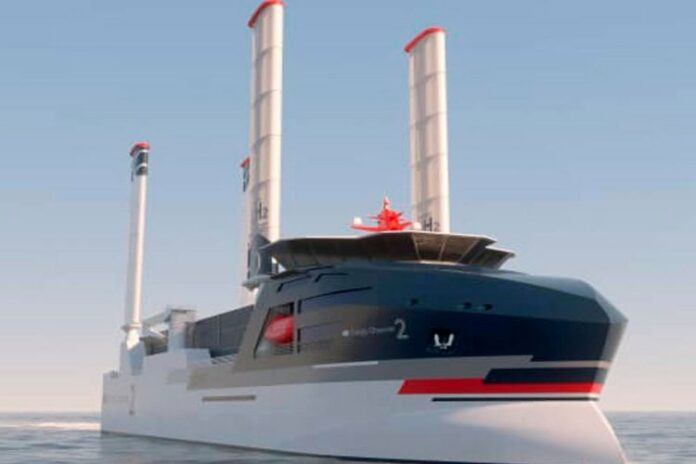
Energy Observer has unveiled a brand-new laboratory vessel with the “first” complete hydrogen chain.

In doing so, the ship is completely zero-emission and will be utilised to explore real world data for hydrogen application within the maritime industry whilst also becoming a champion for the hydrogen industry.

With the liquid hydrogen market being well established, Energy Observer will use the vessel to tackle several technological challenges such as the integration of large tanks as well as the management of cryogenic temperatures – both crucial in enabling the scaling of hydrogen in the maritime sector.

The Energy Observer 2 will also pool the collective knowledge from across the hydrogen sector with Air Liquide, CMA CGM Group, EODev, LMG Marin, Ayro, Bureau Veritas, The French Maritime Cluster, and T2EM Institute all working together for the success of the vessel.

Victorien Erussard, President and Founder of Energy Observer, said:

“With this demonstrator ship, we want to go all the way in decarbonising medium-sized industrial ships, using hydrogen directly as a fuel.

“We believe in the capacity of the French maritime industry to become an international model, benefiting from an agile and efficient research-industry ecosystem.”

Matthieu Giard, Member of the Executive Committee in charge of Hydrogen activities at Air Liquide, said:

“The adventure of hydrogen is above all a story of pioneers. With Energy Observer, we share this desire to push back the technological frontiers to take concrete action in the face of the climate emergency.

“Liquid hydrogen will play a major role in the decarbonation of maritime transport. Air Liquide’s experience and, that of the various players involved in the Energy Observer 2 project will help prove that liquid hydrogen is low-carbon energy adapted to large cargo ships.

“That project opens up important prospects by touching on the heavy transport sector, for which hydrogen is particularly relevant.”

Damen’s revolutionary FCS 7011 completes sea trials

0

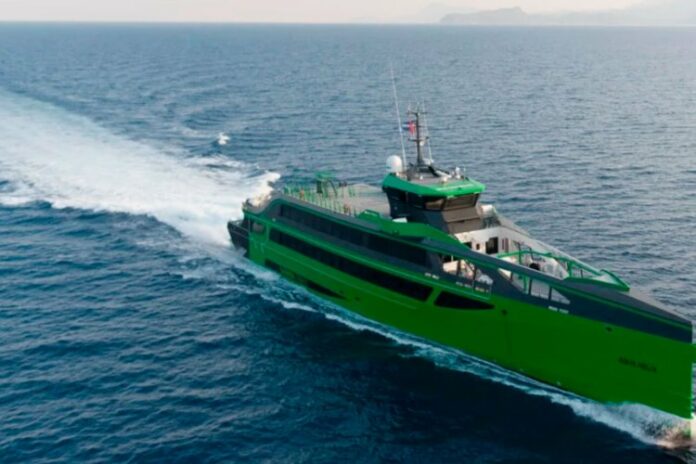
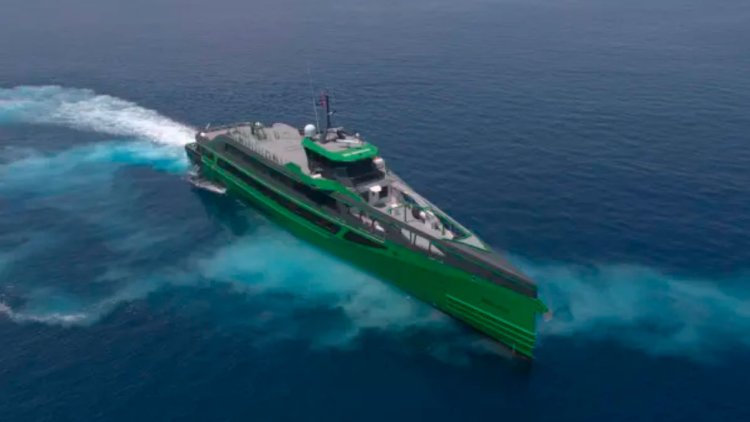
After five years of market consultation, research, design, engineering and construction, the first of Damen’s ground-breaking Fast Crew Supplier (FCS) 7011 class has completed its sea trials off the Turkish coast and is set to begin the passage to the Netherlands. 

The FCS 7011, in combination with the latest Ampelmann walk-to-work system, represents the very latest in marine access thinking, having been developed in consultation with the offshore energy industry and leading maritime research institutes. Its goal is to meet the challenges presented by the unpredictability of the price of oil and increasingly competitive renewable energy. As a cost-effective crew transportation solution featuring the highest levels of both comfort and safety, it offers a viable alternative to helicopter transport and has already gained substantial interest from clients in the southern North Sea, the Gulf of Mexico, Brazil and West Africa.

The business case is based on its ability to transfer much larger numbers of personnel for longer distances at higher speeds. This opens the door to moving away from day-rate structures towards a pay per journey model and, potentially, vessel sharing, whereby multiple offshore installations can be served in a single round trip, thereby delivering substantial savings in both time and operational costs.

With journey times of up to 12 hours, comfort and safety are key. To achieve this the design incorporates the Damen Sea Axe bow, the positioning of the accommodation just aft of amidships, and interceptors fitted within the vessel’s stern, all to minimise sensations of motion as it moves through the sea. The FCS 7011 also features a range of motion-compensating technologies to optimise the safety of crew transfers. These include a Kongsberg DP system, a tailor-made Ampelmann gangway and a VEEM gyrostabiliser, operating alongside the MTU main engines, Hamilton waterjets, Danfoss shaft generators, Reintjes gearboxes and Veth bow thrusters. The result is a tightly integrated advanced control system capable of delivering and receiving personnel safely in a wide range of sea states.

On arrival in the Netherlands, the Ampelmann gangway system will be installed, making the FCS 7011 ready for fully-integrated, proof of concept trials in the North Sea. By joining forces to commercialise the vessel, Damen and Ampelmann have combined Damen’s decades of experience in designing and building crew change vessels with the industry-leading walk-to-work expertise of Ampelmann.

Marlink and Oneweb to bring high-speed connectivity to the maritime sector

0

OneWeb, the Low Earth Orbit (LEO) satellite communications company and Marlink, the Smart Network Company, have joined forces to bring OneWeb’s high-speed, low latency connectivity to the maritime, energy, enterprise and humanitarian sectors.

Marlink operates a global industry leading VSAT network and has unrivalled market access providing remote communications across the maritime, offshore and onshore energy, enterprise and humanitarian sectors. In partnership with OneWeb, Marlink will further enhance the capabilities of its hybrid network solutions and offer its customers truly differentiated, flexible, reliable and secure connectivity solutions, optimized for every application.

The two companies plan to concentrate on the energy sector in regions above the 50th parallel north from January 2022, expanding to the maritime, energy, enterprise and humanitarian sectors on a global scale from January 2023.

Together OneWeb and Marlink will deploy, test and demonstrate several types of user terminals and LEO connectivity services to customers across these market segments.

Alexandre de Luca, President Energy, Enterprise and Government at Marlink said:

“We are delighted to be working with OneWeb to deliver a new global, high-speed, low latency connectivity solution that is in strong demand by our remote communication customers across the market segments we serve.”

Tore Morten Olsen, President Maritime at Marlink added:

“Together with OneWeb, we will significantly improve Marlink’s hybrid connectivity solutions for our energy and maritime customers. Adding OneWeb’s capabilities will further enhance our smart hybrid network to support the digitalization of our customers’ remote operations, and in particular to enable our customers’ cloud applications.”

OneWeb is making significant progress in building its constellation and currently has 394 satellites in Low Earth Orbit, representing more than 60% of its planned fleet, delivering connectivity to customers in remote regions of Alaska, Canada and the North Sea. Launches will continue during 2022 to enable the company to offer commercial connectivity services globally for maritime in 2023.

Impossible Sensing taps seafloor to discover cleantech resources

0

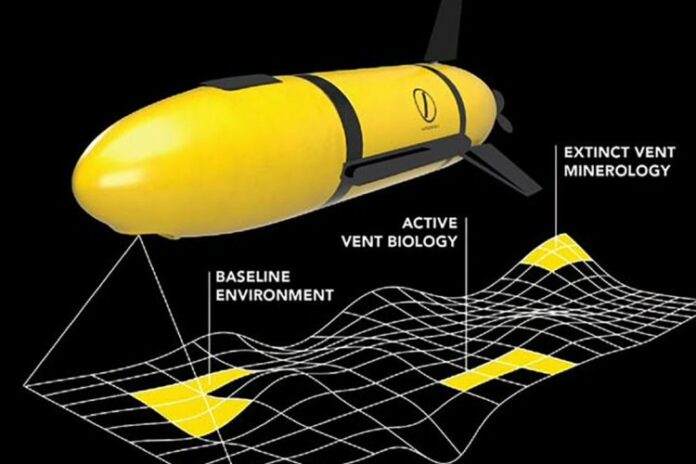
The startup has partnered with the US Department of Interior’s Bureau of Ocean Energy Management (BOEM) to advance this robotic technology. The partnership aims to bring robotic laboratories to the ocean’s depths to locate, size, and characterize mineral resources and biological communities.

VIPER leverages Impossible Sensing’s space exploration capabilities, which were initially created for NASA, to thoroughly map and discover marine minerals in the US exclusive economic zone. It also gives critical information on sensitive habitats and species while these advancements aim to minimize the nation’s strategic vulnerabilities. This can enable a global shift to clean energy while also documenting the deep-sea biodiversity. Impossible Sensing claims VIPER to be a cost-effective tool that can discover and evaluate marine cleantech resources.

It collaborates with BOEM to gather further information on the location and extent of critical minerals on the outer continental shelf. Without the need to take samples, Impossible Sensing and BOEM anticipate that 100 km2 mineral and environmental assessments can be conducted in days rather than months. Additionally, VIPER can also help reduce carbon emissions.

Clean technology has become a hot topic among businesses to decrease or eliminate pollution and waste while also increasing production and efficiency. It can also help every firm, regardless of industry to gain a competitive advantage with this technology adoption. Impossible Sensing is seemingly transforming its space exploration inventions into game-changing cleantech solutions and aims to bring seafloor mineral riches to market in a sustainable and timely manner, as required by rapid decarbonization.

First uncrewed vessel survey in Irish waters undertaken by XOCEAN

0

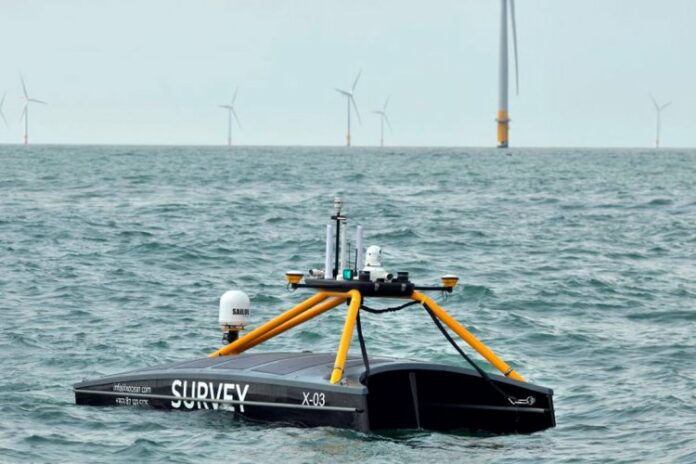
In a first for Ireland, an Uncrewed Surface Vessel (USV) was launched by XOCEAN off the Co. Louth coast last week, to undertake an environmental survey of the seabed in collaboration with Dundalk Institute of Technology (DkIT). 

This is the first time an uncrewed vessel has operated in Irish waters and represents a major step forward in reducing the carbon footprint associated with offshore survey operations. XOCEAN’s carbon-neutral approach to delivering marine data has seen demand for its services grow steadily since it commenced operations in 2019, and with clients across the globe, and revenue tripling in 2021, the company is set to continue its impressive growth trajectory in 2022.

Ireland is fast-tracking the development of its offshore wind sector in line with commitments to increase offshore wind capacity to 3.5GW as part of the government’s ambitions to deliver 70% of electricity from renewable sources by 2030, as a result of the 2019 Climate Action Plan. This environmental research survey, utilising multi-beam echo-sounder sensors will be used to characterise the seabed in this area of the Irish Sea.

XOCEAN’s USVs offer significant benefits including safety with operators remaining onshore, efficiency with 24/7 operations and environmental with ultra-low emissions which together leads to significant economic savings for customers. The uncrewed vessel is around the size of an average car (4.5 metres) and half its weight (750kg) and emits just one thousandth of the carbon typically produced by traditional offshore survey vessels. Throughout the survey, a team of qualified mariners and surveyors monitored the USV 24/7 to ensure the safety of navigation and that the highest quality data was collected.

Commenting on the project, James Ives, CEO of XOCEAN said: “Our USV platform has demonstrated itself to be a safe, reliable and low carbon solution for the collection of ocean data. We are delighted to be working in Irish waters and in collaboration with Dundalk Institute of Technology, on this important environmental project.”