-4.6 C
New York
Home Blog Page 470

Heerema awarded Ichthys LNG transport and installation contract

0

Heerema Marine Contractors is pleased to be INPEX’s contractor of choice for the transport and installation of the 4,800 metric ton Ichthys LNG Booster Compression Module (BCM). 

The module will be installed on the Ichthys Explorer Central Processing Facility, located off the northwest coast of Western Australia, as part of the Ichthys LNG phase 2 development.

This project adds to Heerema’s long record of working in Australian waters, which also includes previous work supporting Ichthys LNG. In 2020, Aegir was in Australia installing Woodside’s Pluto Alpha module. 

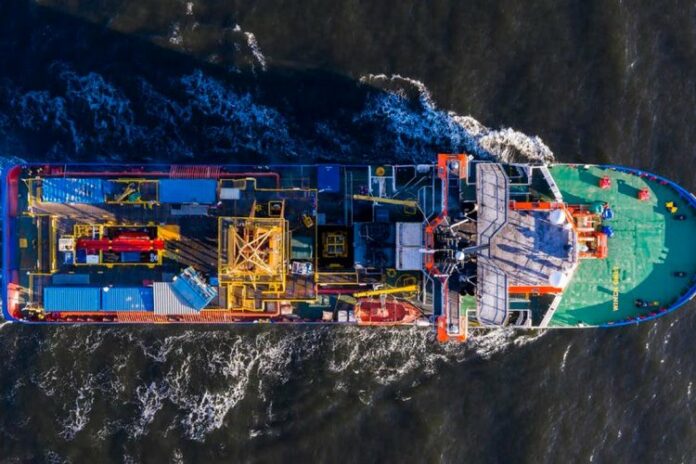
Heerema will transport the BCM from the fabrication yard on Batam Island in Indonesia to the Ichthys Field before installing it in a single lift. The module will be used to extend the production plateau of the field.

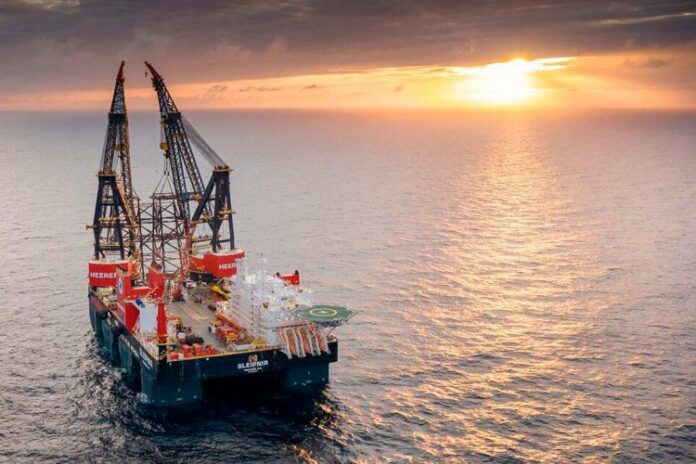
Heerema will be utilizing Sleipnir for both the transport and installation of the module. The vessel has a wide range of sustainability measures, including the use of emission-reducing LNG, which means the vessel produces 90% less NOx, 99% less SOx, and 25% less CO2 compared to running on Marine Gas Oil.

The vessel has a 20,000 metric ton lifting capacity; therefore, it is possible to optimize the BCM’s design due to the vessel’s ability to install the structure in a single lift. This action reduces the time required for platform shutdown, offshore installation, and hook-up duration. This way efficiency is increased and project risk is minimized.

Black Sea blockade: Ukraine accuses Russia of major maritime escalation

0

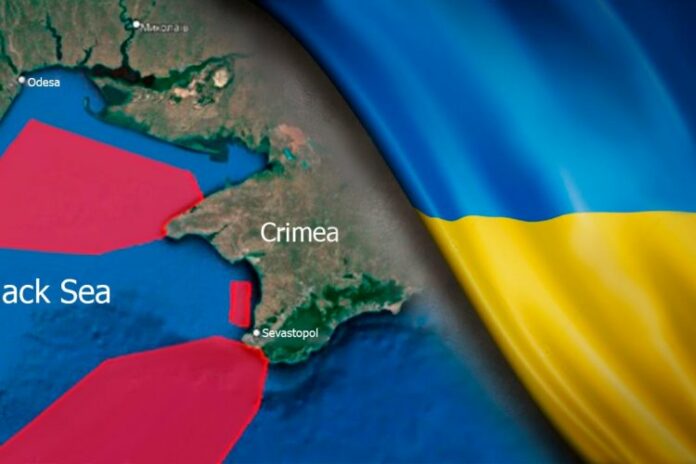
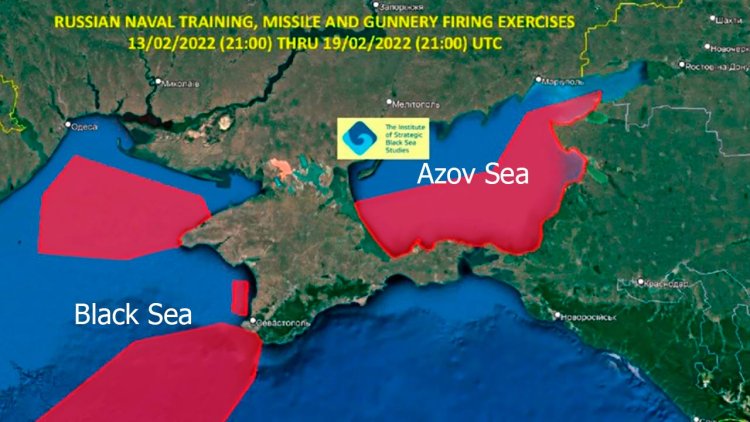
Ukrainian Foreign Minister Dmytro Kuleba said the Sea of Azov was completely blocked and the Black Sea almost fully cut off by Russian forces.

Russia has repeatedly denied any plans to invade Ukraine despite massing more than 100,000 troops at the border.

But it has just begun massive military drills with neighbouring Belarus.

Belarus is a close ally of Russia and has a long border with Ukraine.

France called the drills – believed to be Russia’s biggest deployment to Belarus since the Cold War – a “violent gesture”. Ukraine says they amount to “psychological pressure”.

The US on Thursday urged Americans in Ukraine to leave immediately due to the “increased threats of Russian military action”.

UK Prime Minister Boris Johnson said that Europe faced its biggest security crisis in decades amid the tensions.

Russia’s naval exercises will take place next week in the two seas to the south of Ukraine, the Black Sea and the Sea of Azov. Russia has issued coastal warnings citing missile and gunnery firing exercises.

Image: The map of the territories of the Azov and Black Seas, crossed by the Russian military

Ukraine’s foreign ministry said the “unprecedentedly vast area where the manoeuvres will be conducted makes navigation in both seas practically impossible”, and Defence Minister Oleksiy Reznikov tweeted that the international waters of the two seas had been blocked by Russia.

Meanwhile, the US embassy in Ukraine, tweeted that that “under the pretext of military exercises, Russia restricts Ukraine’s maritime sovereignty, limits freedom of navigation in the Black Sea/Sea of Azov, & impedes maritime traffic essential to Ukraine’s economy”.

Tensions have been high between Russia and Ukraine in the Black Sea and Sea of Azov regions since Russia annexed Crimea in 2014. In 2018, Russia seized three Ukrainian naval vessels.

The naval exercises off Ukraine’s southern flank are in addition to the 10 days of military exercises currently underway in Belarus, to the north of Ukraine.

Russia has also amassed tanks, artillery and tens of thousands of troops close to its own border with Ukraine, but denies planning to invade. The US and other Western countries have warned that an attack could come at any time.

Source: BBC

BMT wins another crew transfer vessel design contract

0

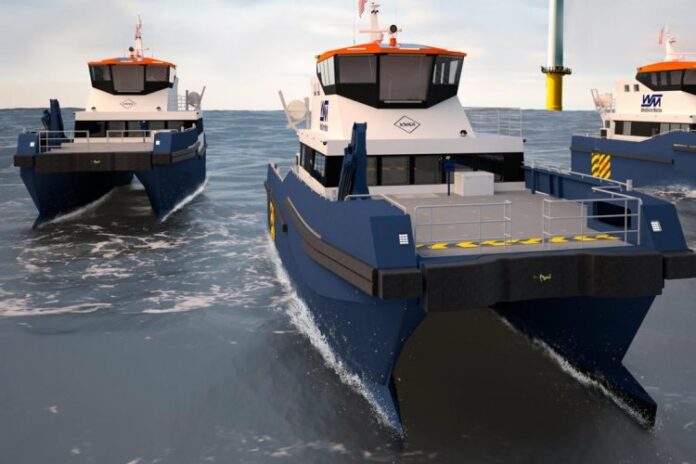
Designed by the company’s team of specialists, the 88ft (27m) CTV design features BMT’s latest innovations to maximise safety, performance, seakeeping, and fuel economy. 

Ideally suited for operating conditions on the US’ east coast, the design features a light weight Z-bow hull form to improve seakeeping characteristics as well as offer very high efficiency thereby reducing emissions.

To ensure the safest possible transfer operations, the vessel utilises a proven latest generation Active Fender System® (AFS), designed and customised by BMT, to facilitate both monopile and conventional landing tube transfers. Fitted to the bow of the vessel, the AFS operates as a suspension system which reduces impact loads and dampens the initial engagements with the turbine tower, guaranteeing successful landing in the most difficult weather conditions, and the layout is such that it can also accommodate the latest GUS technician hoisting system for increased safety. 

The vessel has also been designed to maximise crew and passenger comfort to provide the best possible environment for work in challenging conditions, and the large superstructure is fitted on resilient mounts that absorb noise and vibration and the layout offers plenty of space for 24 technicians. Below decks there are comfortable cabins able to accommodate six crew.

The vessel will also be utilised to carry and deliver cargo, with a large foredeck area to accommodate high volumes of goods The vessel is propelled by highly efficient quad Volvo IPS 900 which deliver  speed performance reaching up to 26 knots, combined with bollard thrust in excess of 15 tonnes while maintaining outstanding manoeuvrability. The three vessels will be built by Senesco in the USA under ABS classification meeting USCG sub chapter L regulations.

James Lewis, Sector Lead for offshore wind vessels in BMT’s specialised ship design team:

‘This is a fantastic project, it shows that BMT’s CTV design is very well-suited to the booming wind energy market in the USA. With over 60 vessels operating on wind farms around the world, our experience has allowed us to come up with a design that is very well tailored to the requirements, whilst providing the assurance that it will perform for the crews and technicians day to day in often challenging conditions.’

Geoquip Marine adopts Fleet Xpress for four geotechnical survey vessels

0

Inmarsat has implemented an agreement with Geoquip Marine allowing the offshore geotechnical solutions provider to offer dedicated Fleet Xpress bandwidth as part of its vessel charter arrangements and separated connectivity for personnel onboard.

Four Geoquip integrated geotechnical survey vessels have introduced Fleet Xpress Charterer Network services for sole use by charterers plus connectivity via Fleet Hotspot Wi-Fi services for those working at sea. In a set-up that is unique to Inmarsat, Fleet Xpress allows multiple networks to be connected to the vessel via a single antenna, with activation requiring no new hardware or shipboard installation work.

The vessels are currently operating off the US East Coast, off Taiwan, and in Europe. Eric Griffin, Vice President Offshore and Fishing, Inmarsat Maritime, said:

“Effectively, the client has its own private, fully secure Charterer Network to handle geo-data, and Fleet Hotspot Wi-Fi connectivity for personnel using either pre-paid or pay-as-you-go data use models. The client controls who sees the data, the Committed and Maximum Information Rates (CIR and MIR), and the analytics management.”

Nico Meijering, Head of MarineOperations, Geoquip Marine, commented:

“By using the full capabilities of Fleet Xpress, we can offer our clients their own separate network to deploy the committed and maximum information rates capacity they require. Having the ability to use multiple segregated networks in connecting to the vessel also enhances cyber security.”

Griffin emphasised:

“Being able to offer the Charterer Network service to drilling companies without adding hardware gives the Fleet Xpress user a competitive edge at the contract tendering stage. Lower speed networks need additional antennas to support a comparable service. Segregated network capability is a core capability for Fleet Xpress, activated on request. We expect others to follow Geoquip’s lead.”

Griffin added:

“Provision of a dedicated, high-speed network for crew and contractors via Fleet Hotspot offers a major enhancement to welfare on board. Inmarsat monitors use and adjusts capacity to reflect the needs of those working at sea.”

The crew is also advised on how to access SeafarerHelp and the ISWAN (International Seafarers’ Welfare and Assistance Network) portal which includes a free, confidential, multilingual chat helpline function, which is available 24 hours a day, 365 days a year.

The Charterer Network/Fleet Hotspot offer provides a new example of Inmarsat’s redoubled commitment to flexible service provision for maritime and offshore customers. It recently unveiled ORCHESTRA – the first of its kind multi-dimensional network, integrating Inmarsat’s ELERA (L-band) and Global Xpress (Ka-band) networks with terrestrial 5G, low earth orbit (LEO) capacity to meet accelerating bandwidth requirements and eliminate congestion at hot spots, including busy ports and sea canals.

Yinson signs firm contracts for FPSO Maria Quitéria in Brazil

0

Yinson, through its wholly owned subsidiaries, Yinson Production Pte Ltd, Yinson Bergenia Production B.V. and Yinson Bergenia Serviços de Operação Ltda, has signed firm contracts with Petróleo Brasileiro S.A. (“Petrobras”) for the charter, operations and maintenance of FPSO Maria Quitéria, formerly known as FPSO Integrado Parque das Baleias (“IPB”), a floating, production, storage and offloading (“FPSO”) vessel in the North Campos Basin, offshore Brazil.

This is pursuant to the two Letters of Intent (LOI) for the project that were awarded on 12 November 2021. The estimated aggregate value of the contracts is equivalent to USD5.2 billion while the contract period is for 22.5 years from the date of the final acceptance.

FPSO Maria Quitéria is Yinson’s second project award with Petrobras and the third project award in Brazil, in line with the Group’s plans to expand its presence in Brazil.

Yinson Group Chief Executive Officer Lim Chern Yuan of the project award, said:

“Brazil is a vital market to us and Yinson is thrilled that Petrobras, one of the most recognisable leaders in the energy sector, has entrusted us once more with the delivery of FPSO Maria Quitéria. We would like to thank Petrobras for placing their confidence in us and we look forward to continue building Brazil’s energy industry together.” 

Yinson Chief Executive Officer Offshore Production, Flemming Grønnegaard commented:

“The experience that Yinson has gained so far through the FPSO Anna Nery project, which was awarded by Petrobras in 2019, has proven invaluable and we are confident that this shall serve as the backbone for the successful delivery of FPSO Maria Quitéria.”

Flemming added:

“At the heart of this project is Yinson and Petrobras’ joint aspiration towards tackling world climate issues. We look forward to implementing low emission designs that were a key consideration of FPSO Maria Quitéria’s design scope and begin realising Yinson’s zero emission FPSO concept, which is an important component in Yinson’s Climate Goals Roadmap.” 

Damen Maaskant delivers Beam Trawler Avanti to Belgian fishing fleet

0

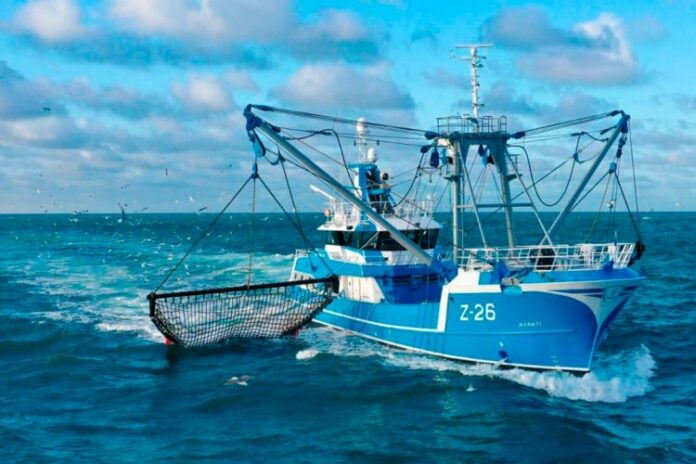
Beam Trawler Z-26 Avanti is designed for great hauling power with less fuel consumption and better seagoing properties due to reduced drag in the water. The 38-metre long fishing vessel was officially handed over to the Depaepe family of the Devan Shipping Company on Saturday 29 January in Zeebrugge, Belgium.

The design of Avanti spans the maximum length and tonnage allowed by Belgian maritime regulations. The Z-26 is the second vessel built to Damen Shipyards’ BT3808 design. Specific modifications for Devan Shipping Company make the vessel specifically suited to the Belgian fishing company’s methods – without customisation, Damen Maaskant would not live up to its name. It was built to the latest standards of comfort, technology, sustainability and the customer’s wishes.

Project manager John van der Maas. New and unique on this fishing cutter is the cold room instead of refrigerators for provisions, says:

“Devan Shipping Company aimed for a highly efficient and profitable ship. Damen Maaskant modified the design together with SIP Marine to reduce fuel consumption and increase hauling power. The ship also has an imprinted anode system on board, ICCP, eliminating the need for anodes on the hull. This has the main effect of reducing drag. Cooperation with all subcontractors went like a well-oiled machine. This ultimately lead to an excellent end result.”

The hull was built and launched in Gdansk in Poland and then finished at the yard in Stellendam. The trawler was quickly finished within the agreed timeframe despite all the consequences of the pandemic.

Steve Depaepe, owner of Devan Shipping Company, is impressed. Depaepe:

“As a 14-year-old boy, I already dreamed of a real Maaskant Beam Trawler. Childhood dreams come true in Stellendam. A new fishing cutter for our Flemish fleet gives young fishermen hope for a future at sea and inspires new childhood dreams. My captain and crew are eager to go to sea with this magnificent vessel, equipped for comfortable and safe fishing trips.”

Port of Antwerp deploys drones to detect floating debris

0

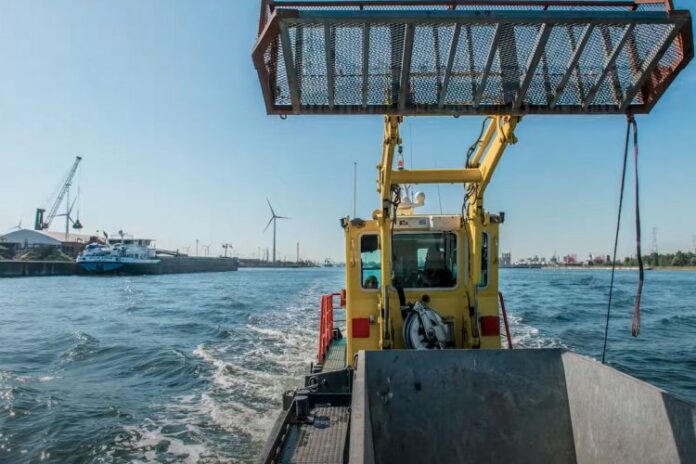
Floating debris does not belong in the port of Antwerp. To detect and clean this up as quickly as possible, Port of Antwerp is deploying drones. It is just one of the innovative digital solutions that should make the port future-proof. 

Every year, about 50 tonnes of floating debris are collected from the docks in the port of Antwerp. This debris is made up of plastics, wood, cardboard, organic material and mooring lines. To reduce water pollution, impact on biodiversity and damage to ships, it is important to detect and clean up this waste as soon as possible.  But since the total port area covers more than 120 km², many eyes are needed to screen this gigantic area.

Thanks to the unique bird’s eye views they provide, drones can make a significant contribution to detect floating debris. This is why Port of Antwerp has developed a “machine vision” application that, based on drone images, automatically builds a map that indicates where floating debris is present. With the use of drones, which will soon be flying over the entire port several times a day, floating debris can then be located and cleaned up more quickly and efficiently.

According to Port of Antwerp, the use of drones will play an increasingly important role in the port of the future. The ambition is to develop a network of autonomous drones that can provide a ‘live feed’ of the various port activities and support the Harbour Safety & Security (HSS) unit and its security partners as much as possible.

The types of tasks that can be performed include inspecting infrastructure, surveillance and monitoring, incident management, berth management and the detection of oil spills or floating debris. To stream images from the drones in real time, 5G will be used in the future. This is already happening in incident management, as was the case last year when the fire department was supported by a live stream of drone footage via the 5G network to deal with a fire in the port area. Thanks to a combination of colour and infrared images, the fire department gained a better idea of the location of the fires.

Minister of Telecommunications Petra De Sutter:

“I see a glimpse of the future here in the port of Antwerp. Drones that keep the port clean and safe. It is a good example of how digitalisation, a clean environment and the fight against climate change can go hand in hand. I am really looking forward to the further added value that 5G can offer in terms of ecological applications. With the help of 5G, a drone can transmit very large amounts of data without any problem. This is not only good for the environment. Also for safety. The port is close to the city. If there is a fire, the thermal cameras can immediately help the fire brigade.”

Petronas collaborates with MOL on liquefied CO2 transportation

0

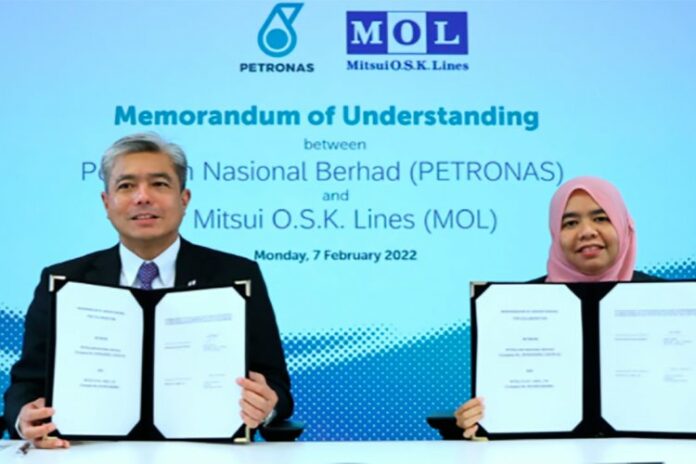
PETRONAS has signed a Memorandum of Understanding (MoU) with leading global shipping company Mitsui O.S.K. Lines, Ltd. (MOL) to jointly explore opportunities in liquefied carbon dioxide (CO2) transportation for the carbon capture, utilisation and storage (CCUS) value chain in Asia Pacific and Oceania regions. 

The MoU was signed in a virtual ceremony on 7 February by PETRONAS Executive Vice President and Chief Executive Officer of Upstream, Adif Zulkifli and MOL President and Chief Executive Officer Takeshi Hashimoto. 

Adif said:

“PETRONAS continuously explores opportunities to reduce carbon emissions in our operations. This collaboration is important as long haul liquefied CO2 transportation plays an essential role in the CCUS value chain.”

During the MoU signing, PETRONAS was represented by Executive Vice President and Chief Executive Officer of Upstream, Adif Zulkifli and Head of CCS Enterprise, Nora’in Md Salleh while Mitsui O.S.K Lines was represented by President, Chief Executive Officer, Takeshi Hashimoto.

CityU study reveals poorly discarded surgical masks threaten marine ecosystem

0

Surgical masks have been part of essential personal protection during the COVID-19 pandemic. However, the inappropriate disposal of surgical masks can cause serious microplastic pollution, equivalent to seriously polluting more than 54,800 Olympic-sized swimming pools of seawater annually, researchers from City University of Hong Kong (CityU) discovered.

This can also affect the growth and reproduction of marine organisms and the food chain. The research team urged the public to dispose of their used masks properly and highlighted the importance of better environmental management, by formulating corresponding policies and law enforcement to ensure the proper disposal of surgical masks.

The research team was led by Dr. Henry He Yuhe, Assistant Professor in CityU’s School of Energy and Environment (SEE) and a member of the State Key Laboratory of Marine Pollution (SKLMP). The findings were published in the academic journal Environmental Science and Technology Letters, titled “Release of Microplastics from Discarded Surgical Masks and Their Adverse Impacts on the Marine Copepod Tigriopus japonicus.”

The research team cited an estimate by a US environmental protection organization that global demand for surgical masks reached 129 billion per month by 2020. And some research estimated that owing to the lack of proper collection and management policies, 1.56 billion masks were inappropriately released into the ocean in 2020.

Dr. He. Microplastics are usually smaller than five millimeters and can take hundreds of years to degrade in the ocean, said:

“Polypropylene (PP) is the main material widely used in surgical masks. It is a kind of commodity plastic that can break down under the effects of heat, wind, ultraviolet radiation, and ocean currents, eventually forming microplastics.

Since all the masks are made of plastics and may be releasing microplastics, improperly discarded masks will affect the marine environment. I believe this problem will continue for many years in the post-pandemic era.”

To figure out the extent and magnitude of this pollution issue and its potential impact, Dr. He and his team collected discarded masks from a beach in Hong Kong to investigate the release of microplastics from polypropylene surgical masks in seawater.

The team conducted experiments in the laboratory to mimic the natural process of microplastics being released from discarded masks. They soaked the masks in a bottle with artificial seawater and shook them continuously using a mechanical shaker for nine days. Under a microscope, they observed significant damage to the mask fibers.

After analysis, the team discovered that a mask weighing about three grams released about 3,000 microplastics. They estimated that 0.88 million to 1.17 million microplastics would be released during a mask’s complete decomposition.

Since about 1.56 billion masks ended up in the ocean in 2020, the team estimated that more than 1,370 trillion microplastics were released in the coastal marine environment from all the surgical masks improperly discarded during the year.

Dr. He added:

“This amount of microplastics can seriously pollute 137 million cubic meters of seawater, which is equivalent to filling up more than 54,800 Olympic swimming pools.”

The team also evaluated the chronic toxicity of microplastics on copepods (Tigriopus japonicus), a small marine crustacean. In their experiment, the copepods were exposed to artificial seawater containing up to 100 microplastics per mL. The microplastics were ingested and accumulated in the intestines of the marine copepods. Compared to copepods not exposed to microplastics, the reproduction fecundity of those that were exposed to 100 microplastics per mL was reduced by up to 22%, and the maturation development time was 5.6% longer.

Dr. He explained that as one of the most abundant classes of zooplankton and the main food source of other small animals in the marine environment, copepods play a critical role in the bioaccumulation of contaminants in the food chain. Microplastics can enter the bodies of higher-level marine organisms, such as fish and shrimps, if they consume copepods with microplastics accumulated in their bodies. The higher the animals are in the food chain, the more microplastics accumulate, resulting in potentially harmful effects.

In addition, the reduced fecundity of copepods can lead to a reduction in food resources for higher marine organisms, threatening the balance of the marine ecosystem.

Dr. He pointed out that microplastics released from masks can also act as vectors for other pollutants, like plasticisers, in the marine environment and might have a cumulative effect on marine organisms.

The team believes that their research findings significantly demonstrate that the inappropriate disposal of surgical masks can have a long-term domino effect on coastal marine ecosystems, which requires more attention and further study. To minimize the risk of this emerging threat, better environmental management, policies and law enforcement are needed to ensure the proper disposal of surgical masks. The research team urges everyone to dispose of their used masks properly to prevent the pollution of microplastics in the marine ecosystem.

Future Proof Shipping joins FLAGSHIPS green hydrogen project

0

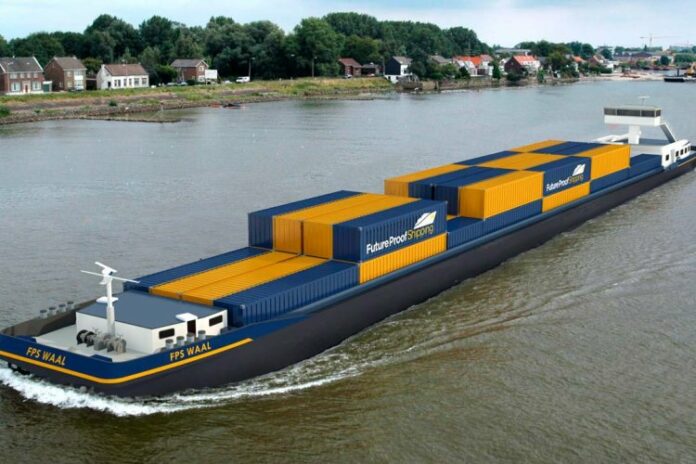
Future Proof Shipping (FPS) has joined FLAGSHIPS, a leading European innovation project, to bring the shipping company’s second zero-emissions inland container vessel, the FPS Waal, to Europe’s waterways.

FPS will strengthen the FLAGSHIPS consortium and expand its green hydrogen-fueled fleet with the addition of the FPS Waal to the project. Collaborative operations are set to commence this year with the vessel sailing on green hydrogen by summer 2023.

The FLAGSHIPS consortium aims to raise the readiness of zero-emission waterborne transport to an entirely new level by deploying two commercially operated zero-emission hydrogen vessels in the coming years.

Over the coming months, FPS will work closely with world-leading fuel cell technology experts Ballard Europe, ship design company LMG Marin, and project coordinators VTT. Together, they will collaborate across a broad range of activities to complete the engineering, fuel cell provision, and safety studies required for the vessel’s approval, by applying and further developing the existing regulatory guidelines.

Jyrki Mikkola, FLAGSHIPS Project Coordinator – VTT Technical Research Centre of Finland, said:

“The demand for more sustainable technologies in inland waterway transport is on the rise. With FPS joining us, we have two groundbreaking vessels part of the FLAGSHIPS project. We aim to raise the readiness of zero-emission waterborne transport in Europe, this truly brings us closer to reaching our goal.” 

The power capacity, size and design of the propulsion system for the FPS Waal will need to be optimised to handle the higher energy consumption rates on the Rotterdam to Duisburg section of the Rhine. Future Proof Shipping has already been in discussions with several cargo owners interested in shipping their containers without emissions on this route and who are aiming to move a large part of their sea cargo to inland water transportation.

Richard Klatten, CEO – Future Proof Shipping, said:

“We are deploying our second zero-emissions vessel here to help decarbonise this busy stretch of 240 kilometre inland waterway. This route is longer and has significantly higher and varying power demands than the route for the FPS Maas, pushing this project team to elevate their innovation efforts considerably. These are new challenges that we are ready to take on together with the FLAGSHIPS team to blaze a new trail towards zero-emissions inland shipping for all.” 

Bart Biebuyck, Executive Director – Clean Hydrogen Partnership, said:

“Inland waterways are important for freight transport in Europe and therefore I am pleased to see a high power container vessel being converted to zero-emission. The FPS Waal conversion will bring knowledge on how to retrofit vessels from diesel combustion to zero-emission alternatives by using battery in combination with green hydrogen in a fuel cell. A key aspect is the replicability of this zero-emission retrofit to similar vessels”. 

Similar to the FPS Maas, Future Proof Shipping aims to retrofit the FPS Waal (109,8 x11,40 x 3,53 m) to sail 100% emission-free. During the retrofit, the internal combustion engine will be removed, and the new zero-emissions propulsion system including PEM fuel cells, hydrogen storage, battery packs and an electric drive train will be installed. The total amount of power installed will be around 1200 kW and the vessel will have a cargo capacity of 200 TEU after the retrofit.