-0.7 C
New York
Home Blog Page 468

Study reveals sunlight can help dissolve oil into seawater

0

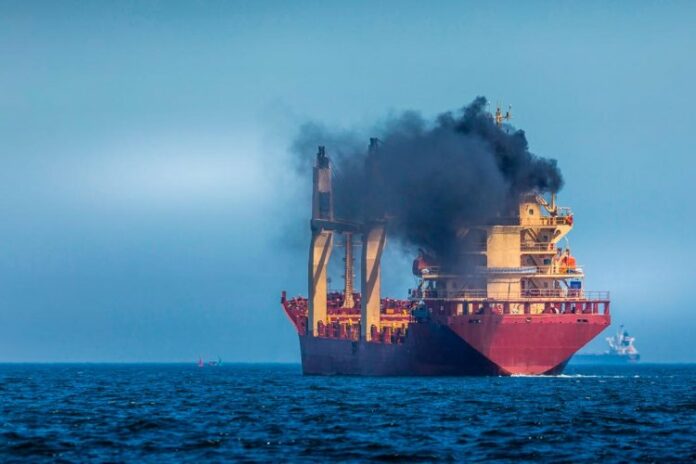
The 2010 Deepwater Horizon oil spill was the largest marine oil spill in United States history. The disaster was caused by an explosion on the Deepwater Horizon oil rig, taking 11 lives and releasing nearly 210 million gallons of crude oil into the Gulf of Mexico. Twelve years and hundreds of millions of dollars later, scientists are still working to understand where all this oil ended up, a concept known as environmental fate.

The most commonly discussed fates of oil spilled at sea are biodegradation (microorganisms consuming and breaking down the oil), evaporation (liquid oil becoming a gas), and oil stranding on shorelines.

But a team of Woods Hole Oceanographic Institution (WHOI) researchers have discovered that nearly 10% of the oil floating on the Gulf after the Deepwater Horizon disaster was dissolved into seawater by sunlight, a process called “photo-dissolution.” The findings were published today in the paper “Sunlight-driven dissolution is a major fate of oil at sea” in Science Advances.

Co-author Collin Ward, assistant scientist in WHOI’s Marine Chemistry and Geochemistry Department, said:

“The amount of oil that was transformed by sunlight into compounds that dissolved in seawater during the 2010 Deepwater Horizon spill rivals that of commonly accepted oil fates, like biodegradation and stranding on shorelines.”

Lead author Danielle Haas Freeman, Massachusetts Institute of Technology/WHOI Joint Program student, said:

“One of the most fascinating aspects of this finding is that it might impact our understanding of where else the oil is going, and whether the result is good or bad. If this sizable fraction of oil is being transformed by sunlight and is dissolving into seawater, that might mean that less oil is ending up in other places, like sensitive coastal ecosystems. However, we have to consider the impacts of the compounds on marine organisms before we can decide if the net result is positive or negative.”

To arrive at this important finding, Freeman and Ward used custom-built light-emitting diode (LED) reactors to measure how the rate of this oil fate varies for different types of light, such as ultraviolet and visible light.

Ward said:

“The process of oil photo-dissolution has actually been known for over fifty years. But what’s new here is our understanding how this process varies with light wavelength, which we determined using the LED reactors. This is the key piece of information that allowed us to estimate the importance of this process during a spill.”

The novel measurements using the LEDs also provided an opportunity to determine which conditions were most important in controlling this process. The team created hypothetical spill scenarios with varying oil slick thicknesses, times of the year, locations around the world, and types of light. What they noticed was that some of these changing conditions mattered more than others.

Freeman said:

“The importance of this process changes dramatically if you are looking at thin versus thick oil slicks. We also found, contrary to popular belief, that this process is relevant in Arctic waters, a particularly important finding given the expected increase in cargo ship traffic and heightened risk of spills in that region. This kind of modeling is critical when forecasting spills and considering the impacts on marine ecosystems.”

The notion that ocean surface oil could have a new fate is monumental for framing the future of oil spill studies and spill response tactics. It is currently unknown what the fate and potential toxicity of these sunlight-produced compounds are, posing a challenge in assessing the impacts of this oil fate. Freeman and Ward encourage the field to gravitate towards these gaps in knowledge.

Ward said:

“While our findings suggest that a substantial fraction of surface oil can dissolve into the ocean after sunlight exposure, a logical next step is to evaluate its persistence and potential harm to aquatic animals.” 
ORIX begins providing sustainability-linked loans for ship finance

0

Under this sustainability-linked loan, a standard value is set for the annual CO2 emissions of the vessels to be financed, and if the annual CO2 emissions of the vessels after the loan has been granted is below the standard value, a preferential interest rate is given for the following year.

CO2 emissions will be calculated by Nippon Kaiji Kyokai (ClassNK) to ensure objectivity and fairness. This is ORIX’s first initiative of ship finance supporting sustainability and the decarbonization of marine transportation through finance.

ORIX began a secondhand ship leasing business in Japan in the latter half of the 1960s and has been carrying out ship finance internationally since the first half of the 1970s. For more than 50 years, ORIX has been acquiring shipping-related expertise from ship finance, investment (owning and operations), sale & purchase and brokerage, including through the establishment in 1977 of Perseus Shipping Co., Ltd. (now ORIX Maritime Corporation), a company which operates vessels. Currently, ORIX owns a number of vessels, mainly bulk carriers, and provides them to first-class companies such as grain trading houses and power companies worldwide.

Last year, ORIX Group established new ESG-related “Material Issues” and “Key Goals” as part of its initiatives to promote sustainability.
Some of ORIX’s other initiatives in the ship business include placement of an order for an eco-ship*2, reducing food loss at sea, and the provision of donations to Filipino crew members affected by typhoons. ORIX will continue to use the experience and expertise it has cultivated to promote initiatives that lead to sustainability, such as the decarbonization of marine transportation.

Bangchak invests in UK-based “hydrogen” focused start-up “Transitus”

0

Bangchak Corporation Public Company Limited invests in future clean energy business, Transitus Energy Limited (Transitus Energy), United Kingdom, through its subsidiary BCP Innovation Pte. Ltd. (BCPI), increasing the share of green businesses and reducing carbon dioxide emissions toward its Net Zero target.

Mr. Chaiwat Kovavisarach, President and Group Chief Executive Officer, Bangchak Group, revealed that BCP Innovation Pte. Ltd. (BCPI) recently signed initial financial commitment with Transitus Energy, a UK-based clean energy business, with BCPI as the main investor with a 40% capital stake. He said:

“Bangchak is accelerating our policy of investing in world-changing business, such as hydrogen, carbon capture, utilization and storage (CCUS), which are critical technologies that will help the world transition to zero greenhouse gases emissions in the coming decades.

Hydrogen will be a major enabler of pollution-free energy in the future, with natural gas as a transitional energy source from which hydrogen can be refined (natural gas is a hydrocarbon mixture having both hydrogen and carbon). Blue Hydrogen is when natural gas is split into hydrogen and CO2, and the separated CO2 is stored in depleted natural gas fields or aquifers. Transitus intends to repurpose mid-to-late-life natural gas fields in the North Sea, operate carbon dioxide storage assets developed from depleted gas fields and aquifers, and transition natural gas production to blue hydrogen, and finally to re-engineer infrastructure to produce green hydrogen.”

Jack Peck, CEO of Transitus Energy commented that:

“Hydrogen will be our best chance of reaching Net Zero carbon targets, because hydrogen decarbonises those parts of the economy that electrification cannot meet. Hydrogen is especially suitable for domestic and industrial heating, long distance transportation, industrial manufacturing, shipping, air travel, and power balancing. The objective of Transitus Energy is to repurpose the enormous expertise from the North Sea energy sector towards rapid and immediate decarbonisation in order to accelerate the energy transition. The Transitus team is experienced in developing industrial companies and has a complementary skillset within all aspects of oil and gas operations, refining and hydrogen operations, as well as business development, finance and society issues.”

Equinor extends drilling contracts on the Norwegian continental shelf

0

The contracts include drilling, completion, intervention services, plugging, maintenance and modifications on 19 of Equinor’s permanent installations, maintaining strong ripple effects.

The four-year agreements were signed in 2018. Exercised for two years from the end of 2022, the options cover the same scope of work as previously regulated by contract. The contracts provide jobs for around 2000 people each year.

Erik Gustav Kirkemo, senior vice president for drilling and well operations, says:

“We have had a long-term and good cooperation with the suppliers, with safe and efficient operations as our top priority. These contract extensions will help ensure predictability for the parties and safe and efficient well deliveries. Together with our suppliers we want to develop these services further to ensure long-term value creation from our installations.” 

Mette Halvorsen Ottøy, chief procurement officer, says:

“The contracts and services have been developed in close cooperation with our suppliers over several years and will help ensure common competitiveness and sustainable activity level. We appreciate suppliers who, in addition to being competitive, help develop our industry further.”

KOTUG starts with zero-emission transportation from Amsterdam to Zaandam

0

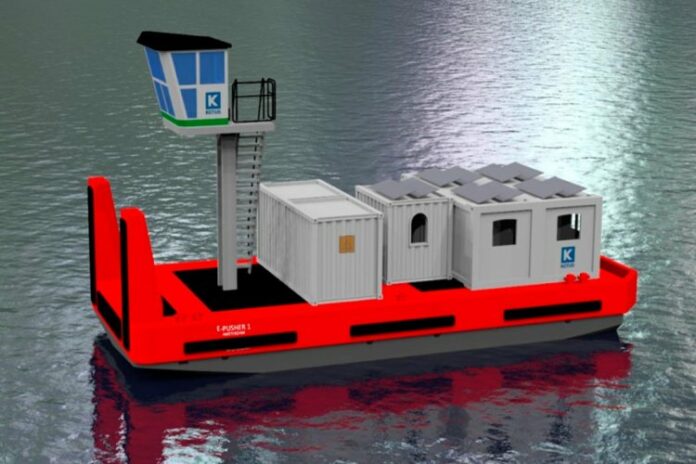
The vessel is equipped with swappable battery energy containers from Shift Clean Energy (Shift), which is part of the revolutionary design of the vessel and will utilize Shift’s unique battery swapping and charging stations.

Cargill will be the first company with this fully electrified industrial setup for inland shipping. With the 100% electric E-Pusher, KOTUG supports companies that want to build more resilient and sustainable supply chains. The modular and scalable electric pusher tug is powered by swappable energy containers. With this zero-emission solution, KOTUG supports the worldwide energy transition and the modal shift from road transport to waterways. 

Furthermore, due to the modular approach and lean assembly method, KOTUG reduced the construction time by more than half compared to traditional pusher boats. The E-Pusher type M can push barges with up to 4.000 tons of cargo. The E-Pusher Series consists of three types: Small, Medium and Large, respectively for transportation in inner cities, over short distances and the larger inland waterways.

By using barges, the E-Pusher concept contributes to a more efficient operation compared to traditional vessels. Efficiency is also achieved with the swappable energy container from SHIFT Clean Solutions; changing the container at one of the battery hubs on-the-go is done in a few minutes. In addition, empty batteries can be recharged at night, taking advantage of possible energy surpluses in the grid.

Shift provides swappable energy containers that utilize its zero-emission ESS battery systems which range from 70kWH to 6MWh. These modular ESS battery systems are charged through clean power generation from (bio)gas, hydrogen, and other renewable energy sources either onboard the vessels or at Shift’s dedicated PwrSwäp energy stations. By swapping these ESS battery systems, uptime is maximized for the vessel owners.

Ard-Jan Kooren, President & CEO of KOTUG International:

“We launched the E-Pusher concept in 2021, and the smaller type, the E-Pusher S (the ‘CityBarge One’), is already successfully deployed in several inland waterways and cities. I am very proud that an international company like Cargill is our first customer for the E-Pusher type M. The vessel is designed for transportations like these and guarantees zero-emission logistics and a significantly approved efficiency. As a result, we can support a broad range of industries to turn a part of their supply chain emission-free without extra costs. The applications of the E-Pusher are endless and vary from the transportation of (construction) waste to construction materials to all kinds of products and packages.”  

Paul Hughes, President & Co-Founder Shift Clean Energy:

“We are thrilled to partner with KOTUG for the supply of the swappable batteries for the revolutionary E-Pusher™ type M. With our PwrSwäp charging stations along the route, as part of the broader Amsterdam-Rotterdam-Antwerp route, we can eliminate any concerns on range anxiety. In our opinion, overcoming this important hurdle will open the door to large-scale electrification of vessels, and thus to zero-emission water transportation. Our PwrSwäp charging stations will be multi-fuel and open access and will provide an important infrastructure improvement for ports and cities as they progress their emissions reduction programs. This is a great start.”

Alma Prins, Head Cargo and Offshore at Port of Amsterdam:

”I applaud these kinds of developments and initiatives. As the largest cocoa import port in the world, many cocoa beans arrive here in Amsterdam. It’s great that these can be transported emission-free between the warehouses in our port and the Cargill factories in Zaandam. We want to move towards a climate-neutral port, so the fewer emissions, the better.”

Costa Cruises restarts with the entire fleet in 2022

0

Costa Cruises continues its gradual restart plan for 2022. From 5 March, the date on which the new Costa Toscana, star of the recent edition of the Sanremo Music Festival, will set sail for her first cruise, an increasing number of the company’s ships will return to service,  joining those already sailing. 

Next summer, the company’s entire fleet will resume operations, with all four of the new ships delivered in recent months – Costa Toscana, Costa Smeralda, Costa Firenze and Costa Venezia – deployed in the Mediterranean. Also, for the summer period, with the hope of favorable regulations, the company is planning to carry out again shore excursions in free mode, and, in light of the gradual relaxation of the measures in place, is working to be able to make them already available as early as this spring.

Costa’s program includes a total of more than 1,800 cruises from spring 2022 to winter 2022-23, allowing guests to discover 179 destinations around the world, with cruises lasting from 3 to 127 days. 

Roberto Alberti, SVP & Chief Commercial Officer of Costa Cruises, said:

“We are seeing the growth in demand for holidays, and I am sure that this trend will increase further in the coming weeks. We think our offer is the best ever, thanks to elements that combine unique experiences, both onboard and ashore.”

After Costa Toscana, Costa’s restart program includes Costa Favolosa on April 28, with “mini cruises” in the Mediterranean, Costa Venezia on May 1 from Istanbul, with a new and one-week itinerary in Turkey and Greece, and Costa Smeralda on May 7, offering a one-week itinerary in the western Mediterranean. Costa Pacifica will resume operations on June 4 from Bari, exploring Greece and Malta. The two-week cruises to the Canary Islands and the Azores, originally planned with the Costa Pacifica in April and May, will be carried out by Costa Luminosa, while Costa Fortuna will return operating in Northern Europe on June 12.

In summer 2022, the sister ships Costa Smeralda and Costa Toscana, powered by liquefied natural gas, together with the Costa Firenze, will offer week-long cruises in the western Mediterranean, while Costa Venezia will continue with her new itinerary in Turkey and Greece, departing from Istanbul. 

Costa Pacifica, Costa Deliziosa and Costa Luminosa will be operating in the Eastern Mediterranean with one-week cruises. Four ships, Costa Fortuna, Costa Favolosa, Costa Fascinosa and Costa Diadema, will be deployed in Northern Europe, visiting the Baltic capitals, the Norwegian fjords, the North Cape and Iceland.

FuelTrust announces the launch of Carbon Baseline

0

FuelTrust, the technology company dedicated to creating a trusted and sustainable fuel ecosystem for the maritime industry, today announces the launch of Carbon Baseline. Carbon Baseline is an AI-enabled solution that delivers a detailed and verified baseline assessment of historical vessel and fleet emissions.

As shipping progresses towards its 50% carbon reduction target in 2050, progress of individual vessels towards this goal will be assessed based on historical baselines going back to 2008. Finance decisions, tax levies and ESG reporting will all be driven by this assessment of vessel performance and could result in major financial implications. Owners with a detailed and verified baseline assessment of historical fleet emissions, based on scientific analysis, will have a commercial and ESG compliance advantage over those using current emissions models that can only estimate performance.

FuelTrust’s Carbon Baseline service uses cloud-based AI and blockchain technology to deliver a validated historic carbon baseline in weeks, not months, at lower cost. The patent-pending AI Digital Chemist™ uses historical operational data to calculate prior-year GHG emissions profiles for a vessel or fleet.

With a validated historic carbon baseline, owners can increase charter pricing for validated green ships, certify applications for carbon credits, and with FuelTrust’s independent emissions scoring, seek lower carbon taxes and fees globally.

Current emissions models offer only rough estimates, based on generic models that don’t account for chemical interactions, source fuel data, or supply and delivery chain impacts. Many also require massive amounts of manual input, or the installation of costly, high-maintenance devices aboard vessels.

FuelTrust uses its AI Digital Chemist™, which provides calculations based on a simulation of combustion at a molecular level, which considers differences between batches of fuels that current emission models cannot.

Darren Shelton, Chief Product Officer at FuelTrust, said:

“With Carbon Baseline, class or flag authorities can be provided a more accurate, third-party verified report on the emissions reductions actually achieved, meaning the fleet owner, their customers and their investors can benefit.”

Shelton continues:

“Exact calculation is essential for the industry as not all fuels are created equal. Recent studies have shown that, for example, there can be an energy density difference of up to 3% between batches of the same fuel. There is also a significant carbon difference between batches. By offering this higher level of granularity in our data, we can give owners and charterers a far better picture of what their GHG performance has been in the past and what will be in the future.”

Carbon Baseline outputs a blockchain certificate for its findings, creating a fixed-in-time record that makes it easier for fleets to apply for carbon credits.

FuelTrust’s blockchain platform provides data security with encrypted and permissioned access, so only owners can authorize who views their data. In this way, FuelTrust makes it simple for ship owners and charterers to monitor and manage emissions, continue to adopt more sustainable practices, and benefit from all historic actions they have taken.
 

Wartsila to supply engines for LNG-fuelled RoPax vessels in Poland

0

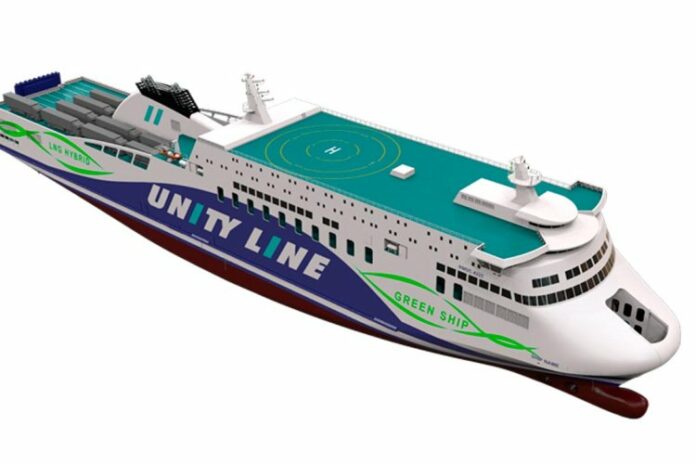
The technology group Wärtsilä has been contracted by Remontowa shipyard in Poland to supply engines, fuel storage and supply systems for three new RoPax vessels, the first LNG-fuelled RoPax vessels to be built for the Polish maritime sector. The contract with Wärtsilä was signed in January 2022.

The vessels will each operate with four highly efficient Wärtsilä 31DF dual-fuel engines. The LNG-fuelled engines can use bio-LNG, either on its own or blended with conventional LNG, to further reduce their carbon footprint. The operators intend to run the vessels entirely on bio-LNG by 2025.

The efficiency of the Wärtsilä 31DF engine was a key consideration in the award of this contract. The diesel version of the engine has been recognised by Guinness World Records as being the world’s most efficient 4-stroke diesel engine. Wärtsilä will also deliver its LNGPac fuel storage, supply, and control system.

Grzegorz Wardzyński, Technical Director of Polsteam, the parent company of Unity Line, says:

“High efficiency and sustainability are essential in today’s operating environment, especially in the Baltic Sea which is an Emissions Control Area. The Wärtsilä 31 engine represents the latest engine technology available and this, coupled with Wärtsilä’s vast experience in LNG solutions, made the choice easy for us.”

Matthias Becker, General Manager, Sales, Wärtsilä Marine Power, says:

“Decarbonisation is a front and centre issue for the maritime sector, and this focus is reflected in the choice of the Wärtsilä engines for these ferries. Optimal engine performance is essential in maximising fuel efficiency and minimising exhaust emissions. These new vessels will become an important part of Poland’s transport infrastructure, and we are proud to be a partner to this project.”

The vessels will have an overall length of 195 metres and will be capable of carrying 400 passengers, with 4,100 lane metres for vehicles. They will operate between Swinoujscie in Poland and the Swedish ports of Ystad and Trelleborg.

MacGregor selected to supply FPSO offloading systems for CNOOC’s project

0

The contract has been awarded following the successful cooperation and delivery of the mooring system and riser pull-in system for CNOOC’s Lingshui 17-2 project.

The order was booked into Cargotec’s 2021 fourth quarter order intake. The offloading systems are planned to be delivered to Offshore Oil Engineering’s construction site located in Qingdao, China in January 2023.

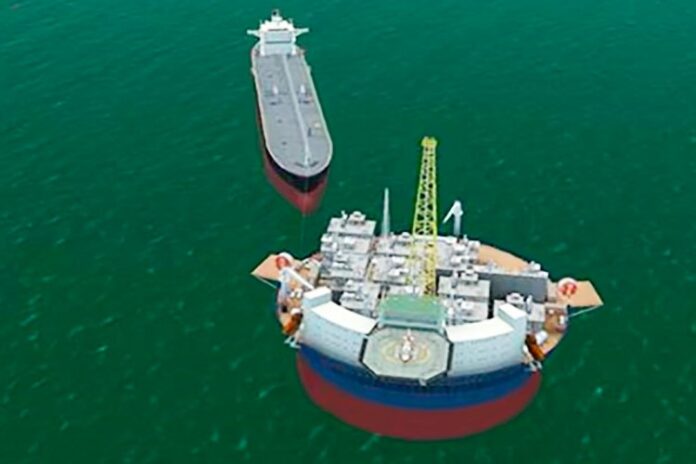
This is China’s first 60,000T cylindrical FPSO, and MacGregor’s offloading systems will play a critical role in ensuring the safe and efficient discharge of oil from the FPSO to a shuttle tanker.

The offloading systems will be customized to store either a 16-inch catenary hose or a 16-inch floating hose that allows the operator flexibility with shuttle tanker selection. The rated oil flow is up to 3600 m3/h for each offloading system. The two sets of offloading systems share a common hydraulic power unit, with this redundant solution providing high-efficiency operation.

Tor Eide, Vice President, Offshore Energy Solutions, MacGregor, says:

“During the past two years we have delivered the 16-point mooring system, the north and south modular riser pull-in system for the CNOOC Lingshui 17-2 project in the western part of South China Sea. Despite unprecedented challenges and difficulties caused by the Covid situation, our teams from China, Singapore and Norway worked together to achieve delivery punctuality and continuous responsive service, which was highly recognised by the CNOOC project team.”

“Based on the trust gained and many years of excellent cooperation, we are proud to again have the opportunity to support CNOOC’s gas field development and make our contribution to the Liuhua 11-1/4-1 project.”

McDermott awarded its largest ever renewable energy project by TenneT

0

McDermott International has been awarded its largest ever renewable energy contract from TenneT for the BorWin6 980MW High-Voltage, Direct Current (HVDC) project. Through a consortium with Global Energy Interconnection Research Institute Co., Ltd. and C-EPRI Electric Power Engineering Co., Ltd. (GEIRI / C-EPRI), McDermott will provide engineering, procurement, construction, installation and commissioning (EPCIC) services.  

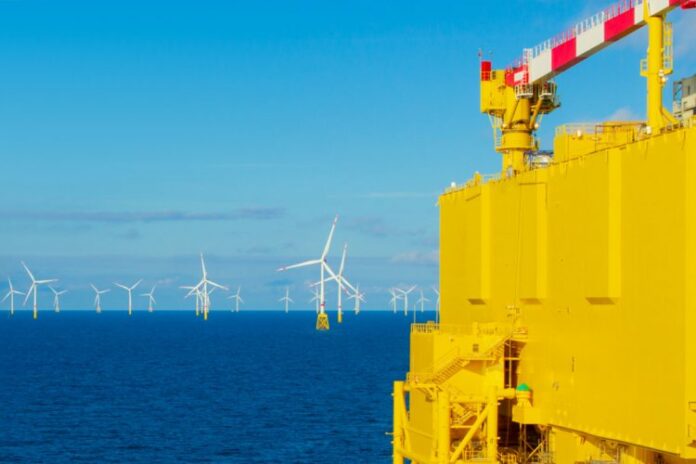
The project is for the design, manufacture, installation and commissioning of an HVDC offshore converter platform, located 118 miles (190 kilometers) offshore Germany on the Platform North Sea Cluster 7 in a water depth up to 131 feet (40 meters). Electricity generated from offshore wind farms will be converted into direct current and transported to an onshore converter station located 28 miles (45 kilometers) onshore near Büttel, Germany.

Samik Mukherjee, McDermott’s Executive Vice President and Chief Operating Officer, said:

“This major EPCIC award elevates our growing energy transition portfolio and signifies our expansion into the thriving offshore wind market, further strengthening our global ambitions in the renewables sector.”

McDermott will lead the consortium with GEIRI / C-EPRI through an integrated execution model utilizing McDermott’s extensive global engineering centers and strategically located fabrication yards. The consortium will leverage McDermott’s extensive project management, engineering, global procurement and fabrication expertise and GEIRI / C-EPRI’s proven HVDC experience and world-class network solutions.

Tareq Kawash, McDermott’s Senior Vice President, Europe, Middle East, Africa, said:

“Our integrated EPCIC delivery model, combined with nearly a century of experience executing some of the most challenging offshore projects in the world, make us ideally suited to support TenneT on this important offshore grid connection project. Additionally, our HVDC Center of Excellence in The Hague is strategically positioned to lead our execution delivery in the European market.”

On the HVDC offshore platform, McDermott’s scope includes the engineering, procurement, fabrication, transport and installation and commissioning of the topside module and jacket. On the onshore converter station, McDermott’s scope includes the engineering, procurement, construction and commissioning.

GEIRI / C-EPRI’s scope includes the engineering, manufacture, supply, installation supervision and commissioning of the HVDC system for the onshore and offshore converter stations.

The engineering and project management will be executed from McDermott’s HVDC center of excellence in The Hague with support from its Chennai and Gurgaon offices. The fabrication of the topside is planned to be executed by the Qingdao McDermott Wuchuan (QMW) Fabrication Facility in Qingdao, China, and the jacket from McDermott’s Batam fabrication yard in Indonesia.