-0.7 C
New York
Home Blog Page 467

ZELEROS will test the hyperloop technology in the Port of Sagunto

0

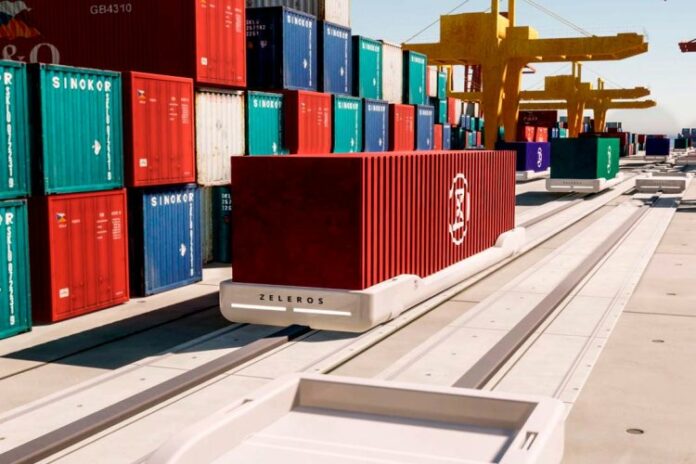
ZELEROS, the Valencia-based European company leading the development of a hyperloop transport system, will build a prototype of its SELF (Sustainable Electric Freight-forwarder) autonomous container transport system in the Port of Sagunto. 

This technology will allow the company to advance in the development of its hyperloop system with an application aimed at decarbonising and automating container movements between terminals. This project is possible thanks to the support of the Port Authority of Valencia (APV), whose Board of Directors, this Friday 11 February 2022, has approved the concession of land for the installation of the prototype.

The SELF system aims to accelerate the transition of ports and airports towards sustainability and automation. The system consists of vehicles (or bogies) guided and propelled by the rails where the linear motor is installed. This technology has been developed together with the Centro de Investigaciones Energéticas, Medioambientales y Tecnológicas (CIEMAT). This linear motor is 100% electric and can be operated in a fully automated way, like the intralogistics systems that can be found in logistics warehouses, reducing emissions and improving the efficiency of port operations.

With the aim of demonstrating the capacity of the technology and its impact on port application, the pilot project will be installed in the Port of Sagunto. A privileged environment to bring the technology as close as possible to the final application environment. The prototype consists of a 100-metre shuttle where the linear motor will be subjected to several missions to validate the functionality of the system.

David Pistoni, co-founder and CEO at ZELEROS highlights:

“Hyperloop technologies are also applicable to other sectors, such as the port sector, and with this pioneering pilot we will demonstrate and optimise the SELF system, accelerating the path towards its commercialisation that will allow its implementation in ports all over the world”.

Aurelio Martínez, President of the APV emphasises:

“the concession of this space to the Valencian start-up ZELEROS reaffirms Valenciaport’s commitment to innovation. Ports are spaces of innovation that host innovative experiences such as Zeleros; this is how progress is made towards increasingly sustainable, efficient and safe operations. And of course, with this project, the Port of Sagunt is sending out a clear message of identifying itself as an industrial and innovative enclave of reference in the Mediterranean for future generations”.

In addition to ZELEROS, CIEMAT and the Polish company Magneto, specialised in the manufacture of electrical steels, are also taking part in this project. The project is supported by the European Eureka-Eurostars programme and is co-funded by the CDTI, the Centre for the Development of Industrial Technology; the NBCR, the Polish National Research and Development Centre. The project is thus aligned with the EU Sustainable Development Goals, paving the way for building a low-carbon future and more sustainable port mobility and operations.
World’s first library of underwater biological sounds to monitor changing marine life

0

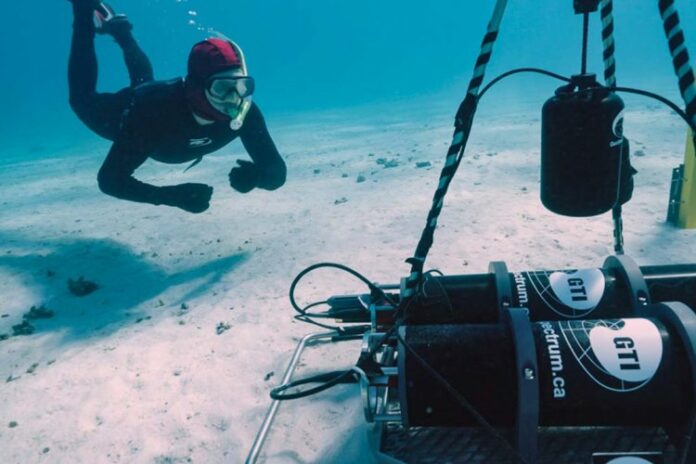
The open-access Global Library of Underwater Biological Sounds (GLUBS) is the proposal of 17 experts from nine countries, including Australia, and will use artificial intelligence (AI) and citizen science.

It will contain the signature sounds of mammals such as whales, as well as invertebrates, fish and crustaceans, many of which are nocturnal or hard to find, making visual observations difficult. 

The team’s paper, Sounding the Call for a Global Library of Biological Underwater Sounds, published in Frontiers in Ecology and Evolution, calls for a workshop this year, bringing marine scientists together with digital experts to realise the long-held dream.

The lead author, AIMS marine acoustics scientist Dr Miles Parsons, said listening in on life in marine, brackish and freshwaters, allowed scientists to monitor changing diversity, distribution and abundance, and identify new species.

He said:

“Using the acoustic properties of underwater soundscapes, we can characterise an ecosystem’s type and condition. Collectively there are now many millions of recording hours around the world that could potentially be assessed. With biodiversity in decline worldwide, and humans relentlessly altering underwater soundscapes, we need to document, quantify, and understand the sources of underwater animal sounds before they potentially disappear.”

Besides making sounds for communication, many aquatic species produce ‘passive sounds’ while eating, swimming, and crawling which provided important information about the ecosystem.

The team’s proposed platform will integrate and expand existing libraries around the world to provide an open-access reference library of known and unknown biological sound sources.

It will include a training platform for AI algorithms to detect and classify sounds, will allow scientists to develop species distribution maps and will include a citizen science component.

Rockefeller University scientist Dr Jesse Ausubel said AI would help scientists better understand the “lyrics” of fish songs.

Of the roughly 250,000 known marine species, scientists believe all 126 mammals emit sounds – the ‘thwop’, ‘muah’, and ‘boop’s of a humpback whale, for example, or the boing of a minke whale.  Audible too are at least 100 invertebrates, 1000 of the world’s 34,000 known fish species, and likely many thousands more.

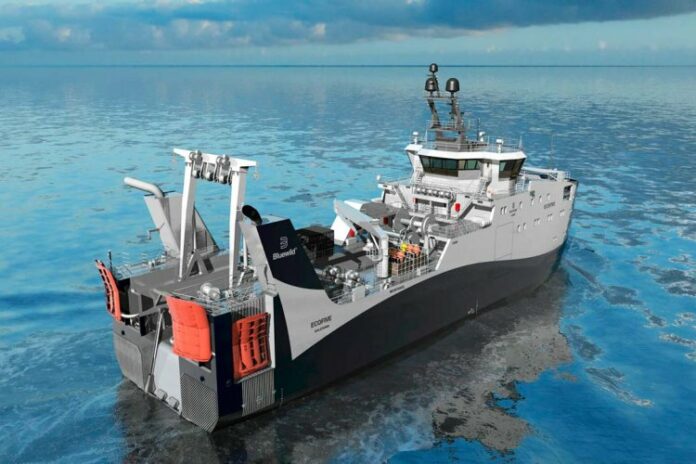
Bluewild contracts new factory trawler with design from Ulstein

0

Gentle handling of the catch and the lowest possible energy consumption have been important elements in the design development. The trawler will be built at Westcon Yards.

The stern trawler is of the design type ULSTEIN FX101 and marks the start of a new design segment for Ulstein. The ship is equipped for 30 people. The 73.2-metre-long ship has a net cargo space of approx. 2,000 cubic metres and is equipped with quadruple trawl and pelagic trawl. The X-BOW® hull design will contribute to less abrupt movements and will minimise sea on deck.

ECOFIVE is a standard from Bluewild and sets ambitious requirements for the lowest possible energy consumption, the greatest possible utilization of the catch, extraction of nutritional value and the highest possible quality of the end product. To facilitate the goals in ECOFIVE, Ulstein has developed concrete solutions for a new standard in factory trawlers. Thorough analyses at the beginning of the design process and extensive collaboration with the owner’s team have led to a new configuration for such vessels, adapted to the owner’s desired operating profile and production philosophy.

Ulstein has developed a system for catch reception and storage that will, as far as possible, keep the catch alive until processing. By taking the catch directly from the sea and into separate tanks, the loss of quality during hauling and storage in dry receiving bins will be avoided, and the factory can work more steadily at its optimum capacity.

The hybrid power and propulsion system is supported by a large battery pack. Two large propellers with rudder nozzles increase manoeuvrability and towing power and help to minimise energy loss at rudder angles. Surplus energy, such as the return energy from the winches, will be stored in the battery pack and excess heat from the engines will be recovered and used where desired elsewhere in the ship.

Based on the operational profile of the ship, Ulstein has planned the propulsion system and system integration to enable fuel savings of at least 25 per cent per kilo of fish product produced compared to a conventional power system. In some operations, together with other energy-saving measures onboard, this figure can exceed 40 per cent. This significant reduction in energy consumption will not only lead to reduced fuel costs for the shipowner but will also result in a significant reduction in greenhouse gas emissions.

The trawler will be built at Westcon Yards in Ølensvåg and they have four yards along the coast of Norway.

Erwin Jager, sales manager fisheries at Ulstein Design & Solutions, says:

“They are a good partner for Ulstein Design & Solutions. It is gratifying to see that we can once again supply design and equipment to a Norwegian shipyard for the construction of an innovative vessel.”

Ulstein, headquartered in Ulsteinvik, delivers design and engineering, and an equipment package for the power system. This package includes the generators, electric motors for propulsion including converters, a complete battery system, switchboards and distribution, and control systems for power management and energy management. All controlled and supervised by the automation system ULSTEIN IAS™ with data collection to the cloud via Blue Box.

AI transfer learning techniques help to study ocean internal waves

0

Internal waves are widely distributed in the ocean, and their amplitude can reach hundreds of meters, affecting the ocean environment.

Remote sensing is a crucial method for observing internal waves in the ocean. However, inversion of internal wave amplitudes from remote sensing images is not available.

Recently, a research team led by Dr. LI Xiaofeng from the Institute of Oceanology, Chinese Academy of Sciences (IOCAS), applied artificial intelligence (AI) transfer learning techniques to integrate data from laboratory, buoy, and remote sensing to study internal waves.

The study was published in Remote Sensing of Environment on Feb. 9.

The researchers applied in-situ and remote sensing data to establish a matched dataset for model training, and used AI transfer learning techniques to solve problems of different data source and accurately reconstruct three-dimensional structure of internal waves.

The AI transfer learning-based internal solitary wave amplitude inversion model is a two-stage model. In the first stage, transfer learning is applied to deal with different internal wave data sources. A tailored modification inspired by the ResNet called short connection is introduced. In the second stage, the model conducts bias-correction of the results of the first stage by using density information of the actual oceans.

Dr. LI said:

“The model can inverse the internal wave amplitude by taking satellite image extracted information as input, and the three-dimensional structure of internal waves can be reconstructed.”

Related results demonstrate that developing inversion models for complex marine phenomena based on pure data-driven ocean information big data is reliable and feasible.

Dr. LI said:

“As a booming emerging technology, AI technology can establish fast and direct mapping relationships in studying complex marine phenomena.” 

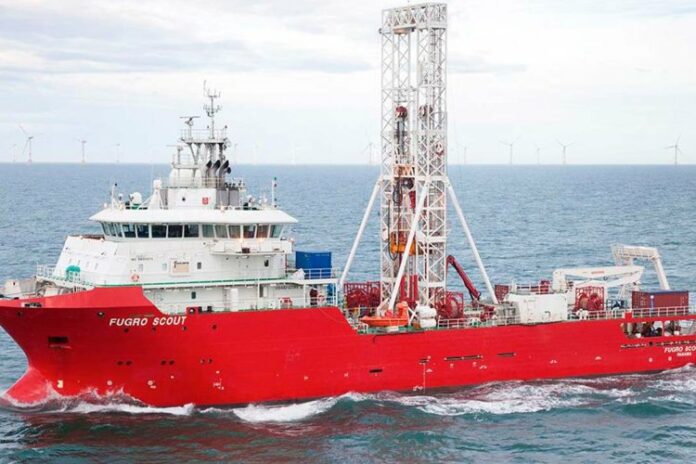
Fugro scores geo work for Hornsea duo

0

Located off the East Coast of England in the North Sea, this forms part of the broader Hornsea Project – which includes the two current world’s largest offshore wind farms – Hornsea One and Two.

With operations set to run from May to August 2022, Fugro will be mobilising multiple vessels from its industry-leading fleet to combat challenging ground conditions and deliver large volumes of Geo-data within the required project schedule. The detailed site investigations include, downhole cone penetration testing (CPT), seismic cone penetration testing (SCPT), downhole sampling and high-quality rock coring as well as borehole geophysical logging. This will not only enable reliable and efficient foundation designs, but also help derisk the project’s future developmental phases.

Dennis Koenen, Fugro’s Global Director Geo-data Acquisition Marine Site Characterisation, said:

“Our site investigation services are crucial for ensuring the long-term performance of offshore assets, such as the Hornsea Project. With an array of specialised vessels and equipment, we are committed to supporting the UK’s energy transition and we’re proud to continue working with Ørsted, building on our past success, to provide critical support that will help move this project forward.”

Fugro has been extensively involved in the development of the Hornsea Project sites since 2011, completing a range of geophysical, geotechnical and environmental services.

Wärtsilä and Grimaldi unveil new filter system to tackle ocean microplastics

0

The technology group Wärtsilä, together with the shipping company Grimaldi Group, have unveiled a new system that uses exhaust gas scrubber washwater to tackle the amount of microplastics in the world’s oceans; a critical and growing global environmental challenge. 

To tackle the growing amount of microplastics in the world’s seas, Grimaldi has developed and patented a system that filters out microplastics from open loop scrubber washwater.

Wärtsilä, in partnership with the Neapolitan group, will take the microplastics filtration system – which traps plastic particles before the washwater is returned to the ocean – to market. The capability to filter microplastics will be an integrated feature of Wärtsilä’s future wash-water treatment system.

The new system requires very little changes to onboard procedure and uses the natural capabilities of an open loop scrubber to contribute to cleaning the oceans during each voyage. Currently, a 10-megawatt engine will require scrubbers to process approximately 450 m3 of water per hour, potentially resulting in a large amount of microplastics being captured from seawater. According to early test results, the microplastics filtration system is efficient in capturing particles smaller than 10µm and the captured concentration by volume equals around 76 particles/m3.

Adding an abatement solution for microplastics to Wärtsilä’s portfolio further strengthens its commitment to use exhaust gas cleaning systems as a part of a modular platform that can enable further environmental technology innovations. 

Emanuele Grimaldi, managing director of the Grimaldi Group, commented:

“Reducing microplastics pollution in our world’s oceans is an important challenge, and we are pleased to provide a solution for the shipping industry.  The idea for this innovative technology originated from recognising that open loop exhaust gas cleaning systems can draw seawater for exhaust scrubbing and simultaneously collect microplastic present in the oceans as part of their normal operation.

We have already completed pilot testing of this system onboard one of our vessels deployed between Civitavecchia and Barcelona. The results are promising, with 64,680 microplastic particles collected on a single voyage between these two ports. We are glad that Wärtsilä also recognises the potential of this system, and we look forward to further collaboration to tackle microplastics in our oceans.”

Tamara de Gruyter, President Marine Systems at Wärtsilä, said: “It is a pleasure to continue our long relationship with Grimaldi and announce this innovation. Microplastics are a pressing environmental challenge and we’re proud to work together with Grimaldi to tackle cleaning up the oceans. Even more importantly, the ability to capture microplastics shows how scrubbers are a platform for solving a wide range of sustainability challenges – and now even ones that are beyond the stack.” 

Grain de Sail and Piriou sign contract for pure wind powered sailing ship

0

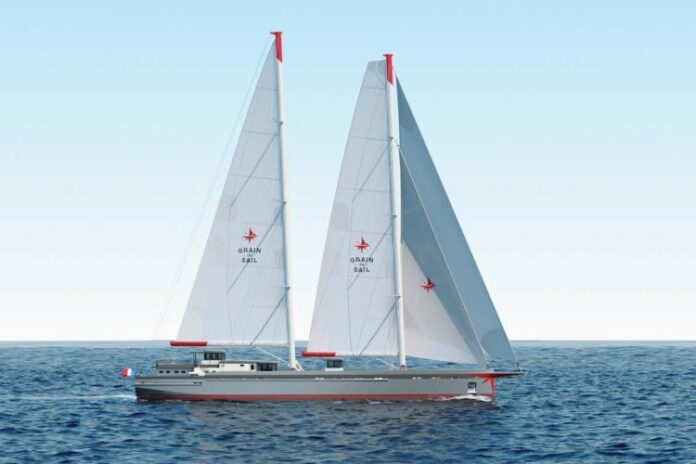
After a months-long consultation process, Grain de Sail signed with Piriou the contract for the build of its future cargo sailboat on the 11th of February during the One Ocean Summit week in Brest aboard Grain de Sail 1. 

The company from Morlaix, Brittany hence will be adding a second cargo sailboat to its carbon-free maritime fleet in order to expand its transportation capabilities and meet the increasing demand for its coffees and chocolates.

Since November 2020, Grain de Sail operates the world’s first modern cargo sailboat to meet international maritime regulations: an eponymous schooner-type vessel of 24 meter and 50 tons of payload capacity. The fast-growing company has this time designed a ship twice as long in collaboration with the naval architecture firm L2Onaval. The overall budget for the build is kept confidential but will remain below the 10M€ mark. Grain de Sail has selected two market leaders to build its next wind-propelled freighter: Piriou will manufacture the hull in its shipyard in Ho Chi Minh City, Vietnam while Lorima will provide the rigging and install it in Lorient, France. The launching of Grain de Sail 2 is planned for end of 2023.

Grain de Sail successfully transported by sail around 55% of the cacao mass used in its chocolate factory during 2021 thanks to its first cargo sailboat. This next ship will enable 100% of its raw ingredients to cross the Atlantic carbon-free for use in the chocolate factory and coffee roasting facility located in Morlaix, France. 

Grain de Sail 2, to be registered under French flag, will make transatlantic routes from St Malo (its homeport) exporting wines and other fine products from France and Europe to the United States and bringing back raw ingredients from Latin America to France (cacao mass, green coffees, rums, etc.). It will be built in aluminum and have a payload capacity of 350 tons with up to 238 pallets loaded on two levels in two separate holds. In addition, a separate tank will be able to receive up to 18 m³ of bulk liquid while on deck there will be another 5 m³ for liquids in barrels. 

With 1170 m² of sails, Grain de Sail 2 will be efficient even in light wind conditions and is designed to be maneuvered by two experienced sailors. On board, cabins will accommodate the nine crew members. Crossing of the Atlantic, depending on routing choices and wind conditions, is estimated at around 2 weeks thus permitting three to four round trips per year. Above all, the design of the ship emphasized safety, reliability, maneuverability and robustness. 

Grain de Sail 2 seeks not only to transport goods without carbon emissions it also seeks to maximize reduction of its overall carbon footprint by incorporating renewable energy production systems to provide electricity on board such as solar panels and ydrogenerators. Only a small IMO TIER 3-approved engine will make use of fossil fuels during maneuvers into and out of ports, as well as diesel-generators for safety and to be used only in case of need as a backup to green energies.

Accompanied by L2Onaval, based in Lorient (Brittany), Grain de Sail significantly incorporated first-hand experience of navigating with its first cargo sailboat and was thereby able to reach a concept design for Grain de Sail 2 that will serve as first in the series for the construction of future sister ships. Following a year-long design phase, Grain de Sail made requests for bids with several shipyards and rigging builders. At the end of the selection and negotiation process, Piriou and Lorima (acting as a subcontractor), two companies from Brittany, were retained.

Loïc BRIAND, managing director of Grain de Sail Shipping adds:

“It has been a long journey and a lot of work to reach this point and I am happy to sign this contract which turns into a reality a childhood dream. It is a sailboat designed by sailors for sailors that will be efficient, quick, adapted to our needs and capable of facing all sea conditions safely.”

Vincent FAUJOUR, president of PIRIOU Group says:

“Within a few weeks this is the 3rd sailboat awarded to Piriou which reinforces our commitment and places us at the forefront of carbon-free maritime transportation, by adding a whole range of sail-powered freighters for our clients.”

Damen delivers Hybrid Crane Vessel 1804 to Amsterdam’s Waternet

0

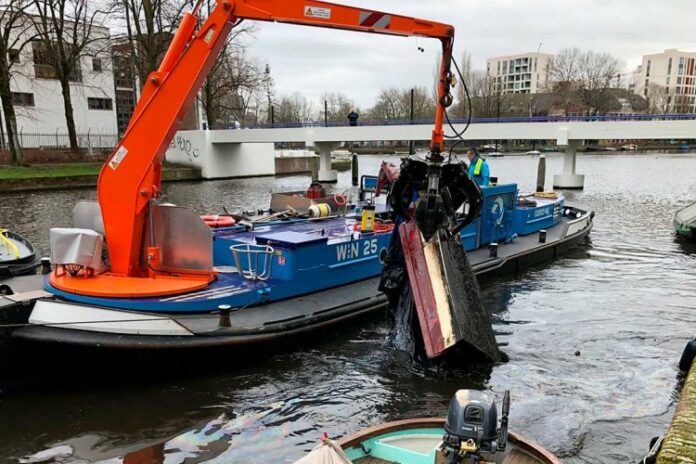
Damen Shipyards Hardinxveld has delivered a Damen Crane Vessel 1804 WN25 to the “bagger en drijfvuil” (dredging and floating debris) department of Waternet Amsterdam, the organization responsible to delivering fresh water and associated management services to 1.3 million people in and around Amsterdam.

The 18-metre vessel is equipped to undertake a range of roles including detecting and removing rubbish and abandoned derelict boats, as well as towing and pushing barges when required.

Designated the WN25, the Crane Barge has been adapted to meet Waternet’s exact requirements. Its hull shape has been modified to reduce the suction effect when sailing close to the side of a channel and through bridges. To minimise emissions, it has a hybrid propulsion system with lithium ion batteries installed in a dedicated air-conditioned section of the vessel, charged by an EU Stage 5 certificated engine. 

With a capacity of 138kwh (108kwh DOD) the batteries deliver a maximum speed of 8 knots and a range of 3.5 hours at 6.5 knots, plus a bollard pull of 2.1 tonnes. In addition, the wheelhouse has been redesigned, allowing it to be dropped in order to minimise the air draught and both it and the accommodation are also air-conditioned.

Jeroen van Woerkum, commercial manager at Damen Shipyards Hardinxveld, said:

“While Waternet was already an existing customer of Damen Shipyards, having bought some Damen Patrol Vessels over the years, this latest contract was awarded to us via a European tender process that pitched our proposal against those from other leading shipbuilders. We were of course delighted with the outcome.”

Boluda to initiate construction of Santander Port container terminal

0

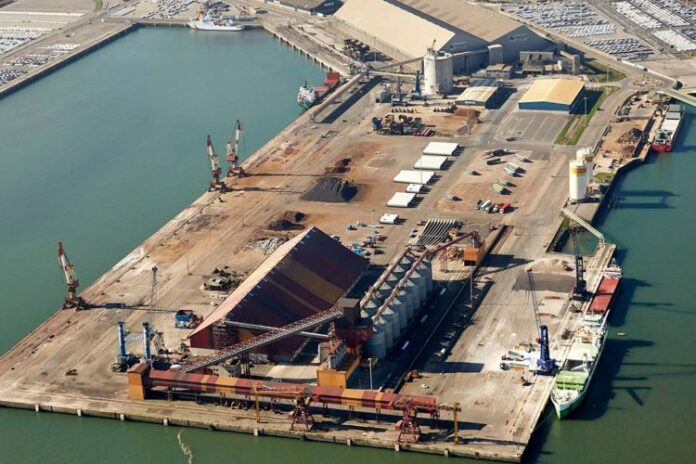
Boluda Corporación Marítima CEO Vicente Boluda will attend the cornerstone laying ceremony for the container terminal in the north pier of Raos in Santander port, to be held on 21 February. The logistics platform will be renamed Boluda Maritime Terminals Santander and is scheduled to enter into service in January 2023.

Vicente Boluda emphasised how proud Boluda Corporación Marítima is that:

“Boluda Shipping is helping improve national and international links with the port of Santander with the creation of this container terminal, which will result in lower costs for companies and shorter transit times, and allow Santander and Cantabria to become more competitive”. 

Furthermore, he explained, “this project will also contribute to reducing the impact of CO2”.

For Santander Port Authority president Francisco Martín, this new infrastructure represents “the fulfilment of a historical aspiration” that will give “companies in Cantabria a direct import and export option via containership, and which will lead to a throughput increase of approximately one million tons in our port”. The president of the APS also indicated that the aim is “to advance the transformation of our business model to increase the percentage of general freight by expanding the product portfolio in a terminal with a greater number of destinations”.

The concession for design and operation of the maritime terminal was awarded on 16 December 2020 by the Santander Port Authority Board of Directors to NSCT Investment, a company created by Boluda. The company awarded the construction contract, Dragados, will begin work next March.

Boluda Maritime Terminals Santander will occupy an area of ​​around 67,000 square metres, with a 472-metre berth line for docking. Apart from the other freight handling ships companies, Boluda Lines, the shipping company of Boluda Corporación Marítima’s international transport and logistics division Boluda Shipping, plans to make one stopover per week, with links in ports such as Villagarcía, Leixoes, Setúbal, Las Palmas and Tenerife, as well as in Northern Europe.

Boluda Maritime Terminals Santander has committed to maintaining a minimum annual import and export throughout of at least 35,000 TEUs during the first five years of the concession, increasing to 44,823 TEUs per year from then onwards.

The maritime company predicts an investment of 20 million euros, between civil engineering, installation, construction and machinery purchase. Including equipment repair, this investment is estimated to reach 38.5 million euros over the 40 years of the concession.

This initiative will include port of Santander among the ports (Las Palmas, Tenerife, Fuerteventura, La Palma, Seville and Villagarcia) in which Boluda Shipping Division subsidiary Boluda Maritime Terminals manages freight handling logistics. The subsidiary is expected to begin operating another terminal in the Canary Islands next April, this time in the port of Arrecife.

Nova wins seabed lease to help drive Shetland’s clean energy future

0

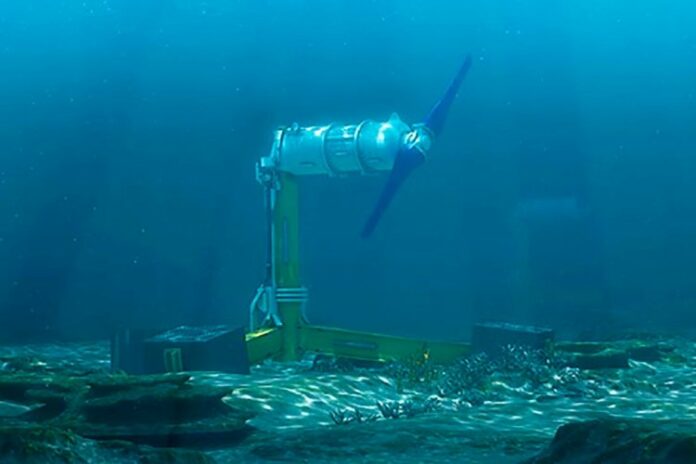
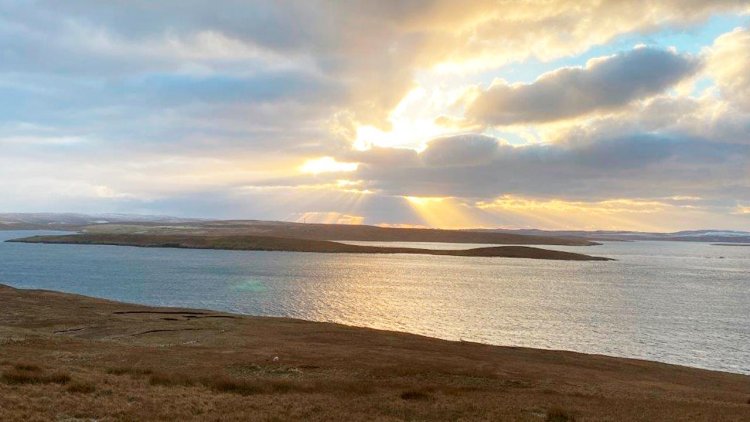
Nova has been awarded an Option Agreement from Crown Estate Scotland to develop a 15MW tidal array at Yell Sound, between the islands of Yell and Bigga, that is predicted to meet over a third of household electricity demand in Shetland.

This new tidal energy site will build on the success of the world’s first offshore tidal array that Nova created in neighbouring Bluemull Sound. Since 2016, the Shetland Tidal Array in Bluemull Sound has been transforming the raw power of the North Atlantic into clean, predictable energy, powering Shetland’s homes, businesses and grid. 

Simon Forrest, CEO of Nova Innovation, said:

“Having been at the centre of the oil and gas industry for 50 years, Shetland is now at the forefront of the green energy revolution, and we are excited to play our part in decarbonising the Shetland Islands. Building on Shetland’s success with the world’s first offshore tidal array in Bluemull Sound, we are delighted to be working with local partners to deliver another world-leading project.”

Companies in Shetland currently manufacture blades, steel structures and provide vessels and services for Nova. The turbines will be manufactured at Nova’s facility in Edinburgh.

Nova’s tidal turbines sit on the seabed, so there is no visual impact on the land and seascapes of Shetland, with ships free to pass above them. Comprehensive environmental monitoring of Nova’s turbines in Bluemull Sound have demonstrated that they work in harmony with marine wildlife.

Michael Matheson, Cabinet Secretary for Net Zero and Energy, said:

“This agreement between Nova Innovation and Crown Estate Scotland marks another important milestone in commercialising tidal energy in Scotland, putting Shetland at the heart of this exciting technology and its capability to deliver secure and reliable clean energy to support our climate targets. With our abundant natural resources and expertise, Scotland is ideally placed to harness the global market for marine energy whilst helping deliver a net-zero economy both here and across the world.”

Nova’s innovative turbines can unlock huge international and domestic tidal energy opportunities. The Shetland projects prove that tidal energy can generate substantial, scalable levels of clean, predictable energy for coastal populations around the world, harnessing the untapped tidal energy on their doorstep.   

Sian Wilson, Head of Emerging Technology at Crown Estate Scotland, said:

“We’re pleased to support the marine energy sector, and efforts by island communities such as the Shetland Islands to decarbonise their energy systems. It’s important for Scotland to have a diverse renewable energy supply to deliver on the country’s net zero ambitions in the coming decades and predictable tidal power at scale will play a valuable part in achieving that goal.”