2.7 C
New York
Home Blog Page 466

ORE Catapult and UIUC join forces on floating wind challenges

0

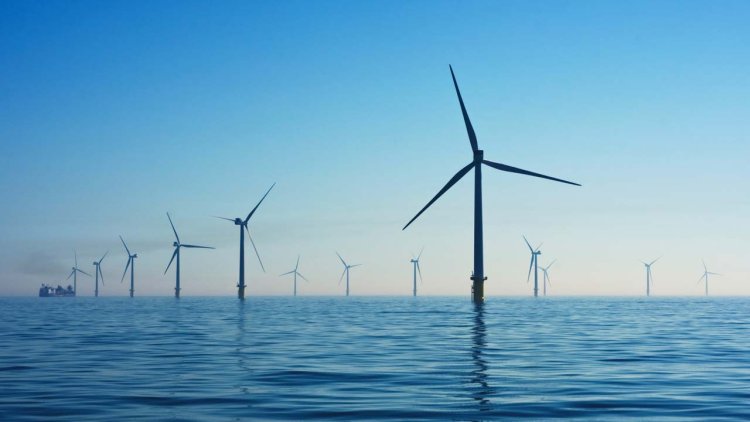
The Offshore Renewable Energy (ORE) Catapult is set to bring UK expertise to the development of the US floating offshore wind sector through a collaboration with the University of Illinois Urbana-Champaign (UIUC).

Funded by the US Department of Energy Advanced Research Projects Agency-Energy (ARPA-E) and Innovate UK, and with support from the Energy Systems Catapult, the project aims to create turbine and sector blueprints, map the transatlantic supply chain and lay the groundwork for offshore grid network designs.

Floating wind will likely be a primary source of US offshore wind capacity in the coming decades as much of their estimated 2,000GW capacity lies in deeper water sites that are unsuitable for conventional, fixed-bottom turbines. One of the core challenges is the development of an infrastructure that will be suitable for connecting floating wind turbines to US electrical power grids. The partners will explore the best configurations for direct current transmission in US waters.

Michael Smailes, lead engineer on the project at ORE Catapult, comments:

“More offshore wind developers are exploring the use of high-voltage direct current (HVDC) transmission on the sites that are further away from the shore. Despite the effectiveness of current offshore HVDC systems, they generally require building huge offshore sub-stations that can be as big as the size of football stadiums. We will be looking at scenarios for medium-voltage direct current (MVDC) collection grids across a range of voltage levels. This offers an interesting but untested solution for minimising the size of infrastructure needed; it may even eliminate the need for sub-stations entirely.

“Many challenges remain in designing a suitable MVDC collection system. The work we do under this project will be to determine the art of the possible and the potential cost savings, as well as identifying the remaining unknowns for future research and development.”

The UK is one of the countries vying to lead development of floating wind technologies. ORE Catapult estimates that its own floating wind supply chain could capture £2.3bn per year between 2031 and 2050.
Professor Chong Ng, Head of Applied Research at ORE Catapult added:

“We have one of the most ambitious targets in the world for floating offshore wind in the UK with a hotbed of innovation in this area. This new collaboration opens up a route to the future US market for our innovative technologies.”

Professor Arijit Banerjee, a faculty member in the Department of Electrical and Computer Engineering at UIUC will serve as the principal investigator leading the effort from the US. He said:

“Over the past few years, we have focused primarily on creating power harvesting architectures attractive for the offshore environment. ARPA-E’s support through its OPEN 2018 was crucial to help us reach a stage where we can build a 200-kW prototype of our proposed architecture. This collaboration gives us a new opportunity to look at solutions from a system-level perspective—from the generator to the grid.”

Dr Jennifer Gerbi, ARPA-E Deputy Director for Technology, said:

“ARPA-E sets out to address innovation needs, and that’s exactly what this collaboration aims to achieve in floating offshore wind turbine technology. This partnership seeks to enable the offshore wind industry to ultimately strengthen and diversify the array of domestic energy sources available to Americans and our partners abroad.”

Dr Mario Garcia-Sanz, ARPA-E Program Director, added:

“ARPA-E created the ATLANTIS program to drive forward floating offshore wind turbine technology. Innovate UK and ARPA-E understand that floating wind turbines have the potential to increase the affordability and reliability of wind energy so we can capture more of this emissions-free, renewable energy resource. This collaboration between the ATLANTIS project team at UIUC and the ORE Catapult has great potential to innovate floating wind turbine technology.”
Neptune Energy awards £3M contracts to support gas production at Cygnus

0

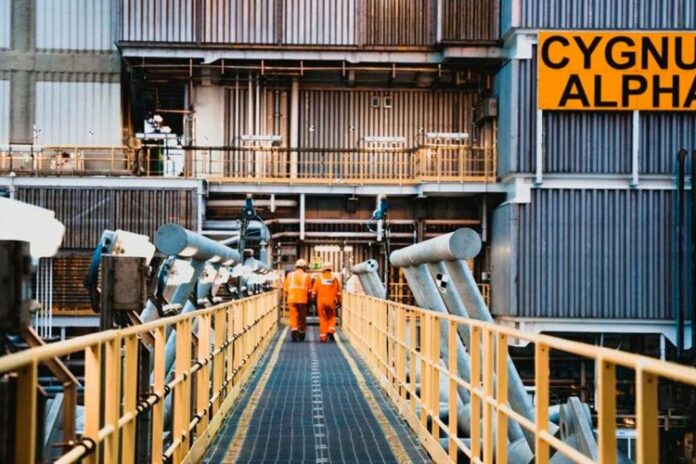
Neptune Energy has announced a series of contract awards totalling almost £3 million to support ongoing operations at its operated Cygnus Alpha and Bravo platforms in the UK Southern North Sea.

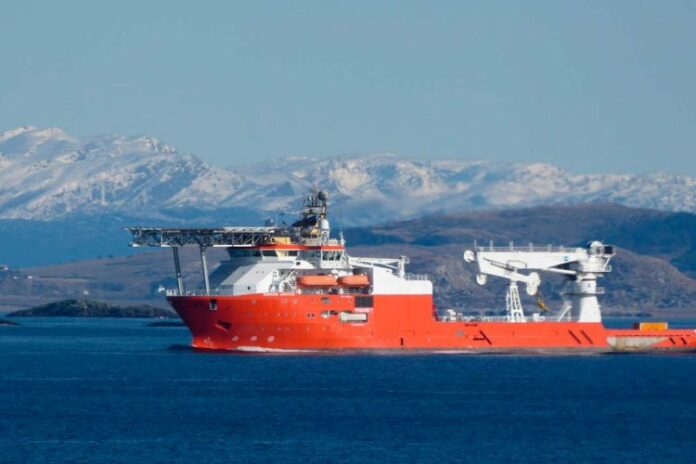
The awarded workscopes cover diving support vessel services, helicopter services and general inspection activities.

The work will support maintaining high levels of gas production from the facility, which is capable of producing 6% of UK domestic gas demand.

Neptune Energy’s Director of Operations for the UK, John Moffat, said: “We are continuing to work with our partners across the supply chain to ensure continued safe and efficient operations at Cygnus, which is strategically important for domestic gas supply to the UK.”

The latest awards follow the announcement of two contract extensions to Petrofac for operations & maintenance and engineering at Cygnus which came into effect at the beginning of 2022.

Ocean Group signs agreement with the Port of Vancouver

0

Starting July 19, Ocean Group will mobilize two DAMEN ASD Tug 2813 tugs equipped with fire fighting systems and IMO Tier III engines, starting July 19. In addition to being proud partners of the port in the ECHO program, Ocean Group meets the highest environmental standards for motorization in Canada. These tugs are therefore among the most eco-friendly operating in the Vancouver area.

This strategic positioning in the Port of Vancouver allows Ocean Group to distinguish itself by focusing on the reduction of pollutants, by offering more competitive rates, and tugs better adapted to the needs of its customers. Once again, Ocean Group reiterates its desire to become a world-class organization and to be a trusted partner for all its customers.

Ocean Group began operations in the Port of Vancouver in March 2020 with two tugs. Since then, the company has significantly increased the number of its tugs present in this territory with the arrival of new state-of-the-art tugs, and then with the acquisition of Samson Tugboats. Starting next July, Ocean Group will have eight (8) port tugs in the Vancouver area to serve its customers.

This important contract with the Port of Vancouver consolidates the company’s development and growth efforts in Western Canada. The Port of Vancouver’s goal of being the most environmentally sustainable port in the world is fully in line with Ocean Group’s fundamental values.  In addition, the desire of the company and its management to develop long-term harmonious working relationships with First Nations in order to generate enviable economic opportunities and to promote sound environmental management is an important objective for the continuation of Ocean Group’s activities in Western Canada.

Ampelmann and Damen mobilise S-type system on the Aqua Helix

0

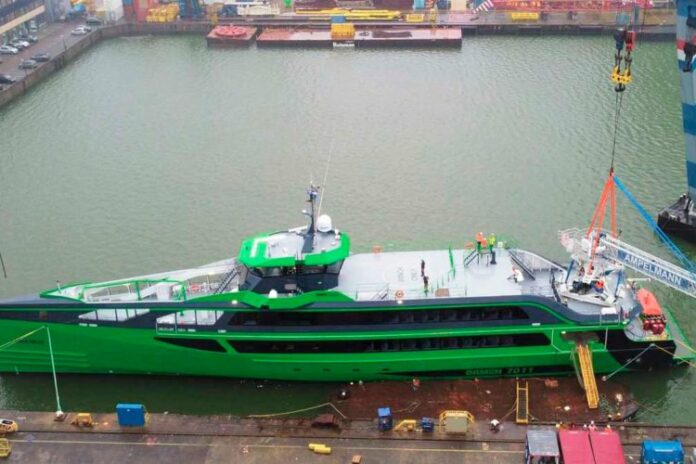
In a collaborative effort, offshore access provider Ampelmann and Damen Shipyards Group are ready to enter the final testing phase of their joint project that fully integrates the S-type motion compensated gangway with the newly constructed fast crew change vessel, the Aqua Helix (FCS 7011). 

Final testing will commence at the end of February and customer trials are expected to begin mid-March. This all-in-one vessel and gangway is designed to address the growing demand for safe, comfortable, and efficient crew change operations in the North Sea.

The S-type is a top-of-the-line system in a range of recent Ampelmann products aimed at addressing the shortcomings of the offshore crew change market. Fully electric and lightweight, it is especially energy efficient due to its regenerative power system, requires only a single operator and can transfer up to 50 people within five minutes. Specifically designed to endure the roughest of metocean conditions, this system can compensate for waves up to 3m Hs.

The gangway has been fully integrated into the recently launched Aqua Helix – a 70m highly lightweight DP2 vessel that is ideally suited for conditions in the North Sea. The vessel can reach up to 40 knots, actively counteracts vessel motions in the roughest sea states and its spacious interior as well as onboard amenities guarantee the best possible travel experience. Optimised for rapid transits, this fully integrated collaborative crew change solution ensures a safe, efficient and comfortable transfer.

In a novel approach to offshore access, companies can commission the service provided by Damen and Ampelmann on a recurring basis to fulfil their crew change requirements. There is a growing need for flexible marine solutions that increase the efficiency of offshore operations and enable the rapid deployment of highly specialised technical crew. The combination of the Aqua Helix and the S-type will help to satisfy the demand for flexible transfer options by supplying on-demand offshore access.

Turbine supplier selected for Baltyk II and III projects in Poland

0

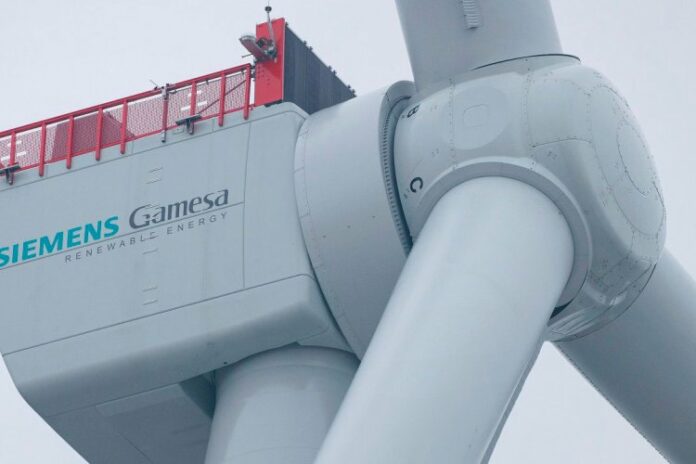
Equinor and partner Polenergia have selected Siemens Gamesa as the preferred supplier of wind turbine generators for the MFW Bałtyk II and MFW Bałtyk III projects, two of the largest and most advanced offshore wind farms being developed in Poland, with a total installed capacity of 1440 MW.

The signing of the preferred supplier agreement is a key milestone for the MFW Bałtyk II and MFW Bałtyk III projects. It is an important step towards delivering on the projects’ goal of providing offshore wind energy as a significant part of the Polish energy transformation.

Michał Kołodziejczyk, country manager of Equinor in Poland, says:

“Selecting the preferred turbine supplier, we reach another milestone, moving our projects forward and bringing the best technologies into the Polish market and its offshore wind industry development. Our goal is to execute these projects in a way that brings this competitive source of clean and renewable energy to Poland, based on leading solutions. We believe this cooperation with Siemens Gamesa will accelerate further the progress of our projects that can bring several opportunities for the Polish market and Polish companies to be included in the local supply chain.”

Under the announced deal Siemens Gamesa will deliver its flagship model SG 14-236 DD offshore wind turbine to cover the maximum combined capacity of both projects. The turbine has 14 MW nominal power and can reach up to 15 MW capacity with Power Boost.

This is Siemens Gamesa’s largest direct drive offshore wind turbine and it will have been running commercially for a couple of years when installed on Equinor and Polenergia’s projects. The exact number of machines remains to be determined at a later phase of the development upon completing the final turbine supply agreement and service and warranty agreements.

Mette H. Ottøy, Equinor’s chief procurement officer, says:

“We are very pleased to select the turbine supplier for two of Poland’s first offshore wind power projects. The delivery of wind turbine generators is the largest contract for the projects, and we have secured an experienced supplier with a proven track record of deliveries to Equinor. We have selected a wind turbine that is the best solution for the overall business case and we look forward to further maturing the projects in collaboration with Siemens Gamesa.”

With the large modern wind turbines selected for the Equinor and Polenergia projects, one rotation of the rotor at full load will supply enough electricity for one average household in Poland for 4 days. When one turbine is running at full load, it will only take 10 minutes to produce the electricity needed to power one average Polish household for one year.

Michał Michalski, Ph.D., president of the Management Board of Polenergia, claims:

“We effectively secure the supply of key products and services required to implement Baltic investments. We develop our projects on the basis of the best practices known from other European countries and draw on the experience of other offshore energy investments. This allows for a smooth process of obtaining the necessary permits and significantly increases the degree of advancement of these projects. We believe that our offshore wind farms will provide clean, green energy for millions of Polish households by 2027.”

The combined capacity of both projects adds up to 1440 MW which is a substantial part of the first phase of Polish offshore wind industry development scheme with a total capacity of 5900 MW.  MFW Bałtyk II and III were awarded Contracts for Difference (CfDs) in May 2021 by Poland’s Energy Regulatory Office (ERO). The projects are located in the Baltic Sea, approximately 27 and 40 kilometers from the port of Łeba where Equinor has acquired a plot for its future operations and maintenance (O&M) base port.

The final investment decision for both projects is subject to obtaining the necessary permits and is planned for 2024 with the first power delivered to the grid in 2027.

Consultation launched for offshore wind energy in the Gulf of Cagliari

0

Nora Ventu, the company set up by the partnership between Falck Renewables and BlueFloat Energy to develop floating offshore wind farms off the Sardinian coast, has launched a consultation to provide local communities with more information on two projects to be developed in the Gulf of Cagliari.

Nora Ventu has begun a series of meetings with local stakeholders to outline its proposals for two offshore floating wind farms, Nora Energia 1 in the south-west, and Nora Energia 2 in the south-east, which together would have a total of around 1.4 GW of installed capacity.

This local engagement starts before the beginning of the authorization procedure, the first step of which will be a preliminary consultation process known as scoping, aimed at defining the scope of the environmental impact study.

The company’s project proposals build on Falck Renewables’ longstanding knowledge of the Italian energy sector and BlueFloat Energy’s experience in floating offshore wind technology, which allows wind turbines to be positioned in deep, open sea without the need for fixed foundations. This minimizes the impact on the marine and onshore environment during all phases of the project and allows the wind resource to be harnessed where it is most abundant, increasing the efficiency of the wind farms and contributing to Sardinia’s energy requirements.

Requests for a maritime concession for each of the two projects were filed with the Ministry of Infrastructure and Sustainable Mobility and the Port System Authority of Cagliari at the end of December 2021.

In addition to generating clean energy, the developers behind the Nora Energia 1 and Nora Energia 2 projects are pursuing a collaborative and value-sharing approach with the local communities.

The benefits of the proposed projects for the local economy and supply chain are considerable, with an estimated 4,000 direct jobs being created in the manufacturing, assembly and construction phases. Once operational, the projects are expected to generate more than 300 long-term jobs will be created for maintenance activities, of which around 80% of the workforce will come from the local area.

Goods and services for the construction and maintenance of the floating offshore wind farm will be primarily sourced from local companies, making the most of the local workforce, expanding skills through advanced training schemes and providing significant opportunities for local businesses, during both construction and operation phases.

Local infrastructure is also set to benefit as the projects would rely on the main industrial ports, such as the Port of Cagliari, for the assembly, operations and maintenance of the wind farms, allowing diversification of their infrastructure and services.

As the wind farm projects develop there will be opportunities for study and research and the potential to work in partnership with Sardinian universities, research centres and technology parks on cutting-edge projects.

Visual impact analyses already carried out and due to be submitted in the coming weeks, show that the proposed offshore wind farms, which would be located outside the territorial waters, would be almost imperceptible to the human eye from the coast.

The Nora Energia 1 project proposal foresees:

  • 53 wind turbines, with a total installed capacity of 795 MW, located in the sea area of the Sardinian Channel southwest of the Gulf of Cagliari, positioned at distances between 22 km (minimum distance from the coast) and 34 km from the coast.
  • An expected annual production of 2.6 TWh, equivalent to the consumption of over 700,000 households, avoiding the emission of around 1,5 million tonnes of CO2 into the atmosphere per year.

The Nora Energia 2 project proposal foresees:

  • 40 wind turbines, with a total installed capacity of 600 MW, in the stretch of the sea inside the Sardinian Channel and south-east of the Gulf of Cagliari, located about 30 km south of Capo Carbonara.
  • An expected annual production of 1.9 TWh, equivalent to the consumption of over 500,000 households, avoiding the emission of more than 1 million tonnes of CO2 each year.

MHI-MME concludes licensing agreement with Mitsui E&S Machinery

0

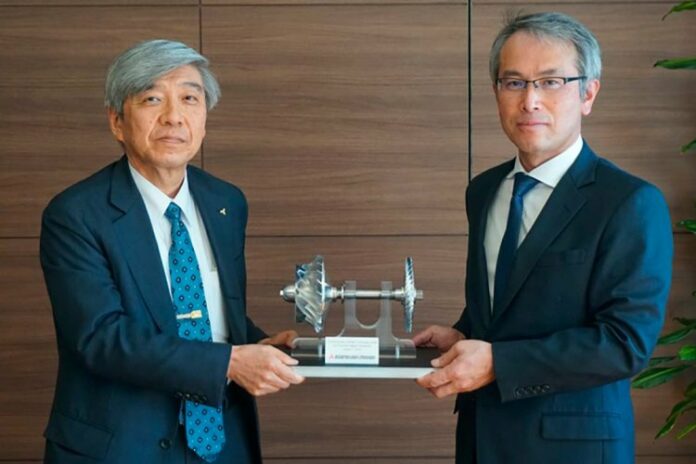
Mitsubishi Heavy Industries Marine Machinery & Equipment Co., Ltd. (MHI-MME), a Mitsubishi Heavy Industries (MHI) Group company based in Nagasaki, has concluded a licensing agreement giving Mitsui E&S Machinery Co., Ltd. , a Mitsui E&S Holdings Co., Ltd. Group company rights to manufacture and sell its MET turbochargers. The MET lineup are exhaust gas type turbochargers engineered for use with diesel engines.

The newly concluded licensing agreement allows Mitsui E&S Machinery to manufacture in-house all models in the MET-MB and MET-MBII series of turbochargers used in two-stroke engines. Production will get underway with three models: MET-66MBII, MET-42MBII and MET-42MB. Plans call for the first unit to be completed early in 2023, with production to be expanded to other models when deemed appropriate.

Mitsui E&S Machinery has been manufacturing a single brand of large marine diesel engines ever since concluding a technical tie-up with B&W of Denmark (now MAN Energy Solutions SE) in 1926. In 2021 the company reached cumulative production of 110 million horsepower, with more than 7,000 units manufactured to date. These statistics make Mitsui E&S Machinery Japan’s foremost engine manufacturer and a world leader in the industry.

MHI-MME began marketing water-cooled turbochargers in the 1950s, and in 1965 the company developed the world’s first non-water-cooled turbocharger, precursor of the MET series. Since then, the lineup has been expanded to include numerous high-efficiency large-capacity models. Today, MHI-MME has a track record in MET turbochargers of more than 39,000 units in total, and the company accounts for a near 40% share of the global market for turbochargers for two-stroke marine engines.

After concluding the new licensing agreement, going forward MHI-MME aims to strengthen its ties with Mitsui E&S Machinery in a quest to further develop business in marine engines and turbochargers for the needs of tomorrow taking into account of global warming issues.

Petrofac signs floating offshore wind MOU with Seawind Ocean Technology

0

Petrofac has signed a Memorandum of Understanding (MOU) with Seawind Ocean Technology, an engineering and technology company which has developed a unique floating offshore wind energy system.

Through the MOU, Petrofac will initially support design verification of the system and, thereafter, is positioned to provide project management/EPCm services in connection with Seawind’s first 6.2MW floating offshore wind turbine demonstrator, due for deployment in European waters by the first quarter of 2024.

Netherlands-based Seawind has developed proprietary two-bladed floating wind turbines integrated with a unique concrete floating structure suitable for installation in all seas, including cyclonic regions and ultra-deep waters.

The two companies will work together to combine Seawind’s floating offshore wind expertise and Petrofac’s world-class engineering, procurement, and construction (EPC) and energy project delivery track record. Under the terms of the agreement, they will collaborate on the delivery of early floating offshore wind plant concessions, initially in the Mediterranean Sea and subsequently in other European and global locations, as well as work towards the electrification of other offshore energy assets.

John Pearson, COO of New Energy Services at Petrofac, commented:

“The recent ScotWind offshore wind leasing announcement signals major commitment towards achieving the UK’s Net Zero ambitions. More than half the awards were granted for floating wind projects, which we consider a major driver of our growth ambitions in the new energy sector.
“We look forward to deploying more than a decade of offshore wind expertise in support of Seawind Ocean Technology and the growing floating wind sector.”

Vincent Dewulf, CEO of Seawind Ocean Technology, commented:

“Today we are delighted to announce our strategic collaboration with Petrofac which will strengthen our execution capability for our promising initial projects. Petrofac assures delivery for its clients through innovation and technology, with proven results. Seawind has developed a unique patented technology that deploys the teetering hinge two blade wind turbine technology, which has many benefits for offshore application. Assembly of the complete system is made in a harbour with land-based cranes, no installation vessels are required for installation at sea.”

Wärtsilä and Solstad Offshore collaborate on fleet decarbonisation ambitions

0

In its efforts to reduce the carbon footprint of its 90 vessel fleet, Solstad Offshore has turned to the technology company Wärtsilä for collaboration. Partnership is seen as being key to finding the right solutions.

The agreement aims to identify, evaluate, and implement solutions that will increase fuel efficiency and significantly reduce greenhouse gas (GHG) emissions from Solstad’s offshore vessels. Each vessel will be assessed for appropriate solutions, possible operational improvements and life extension considerations. The company hopes to reach full carbon neutrality by 2050.

Tor Inge Dale, Head of Sustainability at Solstad Offshore, says:

“Cooperation is essential if we are to implement the solutions needed to succeed with the green shift that is underway. For this reason, we at Solstad are partnering with forward-looking companies such as Wärtsilä who have the expertise, experience, and innovative technologies required.” 

Cato Esperø, Head of Sales, Wärtsilä Norway, adds:

“Solstad has a clear and ambitious strategy to become the owner and operator of the industry’s greenest fleet of vessels. We are happy and proud to have been selected to collaborate in this major decarbonisation project. Since no single solution will be relevant to every ship, by working together we intend to find what works best and most efficiently on a case-by-case basis. We see this as a blueprint for achieving the best possible results.”

Solstad has worked systematically to reduce emissions since 2009, both through operational measures (Solstad Green Operations), and technical upgrades. These have so far resulted in average fuel consumption per vessel being reduced by more than 20 percent. The further reduction to 50 percent is expected to be reached by optimising energy efficiencies, and by retrofitting the vessels to operate with alternative fuels such as hydrogen, ammonia, and methanol. Additionally, new ship designs must be capable of offering low or zero emissions from the outset.

Roy H. Stavland, Senior Sales Manager at Wärtsilä, says:

“It is too early to determine which solutions will prove to be the most appropriate for meeting the GHG emission reductions envisioned by Solstad. However, it is extremely likely that future propulsion solutions operating with new alternative fuels, such as ammonia and/or methanol, will be key enablers as these fuels become widely available for bunkering.”

Wärtsilä will initially be an advisor and technical expert to Solstad. The agreement also allows the company to act as a possible supplier for the decarbonisation solutions selected.

NYK enters comprehensive partnership agreement with Akita Prefecture

0

On February 8, NYK concluded a comprehensive partnership agreement with Akita Prefecture (Norihisa Satake, governor) for collaboration in Akita prefecture in the fields of promotion and nurturing human resources for the renewable-energy business, nurturing ship-related human resources, utilization of ports, promotion of tourism, environmental preservation, regional revitalization, among others.

Akita prefecture has been proactively proceeding with efforts for renewable energy, such as wind power generation. Public solicitations for offshore wind power business operators have been carried out in accordance with the Act of Promoting Utilization of Sea Areas in Development of Power Generation Facilities Using Maritime Renewable Energy Resources, and further developments in several sea areas are expected in the future. NYK has been proactively cooperating with operators within Akita prefecture, such as Akita Eisen KK, for study of collaboration in the CTV business in the waters off Akita prefecture.

In addition, the Japan government declared in October 2021 its intention to become carbon neutral by 2050, so the social requirement for attaining such is increasing. NYK has set a long-term target of net-zero emissions of greenhouse gas (GHG) by 2050 for the NYK Group’s oceangoing businesses. In non-oceangoing businesses, NYK has been proceeding with efforts for renewable-energy businesses, namely offshore wind power generation.

In the future, NYK will further reinforce its partnership with Akita prefecture in accordance with this comprehensive partnership agreement and will aim to contribute to a carbon neutral society by promoting renewable-energy related businesses, together with contributing to regional revitalization.