1.2 C
New York
Home Blog Page 463

Second evolved cape class patrol boat launches in WA

0

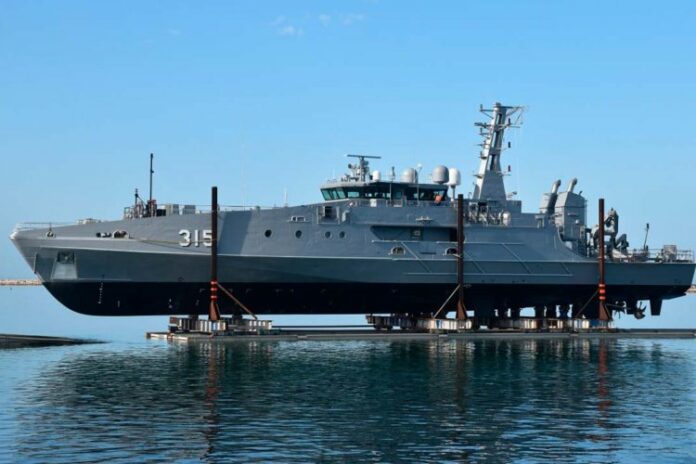
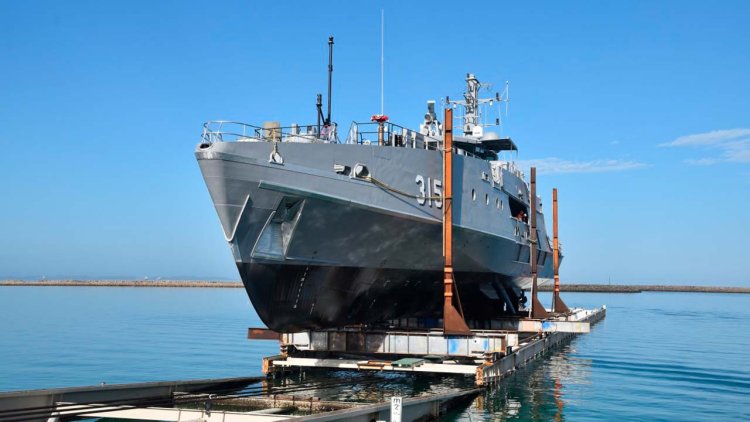
Austal Australia has welcomed Assistant Minister for Defence, The Hon Andrew Hastie MP, to officially launch the second of six Evolved Cape-class Patrol Boats to be delivered to the Royal Australian Navy (RAN).

Austal Limited Chief Executive Officer Paddy Gregg said it was very fitting that the Assistant Minister for Defence officially launched the vessel, which is one of nine naval ships to be delivered to the Commonwealth of Australia by Austal this calendar year.

Mr Gregg said:

“I’m proud to say the Evolved Cape-class Patrol Boat Project for the Royal Australian Navy is progressing at pace. We will be handing over the First of Class in March, with follow-on vessels delivered every 4 months thereafter.

“Our hardworking Austal team and supply chain partners continue to achieve greater efficiencies and productivity, working together with the Department of Defence to provide new capability in support of the Navy’s operational requirements and further develop the National Shipbuilding Enterprise.”    

“The Evolved Capes for the Royal Australian Navy is just one of two major naval shipbuilding projects Austal is continuing to deliver this year – the second is the Guardian-class. In total, Austal Australia is going to deliver an unprecedented nine naval ships to the Commonwealth of Australia in 2022.”

The new Evolved Cape-class Patrol Boats for the Royal Australian Navy include several enhancements that further extend the capability of the proven vessel and the fleet; with modifications developed through the in-service experience of ten Cape-class Patrol Boats already operating with the Navy and Australian Border Force throughout Northern Australia.

The A$324 million contract for the Evolved Cape-class Patrol Boat Program (SEA1445-1), comprising six 58-metre vessels, was awarded to Austal Australia in May 2020 and has directly employed approximately 400 people in Henderson, Western Australia and hundreds more through supply chain partners across Australia.
Shell tries to defend ‘difficult’ decision to buy Russian crude oil

0

The oil giant said in a statement that the decision to purchase the fuel at a discounted price was “difficult”.

It confirmed that it had bought a cargo of Russian crude oil on Friday but it had “no alternative”.

Ukrainian Foreign Minister Dmytro Kuleba hit out at the energy company, asking on Twitter: “Doesn’t Russian oil smell Ukrainian blood for you?”

Although the purchase does not violate any sanctions introduced by Western countries, Mr Kuleba called on businesses to continue to apply pressure to Russia.

A spokesperson for Shell said, however, that the company is trying to maintain supplies of fuels and in this case it had no alternative crude supplies which would reach Europe in time.

In a statement, the firm said it remains “appalled by the war in Ukraine” and that it has stopped most activities involving Russian oil, but added that the situation with supplies is “highly complex”.

Russian oil currently makes up about 8% of work supply.

One of Shell’s refineries, which produces diesel and petrol and other products, is also among the biggest in Europe.

The spokesperson said:

“To be clear, without an uninterrupted supply of crude oil to refineries, the energy industry cannot assure continued provision of essential products to people across Europe over the weeks ahead. Cargoes from alternative sources would not have arrived in time to avoid disruptions to market supply. We didn’t take this decision lightly and we understand the strength of feeling around it.”

The firm also said that it will try to choose alternatives to Russian oil “wherever possible”, and that profits from Russian oil will go to a dedicated fund aimed at helping people in Ukraine.

It comes shortly after the company announced that it would end all of its joint ventures with the Russian energy company Gazprom following the invasion.

That will involve the company selling its 27.5% stake in a major liquefied natural gas plant and a 50% stake in two oilfield projects in Siberia.

It will also end its involvement in the Nord Stream 2 pipeline between Russia and Germany. The 1,200km pipeline under the Baltic Sea had already been put on hold by German ministers.

In a statement issued on Monday, Shell said that it expected the move, which will also apply to any “related entities” to Gazprom, would be worth about $3bn (£2.2bn). The associated costs will be marked on its balance sheet later this year.

Shell followed on from the likes of BP, which had already announced that it would offload its stake in the Russian state-owned oil giant Rosneft – a potential hit of $25bn.

BP said earlier this week it was too soon to say how or to whom its stake in Rosneft would be sold.

Norwegian oil and gas producer Equinor has also announced its exit from Russia, saying the conflict made its current position “untenable”.

Source: BBC

World’s first delivery drones for offshore wind industry in development

0

Marco Polo Marine and F-drones has announced the signing of a memorandum of understanding (MOU) to co-develop the world’s first large-scale, electric aerial delivery drones for offshore wind farms. 

The use of the co-developed delivery drones is expected to result in more than 90% cost savings, and is four times faster than traditional means, which rely mostly on boats and occasionally, helicopters, as the key modes of transport. The partnership will see both companies co-develop drones customised for deployment in Asia-Pacific, to send supplies and critical items to offshore wind installations. F-drones, which has been developing drones to deliver cargoes of up to 100kg over 100km, will offer its advanced drone technology expertise, while Marco Polo Marine will provide strong technical operating and commercial capabilities in the offshore wind sector. 

As the offshore maritime industry transitions to a lower carbon footprint, using drones has an added environmental benefit – a significant reduction in fuel consumption can be achieved when conducting remote delivery of packages of up to 100kg and emergency deliveries to vessels. Utilising drones will result in sharply lower Carbon Dioxide Equivalent (CO2e) emissions – which includes CO2 and other greenhouse gases – of up to 99%, as compared to sending a supply boat or Crew Transfer Vessel (CTV) for 100kg loads over 100km to offshore wind farms. 

Mr Sean Lee, Chief Executive Officer of Marco Polo Marine, commented:

“It gives us great pleasure to unveil this collaboration with F-drones. The partnership is an example of different industry players with aligned values coming together to reduce greenhouse gas emissions, which is in line with global and Singapore government initiatives. By enabling efficient and sustainable maritime logistics, this collaboration will boost the offshore maritime industry, as it transitions to fuels with a lower or minimal carbon footprint.”

Mr Nicolas Ang, Chief Executive Officer of F-drones added:

“The world’s energy transition not only requires building renewable energy assets, but also the ability to service them sustainably. Our partnership with Marco Polo Marine is a case-in-point, which has the potential to transform the future of logistics across offshore wind farms globally.”

Russian LNG tanker arriving into France confronted at sea by Greenpeace

0

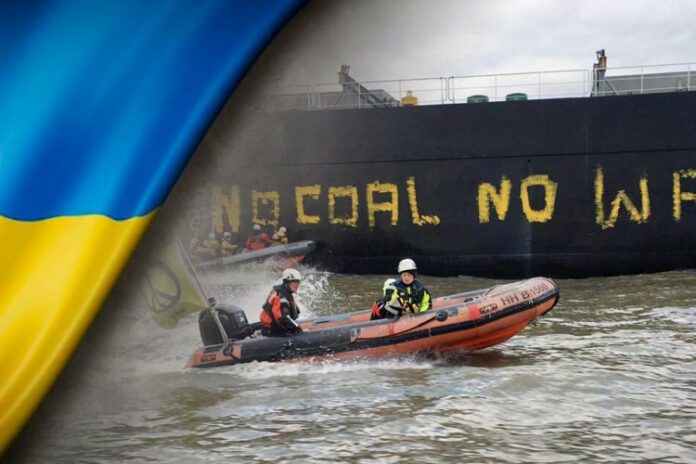
Today, Greenpeace France activists have taken action at sea to highlight the historical responsibility of fossil fuels in triggering and financing international conflict and to call on Europe to divest from Russian oil and gas and push for investment in renewable energies. On board an inflatable, the activists displayed a banner reading “Fossil Fuels War” in front of a LNG tanker preparing to unload TotalEnergie’s gas in the port of Montoir-de-Bretagne in the west coast of France.

The ship, named Boris Vilkitsky, was initially on its way to the Isle of Grain in the UK, but dock workers refused to unload the cargo and was diverted to France. TotalEnergies is the only oil giant that has refused to leave Russia since Putin’s invasion in Ukraine started. 

Helene Bourges, head of fossil fuel campaign for Greenpeace France, said:

“How many more missiles have to destroy civilian lives before we ditch fossil fuels? Putin’s invasion is yet another example of the many conflicts fuelled by oil and gas across the world. After helping fill the Kremlin’s pockets and fuel its tanks, the oil giants are now racing to leave Russia in a desperate attempt to protect their image. But the damage is done and despite the sanctions, ships loaded with Putin’s gas are still docking in Europe.”

The LNG tanker, Boris Vilkitsky, departed from Sabetta port in the Russian Arctic on the 25th carrying a cargo of liquefied gas from the Yamal site, one of the largest LNG projects in the world, in which TotalEnergies holds a 20% stake. It also owns 19.4% in the Russian group Novatek, which in turn owns 50% of Yamal. Novatek’s other main shareholder is Gennady Timchenko, an oligarch sanctioned by the EU over the invasion of Ukraine.

Bourges said:

“Europe’s gas dependence is funding Putin’s war machine and this is the true face of TotalEnergies, a self-proclaimed ‘responsible energy major’ that expresses its solidarity with the Ukrainian people on Tuesday and welcomes Russian gas into Europe on Saturday. Despite Emmanuel Macron’s alarming 90 minute call with Putin, the French government has not yet ordered TotalEnergies to withdraw from Russia.”

Last month, the European Commission presented a controversial plan to label fossil gas and nuclear energy as sustainable under the taxonomy regulation. The plan would incentivise potentially hundreds of billions of euros in private investments to flow away from clean energy like renewables and instead go to nuclear energy and fossil gas, accelerating the climate crisis and dangerously slowing down the European energy transition. 

Bourges said:

“We already have the technologies we need to end our dependence on gas. All we need is the political will of the EU to carry out an unprecedented programme to free Europe from its gas dependence. We need an emergency plan to insulate homes, replace boilers with heat pumps and boost ever-cheaper solar and wind power. This will create jobs, lower energy bills, tackle the climate crisis and cut our dependence on imported gas.” 

The arrival of this ship comes amid growing international and civil society rejection of Russian imports. This week dockers in France,  the UK and the Netherlands refused to unload gas tankers coming from Russia. Yesterday, 20 activists from Greenpeace Germany on board six inflatables painted “No Coal” and “No War” on the side of a ship loaded with 100,000 tons of Russian hard coal as it approached the port of Hamburg.

Greenpeace calls on Europe to reject and ban any import of fossil fuels from Russia as an immediate step to weaken Putin’s war machine and save lives, and rapidly phase out all fossil fuels to protect humanity from future conflict. 

Kongsberg to provide propulsion system for new zero-emissions Scandlines ferry

0

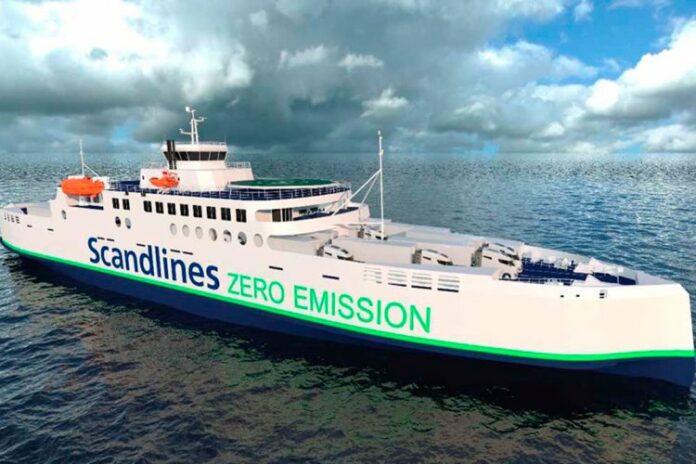
Kongsberg Maritime (KM) has just been commissioned to supply a complete propulsion and control system package for a forthcoming Scandlines zero-emissions vessel which, when built, is destined to be the world’s largest all-electric double-ended ferry.

The new freight ferry is expected to enter service in 2024. As the first of the company’s next-generation vessels, heralding its ambitions to make its operations entirely emission-free, it will represent a momentous step in Scandlines’ green journey.

KONGSBERG has been Scandlines’ main propulsion supplier for over two decades, contributing directly in recent years to the company’s emission-reduction strategy. The new ferry, 147.4 meters in length and designed to carry a maximum of 140 passengers and 66 cargo trucks at a service speed of 16 knots, will be equipped with KONGSBERG’s pulling azimuth thruster; Azipull™. The thruster will be delivered with controllable pitch propellers, in an L-drive configuration with an integrated permanent magnet drive motor. This increases overall energy efficiency while reducing noise and vibrations, as well as reducing the physical footprint of the thruster system compared to previous deliveries.

KONGSBERG will also be supplying its Mcon Propulsion & Thruster control system to control and monitor the ferry’s propulsion and steering, presenting operators with an intuitive human machine interface which will allow them to check important parameters, such as the magnitude & direction of thrust and equipment health, at a glance.

Scandlines’ new freight ferry will be operating on the crossing between Puttgarden, on the German island of Fehmarn, and Rødby in Denmark. With a capacity of 66 freight units (equating to approximately 1,200 lane meters), it will increase freight transportation capabilities on the route by around 23%. Emission-free crossings will be completed in one hour and 10 minutes: the vessel could also be operated as a hybrid ferry, whereby the journey duration would be reduced to 45 minutes.

Updating the infrastructure to support the new electric ferry and its planned successors is already in hand. The 50kV / 25MW power cable which Scandlines laid in Rødby harbour in 2019 is being extended to the ferry berths, where a transformer and charging station will also be installed. In future, it is anticipated that there will be charging facilities for the new ferry in Puttgarden as well, once a suitable solution has been agreed upon for purchasing green electricity. The new freight ferry is being designed so as to fit the existing berths in Rødby and Puttgarden.

Michael Guldmann Petersen, COO, Scandlines, says:

“Our ongoing investment in KM technology not only indicates the closeness of our trusted business relationship but also demonstrates our commitment to deploying the most sustainable energy solutions available on the market.”

Roy Egil Høydal, Senior Sales Manager, Seaborn & Pax, Kongsberg Maritime, adds:

“Scandlines is setting an example which is destined to secure the viability of freight ferries in an environmentally-conscious world, and we’re very proud to be associated with such a responsible, game-changing project.”

PSA and A*STAR collaborate on smart solutions for managing AGV fleets

0

PSA Singapore and the Agency for Science, Technology and Research’s (A*STAR’s) Institute of High Performance Computing (IHPC) have signed a research collaboration agreement to jointly develop a large-scale fleet management solution for automated guided vehicles (AGVs) to move containers efficiently and securely in the Next Generation Port at Tuas. Tuas Port will be the largest fully automated container terminal in a single location with an annual handling capacity of 65 million TEUs.

AGVs currently play a significant role in automating yard and wharf operations for the Tuas Port, due to their versatility and maneuverability in picking up and transporting containers. These driverless electric vehicles are also greener and more sustainable compared to using diesel prime movers, reducing carbon emissions by about 50 per cent. The fleet of AGVs is expected to increase in tandem with large-scale port operations.

To meet the demands of a larger AGV fleet, PSA requires an intelligent, advanced fleet management system that is responsive and can handle the computational load. This new fleet management solution for AGV operations is also expected to achieve significant cost savings through the reduction of infrastructure and operational costs. PSA and A*STAR’s IHPC will co-develop advanced automation and digitalisation solutions that can address these needs.

IHPC will contribute its expertise in advanced high performance computing technologies and algorithms to develop accelerated solutions for large-scale fleet management of AGVs. PSA will contribute its expertise in the design of algorithms, provide a simulation platform to conduct the proof of concept, as well as furnish its wealth of experience and domain knowledge in the development and operation of the existing AGV fleet
management system.

The research collaboration also includes the development of innovative techniques that will allow a scalable design with multiple AGVs coordinating seamlessly and at the same time, ensuring operational safety. Upon successful development, PSA will look to apply the smart solutions to future enhanced fleet management systems as operations in Tuas Port gradually scale up, while the addition of new technologies such as 5G will further enhance computation performance.

Mr Ong Kim Pong, Regional CEO Southeast Asia, PSA International, said:

“PSA Singapore is pleased to partner IHPC in co-creating innovative and robust solutions to manage our large fleet of smart and green AGVs. We look forward to leveraging the diversity of ideas and thought to drive technological innovations which will enhance our operational agility and scalability. This collaboration will bring us closer to our vision of developing an intelligent, resilient and sustainable port of the future.”

Mr Kenneth Lim, Assistant Chief Executive (Industry) of MPA, said:

“The development of large-scale AGV fleet management solution is a step towards realising MPA’s vision to build a smart, next-generation port that increases productivity, while improving safety and security. MPA is pleased to support this initiative which is funded under the Maritime Transformation Programme (MTP). One of the key vehicles under the Sea Transport Industry Transformation Map, MTP co-funds projects to develop new capabilities or technologies that have high potential for industry application.”

‘Warlike Operations Areas’ designated in seas around Ukraine

0

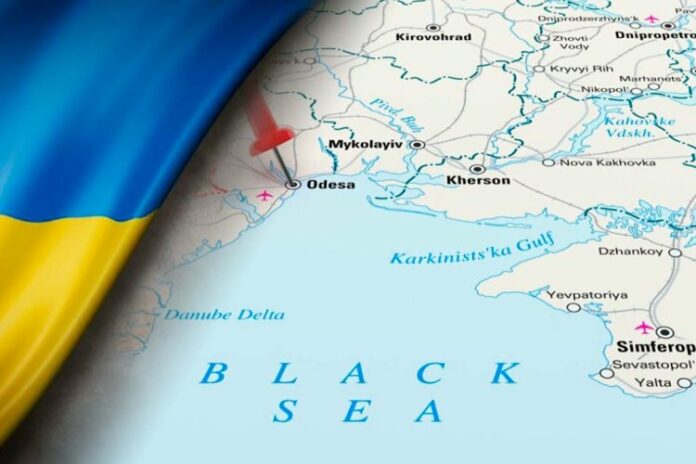
The Joint Negotiating Group (JNG) and the International Transport Workers’ Federation (ITF) have designated areas in the Black Sea and the Sea of Azov as ‘Warlike Operations Areas’ triggering an increased security level and other entitlements for seafarers in the war zone.

The designation was agreed at an emergency high-level meeting on the rapidly escalating crisis in Ukraine between the social partners on Tuesday. Repatriation, payment of wages, safe transit and respect of individual seafarers’ rights, particularly for seafarers from the region, were the focus of discussions.

The JNG and ITF as social partners, negotiate and ensure application of the International Bargaining Forum (IBF) agreement, which is the only international collective bargaining agreement covering terms and conditions for seafarers in international trade on over 9,000 ships.

The escalation in hostilities and conflict in Ukraine has put enormous pressure on seafarers of all nations and an industry already labouring under the demands and challenges of the pandemic. The parties agreed that the welfare of seafarers and the protection of their rights in this unprecedented situation was paramount to the spirit and intent of the IBF agreement.

IBF Warlike Operations Areas were designated for the Sea of Azov (north of latitude 46°N), the Northern Black Sea Region and all ports in Ukraine. Under this classification seafarers onboard IBF covered ships are entitled to receive:

  • bonus equal to basic wage, payable for 5 days minimum + per day if longer;
  • doubled compensations for death and disability;
  • right to refuse sailing, with repatriation at company’s cost and compensation equal to 2 month’s basic wage
  • recommended to operate at ISPS Level 3

Due to the rapidly developing situation these designations will be re-visited on a two-weekly basis to review the period of validity and, if necessary, the terms and conditions as well as the coordinates.

In addition to the establishment of the ‘Warlike Operations Areas’ around Ukraine and adjacent waters, the JNG and ITF also committed to further high-level discussions to monitor and review mechanism to ensure seafarers’ safety and security in the rapidly evolving crisis.

The facilitation of support from governments worldwide for potential refugee arrangements for Ukrainian seafarers and their families was also considered. The social partners agreed to increase pressure on governments to waive visas for Ukrainian seafarers to ease their repatriation.

Equinor and BP partner to develop New York offshore wind hub

0

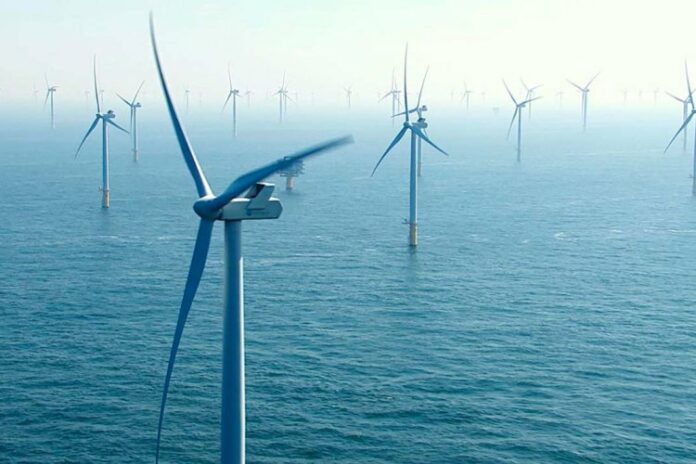
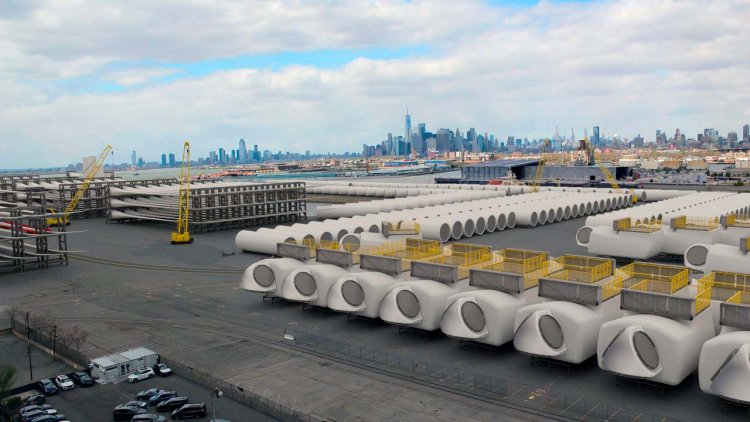
Under the agreement, the terminal will transform into a world-class offshore wind port capable of staging and assembling the largest, most sophisticated offshore wind technology components for the Empire Wind and Beacon Wind projects and for the growing U.S. offshore industry on the East Coast.

The agreement was co-signed by terminal operator Sustainable South Brooklyn Marine Terminal (SSBMT) and New York City Economic Development Corporation (NYCEDC).

The offshore wind projects on the US east coast are key building blocks to accelerate profitable growth in renewables and Equinor’s ambition to install 12-16 GW of renewables capacity by 2030.

Equinor and bp will create an operations and maintenance (O&M) hub and staging area at SBMT, with a total investment of USD 200 – USD 250 million in infrastructure upgrades, while also pursuing the development of SBMT as a low-emissions facility. The port will become a cutting-edge staging facility for Equinor and bp’s Empire Wind and Beacon Wind projects that will supply 3.3 gigawatts (GWs) of energy—enough to power nearly two million New York homes —as well as become a go-to destination for future offshore wind projects in the region.

The redevelopment will inject the Sunset Park waterfront with substantial investment from the new renewable energy economy, creating new jobs and providing an economic boost to the community. Equinor and bp’s activities at SBMT are anticipated to support over one thousand jobs annually in the region.

Siri Espedal Kindem, President of Equinor Wind U.S., said:

“This agreement marks a major step forward in our commitment to New York State to both provide renewable power and to spark fresh economic activity, while creating enduring jobs.”

“With the support of NYCEDC, SSBMT and our partners in the community, Equinor and bp are ready and eager to invest in the revitalization of SBMT, an historic port that will soon become a major part of New York’s energy future. New York has shown unflagging determination to become a focal point of the region’s offshore wind industry, and this agreement offers tangible evidence that this vision is quickly coming to life.”

NYCEDC Chief Strategy Officer and Executive Vice President Lindsay Greene said:

“We are enormously proud to lay the groundwork today for our vision of making New York City a nation-leading hub for the offshore wind industry. This agreement builds on the City’s $57M commitment to reactivate SBMT as a key manufacturing and operations base and will help make New York a leader in climate resiliency as well as air quality through clean energy investments.” 

“Working together with our partners at Equinor, bp, and SSBMT, we are also advancing economic recovery and increasing diversity in waterfront construction, by helping local minority- and women-owned business enterprises benefit from the growing offshore wind industry and take advantage of the green jobs of the future.”

Felipe Arbelaez, bp’s senior vice president for zero carbon energy, added:

“Today marks the first of many positive ripple effects from this project – and we want them to reverberate far and wide. As we reinvent energy, we also want to help reinvent the communities that help deliver it by investing in the skills and capabilities needed. By creating this regional hub we are able to do just that and it brings us all one step closer to delivering this incredible offshore wind development.”

At approximately 73.1 acres, SBMT will be one of the largest dedicated offshore wind port facilities in the United States. It is the only industrial waterfront site in the New York City area with the capacity to accommodate wind turbine generator staging and assembly activities at the scale required by component manufacturers.

Subsea 7 awarded FEED contract in Norway

0

Subsea 7 today announced the award of a contract by Equinor for the front-end engineering and design (FEED) study for the marine installations associated with the Krafla development project, offshore Norway.

The awarded work is required to finalise the technical definition of the proposed development prior to Equinor and its partners making the final investment decision (FID) planned late 2022. The FEED study will begin immediately.

Subsea 7 has recognised the FEED award in its order backlog in the first quarter of 2022. The value of a potential, subsequent EPCI contract would only be recognised by Subsea 7 in its backlog upon FID, and would represent a large1 project award.

Project management and engineering will take place in our offices in Stavanger and Aberdeen. Offshore installation activities would be scheduled for 2024, 2025 and 2026.

Monica Bjørkmann, Vice President for Subsea 7 Norway said:

“This award continues our long-standing collaboration with Equinor. The study enables Subsea 7 to engage early in the field development process, optimising design solutions and contributing to the final investment decision. We are delighted to be a trusted partner for Krafla field development, and we look forward to working closely with Equinor to successfully deliver our scope with safety and quality at the forefront throughout.”

Construction begins on Chouest vessel

0

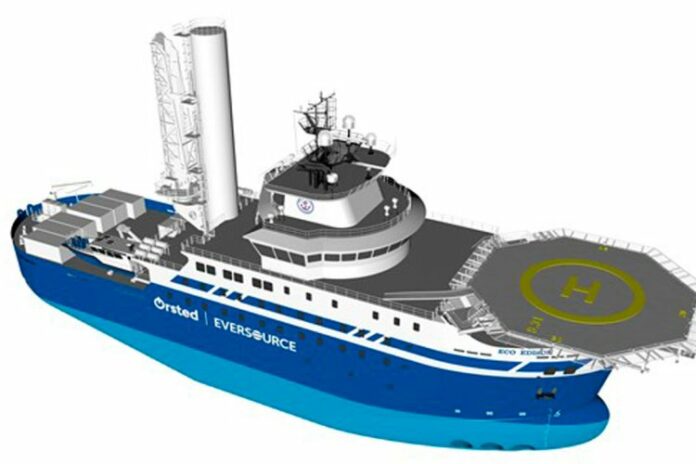
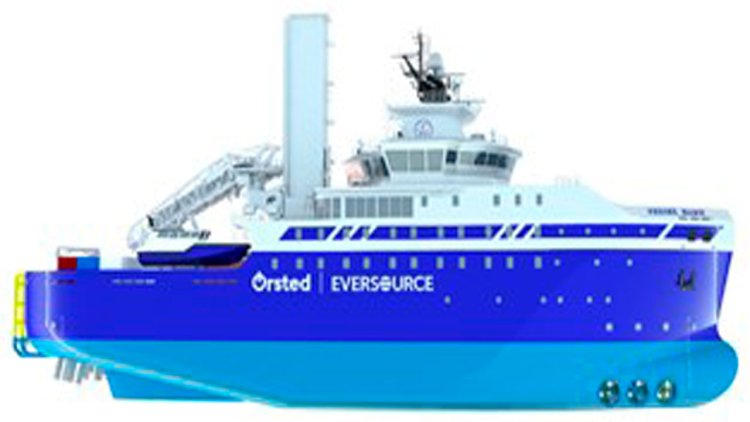
The vessel, ECO EDISON, is being built at ECO in-house shipyards located in Louisiana, Mississippi and Florida, creating well over 300 new jobs, with components of the vessel being manufactured across 12 states including Alabama, Florida, Illinois, Indiana, Louisiana, Michigan, North Carolina, Ohio, Texas, Washington, West Virginia and Wisconsin. 

ECO EDISON will be delivered in 2024 and immediately provide operational support out of Port Jefferson, New York for Ørsted and Eversource’s joint venture offshore wind portfolio, which includes South Fork Wind, Revolution Wind and Sunrise Wind.  Once complete, South Fork Wind, Sunrise Wind and Revolution Wind will generate approximately 1.8 GW of offshore wind power, enough to power over a million homes.

The vessel, which will be over 260 feet long and capable of housing 60 crew members, will be utilized during the operation & maintenance (O&M) phases of the wind farm projects, serving as an at sea base of operations to accommodate and transfer technicians, tools and parts safely to and from the individual Wind Turbine Generators.

David Hardy, Chief Executive Officer of Ørsted Offshore North America, said:

“This new vessel will be the first of its kind in the United States and play a crucial role in the growth of America’s offshore wind industry. We’re proud to work with companies like Edison Chouest Offshore to support good-paying jobs in states across the country as we build a new energy future.”

Joe Nolan, Chief Executive Officer and President of Eversource Energy, said:

“Today, the development of a new, clean energy future for the United States takes another important step forward as construction begins on the nation’s first Jones Act-qualified service and operations vessel. Construction of this vessel will mean hundreds of new jobs for American workers as we continue to bring the benefits of offshore wind to communities around the country.” 

With work beginning on the vessel, ECO has also announced the selection of Caterpillar Marine, GE Power Conversion and Voith Schneider as power and propulsion system providers for the ECO EDISON. The vessel will be powered by four Caterpillar 3512E EPA Tier 4 generator sets (gensets), each rated for 1700 ekW. The gensets are configured for variable speed operation, allowing for the highest levels of efficiency and minimized exhaust emissions. The GE Power Conversion electrical system can operate with gensets or stored energy.

The latest generation of Voith Schneider Propellers (VSPs), featuring integrated permanent magnet motors, are utilized for propulsion. These propellers have a rapid thrust and steering response, with minimal noise and vibration. The thrusters also feature roll reduction and sleep mode, maximizing station keeping, active motion compensated gangway workability and comfort. The vessel will also be equipped with extensive remote monitoring and support capability provided by Marine Technologies, another Louisiana-based company.

This full configuration results in a vessel that delivers high efficiency, low power consumption, minimum GHG emissions, maximum workability and the highest levels of comfort.  The vessel is also being constructed to incorporate future zero-carbon emission technology to assist in reaching carbon neutral goals.

Through their joint venture projects, Ørsted and Eversource are supporting the development of a domestic offshore wind supply chain that will create jobs and economic development across dozens of states. By working with companies like Edison Chouest Offshore, which has deep expertise in offshore energy, Ørsted and Eversource are creating opportunities for American companies to help build the future of the US energy industry.