3.1 C
New York
Home Blog Page 464

5G goes live at the Port of Felixstowe

0

The Port of Felixstowe along with consortium members, Three UK, Blue Mesh Solutions and the University of Cambridge was successful in an application for grant funding under the 5G Testbeds and Trials programme run by the Department for Digital, Culture, Media and Sport (DCMS). The project aims to prove 5G’s capabilities in a busy port environment.

The project seeks to deliver on two use cases: predictive maintenance of quay cranes using Internet of Things (IoT) sensors and providing communications for remote control yard cranes.

Digital Infrastructure Minister Julia Lopez said:

“It’s incredible to see our £200 million investment in innovative 5G tech is empowering Britain’s biggest and busiest container port to explore new ways of driving efficiency, improving safety and supporting the UK’s post-Brexit status as a global trading nation.

“5G has huge potential to revolutionise a wide range of UK industries and 5G Ports is just one testbed the government is funding to help achieve this.”

Karen Poulter, Head of Information Services, Port of Felixstowe and 5G Project Lead commented:

“As part of the 5G project, six quay cranes are being fitted with IoT Sensors to understand the stresses and strains placed on them by day-to-day operation. Using 5G to transmit the data enables these systems to operate in real-time which could enable ‘in the moment’ safety-critical applications.

“Using the data generated by the IoT sensors and linking it to the actual activity on the crane together with previous maintenance records, Cambridge University is developing an algorithm to predict equipment failure and suggest the optimum time to maintain the equipment.”

The availability of equipment is integral to port operations. Routine maintenance is an absolute necessity but can restrict equipment availability. The algorithm will maximise the amount of time cranes are in use and will reduce the cost associated with emergency repairs and day-to-day maintenance.

The 5G network can handle the huge volume of data collected which will be used to train the algorithm at levels that wouldn’t be sustainable over 4G.

Prof Ajith Parlikad, Professor of Asset Management at the University of Cambridge, commented:

“We will harness the speed, low-latency and high-capacity of 5G to send the high volumes of data generated by the IoT sensors for an Artificial Intelligence based predictive maintenance system. This system will be able to detect anomalies in the cranes and alert the operators so that preventive maintenance can be targeted at these areas before the failure actually happens.”

Steve Wylie, Head of Corporate Sales, Three UK, added:

“The Port of Felixstowe already operates remote control quay cranes and yard cranes. Traditional methods of communicating to CCTV needed for remote control have limitations on bandwidth and flexibility for extension across the port. 5G and its unique low latency and high throughput capabilities make it the optimum technology to power remote control and support the port’s long term growth objectives.”

Richard Brooks, Managing Director, Blue Mesh Solutions said:

“5G allows IoT systems to operate in a denser and more data rich environment. Combining modern sensors with IoT technology to manage data backhaul allows data to be used in new ways, such as combining the sensors with Artificial Intelligence algorithms to search for inferences in data that are hidden from standard analysis methods. Building these ‘Digital Twins’ is the future of computer and engineering science and 5G is an enabling technology. Personally, it’s exciting for our small company to be working on such a thought leading and technically challenging project with world leaders in global port management, telecommunications and engineering research.”

The project is due to complete in September 2022. Significant work has already been undertaken at the Three lab to test the 5G network against these use cases. Increasing traffic will now utilise the network and prove its capabilities to simultaneously manage the two use-cases and to support the business- critical activities of the port.
Crew of sunken ship HELT rescued

0

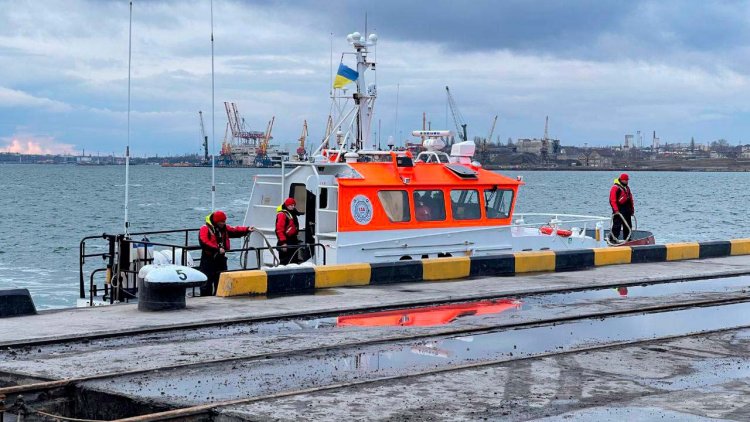
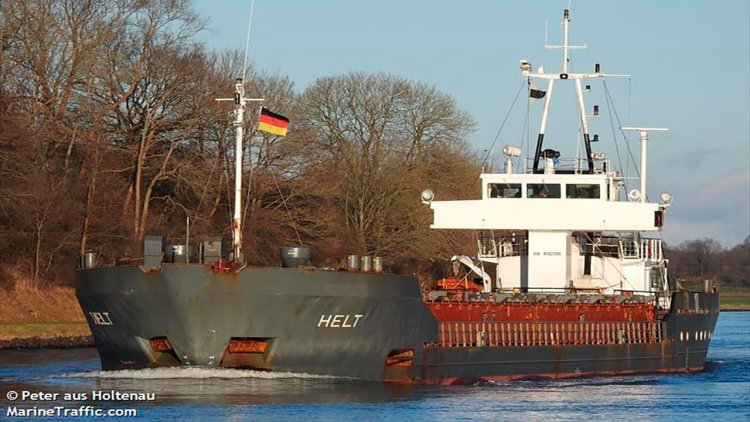
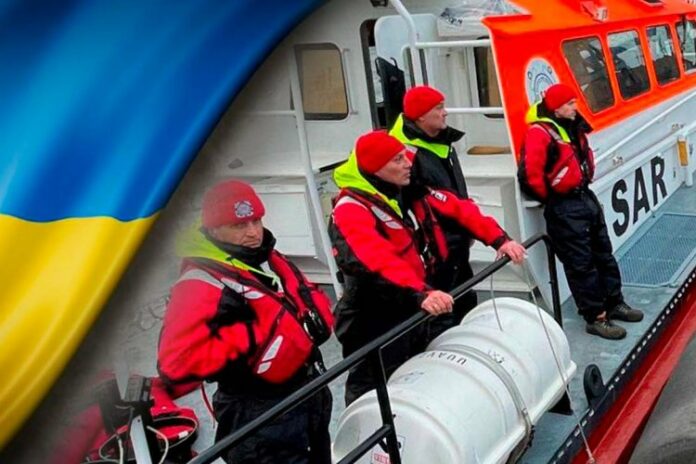
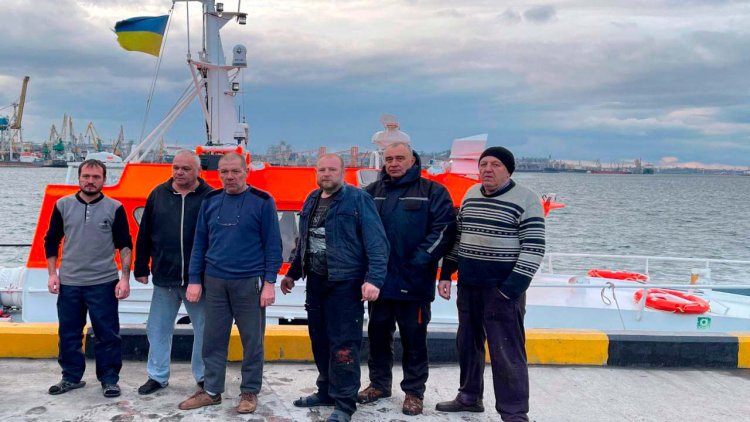
Rescuers delivered six crew members of the dry cargo ship HELT to Chornomorsk. This is a city and port near Odesa.

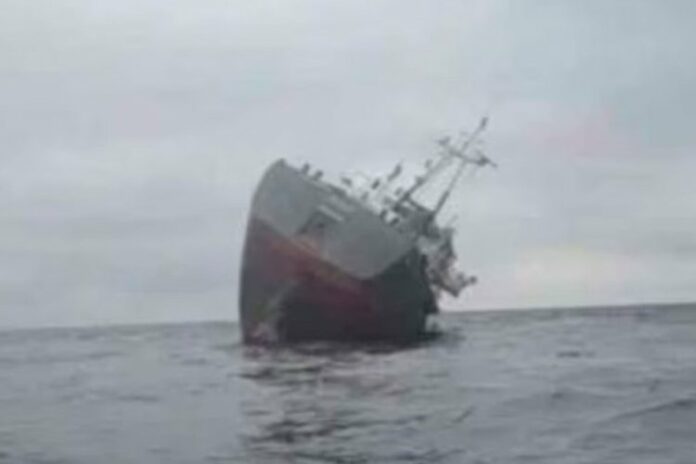
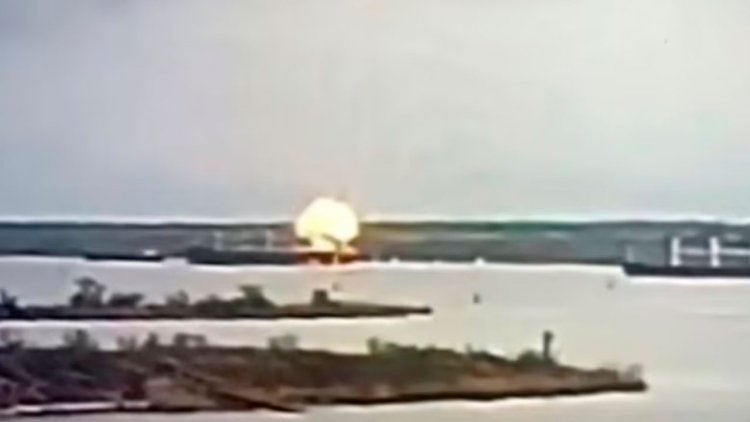
The ship was hit by a missile from the Russian Navy and sank within a 12-mile zone on the traverse of the Pivdenny port.

The Russian warship that sank the ship at first prevented the rescue operation by threatening to open fire. This was announced by the head of the Odessa Regional Military Administration Maxim Marchenko.

One of the rescued sailors, Viktor Tsushko, said:

“There was no call for communication or any warnings from the Russian warship. The projectile came from the sea. From the shell that hit the ship, it sank in a few minutes.

Crew members managed to give an SOS signal. In lifeboats and rafts, six sailors stayed at sea for about four hours. Then they were picked up by the rescue service. The health condition of all crew members is satisfactory.

NAPA and ClassNK launch new data link to support 3D ship design approval process

0

NAPA and classification society ClassNK have strengthened their partnership to support the use of 3D models in the ship design approval process. 

By streamlining data sharing between design and class approval software, this move brings 3D model-based approval one step closer to reality. It saves time and allows designers, engineers, and class societies to collaborate more effectively on vessel designs by using a consistent 3D model throughout.

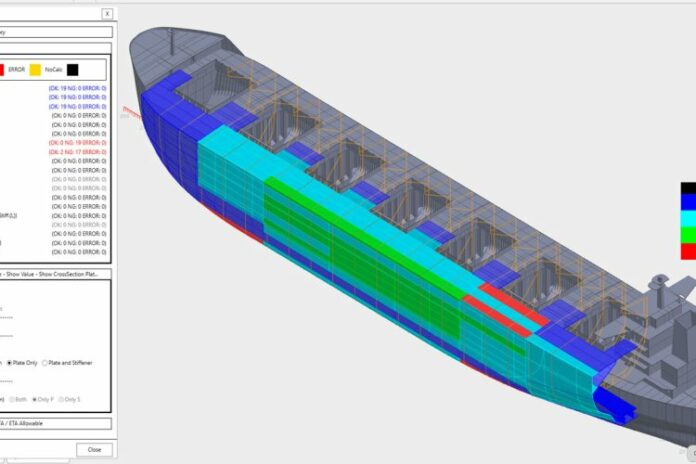
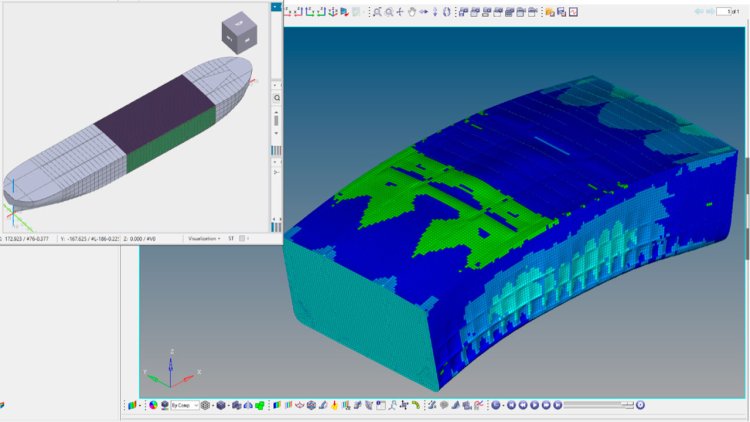
The partnership will enhance data sharing between NAPA’s 3D Computer-aided design (CAD) software NAPA Designer and ClassNK’s design support software PrimeShip-HULL. The two systems will now be directly linked through NAPA’s Application Programming Interface (API) rather than relying on intermediate files. 

This streamlined system will reduce the person-hours required for data linkage by more than 30% compared to the current method while also improving the accuracy of linkage and limiting the risk of errors.

This latest upgrade will also enable closer collaboration between designers and class societies. It allows users of the PrimeShip-HULL system to carry out direct strength and prescriptive calculations on NAPA Designer seamlessly. Moreover, any amendment to dimensions following these calculations will be directly reflected in NAPA Designer’s 3D models. The new function is currently available for bulk carriers and oil tankers, applying the Common Structural Rules for Bulk Carriers and Oil Tankers (CSR BC & OT) requirements. The scope will be expanded to more ship types and structures in the future.

Tapio Hulkkonen, Director, Product Management, Design Solutions at NAPA, said:

“The use of 3D models throughout the design process of a ship, including for the class approval process, is an integral part of the future of naval architecture. At NAPA, we are proud to drive this vital transition forward by developing solutions that enable all stakeholders to collaborate on the same 3D model, instead of wasting time and resources on multiple conversions to 2D drawings. This makes the design process more efficient, saves time and money, and reduces the risk of errors. At a time when ship designers and engineers need to innovate rapidly to create more efficient vessels, and continue to raise safety standards, this couldn’t be more important.” 

Dr. Toshiro Arima, Corporate Officer, Director of Rule Development and ICT Division at ClassNK, said:

“As the capabilities of 3D computer-aided design software improve, we see an acceleration in the use of 3D technologies in the shipbuilding industry. At ClassNK, we are dedicated to supporting this transition with a powerful software environment that puts 3D models at the forefront to facilitate approval and collaboration between all partners. Today’s announcement builds on previous collaboration with partners on a study to facilitate the class approval process using 3D models, and we are proud to be at the forefront of innovation on this vital issue.”

NATO member owned ship sinks off Odessa after explosion

0

An Estonian-owned cargo ship has been sunk off the coast of Ukraine following an explosion. 

Two crew members were in a life raft at sea while four others were unaccounted for, Igor Ilves, managing director of Tallinn-based manager Vista Shipping Agency, told Reuters.

Ilves said:

‘The vessel has finally sunk. Two of the crew are in a raft on the water and four others are missing. I don’t know where they are at the moment.’ 

Ilves said the vessel might have struck a mine.

Estonia is a member of NATO, leading to fears the sinking could spark even further conflict in Eastern Europe. 

The 37-year-old Helt was flying under the Panamanian flag, like many merchant ships who wish to avoid their own countries’ strict marine regulations. 

It comes after the Russian Black Sea Fleet was accused of using civilian vessels including the Helt as human shields in the invasion of Ukraine.

The military said the Russian Navy forced the Helt to enter a dangerous zone of the Black Sea to cover the movement of its own warships.  

Ukraine’s armed forces said:

‘For the safety of civil navigation, the Navy of the Armed Forces of Ukraine closed navigation in the north-western part of the Black Sea.

‘At the same time, the Russian Black Sea Fleet continues the tactics of Russian ground forces trying to hide behind civilian lives.’  

It comes just a day after a Bangladeshi-owned cargo ship was struck by a missile or bomb in the Black Sea port of Olvia, killing one of its crew members.  

The Bangladesh-flagged Banglar Samriddhi had been stuck in the port of Olvia since Russia’s invasion of Ukraine began on February 24, and was hit by a missile on Wednesday evening, a Bangladeshi foreign ministry official said on Thursday.

Source: Reuters, MAILONLINE

Chris-Marine to supply RCG and Celebrity Cruises with engine maintenance machines

0

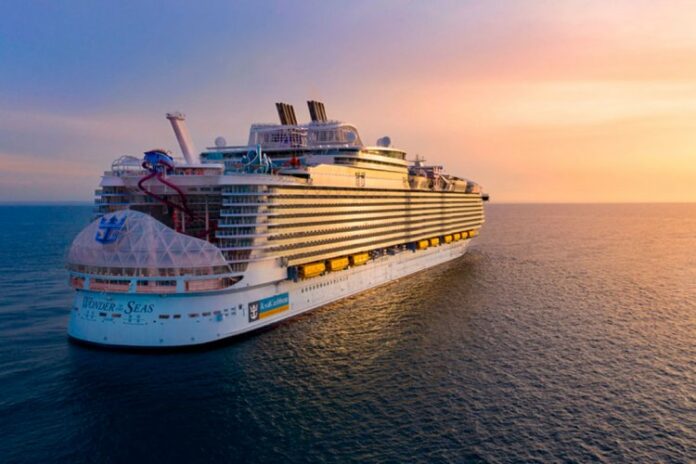
Chris-Marine USA, LLC has been chosen by Royal Caribbean Group (RCG) to supply critical engine maintenance machines for several Royal Caribbean International and Celebrity Cruises vessels throughout 2022.

The Scope of Supply includes over 65 Chris-Marine machines such as CPM (Surface Grinding Machine), VRL (Valve Seat and Recess Lathe), VSL (Valve Seat Lathe) and DGL (Deglazing Machine) which are critical to proper engine maintenance onboard the ships.

Alexander Malt, Global Sales & Marketing Director at Chris-Marine, says:

“We are very proud that Royal Caribbean Group has selected us as one of their partners in engine maintenance. To supply engine maintenance equipment to one of the world’s leading cruise companies is an honor and we very much look forward to contributing to the safe and efficient running of Royal Caribbean’s cruise ships.”

Anders Aasen, Vice President, Global Marine Operations, Royal Caribbean Group, says:

”We are pleased with Chris-Marine’s responsiveness to our unique business need, which enables RCG in-house riding teams to perform regulatory maintenance on our diesel engines.”

Wintershall Dea writes off financing of Nord Stream 2

0

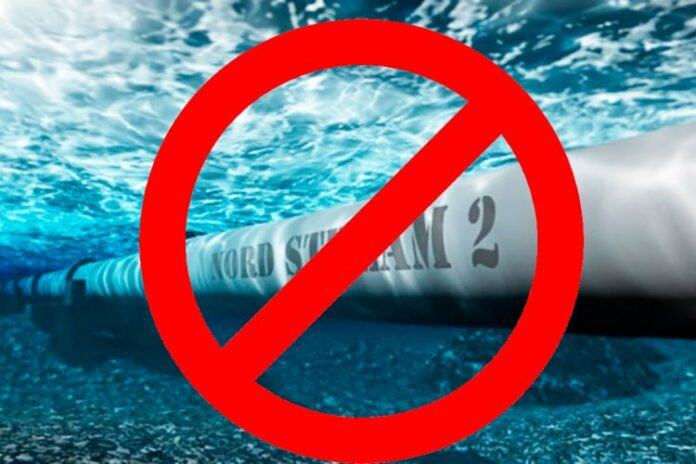
Wintershall Dea AG’s Management Board has decided not to advance or implement any additional gas and oil production projects in Russia and to write off its financing of Nord Stream 2 totalling around 1 billion euros.

In a personal statement yesterday, Wintershall Dea’s Chief Executive, Mario Mehren, emphasised that the Russian President’s war of aggression against Ukraine has shaken the foundations of the company’s work in Russia to the core. The brutal attack is causing unimaginable suffering and marks a turning point.

As a consequence, Wintershall Dea AG’s Management Board has decided today:

  • not to pursue any additional gas and oil production projects in Russia, and to stop all planning for new projects,
  • to basically stop payments to Russia with immediate effect,
  • to write off its financing of Nord Stream 2.

Wintershall Dea remains active in GASCADE Gastransport GmbH. GASCADE operates a 3,200 km gas pipeline network in Germany: critical infrastructure for gas transport in Germany and Europe.

Wintershall Dea remains involved in the existing Yuzhno Russkoye and Achimov natural gas production projects in Siberia. The projects produce natural gas for European energy supply.

Wintershall Dea is in contact with the German Federal Government and the European Commission.

Bureau Veritas delivers AiP to InfraCore for lightweight rudder flap

0

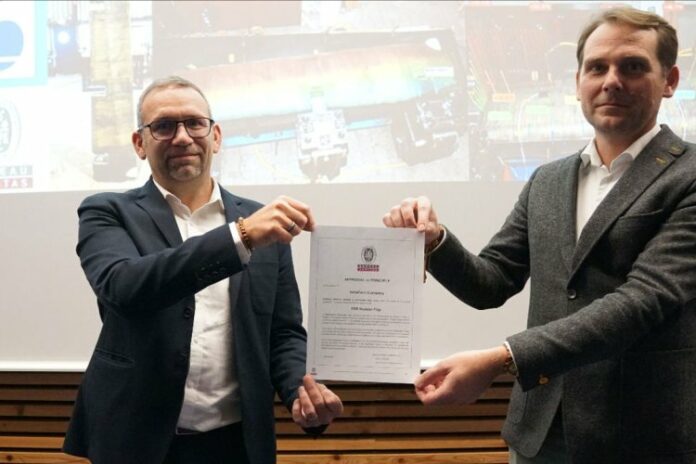
Bureau Veritas (BV) has delivered an Approval in Principle (AiP) to InfraCore Company for its design, modelling, production and testing of a full glass fibre-reinforced polymer (GFRP) rudder flap for an 18,500 TEU container ship.

The certificate was delivered as a result of the EU-funded project RAMSSES – Realisation and Demonstration of Advanced Material Solutions for Sustainable and Efficient Ships – which aims to expand the application and usage of innovative materials to build more efficient and sustainable ships.

Lightweight and other advanced materials, for example, were identified as technologies with high potential but development for use in the maritime sector was lagging. Increased freedom of design of a composite rudder flap can improve hydrodynamic performance, lifetime and reduce maintenance cost.

RAMSSES was initiated to validate and fast track approvals on the usage of innovative materials to improve the life cycle performance of European built ships and maritime structures, assisting the industry to build more sustainable and efficient ships at pace, while reducing their environmental footprint and making the industry more competitive at a global scale.

An important aspect of RAMSSES was the role classification societies play in developing a more efficient and agreed upon standard risk assessment. Bureau Veritas successfully defined a first draft of the approval process to be considered within RAMSSES project, pioneering the safety and performance of new technologies.

Laurent Leblanc, Senior Vice President Technical & Operations at Bureau Veritas Marine & Offshore, commented:

“Bureau Veritas is honoured to hand over the “Approval in Principle” document to InfraCore Company for their work on the design, modelling, production and testing of a full GFRP rudder flap for an 18,500 TEU container ship. The usage of innovative materials will help advance innovation, safety and performance. This AiP is another testament to our ambition to support safe innovation to shape a better future for the maritime industry and the wider world.”

Concept design for ammonia-fuel ready LNG-fueled vessel completed

0

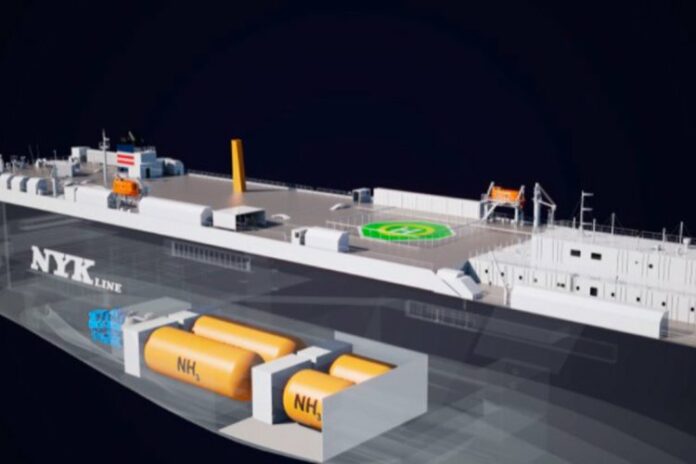
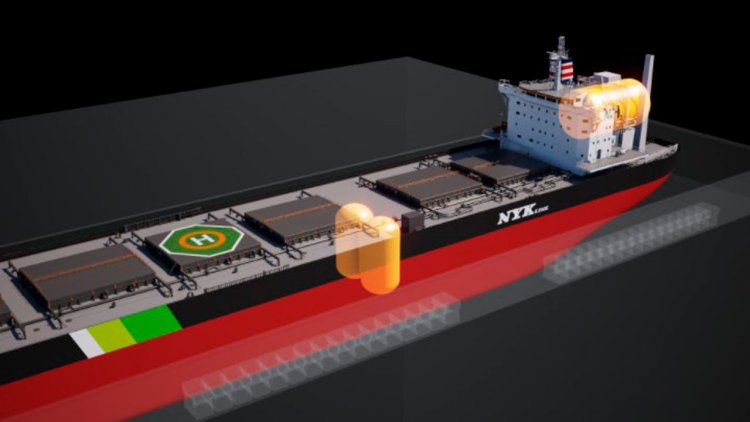
Nippon Yusen Kabushiki Kaisha (NYK), MTI and Elomatic Oy, a Finnish maritime consulting and engineering firm, have completed the development of a concept design for an ammonia-fuel ready LNG-fueled vessel (ARLFV) for the transition to a future marine fuel.

NYK and MTI (hereinafter, the NYK Group) have established the long-term target of net-zero emissions of greenhouse gas (GHG) by 2050 for the NYK Group’s oceangoing businesses. To achieve this goal, the NYK Group has been expanding its fleet of LNG-fueled ships in response to the Group establishing the LNG-fueled vessel as a bridge solution to vessels propelled by future marine fuels, such as ammonia or hydrogen.

In this project, which started in September 2021, the NYK Group and Elomatic started the development of a concept design for an ARLFV that can efficiently be converted from an LNG-fueled vessel to an ammonia-fueled vessel, based on the assumption that ammonia will become a next-generation marine fuel.

A concept design considers the specifications of a ship from an operation aspect, including factors such as load capacity, voyage distance, ship speed, fuel capacity, etc. When an ARLFV is ordered from a shipbuilder in the future, this concept design can then be used.

During Phase 1.5, which will continue until June 2022, the companies will design a similar concept for a capesize bulk carrier and a very large crude oil carrier. Furthermore, until the end of 2022 in Phase 2, they will proceed with the actual design of an ARLFV with a shipyard and marine manufacturers, reflecting the results obtained in the concept design, such as the optimal fuel-tank layout, ammonia-fuel supply device, and structural strength of the hull.

This project will be completed when the actual ship design is completed, Afterward, we will propose to customers and business partners a transportation service that can transition trouble-free from an LNG-fueled vessel to an ammonia-fueled vessel through use of an ARLFV. NYK plans to offer customers ARLFV contracts in 2023 and aim to complete building the first ARLFVs in 2025.

Billionaire Usmanov’s superyacht said to be seized in Germany

0

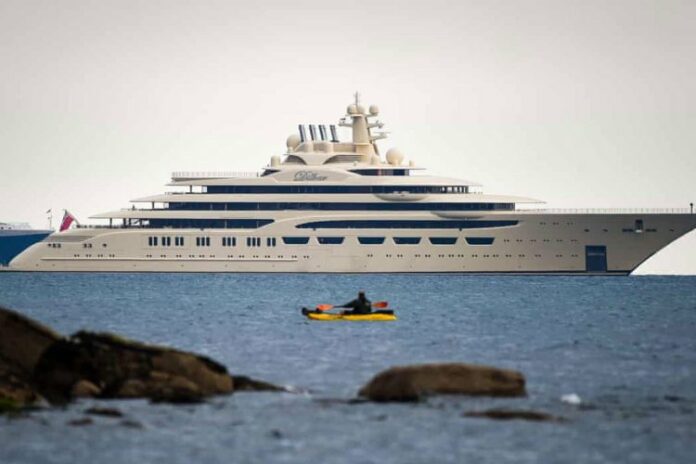
Russian billionaire Alisher Usmanov was sanctioned by the European Union on Monday. Two days later, Forbes has learned from three sources in the yacht industry that one of his prized possessions—the 512-foot yacht Dilbar, valued at nearly $600 million—has been seized by German authorities in the northern city of Hamburg.

The ship has been in the Hamburg shipyards of German shipbuilding firm Blohm+Voss since late October for a refitting job. Sources who spoke to Forbes said that the German government froze the asset and that, likely as a result, Blohm+Voss employees who had been working on the yacht didn’t show up to work on Wednesday. Representatives for Blohm+Voss and Usmanov didn’t immediately respond to a request for comment.

Usmanov purchased Dilbar in 2016 for a reported $600 million from German shipbuilder Lürssen, which custom-built it for him over 52 months. The firm calls it “one of the most complex and challenging yachts ever built, in terms of both dimensions and technology.” At 15,917 tons, it’s the world’s largest motor yacht by gross tonnage, and is typically manned by a crew of 96 people. Dilbar boasts the largest swimming pool ever installed on a yacht as well as two helicopter pads, a sauna, a beauty salon, and a gym. Its plush interiors have more than 1,000 sofa cushions and it can host up to 24 people in 12 suites.

On Tuesday, Usmanov commented on the EU sanctions imposed on him in a statement to the International Fencing Federation where he also announced he was stepping down as the organization’s president. “I believe that such decision is unfair, and the reasons employed to justify the sanctions are a set of false and defamatory allegations damaging my honor, dignity, and business reputation,” he wrote. “I will use all legal means to protect my honor and reputation.”

At least five other superyachts owned by Russian billionaires are now anchored or cruising in Maldives, an Indian Ocean island nation that does not have an extradition treaty with the US, ship tracking data showed.

The vessels’ arrival in the archipelago off the coast of Sri Lanka follows the imposition of severe western sanctions on Russia.

The Clio superyacht, owned by Oleg Deripaska, the founder of aluminium giant Rusal, who was sanctioned by the US in 2018, was anchored off the capital Male on Wednesday, according to shipping database MarineTraffic.

The Titan, owned by Alexander Abramov, a cofounder of steel producer Evraz, arrived on 28 February.

Three more yachts owned by Russian billionaires were seen cruising in Maldives waters on Wednesday, the data showed. They include the 88-metre (288 ft) Nirvana owned by Russia’s richest man, Vladimir Potanin. Most vessels were last seen anchored in Middle Eastern ports earlier in the year.

The US has said it will take strict action to seize property of sanctioned Russians.

“This coming week, we will launch a multilateral transatlantic taskforce to identify, hunt down, and freeze the assets of sanctioned Russian companies and oligarchs: their yachts, their mansions, and any other ill-gotten gains that we can find and freeze under the law,” the White House said in a tweet on Sunday.

Washington imposed sanctions on Deripaska and other influential Russians in 2018 because of their ties to president Vladimir Putin after alleged Russian interference in the 2016 US election, which Moscow denies.

Source: Forbes, the Guardian

Terntank takes delivery of Tern Fors

0

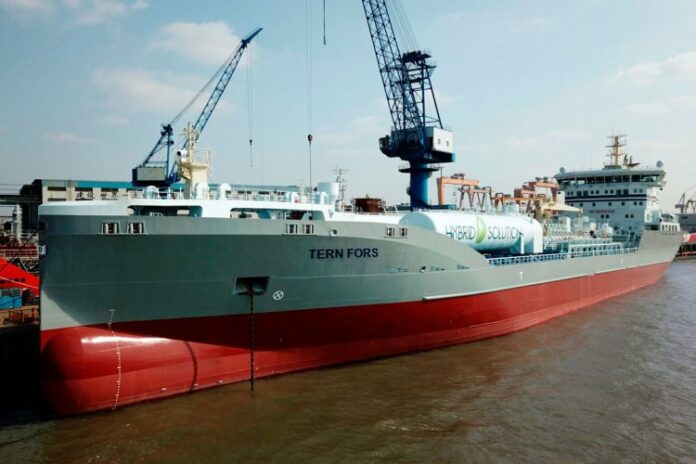
Leading Swedish tanker operator Terntank takes delivery of TERN FORS on Friday, 25th of February, 2022. 

TERN FORS is the second tanker of a series of two that combine LBG/LNG engine-powered engines, are 100% biofuel compatible, emit no greenhouse gases or carbon particulates during port operations and facilitate enhanced digital solution for optimized operations. 

TERN FORS has been delivered today from China Merchants Jinling Shipyard, Yangzhou, Dingheng Co Ltd to Terntank Rederi AS. Designed by Terntank and Kongsberg Maritime CM AS, TERN FORS is the second of a series of two 15000 DWT chemical and product tankers. The vessel, has been designed with the Hybrid Solution® combining dual-fuel powered engine that uses LBG (liquefied biogas) or LNG (liquefied natural gas), which means that it is able to operate on completely fossil-free fuel. Additionally, TERN FORS has been installed with Kongsberg’s digital solution vessel insight. 

The digital solution installed upon the vessel optimizes voyages, achieved by constantly adjusting the vessel’s speed to meet its’ agreed time of arrival and utilizing slow streaming, which allows the vessel to send a virtual NOR, moving directly into port, instead of dropping anchor and waiting to berth. This also ensures compliance with the BIMCO clause on slow steaming and tracks real-time savings. This digital solution offers enhanced their “Just-In-Time” management, which is continuously developed, providing vessel-to-cloud data infrastructure capturing and aggregating quality data in respect to the vessel’s overall operation. 

The data gathered ranges from engine and piston performance, hull build up, to even contact with ice. This data is then utilized to allow efficient and proactive maintenance, evidently leading to reduced emissions, placing Terntank’ s green operations in another league. 

Furthermore, TERN FORS as sister vessel TERN ISLAND, is 100% biofuel compatible. The main engine, boiler and auxiliary engine are designed to reduce the environmental impact and perform safe operations running on biofuels. By combining the optimized hull and rudder design with dual fuel capability, when utilising 30% biogas, in comparison to a same sized conventional vessel, TERN FORS reduces emission by: -70% of CO2 and almost eliminated the emissions of sulphur oxide (-99%), of particle emission, (-99%) and nitrogen oxide (-97%).