-0.4 C
New York
Home Blog Page 46

Malaysia’s ALAM launches Wärtsilä simulators for alternative fuels training

0

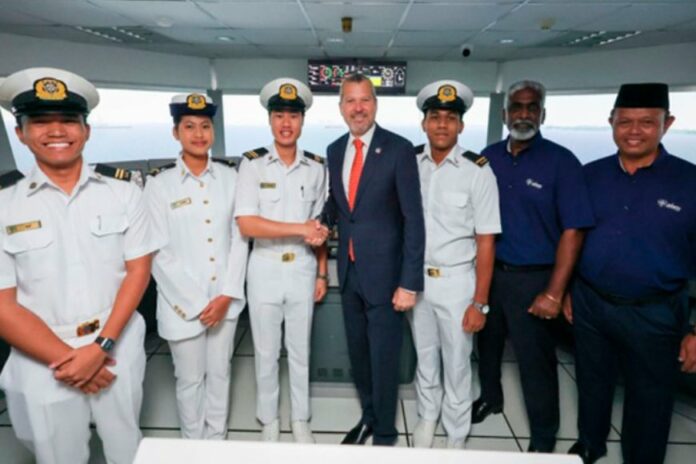
ALAM is the training arm of MISC (Malaysia International Shipping Corporation Berhad), a subsidiary of Petronas group. The integration of Wärtsilä’s latest simulator technology significantly raises the level of maritime education for the region, creating a new generation of highly skilled and proficient seafaring professionals. 

ALAM’s new simulation suite features Wärtsilä’s new advanced dual-fuel simulator technology, including the adoption of virtual reality elements to immerse seafarers in realistic training scenarios. There is also training available to educate seafarers in operating with future sustainable fuels – such as methanol or ammonia, for example – and different engine types, which are essential to the industry’s transformation to decarbonised operations.

During the inauguration, it was announced that ALAM has been included in Wärtsilä’s “Maritime Advancement in Simulation, Technology and R&D Services” (MASTERS) program, the first in the Asia Pacific region. The program is dedicated to the identification, recognition and formalisation of Wärtsilä’s relationship with leading global Maritime Training and R&D providers who are not only extensive users of Wärtsilä’s simulation and training products and services, but with whom Wärtsilä collaborates closely to promote advancements in Maritime training.

“The launch of the Maritime Experiential Learning Centre and its recognition as Wärtsilä’s first MASTER centre in Asia, reflects ALAM’s strong commitment to raising the standards of Maritime Education and Training (MET) in Malaysia and the Asia Pacific region. As the industry continues to evolve, we must ensure our students are equipped not just with technical skills, but with the ability to lead, adapt, and thrive in a global maritime environment. This new facility supports our broader ambition to become the Maritime University of Choice in Asia by nurturing the development of future-ready seafarers through hands-on, immersive, and internationally aligned training programmes, including those related to New Energy, Decarbonisation and Digitalisation,” said Ts. Dr. Captain Manivannan Subramaniam, Chief Executive of ALAM. 

The technical simulators provided pertain to full-mission and multi-functional network classroom set-ups, both for engine-room and liquid cargo handling training. The navigation simulators include a full-mission bridge with 270-degree visualisation, three part task bridges, equipped with dynamic positioning and extended reality (XR) training capabilities. The suite also includes GMDSS & ECDIS classroom simulators, as well as Wärtsilä cloud-based simulation for blended learning experiences. 

“First of all, I want to congratulate ALAM for their commitment to providing world-class maritime education and training. The inauguration of these simulators allows ALAM students to achieve a new higher level of competence that they need for today’s highly automated and digital vessels. They can now replicate real-world operational scenarios, enabling students to hone their skills in a controlled, safe setting. A broad range of training needs can now be addressed, from basic navigation and engine room operations to complex procedures, research studies, and integrated emergency response drills,” comments Neil Bennett, General Manager, Simulation & Training, Wärtsilä Marine. “What’s more, I would also like to congratulate ALAM for being the first organisation from this region to join our MASTERS program. Members embody and share our objective of improving safety, whilst advancing optimisation, digitalisation and decarbonisation learning in maritime.” 

Founded in 1976, ALAM has provided training for more than 15,000 maritime professionals for both onshore and offshore operations. The training centre is located in Melaka, overlooking the busy Straits of Malacca. Wärtsilä began its partnership with ALAM in 2006 with the launch of the Maritime Simulation and Communication Centre.

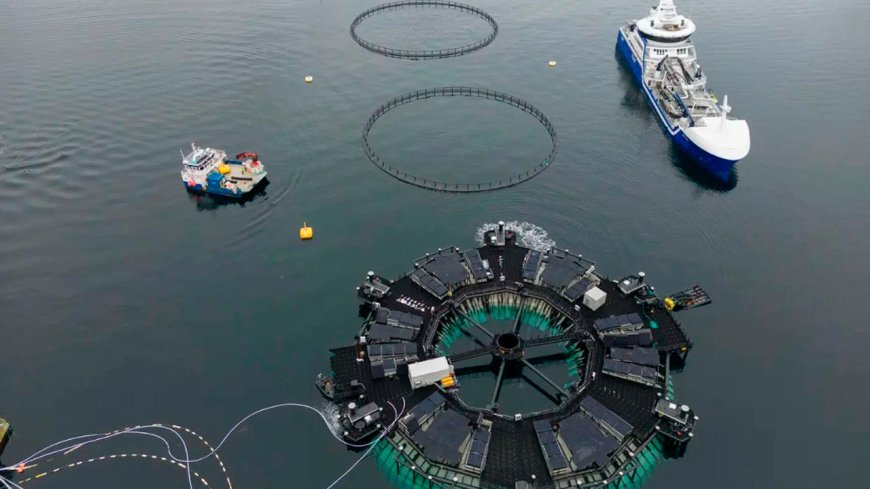
Marine Donut is ready for market

0

The Marine Donut is a circular closed flow-through facility in the sea, with a volume of 22,000 cubic metres and a capacity of 1,100 tonnes of standing biomass. It is constructed of thermoplastic, has ultraviolet purification of intake water, and sludge collection, and is one of the few sea-based facilities that meets the requirements for moving fish between production zones.

“We have built something completely unique. There is a ‘river’ inside the facility that sets the fish in motion, which reduces stress. The volume is fantastic, and the fish move very nicely. This is not only an environmentally friendly concept, but also economically sound,” says Tufte.

The Marine Donut can be used for both post-smolt and food fish production, and Tufte believes the greatest economic potential lies in its flexibility.

“You can use the Donut for post-smolts, and then send the fish to open cages – or further into a new Donut. This provides more strategic opportunities for the farmers.”

Bluegreen is also involved in the production of FishGlobe – another closed farming concept. 

Bluegreen CEO Nils Johan Tufte does not see this as a conflict, but as a strength.

“The market is big enough for both. We work well together and are building three FishGlobes now – two for overseas and one for Nova Sea.”

The road to this point has not been easy. Since its inception in 2020, Bluegreen has experienced major fluctuations. The first year the company had NOK 56 million in revenue, the second year NOK 172m, but then came the resource tax.

“It’s going to be an adventure. Marine Donut is a ‘proven technology’. Now we will build capacity and help the industry move forward – both in Norway and internationally.”

The company has looked at both Canada and Scotland, but has no doubt that its main market will be in Norway. The boss also highlights the opportunities in artificial intelligence and data collection in closed facilities as the next step.

“With all the sensors and data capture we have in a closed system, everything is in place to use AI to further optimise operations. It’s incredibly exciting – and this is where the future lies.”

Source: FishfarmingExpert

Russian port of Ust-Luga begins inspecting ships after series of tanker explosions

0

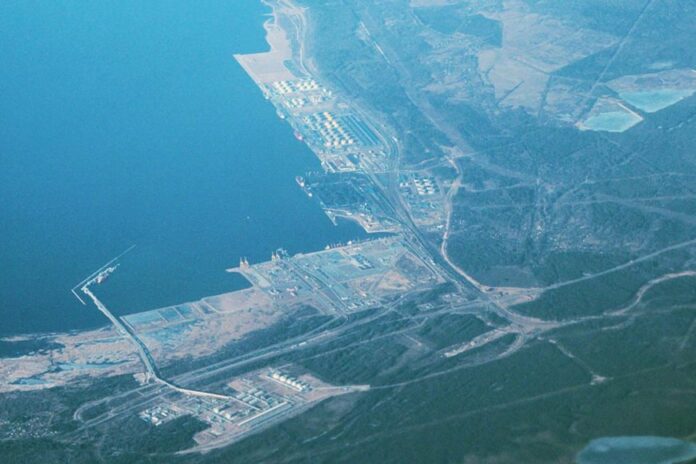
The decision was made in the wake of a series of explosions on tankers bound for Russia. Bloomberg reported, citing informed sources.

The decision to begin inspecting the underwater parts of ships was made earlier this month. The Ust-Luga port also insists that ships arriving at the port must have Russian insurance against risks, including spills and collisions.

Recall that earlier in the Russian Federation it was decided that every ship heading to Russian seaports from abroad must obtain permission to enter from the FSB. However, the decision to inspect ships in Ust-Luga was made before Putin’s order was issued, and other Russian ports are not currently using this approach, the publication’s sources noted.

Earlier this year, the first explosion on an oil tanker occurred in Ust-Luga. In February, the tanker Koala, anchored in the port, was damaged in a “man-made incident” that resulted in an oil spill. In mid-July, another tanker, the Eco Wizard, reported an ammonia leak while anchored in the same port.

These incidents led to increased security measures in ports, in line with recommendations from the Russian Security Council. As a result, shipowners began checking the hulls of their vessels for mines using divers and special underwater vehicles.

Source: Bloomberg, USM

Corsica Linea ferry gains significant fuel savings with Wärtsilä retrofit package

0

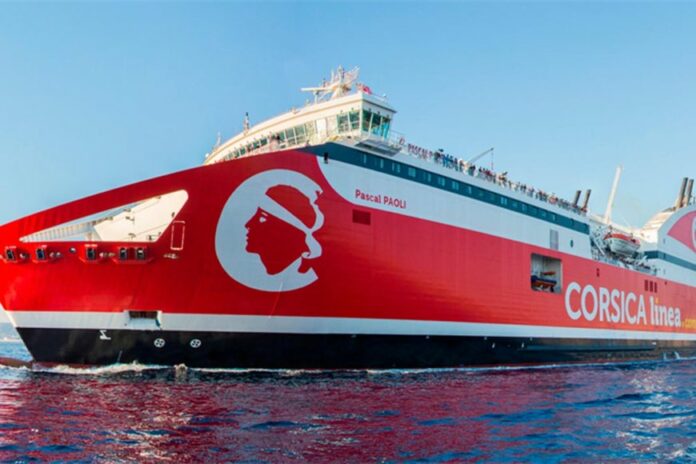
This significant gain in energy efficiency on each trip has been made possible by the installation of a new twin screw controllable pitch propeller (CPP) system with blades optimised for the ship’s operating profile, the Wärtsilä EnergoProFin energy saving propeller cap, a controls retrofit, and combinator curves for the ship’s various operating modes. 

These upgrades, which were completed at the end of 2024, were validated through CFD (computational fluid dynamics) open water simulations, and confirmed during sea trials with the chief engineer. In monetary terms, the fuel savings equate to an estimated 7,700 US Dollars per trip. The related reduction in emissions represents a massive step in Corsica Linea’s decarbonisation journey, allowing the company to remain compliant with the stricter requirements on carbon emissions. 

“We are extremely happy with the efficiency improvements resulting from this Wärtsilä retrofit package,” says Xavier Esnault, Energy transition project manager at Corsica Linea. “The fuel savings are important, both from a cost perspective, as well as supporting our decarbonisation strategy to reach a reduction of 40% of our CO2 emissions by 2030.” 

The ‘Pascal Paoli’ is a 174-metre long RoPax ferry operating between Marseille and Bastia. Ferries are on the front line of the energy transition and are among the first sectors to target net zero-carbon operations. At the same time, operators are expected to provide a reliable, efficient on-time service, while keeping operating costs under strict control. 

“Ferry operators, such as Corsica Linea, are looking to leverage technologies that offer minimal service disruption and a maximised return on investment, all while reducing their carbon footprint. For this reason, the fuel efficiency upgrade carried out on the ‘Pascal Paoli’ was done with the aim of supporting Corsica Linea with achieving these goals,” comments Andrey Dudko, Product Manager, Propulsion – Wärtsilä Marine. 

The ’Pascal Paoli’ operates with two Wärtsilä 46 engines per shaftline. It has a number of operating modes, including sailing and manoeuvring with one or two engines per shaft line. The changes resulting from the retrofit project did not impact the vessel’s manoeuvrability. 

This upgrade comes at a time when ferry operators are under increasing pressure to decarbonise. The IMO’s new Net-Zero Framework through the GHG fuel intensity (GFI) provides a clear incentive for operators to invest in energy-efficiency solutions, such as the technologies leveraged for this retrofit project. By placing an explicit price on GHG emissions, the IMO has sent a strong market signal that energy efficiency technologies and alternative fuel solutions must be part of every shipowner’s toolkit. This framework encourages industry stakeholders to invest in immediate operational improvements, explore onboard abatement solutions, and accelerate the roll-out of sustainable fuels.

Isotta Fraschini Motori inaugurates new Fuel Cell production line in Bari

0

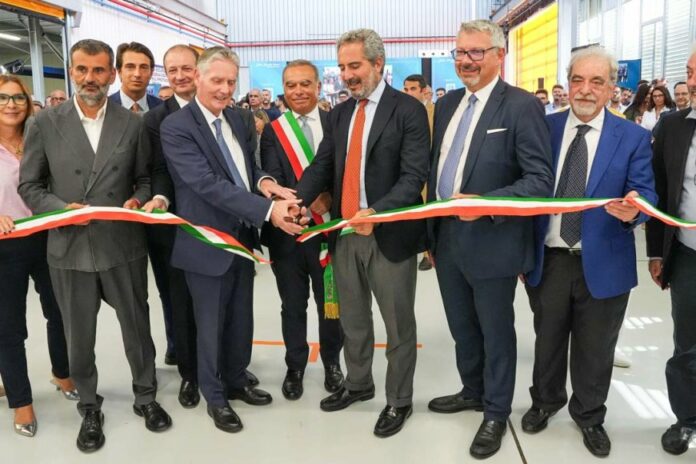
Isotta Fraschini Motori (IFM), a Fincantieri Group company specialized in advanced fuel cell technologies, has inaugurated a new production line at its Bari facility dedicated to the development and testing of hydrogen fuel cell systems.

Among the first applications is the marinized fuel cell module produced by IFM, which will be installed on board the Viking Libra, the world’s first cruise ship powered by hydrogen stored on board and used both for propulsion and for electricity generation. This represents a concrete example of Fincantieri Group’s ability to be the first adopter of its own solutions, implementing a vertical integration model that accelerates the introduction of zero-emission technologies and strengthens its industrial leadership in the ecological transition.

The new line is part of the Innovation and Development Center (CIS) launched in 2023, supported by the European Regional Development Fund – Puglia. It is a key milestone in the transformation of the Bari plant into a cutting-edge Net Zero Technology Hub. Within an integrated industrial ecosystem approach, Isotta Fraschini Motori with an economic commitment of around 30 euro million over five years—partly financed by IPCEI funds—plans to develop innovative zero-emission systems and significantly reduce its carbon footprint, including through energy recovery from production processes.

This commitment is part of Fincantieri Group’s broader focus on sustainable innovation through strategic initiatives such as Wave 2 the Future, part of the Important Project of Common European Interest (IPCEI) “Hy2Tech” on hydrogen. The goal is to develop enabling technologies for the use of hydrogen in the maritime sector, promoting the shift toward decarbonized mobility and contributing to the creation of a competitive European industrial ecosystem.

“With the inauguration of Isotta Fraschini Motori’s new fuel cell production line, Fincantieri takes a decisive step toward the future of naval technology,” said Pierroberto Folgiero, CEO and General Manager of Fincantieri.
“This is a commitment that brings our strategic vision to life: leading the sustainable transformation of the industry through our hallmark innovation capabilities and strong local presence. Our goal is to make hydrogen a tangible lever for competitiveness and decarbonization of the European industrial system, and to consolidate our role as a leader in the adoption of pioneering technologies.”

IFM technologies will initially be adopted within the Group, further confirming Fincantieri’s ability to act as the first user of its solutions—generating added value and accelerating the path toward energy transition.

Bibby Marine lays keel for zero-emissions CSOV

0

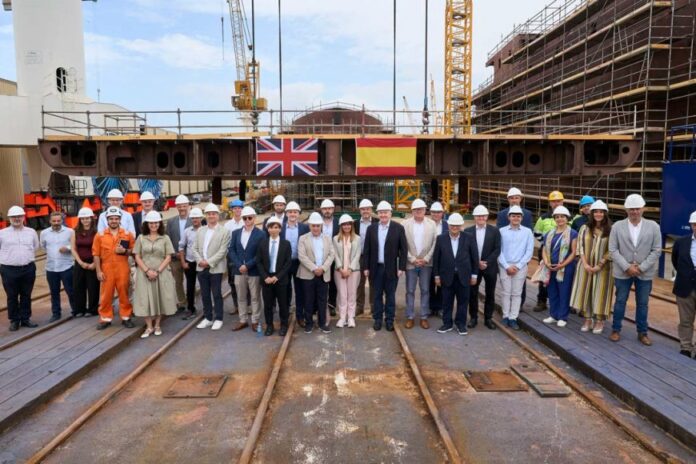
Bibby Marine has laid the keel for its first e-CSOV, a hybrid methanol battery-powered commissioning service operation vessel for the offshore wind industry at the Armon Shipyard in Vigo, Spain. During the ceremony, Bibby Line Group CEO, Jonathan Lewis, welded a coin from 1807, the year of Bibby’s founding, into the keel plates, marking the start of the vessel construction.

When commissioned in 2027, the vessel will provide significant reductions in emissions and fuel consumption for the offshore wind industry, providing accommodation for up to 120 personnel and able to provide zero-emission commissioning and O&M support to offshore windfarms for up to 30 days.

Speaking at the keel laying event, Jonathan Lewis said, “This vessel is more than a feat of engineering – it’s a symbol of our values as a business, in action. At Bibby Marine, we believe in doing the right thing, even when it’s difficult.

“We began work on zero-emissions vessels back in 2019, long before it was mainstream. As we lay the keel for our electric-first vessel, we are proud to be proving that clean, sustainable maritime solutions are not only possible, but essential.”

Key partners in the project include Kongsberg, provider of the dynamic positioning and main propulsion package, battery provider, Corvus Energy and Wartsila, which provide engine and propulsion.

Van Oord orders next generation Subsea Rock Installation vessels

0

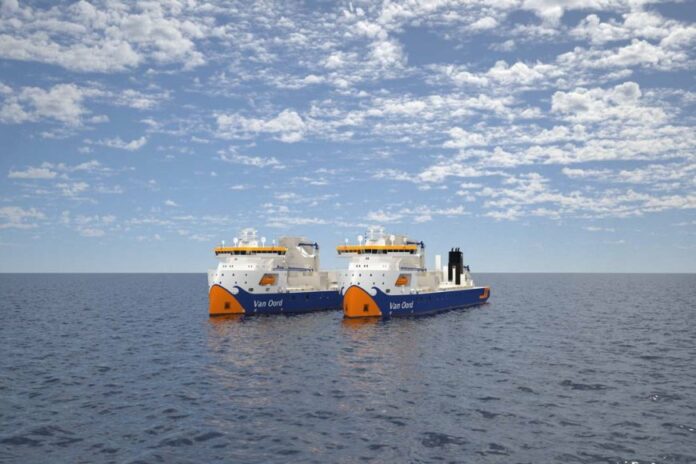
The first vessel is expected to enter the market in 2028, with a second vessel expected to follow within one year. 

Subsea Rock Installation, pioneered by Van Oord since the 1970s, is vital for protecting and stabilising offshore energy assets. With a track record in efficient and innovative flexible fallpipe vessels, Van Oord is a market leader in seabed intervention. 

The new vessels will be equipped with a substantial loading capacity of 35,000 tonnes, will be capable of handling large rock sizes, and feature a DP-2 dynamic positioning system. This advanced system will enable the vessels to maintain precise positioning despite challenging conditions such as waves, wind and currents. These features will make the vessels ideal for long-distance projects, as they will minimise round trips, reducing emissions and costs per installed rock volume. 

Maurits den Broeder, Managing Director Offshore Energy at Van Oord, said:

‘Van Oord is at the forefront of the energy transition. Through innovative technologies and long-term investments, we actively contribute to greater energy security and energy independence for countries. Particularly in times when securing critical underwater infrastructure is a priority, this investment is important. These new vessels embody our commitment to innovation, safety, sustainability and efficiency, while supporting the growing demands of our clients and our own net-zero ambitions.’

The sustainable design of the vessels includes multi-fuel engines (biofuel and methanol), a DC-grid with large battery storage capacity, and an energy-efficient hull design and rock handling system. These technologies enable a reduction in CO₂ emissions, supporting Van Oord’s net-zero strategy. 

Van Oord currently operates three Subsea Rock Installation vessels: Stornes, Nordnes and Bravenes. The new vessels will build on this proven platform, offering key upgrades to meet future offshore challenges. The vessels will be constructed by Yantai CIMC Raffles Offshore in China. 

Vår Energi confirms new gas discovery in Norwegian Sea

0

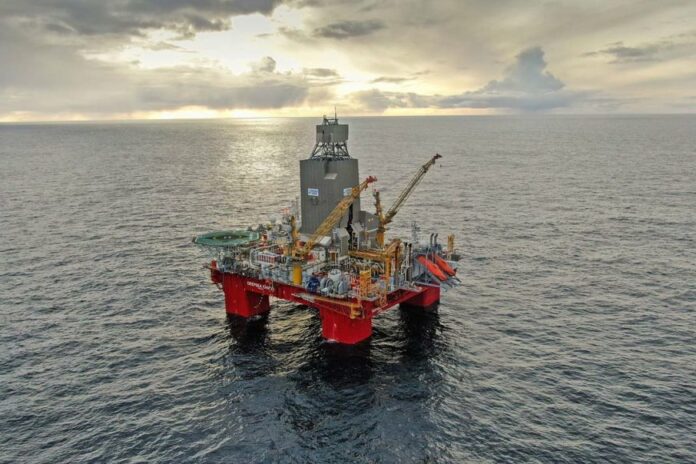
Vår Energi and its partners have made a gas/condensate discovery in the “Vidsyn” prospect.

Preliminary estimates indicate that the size of the discovery is between 4-6.4 million standard cubic metres of oil equivalent, or 25-40 million barrels of oil equivalent. 

The licensees will now assess the discovery together with prospects in the area with a view towards a potential development tied back to existing infrastructure.

Wildcat well 6406/11-2 S was drilled in production licence 586, about 8 kilometres west of the Vår-operated Fenja field.

Production licence 586 was awarded in 2011 (Awards in predefined areas 2010), and 6406/11-2 S is the eighth wildcat well to be drilled in the production licence. 

The primary exploration target for the well was to prove petroleum in Lower to Middle Jurassic reservoir rocks in the Ile Formation (the Fangst Group). The secondary exploration target was to prove petroleum in Lower Jurassic reservoir rocks in the Tilje and Tofte Formations (the Båt Group).

Well 6406/11-2 S encountered a gas/condensate column of around 110 metres in the Ile Formation in a sandstone reservoir with moderate to good reservoir properties. The reservoir was around 145 metres thick. The petroleum/water contact was encountered 3513 metres below sea level. The total column is in excess of 210 metres.

In the secondary exploration targets in the Tilje and Tofte formations, aquiferous sandstones were encountered, with moderate reservoir quality.

Extensive data acquisition and sampling have been carried out.

The well was drilled to a vertical depth of 3857 metres below sea level and was terminated in the Åre Formation from the Late Triassic. Water depth at the site is 310 metres. The well will be permanently plugged and abandoned.

Egypt’s first finished-vehicle logistics terminal opens

0

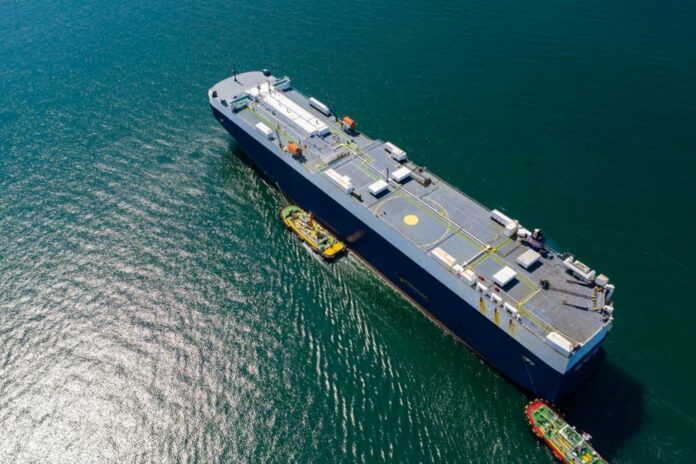
The Suez Canal Automotive Terminal (SCAT) — a joint venture among NYK, Africa Global Logistics (AGL) and Toyota Tsusho Corporation (Toyota Tsusho) — has officially opened Egypt’s first finished-vehicle logistics terminal.

Driven by Egypt’s robust population growth and economic development, the nation’s automobile market is expanding. With an anticipated increase in finished-vehicle imports and the forthcoming initiation of full-scale exports, SCAT is strategically positioned to address this growing demand. The facility features a quay capable of accommodating two large car carriers simultaneously, as well as extensive storage space that will be able to accommodate up to 10,000 vehicles. In addition, the terminal is equipped to support the rising need for cargo transshipment.

Outline of the terminal

  • Name: Suez Canal Automotive Terminal (SCAT)
  • Location: East Port Said, Arab Republic of Egypt
  • Opening date: July 1, 2025
  • Planned operating period: 30 years
  • Site area: approximately 21.2 hectares
  • Storage capacity: 2,550 vehicles in the initial stage of operation, to be expanded to a maximum of 10,000 vehicles in the future

SCAT will contribute to the development of the Egyptian economy by combining the knowledge that AGL has accumulated through its port operation business in Africa, Toyota Tsusho’s experience and insight into a wide range of companies in Egypt, and the expertise and technology in finished vehicle transportation and terminal operation that NYK has cultivated around the world. SCAT is well positioned to contribute significantly to Egypt’s development by capturing the increasing demand for automobile logistics in North Africa and the Eastern Mediterranean region.

Australian AI startup granted AUKUS exemption for autonomous vessel software

0

An Australian AI startup developing software for crewless boats said it has been granted one of the first AUKUS exemption licences by the Australian government, allowing it to share information with defence contractors in the U.S. and Britain.

Defence officials have said Australia will rely more on autonomous systems to protect its vast coastline and up to 1.2 million square miles (3.1 million sq km) of northern ocean, even as it spends billions on nuclear-powered submarines.

Australia, the United States and Britain removed significant barriers on defence trade in August through an exemption to the U.S. International Trafficking in Arms Regulations, designed to speed up construction of nuclear-powered submarines under the Australia-UK-US (AUKUS) pact.

The co-founder of the Greenroom Robotics startup, former Royal Australian Navy engineer Harry Hubbert, told Reuters the licence exemption will also speed up the company’s collaboration on autonomous vessel trials with defence companies in Britain and the United States.

Greenroom’s software acts like “the brain of a vessel”, he said, emulating what a helmsman or navigator would do by talking to the rudder, engine and radar systems on board.

Trials of the software have been conducted on boats ranging from a one-metre long research vessel to an offshore patrol boat, he said.

Greenroom has a partnership with navy shipbuilder Austal Australia (ASB.AX), opens new tab and has also worked with British company Subsea Craft on a tactical water vessel, Hubbert said.

Greenroom’s software is dual-use, and can also be applied to help vessels monitor for whales, he added.

“The opportunity with AUKUS is that we can enter U.S. and UK markets but also expand the horizon,” he said.

With around 80% of the ocean floor uncharted to modern standards, autonomous vessels can gather information that helps ocean research, national security needs and sea-borne trade, he said.

Source: Reuters