0.3 C
New York
Home Blog Page 47

Vår Energi confirms new gas discovery in Norwegian Sea

0

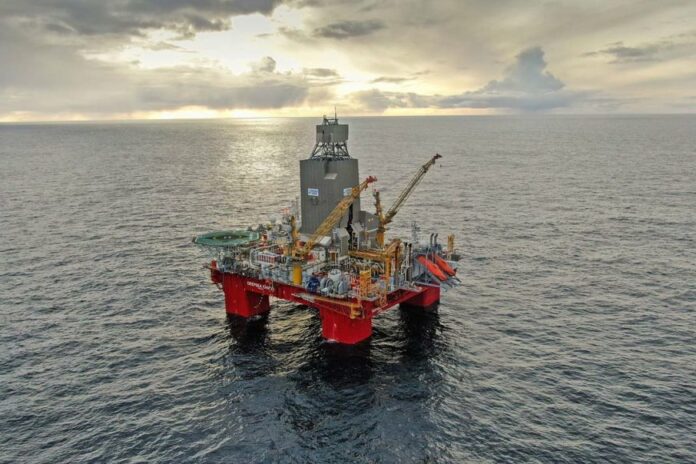
Vår Energi and its partners have made a gas/condensate discovery in the “Vidsyn” prospect.

Preliminary estimates indicate that the size of the discovery is between 4-6.4 million standard cubic metres of oil equivalent, or 25-40 million barrels of oil equivalent. 

The licensees will now assess the discovery together with prospects in the area with a view towards a potential development tied back to existing infrastructure.

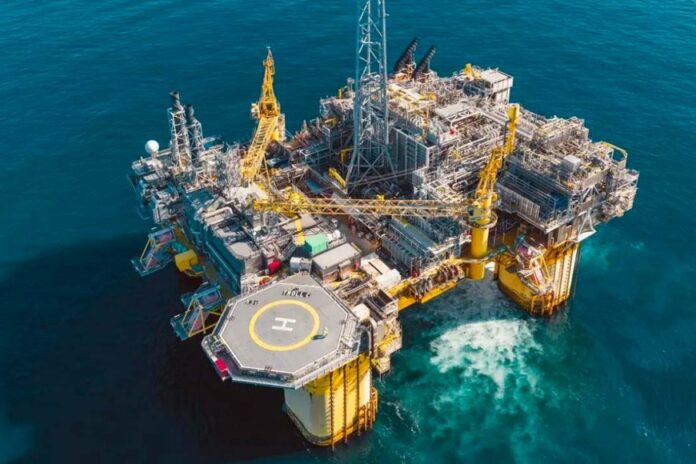
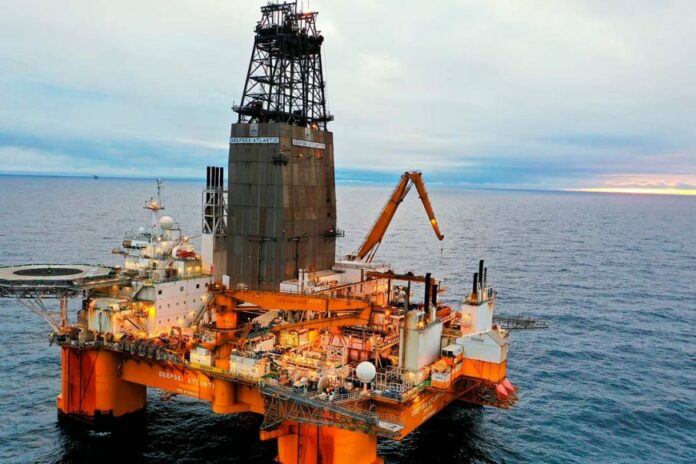
Wildcat well 6406/11-2 S was drilled in production licence 586, about 8 kilometres west of the Vår-operated Fenja field.

Production licence 586 was awarded in 2011 (Awards in predefined areas 2010), and 6406/11-2 S is the eighth wildcat well to be drilled in the production licence. 

The primary exploration target for the well was to prove petroleum in Lower to Middle Jurassic reservoir rocks in the Ile Formation (the Fangst Group). The secondary exploration target was to prove petroleum in Lower Jurassic reservoir rocks in the Tilje and Tofte Formations (the Båt Group).

Well 6406/11-2 S encountered a gas/condensate column of around 110 metres in the Ile Formation in a sandstone reservoir with moderate to good reservoir properties. The reservoir was around 145 metres thick. The petroleum/water contact was encountered 3513 metres below sea level. The total column is in excess of 210 metres.

In the secondary exploration targets in the Tilje and Tofte formations, aquiferous sandstones were encountered, with moderate reservoir quality.

Extensive data acquisition and sampling have been carried out.

The well was drilled to a vertical depth of 3857 metres below sea level and was terminated in the Åre Formation from the Late Triassic. Water depth at the site is 310 metres. The well will be permanently plugged and abandoned.
Egypt’s first finished-vehicle logistics terminal opens

0

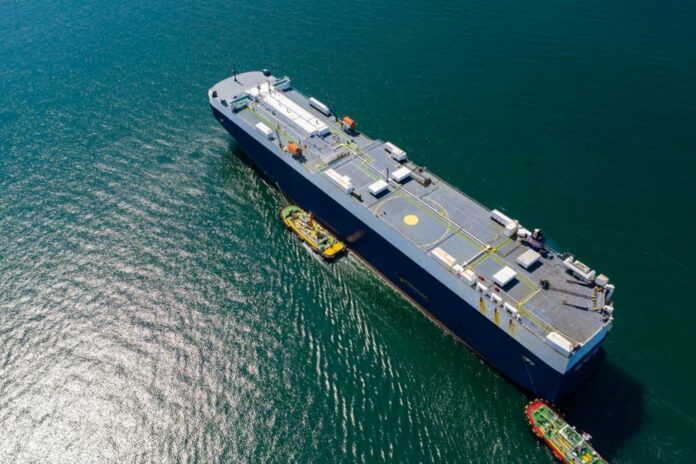
The Suez Canal Automotive Terminal (SCAT) — a joint venture among NYK, Africa Global Logistics (AGL) and Toyota Tsusho Corporation (Toyota Tsusho) — has officially opened Egypt’s first finished-vehicle logistics terminal.

Driven by Egypt’s robust population growth and economic development, the nation’s automobile market is expanding. With an anticipated increase in finished-vehicle imports and the forthcoming initiation of full-scale exports, SCAT is strategically positioned to address this growing demand. The facility features a quay capable of accommodating two large car carriers simultaneously, as well as extensive storage space that will be able to accommodate up to 10,000 vehicles. In addition, the terminal is equipped to support the rising need for cargo transshipment.

Outline of the terminal

  • Name: Suez Canal Automotive Terminal (SCAT)
  • Location: East Port Said, Arab Republic of Egypt
  • Opening date: July 1, 2025
  • Planned operating period: 30 years
  • Site area: approximately 21.2 hectares
  • Storage capacity: 2,550 vehicles in the initial stage of operation, to be expanded to a maximum of 10,000 vehicles in the future

SCAT will contribute to the development of the Egyptian economy by combining the knowledge that AGL has accumulated through its port operation business in Africa, Toyota Tsusho’s experience and insight into a wide range of companies in Egypt, and the expertise and technology in finished vehicle transportation and terminal operation that NYK has cultivated around the world. SCAT is well positioned to contribute significantly to Egypt’s development by capturing the increasing demand for automobile logistics in North Africa and the Eastern Mediterranean region.

Australian AI startup granted AUKUS exemption for autonomous vessel software

0

An Australian AI startup developing software for crewless boats said it has been granted one of the first AUKUS exemption licences by the Australian government, allowing it to share information with defence contractors in the U.S. and Britain.

Defence officials have said Australia will rely more on autonomous systems to protect its vast coastline and up to 1.2 million square miles (3.1 million sq km) of northern ocean, even as it spends billions on nuclear-powered submarines.

Australia, the United States and Britain removed significant barriers on defence trade in August through an exemption to the U.S. International Trafficking in Arms Regulations, designed to speed up construction of nuclear-powered submarines under the Australia-UK-US (AUKUS) pact.

The co-founder of the Greenroom Robotics startup, former Royal Australian Navy engineer Harry Hubbert, told Reuters the licence exemption will also speed up the company’s collaboration on autonomous vessel trials with defence companies in Britain and the United States.

Greenroom’s software acts like “the brain of a vessel”, he said, emulating what a helmsman or navigator would do by talking to the rudder, engine and radar systems on board.

Trials of the software have been conducted on boats ranging from a one-metre long research vessel to an offshore patrol boat, he said.

Greenroom has a partnership with navy shipbuilder Austal Australia (ASB.AX), opens new tab and has also worked with British company Subsea Craft on a tactical water vessel, Hubbert said.

Greenroom’s software is dual-use, and can also be applied to help vessels monitor for whales, he added.

“The opportunity with AUKUS is that we can enter U.S. and UK markets but also expand the horizon,” he said.

With around 80% of the ocean floor uncharted to modern standards, autonomous vessels can gather information that helps ocean research, national security needs and sea-borne trade, he said.

Source: Reuters

Ancient river landscapes discovered beneath East Antarctica

0

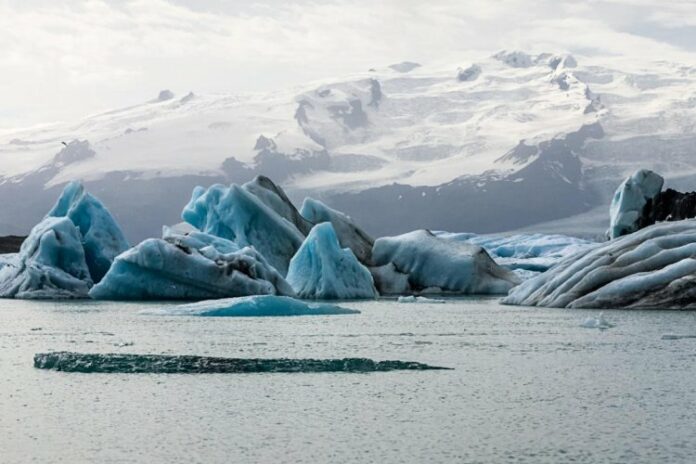
The international study, led by Durham University and published in the journal Nature Geoscience, used radar data to reveal previously unmapped, remarkably flat surfaces buried beneath a 3,500km stretch of the East Antarctic Ice Sheet, between Princess Elizabeth Land and George V Land.

These surfaces, some of which are believed to have formed over 80 million years ago when East Antarctica and Australia were still joined, are thought to have been smoothed by large rivers before the continent was engulfed by ice around 34 million years ago. Remarkably, these landscapes have remained largely intact, preserved beneath the ice sheet for over 30 million years.

Dr Guy Paxman, lead author and Royal Society University Research Fellow at Durham University, explains:

“The landscape hidden beneath the East Antarctic Ice Sheet is one of the most mysterious not just on Earth, but on any terrestrial planet in the solar system.

“These flat surfaces we’ve found are likely the remnants of ancient river beds that have survived beneath the ice. Their shape and position now appear to slow down the movement of ice above them, acting almost like a brake on fast-flowing glaciers.”

While ice loss from Antarctica is accelerating due to climate change, these ancient fluvial surfaces may be playing a stabilising role – regulating how quickly ice can flow to the ocean through narrow troughs that separate the plateaus.

Co-author Professor Stewart Jamieson, also from Durham, said that factoring these hidden landscapes into computer models could significantly enhance projections of how Antarctica will respond to warming temperatures.

Dr Tom Jordan, a BAS geophysicist and co-author, explains:

“These findings show just how much of Antarctica’s past remains locked beneath the ice. Understanding the ancient landscapes that influence present-day ice flow is crucial if we’re to predict how this huge ice sheet will behave in the future.”

The discovery could help scientists improve long-term predictions of sea level rise. If East Antarctica’s ice were to melt completely, it holds enough frozen water to raise global sea levels by up to 52 metres. The researchers stress that further exploration is needed to determine how these flat surfaces influenced ice movement in past warm periods. Drilling to obtain rock samples from beneath the ice could confirm when these regions were last ice-free—vital data for improving climate models.

The study was supported by the UK’s Natural Environment Research Council (NERC), the Leverhulme Trust, the European Research Council, and international partners including the Alfred Wegener Institute in Germany and the Polar Research Institute of China.

BASF and Equinor confirm strategic partnership and sign ten-year natural gas supply agreement

0

BASF and Equinor have signed a long-term strategic agreement for the annual delivery of up to 23 terawatt hours of natural gas over a ten-year period. The contract secures a substantial share of BASF’s natural gas needs in Europe. Deliveries will start on October 1st, 2025.

“This agreement further strengthens our partnership with BASF. Natural gas not only provides energy security to Europe but also critical feedstock to European industries. I am very happy that our gas also supports BASF’s efforts to reduce their carbon footprint. Gas from Norway comes with the lowest emissions from production and transportation”, says Anders Opedal, president and chief executive officer, Equinor.

Natural gas is a key feedstock for European industries, especially in the production of chemicals and fertilisers. BASF uses natural gas both as an energy source and as a raw material in the production of basic chemicals. This long-term partnership will support the company’s strategy to diversify its energy and raw materials portfolio. The gas is sold on market terms.

“We are very happy to enter into this long-term partnership with Equinor for the reliable supply of low-carbon natural gas for BASF’s operations in Europe. Equinor is a trusted and valued partner. The supply agreement not only comes with competitive terms but also supports our sustainability targets”, says Dirk Elvermann, Chief Financial Officer and Chief Digital Officer, BASF SE.

BASF develops a broad portfolio of solutions that are essential components in the manufacturing of everyday consumer goods, such as car interiors, sportswear, personal care items, and agricultural solutions. Equinor has been supplying gas and liquids to BASF for several years.

VARD signs a new contract for two CSOVs

0

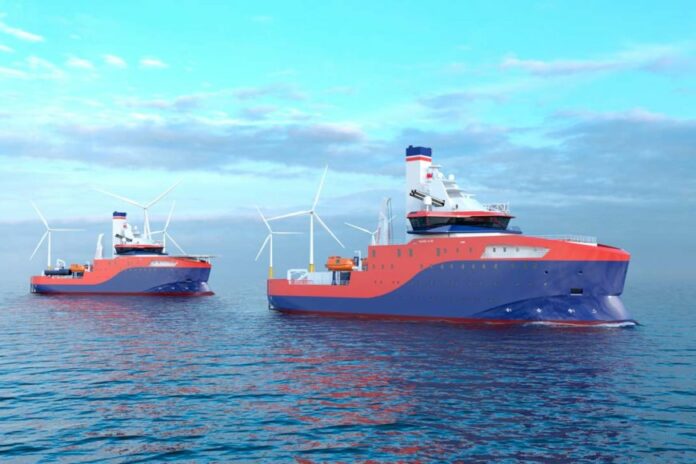
Vard has signed a contract with an international customer for the design and construction of two Commissioning Service Operation Vessels (CSOVs), with an option for a third vessel.  

The vessels, intended for offshore wind farm operations, are based on the upgraded VARD 4 19 design, developed by Vard Design in Ålesund, Norway. The design has been customized to the customer’s needs to give environmental benefits, featuring a hull optimized for low fuel consumption, high operability and onboard comfort. 

The hybrid battery propulsion system allows for periods of zero-emission operation, provides additional peak power when required, and ensures an energy-efficient profile across all activities. In line with sustainability goals, the vessels are also prepared for future methanol operation.

The CSOVs will be equipped with a 30-meter Electric Controlled Motion Compensated (ECMC) Walk-to-Work gangway system from VARD subsidiary Seaonics. The gangway includes an integrated tower and elevator and enables stepless access for technicians to offshore installations positioned between 15 and 30 meters above sea level. In addition, each vessel will be fitted with a 7-ton ECMC C25 3D-compensated crane, capable of lifting up to 5 tons at a reach of 25 meters, ensuring safe and efficient cargo handling.

Each CSOV will measure approximately 87 meters in length and 19.5 meters in beam. They will be equipped with state-of-the-art DP2 positioning and seakeeping systems. The vessels will reach a maximum transit speed of 13 knots, be powered by a hybrid propulsion system, and accommodate up to 120 persons in 84 cabins.

The technology package onboard will be delivered by Vard Electro, including the SeaQ integrated system portfolio designed to enhance safe, efficient, and sustainable vessel operations. The SeaQ Bridge provides operators with a streamlined and intuitive workstation that centralizes all critical functions. Combined with the SeaQ Green Pilot – a cloud-based solution for monitoring fuel consumption, energy use, and emissions – the platform supports real-time and remote performance optimization.

The vessels will also be built to DNV’s Cyber Secure (Essential) notation, confirming cybersecurity readiness from the design phase through to delivery. This ensures the ships’ ability to withstand, operate through, and recover from cyberattacks, in line with the most advanced standards of cyber resilience in shipbuilding.

Vard Interiors will deliver high-end interior concepts, integrating sustainable HVAC-R and piping systems. The focus is on crew well-being, onboard functionality, and energy efficiency, aligning technical performance with environmental responsibility.

The hull of the first vessel will be built at one of VARD’s shipyards in Romania, with outfitting, commissioning, and delivery taking place in Norway. The second vessel will be constructed at Vard Vung Tau in Vietnam. Delivery is scheduled for mid-2027 and mid-2028 respectively.

ABS and FLOWRA to advance offshore wind technologies

0

ABS and the Floating Offshore Wind Power Technology Research Association (FLOWRA) of Japan signed a memorandum of understanding to collaborate and explore new technologies to support the floating offshore wind industry.

“For over 160 years, ABS has been leading the charge for safety excellence in the marine and offshore industries. Joining FLOWRA represents a great opportunity for us to work closely with industry leaders who are shaping what safety means for floating offshore wind developments. By leveraging ABS’ deep domain experience in offshore energy and leaning into our shared interests in the development of practical standards and requirements, ABS and FLOWRA aim to support a safer future for the global floating wind industry,” said Rob Langford, ABS Vice President, Global Offshore Renewables.

FLOWRA is a technical research association that works with overseas organizations to research and develop common basic technologies for floating offshore wind to reduce costs and risks.

Masakatsu Terasaki, Chairperson of FLOWRA BoD, said: “We are delighted to be collaborating with ABS, one of the world’s active classification societies and a leading certification body in the floating offshore wind segment. This partnership is of great significance to FLOWRA’s efforts. By combining ABS’s exceptional technical expertise and risk management capabilities with FLOWRA’s initiatives, we anticipate advancing the optimisation of floating offshore wind power systems and establishing a robust technical foundation, while reducing development risks and costs.”

Russians plan to “modernize” ports in the occupied Kherson region

0

On the territory of the port of Skadovsk, they plan to build warehouses for containers and general cargo, Russian media write.

The Unified Institute of Spatial Planning of the Russian Federation (EIPP) has developed a set of measures “aimed at restoring and increasing the capacity for storing, transshipment and transportation of cargo” of the Skadovsk seaport and “developing” the Genichesk seaport.

The invaders want to build warehouses for containers and general cargo in the Skadovsk port, tanks for bulk food cargo in the Skadovsk port, as well as boathouses for repairing and parking ships.

The Russians also plan to “reconstruct” the building and berth of the Genichesk and Skadovsk ports.

Source: USM

Mitsui E&S converts diesel crane to hydrogen power in Yokohama

0

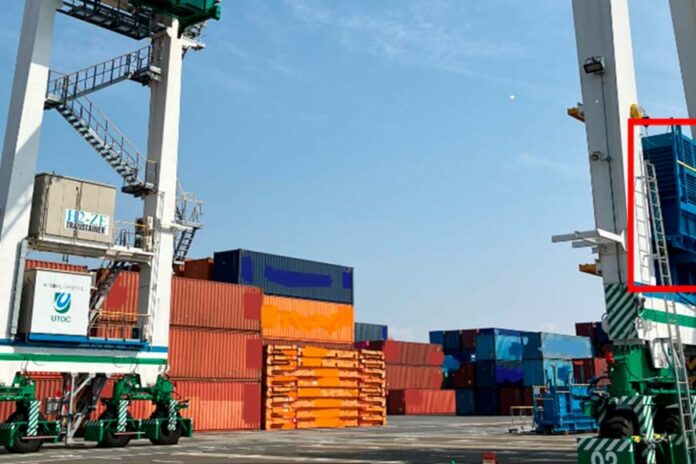
Japan’s drive toward port decarbonization has hit a major milestone. Mitsui E&S has officially begun field testing of a hydrogen-powered rubber-tired gantry (RTG) crane, which now operates at Yokohama Port’s Minami-Honmoku Terminal without emitting carbon emissions onsite. The move is a cornerstone in Japan’s efforts to build Carbon Neutral Ports (CNPs).

Originally delivered to Utoc Corporation in September 2023 as a near-zero-emission diesel-electric unit, the RTG has now had its diesel generator completely replaced with a hydrogen fuel cell power pack. The retrofit was contracted in January 2024 by the Ministry of Land, Infrastructure, Transport and Tourism’s Kanto Regional Development Bureau, under a program officially called “On‑Site Demonstration of Cargo‑Handling Machinery Fueled by Hydrogen.”

Hydrogen refueling is being provided by Taiyo Nippon Sanso using a mobile hydrogen station, with real-time operational data on reliability, emissions, and safety now being gathered under working port conditions. The demonstration is scheduled to continue through FY2025, with insights set to inform regulatory reforms and technical standardization by FY2026.

“This demonstration is part of the effort to form a Carbon Neutral Port—advancing port functions in a decarbonized manner and building a hydrogen reception environment,” Mitsui E&S stated.

The project builds on Mitsui’s prior success in deploying the world’s first hydrogen fuel cell RTG at the Port of Los Angeles in 2024. The current effort not only reinforces the company’s hydrogen equipment portfolio but also offers the critical “know‑how and track record needed for future hydrogen applications.”

The testing grounds at Minami-Honmoku Terminal District MC-2 will serve as a blueprint for nationwide hydrogen cargo handling deployment, especially in refining refueling logistics and safety management protocols in live terminal settings.

Equinor and its partners have drilled a dry well in the “Garantiana NV” prospect

0

Wildcat well 34/6-8 S was drilled in production licence 554, which was awarded in 2010 (Awards in pre-defined areas 2009). 

The well was drilled about 4 kilometres northwest of the 34/6-5 S “Garantiana West” discovery (made in 2021) and about 120 kilometres west of Florø.

The objective of the well was to prove petroleum in reservoir rocks in the Cook Formation from the Early Jurassic.

The well encountered the Cook Formation with a vertical thickness of 105 metres, 53 metres of which was sandstone with moderate to good reservoir quality. The reservoir was aquiferous, and the well is classified as dry.

Well 34/6-8 S was drilled to respective vertical and measured depths of 4123 and 3984 metres below sea level, and was terminated in the Burton Formation from the Early Jurassic.

Water depth at the site is 386 metres. The well has been permanently plugged and abandoned.