-1.2 C
New York
Home Blog Page 459

GTT to design the LNG fuel tank for four very large LNG-fueled container vessels

0

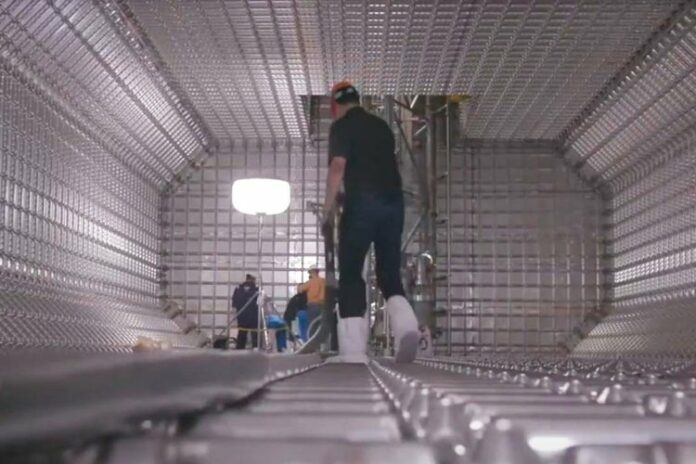
GTT has received an order from its partner the Chinese shipyard Jiangnan for the LNG fuel tank design of four very large LNG-fueled container vessels, able to carry 14,000 containers each, on behalf of Pacific International Lines (“PIL”), a leading shipping line in Asia.

The LNG fuel tank of each vessel will offer a capacity of 13,800 m3 and will be fitted with the Mark III membrane containment system. These tanks will include unique features to facilitate a potential conversion of these vessels to ammonia, giving PIL greater operational flexibility in case of changes in environmental regulations.

In addition to the engineering services and on-site technical assistance, GTT will assist PIL through every step of their first LNG-fueled project: commissioning of the LNG tank, first LNG bunkering operations, as well as further specific LNG operations and maintenance of the vessels. Moreover, GTT will provide LNG training for the crews, supported by its proprietary G-Sim® training simulator, which replicates the future LNG operations of the vessels. PIL will also benefit from the availability of the HEARS® emergency response service with 24/7 technical assistance. 

The vessels will also be fitted with the “GTT Digital” platform, a Smart Shipping solution for monitoring and optimising their operational performance as well as their environmental footprint.

Vessels deliveries are scheduled between the second half of 2024 and the first half of 2025.

Philippe Berterottière, Chairman and CEO of GTT, declared:

“We are very pleased that PIL has selected our fuel tank and that the collaboration with Jiangnan continues with this new order. We are convinced that LNG is the solution of choice to reduce the shipping industry’s carbon footprint. The ammonia compatibility of the vessels ordered also offers greater flexibility and demonstrates GTT’s continued commitment to securing ship owners’ investments in a context where they must constantly adapt to environmental regulations.”
TotalEnergies completes first marine bio-VLSFO bunker delivery in Singapore

0

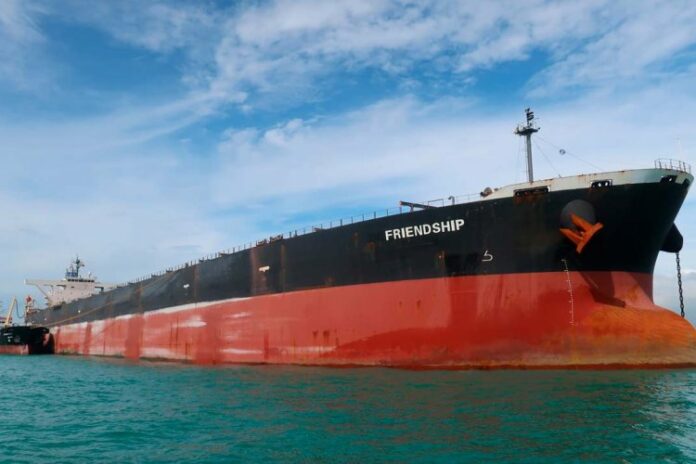
TotalEnergies Marine Fuels has carried out its first marine bio-VLSFO (Very Low Sulfur Fuel Oil) bunker delivery in Singapore’s port waters, as part of a biofuel trial recently completed by NYK Line and Anglo American.

During the operation, a B10 biofuel blend that composed of VLSFO blended with 10% second-generation, waste-based and ISCC-certified UCOME (Used Cooking Oil Methyl Ester) was supplied via ship-to-ship transfer to MT Friendship, a bulk carrier owned by Seanergy Maritime Holdings Corp. and chartered by NYK Line to transport cargo provided by Anglo American. The biofuel was consumed during her two-way voyage between Singapore and Saldanha Bay, South Africa.

The UCOME bio-component, sourced from the circular economy, can achieve more than 80% reduction of GHG (Greenhouse Gas) emissions compared with heavy fuel oil from a well-to-wake analysis. Consequently, the delivered B10 biofuel blend provides a reduction of up to 10% in GHG emissions. The trial also showed that the biofuel can be safely used in relevant marine applications without any modifications. These results, coupled with the vessel’s smooth operational performance throughout the trial, demonstrate the potential of biofuels in assisting ship-owners to meet the International Maritime Organization’s carbon emissions reduction targets.

TotalEnergies Marine Fuel’s successful biofuel delivery also underlines its pioneering efforts in setting up a local biofuel supply chain for this trial, including land storage, blending and the eventual bunkering operation. The local operation was made possible with support from the Maritime and Port Authority of Singapore (MPA) and the involvement of local partners, including Singapore bunker barging company V-Bunkers and tank storage company Vopak Terminals Singapore at Penjuru.

This biofuel delivery forms part of TotalEnergies Marine Fuels’ drive to develop a range of fuel solutions to help the shipping industry’s move towards decarbonization.

Laura Ong, General Manager of Trading and Operations for Asia Pacific, TotalEnergies Marine Fuels, based in Singapore, said:

“We are delighted to partner with NYK Line and Anglo American for our first marine biofuel delivery in Singapore. This trial has allowed us to initiate the structuring of a supply chain with local expertise to create a sustainable, cost-efficient and low-carbon biofuel offer for the shipping sector in the region. We will continue to conduct more bespoke trials with our customers and to ultimately provide a scalable solution of this lower-carbon marine fuel.”

EXMAR and GASUNIE join forces in securing energy supply

0

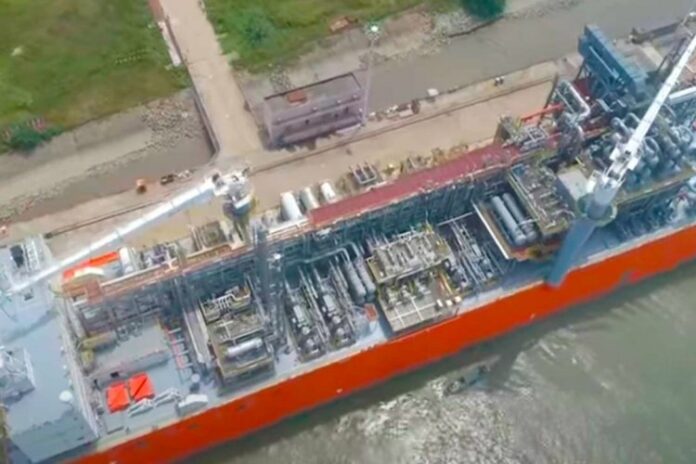
EXMAR has reached an agreement for a 5-year charter for the employment of its 600 MMSCFD regasification barge FSRU S188 (Floating Storage and Re-Gasification Unit) with GASUNIE LNG Holdings BV (GASUNIE).

GASUNIE will use the FSRU S188 as floating LNG import terminal at Eemshaven in Groningen, the Netherlands, in view of the geopolitical developments currently going on in Europe and the increased emphasis of governments on the security of energy supply.

The objective is to deploy the FSRU S188 and have the terminal up and running by the end of the third quarter of 2022.

Nicolas Saverys, EXMAR’s Executive Chairman, commented:

“We are happy to reach this agreement with GASUNIE. It proves the  possibilities of our floating infrastructure solutions as a quick to  market and competitive solution for securing energy supply to communities, industries and households. We are proud that GASUNIE entrusts EXMAR with this LNG import project building upon our expertise in this area over the past decade.”

Wallenius Wilhelmsen receives first delivery at new marine terminal

0

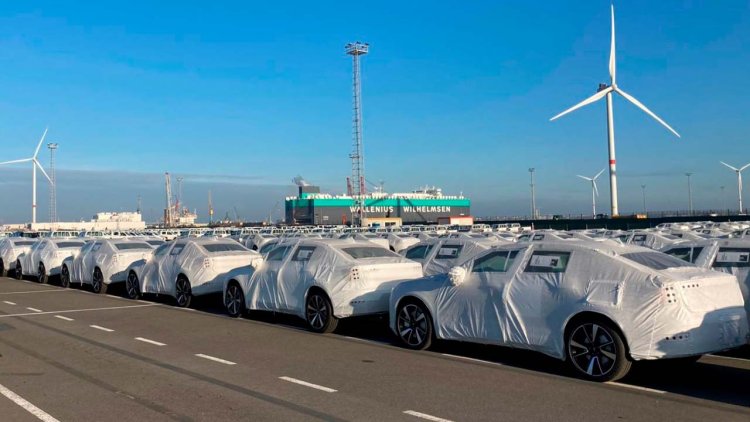
The vehicles are now being transported via short-sea and inland connections to locations all over Europe.

The first phase of the approximately 50-hectare expansion project at Bastenaken West was not scheduled for completion until later this year. However, due to increased cargo throughput and ongoing port congestion globally, Wallenius Wilhelmsen fast-tracked construction to meet demand. 

Mike Hynekamp, COO Logistics Services at Wallenius Wilhelmsen says it was fitting that the first cargo at Bastenaken West was electric vehicles:

“We are amid an automobile landscape transition: European sales of electric cars overtook diesel models for the first time in December and are expected to reach 30 per cent of the market by 2025. Our operation at Zeebrugge, including the existing terminal and the expansion, is perfectly positioned to process these vehicles and transport them throughout Europe.”

More broadly, the Bastenaken West expansion will support an expected rise in global manufacturing volumes as well as the increasing requirements of OEMs for vehicle processing services, which prepare vehicles for delivery.

Mike says:

“We expect that commercial vehicle growth will outpace that of passenger vehicles, in addition to increased heavy equipment and project cargo demand.”

The expansion includes three new berthing positions and approximately 50 hectares of yard to process vehicles and equipment for the automotive, equipment and breakbulk industries through a vehicle processing center (VPC). It’s expected to create several hundred jobs once fully operational in 2027 and operations will be gradually ramped up as initial construction phases are completed.

The Bastenaken West expansion is designed to be carbon neutral and will combine several green technologies. Three windmills will supply the entire site’s energy needs with the potential to sell energy back to the grid. It will also feature a water treatment facility for the VPC and the installation of electric vehicle charging points.

Mike says:

“Bastenaken West is a project committed to being green while building prosperity for current and future generations. For this purpose, terminal sustainability will be the core of development strategies and plans, beyond systems and business processes, setting a foundation in which to evolve.”

The Port of Zeebrugge, which handles 2.2 million units of cargo annually, serves as an important hub for us, with a network of deep-sea, short-sea and inland transportation connections.

Panama says three ships hit by Russian missiles in Black Sea since start of Ukraine invasion

0

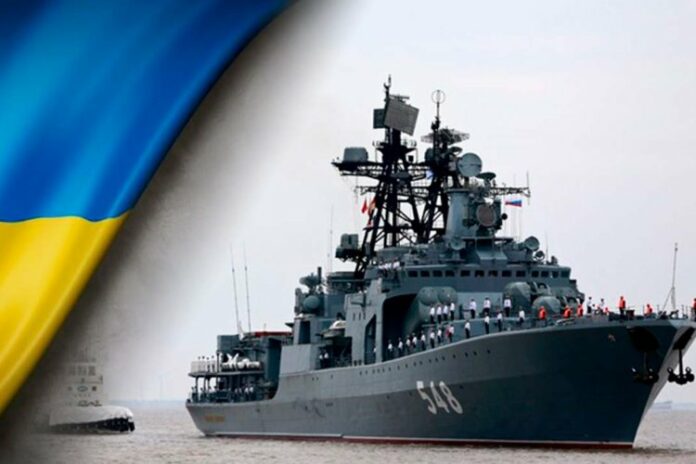
Three Panamanian-flagged ships have been hit by Russian missiles in the Black Sea since Russia’s invasion of Ukraine last month, Panama’s Maritime Authority said on Wednesday.

One ship sank, the maritime authority said in a statement, but there were no casualties reported. The two others remain afloat with damages.

Noriel Arauz, the administrator of the Panama Maritime Authority (AMP), said:

“We know that we had three ships that were attacked by Russian missiles but the crew is all safe, we had material damage.”

The three affected ships were Namura Queen, Lord Nelson and Helt. The AMP did not give the dates of when the ships were hit.

At least 10 other flag-bearing ships are still in the Black Sea, Arauz said, adding the Russian navy is restricting ships from leaving the area.

Panama has the largest registry of flagged ships in the world, exceeding 8,000 vessels, according to the AMP.

Source: Reuters

MSC accelerates its digital transformation using Marlink solutions

0

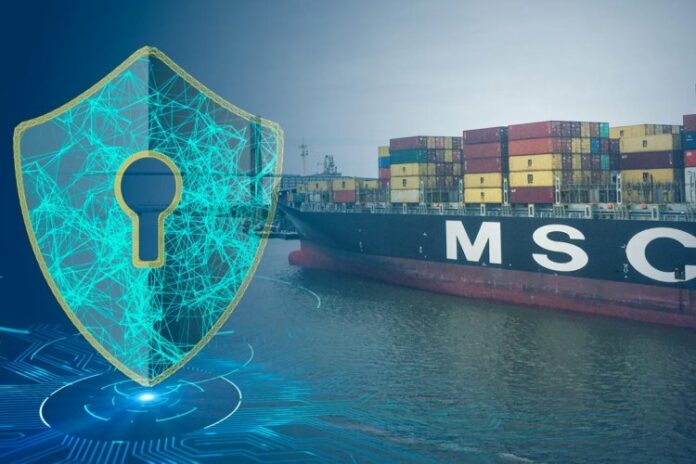
Marlink, the smart network company, is partnering with MSC, the world’s largest container shipping line, to support the shipping company’s ambitious digitalisation goals, using Marlink’s hybrid network solutions and advanced, secure IT management.

Marlink deploys a fully managed hybrid network solution, bundling its VSAT connectivity with L-band backup and global 4G connectivity on 127 vessels, providing MSC with seamless, secure connectivity to run its critical business and crew applications. This hybrid network solution is fully secured by Marlink’s Cyber Detection Service which scans real-time outbound and inbound network traffic for targeted cyber threats and takes immediate countermeasures to remediate incidents. In this way the shipping giant can keep its remote vessels securely connected.

The next phase of MSC’s digitalisation strategy sees the roll-out of Marlink’s ITLink management solution across the fleet. MSC has moved decisively to increase the standardisation of its onboard IT systems and to meet 2021 IMO requirements, enabling fleet managers to monitor operating IT systems and software from shore. ITLink enables MSC fleet managers to remotely access their onboard IT networks for monitoring and troubleshooting in a secure environment and allows software updates and patches to be applied fleetwide – a major efficiency gain for container shipping’s leader.

Container shipping lines are among the most advanced maritime companies in adopting operational digital systems to support customer service. As a global leader, MSC is committed to meeting its customers’ needs with more efficient, sustainable and compliant shipping operations. As a long-time partner, Marlink answers these needs beyond pure connectivity by providing the highest security and standardised IT for remote support, access and monitoring by making the fleet IT blueprint the same on each vessel for increased efficiency.

Nicolas Furgé, President, Digital, Marlink, says:

“Marlink understands the critical requirements that drive container lines; operating a global service with high attention to asset availability, service reliability and security that demand a global approach. Our partnership with MSC will enable them to build a digital ecosystem that supports efficient vessel operations and compliance, powered by world-class connectivity.”

Sembcorp completes fabrication of zero-emission Ropax ferry

0

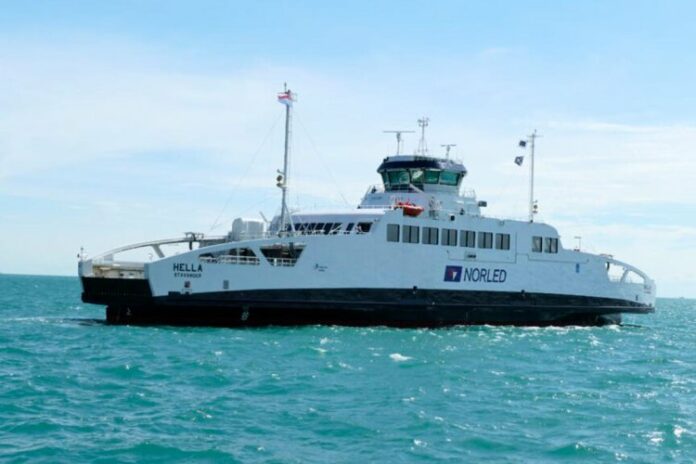
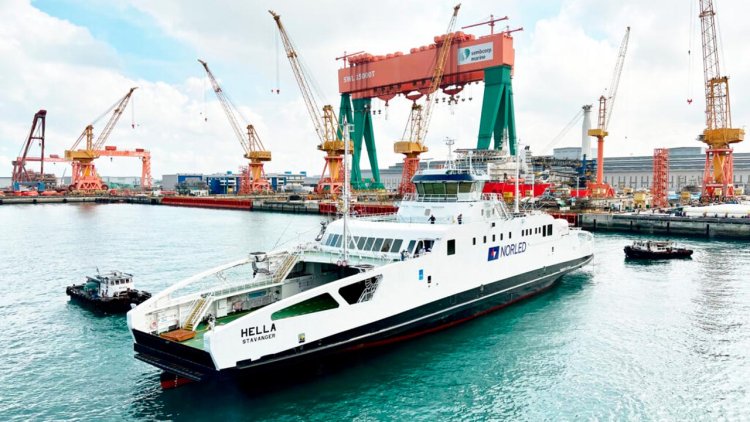
The Group was awarded a contract by Norled to design and construct three identical battery-powered Ropax ferries, based on the proprietary design of LMG Marin AS (“LMG Marin”), a wholly-owned subsidiary of the Company.

The vessels’ design is optimised according to Norled operational requirements incorporating energy-efficient solutions throughout the ferries. These include quickconnection shore charging plugs; auto-mooring; auto-cross; efficient hull, propulsion and heat recovery systems; as well as minimised hotel and auxiliary loads. 

The vessels will operate normally on zero-emission, powered by lithium-ion batteries at a service speed of 10 knots. When required, they can run on combined battery-diesel hybrid backup modes. The batteries will be charged and recharged using green hydroelectric power.

The design of the 82.4-metre long multi-deck, double-ended ferries, each with a capacity for 300 passengers and crew, as well as 80 cars or a combination of up to 10 cars and 10 trailer trucks, also took into consideration passengers’ comfort and working conditions for the crew.

When launched into operation for Norled’s shortsea Hella-Vangsnes-Dragsvik connections in Norway, it is expected to fulfil Norled’s objective to contribute to emission reductions through the introduction of innovative new vessels equipped with zero-emission technology.

LMG Marin Managing Director Mr Torbjorn Bringedal said:

“LMG Marin offers a wide range of designs and technologies for sustainable ship operations, including LNG, battery, hydrogen, ammonia and hybrid propulsion systems. We are very pleased to be able to use our proprietary design to support Norled’s green objectives with specific customisation for the vessels’ operating environments.”

Mr Tan Heng Jack, the Company’s Head of Specialised Shipbuilding, said:

“To serve efficiently as a ferry vessel, the design took into consideration the vessel’s operational profile and schedule, as well as design imperatives of passenger safety and comfort, and conducive working conditions for ferry staff. The first of the three vessels will soon be part of Norled’s service fleet in Norway.”

Mr Wong Weng Sun, Sembcorp Marine President & CEO, said:

“The demand for passenger ferries is anticipated to increase owing to a wide range of factors including the emerging trend of ferries as a viable alternative transport, development in marine fuel technologies, and inclination of consumers towards luxury marine travel.”

Mr Wong added:

“Sembcorp Marine, with its extensive track record and suite of proprietary designs for various types of ships and offshore engineering solutions, will continue to strategically position the Group strongly to support the maritime industry’s transition towards renewable energy and the adoption of green technologies. This latest project marks our commitment to our customer and their pursuit of green solutions for the industry.”

The remaining two Ropax ferries are expected to be ready in 2022. 

Seabed 2030 utilizes Blue Insight to optimize seafloor mapping

0

Kongsberg Maritime (KM) has collaborated with The Nippon Foundation-GEBCO Seabed 2030 Project to develop and deliver the SeaKoMaP solution, with the unified goal of optimizing the processing of bathymetric data. 

SeaKoMaP, an acronym which stands for Seabed 2030 Kongsberg Maritime Cloud Processing, will allow Seabed 2030 to use Blue Insight to leverage its extensive alumni network as a means of simplifying some of the many valid processes from data collection to the publishing of seafloor maps.

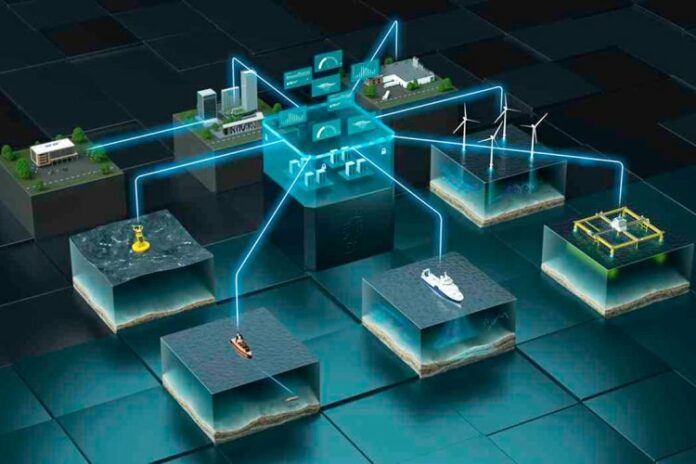
To bring this about, KM will provide Seabed 2030 users with remote login privileges for Blue Insight, KONGSBERG’s recently-introduced, cloud-based, modular platform for the secure visualization, processing and sharing of ocean data. Blue Insight enables data to be harvested from any platform, including vessels, USVs and AUVs: it deploys the principle of sensor fusion, wherein data is streamed from a number of onboard sensors to a local database, from where it is transferred seamlessly into the cloud for visualization, further processing and distribution to users.

The SeaKoMaP project adheres to a dedicated memorandum of understanding (MOU) between KM and Seabed 2030, supporting the latter’s unique mandate to map the entirety of the world’s ocean floor by the end of this decade. The pilot project will build upon established solutions such as Qimera, a hydrographic data-processing software package from QPS, but will add an infrastructure that will enable Seabed 2030 to scale one of its many processing pipelines in order to meet its highly ambitious target by 2030.

Jamie McMichael-Phillips, Seabed 2030 Project Director, says:

“With just under eight years left until the end of the decade, and with 80 per cent of the seafloor still to map, how we use the time we have left is paramount. Partnering with distinguished organisations in the maritime technology industry – such as Kongsberg Maritime – that can offer innovative and efficient solutions is vital in helping us reach our goal.”

Leif Bildøy, product manager, Blue Insight at Kongsberg Maritime, adds:

“We’re very excited to be working with Seabed 2030 on SeaKoMaP. Our ambitious goal for the Blue Insight roadmap is to make it the go-to solution for any ocean stakeholder, and adding value to a project like Seabed 2030 is a big milestone for us.”

Maersk Drilling secures five-month UK contract for Maersk Resolve

0

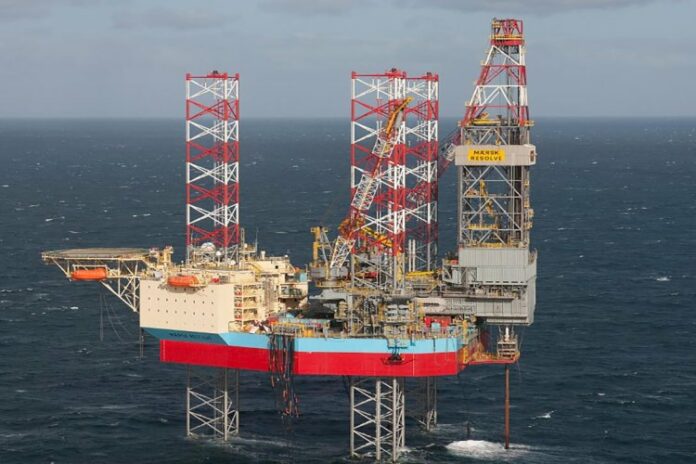
Maersk Drilling has been awarded a contract which could employ the harsh environment jack-up rig Maersk Resolve with a customer in the UK sector of the North Sea for the majority of 2022. 

The contract is expected to commence in April 2022, with an estimated duration of 150 days. The contract value is approximately USD 16.9m, including mobilisation and demobilisation fees. The contract contains options to add additional work scopes with a total estimated duration of 85 days to the campaign.

Maersk Resolve is a 350ft, Gusto-engineered MSC CJ50 high-efficiency jack-up rig which was delivered in 2009. It is currently warm-stacked in Esbjerg, Denmark after completing its previous contract in the UK North Sea in January 2022.

Ashtead Technology strengthens its rental fleet with investment in iXblue technologies

0

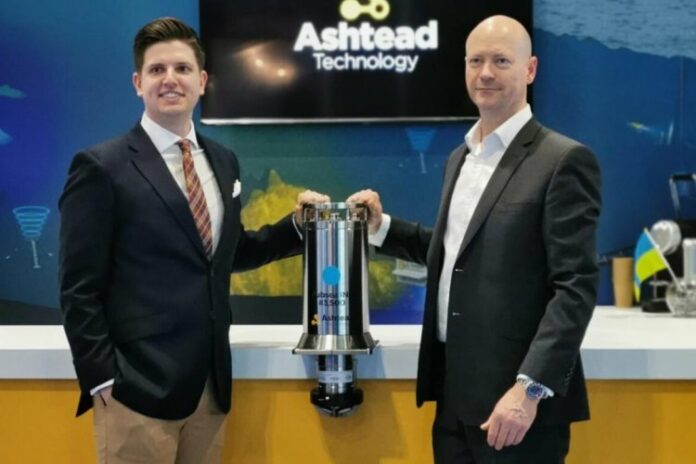
The investment includes the addition of iXblue’s Gaps M5 USBL acoustic positioning systems which are now available to rent throughout the company’s nine international technology and service hubs.

Gaps M5, the latest addition to iXblue’s USBL product range, is a medium frequency ultra-short baseline (USBL) system for the accurate positioning and tracking of subsea assets. Free of export restrictions, Gaps M5 is a more compact version of Gaps, the lightest high-performance USBL system on the market. It offers extreme accuracy in shallow waters and horizontal tracking conditions, making it especially suited for challenging subsea positioning environments such as marine renewable energy.

In addition to the Gaps M5 USBL systems, Ashtead Technology has also recently invested in several iXblue attitude and heading reference systems and inertial navigation systems, including the iXblue Rovins, Rovins Nano, Octans and Phins Surface.

Brett Lestrange, Ashtead Technology’s Regional Director for Europe, said:

“With over 17,000 assets in our subsea equipment rental fleet we offer one of the largest pools of subsea navigation and positioning systems for rent worldwide. This latest investment of iXblue equipment is a direct result of listening to our customers’ requirements and ensuring we have the broadest and most technologically advanced subsea equipment from leading manufacturers to support our customers’ projects worldwide.”

Maverick Piccininni, iXblue’s, Regional Sales Manager, said:

“This latest order from Ashtead Technology is their second largest investment in iXblue technology in the past few months which is testimony to our long-term partnership. It also demonstrates Ashtead Technology’s commitment to leading edge technology and innovative solutions that brings robust performance, safety, reliability and differentiation to their customers. We look forward to seeing our new Gaps M5 USBL systems being deployed in the field and supporting Ashtead Technology’s customers worldwide.“

So far this year, Ashtead Technology has invested £7million in new subsea equipment and technology to expand its extensive equipment rental fleet, further strengthening its position in the offshore energy subsea equipment rental sector.