-1.2 C
New York
Home Blog Page 458

NYK took delivery of new LNG-fueled PCTC

0

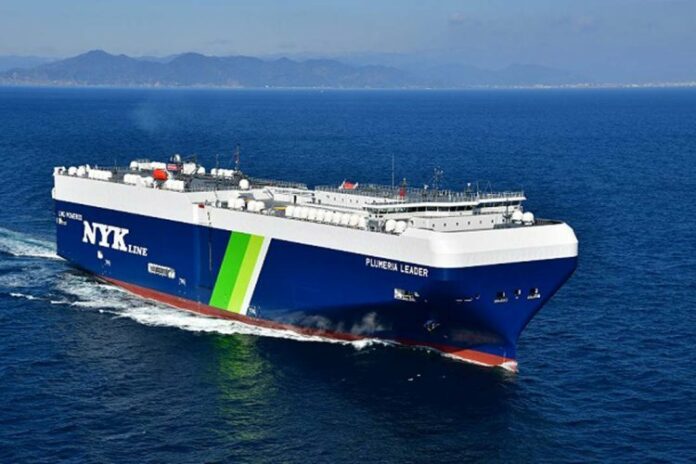
On March 24, NYK took delivery of Plumeria Leader, a pure car and truck carrier (PCTC) capable of navigating oceans with only LNG as the ship’s main fuel

The vessel was built at the Shin Kurushima Dockyard of Shin Kurushima Toyohashi Shipbuilding Co. Ltd. This is NYK’s second LNG-fueled car carrier following the Sakura Leader.

By vessel modification and the switch to LNG, Plumeria Leader will make the ship up to approximately 40% more energy efficient (by reducing CO2 emissions per unit of transport) compared to ships using conventional heavy oil fired engines. The vessel is also expected to reduce sulfur oxide (SOx) emissions by approximately 99% and nitrogen oxides (NOx) by approximately 86% compared to ships using conventional heavy oil fired engines.

A delivery ceremony was attended by Kyogo Onoue, Chief Officer, TPS Group of the Toyota Motor Corporation; Takaya Soga, Senior Managing Executive Officer of NYK. The ship was named “Plumeria Leader” to express our wish to realize and pass on a rich global environment through environmentally friendly transportation and to leave beautiful flowers to the future.

This ship will be one of the world’s largest PCTCs, capable of transporting approximately 7,000 units (standard vehicle equivalent) per voyage, beginning with vehicles produced by the Toyota Motor Corporation.

NYK set a long-term target of net-zero emissions of greenhouse gas (GHG) by 2050 for the NYK Group’s oceangoing businesses.

Port of Zeebrugge joins SEA-LNG coalition

0

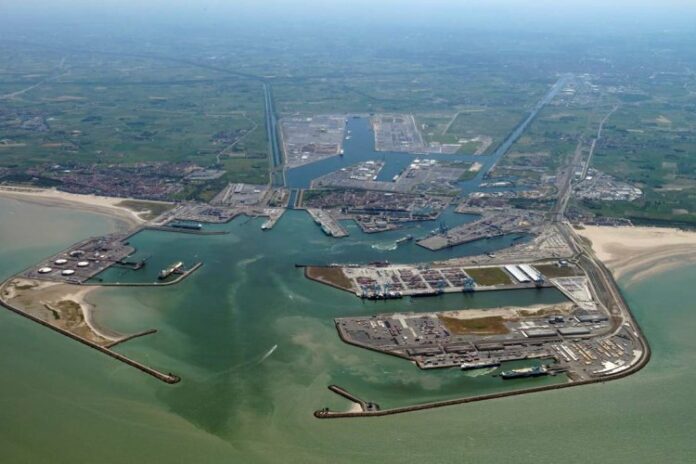
SEA-LNG, the multi-sector industry coalition established to demonstrate LNG’s benefits as a viable marine fuel, today announces the membership of Port of Zeebrugge, the innovative seaport of Bruges which has been at the cutting-edge of LNG bunkering for decades.

The Port of Zeebrugge has pioneered the development of LNG bunkering in Europe, with the world’s first purpose-built LNG bunkering vessel – the Engie Zeebrugge (now Green Zeebrugge) – commencing operations there in June 2017.  

Port of Zeebrugge is one of the world’s leading roll-on/roll-off ports, and in 2021 transhipped 49.1 million tons of goods. The deep-sea container terminal, CSP Zeebrugge Terminal, is located adjacent to the open sea and the main shipping routes of north-western Europe.

Infrastructure for storing and transferring LNG marine fuel has been installed and used at the Port of Zeebrugge since 1987. The port is one of the main hubs for LNG supply in the region, receiving pipelines from Norway and the UK, and vessel imports from Qatar. The port’s LNG terminal, operated by Fluxys, offers regasification and provides distribution in Belgium and across the European network in pipelines, trucks or ships. Onsite storage is equal to 9 billion m³ LNG per year. Port of Zeebrugge has broad expertise and valuable experience due to its long-standing and pivotal role in European LNG markets. 

Peter Keller, Chairman, SEA-LNG, commented:

“We’re pleased to welcome the innovative Port of Zeebrugge to our coalition. We look forward to working with the port and its users to continue to drive the growth of environmentally-friendly LNG-fuelled shipping in northwest Europe, creating a pathway for long term decarbonisation of the industry”.   

Tom Hautekiet, CEO Port of Zeebrugge added:

“Sustainability and climate protection are high on the agenda of the port authority of Zeebrugge. This new partnership with SEA-LNG will definitely offer us new opportunities to stimulate the switch to eco-friendly fuels and pursue our ambitions to become a green energy hub internationally. We look forward to working closely with all the partners involved and jointly developing new projects in which we contribute to the planet. Therefore, we can only congratulate SEA-LNG with this effective coalition.”

In 2021, nearly one-third of orders for vessel newbuilds, by capacity, were powered by LNG. Globally, LNG bunkering infrastructure is growing rapidly, with Clarksons forecasting that by the end of 2022 LNG bunkering will be available in 170 ports worldwide. This growth reflects the fact that LNG is already a fuel in transition, which, with a pathway that includes drop-in carbon neutral fuels, can take shipping from today all the way to 2050. Today, LNG offers 23% reduction over oil-fuelled vessels, after 2030, a 10% increase in the carbon-neutral blend of LNG fuel, will secure an additional two years of compliance with CII regulations.

Undersea sediment reveals clues about seismic activity

0

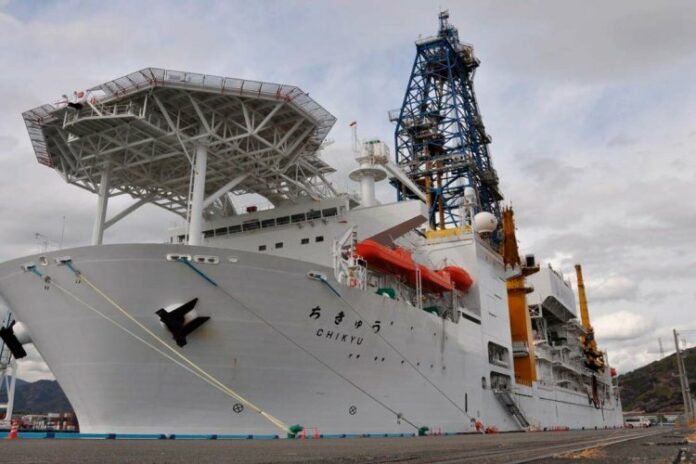
Although the offshore portion of the expedition ended last summer, the scientific portion of the mission, a month-long investigation into the recovered samples, recently ended on March 15.

Roughly 30 international scientists are involved with the project, including Derek Sawyer, an associate professor of earth sciences at The Ohio State University.

Although he joined the trip almost two years ago, the mission was subsequently postponed due to the pandemic, forcing many of the researchers to conduct their science remotely.

While researchers have been studying earthquakes for centuries, the expedition offers a unique opportunity to answer key questions that have stumped scientists about these unearthly tremors.

Sawyer said:

“There are lots of places around our planet that have earthquake hazards, Japan being one of them. But there’s been a lot of scientific research and efforts to try to understand earthquakes in general by looking at a place like Japan, to learn a lot about how they work and how frequent they are.”

About 1,500 earthquakes strike Japan every year, the latest being a powerful magnitude 7.3 earthquake that rocked its northeast coast earlier this month. Since the island nation is located in an area where four major tectonic plates meet (the Eurasian, Okhotsk, Pacific, and Philippine Sea plates), the entire archipelago is home to an array of natural geological occurrences, including hot springs and volcanoes.

Because of this vulnerability, the country is home to one of the most effective earthquake early-warning systems in the world. In other words, Japan is the perfect location to study how earthquakes affect the Earth’s tectonic memory, and learn how geologic time lines up with our own.

To do this, the expedition’s goal was to explore the Japan Trench, a deep submarine trench filled with a range of high and low geologic formations. These diverse underwater topographies can, when disturbed, send earthquake-triggered deposits, or sediment downslope to fall into these deep basins. Although it can be tricky to tell if these deposits were made by particularly bad storms or quakes, this special mud could stay buried there for millions of years, waiting to tell a story.

Sawyer said:

“Sediments, oftentimes, especially in quiet deep oceans, they just deposit layer by layer, grain by grain, slowly but surely. However, there are also times when a pulse of sediment can be deposited quickly, for example from an underwater landslide or current triggered by earthquake shaking.”

“We can then recover the sequence of sediments by collecting long cylindrical cores, akin to using a giant straw to extract the sediments. We can then split open the core and read or interpret the history of the layers that are there.”

Today, a typical oceanic drill can reach depths of about 200 to 2,000 meters below sea level. Expedition 386, however, broke ocean drilling records last summer after the crew drilled down more than 8,000 meters to recover these sediment samples. Descending at approximately 1 meter a minute, just a one-way trip takes a couple of hours to get close to their destination under the seabed, Sawyer said.

Once brought back to the surface, the crew’s next step was to perform a variety of measurements and subsamples, including analyzing the physical properties of the cores. As group leader for the expedition’s physical properties team, Sawyer coordinates the detailed documenting of the physical measurements that will be done on the samples.

To find proof of past seismic activity, his team created incredibly detailed observations of the cores, including whether they have any unique geological characteristics, their geochemistry, and even if there were any fossils to be found inside the samples.

If Sawyer and his colleagues are able to successfully record and compile their findings over the next few months, researchers will be able to age-date these sediment cores and build a catalog of major earthquakes near Japan. Such a log, much like how a tree’s rings record its personal history, could help scientists better understand the frequency of larger quakes.

That information could also be used to extend the public’s knowledge of the hazards associated with these events and mitigate or even plan for them in the future.

Sawyer said:

“You can’t stop them from occurring. But you can think about the best ways to engineer or build resilience of communities that are susceptible to impacts of earthquakes and their tsunamis. Vital information for that is an accurate record of frequency and magnitude of past earthquakes.”

MacGregor to supply RoRo equipment to four innovative Pure Car and Truck Carriers

0

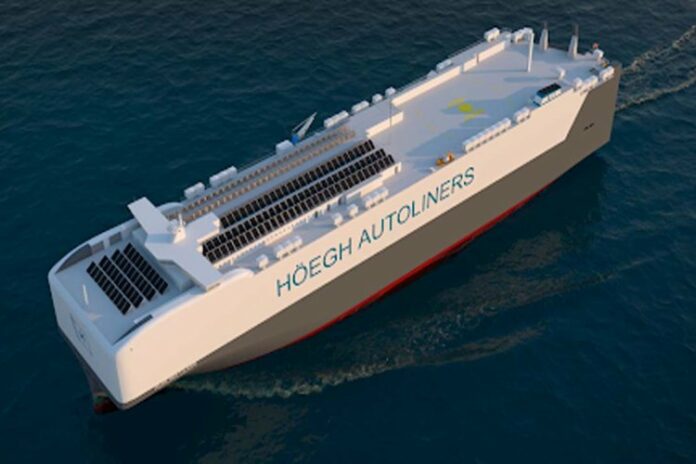
MacGregor, part of Cargotec, has been selected to supply comprehensive packages of RoRo equipment for four Aurora class Pure Car and Truck Carriers (PCTCs) to be built by China Merchant Heavy Industries (Jiangsu) Co., Ltd for the Norwegian owner, Höegh Autoliners.

The order, with a value of more than US$15 million, was booked into Cargotec’s 2022 first quarter order intake. The first two vessels will be delivered during the second half of 2024 and the next two in the first half of 2025. Höegh Autoliners also has options for a further four plus four vessels.

Designed by the China Merchants Industries owned ship designer, Deltamarin, the Aurora class  can transport up to 9,100 cars and will be the world’s largest and most sustainable car carriers. The class will have DNV’s ammonia and methanol ready notation.

MacGregor’s scope of supply encompasses design, supply and installation support for a large stern quarter ramp and door, side ramp and door, and liftable car decks.

The vessels’ strengthened decks and internal ramp systems will enable electric vehicles to be carried on all decks, with the MacGregor patented Load Monitoring System boosting the load capacity of the ramp and providing more flexibility for heavier project cargo.

Magnus Sjöberg, Senior Vice President, Merchant Solutions, MacGregor, says:

“We are very pleased to have supported Höegh Autoliners from the early stages of the Aurora class project, building on the previous Horizon class vessels and our long-standing relationship with Höegh Autoliners. Close collaboration with the owner, designer and builder is essential for a project such as the Aurora class to be successful, and we look forward to continuing our work together towards delivery of the first two vessels in 2024.  

Andreas Enger, CEO of Höegh Autoliners, says:

“We are pleased to continue the relationship with MacGregor to build our Aurora class vessels. MacGregor’s world leading technology and expertise will ensure our vessels are built to the highest standards. The Aurora class represents the future of our business. It will further strengthen our service offering, accelerate our path to zero emissions and put us in the forefront of sustainable shipping.”

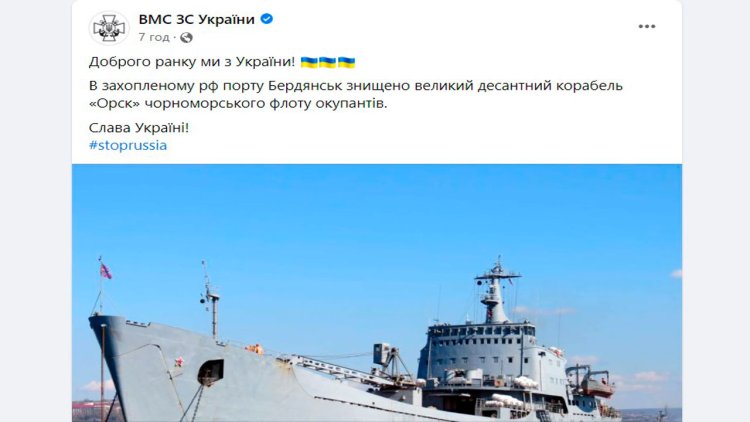
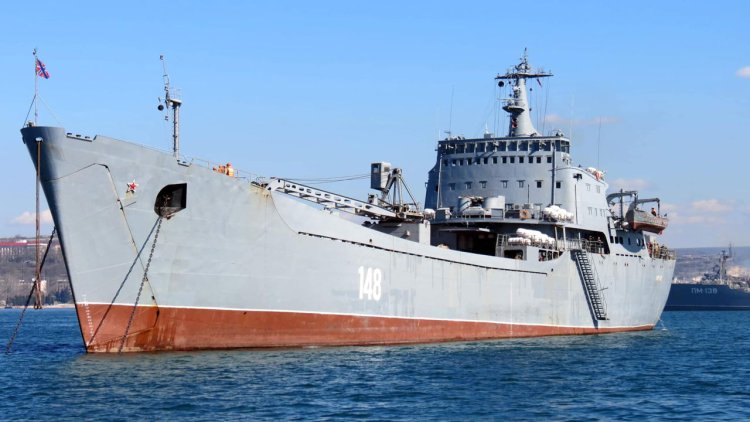
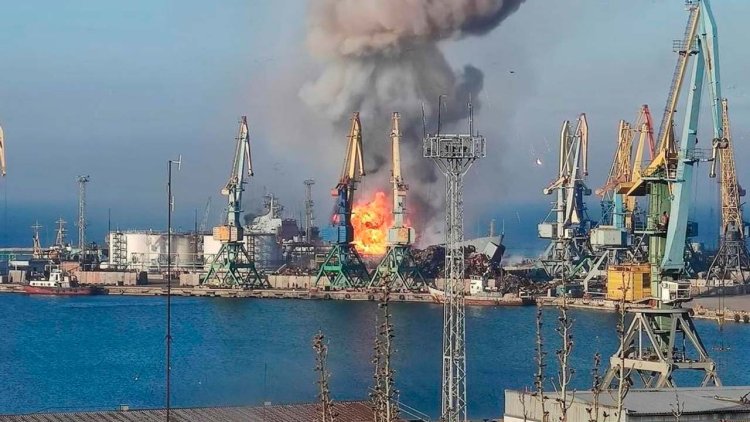
Russian warship destroyed in occupied port of Berdyansk. VIDEO

0

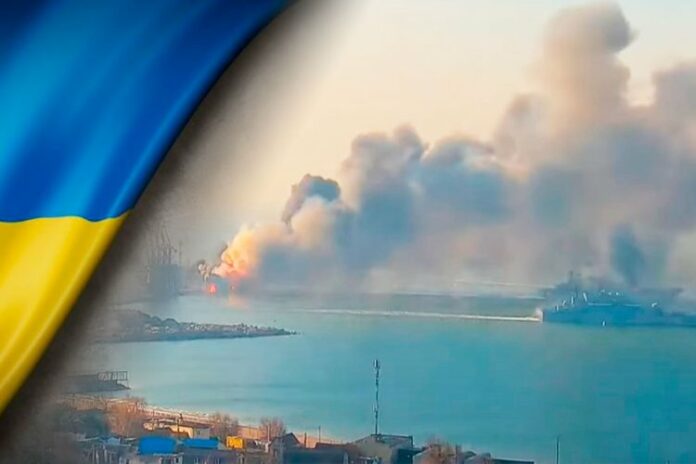
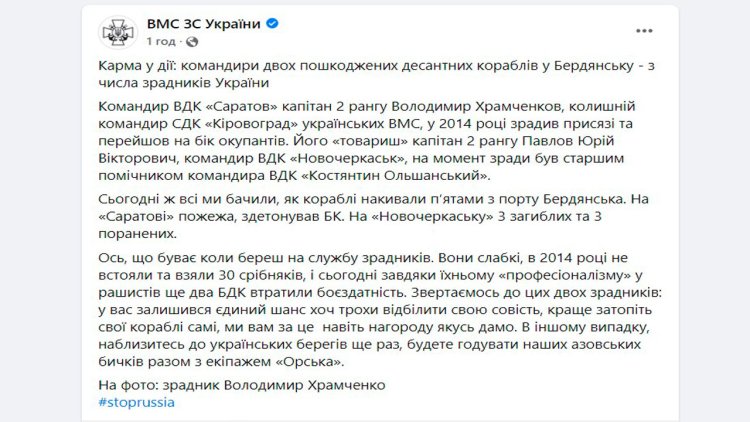
The Ukrainian military posted footage early on Thursday and said the warship Orsk had been hit by its forces.

Berdyansk, which is west of the besieged port of Mariupol, was seized four days after Russia invaded Ukraine.

Russia says it has used the port as a base to ferry in equipment for its troops.

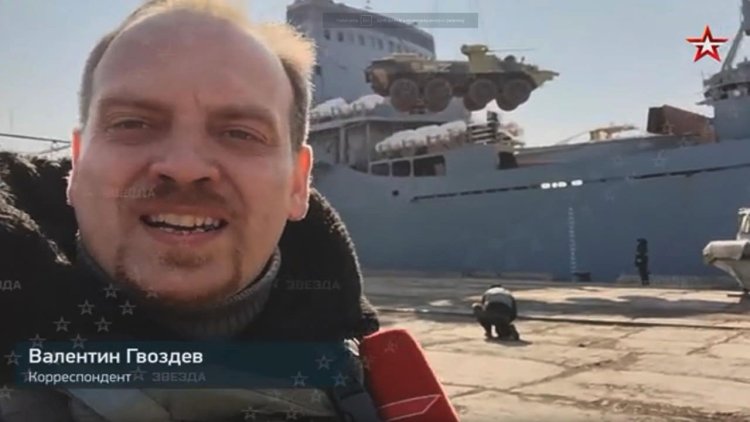
Russian army TV hailed the arrival of the Orsk in Berdyansk last week as an “epic event” as it was the first Russian warship to dock there.

Drone footage filmed by Russian state TV reporter Murad Gazdiev showed an armoured personnel carrier being offloaded from the Orsk in the port. The armoured vehicles were to be used to reinforce Russian troops, the TV report added.

Video posted by the navy and on social media showed explosions and a big ship on fire at the port at 07:00 (05:00GMT) on Thursday.

Deputy Defence Minister Hanna Malyar told Ukrainian TV that the military had hit a “huge target”, capable of carrying 20 tanks, 45 armoured vehicles and 400 troops.

Earlier this week Gazdiev, who works for Russia-backed media outlet RT, reported that Ukrainian missiles had repeatedly targeted Berdyansk port, and every missile had been intercepted by Russian anti-air defence.

Berdyansk is of major strategic value to the Russians, lying between Crimea and the besieged city of Mariupol, some 80km (50 miles) to the east, where an estimated 100,000 people remain stranded facing Russian bombardment.

Some of those who have managed to escape Mariupol have arrived in Berdyansk and Ukraine’s deputy prime minister has said they will be taken inland to the city of Zaporizhzhia.

Capturing the towns of Berdyansk and Melitopol are part of Russia’s bid to create a land bridge from Crimea to the Russian border, as well as establishing a route towards Zaporizhzhia.

Residents have staged protests against Russia’s occupation of Berdyansk, and video posted on social media this week showed the military beating people in an attempt to disperse the crowd.

Ukrainian officials said the attack on the Orsk had further symbolic value, suggesting that it may have taken part in Russia’s original capture of Crimea in 2014, pointing to medals apparently awarded to the ship’s commander and a crewman.

Source: BBC

Saipem, awarded an offshore drilling contract by Aker BP

0

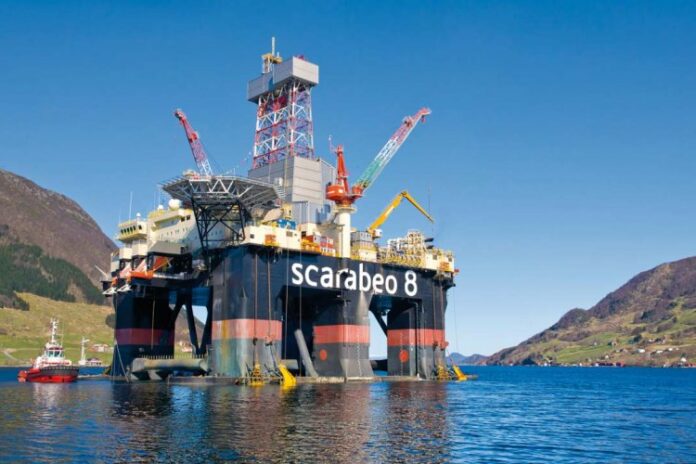
Saipem has been awarded a contract by Aker BP for a drilling campaign offshore Norway. The operations are expected to start from the end of Q4 2022, upon termination of the works in which Scarabeo 8 is currently engaged.

Scarabeo 8 is a Saipem semisubmersible drilling rig able to work in harsh environments. It is a dual derrick deep water unit with a dynamic positioning system and with enhanced mooring capabilities. Scarabeo 8 meets the highest standards of the most stringent rules and regulations, and it has proven track records in working with most recognized Oil Companies in the challenging North Sea environment, from West Norway to the Barents Sea.

The contract duration is three years for an approximate value of 325 million dollars. The contract also includes the option of two one-year extensions and encompasses potential upsides among which a performance bonus scheme and a mechanism of rate adjustment to market rates from the third year onward.

ONE expands its refrigerated container fleet

0

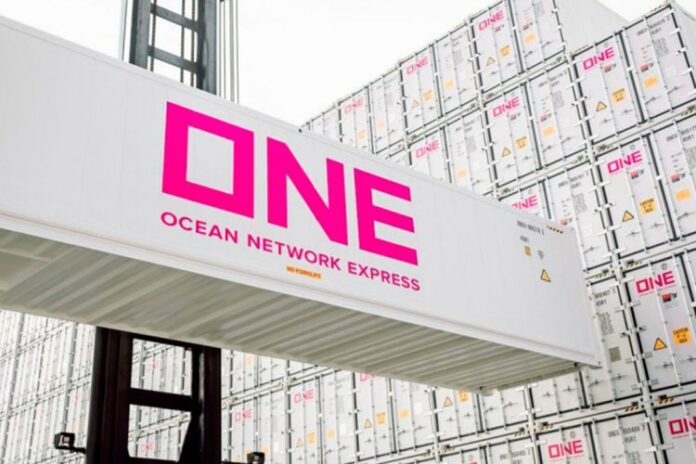
Ocean Network Express (ONE) is expanding its current refrigerated container (reefer) fleet by adding another 6,500 new units (including 500 units equipped with advanced Controlled Atmosphere (CA) technology) to meet the growing demand for refrigerated cargo around the world. 

Rather than using traditional solvent-borne paint, these new units will have waterborne paint applied instead. The use of solvent-borne paint is known to release volatile organic compounds (VOC) which can pollute the environment and cause smog that impacts air quality and visibility. The use of water-borne paint will help to reduce VOC emissions by 80-90%, yet it retains a similar quality to solvent-borne paint in terms of durability and anti-corrosion capabilities.

ONE is currently working towards the application of the latest Internet of Things (IoT) technology into its fleet of reefer containers which provides real time visibility of critical information such as the temperature and humidity inside the container, thereby enhancing cargo care during the entire voyage.

Hiroki Tsujii, Managing Director, Marketing & Commercial in Ocean Network Express (ONE) commented:

“ONE continues to show our commitment to the refrigerated cargo segment with this additional investment in new reefer containers. We maintain one of the largest and youngest reefer fleets in the world, equipped with the most advanced technologies designed to handle perishable cargo demand. As a socially responsible company and leader in the industry, we are also doing our part for the environment by using water-borne paint which reduces VOC emissions.”

Ukrainian city Mariupol shelled by Russian navy – Azov regiment

0

The city of Mariupol in Donetsk region was shelled from the ships of the Russian occupation fleet on Sunday, according to the Telegram channel of the Azov regiment. Soldiers of the Azov Special Operations Detachment heroically defend the city.

The statement said: “The city of Mariupol has just been shelled by four Russian Navy ships. The enemy continues to cynically destroy the Ukrainian city, using all available arsenals. After aircraft, artillery, various systems and tanks, the Russian occupiers are destroying the city with heavy weapons of warships.”

The Russian invaders had caused the worst humanitarian catastrophe in Mariupol. The invaders are bombing unarmed people and blocking humanitarian aid. 

It was also previously reported that more than 39,000 residents of Mariupol in the Donetsk region left the city in their own transport over the past week in the absence of an actual “silence regime.”

“Over the past week, despite the fact that in fact there was no silence regime, more than 39 thousand Mariupol residents left through the open corridor “Mariupol – Berdyansk – Zaporozhye”. People broke out of the blockaded Mariupol on their own transport,” reported in the Telegram channel of the Mariupol City Council on Sunday.

The message notes that a total of more than 8 thousand passenger cars under continuous shelling left Mariupol in the direction of Berdyansk Zaporizhzhia region, from where they then arrived in Zaporizhzhia. “For those who for various reasons could not continue driving on their own, organized evacuation by buses from Berdyansk to Zaporozhye,” the city council specifies.

Sources: Ukrinform, FrontNews

Klaipėda LNG terminal capacity fully booked for this gas year

0

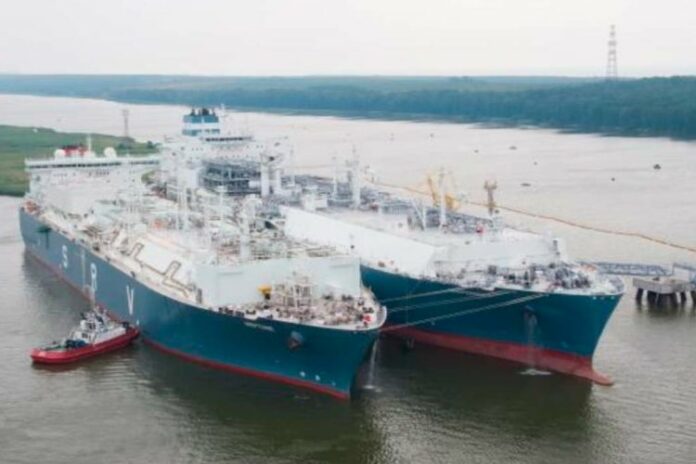
Klaipėda LNG terminal customers have fully booked the LNG terminal’s regasification capacity for this gas year, i.e. until 30 September, 2022. According to the latest customer requests, a total of 23,9 TWh of Klaipėda LNG terminal capacity has been allocated for the current gas year.

During the 2021 annual capacity allocation procedure, 8.9 TWh of LNG terminal regasification capacity was pre-booked by customers for the gas year starting on 1 October 2021.

In March-September Klaipėda LNG terminal is expected to receive 20 large-scale LNG cargoes and perform 1 reloading operation. All the planned cargo reception windows are dedicated for the large gas carriers carrying LNG cargoes of at least 138,000 cubic metres.

Mindaugas Navikas, KN Chief Commercial Officer, says:

“Two factors have contributed to the increased interest in LNG terminal services. Firstly, the war in Ukraine has made it even more important for the companies operating in the Baltic region to secure a reliable alternative source of gas supply. In addition, the earlier announcement of the start of operations of the Polish-Lithuanian gas pipeline (GIPL) link is creating opportunities for businesses to take advantage of new emerging opportunities. It is worth noting that, although the terminal capacity is already fully booked, market participants who have not done so can negotiate with each other to purchase or swap quantities of gas delivered at the terminal, or to purchase terminal capacity on the secondary market. KN, for its part, is also evaluating additional opportunities of the terminal to meet the changing market demand.”

According to Mindaugas Navikas, Chief Commercial Officer, taking into account the increased needs of market participants, the assessment is currently underway on how to optimize the cargo receiving processes so that the LNG terminal could receive additional LNG quantitites by the end of the gas year. The possibility of expanding Klaipėda LNG terminal’s technical regasification capacity from the current 3.75 billion cubic metres to 5 billion cubic metres in the long term is also under consideration.

The company allocates the capacity of the terminal in accordance with the Regulations for use of the LNG Terminal, which have been agreed between the State Energy Regulatory Council and the company, approved and made publicly available. 

Nexans to connect one of France’s largest offshore wind projects

0

Nexans has been awarded a contract worth around 100 million euros by RTE to supply and install 47 km of offshore and 18 km of onshore power export cable for the wind farm located in the English Channel, more than 15.5 km from Le Tréport and 17 km from Dieppe.

With a capacity of 496 MW, the wind farm is expected to produce an average of 2,000 GWh per year, which represents the annual electricity consumption of approximately 850,000 people, or about two-thirds of the population of Seine-Maritime or more than the entire population of the Somme.

Developed by the consortium “Éoliennes en Mer Dieppe Le Tréport”, this is one of the largest commercial offshore wind projects in France. Its success is of major importance as it will contribute to the country’s response to climate change. The project is fully in line with France’s objectives regarding the energy transition, energy mix, including offshore renewable energy, and energy independence of the country. RTE has been appointed by the State to connect this wind farm from the offshore substation to the onshore power grid through the installation of two 225,000 volt subsea and onshore links.

For the subsea section, Nexans will supply two 23.5 km lengths of 225 kV three-core cable. Featuring innovative new technology, the cable has hybrid armoring and incorporates a fiber optic element to remotely monitor the health of the link and transmit information between the offshore wind farm and the onshore base. The cables will be laid by the CS Skagerrak, one of the Group’s two cable laying vessels along with the newly constructed Aurora. 

The onshore link will consist of 18 km of 225 kV single-core cable, similar to that supplied to RTE by Nexans under the current framework contract for onshore cables. Nexans will also be in charge of the cable burial and protection for the onshore section. 

The awarded contract includes business continuity services (inspection, maintenance, repair) for the entire project.

Gilles Etheimer, RTE’s Purchasing Director, said:

“Two years after the award of the contract for the supply and installation of 225 kV power export cables for the St Brieuc wind farm, we welcome Nexans’ success in this new tender. In view of the elements provided, RTE is confident that this new collaboration will bring value to the French power grid and be a source of productivity and continuous improvement for both companies.”

Laurent Guillaumin, Nexans Sales Director, said:

“We are pleased to be working with RTE again to connect one of France’s largest offshore wind projects to the grid. This is the continuation of a long-term partnership. The key to success lies in our experience in this sector, combined with our ability to offer innovative and competitive turnkey cabling solutions. This puts Nexans at the heart of Europe’s energy transition and energy independence.”

Nexans’ Halden plant in Norway will manufacture the subsea cables, while the land cables will come from the Nexans plant in Charleroi, Belgium. The fiber optic elements will be supplied from the Norwegian site in Rognan. The installation of the subsea cables should start in the second half of 2024.