-1.1 C
New York
Home Blog Page 457

Inmarsat launches Fleet Xpress for shipyards

0

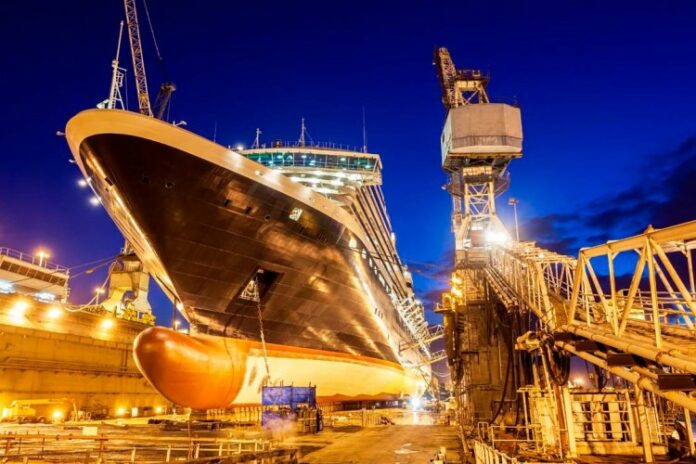
Maritime broadband service Fleet Xpress now available to shipyards, offering reliable, high-speed communications from vessel launch

Installed during new building, Fleet Xpress for Shipyards eliminates time-consuming and costly installation works in port, offering owners a pre-fitted very small aperture terminal (VSAT) solution included in the initial cost of the vessel.

Ben Palmer, President, Inmarsat Maritime, said:

“Fleet Xpress for Shipyards is a game-changer for shipbuilders and owners alike, streamlining installation, providing remote connectivity from vessel launch and enabling optimal integration between integral onboard systems. We are delighted to collaborate on the shipyard offering with JRC and Intellian, two of our Value-added Manufacturers and trusted partners.”

Inmarsat’s newly-launched service enables delivery of Fleet Xpress capability to the shipyard during vessel construction. All terminals, cables, and below deck units are installed as a Fleet Xpress line-fit service, allowing the yard to deliver a one-stop solution to the owner that improves safety and offers fast and reliable connectivity from the first voyage.

Eric Sung, CEO, Intellian, said:

“Working with Inmarsat to deliver Fleet Xpress for Shipyards allows us to strengthen our relationship with yards as a technology partner for smart vessels. As one of the world’s top shipbuilders, we’re delighted that Hyundai Heavy Industries is among the first to recognise the value of this line-fit solution – we’re seeing significant interest from yards across all markets.”

For shipyards, early installation of Fleet Xpress will enhance responsiveness to growing customer demand for high-speed communications and provide remote vessel monitoring and maintenance capabilities upon delivery. Furthermore, by using data to counter improper claims and ensure preventive operations, shipyards can minimise warranty costs.

With the vessel featuring state-of-the-art VSAT equipment at launch, owners and managers are assured that their bandwidth needs are fully integrated and sea-trialled at the point of handover, while the crew has access to fast, ultra-reliable connectivity as soon as they step onboard. In addition, Fleet Xpress allows the implementation of a range of digital services and automation onboard the vessel that further delivers advantages for ship performance and crew well-being.

Palmer said:

“Fleet Xpress for Shipyards gives shipbuilders the competitive edge of being able to pre-install Inmarsat’s industry-leading Fleet Xpress service. Early interest in the solution has been strong. With the first implementations executed, we already have several more projects in the pipeline.”
Shell adds deep-water production in the Gulf of Mexico with PowerNap

0

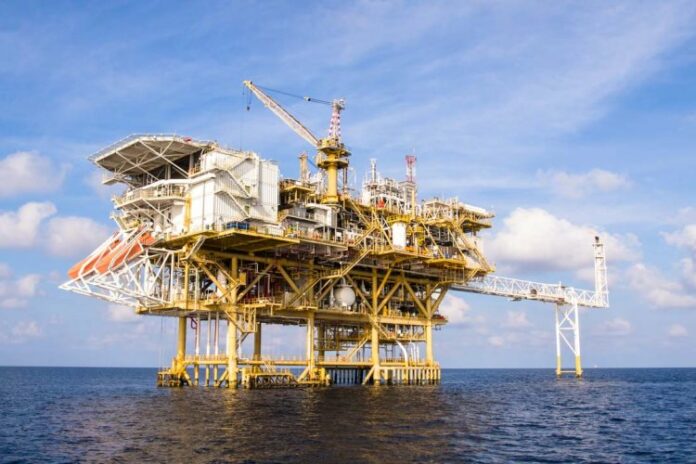
Shell Offshore Inc. (Shell), a subsidiary of Shell plc, today announces the start of production at PowerNap, a subsea development in the U.S. Gulf of Mexico with an estimated peak production of 20,000 barrels of oil equivalent per day (boe/d).

PowerNap is a tie-back to the Shell-operated Olympus production hub in the prolific Mars Corridor.

Zoe Yujnovich, Shell Upstream Director, said:

“Shell has been producing in the Mars Corridor for more than 25 years, and we continue to find ways to unlock even more value there. PowerNap strengthens a core Upstream position that is critical to achieving our Powering Progress strategy and ensuring we can supply the stable, secure energy resources the world needs today and in the future.”

Shell uncovered PowerNap in 2014 and holds a 100% stake in the project. 

It is located in the south-central Mississippi Canyon area, about 150 miles from New Orleans in about 1,280 metres of water.

PowerNap consists of three production wells produced through a single insulated 19-mile flowline and high-pressure gas lift capability.

Shell operates Olympus with a 71.5% working interest, with BP controlling the remaining 28.5%.

Offshore renewables programme invests over £2m in regional innovation

0

A further four companies operating in the North of Tyne region have been selected to develop their innovative technologies as the latest round of funding from the Technology, Innovation and Green Growth for Offshore Renewables (TIGGOR) programme takes its total regional investment to over £2m.

The successful companies – TechnipFMC, FES International, Kinewell Energy, and Enshore Subsea – will receive a share of £800,000 in match funding made available through the second round of the TIGGOR programme’s technology demonstration strand. Last year, the programme awarded £1.5m across five companies for green technology development.

TIGGOR is funded by the North of Tyne Combined Authority (NTCA) as part of its wider Energy, Green Growth and Climate Change and delivered by the Offshore Renewable Energy (ORE) Catapult.

The companies applied for support to accelerate innovative technology concepts in key areas such as dynamic subsea cable arrays, re-usable suction vent hatches for fixed and floating offshore wind farms and scanning for Unexploded Ordnance (UXO). Each company will work closely with ORE Catapult, as well as demonstrate their technologies to specialists at Equinor, joint venture partner and future operator of Dogger Bank Wind Farm, and EDF Renewables, which owns and operates the Blyth Offshore Demonstrator wind farm.

A new open call has been launched on 25th March for any organisations across the North of Tyne region wishing to apply.

Graham Smith, TIGGOR programme manager, said:

“This funding award completes the second round of funding within the TIGGOR regional supply chain demonstration programme and provides excellent opportunities for local companies to access the fast-growing offshore renewables market.

“The programme, with strong industry engagement, demonstrates to wind farm developers highly innovative solutions with the ambition to increase UK local content in future developments.”

Councillor Richard Wearmouth, the North of Tyne Cabinet Member for Clean Energy and Connectivity and Deputy Leader of Northumberland County Council, said:

“The TIGGOR programme is already driving forward innovation, research and development here in the North of Tyne.

“With the ORE Catapult in Blyth we’re leading the way in support both for our local businesses and in terms of attracting more companies here to the North of Tyne.

“This investment is a further opportunity to take advantage of a multi-billion pound industry emerging in the UK, placing ourselves right at the centre of the green energy revolution.”

Andrew Saunders, O&M Manager for Equinor at Dogger Bank Wind Farm, said:

“Equinor is delighted to continue acting as a Technical Advisor to the TIGGOR programme to facilitate innovative technology development in the North of Tyne region, and look forward to working closely with TechnipFMC, FES International, Kinewell Energy, and Enshore Subsea to provide technology and industry advice on how their solutions can be advanced to market in the offshore wind industry.

“Demonstration is vital in maturing ground-breaking technologies and the North of Tyne region, through TIGGOR, is becoming a hub for innovation in global offshore wind.”

LNG bunkering vessel to start operation in Kyushu and Setouchi Regions in 2024

0

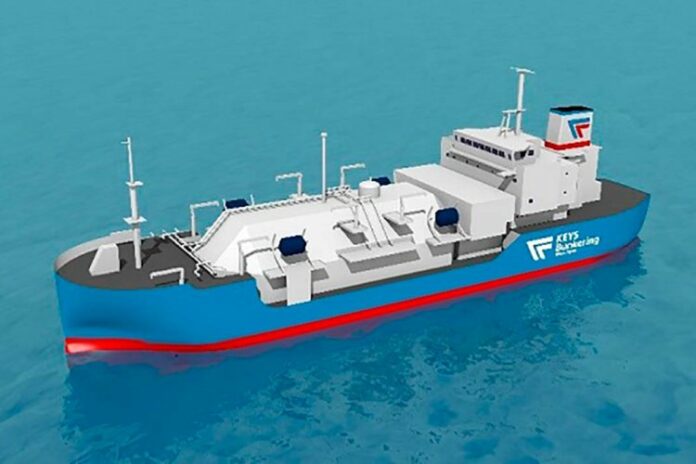
Kyushu Electric Power, NYK Line, ITOCHU ENEX, and SAIBU GAS have established a joint venture company, KEYS Bunkering West Japan, in February this year and have performed considerations with the goal of beginning the operation of the liquefied natural gas (“LNG”) fuel supply business for ships in Japan’s Kyushu and Setouchi regions in the spring of 2024.

The parties announced today the conclusion of a shipbuilding contract for one private vessel for the supply of LNG fuel to ships between KEYS and Mitsubishi Shipbuilding Co., Ltd. The construction of the LNG bunkering vessel is planned to be completed in March 2024, and the vessel will become the first LNG bunkering vessel operated in West Japan.

For starting the LNG fuel supply business, the parties also applied, in January 2022, for support from the subsidy program for development of LNG bunkering bases , the Ports and Harbours Bureau, Ministry of Land, Infrastructure, Transport and Tourism (hereinafter “MLIT”) assistance project that supports the establishment of LNG fuel supply facilities. The support for this LNG fuel supply business was approved on March 4, 2022. With the support of the MLIT, KEYS will own and manage LNG bunkering vessels and implement the LNG fuel supply business.

Through this business, which handles environment-friendly LNG fuel, the parties and KEYS will contribute to the reduction of greenhouse gas emissions with the goal of realizing a carbon-neutral society.

Empire Wind selected Maersk to supply wind installation vessel

0

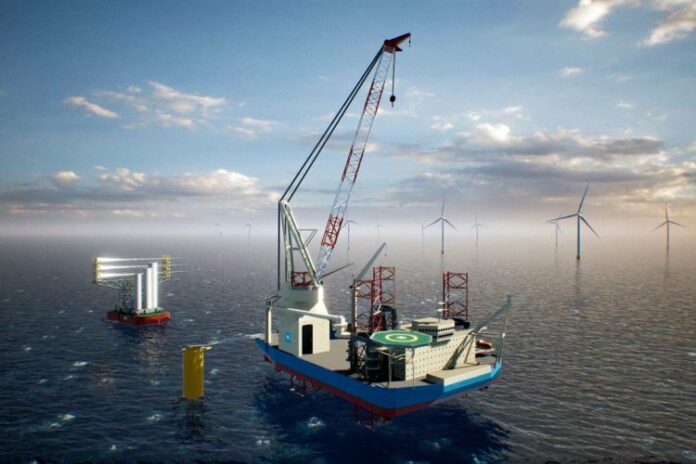
Empire Offshore Wind, a joint venture between Equinor and bp, has awarded a contract to Maersk Supply Service for charter of its newbuild wind installation vessel (WIV). 

The newbuild vessel is planned to be ready for operation for Empire Wind I and II in the mid-2020s. Maersk has developed the vessel concept, which will deliver installation of wind turbines by a Jones Act compliant spread.

Mette H. Ottøy, chief procurement officer, says:

“Equinor has worked closely with Maersk for a number of years on the Norwegian Continental Shelf, where we have employed several of their jack-up rigs. Now Equinor and bp are excited to cover new ground together, with the first-of-its-kind wind installation vessel. We will build on all parties’ long history of offshore experience as we extend our collaboration into the renewables business.”

Empire Wind 1 and 2, part of the company’s portfolio of offshore wind projects off the US east coast, are key building blocks to accelerate profitable growth in renewables and to deliver on Equinor’s ambition to install 12-16 GW of renewables capacity by 2030.

Maersk’s vessel will be supported by two newbuilt tugs and barges, which will transport the wind turbine components from the South Brooklyn Marine Terminal to the Empire Wind lease area, located 15-30 miles southeast of Long Island, New York. The barges and tugs will be constructed and operated by Kirby Offshore Wind, a subsidiary of Kirby Corporation. The concept ensures that the vessel can remain in operation while the barges transport turbine components from the staging port on a continual basis.

Trond Gulichsen, project director for Empire Wind, says:

“We are very pleased with having signed this agreement with Maersk, providing a state-of-the-art vessel for the landmark project in New York demonstrating industry collaboration with the US supply chain in providing new technology and solutions for the US offshore wind market. The Maersk concept will ensure efficient installation of the Empire Wind turbines by using a dock-in feeder solution, which will improve safety by reducing the number of offshore lifts. We are pleased that Maersk is also exploring the opportunity of using climate neutral fuels to operate the wind installation vessel.”

When completed, Empire Wind 1 and 2, will power more than 1 million New York homes. The project will be a major contributor to meeting US and New York State’s energy transition goals.

MAWANI and CMA CGM to launch new integrated logistics platform

0

The Saudi Ports Authority (Mawani) has signed an agreement with CMA CGM Group, a world leader in shipping and logistics, to build an integrated logistics platform at Jeddah Islamic Port. 

The new facility will be established on 130,000 sq. meters of land leased by the port administration with the overall aim of developing an efficient sector-wide logistics mechanism and boosting the Kingdom’s profile as a global logistics hub connecting three continents.

The deal was signed by HE Omar Talal Hariri, President of Mawani, and Xavier Eiglier, CMA CGM Group’s Regional Director for the Middle East Gulf, Indian Subcontinent, Indian Ocean Islands, and Southern and Eastern Africa, in the presence of senior officials from both sides and a host of leading industry executives.

Mawani’s President commented on this occasion:

“The logistics platform represents an important milestone in the Authority’s continued endeavour to fulfil the objectives of the National Transport and Logistics Strategy (NTLS) in creating specialized logistics zones within the precincts of Saudi ports and beyond in the pursuit of positioning the Kingdom as a global logistics hub. It adds further momentum to our aspirations in building a booming and sustainable maritime sector, achieving the socioeconomic ambitions listed out in Vision 2030, and offering world class logistics services that can stimulate economic growth and enable strategic integration with the transportation ecosystem.”

Xavier Eiglier, Regional Director, Middle East Gulf, ISC, Indian Ocean Islands, Southern and Eastern Africa, of the CMA CGM Group said:

“This project marks the Group’s first integrated logistics platform in the Middle East and will help in expanding our service offering to our Saudi and global customers to use Jeddah as a transit hub for trading across the wider region.”

Jeddah Islamic Port is Saudi Arabia’s top import and export destination, receiving 75% of the nation’s total inbound maritime trade and transhipments. With an annual capacity of 130 million tons, the Red Sea’s leading re-export hub features 62 berths and four terminals.

The port regulator’s recently launched strategy is well set to realize the goals conceived by the National Transport and Logistics Strategy (NTLS) to develop a competitive and productive maritime sector that keeps pace with global trends and promotes economic prosperity.

The CMA CGM Group pursues its development in logistics within the region with the launch of a 130,000 sq. meters facility of specialized container depots and warehouses in one of Saudi Arabia’s major ports.  CMA CGM INLAND SERVICES (CCIS), the Group’s entity dedicated to inland transportation solutions development, and its logistics subsidiary CEVA collaborated closely on this project which includes a USD 130 000 000 investment over the span of 20 years to strengthen the CMA CGM Group’s presence in the Kingdom of Saudi Arabia and the whole region.

The project aims to offer a unified logistics ecosystem leveraging CMA CGM’s ocean network with CCIS inland solutions and CEVA’s logistics services, to offer customers seamless end to end logistics solutions. The agreement will create more than 150 direct jobs and hundreds of indirect ones within the logistics sector. It will be providing a trusted logistics hub in one of the busiest trading routes serving as an instrumental part of the global maritime trade connecting Saudi Arabia to the rest of the world.

CMA CGM subsidiaries, CCIS and CEVA, will be offering unique logistics solutions including advanced hub, export hub, value added services, temperature controlled bonded storage and multimodal transport solutions to cater for all customer needs.

With this major investment, the new project will strengthen Jeddah Port’s position as the hub of choice for both gateway and cross border trade in the Red Sea. It will support Jeddah Islamic Port’s growth strategy in its aim to become one of the top ten ports globally, as part of Saudi Arabia’s Vision 2030.

NOAA’s ship to measure water depths in the Mariana Archipelago

0

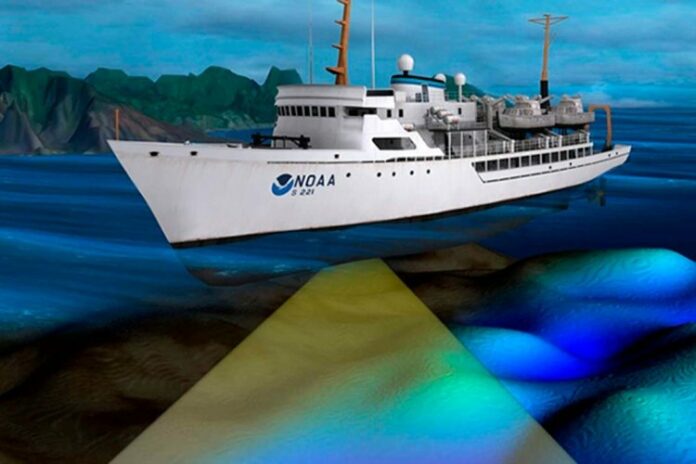
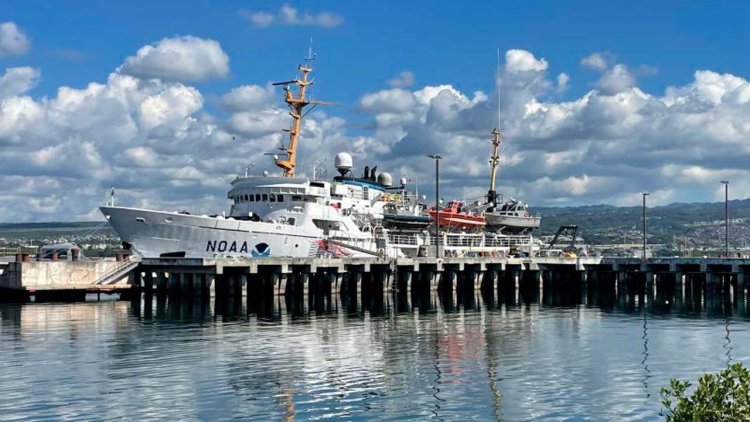
The NOAA Ship Rainier departs Honolulu on a mission to measure water depths and gather information on corals, fish, and changing ocean conditions.

Scientists and managers depend on research surveys to monitor coral reef ecosystems across the Mariana Archipelago. Multiple threats including climate change, disease, and land-based sources of pollution impact coral reefs around the globe, including the Marianas.

During expeditions this spring and summer, scientific divers from NOAA will estimate the number of reef fish and measure corals around the islands. They will also collect thousands of photographs to create 3D images of the reefs. The abundance and distribution of reef fish and coral reef organisms show us the conditions and integrity of our coral reef ecosystems. Over time, we can see how they have changed—an important part of conserving reefs in the region.

In addition to collecting information about the coral reefs, the team aboard the Rainier will also collect high resolution bathymetric data to update nautical charting products, improve maritime safety, and characterize seabed habitat. These data will be collected in areas of the Marianas Archipelago that, in some cases, have not been surveyed in over 80 years—if at all.

Combining seafloor images to create 3D models of large areas of reef tract is a process called “structure-from-motion” photogrammetry. During this mission, NOAA scientists will conduct structure-from-motion surveys across the archipelago to measure the density, surface area, die-off, and health of corals. Monitoring the same locations over time will provide valuable information on the resilience of these coral reefs to local and global threats.

Scientists aboard the Rainier will measure water temperature, salinity, carbonate chemistry, and other physical characteristics of the coral reef environment. Researchers will measure coral growth and bioerosion monitoring units to measure coral reduction. Together, these instruments allow researchers to assess the potential early effects of ocean acidification on the corals.

Scientists will observe the number and size of reef fish among the corals, and will also measure the coral size and health. These ecosystems are packed full of a variety of plants and animals.They provide coastal protection, food, and livelihoods to millions of people worldwide, but threats to coral reefs and marine ecosystems are growing. Researchers are leaning more heavily on combining digital imaging, growth measurement tools, and fish observations to enhance our monitoring capabilities. 

BV delivers AiP for ‘Solid Sail’ to help reduce large cruise ship emissions

0

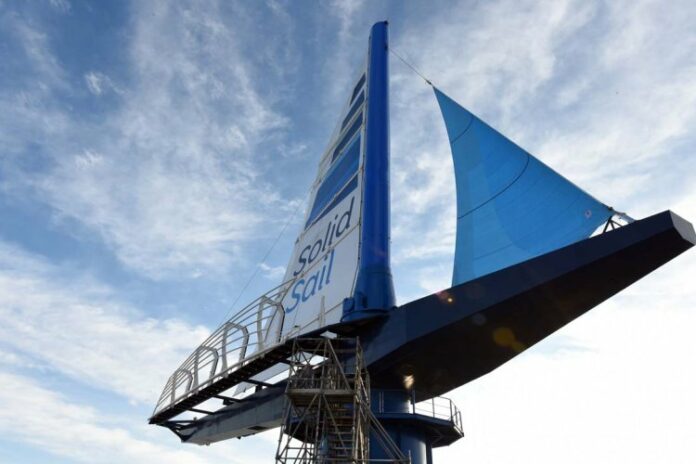
Bureau Veritas (BV), a world leader in testing, inspection, and certification has delivered an Approval in Principle (AiP) to Chantiers de l’Atlantique for its innovative sailing propulsion system, Solid Sail, tailored for the large ships market.

Solid Sail is a 1,200 m² rigid sail made of composite panels assembled together, which was developed specifically for large vessels. The system overcomes the usual size limitations of standard fabric sails. Moreover, the rigidity of the sail panels induces less flapping and therefore increases the estimated life compared to a soft sail.

BV has been involved from the early stage. The company delivered the AiP in line with our Rule Note for WIND PROPULSION SYSTEMS (WPS) – NR 206. BV conducted an assessment of the Solid Sail’s design and system. This AiP assures the industry that this new technology can be safely used and is ready for the next phase of its development and installation on-board.

Increasing the energy efficiency of cruise ships and lowering their impact on the environment are two of the main objectives of “Ecorizon®”, Chantiers de l’Atlantique’s R&D pioneering 14-year old program dedicated to ship energy and environmental efficiencies. This final validation step paves the way for the commercialisation of Solid Sail and its installation on large cruise ships.

Frédéric Grizaud, Senior Vice President at Chantiers de l’Atlantique, said:

“The concept of Solid Sail is the first of its kind, and is the most advanced and innovative solution of sailing propulsion of the large ships market. The integration on-board a passenger ship of such an innovative solution is only possible thanks to the tremendous collaborative work done with Bureau Veritas on its new rules on Wind Assisted Propulsion.”

Laurent Leblanc, Senior Vice President Technical & Operations at Bureau Veritas Marine & Offshore, commented:

“The power of the wind, even if it is not always available, can make a significant contribution to GHG free ship propulsion and ship design. We are pleased to deliver this AiP to Chantiers de l’Atlantique, bringing trust in wind propulsion systems and supporting the GHG emission reduction of shipping more generally. That’s how we can help shape a better maritime world. We look forward to seeing the system in operation.”

Turkey, Romania work to defuse mines possibly floating from Ukraine’s shores

0

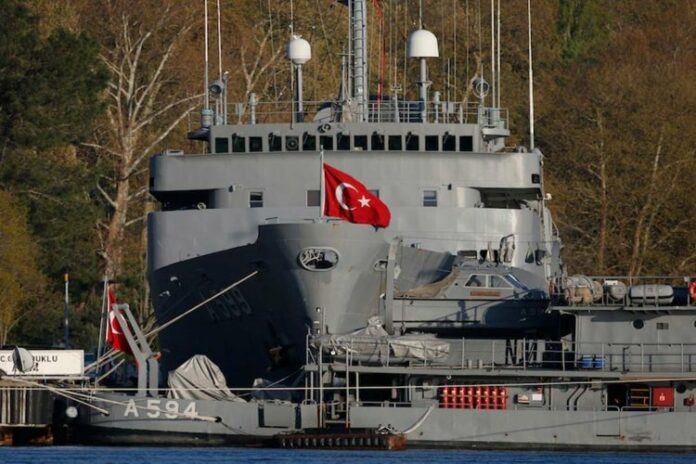
Turkey and Romania have scrambled in recent days to neutralize potentially explosive mines amid concerns that the weapons may be drifting across the Black Sea from Ukraine’s shores toward neighboring countries.

Defense ministries for both countries, in separate announcements Monday, said they had dispatched their naval forces to defuse mines of unknown origin that appeared near their coasts.

A mine that appeared Monday was the second reported in the waters near Turkey in three days. Turkey’s government had said previously that it was in contact with both Moscow and Kyiv about the weapons, but did not specify which side, if either, was responsible for the mines.

Bulgaria’s government last week warned people living in three districts near its Black Sea coast to beware of possible drifting mines, according to local media reports.

The scramble comes after Russia’s intelligence service, the FSB, claimed on March 19 that poor weather had caused more than 400 naval mines to become disconnected from the cables that were anchoring them, and warned that the mines were “drifting freely in the western part of the Black Sea,” which includes the territorial waters of Ukraine, Romania, Bulgaria and Turkey.

Ukraine at the time dismissed the assertion as untrue and politically motivated. “This is complete disinformation from the Russian side,” Viktor Vyshnov, deputy head of Ukraine’s Maritime Administration, told Reuters. “This was done to justify the closure of these districts of the Black Sea under so-called ‘danger of mines.’ ” 

A 1907 international treaty prohibits countries from laying unanchored mines designed to damage ships unless they can be controlled or are “constructed as to become harmless one hour at most after the person who laid them ceases to control them.”

The Romanian Defense Ministry said Monday that a fishing vessel had spotted a drifting mine about 8 a.m. and alerted maritime authorities, which then undertook an operation to neutralize it about 39 nautical miles from the Port of Midia, in southeast Romania. The ministry did not say where the mine came from and an update on the operation was not immediately available.

Meanwhile, Turkey said Monday that it had neutralized a mine detected off the coast of Igneada, a town in the country’s northwest near the border with Bulgaria, while on Saturday another mine, which was thought to have drifted from the Black Sea, forced a temporary closure of the Bosporus, the key waterway that runs through Istanbul.

The incident raised fears that the conflict between Russia and Ukraine could threaten traffic in the Bosporus, a choke point for global energy supplies and commerce.

Photographs purporting to show the mine depicted what appeared to be a metallic orb with spikes. On Saturday, Turkey’s defense minister, Hulusi Akar, described the mine as “old” and said Turkey had been in touch with the Kremlin and with Kyiv about its appearance in the Bosporus.

Source: The Washington Post

Wärtsilä signs agreement with Brittany Ferries to support new LNG-fuelled ferry

0

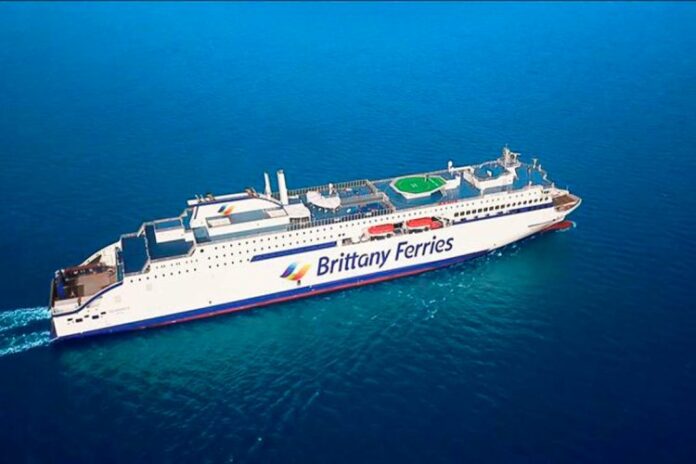
The 10-year agreement was signed in December 2021. The ’Salamanca’ is the first LNG-fuelled passenger ferry to operate from the U.K. The vessel’s multi-fuel Wärtsilä engines are also adapted to utilise even cleaner fuels, such as synthetic or bio-methane, as and when they become available.

Arnaud Le Poulichet, Director Engineering and Maintenance Brittany Ferries, says:

“We have a responsibility to operate as environmentally efficiently as possible and the choice of LNG-fuelled propulsion is in line with this commitment. The advanced technical support provided by Wärtsilä will optimise the ship’s operational performance, thus further raising its level of sustainability.”

The extensive scope of the service agreement includes remote operational support and Wärtsilä’s unique Expert Insight digital predictive maintenance solution. Expert Insight combines artificial intelligence (AI) techniques and advanced diagnostics with the company’s OEM expertise to identify anomalous equipment or system behaviour. It proactively identifies and highlights potential failures allowing appropriate actions to be taken, thus ensuring optimal uptime.

The agreement also includes long-term maintenance planning emphasising a fully controlled and optimised maintenance budget. With round-the-clock technical and operational support provided from Wärtsilä’s Expertise Centres.

Nicolas Rossi Agreement Sales Manager, Wärtsilä Marine Power, said:

“We congratulate Brittany Ferries on the inauguration of the ‘Salamanca’, a ferry that is in complete alignment with the maritime sector’s ambitions towards decarbonised operations. The service agreement will ensure that the vessel’s sustainable propulsion solutions will be efficiently maintained so that its carbon footprint is minimised at all times.”

The ‘Salamanca’ was built at the CMJL (China Merchants Jinling Shipyard (Weihai)) facilities in China. It features two Wärtsilä 46DF dual-fuel main engines and three Wärtsilä 20DF dual-fuel auxiliary engines with gas valve units. Wärtsilä has also supplied two LNGPac fuel storage, supply and control systems, two tunnel thrusters, two tail shafts, the stern tube seals, a Wärtsilä Aquarius Ballast Water Management System, and Wärtsilä’s Nacos Platinum integrated navigational system.