-1.1 C
New York
Home Blog Page 456

DP World launches E-commerce platform in Tanzania

0

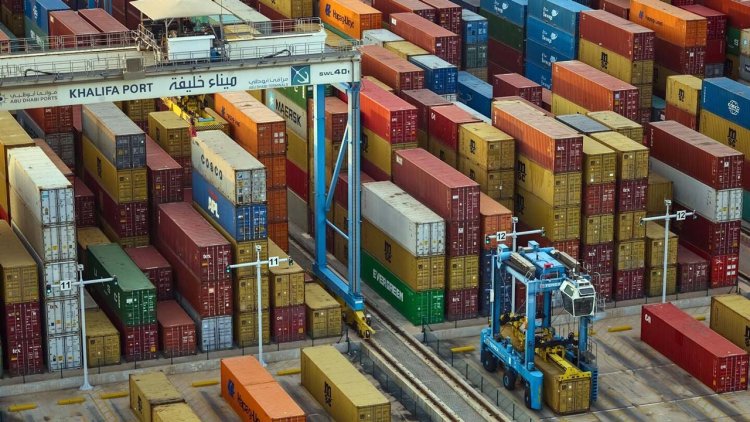
DP World has announced the launch of its wholesale e-commerce platform DUBUY.com in Tanzania. The online marketplace will give Tanzanian businesses better access to international markets. It will also provide a more secure and reliable supply chain, through DP World’s worldwide ports and logistics network.

The new platform enables Tanzanian businesses to buy wholesale products across a variety of categories both domestically and abroad. DUBUY.com offers users a unique combination of advanced technology and DP World physical infrastructure – which includes the Port of Berbera in Somaliland – to solve several key challenges facing the growth of e-commerce in Africa. This includes reliable fulfilment, secure financial transactions, and safe movement of goods.

This latest expansion of DUBUY.com follows launches in Kenya and Rwanda last year, which created an online business community of more than 1500 active merchants. The move into Tanzania demonstrates DUBUY.com’s commitment to creating a strategic trading gateway into East Africa by working in partnership with the Chamber of Commerce.

Speaking on today’s launch, Mahmood Al Bastaki, Chief Operating Officer of Dubai Trade World said:

“Dubuy.com presents an opportunity for homegrown businesses to transform into international enterprises by providing access to new markets in Africa, the Middle East and the rest of the world. We are thrilled to continue our expansion into East Africa with our launch in Tanzania, a key strategic market given its rapidly growing economy and under-served e-commerce marketplace. It is our hope that access to these new digital tools will enable local businesses to prosper.”

Mr Paul Koyi, President of Tanzania Chambers of Commerce, said:

“Tanzania’s Development Vision for 2025 is to have a strong, diversified, resilient and competitive economy, one which is easily and confidently able to adapt to the changing market and technological conditions of the regional and global economy. We know that exciting opportunities such as those provided by our strategic partnerships with DP World and DUBUY.com will help us drive this vision forward. Further, it will allow us to increase our country’s trading connectivity, build an easy access market for Tanzanian entrepreneurs, and help us secure long-term, sustainable growth. With our local expertise, and DP World’s global footprint and influence, we have a bright and prosperous future as part of a global market ahead of us.”
QatarEnergy acquires 40% interest in exploration block offshore Egypt

0

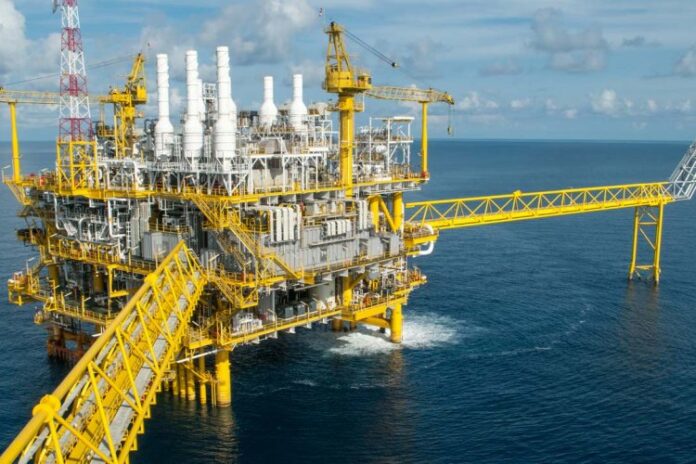
Under the terms of the agreement, which is subject to customary approvals by the government of Egypt, QatarEnergy will hold a 40% working interest in the contractor’s share in the North Marakia Offshore Block in the Mediterranean Sea, while an affiliate of ExxonMobil (Operator) will hold the remaining 60% working interest.

Commenting on this occasion, His Excellency Mr. Saad Sherida Al-Kaabi, the Minister of State for Energy Affairs, the President and CEO of QatarEnergy said:

“This agreement represents another important step in establishing QatarEnergy’s presence in the Arab Republic of Egypt’s upstream oil and gas sector, and in implementing our international growth strategy.”

His Excellency Minister Al-Kaabi added:

“We are pleased to sign this agreement and to work with our valued long-term partner ExxonMobil to explore exciting prospects in this promising region. We are also delighted to have the opportunity to work with EGAS and the Egyptian Ministry of Petroleum and Mineral Resources and I would like to take this opportunity to thank the Egyptian authorities and our partners for their valuable support and cooperation.”

North Marakia Offshore was awarded to ExxonMobil in 2020 and covers an area of 4,847 km2 in water depths of 1,000 m to 2,000 m. 

Isle of Man Ship Registry and FuelTrust sign MOU to validate green ships

0

FuelTrust, the technology company dedicated to creating a trusted and sustainable fuel ecosystem for the marine industry, and Isle of Man Ship Registry (IOMSR), one of the world’s leading registers of ships, have signed a Memorandum of Understanding. IOMSR will use FuelTrust’s fuels and emissions digital technology to validate vessels for the flag’s Green Ship scheme and to collaborate on further projects to incentivize and enable emissions reductions.

The collaboration and cooperation agreement will enable ship owners and operators registered with the IOMSR to use FuelTrust’s Bunker Insights® product to predict, measure and authenticate their fleets’ emissions reductions.

Under this collaboration, IOMSR will accept FuelTrust’s AI-based validation of a vessel’s performance regarding its emissions and fuel quality programs. This will make vessels using Bunker Insights eligible for IOMSR’s green ship designation and benefit from discounts or offerings on their annual registration fee.

The Green Ship discount programme, which comes into effect on 1 April 2022, is available to operators of cargo ships, commercial yachts or passenger ships that invest in biofuel, alternative fuels, wind, or shore-side energy technology. FuelTrust and IOMSR will collaborate further to explore methodologies for tracking emissions reductions from zero-carbon fuels, among other projects, to reduce GHG emissions.

Darren Shelton, Chief Product Officer of FuelTrust, said:

“The agreement with Isle of Man Ship Registry creates significant opportunity for vessel owners. IOMSR recognizes how advanced technologies such as ours can help its members reduce their carbon emissions, track fuel usage and monitor performance.

“The advent of low or zero-carbon fuels, each with their own supply chain, is making the bunkering market even more complex. Owners and operators need to demonstrate to charterers, shippers, insurers, financiers and regulators that they are purchasing fuel that delivers against decarbonization targets. Digital technologies are required to ensure shipping companies have a validated analysis of their fuel profile and environmental impact.”

Cameron Mitchell, Director of the Isle of Man Ship Registry, said:

“As the world’s first flag state to reduce registration fees for ships deploying green technology, we want to support our members’ efforts by giving them access to the best technology for supporting fuel choice and to manage and monitor vessel emissions for regulatory compliance.

“Our collaboration with FuelTrust provides Isle of Man-registered ship operators and charterers the insights, expertise and transparency to assess the collective carbon output of their fleets and to manage compliance with emissions regulations.”

FuelTrust’s solutions use its AI Digital Chemist® to simulate combustion on a molecular level to track fuel quality, energy, and emissions profiles. AI Digital Chemist combines the known characteristics of a fuel batch, with class data on the vessel engine, and data from the day logs to precisely establish what results when fuel is burned. This gives a far more accurate picture than current emissions models and estimates, which don’t account for chemical interactions, source fuel data, or supply and delivery chain impacts. Many approaches require significant amounts of manual input, or the installation of costly, high-maintenance devices aboard vessels. FuelTrust solutions provide a fuel-centric and cost-effective digital method to solve these challenges.

ABB and PONANT enter 10-year MarineCare service agreement

0

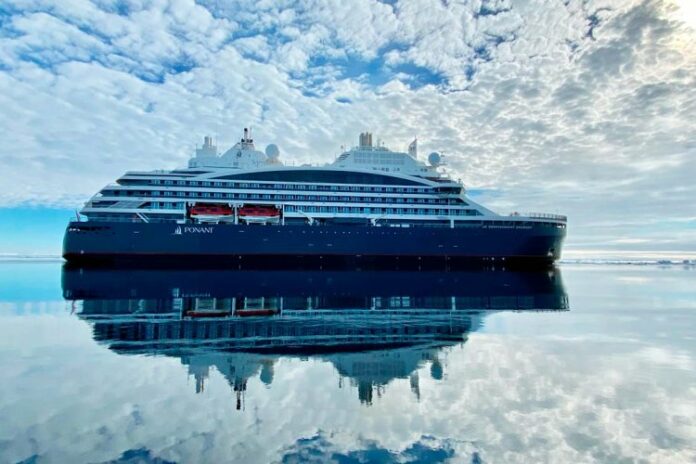
Le Commandant Charcot, which recently became the first exploration cruise ship to reach the geographic North Pole, has signed up for ABB MarineCare services to ensure safe and sustainable operations. 

The comprehensive 10-year service agreement provides round-the-clock remote support, diagnostics and condition monitoring, as well as preventive and planned maintenance, and the critical spare parts to sustain the achieved operational efficiency. The service scope also includes warranty for the ship’s energy storage system, supplied and integrated by ABB. 

The key benefits of ABB MarineCare include increased safety, reduced operational, maintenance and administration costs and maximized vessel uptime. Regular maintenance and continuous awareness of asset health status enable resolving possible issues remotely, preventing failure escalation and reducing the need for unplanned activities. Eight ABB Ability™ Collaborative Operations Centers around the world provide 24/7 support ensuring dedicated expertise and fast response times.

Mathieu Petiteau, Newbuilding Director, PONANT, said:

“At PONANT, we take great pride in allowing our guests to experience the most awe-inspiring destinations on Earth, secure in the knowledge that their safety and the health of the environment are our utmost priorities. ABB’s support ensures optimized performance of our advanced ABB technology on a continuous basis, bringing us complete peace of mind and allowing us to focus on delivering a unique travel experience.”

Jyri Jusslin, Head of Service, ABB Marine & Ports, said:

“PONANT’s high standards in safety and sustainability are crucial when operating in isolated environments such as the Arctic and Antarctica. Our MarineCare agreement ensures that Le Commandant Charcot has full access to our remote services wherever in the world she is sailing, and offer the ship’s crew continuous training to help them respond to any unforeseen issues.”

The Polar Class PC2 expedition vessel features the largest energy storage system ever installed on a cruise ship, as well as two ABB Azipod® propulsion units with a combined power of 34 megawatts. With the electric drive motor situated in a submerged pod outside the ship hull, the Azipod® system can rotate 360 degrees, significantly increasing maneuverability and operating efficiency of a vessel and cutting fuel consumption by up to 20 percent compared to conventional shaftline systems. 

AD Ports signs two agreements with the Egyptian Group

0

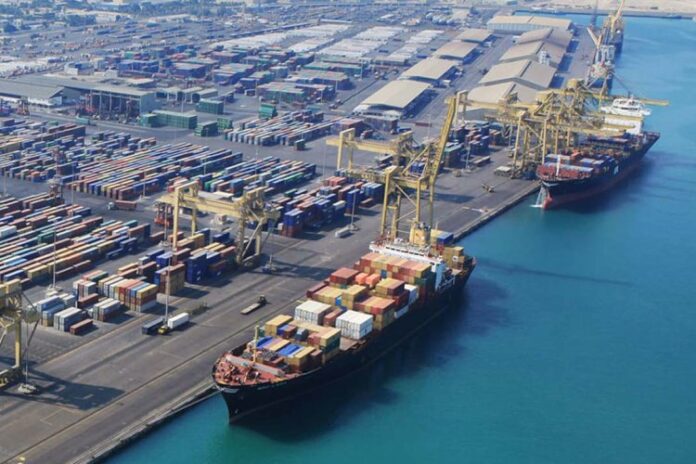
AD Ports Group has signed a Memorandum of Understanding (MoU) with the Egyptian Group for Multipurpose Terminals, the commercial arm of the Egyptian Ministry of Transportation, to jointly oversee the development and operation of Egypt’s Ain Sokhna Port and discuss cooperation with the aim to develop the maritime sector in Egypt.  

Under the agreement, the two organisations will work closely together to conduct a feasibility study into the future development of Ain Sokhna Port, exploring potential investment opportunities to enhance its capacity and capabilities, which will enable the port to target untapped market segments and establish new revenue streams.

AD Ports Group will manage the research study for Ain Sokhna Port, which is expected to be conducted over a period of six months, while the Egyptian Group for Multipurpose Terminals will support the project with the provision of financial, technical, environmental, commercial, and operational data necessary to ensure the study’s successful conclusion.

A second MoU, signed with the Egyptian Group for Multi-Purpose Terminals and the River Transport Authority, will see the parties collaborate on three main projects including building and operating a river port in Minya; managing and operating warehouses in Damietta; and equipping, managing and operating passenger lines in Greater Cairo.

The signing took place on the side-lines of the eleventh session of the International Conference on Maritime Transport and Logistics (Marlog 11), in the presence of His Excellency the Egyptian Minister of Transport, Lieutenant-General Eng. Kamel el Wazir and Capt. Mohamed Juma Al Shamisi, Managing Director and Group CEO of AD Ports Group. It was signed by Saif Al Mazrouei, Head of Ports Cluster at AD Ports Group and Rear Admiral Abdul Qadir Darwish, Chairman of the Egyptian Group for Multipurpose Terminals and Admiral/ Mofed Salah Shehata – Chairman and CEO of River Transport Authority.

Rear Admiral Abdul Qadir Darwish, Chairman of the Egyptian Group for Multipurpose Terminals, said:

“These agreements represent an important step in the field of maritime and river transport in Egypt by developing port operations and establishing and operating logistics areas. The Egyptian Multipurpose Terminals Group and AD Ports Group have a close collaborative relationship and this collaboration has resulted in these important agreements that will play a key role in supporting Egypt’s maritime and river port ecosystem.”

“Today the continued cooperation between the two parties has achieved further successes, reflecting the close relations at all levels, and expanding the horizon of cooperation to include the potential management of a multi-purpose terminal at Ain Sokhna Port on the Gulf of Suez and collaboration on the operation of a river transport station in order to activate river transportation across the Nile.”

Saif Al Mazrouei, Head of Ports Cluster, AD Ports Group, said:

“AD Ports Group is pleased to further our close relationship with the Egyptian Ministry of Transport and to coordinate with the River Transport Authority and the Egyptian Group for Multipurpose Terminals on these latest projects to support Egypt’s efforts to further modernise its maritime infrastructure and service capabilities.”

“We see significant commercial and social potential for the development of Ain Sokhna Port and the river port in Minya. The cooperation will boost the already strong capabilities that these facilities have in commercial and maritime shipping, as well as in the cruise sector. We are confident that AD Ports Group has the experience and expertise required to bring the best out of these key assets.”

Participating in the 11th Session of the International Conference on Shipping and Logistics at MARLOG 11 2022, AD Ports Group’s representatives showcased several of the organisation’s achievements of the past year, while also advancing a series of discussions and agreements that were initially conceived during last year’s Trans-MEA conference, including its MoU with the Egyptian Group for Multipurpose Terminals for the development and operation of a multipurpose terminal in Safaga Port.

Ships stranded in Ukraine as war slows UN rescue efforts

0

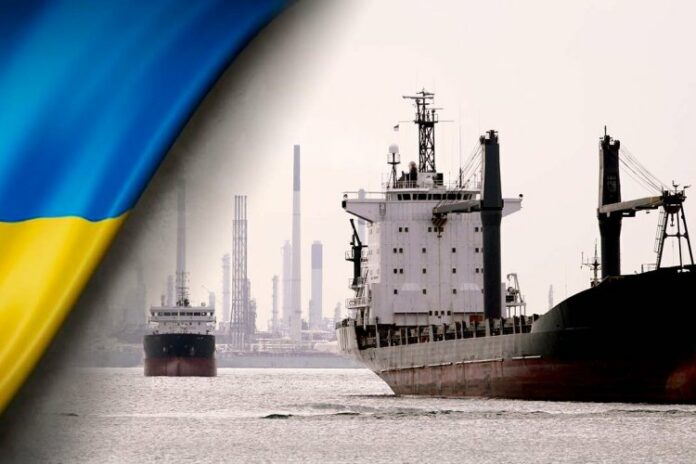
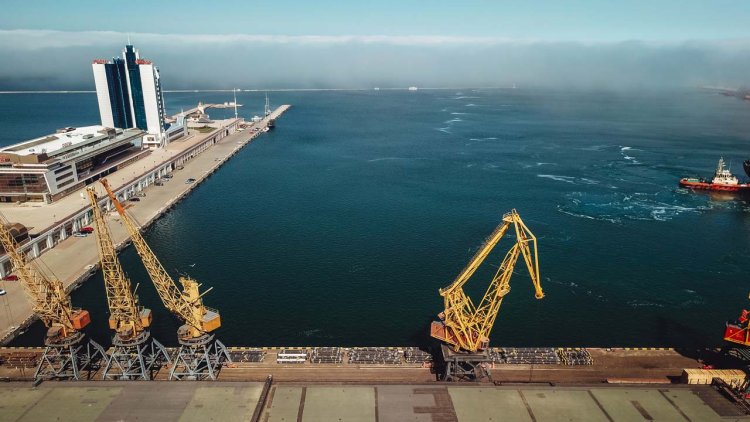
With more than 1,000 seafarers stranded on ships in Ukrainian ports and food supplies running low, the United Nations is pressing for their safe passage out of danger but security risks and disagreements are hobbling those efforts, maritime sources say.

At least 100 foreign flagged ships with over 1,000 seafarers have been stuck inside Ukrainian ports with food supplies running low, shipping officials say.

UN shipping agency the International Maritime Organization (IMO) said this month it would seek to create a safe maritime corridor to enable merchant ships and their crews to sail out of the Black Sea and Sea of Azov without the risk of being hit.

“The IMO Secretariat is working with both Ukraine and the Russian Federation to try and assist the safe departure of the ships and their crew,” an IMO spokesperson said.

“However, at present, the ongoing security risks preclude the option for ships to depart from ports in Ukraine.”

Multiple issues including the risk of mines is complicating efforts, sources with knowledge of the situation say.

In recent days Turkish and Romanian military diving teams have been involved in defusing stray mines around their waters, underscoring the broader dangers.

“Efforts to establish these safe blue corridors are extremely challenging,” the International Chamber of Shipping (ICS) said.

An ICS spokesperson added that it was trying to deliver provisions to affected vessels, “which are in grave danger of running out of food in the coming days as well as ensuring that vessels are not targeted for any kinetic strikes by any party”.

Five merchant vessels have been hit by projectiles – with one of them sunk – off Ukraine’s coast with two seafarers killed, shipping officials say.

London’s marine insurance market has widened the area of waters it considers high risk in the region.

In a circular letter issued to the IMO on Monday, Russia said it had established a humanitarian maritime corridor starting from March 27 “with the aim of ensuring safe passage” from the Ukrainian ports of Chernomorsk, Kherson, Mykolaiv, Ochakov, Odesa and Yuzhne.

Russia said the corridor, which would operate daily, represented an 80-mile long and 3-mile wide marine traffic lane from the assembly area.

“The Russian side calls on competent authorities of the Ukraine to provide for the safety and security of the merchant vessels and their crews transition to the assembly area,” it said in the circular.

Ukraine’s Maritime Administration is aware of Russia’s announcement, its deputy head Victor Vyshnov said, which was first made by Russian warships to commercial ships last week.

The IMO spokesperson said its Secretariat had circulated Russia’s communication.

But Vyshnov said any boundaries for the corridor announced by Russia had not been agreed by Ukraine.

“This is just a new sign of Russian propaganda,” he told Reuters.

“Due to the ongoing aggression against Ukraine, and Russian mine-laying activities at sea, no one can guarantee shipping safety in this region.”

Vyshnov said there were preconditions for the safe evacuation of ships.

“Russia must fully stop the hostilities, withdraw its troops and ensure the freedom and safety of navigation in the Black Sea and the Sea of Azov, including by carrying out mine-sweeping or allowing other littoral states to do this job,” he said.

Source: Reuters. Reporting by Jonathan Saul; editing by Jason Neely)

Remote Indian Ocean reefs bounce back quickly after bleaching

0

University of Exeter researchers are investigating “reef carbonate budgets” – the net production or erosion of reef structure over time.

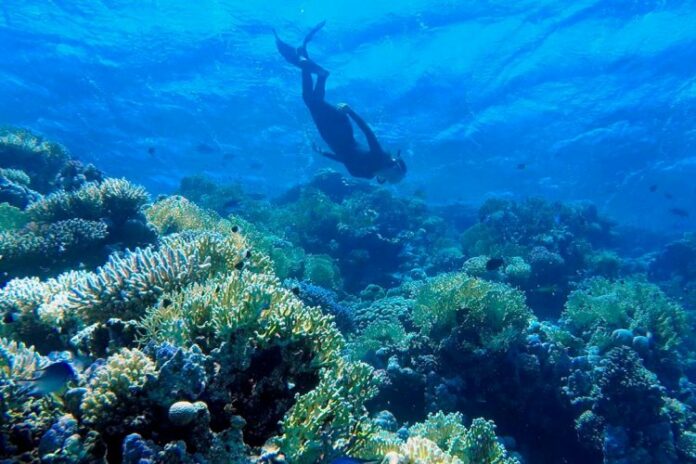
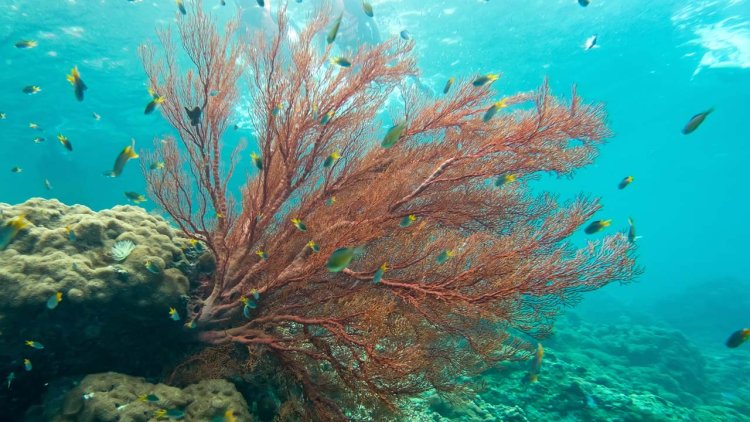
To study the impacts of climate change on reef functions, they examined 12 reefs in the remote Chagos Islands in the Indian Ocean before and after the global coral bleaching event in 2015/16.

In 2018, the formerly thriving reefs were “shrinking”, with coral cover and carbonate production down by more than 70% and erosion processes exceeding new coral growth.

When the researchers returned in 2021, all reefs were on a trajectory of recovery, although the speed varied from place to place.

Where key coral species returned quickly and the underlying physical reef structure had stayed intact, reefs showed a rapid transition back to positive growth only six years after the bleaching event.

Bleaching is caused by warmer water temperatures, which can trigger corals to expel their symbiotic algae and turn white. Corals can survive this, but an extreme heat wave causes large-scale mortality.

The speed of subsequent recovery is an important indicator of a reef’s health and resilience.

Lead author Dr Ines Lange, a postdoctoral research fellow in a multi-institutional project funded by the Bertarelli Program in Marine Science, said:

“Such high rates of coral recruitment and the rapid restoration of reef functions are a very nice surprise and imply that this location is showing some resilience, thus far, to ongoing ocean warming. A full recovery of reefs across the Chagos Archipelago over the next few years is likely if the region is spared from reoccurring marine heating events.”

Dr Lange added:

“The study shows that in remote and protected areas without local impacts such as fishing or pollution from land, coral reefs and the important functions they provide are able to recover relatively quickly, even after large-scale disturbances.

“Proximity to healthy coral populations and the maintenance of a complex reef structure seems to boost recovery speed, which may help to manage reefs under the threat of increasing frequency of bleaching events predicted for the near future.”

Co-author Professor Chris Perry, from the University of Exeter and a member of the Global Systems Institute, developed the census-based ReefBudget method to quantify reef carbonate budgets.

These carbonate budgets are important indicators of a reef’s ability to provide habitat to marine life, protect shorelines from wave energy and help reef islands to keep up with future sea level rise.

Over the last years, Prof Perry and Dr Lange optimised the method for the central Indian Ocean by quantifying and integrating local rates of coral growth and parrotfish erosion.

The paper, “Recovery trends of reef carbonate budgets at remote coral atolls six years post-bleaching” is published in Limnology and Oceanography by Ines Lange, Chris Perry and Marleen Stuhr.

Fincantieri launches Qatar’s fourth air defense corvette

0

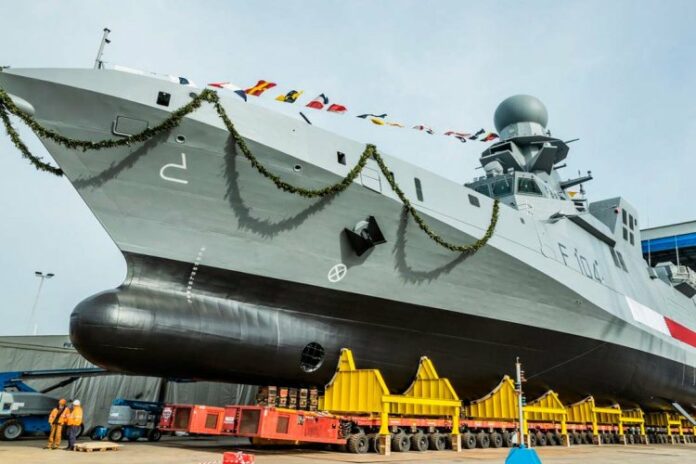
The launching of the corvette “Sumaysimah”, the fourth of the Al Zubarah-class of four vessels ordered to Fincantieri by the Qatari Ministry of Defence within the national naval acquisition program, took place today at the Muggiano (La Spezia) shipyard.

The ceremony, held in a restricted format and in full compliance with anti-contagion requirements, was attended by H.E. Khalid bin Yousef Al-Sada, Ambassador of The State of Qatar to Italy, Brigadier Rashid Al Qashouti, Chief of Staff Representative of Qatar Armed Forces, Brigadier Ali Ameen, Chief of Qatar Navy Representative, Major General Staff Hilal Al Muhannadi, Defense Attaché of the State of Qatar in Rome, Rear Admiral Riccardo Marchiò, Italian Navy MCM Force Commander, and by Marco Acca, Deputy General Manager Naval Vessel Division of Fincantieri.

The Al Zubarah-class corvettes, designed consistent with the RINAMIL rules, will be highly flexible and capable of fulfilling different kinds of tasks, from surveillance with sea rescue capacities to being fighting vessels. They will be about 107 meters long, 14.70 meters wide, and equipped with a combined diesel and diesel plant (CODAD), with a maximum speed of 28 knots. The units will be able to accommodate 112 persons on board.

Furthermore, the corvettes will be capable of operating high-speed boats such as RHIB (Rigid Hull Inflatable Boat) through lateral cranes or a hauling ramp located at the far stern. The flight deck and hangar are sized for hosting one NH90 helicopter.

The Crown Estate commissions latest marine aggregates data

0

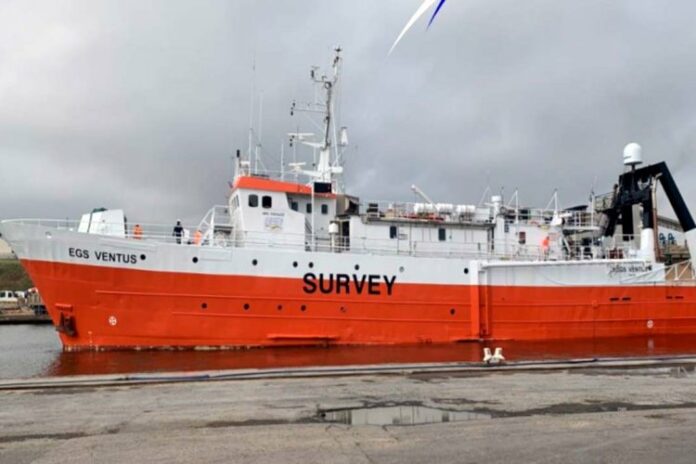
The research, which has been undertaken by EGS International Ltd, has captured high-quality bathymetric and geophysical data, focusing on four key seabed regions: the East English Channel, the Thames Estuary, the East Coast, and the Humber.

The data and evidence captured will inform decisions relating to the future use of the UK seabed, helping to optimise the area of seabed used for aggregate dredging. This will enable the potential safeguarding high quality resources, whilst releasing other seabed for alternative uses. It will also be used to help develop national & regional resource statements, for marine and mineral policy & planning and marine development guidance.

EGS has used the permanently mobilised 50m survey vessel, EGS Ventus, which is operating a spread of high-resolution bathymetric and geophysical equipment. This includes a hull mounted, dual head/dual swath Kongsberg 2040 MBES system, high-resolution dual frequency sidescan sonar and UHRS boomer system.

Marine aggregates are a vital component of the building materials supply chain and are extensively used in construction and civil engineering projects, particularly in the South East of England and South Wales.

The survey work builds on the ongoing research delivered by the British Geological Survey, the marine aggregates industry and The Crown Estate.   

Nick Everington, Portfolio Manager for Marine Minerals at The Crown Estate said:

“We’ve been working closely with the marine aggregates industry for many years, using data captured from surveys and dredging vessels, to support the sustainable management of our seabed.

“As competition for seabed space becomes increasingly pressured, this latest work will helps us build a more detailed understanding of UK seabed conditions and the nation’s current aggregate resources, helping to inform decisions about the future use of our marine environment.”

Gareth Stevens, EGS’ Commercial Manager, commented:

“This contract award demonstrates the suitability of EGS Ventus as a capable survey platform in N.E. European waters. We are very pleased to have been selected by The Crown Estate for this work, and look forward to the opportunity to continue this relationship in the future.”

C-Job launches self-propelled cutter suction dredger design

0

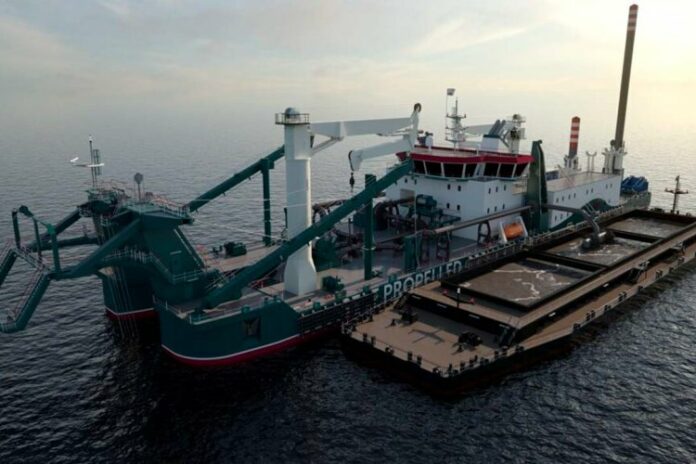
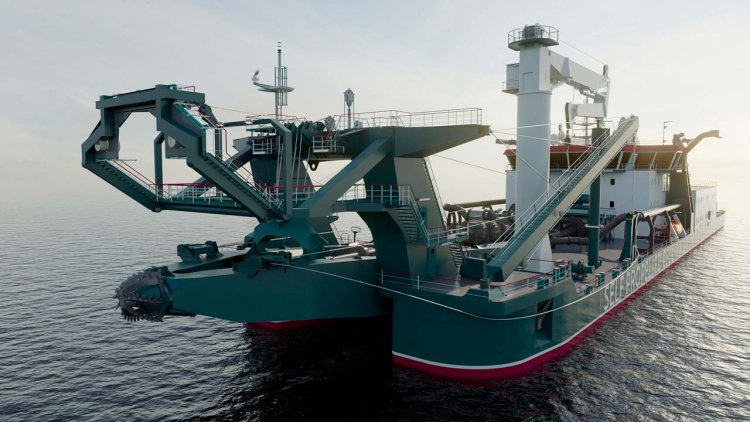
Headlining the series is a 34-inch self-propelled cutter suction dredger that features a cutter power of 3500 HP and a total installed power of approx. 26000 HP.

The CSD includes two 6300 HP dredge pumps on deck and one 3500 HP submerged dredge pump on the cutter ladder enabling a maximum dredging depth of 95 feet. The self-propelled CSD boasts a length of 296 feet, which can be extended to provide an increased swing width.

Todd Allen, VP Business Development at C-Job, says:

“The new CSD series is a bold design that brings industry leading performance in a dynamic modular package. With advanced features like motion compensation and a wide range of options it demonstrates the start of what is possible with the C-Job CSD series.” 

The CSD series presents the solution for mid-range cutter suction dredgers featuring a dredge discharge diameter of 20 to 40 inch and total installed power from any size up to 30000 horsepower. Thanks to the adaptive platform underpinning the CSD series, shipowners can completely tailor the design to their desired operational profile while benefitting from a full range of design solutions. Options include self-propelled or stationary service, anchor boom system, barge loading system, motion compensation in the spud carrier system, Christmas tree system, and spud tilting system to name a few. In terms of fuel options, in addition to standard systems designs can also include renewable marine fuel such as methanol or a combination via dual-fuel propulsion.