-0.8 C
New York
Home Blog Page 455

ExxonMobil makes final investment decision on fourth Guyana offshore project

0

ExxonMobil has made a final investment decision for the Yellowtail development offshore Guyana after receiving government and regulatory approvals.

Liam Mallon, president of ExxonMobil Upstream Company, said:

“Yellowtail’s development further demonstrates the successful partnership between ExxonMobil and Guyana, and helps provide the world with another reliable source of energy to meet future demand and ensure a secure energy transition. We are working to maximize enefits for the people of Guyana and increase global supplies through safe and responsible development on an accelerated schedule.”

Yellowtail production from the ONE GUYANA floating production storage and offloading (FPSO) vessel will develop an estimated resource of more than 900 million barrels of oil. The $10 billion project will include six drill centers and up to 26 production and 25 injection wells.

ExxonMobil’s ongoing offshore exploration in Guyana has discovered a recoverable resource of more than 10 billion oil-equivalent barrels. The company anticipates up to 10 projects on the Stabroek Block to develop this resource.

Development of projects and continued exploration success offshore are enabling the steady advancement of Guyanese capabilities and enhanced economic growth. More than 3,500 Guyanese are supporting ExxonMobil’s activities in Guyana, an increase of more than 50% since 2019. ExxonMobil and direct contractors have spent more than $600 million with more than 880 local suppliers since 2015. More than 3,000 Guyanese companies are registered with the Centre for Local Business Development, which was founded by ExxonMobil and its co-venturers in 2017 to build local business capacity and support global competitiveness.

ExxonMobil affiliate Esso Exploration and Production Guyana Limited is operator and holds 45% interest in the Stabroek Block. Hess Guyana Exploration Ltd. holds 30% interest and CNOOC Petroleum Guyana Limited holds 25% interest.

Liquefied CO2 cargo tank system obtains AiP from classification society DNV

0

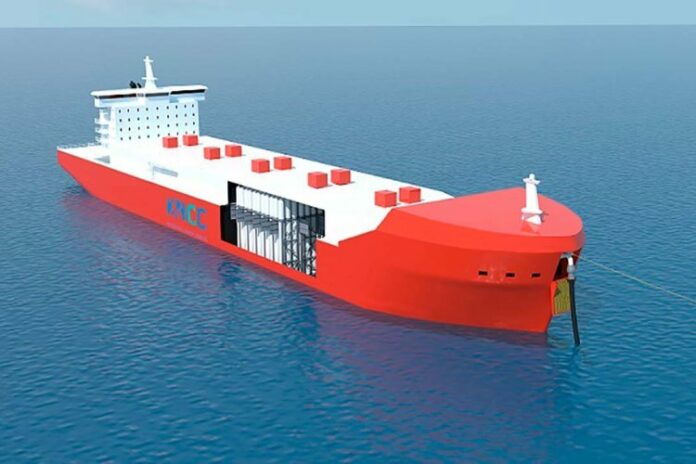
Knutsen NYK Carbon Carriers AS, which is an affiliate of NYK, received approval in principle (AiP) from the Norwegian classification society DNV on April 5 for the PCO2® tank system, which can transport and store liquefied carbon dioxide (CO2) at ambient temperature.

This is the world’s first AiP for a cargo tank system that can marine transport and store liquefied CO2 at ambient temperature.

Future expansion of the CCUS value chain will require larger vessels to maximize transportation efficiency. The concept of the PCO2® tank system is to transport liquefied CO2 over ambient temperatures (0–10°C) and under high pressure (35–45 bar). This makes it possible to transport liquefied CO2 in larger vessels than vessels that transport it under low or medium pressure, and to reduce costs incurred throughout the CCUS value chain.

Furthermore, transporting at ambient temperature and high pressure makes it possible to keep the pressure, temperature, and condition of liquefied CO2 relatively uniform from the transport of liquefied CO2 to injection into the seabed or underground. It makes it easier to handle liquefied CO2 in the CCUS value chain, which also has the advantage of reducing costs throughout the CCUS value chain.

In the future, KNCC aims to realize the operation of liquefied CO2 carriers at an early stage and participate in the CCUS value chain.

Ørsted acquires majority stake in Scottish floating wind development project

0

Ørsted has acquired a majority stake in the 100 MW Salamander floating offshore wind development project on the Scottish coast, entering a joint venture (JV) partnership with Simply Blue Group, a leading Irish blue economy developer in floating offshore wind, wave energy and low-impact aquaculture. Ørsted will own an 80% stake in the project as Simply Blue Group’s newest JV partner on the project, alongside minority JV partner, Subsea 7.

Salamander is intended to be progressed through the innovation track of Crown Estate Scotland’s forthcoming Innovation and Targeted Oil and Gas (INTOG) leasing round later this year. Established by Simply Blue Group, the project is designed as a stepping-stone for floating wind technology, providing an opportunity for supply chain businesses to gear up for commercial scale floating wind opportunities and help the technology become cost competitive as early as possible. The Salamander project follows on from other such projects Simply Blue Group is developing with major energy operators around Ireland and in Wales.

Martin Neubert, Group Deputy CEO and Chief Commercial Officer at Ørsted, said:

“I’m pleased that we have agreed with Simply Blue to become a partner on this promising project which further expands Ørsted’s engagement in floating offshore wind and will provide a lot of learnings that we can apply on Scotwind and other floating wind projects as the technology transitions from demo projects to utility scale. Ørsted has been driving the commercialisation of bottom-fixed offshore wind for 30 years, and during the next decade we want to help make floating offshore wind similarly successful through projects such as this one.”

Sam Roch-Perks, CEO of Simply Blue Group said:

“We are delighted that Ørsted is joining with Simply Blue Group and Subsea 7 to develop the Salamander project.  Ørsted is a leading player in renewable energy and brings considerable expertise to the prestigious Salamander project. As a leading floating wind developer, Simply Blue Group wants to contribute to the development of the Scottish Offshore wind market and its supply chain. Scotland is one of the best locations on the planet for the development of floating wind projects and we look forward to the collaboration with Ørsted on this exciting and important project.”

Duncan Clark, Head of Region UK for Ørsted said:

“Today’s announcement reaffirms Ørsted’s commitment to floating offshore wind, a developing technology which has an exciting future in Scotland and we look forward to working with Simply Blue Group and Subsea 7 to realise the potential of this exciting project.

“Developing projects of the type and scale of Salamander will provide a smooth transition to delivering utility scale floating offshore wind projects. It will support the cost reduction and learning journey that will underpin the commercial deployment of floating offshore wind, whilst developing the infrastructure, supply chain, jobs and skills that will help Scotland cement its place as a world leader in floating offshore wind as the industry grows in the coming decades.”

Subsea 7 has already joined the project as a joint venture partner. Subsea 7 brings its proven track record in delivering offshore energy projects, together with the company’s expertise and detailed knowledge of the Scottish supply chain.

John Evans, CEO of Subsea 7 said:

“The intention from the outset was to establish Salamander as a project that would be of interest to major players in offshore renewable energy. The project will be a key step towards fulfilling the ambitions for floating wind offshore Scotland, which has an important role to play in the Energy Transition and the journey to Net Zero. We are pleased to have Ørsted join as the majority partner and look forward to working together in pursuing this exciting opportunity.”

Green Giraffe acted as advisor to Simply Blue Group and Subsea 7 on the Salamander joint venture with Ørsted.

EU targets Russian coal and ships in new sanctions

0

European Commission head Ursula von der Leyen said planned measures included an import ban on coal and a ban on Russian ships and road operators.

The US is also planning more sanctions.

And UK Foreign Secretary Liz Truss is calling for a “tough new wave” of sanctions from G7 and Nato ministers.

She said her Japanese counterpart had agreed the international community had to increase pressure on Russia’s Vladimir Putin “and his war machine with further co-ordinated sanctions”.

EU officials had earlier indicated the focus would be on enforcing existing measures.

But revelations of atrocities, with hundreds of bodies of civilians found in towns abandoned by Russian troops, have given added impetus for new measures.

“The new sanctions will probably be adopted tomorrow,” French European Affairs Minister Clément Beaune said on Tuesday.

Ms von der Leyen said the proposals included:

  • A ban on coal imports worth €4bn a year, and a full ban on four Russian banks including Russia’s second biggest bank VTB
  • A ban on Russian ships entering EU ports (with some exemptions) and on Russian and Belarusian road transport operators
  • Bans on EU exports in advanced semiconductors and machinery worth €10bn and other EU imports on wood and cement, seafood and alcohol.
  • Russian companies would also be barred from taking part in competing for contracts across the EU.

The EU was also working on other sanctions including on imports of Russian oil, she said.

This is the fifth set of EU sanctions so far. Earlier measures have ranged from individuals including Vladimir Putin and hundreds of Russian MPs, to the financial and energy sectors. The 27 member states plan to cut use of Russian gas by two-thirds by the end of this year and then make Europe entirely independent of Russian fossil fuels by 2030.

Source: BBC

UKHO provides S-100 navigation data for Mayflower Autonomous Ship

0

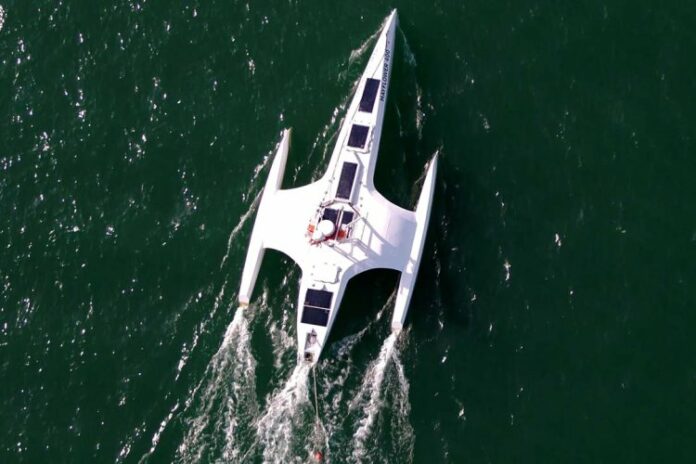
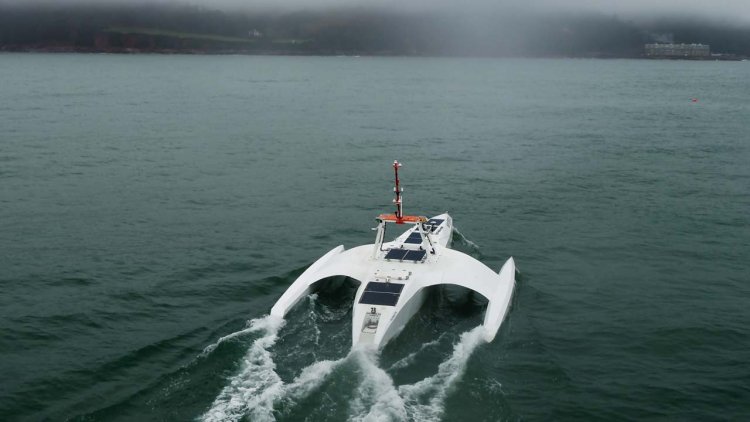
The UK Hydrographic Office (UKHO) has announced that it is the provider of S-100 navigation data for the Mayflower Autonomous Ship (MAS) project. 

The vessel is currently in Plymouth Sound in the UK, undergoing an at-sea trial which started on 28 March 2022 and is testing the ability of the ship to read, integrate, and use S-100 data.

The UKHO is funding the integration and testing of S-100 Universal Hydrographic Model data into the Artificial Intelligence (AI) and Machine Learning (ML) software stack for the MAS project. The S-100 data provided by the UKHO is designed to be machine readable and higher resolution than S-57 electronic chart data, which MAS previously relied on to inform the onboard mission manager – and will be the future standard supporting digital navigation products globally.

During the current trial, the MAS is demonstrating its ability to read and interact with the S-100 data provided by UKHO and safely manoeuvre autonomously, recreating a typical passage from sea to Devonport Naval Base – a ‘what-if scenario’ that requires an unusual and potentially hazardous passage, deployment to and from the Mayflower Base at Turnchapel Wharf, across Plymouth Sound and to and from the sea. 

Numerous iterations of these test scenarios are being run in varying sea states, tidal flow, and wind and weather conditions, as well as with local vessel traffic. During these, the MAS is simulating behaviours of a larger autonomous ship, performing and behaving like a Royal Navy Frigate in terms of size, manoeuvrability, draft, and other vessel characteristics.

Safety is paramount for the project, with a human operator always on the loop from the remote operations centre and a local safety boat in proximity to the MAS at all times.

Commenting on the announcement, Mark Casey, Head of Research, Design & Innovation at the UK Hydrographic Office, said:

“It is fantastic to be able to play an important part in the Mayflower Autonomous Ship project as provider of the S-100 data that will inform the navigation of the vessel. Our contribution to the sea trial, which will see the use of S-100 aboard an unmanned ship for the first time in history, is a proud milestone for us at the UKHO. It not only reinforces our position as an internationally recognised Hydrographic Office, but also as a leading institution in the advancement of autonomous navigation and development of S-100.

“We are grateful to our partners and all parties involved in this exceptional project, which will highlight the importance of S-100 as an enabler of autonomous navigation in a way that the world has not seen before. The MAS project is of major significance for the potential of autonomous shipping and will have crucial implications for the wider industry.”

This project will be highly relevant for the user case of S-100 as it will provide feedback on the utility of the S-100 data and format, identify gaps in the data and method of deployment and integration, and provide real-world operational testing that will inform future deployments of S-100 data from the UKHO to other manned and unmanned vessel operators across the world. The MAS project will also help to advance the state of the art in marine autonomy and will be crucial for the advancement of autonomous shipping. 

Equinor awarded the Smeaheia and Polaris CO2 licenses

0

The two licenses are important building blocks for developing the Norwegian continental shelf into a leading province for CO2 storage in Europe.

On Tuesday 05 April, the Ministry of Petroleum and Energy announced the award of CO2 licenses, and Equinor was awarded the operatorships for the two licenses referred to by the company as “Smeaheia” and “Polaris”.

CO2 transport and storage infrastructure (CCS) is crucial for providing CO2 solutions on a commercial basis to industrial customers, such as steel, cement and other heavy industries. This will also help protect existing jobs in these industries while at the same time creating new jobs in the development of new value chains on the Norwegian shelf.

Irene Rummelhoff, executive vice president for Marketing, Midstream and Processing (MMP), says:

“We are now building on more than 25 years of experience from CO2 capture and storage on the Norwegian continental shelf and we regard the award as an important milestone in the work to make the Norwegian continental shelf a leading province in Europe for CO2 storage. We see that demand for CO2 storage is increasing in several countries, and we want to get started with developing new CO2 storages quickly, so that we can offer industrial solutions that can contribute to decarbonisation in Europe.”

In its application, Equinor has submitted plans to develop the CO2 storage capacity in Smeaheia at 20 million tonnes annually, which entails a sharp increase in the capacity to store CO2 on a commercial basis on the Norwegian continental shelf. Northern Lights, the CO2 storage facility in the Longship project, has a planned injection capacity of 1.5 million tonnes a year in Phase 1 available from 2024 with plans to develop the capacity to 5-6 million tonnes a year from around 2026.

Through these two projects, Equinor aims to contribute to CO2 reductions equivalent to half of Norway’s annual emissions. Equinor has ambitions to develop further storage licenses in the North Sea in the coming years with the aim of building a common, pipeline-based infrastructure that can contribute to substantial cost reductions for the CCS value chains.

Rummelhoff says:

“We are pleased that Norwegian authorities have made storage areas available with basis in commercial industries. Rapid scale-up of CO2 storage at Smeaheia is essential to meet the interest and need for this type of service and to ensure storage needs from low-carbon projects in Norway.”

Safe capture and storage of CO2 is also a prerequisite and enabler for developing blue hydrogen and ammonia from natural. With CCS, blue hydrogen and ammonia can more or less eliminate emissions from the use of gas, thus ensuring access to large amounts of low-carbon and reliable energy. With the use of CCS, emissions can also be significantly reduced from gas-fired power plants.

In the Barents Sea, about 100 kilometres off the coast of Finnmark, lies the CO2 storage Polaris. The storage is a key part of the Barents Blue project which Equinor is developing in collaboration with Vår Energi and Horisont Energi. The project is developing an ammonia production facility at Markoppneset in Hammerfest that will reform natural gas from the Barents Sea to clean, blue ammonia using carbon capture and storage. The first stage of the development includes capture, transport and storage of two million tonnes of CO2 each year.

In October 2021 Equinor launched Norway energy hub, with a goal to help maintain and further develop Norway as an energy nation, by creating new value chains, solutions and jobs in Norway. Norway energy hub consists of four building blocks: decarbonisation of oil and gas, industrialisation of offshore wind, commercialisation of CCS and large-scale hydrogen production. Equinor has an ambition to develop value chains for CO2 transport and storage with an annual capacity of 15-30 million tonnes of CO2 within 2035. Collaboration between industries, government and organisations is crucial to succeed.

Norsepower and NAPA join forces to maximise wind propulsion efficiency

0

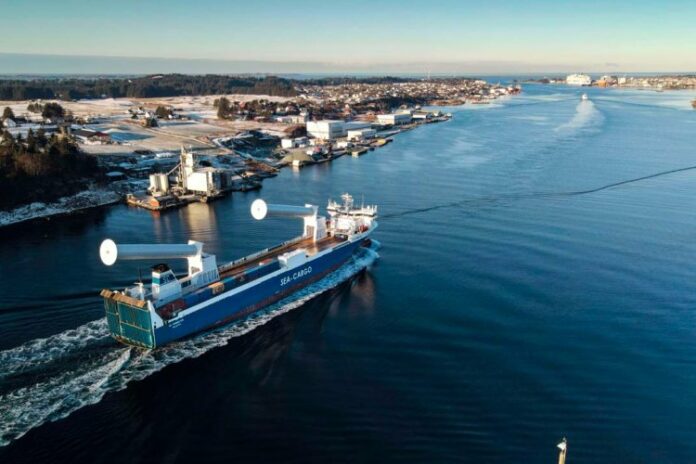
Norsepower Oy Ltd. has signed a formal agreement with NAPA to offer weather routing software in combination with its Rotor Sails solution.

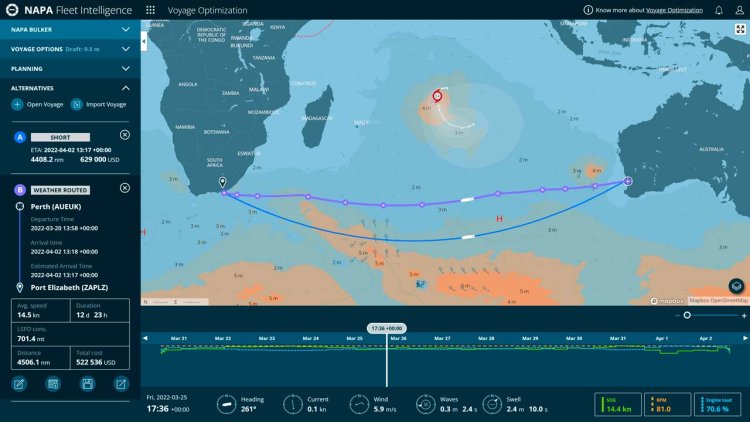
Under the agreement, NAPA Voyage Optimization software will be included as an option in all future sales of Norsepower’s Rotor Sails solution. The combined offer, which applies to retrofits as well as newbuilds, will enable shipowners to maximise both fuel savings and emissions reductions. The combination of voyage optimisation and wind propulsion provides significant potential for increased performance compared to either of the two technologies alone. The software determines the best possible voyage plan for the vessel to maximise the energy savings, taking into account weather conditions throughout the voyage as well as each ship’s design profile and operational requirements. 

The Norsepower Rotor Sail Solution is a modernised version of the Flettner rotor, a spinning cylinder that uses the Magnus effect to harness wind power and generate thrust – reducing fuel consumption and emissions by an average of between 10-25%. The solution has so far been installed on six different vessels, with further orders confirmed with CLdN, the logistics specialist for road, sea and rail.

NAPA Voyage Optimization solution enables captains and ship managers to choose the routes that will minimise their fuel consumption and emissions, depending on the weather conditions. Importantly, the suggested routes are tailored to the designs and characteristics of each ship, using vessel-specific digital models to assess and predict performance under different conditions. This will ensure Norsepower’s Rotor Sails system is specifically considered in the ship performance models to deliver optimal routing. 

Tuomas Riski, CEO of Norsepower, commented on the partnership:

“Our Rotor Sails already offer fuel and associated emissions savings of up to 25%. However, savings can be significantly enhanced when used alongside weather routing software. Given the magnitude of the energy transition challenge, combining commercially-proven solutions enables shipowners to take the next step to not only meeting regulatory targets, but exceeding them. Vessels using the solutions available today will be able to decarbonise faster. It will also help shipowners achieve greater climate alignment compliance scores, including the IMO’s Carbon Intensity Indicator (CII) as well as supporting the ship finance portfolios that are influenced by the requirements of directives such as the Poseidon Principles and Sea Cargo charter clauses.” 

Pekka Pakkanen, Executive Vice President at NAPA Shipping Solutions, added:

“Advanced weather routing is essential for all ships, but it is particularly important for wind-assisted vessels. Now that wind propulsion solutions are becoming a reality for a growing number of ocean-going vessels, we are taking this to the next level with voyage optimisation software which can fully model various cleantech solutions in all weather conditions, taking into account design data for each individual vessel.”

Cargo vessel sinking in Mariupol after Russian shelling

0

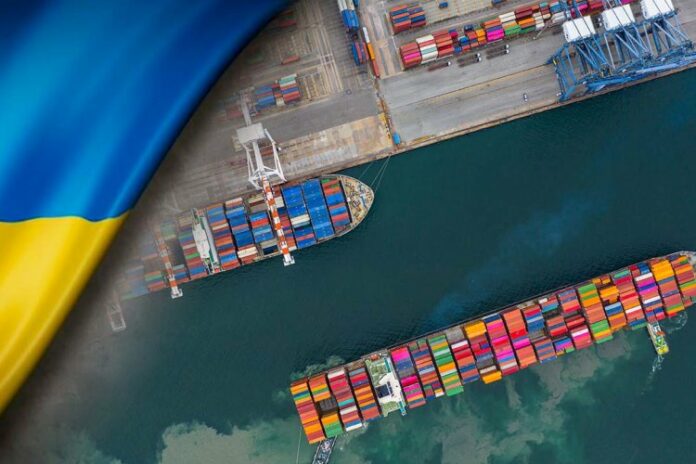
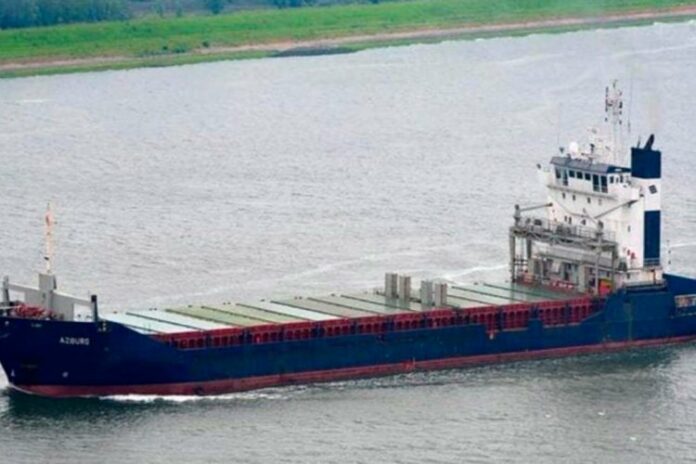
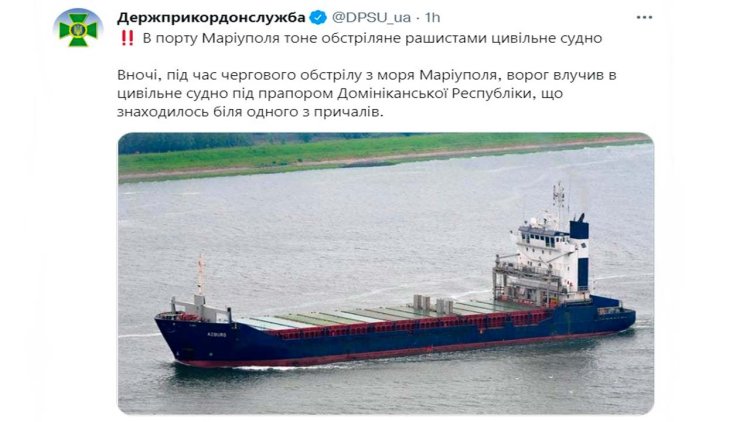
The Ukrainian Interior Ministry said in a statement that the ship was struck during shelling from the sea by Russia, causing a fire in the engine room and injuring one crewmember. 

According to the ministry’s social media posts, the ship in question is the 1995-built general cargo vessel Azburg, owned by MSCo Global of Malta.

“The ship is on fire and is gradually going under water. It is impossible to conduct a rescue operation under constant fire,” the ministry added.

Ukraine’s State Border Guard Service has managed to evacuate the crew to safety.

Source: Splash

Corvus Energy Inherently gas safe marine fuel cell system awarded AiP by DNV

0

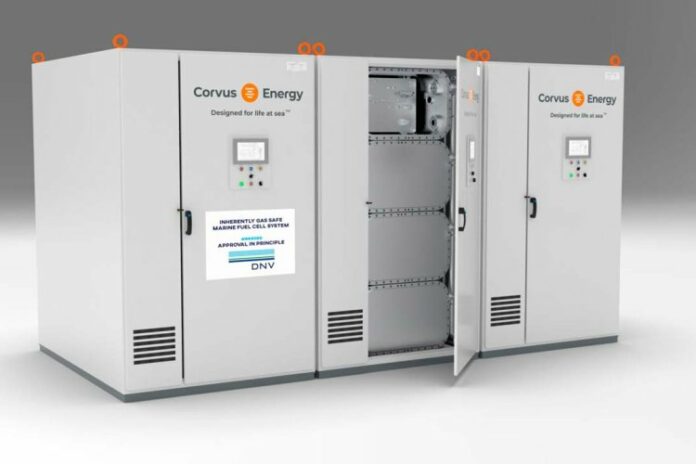
The Corvus Energy Hydrogen Fuel Cell System developed through the H2NOR project has received Approval in Principle (AiP) by DNV for its groundbreaking safety solution enabling simplified placement of the system inside a ship’s hull.

This is the first fuel cell system (FCS) designed to be inherently gas safe meaning that the surrounding machinery space will be considered gas safe under all conditions. This design significantly reduces the number of requirements for the safety and ventilation support systems, thereby enabling a more efficient integration onboard the ship.

Geir Bjørkeli, CEO of Corvus Energy, says:

“We’re excited that the inherently gas safe design developed in the project has received approval in principle from DNV, meeting the highest safety standards in the industry.”

“Hydrogen fuel cells in combination with batteries is a clear path towards powering a clean future for shipping. Scalable technology combined with safety and easy integration will help accelerate the transition and make it available to more vessel types”.

The building block of the FCS is a PEM (Proton Exchange Membrane) fuel cell module supplied by the world leading fuel cell  manufacturer, Toyota, ensuring top quality,safety and market availability for the system.

Torbjørn Bringedal, CEO at LMG Marin and project partner in H2NOR, says:

“This project is unique since we’re combining well-known inherently gas safety design principles from LNG ships with fuel cell technology from Toyota.”

“As ship designers, we are eager to continue our journey providing zero-emission shipping solutions and we consider inherently safe fuel cell products essential in order to obtain compact and cost-efficient hydrogen solutions.”

The Corvus Fuel Cell System can serve as the main power source or as an additional power source to increase fuel flexibility onboard. With water being the only exhaust, the Corvus Fuel Cell will allow a ship to operate in any harbor and protected area today and in the future.

The solution is being developed by the H2NOR project, a consortium coordinated by Corvus together with partners Toyota Motor Europe, Equinor, shipowners Norled and Wilhelmsen, ship design company LMG Marin, the NCE Maritime CleanTech cluster and R&D institution the University of South-Eastern Norway (USN). The project will develop and produce modularized and cost-effective PEM fuel cell systems for the international marine market. The project has received EUR 5.9 m in funding from state agency Innovation Norway and The Research Council of Norway, bolstering Corvus’ front-runner position in clean technology.

H2NOR is scheduled to showcase its first marine fuel cell system onboard sailings pilots in 2023, which will take place alongside marine type approval of the product. The product will be commercially available from 2024, resulting in the expansion of the Corvus factories that will manufacture world-leading marine battery and fuel cell systems for all types of commercial marine vessels.

Wärtsilä coordinates EU funded project to accelerate ammonia engine development

0

A consortium of shipping stakeholders is aiming to develop demonstrators for two-stroke and four-stroke marine engines running on ammonia fuel. 

The project is coordinated by technology group Wärtsilä, with participation from naval architects C-Job, classification society DNV, ship owner MSC and the National Research Council (CNR) of Italy. It has secured funding of €10 million from the European Union through the Horizon Europe research funding initiative.

Sebastiaan Bleuanus, General Manager, Research Coordination & Funding, Wärtsilä Marine Power, explains:

“Ammonia is one of main candidates in shipping’s search for future fuels. Wärtsilä has already proven an engine concept running on blends of up to 70% ammonia so far and will have a concept running on pure ammonia by 2023. This project is a fantastic opportunity to accelerate development of the solutions shipping will need.”

The outcomes of the project will include a lab-based demonstrator for the four-stroke ammonia engine, and a lab-based test engine followed by a vessel retrofit for the two-stroke version by 2025. As well as advancing the engine concepts, the Ammonia 2-4 project will further develop concepts around fuel handling and safety as well as contributing inputs towards a regulatory framework for ammonia.

Niels de Vries, Lead Naval Architect at C-Job Naval Architects, said:

“Thanks to the project set-up, we’ll be able to show the application of ammonia as a marine fuel for both ships using fuel direct configurations and ships using fuel electric configurations. We’re excited to take this next step and apply our knowledge and experience in Ammonia 2-4 together with our partners.”

Hans Anton Tvete, Programme Director Maritime, Group Research and Development, DNV, said:

“Ammonia as fuel has great potential, especially for deep-sea shipping. Collaborative efforts to put safe, reliable and environmentally friendly engine technology in place are essential for ammonia to enter the fuel mix. We are therefore very pleased to team up with such esteemed partners in this project and look forward to supporting it with our expertise in assessing health, safety and environmental concerns, as well as helping to close regulatory gaps surrounding its use as a marine fuel.”

Dr Paolo Sementa and Dr Cinzia Tornatore, researchers at CNR’s Institute of Sciences and Technologies for Sustainable Energy and Mobility, said:

“CNR will be involved in the activities of Ammonia 2-4 making use of the strong knowhow on internal combustion engines and on alternative fuels. Ammonia is a promising alternative fuel with potential to make a major contribution to the decarbonisation of shipping and to the reduction in greenhouse emissions. For this reason, this ambitious project will represent a milestone in reducing the environmental impact of marine transport sector.”