-0.8 C
New York
Home Blog Page 454

Rolls-Royce launches new mtu NautIQ products with Sea Machines technology

0

Rolls-Royce is expanding its range of mtu NautIQ ship automation systems with three new products: mtu NautIQ CoPilot, mtu NautIQ CoOperate and mtu NautIQ CoDirect, which each offer different levels of intelligent crew support, autonomous control, and remote command capabilities. 

Customers in all marine applications will gain significant operational advantages and benefits in terms of safety, efficiency, environmental impact, and climate friendliness. The new products are the next step in the cooperation between Rolls-Royce and Sea Machines Robotics, the leading developer of autonomous control and remote-vessel command systems, which was first announced at Monaco Yacht Show in September 2021. The continued development of the mtu NautIQ product range is at the core of Rolls-Royce’s strategy to be an innovation leader in the marine business and to provide customers with complete propulsion and control solutions from ‘bridge to propeller’.

mtu NautIQ CoPilot is the most advanced intelligent pilot assist system of the new product range. Depending on operating mode, the human-on-the-loop system can either autonomously control a planned voyage from start to finish, or not intervene at all in human operations, while only guiding the operator. The system enables navigation with greater precision and predictability, helping to reduce costs, fuel consumption and emissions.

mtu NautIQ CoOperate is an optionally autonomous ship navigation command system which enables off-boat remote command, including all payloads on board. The system can take over routine and monotonous vessel tasks and it allows crews to focus on more important aspects of their missions. 

mtu NautIQ CoDirect is a wireless, remote-helm system that can control a vessel’s engines, steering and transmission as well as payload functions such as winches and cranes from a distance of up to 1,000 metres.

Michael Johnson, CEO and founder of Sea Machines, said:

“This continued partnership is significant because it brings together a foremost marine power and propulsion solutions provider and the leading developer of advanced and AI-based vessel control systems. Our alliance not only increases access to intelligent technologies that can positively impact operators’ bottom lines, productivity, eco-stewardship and safety, but it also provides proof of the growing market demand for these types of systems for real-world operations.”
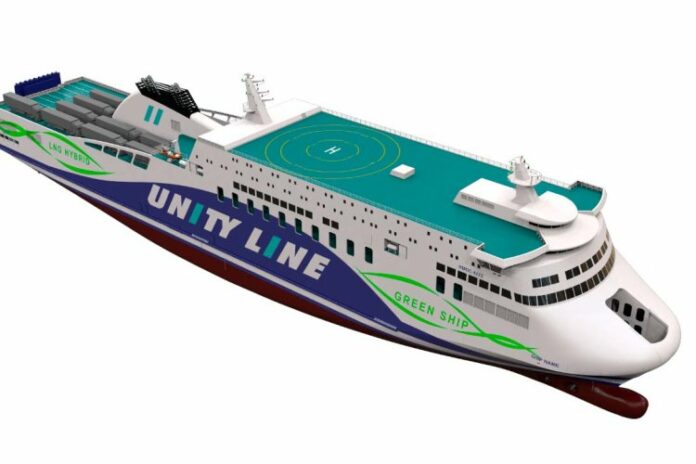
ABB technology to power new hybrid-electric ferries

0

ABB has secured a large order from the Polish shipbuilder Remontowa Shiprepair Yard S.A. to supply integrated power, automation and propulsion solutions to three large passenger and car ferries to operate in the Baltic Sea. The 195-meter-long ferries will each have capacity for up to 400 passengers and 200 trucks and will be delivered to the Polish ferry company Polskie Promy one apiece in 2025, 2026 and 2027. 

The order was booked in the first quarter of 2022. Financial details of the contract were not disclosed.

The Baltic Sea has some of the densest maritime traffic in the world, with about 2,000 large ships sailing in its waters at any given time . The International Maritime Organization – a United Nations agency responsible for regulating shipping – has designated the Baltic Sea as an Emission Control Area with stricter controls to minimize the environmental impact from ships. 

Increased electrification and energy efficiency will play an important role in helping decarbonize maritime transport. As the foundation for ship electrification, electrical propulsion allows the full integration of power systems and equipment on board, offering significant gains in safety, efficiency and sustainability for the new ferries. 

Each of the ferries will be equipped with two 7.5 megawatt Azipod® electric propulsion units that will help achieve a high degree of maneuverability and efficiency in harbor operations. Azipod® technology has a proven ability to cut fuel consumption by up to 20 percent compared to traditional propulsion. Independent research  indicates that Azipod® propulsion offers fuel and emissions savings for ferries which could amount to nearly $1.7 million and 10,000 tons of CO2 emissions per ship per year.

By integrating multi-fuel engines with battery power, ABB’s Power and Energy Management System (PEMS™) balances the use of the different energy sources onboard, enabling further gains in operational efficiency and reducing emissions as a result.

Conventionally, a ship approaching port engages an extra engine as a failsafe back-up, which is sub-optimal in terms of fuel efficiency. The hybrid solution uses batteries to provide this redundancy. Integrated power is so responsive that larger ferries can achieve equivalent performance using lower installed power than that required by comparable ships, ensuring reduced emissions in any circumstances.

The three ferries will also utilize ABB’s shipside shore connection to access plug-in shore power, enabling further emission reductions, as well as benefit from remote equipment monitoring and diagnostics for enhanced passenger and ship safety. 

Ørsted and Eversource sign first-ever U.S. Offshore Wind Helicopter Contract

0

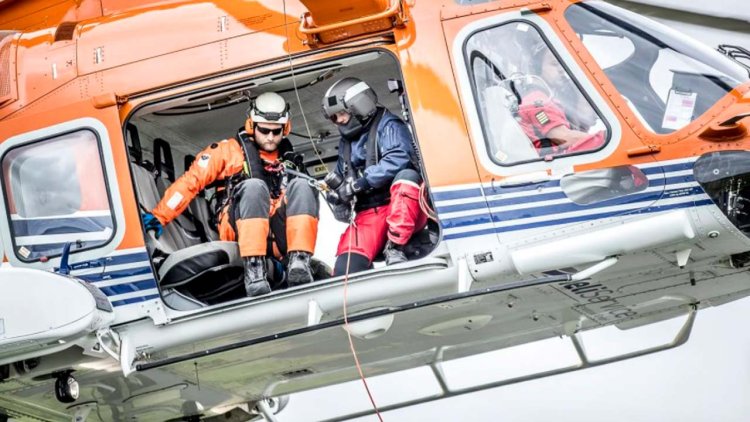
Ørsted and Eversource have announced that HeliService International Inc. has been awarded the contract for helicopter crew change operations for the two companies’ joint venture wind projects in the Northeast United States. The contract is the first helicopter contract to support the United States offshore wind industry and will create jobs and economic development in both helicopter assembly and future operations.  

The Leonardo AW169 helicopters are powered by two Pratt and Whitney PW210 series engines and are capable of crew transport as well as utilizing a hoist system to lift wind technicians to and from the top of wind turbines. The aircraft will support crew transfer and hoisting at the South Fork Wind, Revolution Wind and Sunrise Wind offshore wind farms during construction. They will be assembled on the Leonardo Helicopters assembly line in Philadelphia, Pa.

The contract will also bring approximately $1.8 million of investment to the Quonset State Airport in North Kingstown, R.I. in the form of new infrastructure and equipment, and will lead to the creation of multiple jobs. Upgrades at the Airport will include new check-in and reception spaces, handling and administrative buildings for helicopter operations and upgrades to hangar and maintenance areas. 

Governor Dan McKee said:

“The Ocean State is a leader in offshore wind energy, and this agreement will help strengthen the industry, create jobs and spur economic development, and further our sustainable, affordable, clean energy goals.”

Photo: HeliService

David Ortiz, Head of Northeast Government Affairs and Market Strategy at Ørsted, said:

“This helicopter contract represents just one of the many important ways the offshore wind industry is supporting manufacturing and assembly jobs and infrastructure upgrades, both in Rhode Island and across the United States.”

Julia Bovey, Director of Offshore Wind External Affairs at Eversource Energy, said:

“Offshore wind has tremendous potential to create well-paying jobs in communities across the country. As we continue to transition to a new, clean energy future – one powered by the untapped potential of renewable energy – we are once again making good on our promise to help create a new supply chain here at home that will benefit American workers for years to come.”

Once complete, South Fork Wind, Sunrise Wind and Revolution Wind will generate approximately 1.8 GW of offshore wind power, enough to power over a million homes.

Through their joint venture projects, Ørsted and Eversource are supporting the development of a domestic offshore wind supply chain that will create jobs and economic development across dozens of states. The companies recently announced that work has begun on the first U.S.-built service operations vessel (SOV), and crew transfer vessel charter agreements that will support the building of five new vessels in Rhode Island shipyards.


Russian ships switch flags at record rate on sanctions scrutiny

0

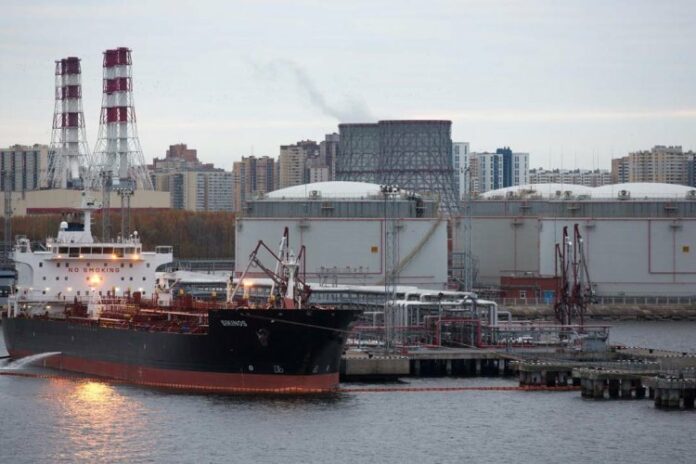
Many more Russian-flagged vessels than usual switched their flags to other countries in March, possibly to conceal their ties to Moscow and avoid being caught up in sanctions over the invasion of Ukraine, according to maritime consultancy Windward Ltd. 

A total of 18 ships, including 11 cargo vessels from the same fleet, changed to non-Russian flags last month, Tel Aviv-based Windward said. That’s more than three times the monthly average for Russian vessels. It’s also the first time the figure has hit doubledigits, based on data going back to January 2020.

“Some of these instances may point to bad actors intentionally disguising their identity to conduct business that would not be allowed under the new sanctions,” Windward said in a report shared with Bloomberg News.  

The flag switches come as Russian vessels from oil tankers to multimillion-dollar yachts owned by oligarchs have gone dark, turning off identification and location transmitting systems that should always be on while at sea. The practice helps avoid detection and can pose risks to maritime safety.

The U.S., U.K. and other allies have ramped up sanctions against Russia because of its invasion of Ukraine that began in late February. U.S. President Joe Biden issued an executive order on March 8 banning imports of Russian oil and gas, while the U.K. said it will phase out oil imports by the end of the year. Both countries, along with Canada, have also barred Russian ships from their ports.

“Foreign companies have different motivations for moving from the Russian flag, they want their vessels to be able to operate everywhere without restrictions and, in some cases for moral reasons,” said Windward product manager Gur Sender.

Of the 18 vessels, three are tankers — two of which transport oil, according to Windward. Five that changed flags in March are connected directly to Russian owners. Eleven cargo ships are from the same fleet owned by a United Arab Emirates company, and they all switched flags to the Marshall Islands. Three vessels changed to Saint Kitts and Nevis flags. 

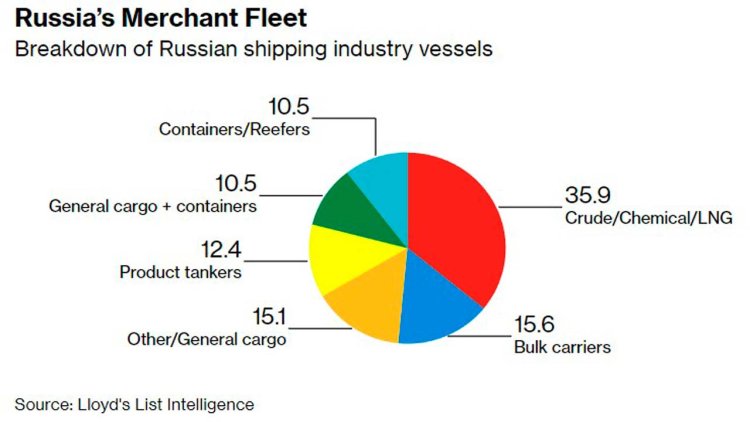
Switching flags isn’t necessarily unusual — it sometimes happens due to a change in ownership or area of operation, Sender said. The monthly average for Singapore vessels in 2021 was 17 flag changes, while Japan averages five per month this year. Those numbers remain consistent, however. Changes in Russia’s 3,300-strong fleet suddenly jumped, having never exceeded more than nine in any month going back to January 2020, Windward data show.  

“What makes flag changes interesting is when they are taking place in correlation with trade restrictions against a specific country, especially when one of the management or ownership companies is in fact registered in that same restricted country,” Sender said. 

In an advisory last May on deceptive shipping practices, the U.S. Treasury warned that “bad actors may falsify the flag of their vessels to mask illicit trade. They may also repeatedly register with new flag states (‘flag hopping’) to avoid detection.” 

The practice is likely to become more common if the war in Ukraine continues, said Ian Ralby, chief executive of I.R. Consilium, a maritime law and security consultancy. Ships flying the flags of the Marshall Islands and the Caribbean nation St. Kitts and Nevis are less likely to draw attention and scrutiny. 

“It’s all a clear attempt by Russian ship owners and operators to try to obscure the identities of the vessels,” he said. “They want to avoid detection.”

Source: Bloomberg

Radio Holland wins 10-vessel contract with ALP Maritime Services

0

The companies have been working together in the global maritime market for more than ten years. The longstanding partnership involves the complete install base in navigation and communication equipment. 

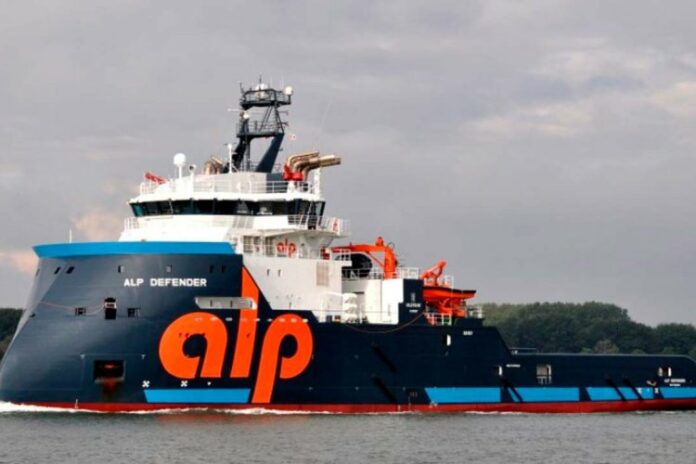
ALP, established in January 2010, is a specialist in ocean towing, offshore positioning and mooring of floating platforms, heavy transport and salvage operations. 

ALP Chief Operating Officer Leo M. Leusink, one of the founders of the company, explains why it chose again Radio Holland as its service partner:

“Our ships sail all over the world. We need a good and reliable partner for our NavCom equipment to help us serve our customers in the oil & gas industry. We chose this contract because we are active in tramping. Our ships go everywhere; we never know exactly which ports they will call at. As a result, we need a high level and quick response support and maintenance with global coverage. We experienced Radio Holland provides exactly that.” 

ALP Maritime Services and Radio Holland go way back. COO Leusink has a long history with Radio Holland, actually dating back more than 40 years when he worked on the tug boats of Smit Internationale in 1980. Radio Holland provided the NavCom service and maintenance. 

Mr. Leusink says:

“Ever since the beginning of ALP, the company had dreamed about building its own ships. Together with Ulstein Design, it started designing the ‘ALP Future Class’ – anchor handling and tugboats with a bollard pull of around 300 tonnes and Dynamic Positioning capability – in September 2011. When we started designing the ALP Future Class we requested Radio Holland to equip the vessels with NavCom equipment.” 

Maarten Tromp, Managing Director of Radio Holland Group says:

“Over the years, the companies have partnered to equip the newbuild and retrofit vessels: In February 2014, ALP awarded Niigata Shipbuilding and Repair Inc. a contract to build the four vessels. The first two vessels were delivered in August 2016 and December 2016 and the following two medio 2017. In 2015, ALP took over six traditional-style tugs (200-300 tonnes bollard pull) and it got in touch with Radio Holland. The six tugs, as well as the four newbuild vessels are covered by the Managed Service Agreement with Radio Holland.”

Saipem: new offshore drilling contracts worth over 400 million USD

0

Two contracts have been awarded in the Middle East for two high specification jack-up drilling units, consisting of drilling and workover operations for a duration of five years.

The start of operations is scheduled for the fourth quarter 2022. Each contract includes options for two additional years. These projects will involve one Saipem jack-up unit and a new high specification jack-up chartered from CIMC Group for the project.

With these additional awards in the Middle East, Saipem consolidates its presence in this strategic area, expanding the jack-up fleet from three to five units, with a view to growth in the offshore drilling market.

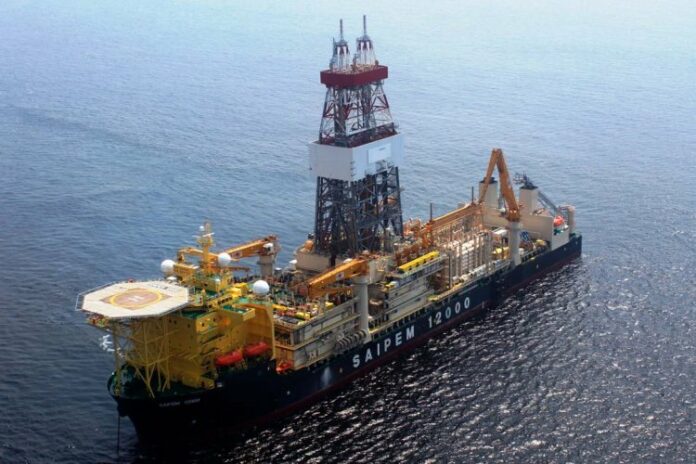
Furthermore, another contract has been assigned by Eni for a drilling campaign offshore West Africa, with operations expected to start in April 2022 in continuity with previous activities. The contract will be executed by Saipem 12000, a sixth-generation ultra-deep-water drillship. The contract duration is for six months plus optional periods for an additional 10 months.

Including the contracts announced today, from the beginning of 2022 Saipem has been awarded projects worth over a total amount of 750 million USD in the offshore drilling segment.


Bureau Veritas launches new digital tool – Machinery Maintenance

0

Bureau Veritas (BV) has launched a new digital tool – Machinery Maintenance – that connects directly to owners’ Computer Machinery Maintenance System (CMMS) and helps them transition to optimized machinery maintenance schemes.

For ship operators to sail safely, their vessels must undergo regular inspections of their machinery equipment and systems. However, most modern ships have more than 300 separate pieces of machinery onboard, each with its own specific maintenance requirements. This poses a challenge to ship owners and operators on how to conduct machinery maintenance regularly, but also efficiently.

For normal machinery maintenance scheme, this process is done through an in-person inspection of all machinery items by a BV surveyor once every five years, during the renewal survey. But today, a large part of the world’s fleet are using more optimised survey schemes such as Continuous Machinery Survey scheme (CMS) or a Planned Maintenance Survey System (PMS), by which each machinery item is given an individual maintenance schedule and scope.

The new BV Machinery Maintenance platform connects ship operators’ maintenance system with BV’s system, thereby facilitating the elaboration of a Planned Maintenance Survey System (PMS) plan with online guided booking. BV has developed an automated integration that connect to owners computer maintenance management systems (CMMS) to collect data on the maintenance status of all machinery items, manage modifications to onboard equipment, and provide access to manufacturer manuals from planning initialization to in-service operations. It enables ship managers and BV surveyors to get a clear and comprehensive overview of onboard machinery maintenance, efficiently prepare for surveys and assess the machinery maintenance conditions. Pilots are currently being successfully deployed.

Bureau Veritas’ technical and digital experts are also currently working to enable the tool to support the promising Condition Based Maintenance (CBM), where maintenance is determined through condition monitoring by performing diagnosis and prognosis on each machinery item’s actual condition. The next step, when historical data is captured, will be to develop predictive maintenance schemes based on artificial intelligence (AI).

Laurent Hentges, Vice President, Digital Solutions & Transformation at Bureau Veritas Marine & Offshore, commented:

“We know that efficient maintenance can have a major impact on vessel operations. As greater digitalization and improved monitoring technology have become available, owners can now move to upgraded systems that further optimize maintenance planning, reliability and costs. As a classification society, we have a crucial role to play in helping ship owners transition to optimized machinery maintenance systems.”

Scarborough project receives key primary approvals

0

Woodside, as operator for and on behalf of the Scarborough Joint Venture, has received key primary approvals from the Commonwealth-Western Australian Joint Authority to support execution of the Scarborough Project.

The Scarborough Joint Venture has received an offer for the pipeline licence to construct and operate the Scarborough pipeline in Commonwealth waters.

Approval has also been granted for the Scarborough Field Development Plan (FDP), enabling Woodside to commence petroleum recovery operations from Petroleum Production Licences WA-61-L and WA-62-L.

These milestones follow final investment decisions made in November 2021 to approve the US$12.0 billion (100%, $6.9 billion Woodside share) Scarborough and Pluto Train 2 developments.

Scarborough gas processed through Pluto Train 2 will be one of the lowest carbon intensity sources of LNG delivered to customers in north Asia, with first LNG cargo targeted for 2026.

Woodside CEO Meg O’Neill said the pipeline licence and field development plan are among the final primary Commonwealth and Western Australian State Government approvals required to develop the Scarborough resource.

She said:

“Developing Scarborough delivers value for Woodside shareholders and significant long-term benefits locally and nationally, including thousands of jobs, taxation revenue and energy security here and abroad.

“The Scarborough reservoir contains only 0.1% carbon dioxide, and Scarborough gas processed through the efficient and expanded Pluto LNG facility supports the decarbonisation goals of our customers in Asia.”

London marine insurers label all Russian waters high risk

0

Guidance from the Joint War Committee, which comprises syndicate members from the Lloyd’s Market Association (LMA) and representatives from the London insurance company market, is watched closely and influences underwriters’ considerations over insurance premiums.

Following Russia’s invasion of Ukraine on Feb. 24, the JWC last month added Ukrainian and Russian waters around the Black Sea and Sea of Azov to its high-risk areas, as well as waters close to Romania and Georgia. read more

Monday’s extension of the area judged high-risk for merchant ships and prone to war, piracy, terrorism and related perils, will mean that vessels will need to notify underwriters when sailing into ports as well as having to pay an additional premium for a seven-day cover period.

“Rating is a matter for individual negotiation between underwriters and brokers and the JWC plays no role in that,” the JWC said.

Marine insurers said any rise in premiums was expected to take a few days after a notification period.

One marine insurance source, speaking on condition of anonymity, said Monday’s advisory was unexpected and would “add to the complexities of trading with Russia”.

Russia relies on its Baltic and Black Sea ports for oil and grains exports, which are significant foreign currency earners. Other terminals, such as Kozmino in Asia, are needed for Russian exports to that region.

A European grains trader said it was already difficult to find vessel owners willing to go to any Russian ports, adding there was no guarantee of being able to insure against the war risks.

“This will add to the problems but not bring a total stop,” the trader said.

Russia’s maritime sector is grappling with the winding down of services including ship certification by leading foreign providers – needed for accessing ports and securing insurance.

In addition, some shipping companies have withdrawn and ship engine makers have suspended training on their equipment following the imposition of Western sanctions on Moscow. 

Source: Reuters

Equinor and Naturgy team up to explore offshore wind development in Spain

0

The Spanish government aims to transform its energy mix and plans to develop up to 3 GW offshore wind by 2030. The first Spanish offshore wind auction is expected to be in the Canary region in 2023 and here Equinor and Naturgy are jointly assessing the opportunity to develop and construct a floating offshore wind project.

The cooperation is in line with the two companies’ joint ambition of utilizing their complementary capabilities to develop renewables in Spain, starting with commercial floating wind projects. With more than 90% of the Spanish offshore wind areas being deep waters, Spain has an exciting opportunity to spearhead the next wave of floating offshore wind in Europe.

The Spanish energy company will contribute with its experience from onshore wind in Spain and Equinor with its proven capabilities in floating offshore wind technology and development.

Jorge Barredo, managing director of Renewables, New Businesses and Innovation in Naturgy, says:

“We are very pleased with the agreement reached with the Norwegian energy company Equinor, because it allows us to promote the commitment to renewables, contributing with our experience in the development, construction and operation of onshore wind energy, as well as extensive knowledge of the Spanish market.”

Equinor’s senior vice president for business development in Renewables, Jens Økland, says:

“It is great to see the deployment of offshore wind in Spain. 3GW by 2030 is an ambitious target, with floating offshore wind it is doable. Equinor has a long history in Spain and Naturgy is a well-known partner for Equinor. Together we now want to contribute long term to the country’ renewable energy plans and start off by developing the first commercial floating offshore wind farm in Spain.”

Spain plays a key role in the supply chain for offshore wind in the rest of Europe and Equinor has a long history of working together with the Spanish offshore supply industry. Key components like floating substructure, the tower, and the mooring at Equinor’s Hywind Scotland floating wind farm were produced in Spain.

Sonja Chirico Indrebø, vice president Floating Offshore Wind, says:

“As operator and developer of floating offshore wind farms we know the technology works, and we believe our floating experience makes us uniquely qualified to contribute to the development of floating offshore wind in Spain in a safe, sustainable and efficient way together with our partner. We look forward to collaborating further with the Spanish industry. Collaboration with ocean users is important to ensure co-existence with this developing industry.” 

Barredo says:

“The development of floating wind opens a window of opportunity for Spain, allowing it to take advantage of locations away from the coast, with excellent wind resources, acting as a tractor of the economy through key sectors such as naval or civil. It is an energy and industrial opportunity, so Spain would seize this through the reconciliation of all interests linked to maritime activities.”