3 C
New York
Home Blog Page 453

The cost of insuring Black Sea shipping is out of control

0

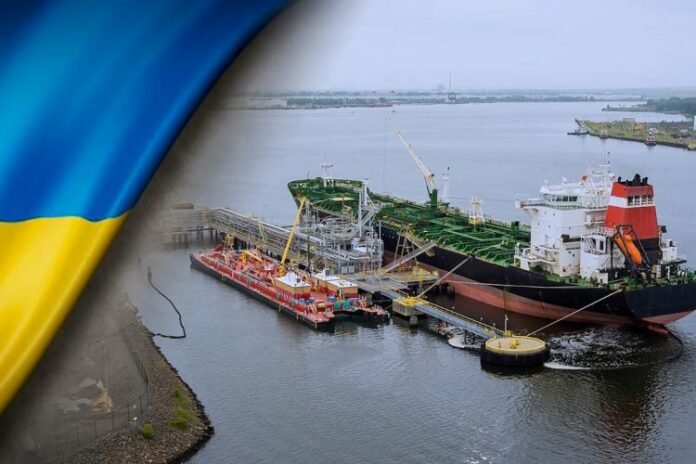
Underwriters are charging as much as 10% of the value of a ship’s hull — basically the vessel’s worth as an asset — for what is called additional war-risk premium, according to four people involved in the market. Some are simply quoting to cover at prices that they know will be refused. There was almost zero cost prior to the war.

It means that insurance now likely exceeds the cost of hiring the vessel itself. A $50 million, five-year old tanker hauling a standard 1 million-barrel Russian cargo would need $5 million just in insurance premiums — about $1.5 million above the cost of hiring the carrier.

The primary concern from insurers is damage to vessels, either through missile attack or possible mines. When war broke out, at least five ships were blown up. A month later, a mine was discovered around Turkey’s Bosphorus strait, a vital maritime corridor for any carrier entering or leaving the Black Sea.

One of the people said that the pool of insurers still quoting has substantially dried up, meaning those who remain are demanding higher prices.

The charges would typically be met by companies hiring the ships, not vessel owners. The Black Sea is normally a hub for exports of crops, oil, fuels and raw materials but has been disrupted by Russia’s invasion of Ukraine. One of the insurers said that current prices are essentially unsustainable for customers.

The surge in insurance premiums represents just another expense for any company seeking to ship anything to or from ports in region. The cost of vessel hire is extreme too. 

It costs about $3.5 million to hire a tanker to take a million-barrel cargo to Italy from the Russian Black Sea port of Novorossiysk compared with less than $700,000 earlier this year, according to industry data compiled by Bloomberg.

As well as the threat of vessel damage, there are other risks. Both the Russian and Ukrainian navies could seize vessels for uses related to national security. If the carriers were held for at least six months — one of the people said one year — for political reasons, that would result in a ship being declared a total loss, allowing its owner to recover the full value of the hull, the people said. 

In theory, owners could go in without insurance. However, because of how insurance works, that would have a knock-on effect that would ultimately put them on the hook for the risk of pollution, removal of wreck, cargo liability and any crew liability and repatriation.

As the war continues, the Lloyd’s Market Association’s Joint War Committee has added the waters of Russia to its list of riskiest areas. That’s likely to mean that insurers will charge additional premiums for more Russian ports in coming weeks.

Source: Bloomberg
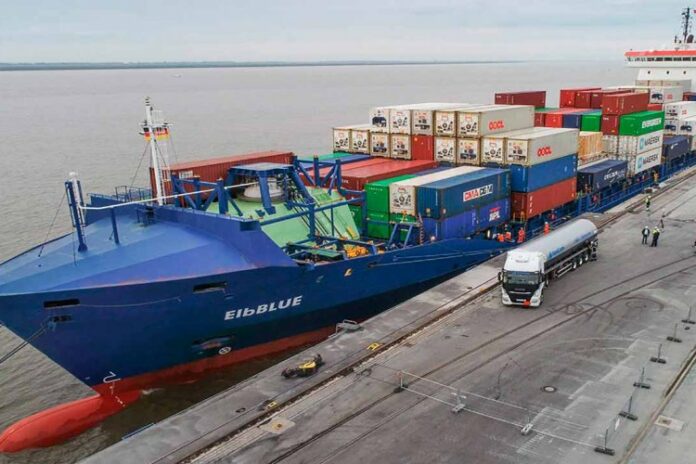
Container ship reduces emissions through synthetic fuel

0

MAN Energy Solutions reports that the 1,036-TEU container ship, ‘ElbBLUE’ – the former ‘Wes Amelie’ – has reduced its greenhouse gas (GHG) emissions by 27% by operating on a blend of climate-neutral, synthetic natural gas (SNG) and conventional liquefied natural gas (LNG), compared to LNG alone.

Compared with heavy fuel oil (HFO), GHG emission reduction was even as high as 34%. The data has emerged from measurements initially carried out on board the ship in September 2021 when the ElbBLUE became the first container ship worldwide to replace a portion of its bunkered gas fuel (around 50%) with SNG. 

Dr Uwe Lauber, CEO of MAN Energy Solutions, said:

“With this project, we have proven the technical viability of our concept of the maritime energy transition. Today, more than ever, we are convinced that climate-neutral, synthetic fuels point the way to green shipping – and even further beyond.” 

Lauber continued:

“The current, global, political situation underscores the future role that synthetic fuels can play in a diversified energy supply in that they point the way toward less dependence on raw material deposits, suppliers and price fluctuations. As a result of the military attack on Ukraine in violation of international law, LNG prices, for example, have risen massively in recent weeks and are now at a similar level to SNG. If production capacity can be built up quickly and synthetic fuels made available to the market, SNG could become a climate-friendly and – in the long term – economical alternative to fossil fuels in shipping.”

Stefan Eefting, Senior Vice President and Head of MAN PrimeServ Augsburg, said:

“With this pilot project, we have proven that any LNG-powered ship can also operate with green SNG from power-to-X. Even with a blend of just 50% SNG, GHG and pollutant emissions are significantly reduced. When operated exclusively on SNG, we would expect a reduction of at least 80% in GHG emissions for modern ships.”

Gas operation also drastically reduces other polluting emissions compared to HFO. In the case of the ElbBLUE, nitrogen oxide emissions (NOx) dropped by almost 87%, while emissions of sulphur oxides (SOx) and particulates were almost completely eliminated (~99%). These values were achieved in both the exclusive operation on LNG and on a blend of LNG and SNG. 

Measurements were carried out on a voyage between Brunsbüttel, Germany and Rotterdam, the Netherlands with SNG comprising approximately 50% of the bunkered gas at 85% engine load. The ElbBLUE is powered by an MAN 51/60DF four-stroke engine. As a multi-fuel engine, the unit allows operation with either HFO or liquid natural gas (LNG) as fuel. The ship’s test-run proved that the latter can be replaced by SNG without engine modification.

Owned by German shipping company, Elbdeich, and operated by charterer, Unifeeder, the 1,036-TEU container ship, ElbBLUE, sails the North and Baltic Seas. It made headlines back in 2017 under its former name, Wes Amelie, when its MAN 8L48/60B main engine was converted to the current MAN 8L51/60DF four-stroke unit, which enables dual-fuel operation with gas. This was the world’s first conversion of a container ship to multi-fuel operation with climate-friendly LNG. 

In September 2021, the ship reached another milestone on the road to climate-neutral shipping when, in the Elbe port of Brunsbüttel, it became the world’s first container ship to bunker climate-neutral synthetic marine fuel – some 20 tons. The liquefied SNG was produced in a power-to-gas plant operated by kiwi AG in Werlte, Germany and generated from 100% renewable energy.

SNG is considered a carbon-neutral fuel as its combustion releases only as much CO2 as captured during its production using power-to-X technology. However, just like LNG, SNG consists largely of methane (CH4) and, during operation, small unburned quantities of the gas can escape – so-called methane slip. Methane is considered a greenhouse gas that, when released unburned into the atmosphere, is 28 times more harmful to the climate than CO2. MAN already offers solutions for methane-slip-free operation in two-stroke engines. For four-stroke engines, the company is working on various solutions to further reduce the escape of methane from the combustion chamber. 

Eefting added:

“We have already been able to halve methane slip in our dual-fuel, four-stroke engines in recent years through internal engine measures, and we see further potential in the area of exhaust gas after-treatment. We are currently developing special oxidation catalysts with which we have been able to reduce methane slip by a further 70% in laboratory tests. Next year, we will test the catalyst on board a ship for the first time and expect to have a market-ready technology by 2025.”

Houlder acquires Seaspeed to accelerate growth of hydrodynamics business

0

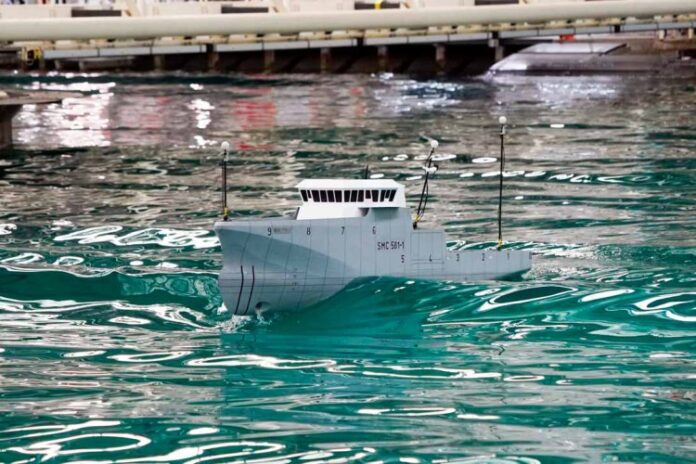
In recent years, Houlder and Seaspeed have successfully joined forces on a number of vessel design projects, including projects with vessel efficiency and sustainability at their core. Those assignments offered insights into the benefits an even closer working arrangement could deliver.

Seaspeed specialises in hydrodynamics, sea trials and naval architecture, which marries perfectly with Houlder’s offering. Computational fluid dynamics (CFD), physical and computer simulation and technical data analysis are increasingly in demand in the marine and energy markets and are core strengths of the Seaspeed team.

The businesses expect innovative new technical advisory service offerings to emerge over time. The aim is to bring sophisticated computer simulation, data handling and AI to the twin challenges of energy transition and vessel decarbonisation.

Stephen Phillips, Director, Seaspeed Marine Consulting commented:

“I have known Houlder for years, but more recently we have teamed up to deliver some really interesting work. The combination works brilliantly from a technical perspective but, as importantly, we share a genuine passion for problem-solving in the marine environment.”

Rupert Hare, CEO, Houlder Limited commented:

“Joining forces means we can work more closely together, more often. I am certain Seaspeed has only scratched the surface of what it can become. Clients are increasingly asking for more cohesive design, engineering and advanced analysis. The challenges faced call for sophisticated simulations that technological advances are making possible and cost-effective; Seaspeed is ideally placed to offer these.”

The full Seaspeed team is retained and will continue to operate from its Chichester base. Over 10 new graduate-level roles are expected over the next three years. 

FuelTrust calls on industry to adopt AI technology to help ensure fuel quality

0

The latest fuel contamination outbreak to hit the bunkering market, this time in Singapore, should be a wake-up call to the danger of discovering quality issues only after fuel is onboard vessels, warns marine fuel tracking expert FuelTrust.

FuelTrust estimates the scale of this contamination outbreak to have spread to dozens of vessels. The disruption is widespread, with many vessels suffering blackouts, engine damage, and the need to debunker. Given the additional disruption to cargo delivery, insurance claims could easily run in the hundreds of millions of dollars.

Jonathan Arneault, Co-Founder of FuelTrust, said:

“We are seeing another fuel crisis similar to Houston in 2018. Four years later, the lawsuits from Houston are still ongoing, and we’re just realizing the financial impact that a single batch of bad fuel can have on the industry. This recent incident is shining a light on a persistent global issue. Fuel quality problems cause debunkering issues every month in ports around the world, most of which never make the news.”

Bunkering remains a fragmented supply chain, full of ‘unknown unknowns’. Contaminant issues may not be picked up by today’s required testing. The lack of digital technology to drive transparency and traceability across the industry means greater risk of fuel quality, quantity, compatibility, and fraud issues. Early warning systems to alleviate risk exist today, at a cost that works out to cents on the barrel.

Arneault continues:

“We have analysed more than 390 million barrels of fuel, looking at their exact chemical make-up. FuelTrust gives suppliers and shipowners the ability to know the content history and expected performance of fuel prior to sale or bunkering. This could reduce operational and financial risk across the industry. In this latest instance, a GCMS (Gas chromatography-mass spectrometry) test would have revealed the presence of the organic chlorides contaminating the fuel. FuelTrust keeps a GCMS lab analysis of the supplier storage fuel tanks, in a secured blockchain record and provides alerts when our AI detects anomalies or non-compliant fuels before they are bunkered.”

FuelTrust’s Bunker Insights uses artificial intelligence and blockchain technologies to establish a digital record of fuel transactions, analyze and identify chemical risks and provide an early warning to ship owners and bunker suppliers based on these insights. FuelTrust’s AI Digital Chemist™ allows users to know where a batch of fuel came from, what changes happened to it over its lifecycle, how it will operate in a particular engine under specific conditions and enables us to make extremely fine predictions about what happens during combustion.

Mark Barton, Business Development Manager at MHG Insurance and a FuelTrust advisor, confirmed the scale of the disruption to shipping from contaminated fuel, and echoed the call for an early warning system. 

“What is yet to be seen here is the true scale of the contamination, which has already spread to dozens of vessels. Damage to these vessels not only means financial impact in terms of repair and time at sea, but also costs associated with failure to meet contractual agreements. We will likely see delays lasting weeks, but legal challenges could go on for years.

“This underlines the need for better transparency and visibility in the marine fuels supply chain – and for a method of giving shipowners and bunker suppliers advance warning of problems with the fuel. The industry cannot afford to continue finding out about this kind of contamination only once the damage is done, which is why solutions like FuelTrust’s are so valuable in our fight for a safer, greener and more trustworthy marine fuels sector.”

Dr. Ram Vis, owner of Viswa Labs, echoed the call to use technology to better document and analyze risk in the supply chain.

“The current bunker quality problems give a feeling of déjà vu from an organic chlorides contamination in 2001, and more recently what we saw in Houston four years ago. While the industry has taken steps to safeguard the fuel supply chain, how do we prevent this from ever happening again in the bunker fuel industry?

“The most effective solution is to use technology, reducing reliance on manual procedures wherever we can. There are plentiful technologies available today which can facilitate that. We can use blockchain to create a secure record of analysis, so that any gaps can be instantly identified, and the point of contamination or adulteration can be captured. In addition to blockchain, machine learning will capture the changing trends in the fuel quality relative to the bunkering port and supplier. If applied correctly, machine learning along with blockchain should prevent a recurrence of such incidents for decades to come.

“The last time this happened in Singapore, the MPA took very stringent action, and it is a tribute to their constant vigilance that, for almost 21 years, there has not been any major contagion there.”

Innosea completes FLOTANT floating wind scope

0

Innosea has completed its engineering and consulting scope of work on the FLOTANT project – a European Horizon-2020 funded R&D project to develop optimised mooring, anchoring and subsea interconnection arrangement for floating offshore turbines. 

The multinational collaborative project has developed a concept design and basic engineering for a hybrid concrete-plastic floating windfarm platform, looking at innovative solutions for anchoring, mooring systems, and dynamic cabling. The project included a global performance assessment of the new concept, with the objective to find a solution, which improves cost-efficiency, robustness and flexibility in floating wind subsea design for deeper waters from 100 to 600 meters water depth.

Jordi Serret, Innosea’s Project Manager, FLOTANT Project, said: 

“The results, including the development of a new concept for high-performance dynamic cabling, will play a key role in supporting the further expansion of floating wind technology into even deeper waters, unlocking higher wind resource at lower production cost.”

Innosea has completed engineering deliveries within three areas:

  • Hydrodynamic assessment and dynamic cable configuration determination and optimisation to develop a lightweight and high-performance dynamic cable
  • Stability analysis and wave-structure interaction analysis to develop a new solution for offshore floating substructure
  • Coupled simulations and global performance assessment of the integrated FLOTANT solution

The FLOTANT project, which kicked off in 2019, is due for completion in spring 2022. The project’s results will be presented at the upcoming Wind Europe Exhibition in Bilbao, Spain, 5-7 April 2022, as part of the exhibition’s conference programme.

FLOTANT is a collaborative consortium project funded by EU Research and Innovation programme Horizon 2020 under the Grant Agreement nº 815289. The consortium is composed of 17 partners from 8 European countries. 

ONE conducts third trial of biofuel to support decarbonization in the shipping sector

0

M/V NYK Fuji was refuelled with 1,300 metric tonnes of marine biofuel product during bunkering at Port of Singapore, on February 11th, 2022. 

The vessel, deployed on ONE’s SAS service, fully consumed the biofuel in 45 days. The trial started on February 21st, 2022, after the vessel passed the Malacca Straits, sailing onwards to the ports of Durban and Cape Town, before returning to Southeast Asia.

The biofuel product used was a blend of Brown Grease Methyl Ester (BGME), a type of Fatty Acid Methyl Ester (FAME), with Very Low Sulphur Fuel Oil (VLSFO). The BGME used is produced from feedstocks labelled as 100% waste or residue and is certified for its sustainability to internationally recognised standards. It is a sustainable biofuel component that is technically and operationally similar to petroleum-derived marine fuels. The trial required no modifications to marine engines or fuel infrastructure and showed that marine biofuel product can be considered a ‘drop in fuel’ that can help to reduce emissions in shipping.

The blend of BGME with VLSFO was supplied by bp. The use and testing were performed in collaboration with shipowner Nippon Yusen Kabushiki Kaisha with the assistance and supervision of the Maritime and Port Authority of Singapore.

Shell idles LNG ships owned by Russia to avoid sanction risk

0

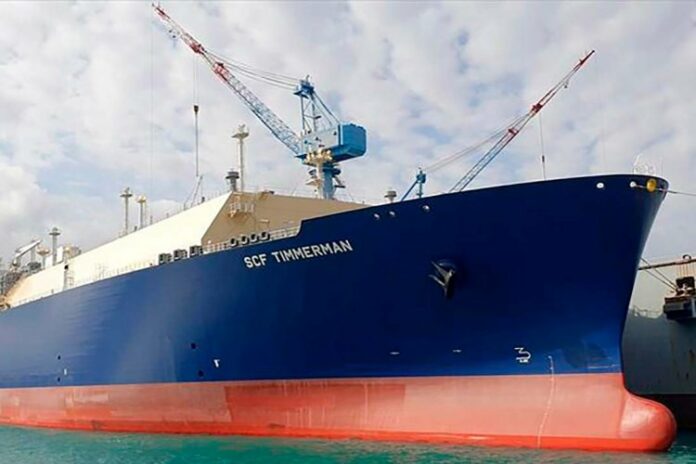
London-based Shell decided last month to take the ships out of service and bear the economic cost, according to people with knowledge of the matter. The ships are primarily used to ferry LNG within Asia and aren’t directly under sanctions, but the company decided to idle them as a precaution, said the people, who requested anonymity to discuss private details.

The SCF Barents and SCF Timmerman have been anchored off the coast of Singapore for several weeks, according to ship-tracking data compiled by Bloomberg. The ships are owned by Sovcomflot — a Russian state-controlled company  — and are under long-term charter by Shell.

“We can confirm that the two mentioned SCF LNG ships are now idling,” said Shell in an emailed reply to questions. “We conduct our business in compliance with international and national laws, abiding by applicable sanctions and trade control measures.”

Sovcomflot wasn’t immediately able to comment.

The move is the latest by an energy company to self-sanction in response to Russia’s invasion of Ukraine. The situation is particularly touchy for Shell, as the company came under fire in early March for purchasing Russian crude at a steep discount. Since then, Shell said it won’t make any new purchases of Russian oil or gas.

The European Union has started to strengthen sanctions against Russian vessels. On Tuesday, European Commission President Ursula von der Leyen said the EU is proposing to ban most Russian ships and trucks from entering the bloc. Russian-owned, controlled, chartered or operated vessels are already blocked from U.K. ports.

Source: Bloomberg

Alewijnse and SEAFAR join forces to contribute to the development of autonomous shipping

0

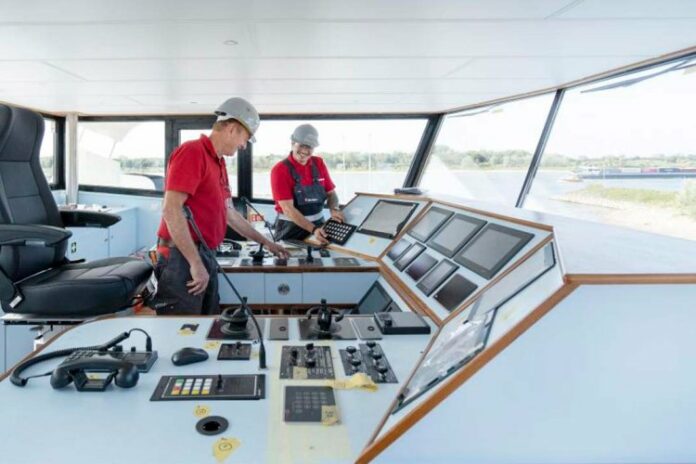
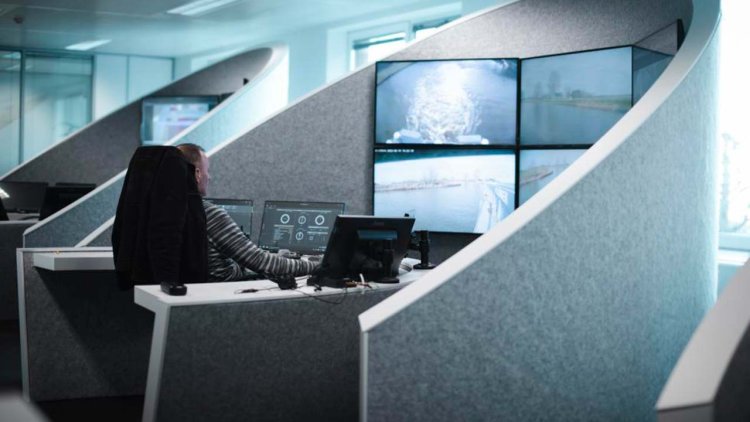
In the future, captains will work ashore instead of on board the vessels they command. From a control center, each captain will direct several ships at once, which may be sailing on different canals and rivers. Only a few sailors will be on board, for maintenance, docking, loading and unloading. Should an emergency arise, a helmsman on the bridge can take temporary control of the ship.

Technology and services company SEAFAR has already made this semi-autonomous sailing a reality by controlling ten ships from a control room in Antwerp, and is planning similar facilities in Namur and Dordrecht. The company aims to have thirty new and existing ships operational, in both inland and coastal shipping, by the end of the year. To advance its plans, SEAFAR is joining forces with Alewijnse to take steps towards the development of innovative systems that will connect with electrical equipment on board to enable remote maintenance and other interventions direct from the control centers. 

SEAFAR’s captains direct ships remotely from a control room. They steer up to three ships at a time, 80% goes autonomous, with only a few crew remaining on board. The major advantage, according to CEO and founder Louis-Robert Cool, is that:

“The captain can do his job in eight hours, and then another captain takes over his shift, and so on. Also, the navigation and maneuvering can be done in a very efficient way through the application of innovative techniques such as artificial intelligence, which can predict behavior using algorithms, and machine learning, which can identify objects and the surrounding environment using sensors, in order to optimise sailing behavior. These are unique techniques for inland navigation that, by combining different elements, form an efficient whole.”

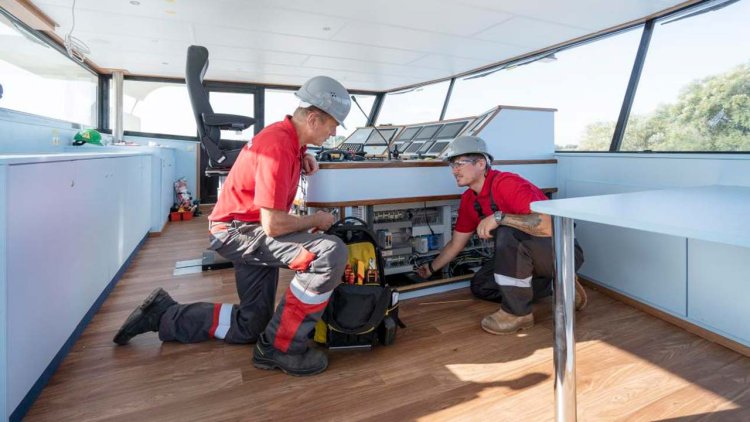
As a system integrator Alewijnse offers a comprehensive package of technical solutions that includes full electrical installations, systems for energy distribution, generation and propulsion, process automation, audio, video & ICT and systems for safety, navigation and communication.

Louis-Robert Cool continues: “Our cooperation is still very new, but our views of the future of the market are the same and we can reinforce each other in a complementary way. Our vision of modernizing the current fleet in the Netherlands is the same as well. Together we would like to expand our network and enter into partnerships in the Dutch market. We are keen to link up on new projects with Alewijnse, to take on several at the same time and to optimise the service we provide to our customers, in order to make more vessels #SEAFARReady! for the future.”

Tom Milder, COO at Alewijnse adds:

“Through our partnership with SEAFAR, we will demonstrate just how well equipped our systems are for emerging technologies like semi-autonomous sailing. We are already experienced with this technology and the specialist equipment needed for it such as remote systems, onboard cameras to provide real-time situational awareness, GPS equipment programmed with emergency scenarios such as holding position, and image and voice communication equipment.”

Because we work with major shipyards and vessel owners, we have an extensive network, especially for the construction of new inland, cargo and coastal vessels. We also have extensive knowledge and experience in system design, the installation of electrical installations and providing after-sales service. Many ships have Alewijnse equipment that we maintain, and this service can be easily extended for SEAFAR systems. More and more ships are installing this equipment.”

According to Cool, semi-autonomous sailing is the answer to the current problems in inland navigation:

“On the one hand, the road to obtaining a license is not an easy one, but on the other hand there is a huge shortage of crew. By 2030 it is estimated that the sector will be short of around 6000 people. By implementing new technologies, it is possible to change the working practices and make the job of captain not only more attractive, but also increase the resources available because sailing has become more efficient. There is also a business case for boosting inland navigation, because it frees up more capital for investments into sustainable technology.”

Milder adds:

“The major advantages of unmanned sailing are saving costs, the possibility of 24/7 sailing while observing the work and rest time regulations, and increasing safety. It also improves the working conditions of the captains, who can now do their job in a comfortable, dry and warm environment, with screens in front of them and seated in comfort, and with attractive working hours and travel distances. In addition, the local regulations are favorable. In Belgium they are already well advanced in developing permits, especially in Flanders, and in the Netherlands things are starting to move as well.”

“K” LINE’s participation in joint study to explore ammonia as marine fuel in Singapore

0

“K” LINE has announced the company has participate in the feasibility study jointly conducted since March 2021 by and among A.P. Moller – Maersk, Fleet Management Limited, Keppel Offshore & Marine, Maersk Mc-Kinney Moller Center for Zero Carbon Shipping, Sumitomo Corporation, and American Bureau of Shipping, with the aim to establish a ship-to-ship based ammonia bunkering at the Port of Singapore, the largest bunkering port in the world.

Memorandum of Understanding was executed by and among the 8 companies, including Maritime & Port Authority of Singapore who has also decided to participate in the Study, at a ceremony held on April, 6 during the occasion of Singapore Maritime Week 2022.

Emitting zero CO2 when combusted, ammonia has been considered as one of promising options among various alternative marine fuels to reduce greenhouse gas (GHG) emissions within the shipping industry, which is in line with the International Maritime Organization (IMO) strategy to achieve reduction of GHG emission by 50% in 2050 compared to the levels in 2008.

The Study aims to cover the entire end-to-end supply chain of ammonia bunkering, design of ammonia bunkering vessels, as well as related supply chain infrastructure. Relevant government agencies and experts in Singapore will be engaged in working towards the standardization of safe operation and regulations. Each partner will contribute to the Study within the scope set in line with their business domain.
 

Deltamarin and GTT receive AiP from DNV for a new design of LNG fueled PCTC

0

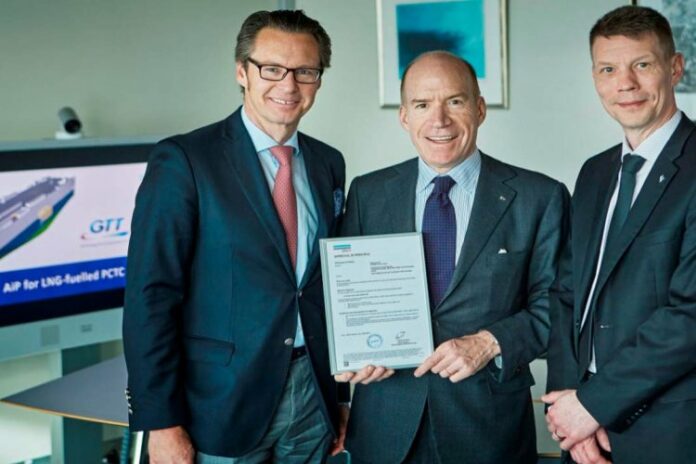
Deltamarin and its partner, the French multinational naval engineering company GTT, have been awarded an Approval in Principle (AiP) from the Norwegian classification society DNV, for an innovative LNG-fueled Pure Car and Truck Carrier (PCTC) design.

The AiP was presented to Kristian Knaapi, Sales Manager at Deltamarin, and Philippe Berterottière, Chairman and CEO of GTT, by Knut Ørbeck-Nilssen, CEO of DNV Maritime at the classification society’s headquarter, during the Nor-Shipping maritime trade fair, held in Oslo this week.

Deltamarin and GTT have been cooperating on the development of a new Dual-Fuel PCTC design, able to carry 8000 CEU. This design introduces a new generation of PCTCs, incorporating GTT’s Mark III membrane LNG fuel tank and Deltamarin’s expertise in developing state of the art vessels.

The AiP from DNV confirms that the design of the LNG-fueled PCTC is feasible and that no obstacles exist to prevent the concept from being constructed and operated. Deltamarin and GTT have designed the most compact LNG system in order to optimize cargo capacity and energy consumption while providing maximal vessel LNG autonomy. The 2 bar gauge (barg) design pressure of the LNG fuel tank enables improved pressure holding capabilities and increased operational flexibility especially during bunkering operations.

Deltamarin is very pleased to receive the approval together with our trusted partners GTT and DNV. Sustainability in the maritime industry is one of the driving forces for Deltamarin, and we look forward to tackling some of its challenges with the new Dual-Fuel PCTC design. The new design enables to lock in CO2 reduction benefits today, while planning for low and zero operations in the future, leading us on the right path towards decarbonization.