-1.1 C
New York
Home Blog Page 449

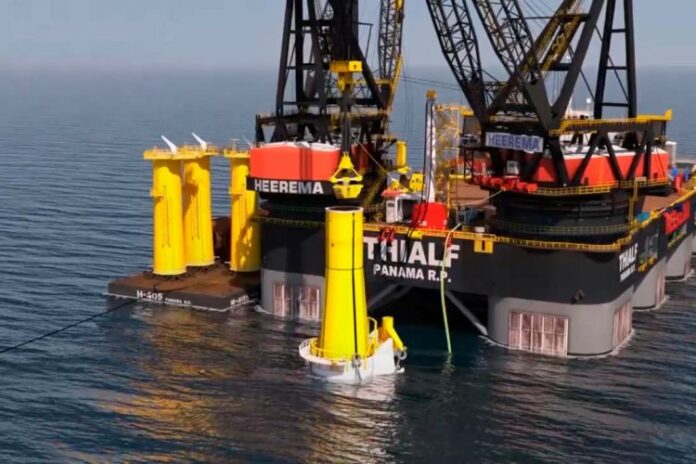
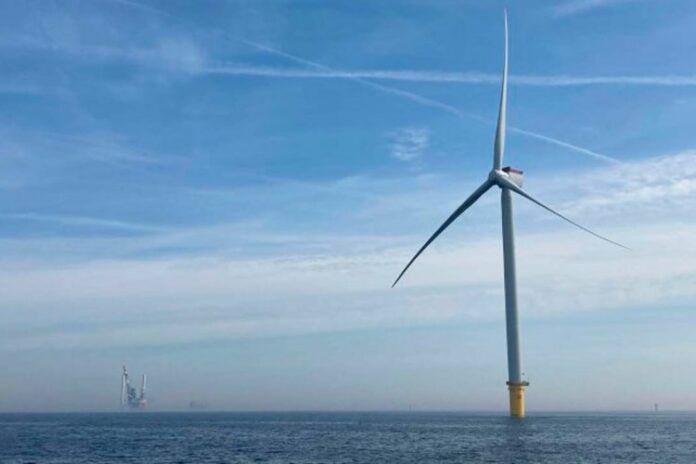
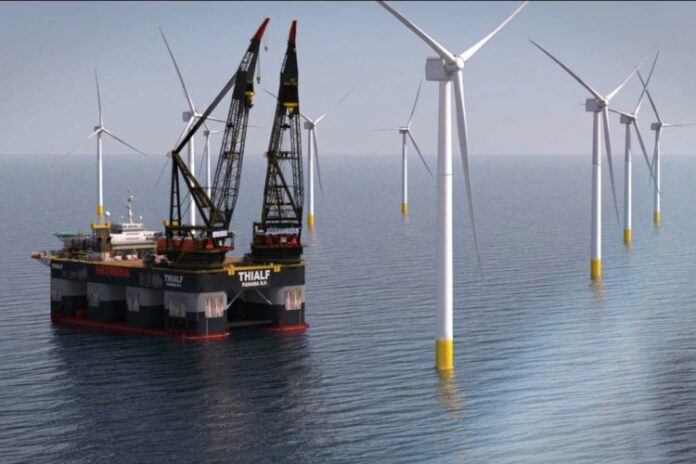
Heerema Marine Contractors awarded He Dreiht XL monopiles project

0

The work includes the transport and installation of 64 monopiles and transition pieces. During operations, Heerema will use the IHC IQIP double-walled noise mitigation system NMS-10,000 amongst other systems to reduce noise pollution.

Heerema CEO, Koos-Jan van Brouwershaven said:

‘We are delighted to be EnBW’s chosen contractor, and we must credit the Heerema team and our client for their excellent collaboration in finding the most suited solutions for the He Dreiht project.’

The He Dreiht wind farm is located in the German North Sea, 90 km northwest of Borkum and about 110 km west of Heligoland. With a capacity of 900 MW, He Dreiht is one of the largest planned offshore wind power projects in Europe and is scheduled to go into operation in 2025.

Heerema’s Offshore Wind Director, Jeroen van Oosten said:

‘We are committed to increasing our market share in large monopile installations for offshore wind, and are proud to be chosen to enable EnBW to deliver 900 MW of renewable energy.’

EnBW He Dreiht Project Director, Jörn Däinghaus said:

‘Heerema is a contractor with a high level of experience and excellent technological know-how. We look forward to working with Heerema to develop and install our first subsidy-free offshore windpark.’

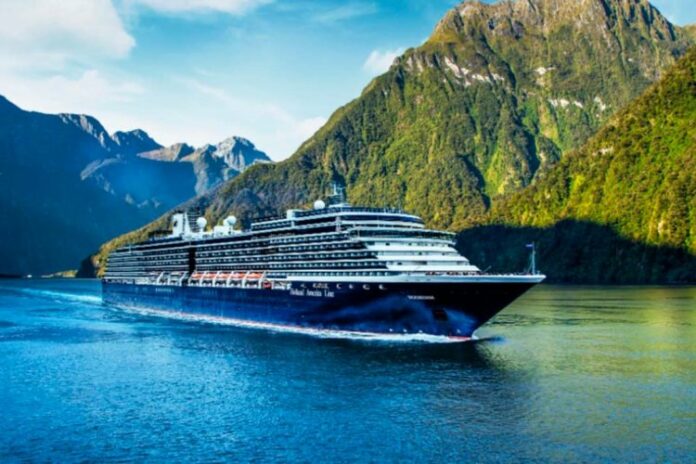
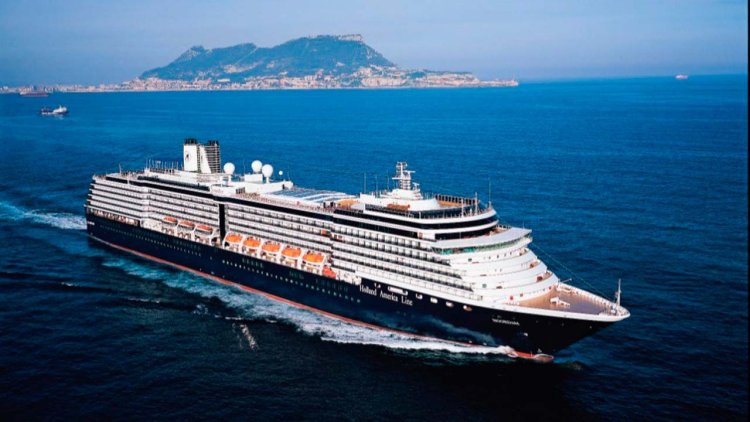
Holland America Line’s Noordam returns to service in Fort Lauderdale

0

After more than two years since the industrywide pause began due to the COVID-19 pandemic, Holland America Line’s Noordam returned to service Sunday, April 24, 2022, at Port Everglades in Fort Lauderdale, Florida. The ship embarked guests for a 21-day Panama Canal transit to Vancouver, Canada, that will position it in Alaska through September.

To commemorate the occasion, Holland America Line held a ribbon-cutting ceremony in the terminal to open embarkation, attended by the ship’s captain and senior officers, with flag-waving fanfare from team members lined up to greet guests as they boarded the ship.

Gus Antorcha, president of Holland America Line, said:

“We are excited to welcome guests aboard Noordam once again as we continue the pace of having all 11 of our ships back in service by June. With each relaunch we are able to bring more of our team members back on board and into the Holland America Line family. They have been waiting for this day to welcome our guests and get back to cruising.”

Since Holland America Line restarted cruising in July 2021, Eurodam, Koningsdam, Nieuw Amsterdam, Nieuw Statendam, Rotterdam and Zuiderdam have returned to service with cruises in Alaska, the Caribbean, Europe, Mexico, California Coast and South Pacific. Volendam currently is under charter by the government of the Netherlands, positioned alongside in Rotterdam accommodating Ukrainian refuges.

Following the Panama Canal transit, Noordam will spend the summer in Alaska, offering seven-day cruises between Vancouver and Whittier, Alaska, along with one special 14-day Great Alaska Explorer roundtrip from Vancouver in September. With a strong cruise presence in Vancouver, Holland America Line is set to position four ships out of the Canadian homeport in 2022. Noordam also will offer longer Cruisetours that combine a three-, four- or seven-day Alaska cruise with an overland exploration of Denali National Park. Holland America Line is the only cruise line that extends land tours up to the unspoiled reaches of Canada’s Yukon Territory.

After the Alaska season, Noordam departs on an epic sojourn westward with a 34-day Pacific Ocean crossing from San Diego, California, to Sydney, Australia, and a 35-day Australian Circumnavigation roundtrip from Sydney with 15 calls around the continent and scenic cruising in the Great Barrier Reef. The ship will sail into 2023 with 12- to 15-day cruises roundtrip from Sydney that explore New Zealand through March 2023, before crossing back over to North America for another season in Alaska.

Holland America Line will complete the restart of the remaining ships in the fleet through June with Oosterdam (May 8 in Trieste [Venice], Italy), Zaandam (May 12 in Fort Lauderdale) and Westerdam (June 12 in Seattle, Washington).

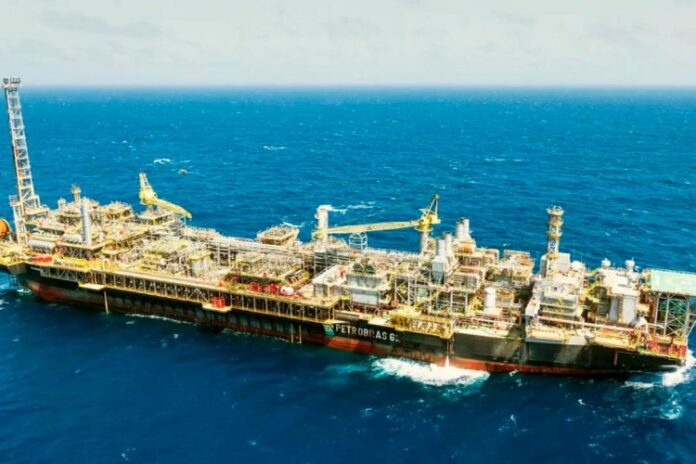
Petrobras and Equinor start production on IOR project at Roncador, Brazil

0

This represents an important milestone in the development of the field, increasing recovery rates, adding valuable production and demonstrating the potential to leverage new technology.

The two wells are the first of a series of IOR wells to reach production. Start-up is almost five months ahead of schedule and at half of the planned cost. The wells add a combined ~20,000 barrels of oil equivalent per day to Roncador, bringing daily production to approximately 150,000 barrels and reducing the carbon intensity (emissions per barrel produced) of the field.

Through this first IOR project, the partnership will drill 18 wells, which are expected to provide additional recoverable resources of 160 million barrels. Improvements in well design and the partners’ combined technological experience are the main drivers behind the 50% cost reduction across the first six wells, including the two in production.

Roncador is Brazil’s fifth largest producing asset and has been in production since 1999. Petrobras is the operator of the field (75% equity) with Equinor (25% equity) entering the project in 2018 as a strategic partner.

Veronica Coelho, Equinor country manager for Brazil, said:

“We are very proud of what the partnership between Petrobras and Equinor has achieved, delivering this project ahead of schedule and below budget.”

“This milestone demonstrates the partnership’s ability to increase production and value through technology. We will continue combining our capabilities to improve recovery from Roncador and extract further value from the field. Petrobras will leverage its experience as one of the largest deep-water operators and pre-salt developers in the world and Equinor will draw on its technology, expertise and decades of experience in IOR on the Norwegian Continental Shelf.”

In addition to the planned 18 IOR wells, the partnership believes it can improve recovery further and aims to increase recoverable resources by a total of 1 billion barrels of oil equivalent. The field has more than 10 billion barrels of oil equivalent in place, under a license lasting until 2052. The strategic alliance agreement also includes an energy efficiency and CO2 emissions reduction program for Roncador.

Damen builds three hybrid Fast Crew Supply vessels on stock

0

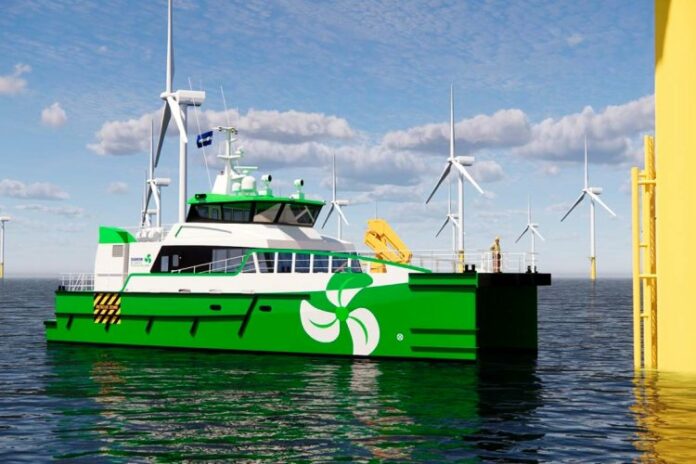
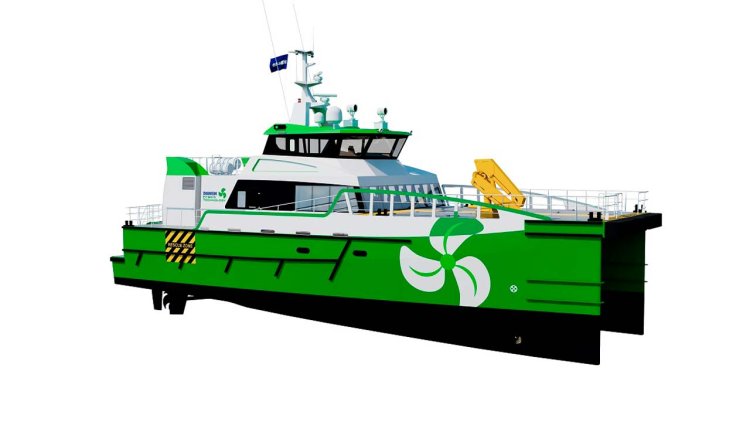
Damen Shipyards Group decided to build three new vessels of the Fast Crew Supplier (FCS) 2710 Hybrid type on stock at the Damen Antalya yard in Turkey. The vessels will be available for fast delivery for operators in the quickly emerging offshore renewable energy production.

Hybrid propulsion enables zero emission operation in wind parks and in harbours. Fast and stable crew transfer vessels that are able to operate at rough seas have become a necessity in offshore energy production. In the quickly developing offshore wind industry, vessels for crew and supplies need to be versatile, stable and sturdy, to be able to manoeuvre in between the turbine shafts and to offer safe and fast transfers from and to shore stations.

Damen has developed the twin axe bow FCS 2710 that is fit to do the work at offshore wind farms with ease and comfort. The catamaran design offers great stability together with a lot of deck space. Both slender hulls have the axe bow design, with a very sharp and deep bow to eliminate slamming in and over waves. The hull design in combination with a two-speed gearbox minimizes the vessel motions and maximizes the vessel’s thrust when being pushed on to the boat landing of a wind turbine, increasing the operability, safety and comfort of crew transfer operations.  

Built in aluminium, the vessels with an overall length of 26.8 meter and 10.5 meter beam, offer passenger capacity of 24 persons for transfer to offshore workplaces and 90 square meters of deck space. The FCS 2710 can reach speeds up to 25 knots and maintain high speed even at rough seas as the axe bow design eliminates slamming and pitching in waves to great extent.

Based on a proven design with proven equipment, the FCS 2710 ensures durable and robust quality. The vessel offers possibilities for customisation upon the proven platform. Cranes, deck equipment, lay-out of deck and interior spaces as well as the number of passengers seats and crew accommodation can be altered to ship owner demand.

Damen offers more than quality vessels: the yard group offers complete service indicated as ‘ship as a service’. Any alteration to meet specific operational demands, lifelong service and repair and even financing options are included in the services Damen can offer.

With three FCS 2710 Hybrid vessels under construction, Damen is working on the development of an all-electric E-FCS 2710. With the Hybrid versions available from the spring of 2023, the all-electric offshore supply vessel is expected to be available during the year 2024.

Biden bans Russian ships from U.S. ports over Ukraine invasion

0

Reuters first reported Biden’s planned action on Thursday and had reported in early March that the ban was under consideration by the White House.

“That means no ship, no ship that sails under the Russian flag or that is owned or operated by a Russian entity, will be allowed to dock in a United States port or access our shores. None,” Biden said Thursday.

The sources said that in 2021 Russian vessels made about 1,800 visits – less than 3% of all traffic. People briefed on the matter said nearly 90% of that traffic was oil imports, which the United States has previously banned.

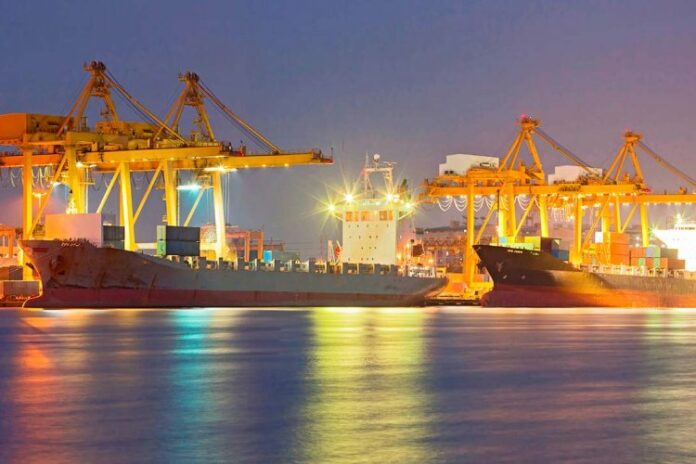
President Joe Biden announced on Thursday the United States will ban Russian-affiliated ships from American ports, joining Canada and European nations in the latest step to pressure Russia over its invasion of Ukraine.

Reuters first reported Biden’s planned action on Thursday and had reported in early March that the ban was under consideration by the White House.

“That means no ship, no ship that sails under the Russian flag or that is owned or operated by a Russian entity, will be allowed to dock in a United States port or access our shores. None,” Biden said Thursday.

The sources said that in 2021 Russian vessels made about 1,800 visits – less than 3% of all traffic. People briefed on the matter said nearly 90% of that traffic was oil imports, which the United States has previously banned.

Source: Reuters 

Wärtsilä and Carnival Corporation join forces in fleet decarbonisation programme

0

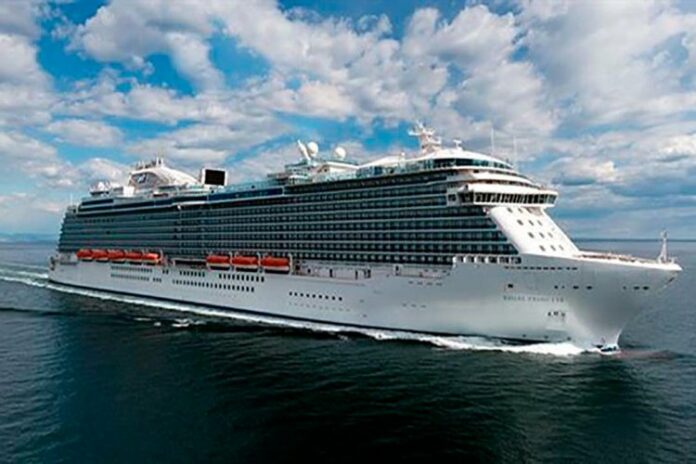
Initially tasked with establishing an optimal decarbonisation path for the cruise ship ‘Regal Princess’, the project will expand to model solutions which could be applied to the entire Carnival fleet. The contract was signed in December 2021 and the project commenced in February 2022.

Under the fleet decarbonisation programme, a digital model of ‘Regal Princess’ will be created by combining operational data from several different sources. Modelling capabilities and machine-learning algorithms developed by Wärtsilä will deliver a detailed analysis of vessel operational data.

The model will be used to simulate the impact of several technologies. A specific focus will be given to E-start, Wärtsilä’s patented electric smokeless start solution, as well as the Wärtsilä HY hybrid power concept with energy storage. The simulations will identify the most beneficial retrofittable solution while minimising the required installation.

Chris Millman, Vice President, Corporate Marine Technology, Carnival Corporation, says:

“At Carnival Corporation we are totally committed to decarbonising our operations. A systematic, data-driven approach is essential. By working closely with Wärtsilä, a company with a depth of experience and expertise, we can establish a model that will allow us to get it right first time.”

Giulio Tirelli, Director, Business Development, Wärtsilä Marine Power, says:

“We are delighted to work with Carnival Corporation on this important project. The complexity of current and forthcoming environmental regulations requires a methodical, systematic approach. The Decarbonisation Modelling Service is the most effective means for assessing and assuring the performance of investments aimed at meeting greenhouse gas emission reduction targets.”

There are multiple ways for ship owners and operators to comply with the International Maritime Organization’s upcoming Energy Efficiency for Existing Ships Index (EEXI) and the Carbon Intensity Indicator (CII). This freedom increases the complexity of making the right choices. Wärtsilä’s Decarbonisation Modelling Service tackles this challenge by combining data-driven assessments with expert insight – enabling operators to maximise environmental impact with cost-effective investments.

Decarbonisation modelling is part of a suite of services to help ship owners plan their pathway to reducing emissions and complying with incoming regulations. It utilizes several advanced machine-learning algorithms, including those powering Wärtsilä’s CII Insight – a new set of capabilities which enable owners to forecast vessel compliance with CII and understand the impact of alternative solutions.

The ‘Regal Princess’ is a 330-metre long, 142,000 gross tonne cruise ship built in 2014. It has a maximum capacity of 5,600 passengers and crew. The vessel is part of Carnival Corporation’s fleet of more than 100 vessels across ten cruise brands. 

First wind turbine installed in Hollandse Kust Zuid

0

The installation of the first turbines started with the loading of the turbine components from the quay on the Maasvlakte. The installation vessel Wind Osprey from Cadeler loaded parts for four turbines on board: four masts, four turbine nacelles and twelve turbine blades.

Søren Andersen, Senior Turbine Installation Package Manager at Vattenfall:

“With the arrival of the Wind Osprey in the week of April 12 and the loading of the turbine components, the first installation could start on April 16. The vessel will take four wind turbines on board each trip, with the goal of having all turbines installed by 2023. It is great to see how all the plans come together and how we shape the energy transition with the installation of these gigantic turbines. It is an absolute honor to be able to play a role in the transition to a fossil-free future.”

At the same time the second phase of the construction project has started after the winter break. In all, 140 turbines are to be installed. Now the piling of the remaining 104 foundations will commence. Seaway’s vessel Strashnov will carry and install three foundations at a time while the Jumbo ship Fairplayer will place the platform on the foundation after the foundation has been installed. This summer, all foundations will be anchored to the North Sea bed.

The Hollandse Kust Zuid wind farm is being built by Vattenfall and is owned by Vattenfall, BASF and Allianz.

Hydrogen-powered ferry prepares to launch in San Francisco Bay

0

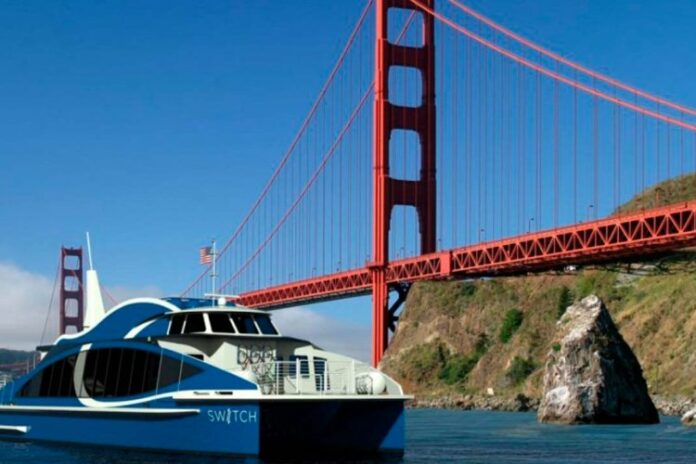
Aptly named Sea Change, the 70-foot (21-meter) 75-passenger ferry will serve multiple stops along the San Francisco waterfront. She was built at the All American Marine Shipyard in Bellingham, Washington, and was undergoing trials with the US Coast Guard in nearby Puget Sound.

Pace Ralli, CEO of Switch Maritime, standing on the bow of the ferry in Bellingham Bay, said:

“We’re here on the water, powered by hydrogen fuel cell and it’s the first commercial ship in the world to have that propulsion system.” 

Sea Change marks another industry exploring fuel cells as clean energy cars, trucks, trains and recreational boats are developed.

Proponents claim that hydrogen fuel cells are cleaner than other carbon reduction methods, emitting only water and heat, but high-cost and bulky fuel cell systems have limited the use of the technology.

Ralli conceived the idea for the fuel cell-powered ferry while living in New York City, trying to find ways to decarbonize the maritime industry.

Ralli said:

“There was a project in California sponsored by the California Air Resources Board, and they were working on hydrogen fuel cells as a method of decarbonizing ships, so we joined them and funded their project in 2019.”

As he spoke, three stacks of hydrogen fuel cells hummed in the engine room, helping to drive two propellers that move the shuttle to a top speed of 20 knots. All American Marine project manager Jeff Sokolik led Sea Change, pressing buttons on a touch screen that activate automated systems that communicate with the engine room.

Sokolik, who believes this green maritime innovation could be widely adopted within 10 years, said:

“This will be the next standard in fuel cell powered vessels. They’re clean, they’re efficient and they make economic sense at scale.”

As companies move towards a world without emissions, the desire to achieve their sustainability goals has increased.

The 2020 International Maritime Organization Greenhouse Gas Study states that greenhouse gas emissions, including carbon dioxide, methane, and nitrous oxide, increased from 977 million tons in 2012 to 1,076 million tons. tons in 2018, an increase of 9.6% in six years.

Ralli said:

“We focus on the shipping industry because that’s where we have experience, but I don’t think any industry can really wait right now. We are really paving the regulatory framework that is needed to bring this to a larger port vessel, whether it be tugboats and other larger ferries or even ocean going vessels like container ships, cruise ships and oil tankers.”

If all goes according to plan, Ralli said the ship will deliver to the Bay Area in late May and serve passengers in June, just in time for San Francisco’s summer season.

Source: Reuters

Heerema introduces Floating to Floating offshore wind installation method

0

Offshore floating wind will be essential for the world’s energy transition, but methods under development can be costly, time-consuming, and ultimately prevent the commercial upscaling of this new frontier in offshore wind.

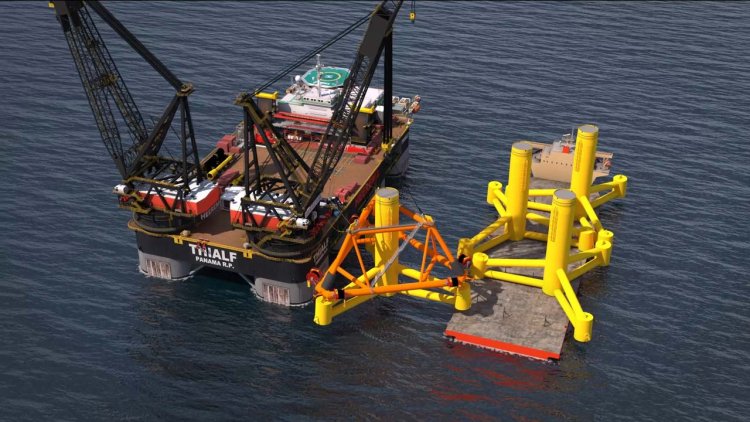
Appreciating the logistical challenges for deployment at scale Heerema has developed a new method for offshore floating wind installations. 

Heerema approached the development of the new Floating to Floating installation method with the following challenges in mind:

• How can the Levelized Cost of Energy in offshore floating wind be reduced?
• What can be done to improve schedule robustness and duration?
• How can bottlenecks be removed in the supply chain?

Heerema’s Floating to Floating installation method was developed to deliver solutions to industry challenges, such as efficient use of resources like steel and port infrastructure, offshore logistics and maintenance, and reaching the required scale and rate of installation. Currently, there are various proposed methods that involve assembling floating foundations (floaters) in port before wet-towing to the field. This presents logistical challenges, as well as there being pressure on the number of suitable harbors.

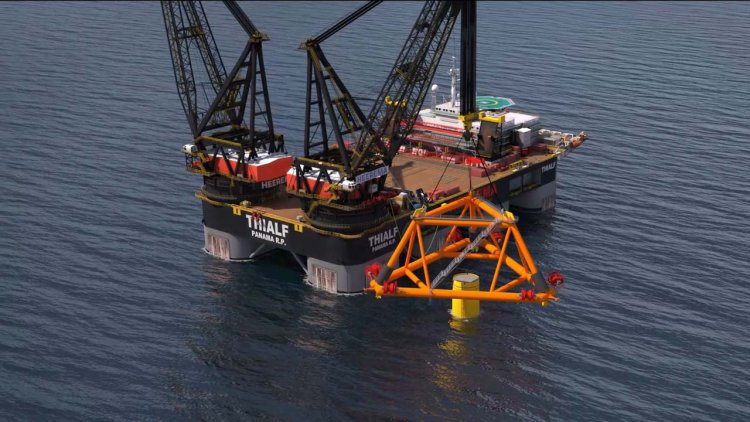
Therefore, Heerema has developed an alternative method that does not require a wet-tow and removes the need for marshalling yards. Using the floating to floating installation method floaters can be constructed on land before being dry-towed on a transport vessel to the location. After arrival, they will be installed using Heerema’s floating installation frame to lift the floaters from the vessel. After that, they will be installed on location. Heerema’s floating installation frame will submerge the floaters down by weight, removing the need for high-tech ballasting or tensioning systems and reducing installation duration. The bottom foundation work can be executed in parallel by optimizing the capabilities of Heerema’s semi-submersible crane vessels.

Jeroen van Oosten, Business Unit Director Wind:

‘We want to show an alternative solution for installing offshore floating wind, especially targeting some of the bottlenecks for scaling up. We strongly believe that by opening up to new ways of working and collaboration floating wind can reach the potential the industry is looking for.’

The floaters’ volume and weight are reduced by removing the need for wet-towing. Also, the floater is lifted directly from the transportation asset in the field, which means both the floater and wind turbine generator can be optimized for in-place conditions only.

A low-tech floater design is possible by integrating installation requirements such as ballasting provisions into reusable installation tooling, removing the requirement to build these functionalities into each floater.

By efficiently using space onboard transport vessels to deliver multiple floaters directly from the fabrication yard to the offshore wind site transport and marshalling costs are significantly reduced.

By removing the need for in-port assembly of the floater and WTG there is less space and draught required in the port and reduced quayside capacity, which helps avoid one-off mega-investments in port areas.

By removing time-consuming and highly weather-sensitive wet tows and mooring connections, higher throughput can be achieved on floating wind projects. The floating to floating installation method means floater and WTG campaigns can be decoupled, reducing supply-chain pressure, and resulting in a more efficient process.

The crane-supported floating to floating installation method is built on proven technologies from the oil and gas floating platform industry. It allows the saving of tons of steel per floater and will reduce overall project CAPEX.

Maersk Drilling sells jack-up rig Maersk Convincer

0

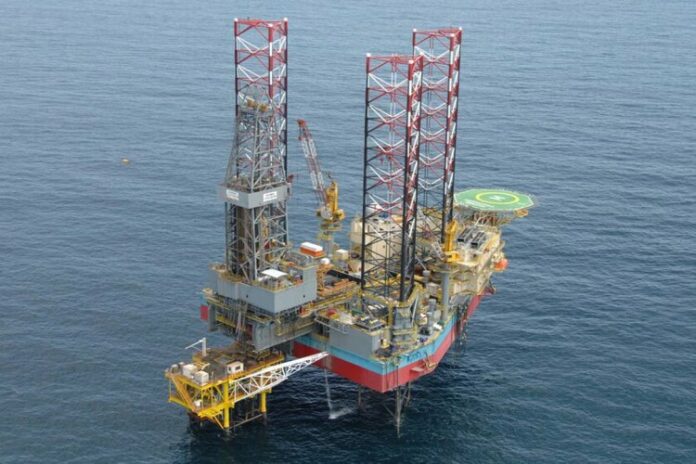
Maersk Drilling has entered into an agreement with ADES to sell the benign environment jack-up rig Maersk Convincer for USD 42.5m in an all-cash transaction.

The transaction is subject to customary closing conditions, and the rig is expected to be transferred to ADES following the completion of its current drilling programme with Brunei Shell Petroleum Company Sdn. Bhd. (“BSP”).

Maersk Convincer is a Baker Pacific Class 375 cantilever jack-up rig which was delivered in 2008. It has been operating offshore Brunei Darussalam since 2017, and Maersk Drilling has reached an agreement with BSP to release the rig from its current contract upon completion of Maersk Convincer’s current drilling programme, which is expected to be completed in August 2022 and in any case not later than 15 September 2022.

CFO Christine Morris of Maersk Drilling says:

“This transaction will contribute to the optimisation of our fleet in line with Maersk Drilling’s strategic priorities of maintaining a fleet of modern, high-end assets and concentrating our jack-up activities in the harsh environments of the North Sea. Though the sale marks the end of an era of proud operations and exemplary collaboration with BSP – a joint venture between the government of Brunei Darussalam and the Shell group of companies – during which our rigs have won multiple Shell Group Jack-up of the Year awards, the Southeast Asian jack-up market is not key to us.”

After the sale, Maersk Drilling’s rig fleet counts 10 jack-up rigs, all of which are suited for operations in harsh environments, and eight floaters.

The transaction does not change Maersk Drilling’s financial guidance for 2022.