1.2 C
New York
Home Blog Page 444

TotalEnergies completes first marine bio-VLSFO bunker delivery in Singapore

0

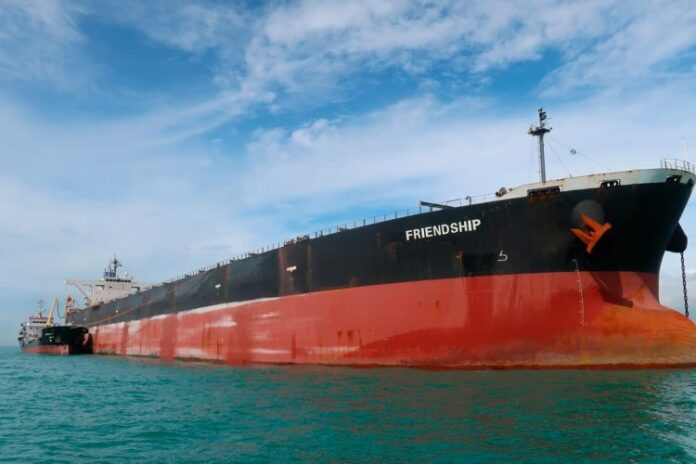
During the operation, a B10 biofuel blend that composed of VLSFO blended with 10% second-generation, waste-based and ISCC-certified UCOME (Used Cooking Oil Methyl Ester) was supplied via ship-to-ship transfer to MT Friendship, a bulk carrier owned by Seanergy Maritime Holdings Corp. and chartered by NYK Line to transport cargo provided by Anglo American. The biofuel was consumed during her two-way voyage between Singapore and Saldanha Bay, South Africa.

The UCOME bio-component, sourced from the circular economy, can achieve more than 80% reduction of GHG (Greenhouse Gas) emissions compared with heavy fuel oil from a well-to-wake analysis. Consequently, the delivered B10 biofuel blend provides a reduction of up to 10% in GHG emissions. The trial also showed that the biofuel can be safely used in relevant marine applications without any modifications. These results, coupled with the vessel’s smooth operational performance throughout the trial, demonstrate the potential of biofuels in assisting ship-owners to meet the International Maritime Organization’s carbon emissions reduction targets.

TotalEnergies Marine Fuel’s successful biofuel delivery also underlines its pioneering efforts in setting up a local biofuel supply chain for this trial, including land storage, blending and the eventual bunkering operation. The local operation was made possible with support from the Maritime and Port Authority of Singapore (MPA) and the involvement of local partners, including Singapore bunker barging company V-Bunkers and tank storage company Vopak Terminals Singapore at Penjuru.

This biofuel delivery forms part of TotalEnergies Marine Fuels’ drive to develop a range of fuel solutions to help the shipping industry’s move towards decarbonization.

Laura Ong, General Manager of Trading and Operations for Asia Pacific, TotalEnergies Marine Fuels, based in Singapore, said:

“We are delighted to partner with NYK Line and Anglo American for our first marine biofuel delivery in Singapore. This trial has allowed us to initiate the structuring of a supply chain with local expertise to create a sustainable, cost-efficient and low-carbon biofuel offer for the shipping sector in the region. We will continue to conduct more bespoke trials with our customers and to ultimately provide a scalable solution of this lower-carbon marine fuel.”
Sempra Infrastructure and PGNiG Advance North American LNG Alliance

0

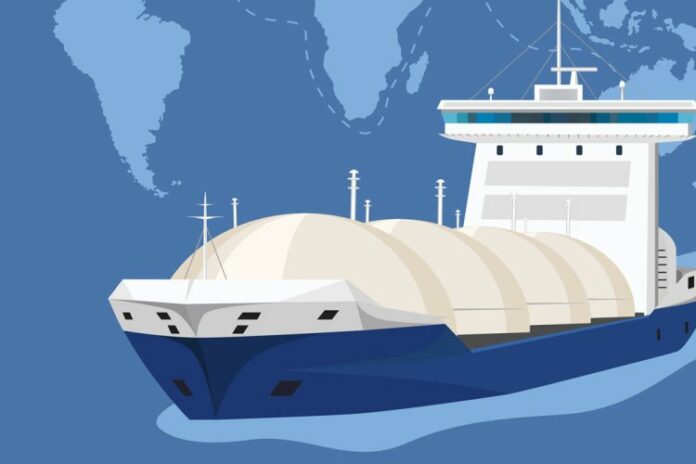
Sempra Infrastructure, a subsidiary of Sempra, and the Polish Oil & Gas Company have announced they have entered into a heads of agreement (HOA) for the purchase of approximately 3 million tonnes per annum (Mtpa) of liquefied natural gas (LNG) delivered free-on-board from Sempra Infrastructure’s portfolio of LNG projects in North America.

Dan Brouillette, president of Sempra Infrastructure, said:

“Today’s agreement underscores our commitment to help provide greater energy security to Poland and our global partners through long-term LNG sales. Our relationship with PGNiG is core to this commitment, and we are excited to continue working closely with them to advance more reliable, secure and increasingly clean energy solutions.”

Iwona Waksmundzka-Olejniczak, PGNiG SA president, said:

“The agreement signed today paves the way for negotiations of detailed terms that would provide PGNiG with LNG from a reliable and highly valued infrastructure partner. Here in Poland, LNG is already one of the cornerstones of our diversified strategy to enhance Polish energy security, as well as to strengthen the commercial potential of the PGNiG Group. We are determined to further expand our operations in this direction and are therefore taking steps to secure access to adequate natural gas volumes in the future.”

The referenced HOA contemplates the negotiation and finalization of definitive 20-year LNG sale-and-purchase agreements for 2 Mtpa from the Cameron LNG Phase 2 project under development in Louisiana, and 1 Mtpa from the Port Arthur LNG project under development in Texas. The HOA also provides PGNiG the opportunity in 2022 to reallocate volumes from the Cameron LNG Phase 2 project to the Port Arthur LNG project. Additionally, Sempra Infrastructure and PGNiG expect to continue working toward a framework for the reduction, mitigation and reporting of greenhouse gas emissions across the LNG value chain.   

Sempra Infrastructure is developing the Cameron LNG Phase 2 project, which is expected to include a single LNG train with a maximum production capacity of approximately 6.75 Mtpa of LNG as well as debottlenecking of the existing three LNG trains at the facility in Hackberry, Louisiana. Last month, Sempra Infrastructure signed an HOA with the Cameron LNG partners for the development of the Cameron LNG Phase 2 project. In addition, Sempra Infrastructure is also developing the proposed Port Arthur LNG project, an approximately 13.5 Mtpa, fully permitted facility on a 3,000-acre site in Jefferson County, Texas.

The HOA is a preliminary, non-binding arrangement, and the development of the Cameron LNG Phase 2 and Port Arthur LNG projects remains subject to a number of risks and uncertainties, including reaching definitive agreements, securing all necessary permits, signing engineering and construction contracts, obtaining financing and incentives and reaching a final investment decision for each project.

ClassNK issues AiP for Large Liquefied CO2 Carrier

0

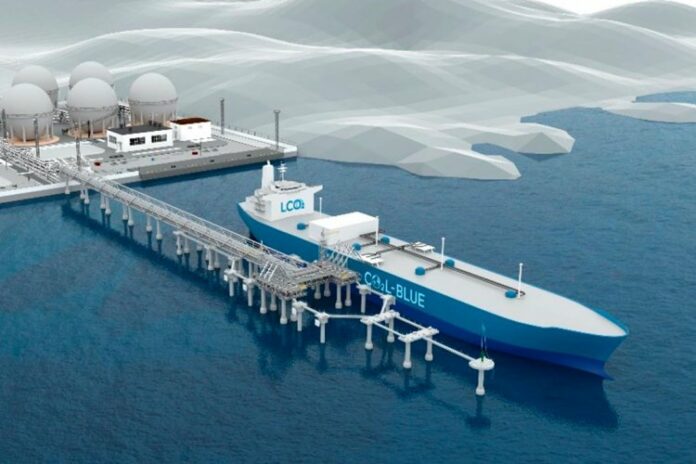
Leading Classification Society ClassNK has issued an Approval in Principle (AiP) for liquefied CO2 (LCO2) carriers developed by Mitsubishi Shipbuilding Co., Ltd., a part of Mitsubishi Heavy Industries (MHI) Group and Nippon Yusen Kabushiki Kaisha (NYK Line).

Carbon dioxide capture, utilization, and storage (CCUS) is attracting global attention as an effective mean for realizing a carbon-neutral society. It is a process that captures CO2 released from thermal power plants, factories, etc. and either uses it as resources or stores it in a stable underground geological formation.

LCO2 carriers will play a vital role in the CCUS value chain by transporting LCO2 to storage sites and facilities for utilization. In order to support the construction of the value chain, ClassNK provides technical verification on the sea transportation of LCO2, which is expected to be used worldwide.

ClassNK carried out the design review of the LCO2 carriers developed by Mitsubishi Shipbuilding and NYK Line based on its Part N of Rules for the Survey and Construction of Steel Ships incorporating the IGC Code. Upon confirming the conformity to the rules regarding the design for each cargo tank system and hull design etc., taking into account different tank pressure settings for medium and large scale vessels, ClassNK issued the AiP for both scales.

Hammerfest LNG to resume operations in a week

0

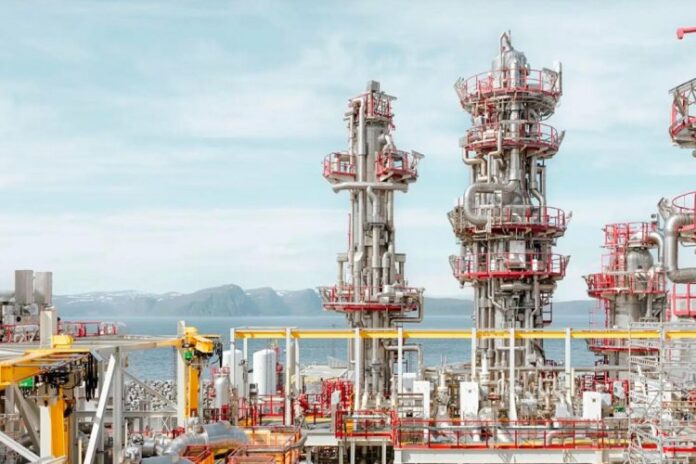
During the weekend, a minor fault was discovered on a compressor that needs to be rectified prior to start-up. The component is now being replaced, and the stepwise process towards operations continues through the week.

Grete B. Haaland, Equinor’s senior vice president for onshore facilities, says:

“Hammerfest LNG has been prepared for production, but we are taking the extra time necessary to safely resume operations.”

Equinor announced on behalf of the partnership in January that the start-up of Hammerfest LNG had been scheduled for 17 May 2022. After an extensive repair and improvement work period, the plant has been prepared for ramp-up.

The partnership includes Equinor Energy AS, Petoro AS, TotalEnergies EP Norway AS, Neptune Energy Norway AS, Wintershall Dea Norway AS. Equinor is the operator of Hammerfest LNG.

Titan LNG and Brittany Ferries embark on a long-term partnership

0

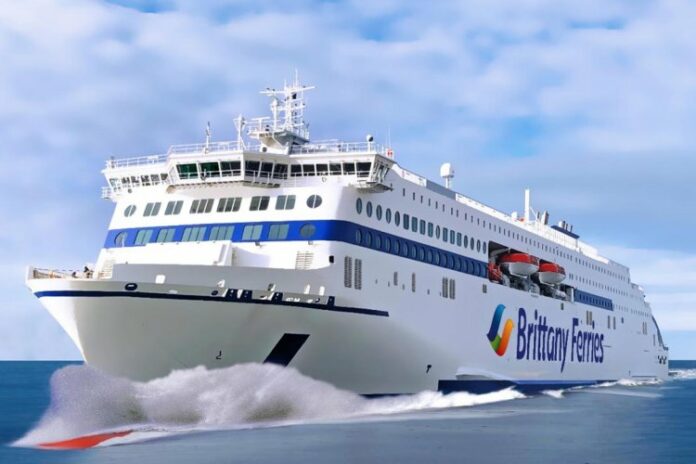
Titan LNG and Brittany Ferries have signed a long-term agreement for the supply of LNG and Liquified Bio Methane (LBM) to two new LNG-fuelled hybrid Ro-Pax vessels that Brittany Ferries will operate between England and France from 2025.

The ferries will serve established routes connecting Portsmouth with Saint-Malo, and Portsmouth with Ouistreham. Titan aims to supply fuel to both vessels during usual cargo operations alongside (SIMOPS) to avoid delays to sailing schedules.

The two 194.7 metre, 1,400-passenger LNG-hybrid ships will join the fleet in 2024 and 2025 replacing two of the longest-serving vessels, Bretagne (1989) and Normandie (1992). They will follow two new LNG-fuelled ships, Salamanca, which entered service in March this year, and Santoña which will arrive on fleet in 2023.

The hybrid vessels will have a large battery hybrid power system of 10 MWh for propulsion and manoeuvring in port and an 8 MW electric shore connection that will allow charging in port, when infrastructure allows. As well as significantly cutting emissions, hybrid propulsion promises less noise and a smoother ride for passengers.

Régine Portocarero, Titan LNG’s Business Development Manager, said:

“We look forward to our journey forward with Brittany Ferries and these innovative ships. We believe strong partnerships are essential for the maritime industry to successfully decarbonise. Furthermore, thanks to the unique farmer-shareholder ownership structure that underpins Brittany Ferries we see great potential in available stocks for local LBM production.”

Frederic Pouget, Operations and Ports Director Brittany Ferries, added:

“Ships like Salamanca, Santoña and our forthcoming hybrid ships are cleaner today and greener tomorrow. Thanks to LNG, they promise an immediate and significant improvement in air quality and a reduction in GHG emissions. They are greener tomorrow because they can run on fuels like LBM and, later, future fuels like hydrogen-derived liquid methane, all without adaptations. These fuels will slash well-to-wake GHG emissions further. Our new vessels will therefore automatically become greener when these fuels arrive and there is great potential for expanding the development of the LBM value chain with Titan LNG.”

This partnership marks the significant expansion of Titan’s operations in the English Channel which will enhance the availability of LNG, LBM, and in the longer run hydrogen-derived LNG in the region. Titan will bring additional barge capacity to meet this demand. There are plans for a Krios series vessel to serve Brittany Ferries and to regularly transit between relevant ports.

CMA CGM launching early container return incentive program

0

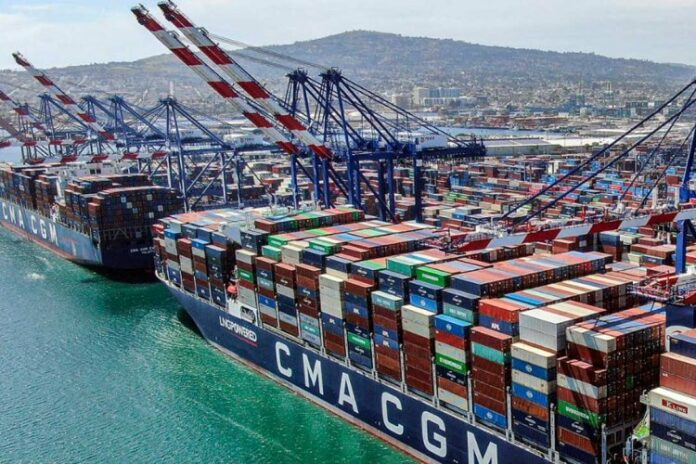
The CMA CGM Group, a global leader in sea, land, air and logistics solutions, announced today that it will implement the shipping industry’s first Early Container Return Incentive Program at the FMS terminal in Los Angeles and all CMA CGM return locations in Chicago, IL; Dallas, TX; Kansas City, KS; and Memphis, TN. The program will begin on May 16, 2022, and continue until July 15, 2022, with the goal of accelerating the return of empty containers and ensuring U.S. exporters have even greater access to equipment.  

The shipping industry has experienced an unprecedented spike in demand, leading to severe congestion throughout North America’s supply chain. Exporters have been impacted particularly hard by the challenges, with the lack of equipment making it more difficult to get their goods to market in a timely manner.

Throughout the crisis, CMA CGM has leveraged its extensive capabilities that include sea, land, air and logistics services to provide an array of flexible transport and logistics solutions to assist customers. The company has also significantly invested in industrial assets (vessels, containers, chassis, aircraft, terminals and warehouses) and implemented several industry-leading programs designed to decrease congestion and help both partners and customers navigate the complex environment. 

Not only was CMA CGM the first to freeze spot rates, the company also implemented a program to encourage the early pickup of containers, which resulted in a 73% decrease in dwell of CMA CGM containers over 9 days in Southern California. And in March, the Group dedicated vessel capacity to small and medium enterprises in both Europe and North America at rates typically only provided to high-volume shippers.  

The Group is also collaborating with industry associations like the International Dairy Foods Association (IDFA) to develop customized, market-based solutions to ensure greater reliability and predictability for U.S. exporters.  

CMA CGM’s new 60-day incentive program is projected to result in approximately 43,000 dry containers being put back into circulation within 4 days of pickup on or after Monday, May 16, 2022. Details include: 

  • A 300 USD credit per dry container returned to eligible locations during calendar days 1–4.
  • Calculation of incentive credits on a weekly basis with a credit memo issued every 14 days to each applicable importer of record (consignee listed on the Bill of Lading).  
  • Utilization of EDI transaction data to assess credit, thus no additional documentation required from customers.

This new initiative is the second incentive program implemented by CMA CGM in the USA, following the Early Container Pickup Incentive Program the Group initiated at the ports of Los Angeles and Long Beach at the end of 2021.

Ed Aldridge, President of CMA CGM and APL North America, said:

“CMA CGM is committed to doing everything we can to increase the fluidity and velocity of America’s supply chain. Our new program will result in an incentive credit for our importers, improve equipment availability for our exporters and expedite the flow of goods into and out of America’s heartland. It’s truly a win-win for everyone.”

Gene Seroka, Executive Director of the Port of Los Angeles, said:

“With this incentive program, the CMA CGM Group is facilitating a more robust flow of goods through the Port of Los Angeles and helping U.S. exporters get their product to destinations around the globe more quickly. CMA CGM has been a reliable partner to the Port of Los Angeles and a driving force for change throughout the spike in demand.”

Kongsberg to deliver electrical and control technologies to Yinson for FPSO project

0

Kongsberg Maritime (KM) is pleased to announce that it has signed an Engineering, Procurement and Construction (EPC) agreement with the global offshore production contractor Yinson for the supply of an integrated suite of electrical and control equipment for a floating production storage and offloading (FPSO) vessel currently under conversion.

The contract scope covers KONGSBERG’s E-house, electrical, control, safeguarding and telecommunication equipment solutions, and also includes service support on board the Maria Quitéria FPSO owned by Yinson.

FPSO Maria Quitéria is on schedule to commence work in 2024 at the Jubarte field, part of Parque de Baleias area in the North Campos Basin, Espirito Santo Statein the waters off Brazil, for field operator Petrobras. The vessel is Yinson’s second project award with Petrobras and its third project award in Brazil, in line with the group’s plans to expand its presence in this high-growth country.

KONGSBERG will utilize its experience as an EIT (Engineering and Information Technology) EPC contractor working alongside Yinson to enable both organizations to leverage their dedicated and professional people to work together effectively as one team.

Noel Denton, Yinson Project Manager, says:

“Yinson is committed to doing our part to improve global access to affordable, reliable energy through our position as a top tier FPSO contractor. We are bringing our extensive knowledge and experience into the FPSO Maria Quitéria project and are eager to again have Kongsberg Maritime working together with us and the other contractors to achieve yet another successful project.”

Egil Haugsdal, President, Kongsberg Maritime, adds:

“We are building on our strong position for delivering integrated solutions for control and safeguarding, telecommunications and electrical packages for all seagoing and offshore installations. Maria Quitéria will join a fleet of more than 30,000 KONGSBERG-supported vessel installations worldwide. KONGSBERG is pleased to demonstrate its capabilities once again in this market and will be calling upon its technologies and proven business systems to ensure the ongoing success of this project, which has an estimated lifecycle of 25 to 30 years.”

DNV provides concept certification of Fred. Olsen 1848’s floating wind turbine

0

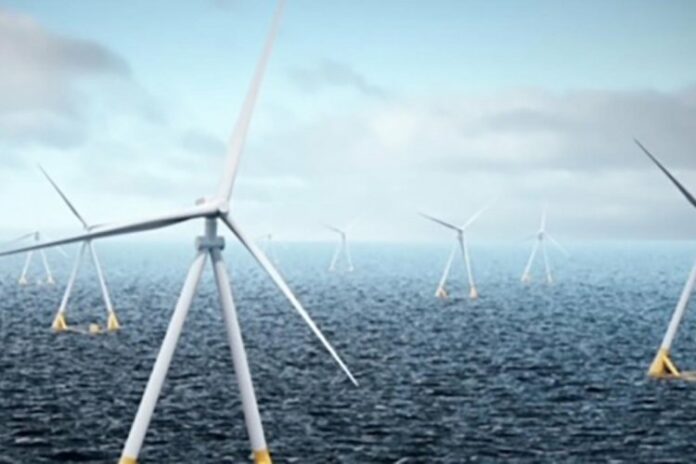
BRUNEL is a floating wind turbine support structure designed to support a 15 MW wind turbine. The substructure is a column stabilized unit with three columns connected by submerged horizontal pontoons. The rotor-nacelle assembly (RNA) is supported by two inclined towers meeting at a distance below the nacelle interface. The structure will be single point mooring through a turret in order to weather vane. This innovative design aims for a modular approach, suitable for serial and automized production in the existing global supply chain.  

The intention of the certification is to show proof of concept for Fred. Olsen 1848’s floating wind turbine support structure, BRUNEL. With achieving this first step in the certification process, DNV considers the BRUNEL concept feasible for further development.

Kim Sandgaard-Mørk, Executive Vice President for Renewables Certification at DNV, explains:

“We are happy to see the announcement by the Norwegian government on 11 May 2022 to develop 30 GW of offshore wind capacity by 2040. To achieve this growth in a safe, reliable, and sustainable manner, Norwegian wind energy projects need access to robust and trusted risk management measures such as certification. Mitigating risks via certification is particularly valuable for floating offshore wind projects in securing project finance and demonstrating operational application.” 

Sille Grjotheim, Director and Country Manager Norway for Renewables Certification at DNV, explains:

“As countries seek to reduce their CO2 emissions in the race to meet net-zero targets and decarbonize their energy systems, interest in floating wind projects is beginning to grow across the globe and Norway continues to be a leader in this field as we expect further calls for tenders later this year. In Norway, DNV’s local certification team based in Høvik is expanding to support the country’s advances in offshore wind.” 

Anne Lene Haukanes Hopstad, DNV’s Project manager states:

“Achieving the Statement of Feasibility is an important first step for BRUNEL. It was an interesting project to undertake, and we are looking forward to continued certification of BRUNEL  in the next development phases. As designs and technologies develop, ensuring safety is paramount for floating offshore wind projects in securing project finance and demonstrating operational applications.”  

Geir Grimsrud, Chief Technical Officer, Fred. Olsen 1848 explains:

“For BRUNEL, the Statement of Feasibility is a key milestone in documenting the technological maturity of our floating foundation technology. It has been important for us to involve DNV at an early stage to ensure certification from the onset.” 

Sofie Olsen Jebsen, Chief Executive Officer, Fred. Olsen 1848 states:

“The potential of floating offshore wind is immense. To drive the industry forward it is critical to unlock sustainable solutions with commercial viability and technical excellence. BRUNEL responds to these challenges, and by achieving a Statement of Feasibility from DNV an important milestone has been accomplished in our efforts to do our part to reduce LCOE and enable floating wind at large scale.”

Ørsted, Falck Renewables, BlueFloat Energy sign up to SOWEC collaboration charter

0

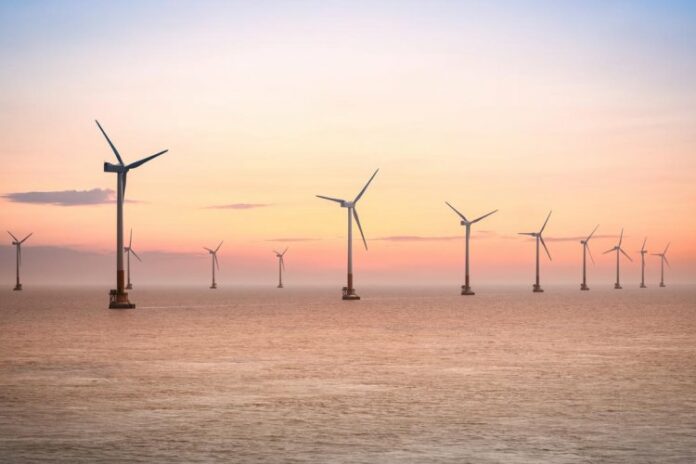
The 24 signatories to the Charter have agreed to work jointly to build a pipeline of supply chain work in Scotland, involving Scottish ports in discussions about the future level of investment required to deliver offshore wind projects.

Richard Dibley, Managing Director of Falck Renewables Wind Ltd, said:

“The potential positive impact of ScotWind is massive and one of our main goals is to ensure we leave a lasting legacy for Scotland.  Bringing so many developers together to help shape the future with ports and the supply chain is an exciting move which will bring clarity to what exactly is required to deliver offshore wind projects and how they can best benefit Scotland as a whole.”

Carlos Martin, CEO of BlueFloat Energy, said:

“The signing of the SOWEC Collaborative Charter is a hugely positive step towards delivering the facilities we need to develop Scotland into a world-leading centre of excellence in floating wind technology. We look forward to working together with other developers as we bring our expertise in delivering the technology to Scotland.”

The Ørsted, Falck Renewables, BlueFloat Energy consortium has been granted a lease from Crown Estate Scotland for a site east of Caithness for its Stromar project. The partnership between Falck Renewables and BlueFloat Energy has also been granted a further two leases from Crown Estate Scotland – one east of Aberdeen for a project called Bellrock and another north of Fraserburgh called Broadshore.

Piriou delivers two new tugs to Boluda France

0

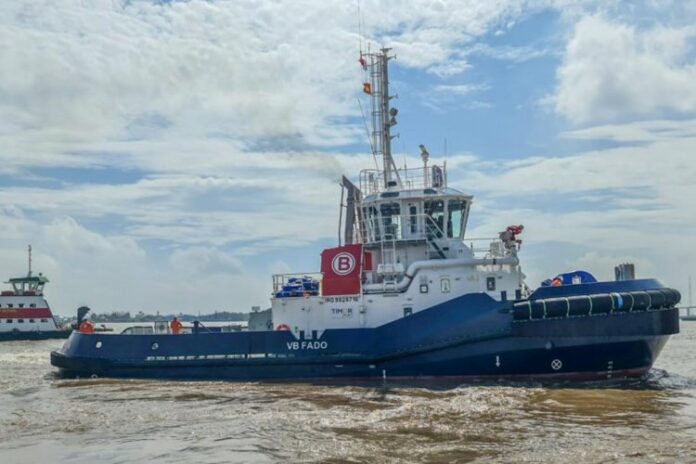
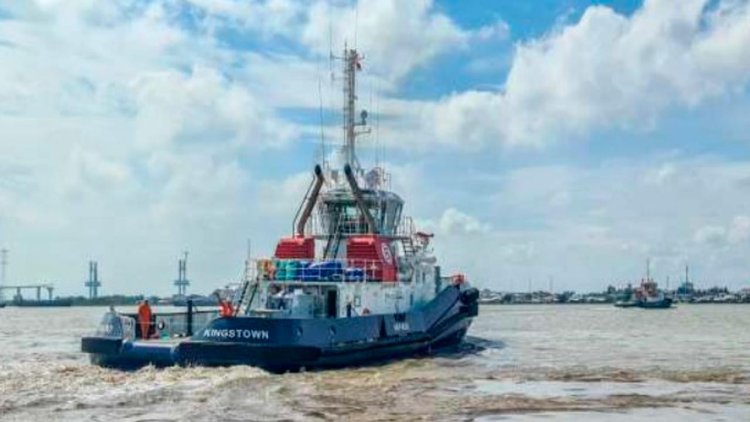
Built by PIRIOU VIETNAM, the ‘VB LIKURAI’ and the ‘VB FADO’ have just left the Nha Be site and are on their way to their place of operation.

These two 30.30 metre tugs which have a bollard pull of 45 tonnes and 60 tonnes respectively, have been built to a PIRIOU standard design and adapted to meet the specific needs of BOLUDA FRANCE. They are particularly manoeuvrable and meet the latest safety and performance requirements, providing our customers with solutions adapted to their operational imperatives.

PIRIOU already built and delivered a first series of eight tugs with 70 tonnes bollard pull to BOLUDA FRANCE between 2007 and 2009, followed by a new series of six tugs built by its Vietnamese subsidiary between 2015 and 2017, and finally a third series of six 75 tonnes bollard pull units between 2019 et 2020.

Vincent Faujour, Chairman of the PIRIOU Group stated:

’We are very pleased with this new demonstration of BOLUDA FRANCE’s confidence with this contract for two new OST30, designed by PIRIOU. The special aspect of this delivery resides in the fact that this is the first time that we have delivered units to BOLUDA FRANCE for a place of operation other than mainland France or its overseas territories. 

Denis Monserand, General Manager of BOLUDA FRANCE, added:

“These two new tugs are destined for our first base in Asia, in East Timor, which is the fruit of a partnership with the BOLLORE group. Through this long-term project BOLUDA FRANCE is taking part in the These units are issued from the OST 30-Omni Stern Tug- model of the tugs range designed by PIRIOU.”

The OST 30 is a multipurpose tug developed for ‘push pull’ type towage and harbour assistance operations as well as deep sea operations. With a hull length of 30.3 metres, it is also fitted to bring assistance to vessels in access channels.

This tug is equipped with two aft azimuth propellers (Azimuth Stern Drive), driven by two marine medium-speed turbocharged four-stroke diesel engines, fresh-water cooled with box cooler refrigerants.

At the bridge, the ergonomics of the single-command control station and the high visibility over the entire working area and its surroundings allow the captain to manoeuvre his tug alone.

In order to answer the operating conditions required by BOLUDA FRANCE, these tugs are equipped with several options including:
– Double drum fore winch 
– Bow thruster
– A towing hook

The 60 T model is also equipped with:
– Fi-Fi 1 equipment for fire fighting 
– Aft towing winch 
– An open bulwark with a stern roller.

The OST 30 is designed to be maintained every five years with special antifouling and ICAF system. Accommodation is in accordance with ILO 2006 requirements and special attention is paid to noise reduction.