3.1 C
New York
Home Blog Page 443

Inmarsat completes first tests of integrated terrestrial networks for ORCHESTRA

0

Inmarsat has completed the first phases of testing of innovative technology developments for ORCHESTRA, the company’s forthcoming dynamic network of the future.

The tests proved the ability to deliver additional capacity at hotspots via unique, shore-based terrestrial networks. Continued growth in demand in key ports and shipping lanes as well as airports and busy flightpaths will lead to signal congestion in the future, potentially affecting vital connectivity. Inmarsat is developing the terrestrial part of ORCHESTRA to provide targeted capacity to tackle these hotspots locally to stay ahead of demand and continue to deliver the industry’s highest performance.

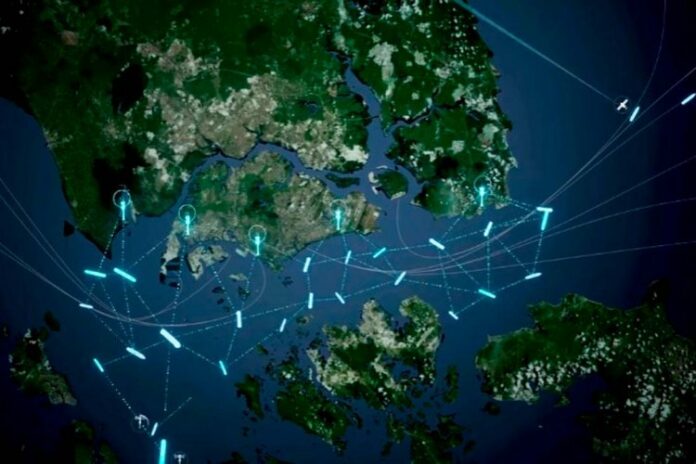
The tests took place in Singapore between land-based signal towers and ships offshore using Inmarsat proprietary technologies across various combinations of frequency bands and terminal equipment onboard vessels. These real-world cases established achievable performance for ship-to-shore and ship-to-ship connectivity, including distances, range, throughput and link availability.

Singapore was chosen because it is one of the world’s busiest container ports, as well as being one of the most demanding environments because of equatorial weather conditions such as heavy rain and high humidity. The tests proved the effectiveness of the stepping-stone connections in the ORCHESTRA maritime mesh, which are expected to reach at least 10 kilometres (6.2 miles) and 100 megabits per second per link, with the mesh network extending this to 30km (18.6 miles) and beyond, enabling, for example, the download of a HD movie in 40 seconds. Just five shore stations near Singapore would deliver in excess of 10 gigabits per second across this important location.

Peter Hadinger, Chief Technology Officer at Inmarsat, said:

“The demand for connectivity is growing constantly and Inmarsat continues to anticipate the needs of our customers, meeting future demand from them through the multi-network power of ORCHESTRA.

“Through Inmarsat’s innovative use of spectrum and technology, combined with state of the art terrestrial mesh networks including using vessels as stepping-stones, Inmarsat will deliver enhanced and customised connectivity to our customers. This will enable Inmarsat to improve services in the future by anticipating and managing demand from customers in hotspots.”
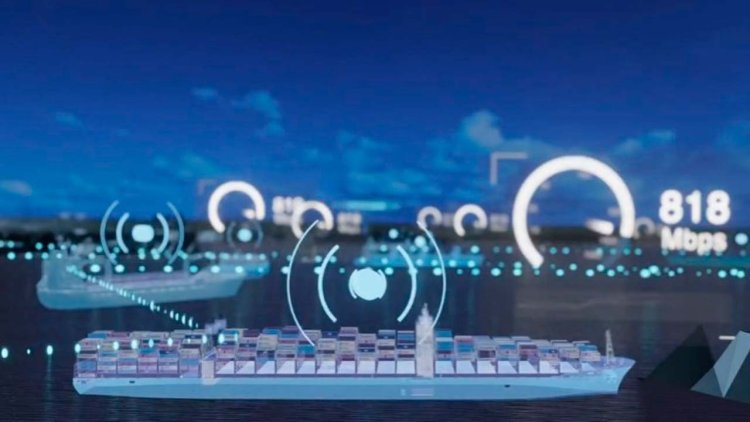
ORCHESTRA combines geostationary orbit (GEO) satellites, low Earth orbit (LEO) satellites and terrestrial communications into a dynamic mesh network to redefine connectivity at scale. It will deliver the highest capacity for mobility worldwide as well as the fastest average speeds and the lowest average latency of any network, planned or in existence.

In the most recent tests, a land-based signal tower communicated with a vessel at sea that travelled to multiple common points daily. The ship sailed patterns of varying distances from the shore, measuring performance during all kinds of weather conditions, the frequency of blockages between the test vessel and shore, such as other ships and the effects of signal reflections off the surface of the sea. Testing included validating the ‘stepping stone’ aspect, connecting a ship to shore via another, intermediate ship.

To deliver ORCHESTRA’s capability for maritime hotspots, Inmarsat will create terrestrial networks that will connect to ships offshore and relieve potential future congestion around ports, straits and canals. These ships in turn will then connect with others further out to sea that are out of the network’s range but can connect via a secure, encrypted signal through multiple vessels as stepping-stones to the network anchor station onshore. Once at sea, as the traffic density dissipates, ORCHESTRA’s dynamic network management will switch ships seamlessly to satellites in the Inmarsat network. In future, this stepping-stone approach in congested areas could also be deployed to the aviation sector around airports and along busy flight paths.

ORCHESTRA’s terrestrial maritime mesh will not be a global network on its own, but instead it will be a crucial ‘instrument’ that ideally addresses a number of hotspots in the world in a way that no stand-alone satellite network ever could. The maritime hotspots have been identified from existing and projected future use of Inmarsat’s Fleet Xpress services.
Carnival Corporation joins Mærsk Mc-Kinney Møller Center for Zero Carbon Shipping

0

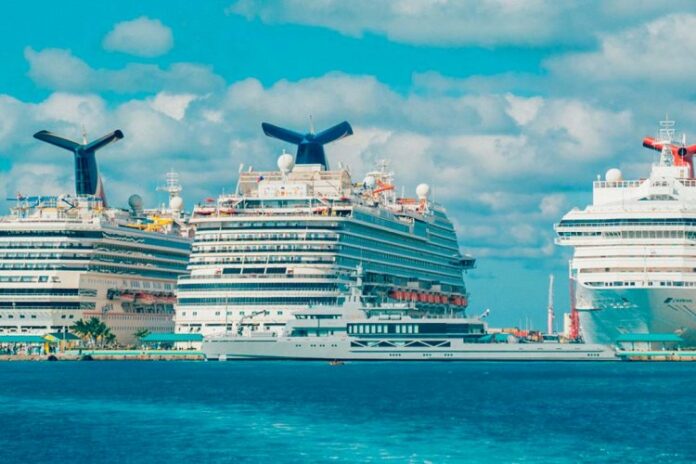
Carnival Corporation has announced it has joined the Mærsk Mc-Kinney Møller Center for Zero Carbon Shipping, a nonprofit, independent research and development center committed to accelerating the transition toward a net-zero future for the global maritime industry. Carnival Corporation, with nine global cruise line brands, is the first cruise company to join the center’s global community.

The Mærsk Mc-Kinney Møller Center for Zero Carbon Shipping aims to advance the maritime industry’s transition to a low carbon future through collaboration across the entire value chain, with the long-term ambition of reaching zero carbon shipping by 2050. Together with its partners, the center is facilitating the development and implementation of sustainable solutions, new technologies and viable transition pathways while driving needed policies and regulations to enable the transition.

Tom Strang, senior vice president of maritime affairs for Carnival Corporation, said:

“We look forward to working with a strong alliance of some of the best minds in science, engineering and business who share our long-term ambition for a successful and sustainable decarbonization of the global maritime industry. As part of our commitment to decarbonization and carbon footprint reduction efforts, we are continuing to innovate to effect change, and joining the Mærsk Mc-Kinney Møller Center for Zero Carbon Shipping is another important step as we continue our ongoing focus to establish a path to zero emission cruising over time.”

Through the partnership, Carnival Corporation will have the opportunity to collaborate with industry players and like-minded organizations across the energy and shipping sectors, and have access to learnings, knowledge, and research and development activities for identifying viable decarbonization pathways. Partners of the center comprise over 40 companies, including global stakeholders from a variety of shipping-related industries such as fuel suppliers, marine classification societies, shipping companies, engineering and manufacturing companies, energy companies and more.

Based in Copenhagen, Denmark, the center was established in 2020 as an independent player in the maritime eco-system to leverage the power of industry collaboration to help accelerate and contribute to the decarbonization of the global maritime industry. The center’s strategic objectives include setting the course for a sustainable industry transition; driving collaboration and applied research and innovation; and advocating for regulatory reform, transparency and accountability that will ensure a level playing field and that long-term sustainable solutions are implemented.

Corvus Energy sets up US battery factory

0

The US-based manufacturing facility, with an annual capacity of 200 MWh of stored energy capacity, will support demand for marine BESS in the Americas as the marine industry accelerates its adoption of decarbonization technology to meet global GHG emissions reduction targets.

Geir Bjørkeli, CEO of Corvus Energy explains:

“We have seen a significant uptake in orders from the US market as well as a growing commitment from the government and industry players on reducing GHG emissions. Increased capacity and production flexibility will be key to meeting anticipated growth. The US factory, along with a more robust sales and service organization, will ensure that we can meet American shipowner’s goals and market demand, providing better services to the US maritime industry.

“Washington State was a natural choice for Corvus due to the presence of a strong maritime cluster, the state’s focus on green shipping, and the proximity to our large team near Vancouver, Canada. We know that a US presence and close collaboration with shipyards, shipowners, Washington Maritime Blue and other suppliers and service providers foster innovation across the entire industry and build valuable competence. This will work as an accelerator to create local, green jobs.”

The new US factory will be located just north of Seattle in the Port of Bellingham.

The announcement of the signed agreement with the Port of Bellingham was celebrated in advance of the Nordic Innovation Summit in Seattle, WA, attended by the Washington State Chamber of Commerce and Norwegian ambassador Anniken Krutnes.

Washington Governor Jay Inslee comments:

“Congratulations to the Port of Bellingham and Corvus Energy on the new facility here in Washington. Corvus continues to thrive as a global leader in the sustainable transition of the maritime industry and I am pleased that they’ve chosen Washington as their first location in the US. This is a great chapter in the ongoing partnership between Washington and Norway on combatting climate change and bringing to reality the green jobs of the future.”

The Corvus Energy Storage Systems are already deployed to more than 30 vessels in North America, as well as 29 hybrid port cranes and 11 land-based drilling rigs. 

Port of Antwerp-Bruges & CMB.TECH prepare the first hydrogen-powered tugboat

0

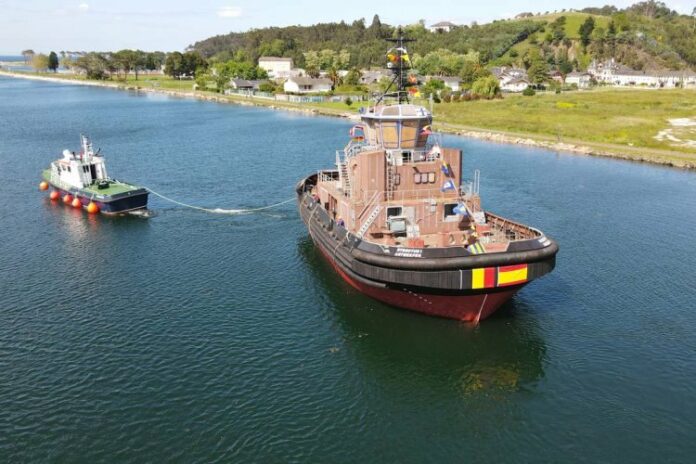
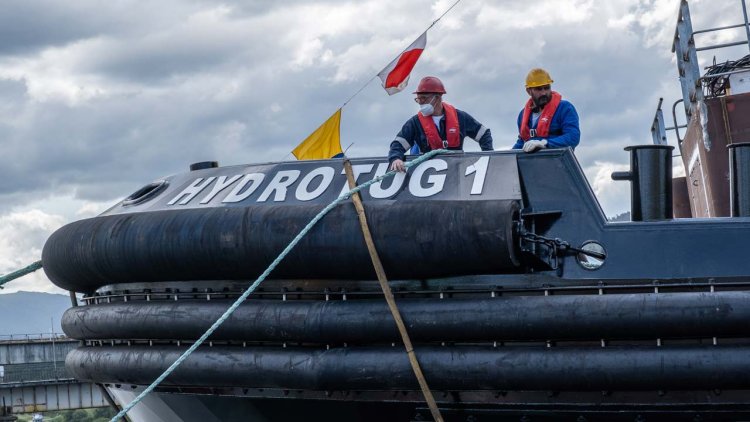
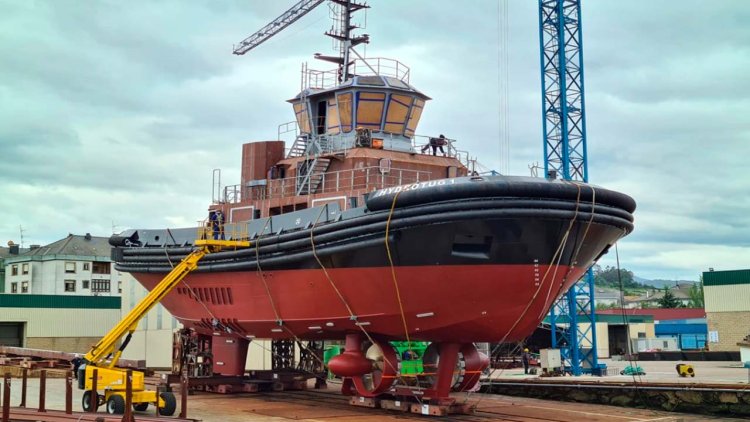
The Hydrotug consists of two BeHydro V12 dual fuel medium speed engines that can run on hydrogen and traditional fuel. This ground-breaking development will be used by Port of Antwerp-Bruges as an important step in the transition to a sustainable, climate neutral port by 2050 and will be operational in the first quarter of 2023.

CTO of CMB.TECH – Roy Campe:

“We are delighted that Port of Antwerp-Bruges will be the first user of Hydrotug, the world’s largest hydrogen-powered vessel. The technology has been approved by Lloyd’s Register and we are ready to approach the global market of 10.000 tugs. With this technology we can significantly improve the air quality in ports and bring hydrogen technology to every port worldwide.”

The Hydrotug is part of an integral greening programme for the Port of Antwerp-Bruges fleet. With this innovation, Port of Antwerp-Bruges strives to integrate the most environmentally-friendly technologies available. The Hydrotug can store 415kg of compressed hydrogen in 6 stillages installed on deck and eliminates the emission’s equivalent of 350 cars.

Vice Mayor for the port, urban development, spatial planning and patrimony of the City of Antwerp, President of the Board of the Port of Antwerp-Bruges – Annick De Ridder:

“The unified port cherishes the ambition to become the energy gateway to Europe as a ‘green port’. An important role in this is reserved for (green) hydrogen. We therefore applaud such projects. It is innovations such as these that ensure that our port continues to excel as the economic engine of Flanders. We look forward to the arrival of the Hydrotug in Antwerp towards the end of the year.”

Port of Antwerp-Bruges Manager Operations – Rob Smeets:

“Recently Port of Antwerp merged with the Port of Zeebrugge into one big organization that aims to reconcile people, climate and economy. Our common goal is to become carbon neutral by 2050, by walking many different sustainability paths, such as carbon capture and storage, and efforts in hydrogen. By 2028 our goal is to have the first green hydrogen molecules on our platforms. Moreover, we are investigating a hydrogen pipeline between the two ports and towards the European hinterland so we can use as much renewable energy as possible. This hydrotug is a fantastic example of what our sustainable future should look like.”

BeHydro, a joint venture between CMB.TECH & ABC, has recently developed the technology for medium-speed engines with a higher power output. The Hydrotug is the first vessel to be powered by these dual fuel medium speed engines – each providing 2 megawatts – with the latest EU Stage V emissions after treatment. The engines passed the necessary Factory Acceptance Tests (FAT) that validate the correct operation of the equipment. This is required by Lloyd’s Register, a global professional service that specializes in engineering and technology for the maritime industry and improves the safety of ships.

The first water launch of the Hydrotug at Armón Shipyards in Navia Spain took place Monday, the 16th of May, and in the next few months, ​ the remaining construction works on the ship will be completed (outfitting) so sea trials can follow later this year. The goal is to deliver the Hydrotug by the end of this year and to have it fully operational in the first quarter of 2023 in Antwerp.

KCC and KSM sign up as first Norwegian members of Eyesea

0

Klaveness Combination Carriers (KCC) and Klaveness Ship Management (KSM) has announced joining as the first Norwegian ship owner/operator to become members of Eyesea, a nonprofit organization with a mission to map global pollution and maritime hazards.

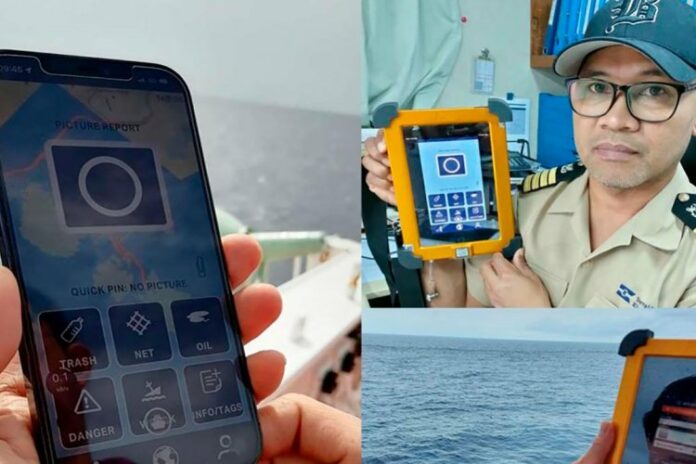
Eyesea has developed an App that allows seafarers to report maritime pollution and other hazards both at sea and onshore. The feedback allows Eyesea to map pollution, with the ambition to use chart overlays to model the effects of current, wind, and tide on its movement and location. The pollution maps and community engagement will help to identify what makes up maritime pollution and where clean-up efforts can have the greatest impact.

As of May 2022, Klaveness vessels have joined the initiative and rolled out the App to crew so they can report what they see and support the global clean-up effort of our oceans. The membership fee will go to further developing the App and contribute towards clean-up expenses.

Engebret Dahm, CEO of Klaveness Combination Carriers comments:

“We are proud to support Eyesea on this initiative and welcome the opportunity to play a valuable role in improving our oceans for future generations.”

Geir Frode Abelsen, MD of Klaveness Ship Management adds:

“We praise Eyesea for this initiative and we are pleased to invite our seafarers to play this unique role in tackling maritime pollution.”

Graeme Somerville-Ryan, founder of Eyesea said:

“Torvald Klaveness is one of the great names in Norwegian shipping, and I am personally rapt that they are our first owner/operator member from a country which leads the way on so many environmental initiatives. The shipping industry, working together, can make a real difference when it comes to ocean conservation—a topic that is far more than just emissions and compliance.”

Voyager Worldwide enhances Fleet Insight service with vessel tracking

0

The simplest and easiest to use Voyager Fleet Insight version yet, it features a host of enhancements to simplify and streamline core ship management tasks, including improved voyage tracking features and new alerts, the ability to manage office technical libraries and a refreshed map interface.

The new Alerts function notifies marine superintendents and other team members to significant operational changes, with options to set alerts when vessels deviate from planned routes, unexpectedly change course, stop moving or lose AIS signal. Regular position updates can also be requested at user-defined intervals to help monitor voyages and validate Noon Report information.

For shipping companies looking for better visibility of live and previous voyages, Voyager Fleet Insight’s vessel tracking module has been enhanced to give users a more detailed view of vessel routing, including departure and arrival ports (including berths) and times, distance travelled and stationary periods.

In addition, a new Office Technical Library management feature in the Voyager Fleet Insight Compliance module now lets shipping companies manage their office libraries in the same way as vessel libraries to help ensure shore-based teams have the latest information they need. The Voyager Fleet Insight base map has also been updated to provide a better background view on which to display vessel movements.

Dominique Law, product manager at Voyager Worldwide, said:

“We work hard to collect and share the data our customer needs and provide our Voyager users a continually improving experience. Voyager Fleet Insight has empowered thousands of marine superintendents around the world by providing unmatched levels of navigation purchasing and compliance transparency to help them drive down their overall cost of operations. This latest version of Voyager Fleet Insight, featuring more detailed voyage information and tracking alerts, gives our users more of the insight they need to make more informed, faster operational decisions and enjoy the best possible experience.”

Norsepower installs Rotor Sail on second Scandlines hybrid ferry

0

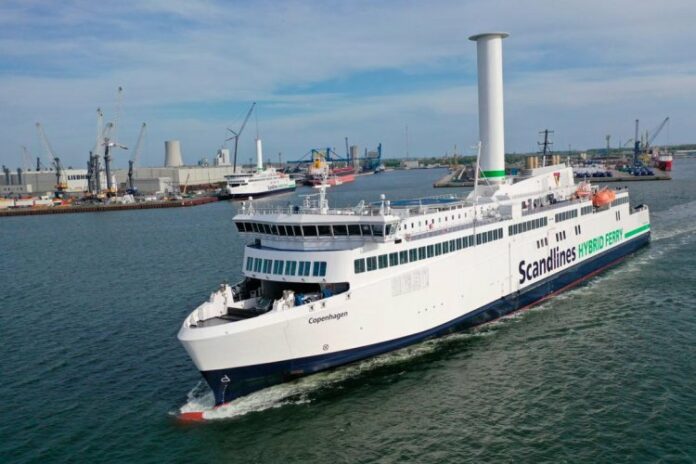
Norsepower is supporting Scandlines with its goal of becoming emission-free by 2040, setting higher targets than the Paris Agreement, with the installation of a 30m high Rotor Sail on the Scandlines hybrid ferry, M/V Berlin.

Norsepower has completed the second installation for Scandlines onboard the M/V Berlin in just a few hours, following the successful use of a Norsepower Rotor Sail on the hybrid ferry M/V Copenhagen in 2020, and a year of demonstrated results.

Since 2013, Scandlines has invested more than EUR 300 million in building and converting conventional ferries into hybrid ferries. In 2020, the ferry operator decided to adopt wind propulsion technology by installing Norsepower’s Rotor Sail on the hybrid ferry M/V Copenhagen, which operates on the Rostock-Gedser route between Germany and Denmark, a route which offers very favourable conditions for using Rotor Sails.

After just a year in operation, the Rotor Sail onboard the MV Copenhagen delivered reductions in fuel consumption, and CO2 emissions by 4% on average. Under optimal conditions, emissions reductions can be further increased to 20%. Given these positive results, Scandlines proceeded with the installation of Norsepower Rotor Sails on M/V Berlin in the port of Rostock on 16 May 2022.

Michael Guldmann Petersen, COO, Scandlines said:

“After positive experiences with the Rotor Sail on the Scandlines hybrid ferry Copenhagen, Scandlines had prepared the sister ferry Berlin for a Rotor Sail as well. We are happy to see, that the installation was successfully completed and that the ferry went into operation again this morning as planned.”

Tuomas Riski, CEO, Norsepower commented on the latest installation:

“Scandlines is taking the international GHG emissions reductions targets extremely seriously and is demonstrating a leading approach to investing in innovation to supersede these. Expanding its use of our Rotor Sail technology on its second vessel highlights the viability of wind power, and the significance of the emissions savings which can be achieved.”

Norsepower’s Rotor Sail solution is fully automated: the system measures the wind speed and direction, based on which it calculates whether using the Rotor Sail will reduce emissions or not. If the conditions are favourable, the Rotor Sail starts automatically. However, for specific port areas which are not suitable for Rotor Sails, the solution has settings to ensure the technology will not be activated.

Norsepower is also currently preparing two Rotor Sails for CLdN, the logistics specialist for road, sea and rail, for installation on board a 2018-built Ro-Ro vessel which is anticipated to be completed by December 2022.

Global shipping community updates Maritime Labour Convention

0

The UN International Labour Organization (ILO) tripartite of shipowners, governments, and transport workers unions have agreed to new measures to strengthen the Maritime Labour Convention (MLC), based on lessons learned from the COVID-19 pandemic.

At the ILO meeting that took place between May 2 – 13 in Geneva, Switzerland, delegates agreed to implement amendments on: bolstering legal requirements for seafarers to be able to access medical care ashore; strengthening health and safety PPE policies on board ships to protect against accidents; and to further facilitate seafarers’ communication with their loved ones ashore.

A new ILO report published in advance of the negotiations highlighted governments’ failure to comply with critical provisions of the MLC during the pandemic, resulting in preventable deaths, and an enormous toll on seafarers’ mental health. At the height of the pandemic, 400,000 seafarers were affected by the crew change crisis, unable to return to shore or access ships due to draconian travel restrictions.

The International Chamber of Shipping is the longstanding ILO representative of the global maritime employers’ group.

The negotiations occurred against the backdrop of the current seafarer crisis in Ukrainian ports and the Sea of Azov. Governments reiterated their support for the ILO resolution calling for the swift and safe disembarkation and repatriation of the 500 remaining trapped seafarers. They called for the prompt delivery of critical supplies, such as food, water, and medicines to these key global workers caught in the conflict zone.

In advance of the meeting, ICS also published a report outlining the impact of COVID-19 on shipping, seafarers and maritime labour markets, and recommendations to mitigate future crises.

Ms. Corinne Vargha, Director of the International Labour Standards Department of the ILO, remarked:

“We welcome the adoption of these amendments which are a testimony to the added value of tripartism and international social dialogue. The outcomes of this meeting will in effect reinforce the relevance and impact of the Maritime Labour Convention, 2006 (as amended). The ILO will continue working with governments, seafarers and shipowners to tackle challenges as they emerge and ensure a full and harmonious implementation of the Convention.”

Fincantieri: Dry dock works start on the LPD for Qatar in Palermo

0

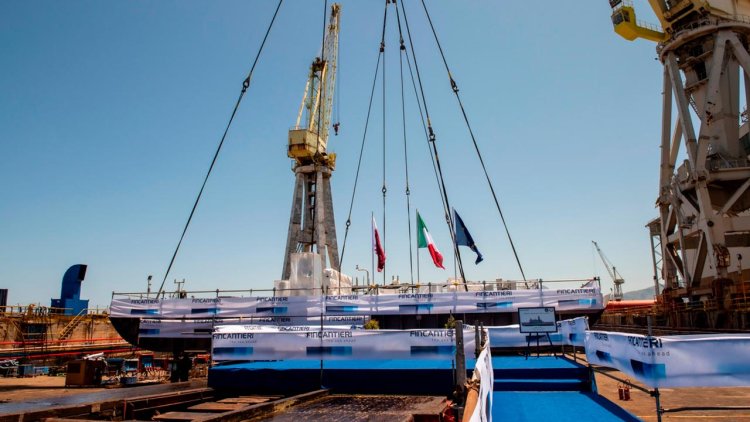
The keel laying of the amphibious vessel (LPD – Landing Platform Dock) ordered to Fincantieri by the Qatari Ministry of Defence within the national naval acquisition program, took place at the Palermo shipyard.

The ceremony, held in a restricted format and in full compliance with anti-contagion requirements, was attended by Brig. Ahmad Al Hammadi, Qatari Emiri Naval Forces Head of Project Control Office-Italy, and Marcello Giordano and Umberto Aloi, respectively Fincantieri Palermo shipyard Director and Vice President Export Programs.

The LPD is designed consistent with the RINAMIL (rules for naval ships classification) rules to ensure extremely efficient land-air-marine connections. It will be highly flexible and capable of fulfilling different kinds of tasks, from humanitarian interventions to support the Armed Forces and land operations.

The ship will be about 143 meters long, 21.5 meters wide and it will be able to accommodate about 550 persons on board, equipped with two vehicle ramps and an internal floodable dock, capable of accommodating a ready-to-go LCM (Landing Craft Mechanized) that can also be stored on garage deck, and can be deployed using a system of davits. Furthermore, the flight deck is sized for hosting NH90 helicopter.

Port of Southampton completes shore power commissioning of three AIDA cruise ships

0

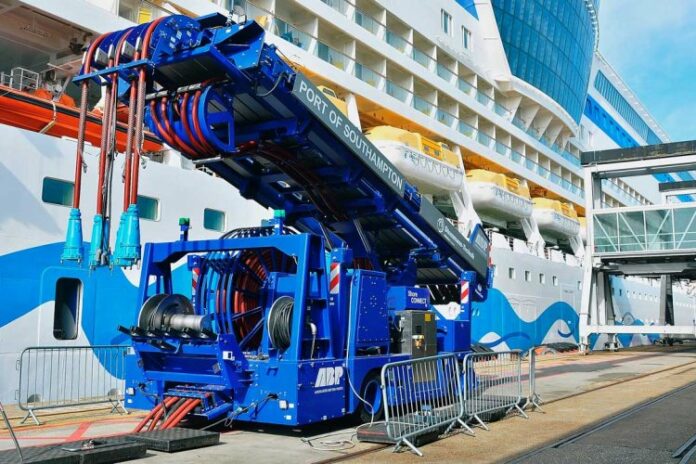
ABP’s Port of Southampton has reached a significant milestone together with AIDA Cruises, as all three of AIDA’s cruise ships to visit Southampton this year have been commissioned for shore power at the port.

AIDAcosma, AIDAprima and now AIDAsol have all undergone successful commissioning. This means that when they return to the port, they are able to ‘plug in’ at Horizon Cruise Terminal or Mayflower Cruise Terminal.

Rebekah Keeler, Head of Cruise at ABP, says:

“It’s fantastic to be able to facilitate this sustainability milestone for AIDA Cruises. To commission three of its ships in such close succession shows real commitment from AIDA Cruises whilst also demonstrating the efficiency of the shore power process at Southampton. We are looking forward to welcoming back AIDAprima and AIDAsol throughout the summer.”  

AIDAcosma was the first of the three ships to be commissioned, shortly after she arrived on her Maiden Voyage at the end of February. AIDAcosma is also the second ship for AIDA Cruises that can be powered by low-emission LNG (liquified natural gas), which can be bunkered at the Port of Southampton’s Ocean Cruise Terminal.

AIDAprima and AIDAsol will run a number of Northern Europe itineraries from the Port of Southampton this summer.