3.1 C
New York
Home Blog Page 442

DeepSea publishes research into real-world utility verification of AI models in shipping

0

DeepSea Technologies has published a new piece of research outlining a pioneering way of verifying the accuracy – and therefore utility – of a ship’s AI-generated model in real-world conditions.

The new approach was developed by seven of DeepSea’s 13-strong team of research scientists headed up by Dr. Antonis Nikitakis, and presented at the 2022 HullPic Conference in Tullamore, Ireland, in May 2022. 

Because the reality of ship-at-sea data is highly variable, most model accuracy figures reported in publications and marketing materials fail to bear relation to the actual utility of those models in real use cases.

DeepSea has researched approaches to solving the technical challenge of boosting models’ ability to understand unseen (“out-of-domain”) conditions for years. However, until today, there has been no benchmark for evaluating this sort of competence within a vessel model. This is a crucial step of AI modelling because the more accurate the virtual model, the more efficient a ship can be made, and vice-versa.

The few models that currently provide an estimation of their accuracy all do so based on testing with data obtained from the same distribution (i.e., representative of similar conditions and containing similar biases) as the data used to train the model. For example, if the model is trained on data from the vessel’s historical behaviour, in a narrow range of well-experienced wind speeds or drafts, it is also tested on data with these speeds and drafts. Thus, the tests performed cannot tell if the model is reproducing the biases in the training data – and whether it will work as well in different, never-seen-before conditions.

Following the publication of this body of work on proving the real-world utility of AI approaches, DeepSea will focus on advocating for common and transparent standards for AI real-world utility in the industry.

Commenting on the research, Dr Nikitakis, DeepSea’s AI Research Director, said:

“This research is an important step in helping our customers and the wider shipping community to understand the true power of an AI-based approach while alleviating its limitations. Coupled with the daily real-world impact we’re seeing on fuel consumption and CII ratings, we believe this sort of information is key to popularising this incredible technology throughout the industry.

“As serious researchers working to popularise the AI approach continue to pursue rigorous methods of proving the real value of what they’re creating, we can also expect end-users looking to employ this sort of technology – in shipping and other sectors – to increasingly demand proof of its utility.”

Dr. Konstantinos Kyriakopoulos, CTO and co-founder of DeepSea, said:

“We designed our AI framework for the direct benefit of the consumer – shipowners, cargo owners, and all other members of the industry who cover fuel costs. I am excited by how, through this research, we can fight the hype and support our honest approach to AI with such compelling evidence. This is exactly what DeepSea was founded to do and what, daily, makes an increasing impact on our clients’ bottom-lines and the sustainable future of the planet.”

DeepSea has publicly released the details of its approach in the hopes that global researchers can utilise it themselves and catalyse greater transparency and common standards across the industry.
Wintershall Dea exits Brage oil field

0

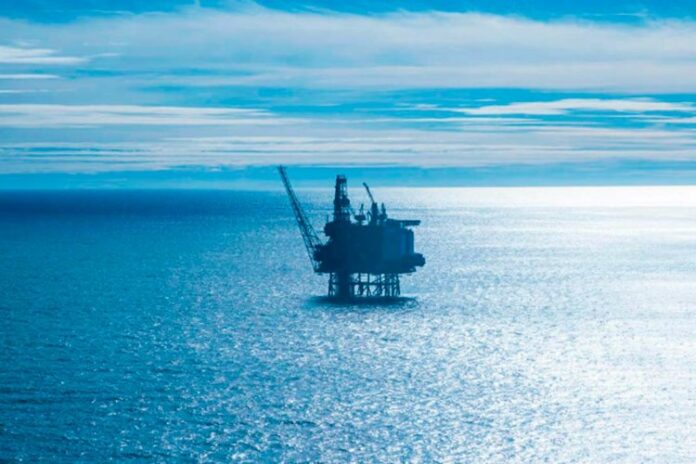
Wintershall Dea is divesting its ownership of the Brage field and transferring the operatorship to the mid-late life specialist operator OKEA. In the next chapter of Wintershall Dea’s story in Norway the company will build on its strength as one of the largest subsea operators on the shelf.

Dawn Summers, Chief Operating Officer at Wintershall Dea, said:

“Norway is and remains an important core region for Wintershall Dea’s production in our global portfolio. With the sale of our interests in Brage and Ivar Aasen, we are further strengthening our focus in Norway on gas production. Here we already have a strong position in the country, and our major projects Dvalin and Njord, that are planned to come on stream by the end of 2022, will add further gas volumes that secure energy supply in Europe.”

As part of the agreement, OKEA purchases Wintershall Dea’s 35.2% share in the Brage field and 6.46% share in the Ivar Aasen field, as well as 6% of the Nova development for €108 million (NOK 1.1 billion). In addition, payments linked to the fulfilment of certain conditions are part of the transaction.

Managing Director at Wintershall Dea Norge, Michael Zechner, said:

“We remain one of the biggest producers in Norway, and one of the largest exporters of gas, while also robustly shaping our business for the opportunities we see coming on the shelf. Through this agreement, we have not only realised value for our assets and exited the operatorship of Brage in favour of a company which specialises in mid-late life fields, we have also gained a valuable partner in our operated Nova license.” 

In Norway, Wintershall Dea will put an even stronger focus on exploration, development, and production in core areas, to continuously develop a low-carbon asset portfolio and position the company within carbon management and hydrogen.

Wintershall Dea’s total production in Norway was 159,000 barrels of oil equivalent per day in 2021, more than half of which was natural gas. Volumes from upcoming projects Nova, Njord and Dvalin will add around 70,000 to 80,000 boe/d. Production from Brage and Ivar Aasen totalled around 6,000 boe per day.

MSC World Europa to be largest LNG-powered cruise ship

0

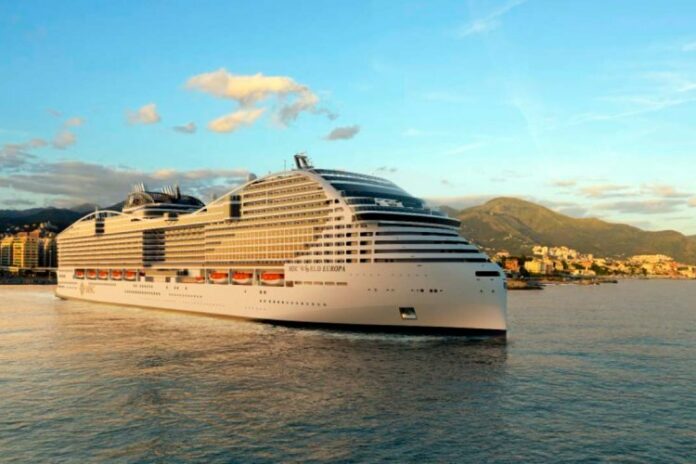
As she enters the final stage of her construction process, MSC World Europa is set to become the greenest and most efficient vessel in MSC Cruises’ fleet when she is delivered in October 2022.

MSC Cruises has today released information about the ship’s environmental credentials, including solid oxide fuel cells, a selective catalytic reduction system and enhanced shore-to-ship power capability. She will also be the largest LNG powered cruise ship in the world when she launches later this year.

MSC World Europa will be the world’s first contemporary cruise vessel to feature brand new solid oxide fuel cell (SOFC) technology powered by liquefied natural gas (LNG) developed by MSC Cruises, Chantiers de l’Atlantique and Bloom Energy. The ship will include a 150-kilowatt SOFC demonstrator that will generate auxiliary power to deliver efficiency gains and significant CO2 emissions reductions compared to traditional internal combustion engines. It will be a testbed to accelerate the development of fuel cell technology for contemporary cruise ships and offers a potential to enable hybrid propulsion solutions in the future.

Linden Coppell, Director of Sustainability for MSC Cruises, said:

“MSC World Europa will be our most efficient ship yet and help us prove and refine environmental technologies for the future of our fleet. With this project, we are also advancing partnerships with technology suppliers, energy companies, academia, and regulatory bodies. We must all deepen our collaboration to unlock a zero-emissions future.”

MSC World Europa features a selective catalytic reduction (SCR) system that reduces NOx emissions by 90% when LNG is not available, and the ship must run on marine gas oil. As LNG fuel achieves a similar reduction, MSC World Europa will always meet International Maritime Organization’s (IMO’s) Tier III NOx emissions standards. On top of this, shore-to-ship power connectivity allows MSC World Europa to minimise engine use at ports where the required infrastructure is available. 

As with all new MSC Cruises’ ships, MSC World Europa also features the latest wastewater treatment technology, in compliance with the IMO’s MEPC 227(64) Resolution, fully aligned with the world’s most stringent regulatory requirements – the so-called ‘Baltic Standard’. The ship includes an advanced ballast water treatment system that prevents the introduction of invasive species in the marine environment through ballast water discharges, in compliance with IMO’s Ballast Water Management Convention. 

MSC World Europa incorporates a wide range of equipment to optimise energy use throughout the ship. These include smart ventilation and advanced air conditioning systems, with automated energy recovery loops, allowing effective distribution of heat and cold across the ship. The ship uses LED lighting controlled by smart management systems to further enhance the energy saving profile. In partnership with the shipyard, MSC World Europa has been designed with an innovative hull shape to minimise resistance through the water. It will also be fitted with enhanced automatic data collection systems for remote energy monitoring and advanced analysis, allowing real-time shoreside support to optimise operational efficiency onboard.

These efficiency advances, and the use of LNG, will enable an operational performance far higher that the IMO-required energy design criteria for new ships. MSC World Europa is designed to perform 47% better than it is required Energy Efficiency Design Index (EEDI).

MSC World Europa’s hull and engine room have been designed to minimise acoustic underwater sound impact, reducing the potential impact on marine mammals in the surrounding waters.

MSC Cruises has three firm orders for LNG-powered vessels, for delivery between 2022 and 2025, representing an overall investment of over EUR 3 billion. MSC World Europa will be followed by MSC Euribia, which is also currently under construction in Saint Nazaire and set to enter service in 2023. Construction of the third ship is set to commence in early 2023.

Damen delivers first of three MMIPVs to South African Navy

0

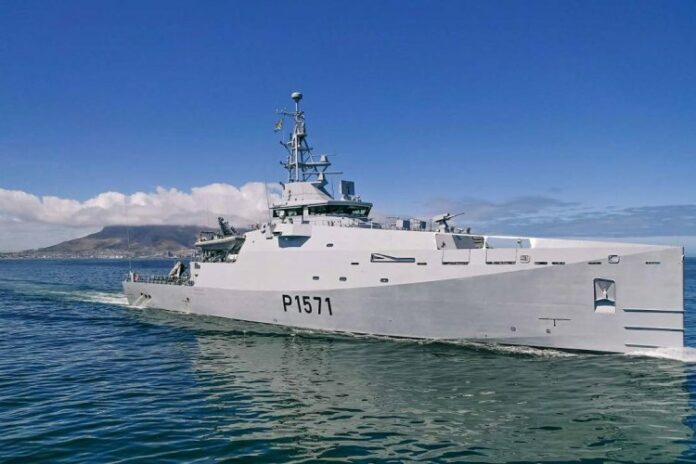
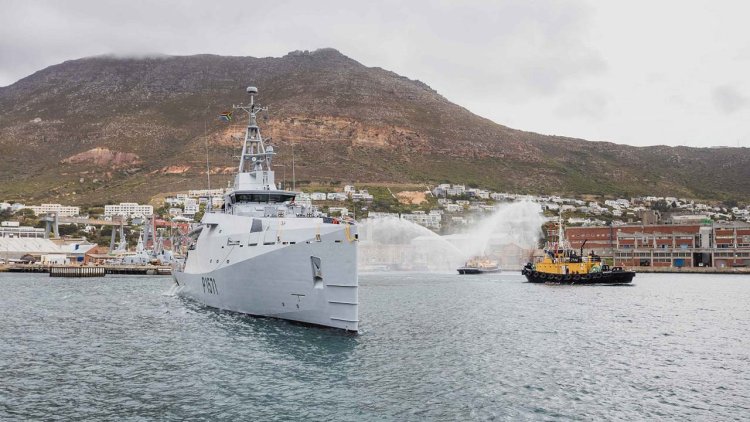
In a ceremony held at Simons Town Naval Base, the first of three, state-of-the-art, Multi Mission Inshore Patrol Vessels (MMIPVs) has been handed over to the South African Navy. 

The vessel marks the culmination of four years of work for Damen Shipyards Cape Town (DSCT).  The vessel being delivered will augment South Africa’s maritime security by enhancing the country’s capability to respond effectively, rapidly and cost-effectively to threats such as illegal trafficking and fishing.

The 62m by 11m vessels have been designed by Damen to deliver a rapid response capability that is both effective and cost efficient. The vessel is the first Damen Sea Axe vessel to operate in South Africa where, along with its sister ships, its primary role will be to counter piracy, illegal fishing and smuggling operations. However, their ability to accommodate at short notice containerized mission modules gives them a true multi-mission capability. The patented design delivers exceptional seakeeping behaviour with the straight-edged bow cutting through the water thereby improving comfort and safety while reducing emissions and fuel consumption.

The MMIPV project is also playing an important role in creating skilled new jobs and acting as a catalyst for the development of regional supply chains. On its own, the MMIPV project is expected to generate more than one million man-hours of work during the construction of the three MMIPVs and will support more than 1,000 direct and indirect jobs at Damen Shipyards Cape Town (DSCT). In addition, the yard is also focusing on nurturing small businesses to maximise local content.

Mr Sam Montsi, Chairman of the Damen Shipyards Cape Town Board, commented:

“The delivery is a significant milestone in the story of Damen Shipyards Cape Town. It is the first time that a naval vessel of this calibre has been built at the yard and it is also the first of its class! Despite the COVID 19 pandemic, this beautiful vessel has been built to the required quality level which is an achievement that was realised by South African people, as most of the work and materials that went into the construction were sourced locally.”

“The yard has significantly grown during this process both in the quality of work and the safety standards achieved. This project has also allowed the yard to increase the impact of its transformation strategy by consistently delivering relevant development to the communities of South Africa.”

Hapag-Lloyd starts new Africa service (MAX)

0

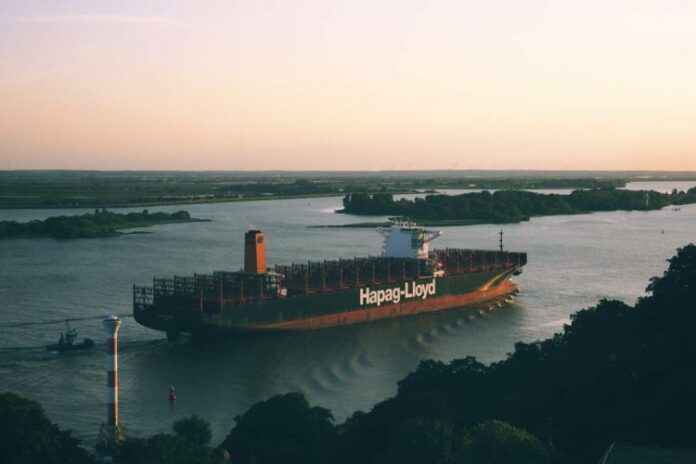
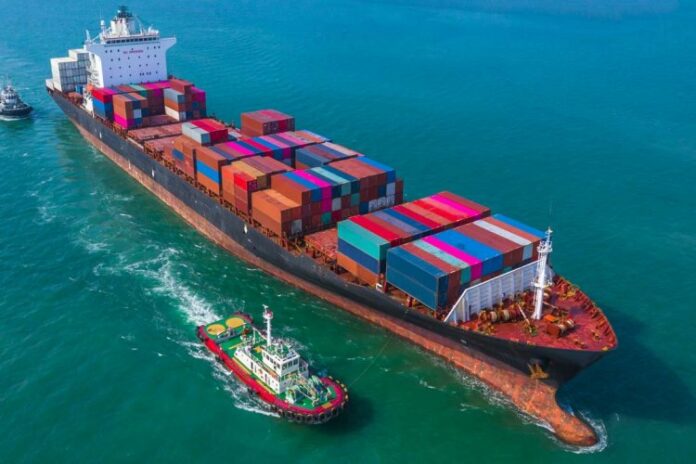
Hapag-Lloyd will launch its new regular service Maputo Express (MAX) beginning of June 2022, expanding its Africa network with this bi-weekly cargo-connection. 

The direct service will operate between Jebel Ali (AE), Mundra (IN) and Maputo (MZ). With this lean three-port rotation Hapag-Lloyd has created a new service with fast transit times from the Westcoast of India to the Eastcoast of Africa. 

The stopover in the port of Jebel Ali, a Middle East hub for global cargo traffic, provides customers with further connections to the worldwide network. Hapag-Lloyd offers with this service also an in-bond-transit between Maputo and Komatipoort (ZA), creating a unique transportation gateway towards the North of South Africa.

Jan Willem De Braal, Senior Director Trade Africa, explains:

“This expansion shows the confidence Hapag-Lloyd has in Africa’s potential. We connect a new destination with our global network, and we offer a competitive alternative for Johannesburg imports and Southerrn Africa exports through this new corridor. Plus we always aim at simplifying our network, especially with the current market challenges. By calling at only a few strategic ports, we make planning easier and speed up transportation time.” 

Marine robots take orders from afar at ReefWorks

0

AIMS’ ReefWorks tropical marine test range near Townsville hosted the first tropics-based component of an innovative naval exercise featuring civilian autonomous technology controlled 1800km away in the Australian Capital Territory (ACT).

Autonomous Warrior is the Royal Australian Navy (RAN)’s flagship program for identifying, demonstrating and experimenting with potential robotics, autonomous systems and artificial intelligence (RAS-AI) capabilities. The exercise is an opportunity for the RAN, industry and research organisations to come together to observe, demonstrate, trial and test a variety of RAS-AI capabilities in a controlled environment.

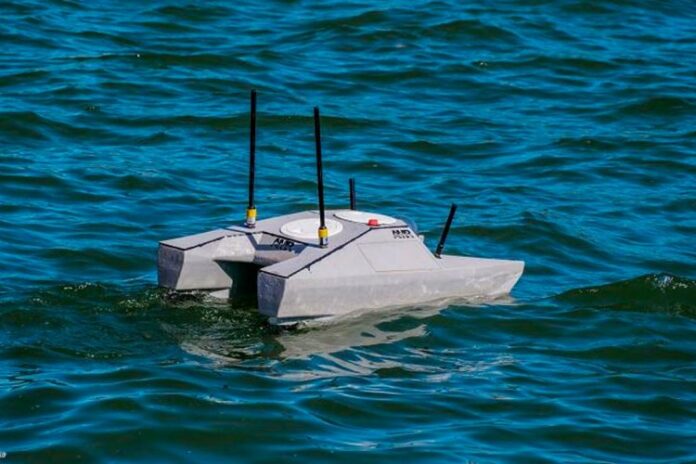
At the ReefWorks event, autonomous surface vessels designed by Australian Droid and Robot (ADR) were livestreamed to, and controlled from, the Navy’s Autonomous Warrior command centre in Jervis Bay using BITSCore remote tasking technology.

The missions included using sonar to detect objects on the ocean floor and patrolling an area to detect and identify unknown vessels and escort them to shore.

It was the first time the Australian Maritime Safety Authority approved a swarm permit for autonomous vessels. A swarm is a collection of vessels working cohesively, directed by an operator. It has advantages over single units by increasing the speed and size of data acquisition while reducing mission time.

Other organisations supporting the event included: Warfare Innovation Navy, MacroData, Black Dog Media, Omnititan Productions, NQAV  and the Trusted Autonomous Systems Defence Cooperative Research Centre.

ReefWorks is a new AIMS facility that offers a national capability to safely test marine technologies, uncrewed systems and new sensors. It is the only facility of its kind in the world in tropical waters which is a challenging operating environment for marine technology.

Following the exercise, AIMS hosted an event for north Queensland’s marine technology leaders to see the technology in action and speak with the innovators who delivered the Autonomous Warrior event.

At least 7 dead after passenger vessel catches fire

0

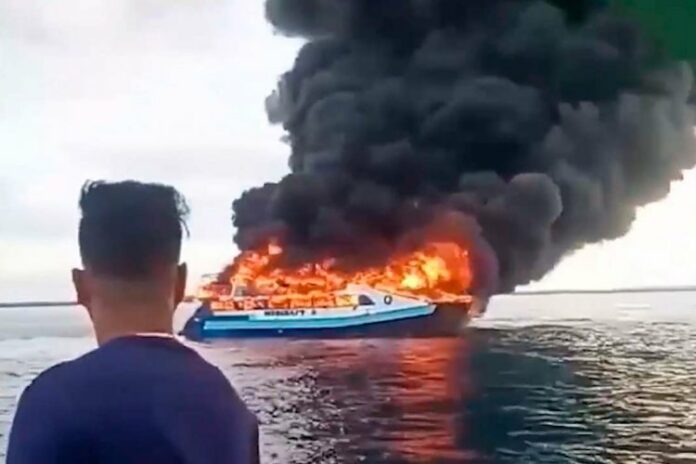
At least seven individuals were declared dead while 24 were injured after a high-speed vessel caught fire on Monday morning as it was approaching the port of Real in Quezon province, the Philippine Coast Guard said.

The MV Mercraft 2 — with a capacity for 186 people — was carrying 126 passengers and 8 crew members when it left Polilio Island around 5 a.m. for Real. The fire quickly engulfed the ferry, forcing its passengers to jump into the sea, officials said.

Coast guard spokesperson Armand Balilo said three are in critical condition, while 21 others are being treated for a number of injuries at the Claro M. Recto Hospital in Real, Quezon as of Monday afternoon. The vessel’s captain was among those rescued. A team of investigators was on the scene to determine what caused the fire. Some 120 people had been rescued as of midmorning Monday. The families of the fatalities have also been notified of the incident,  Armand Balilo added.

Balilo said it was not the first accident involving the company that owned the Mercraft since a similar tragedy happened in 2017. That ship, the Mercraft 3, had been carrying 251 people when it sank off the coast of Infanta, not far from where Monday’s accident occurred.

He said he expected the victims to claim insurance while discussions with the company on other assistance is still ongoing.

“Our marine casualty investigation (team) is now in the area to find out what really caused the fire,” he told CNN Philippines’ Traffic Center. “This is our priority.”

Accidents involving boats are common in the Philippines, an archipelago of more than 7,100 islands where travel by sea is the cheapest mode of transportation.

In 2008, at least 800 people were killed when the Princess of the Stars capsized during a storm in the central Philippines, while a 1987 collision between the ferry Dona Paz and an oil tanker killed more than 4,300, in what is considered one of the world’s worst peacetime maritime disasters.

Sources: NYT, CNN

Parties sign MoU for acceptance of ammonia-powered tug at Yokohama port

0

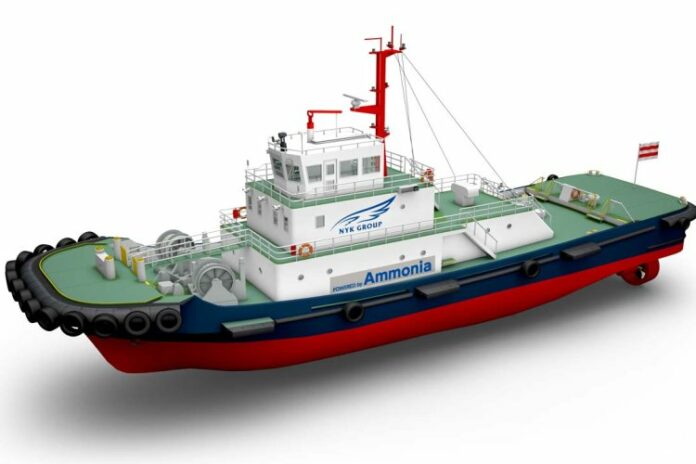
NYK Line, IHI Power Systems Co., Ltd., and Nippon Kaiji Kyokai (ClassNK) have signed a memorandum of understanding (MoU) with City of Yokohama for the acceptance of an ammonia-fueled tugboat (A-Tug) at the port of Yokohama.

The conclusion of this MoU is part of the Green Innovation Fund project within Japan’s New Energy and Industrial Technology Development Organization (NEDO) for the development of vessels equipped with a domestically produced ammonia-fueled engine, adopted in October 2021 for NYK Line and IHI Power Systems Co., Ltd.

The MoU includes the following:

1) Realization of smooth acceptance of A-Tug at the port of Yokohama.
2) Supply of fuel to A-Tug at the port of Yokohama.
3) PR to citizens to affect efforts to reduce environmental load.
4) Other matters related to the business of the parties.

City of Yokohama is pursuing decarbonization at its port as the city works to realize a carbon neutral port.

The parties will work in collaboration with City of Yokohama toward the development and demonstration of A-Tug (scheduled for fiscal 2024), promptly welcome environment-friendly vessels, and contribute to the realization of a carbon neutral society from the port of Yokohama.

Wärtsilä completes delivery of 15 groundbreaking LPG fuel supply systems

0

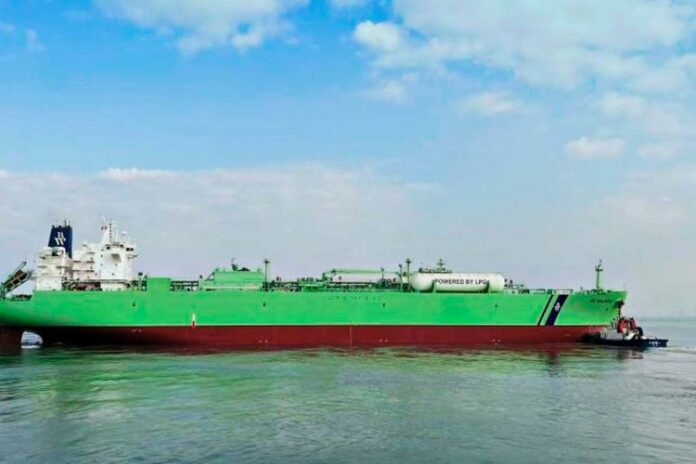
The technology group Wärtsilä has successfully completed delivery of its LPG Fuel Supply System (LFSS) to 15 Very Large Gas Carrier (VLGC) vessels owned and operated by BW LPG. 

BW LPG ordered the first four of these 15 systems in 2018, immediately following Wärtsilä’s full-scale testing of a full-sized 2-stroke marine engine operating with LPG fuel. This was the world’s first such testing protocol, and the performance attained was seen as exceeding expectations. Orders for a further 11 systems were placed in 2020.

The Wärtsilä LFSS is a key enabler for the use of LPG as an environmentally sustainable marine fuel. It meets IMO emission limits without the need for exhaust scrubber systems. Compared to heavy fuel oil (HFO), LPG reduces sulphur oxide (SOx) emissions by 97 percent, nitrous oxide (NOx) emissions by approximately 20 percent, greenhouse gas emissions by approximately 24 percent, and particulate matter emissions by 90 percent.

Pontus Berg, Executive Vice President, Technical and Operation, at BW LPG, commented:

“The successful introduction of the LFSS is testament to Wärtsilä’s commitment to working towards the decarbonisation of shipping We were very quick to adopt this system in support of our own decarbonisation ambitions, and we have enjoyed collaborating with them in this important and groundbreaking project.”

Walter Reggente, Vice President, Wärtsilä Gas Solutions, says:

“It has been a pleasure cooperating with BW LPG in the introduction of the LFSS to 15 of their vessels. We fully support their ambitions towards enhancing the sustainability of their operations, and are proud to bring the widespread use of LPG fuel closer to reality, thanks to the Wärtsilä LFSS.” 

In the retrofitting of these 15 vessels, Wärtsilä has had system integrator responsibilities. This has involved not only the installation of the LFSS, but also the required ship design modifications. The Wärtsilä LPG Fuel Supply System is available as a stand-alone solution, or as an integrated element within the LPG cargo handling system.

Construction started on the Sutherland Street seawall in Port Hedland

0

Construction has started on the Sutherland Street seawall in Port Hedland, a $6.5 million investment to protect the coastline from erosion and inundation into the future. 

Stage two works will run from May to late 2022 and will include excavation, and the placement of geofabric, filter rock and armour rock.  

In March 2020, Council endorsed the design and construction of seawalls at the West End, Sutherland Street and Goode Street. These locations were identified as susceptible to coastal erosion and inundation in the Town’s Coastal Hazard Risk Management and Adaptation Plan (CHRMAP).  

CHRMAP found the risk of erosion likely to increase to a point that is intolerable in the three locations, with seawall construction mitigating this risk. The three seawalls represent a $17.8 million investment in protecting Port Hedland’s coastline.   

The Sutherland Street seawall will protect residential properties, strengthen the integrity of beaches and pathway access and protect unique flora and fauna, including flatback turtles.  

Mayor Peter Carter says the seawall is the next step in the Town’s delivery of the CHRMAP’s objectives, critical for Hedland’s future:

“The Sutherland Street seawall will help protect properties along the coastline, secure sand dunes, maintain pathway access, mitigate the impacts of climate change and protect our flatback turtle friends and their nesting areas on the beach.”  

“Sutherland Street seawall construction follows the West End seawall construction which was completed in March 2022, testament to the hard work of Town staff and contractors WA Limestone, which now protects valuable coastal assets such as the world’s largest bulk exporting port, Marapikurrinya Park and key pathways.” 

“We’re projecting construction to last until later in the year, with appropriate steps taken to minimise impacts to residents and pedestrians in the area.”