2.7 C
New York
Home Blog Page 441

MacGregor to supply RoRo equipment to three low-emission vessels

0

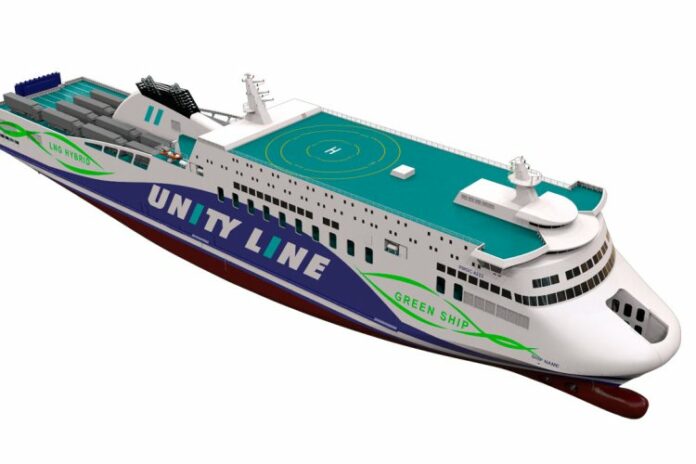
MacGregor, part of Cargotec, has been selected to supply comprehensive packages of RoRo equipment for three pro-ecological, low-emission vessels powered by four LNG engines of dual-fuel type with battery assistance (hybrid). 

These RoPax ferries will be built at Remontowa Shiprepair Yard S.A, the largest shipyard of Poland’s shipbuilding group Remontowa Holding, for the Polish ferry company Polskie Promy, part of Polska Żegluga Morska (PŻM).

The order has been booked into Cargotec’s 2022 second quarter order intake.

MacGregor’s scope of supply encompasses design, manufacturing, transport and installation assistance for the bow and stern equipment together with internal ramps and doors. The  bow ramp folding frame solution and mooring rope self tension system increase efficiency by enabling loading at two levels and reduce the turn-around time in port.

Magnus Sjöberg, Senior Vice President, Merchant Solutions Division, MacGregor, says:

“Remontowa is known for its professionalism, high quality and long-term environmental efforts, and we are delighted that our know-how and long experience has led the customer to choose us to deliver this comprehensive set of RoRo equipment for these three RoPax vessels.”

“I’m also satisfied to see that we are able to support our customer´s focus on sustainability, as in this case, reducing the fuel consumption by enabling shorter turnaround time in the ports.”  

Maran Gas extends agreement with Wärtsilä by an additional five years

0

The technology group Wärtsilä has signed a renewal of its Optimised Maintenance Agreement with the Greek shipping company Maran Gas Maritime. The new agreement will run for five additional years, and is designed to ensure operational certainty with controlled and predictable costs for Maran Gas’s fleet of 21 TFDE LNG carrier vessels. The signing took place on May 3, 2022.

The Maran Gas vessels are all powered by Wärtsilä 50DF dual-fuel engines. In addition to maintenance services including scheduled parts and maintenance work for the engines and turbochargers, the agreement will feature all workshop services and a full support package of advanced solutions. These include remote operational support, dynamic maintenance planning, and Wärtsilä’s Expert Insight digital predictive maintenance solution.

Maria Angelicoussis, President, CEO, Maran Gas, says:

“Wärtsilä has efficiently and effectively planned and executed maintenance of these vessels’ engines over the past five years and have provided valuable operational support. We are pleased, therefore, to renew this service for a further five years. The company’s worldwide service support network demonstrates a high level of professionalism, which is important to both us and to our charterers.”

Roger Holm, President Marine Power, Wärtsilä, says:

“The renewal of this particular agreement with Maran Gas is a strong endorsement of the added value brought to our customers through Wärtsilä Lifecycle Agreements. We are delighted to continue providing Maran Gas with our value-adding services for a further five years.”

By maintaining the efficiency of the vessels’ engines, environmental impact and fuel consumption is minimised, and component use is maximised. Within the agreement, both companies reaffirm their joint commitment to working to accelerate the decarbonisation of the marine industry. It further states that a net zero-emissions future for shipping can only be achieved through innovative sustainable solutions and technologies, which are essential success factors of the collaborative partnership.

Wärtsilä Marine Power is supporting globally more than 700 vessels with Lifecycle Agreements and 90% of cases are solved remotely.

Maran Gas Maritime is the gas carrier management company for, and part of Angelicoussis Shipping Group (ASGL). ASGLs fleet comprises tankers, bulk carriers, LNG carriers and LPG carrier vessels. The company is a well-respected and long-standing customer of Wärtsilä.

EMSA sniffer drone monitoring emissions from ships operating in the Channel

0

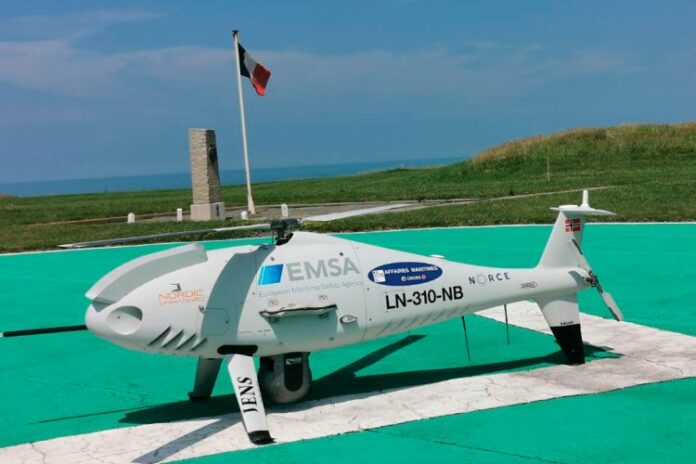
From Cap Gris-Nez on the Pas-de-Calais coast in the north of France, EMSA remotely piloted aircraft are being used by the French Directorate General of Maritime Affairs, Fisheries and Aquaculture to measure sulphur and nitrogen emissions from ships operating in the Emission Control Area (ECA) of the North Sea and English Channel.

 The payload on board the sniffer drone makes it possible to check the compliance of the passing ships with rules capping the content of certain pollutants in the fuel burned.

The North Sea and English Channel make up an Emission Control Area within which ships must adopt specific mandatory measures to prevent, reduce and control pollution of the atmosphere by emissions of nitrogen oxide, sulphur oxide and particles. These help to reduce the harmful effects on human health and the environment. 

Emissions monitoring is the principal objective of the operation but the aircraft also has the capability of being deployed on request for an array of complementary tasks such as pollution detection, search and rescue, fisheries control and vessel traffic management, within the area of operation.

The RPAS used is an unmanned helicopter Schiebel Camcopter S100 which is operated by EMSA’s contractor Nordic Unmanned and is equipped with an emissions sensor from Explicit that analyses the gas samples taken when the drone passes through the exhaust plume of the ship’s funnel or stack.

Calculations are then made to determine sulphur and nitrogen levels and indications of non-compliance and can trigger an inspection at the next port of call to determine whether an infringement has taken place. Since 2020, the Schiebel Camcopter S100 drone operated by Nordic Unmanned teams has flown for more than 430 hours, over more than 600 ships and has taken measurements from 375 merchant ships.

This is the third emissions monitoring campaign to take place in this particular area with the MRCC for Cap Gris-Nez chosen as the deployment site for its close proximity to busy shipping lanes within the flight range of the aircraft in use as well as for the expertise of the personnel monitoring the maritime traffic in that area.

Successful launch of first Dragon Class tidal powerplant

0

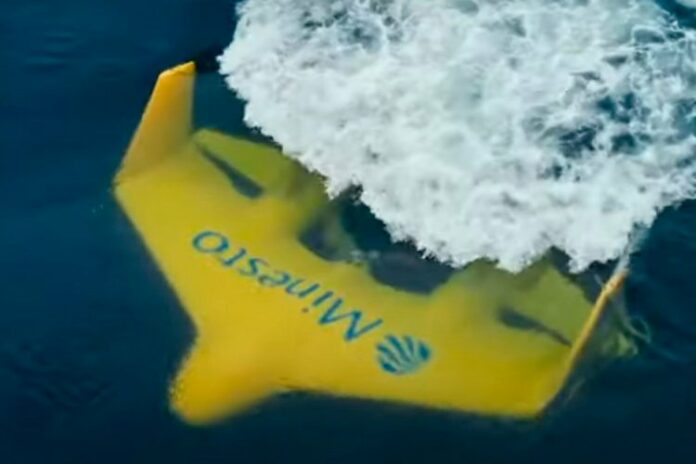
Minesto has now successfully completed the first week of commissioning including satisfactory electricity production and verification of all core functionality with the new Dragon 4 tidal power plant in Vestmanna, Faroe Islands.

The kite has generated first electricity to grid right “out of the box” and the commissioning plan has been executed as planned.  

Martin Edlund, CEO of Minesto, said:

“We are very pleased to announce that the first week of commissioning of Dragon 4 has been successfully completed. Every aspect of the project has been fulfilled according to plan and electricity has been successfully generated.”

Bernt Erik Westre, Chief Technology Officer, Minesto, expressed:

“We started electricity production the same day we launched the Dragon 4, after having completed all necessary pre-flight function verification on the first tide after installation. The Dragon 4 has a lot to offer, and we are now moving into a phase where we will fine-tune the control system settings to maximize the power output.” 

Berg Propulsion drives sustainability gains for CSL’s Great Lakes new generation

0

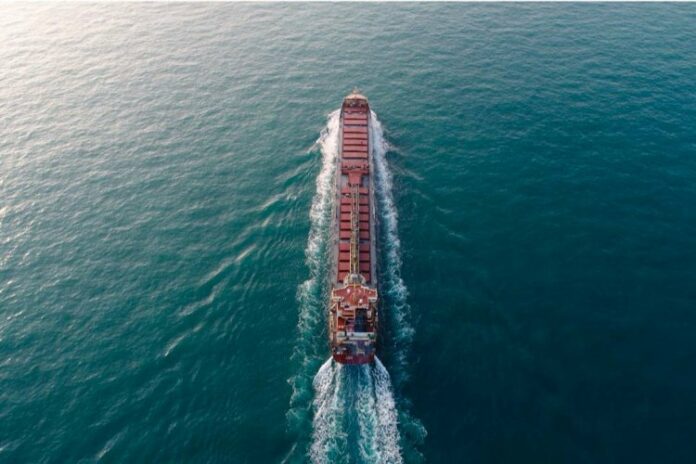
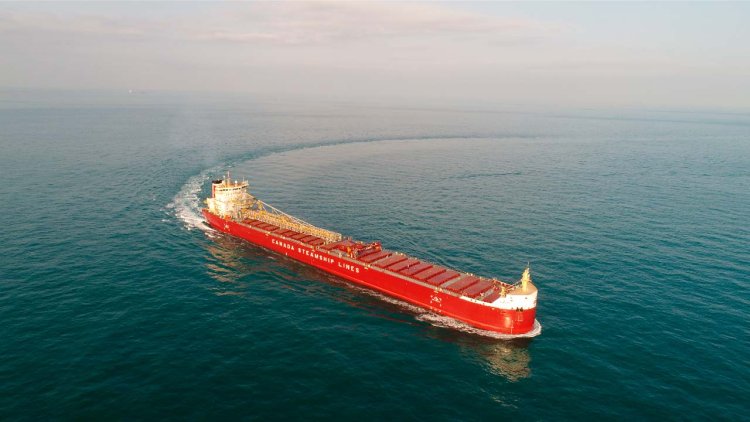
Emissions reductions have been confirmed for the first ‘laker’ to feature a diesel-electric drive train, after the initial weeks in service of Canada Steamship Lines’ new self-unloader Nukumi. 

The vessel arrived in Halifax in time to take up duties for the 2022 Great Lakes season complete with patented Direct Drive Electric technology from Berg Propulsion.

Built by China’s Chengxi Shipyard, the delivery also marks a bulk carrier market debut for Direct Drive Electric – an integrated solution developed by Berg to make high efficiency electric propulsion easier to adopt. The choice reflects CSL’s commitment to sustainable ship technology and aligns with Ministère des Transports du Québec goals to improve efficiency in transport.

The 26,000 metric tons deadweight Nukumi is a single point loader developed by CSL in collaboration with Windsor Salt to deliver de-icing salt from Mines Seleine on Magdalens Islands for use on roads across Quebec and Newfoundland. 

Frederic Jauvin, Vice-President, Global Technical Services, CSL said that, compared to its predecessor, the ship’s combination of optimized hull form, electric propulsion technology and Tier III diesel-electric engines would cut greenhouse gases by 25 percent and other pollutants by 80 percent. The propulsion solution will also enhance maneuverability in the shallow Magdalen Island channel, he said.

Jauvin said:

“Nukumi charts new waters when it comes to safe, sustainable and efficient shipping in the Gulf of St. Lawrence and Great Lakes region. Its efficiency and sustainability are truly exciting and Berg Propulsion’s integrated solution and its engineering partnership with Chengxi Shipyard has been key to securing all of the available performance enhancements.” 

The performance and sustainability gains of electric propulsion are widely acknowledged, especially when ships demand variable load capabilities, but Berg believes the greater simplicity direct drive solutions bring to the marine market could prove decisive.

Jonas Nyberg, Managing Director West, Berg Propulsion, said:

“Conventional electric propulsion systems feed power from the generator to the power distribution system, then on to the frequency controller and the electric motor before they reach the main propeller shaft via the reduction gear. This can be overly complex and hard to maintain, while energy is lost at every step. The Direct Drive Electric solution features electric motors that are integrated to directly drive the propeller shaft.

“For Nukumi, the use of Direct Drive Electric propulsion shows the value available when a shipowner, an equipment maker and a system integrator work together in the early ship design phase on prioritizing performance and sustainability. This is a key reference for Direct Drive Electric as a fuel efficient and easy to install technology which broadens the appeal of greener electric propulsion.”

The removal of gears allows for shorter shaft lines, fewer bearings and a smaller engine room footprint, while very high torque meant the same power could drive larger propellers, added Nyberg.

Berg indicates that energy savings compared to other electrical solutions can be in the excess of 5%, with equivalent fuel savings available. Direct Drive Electric is also ‘future-proofed’ to accommodate alternative energy sources, using a DC hub – or ‘superdrive’ – to draw on main engines or stored energy from zero emission batteries and fuel cells, as required.

Gas and condensate discoveries to be developed in the Norwegian Sea

0

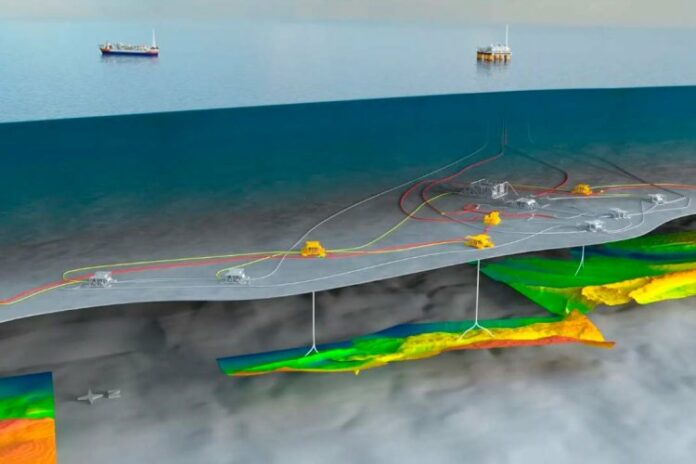
The area consists of six gas and condensate discoveries and option on another three prospects. The partnership today submits the plan for development and operation to the Ministry of Petroleum and Energy.

Geir Tungesvik, Equinor’s executive vice president, Projects, Drilling & Procurement, says:

“Gas is an important energy carrier for Europe. Halten East utilises the existing gas infrastructure on the Norwegian continental shelf (NCS) and will add important volumes that will generate substantial value. The project is a good example of how Equinor works with partners and government authorities across production licences to find smart solutions for optimal resource exploitation from the NCS.”

Halten East is a collective name for several small-size discoveries and prospects. Finding economically viable development alternatives for each individual project was difficult. In 2020 the licensees in the four licences therefore agreed to develop the area as a unit.

Recoverable reserves in Halten East are estimated at almost 16 million Sm3 of oil equivalent, or around 100 million barrels of oil equivalent, 60 percent of which is gas piped via Kårstø to Europe.

Randi Elisabet Hugdahl, vice president, Åsgard operations, says:

“Halten East is a subsea development consisting of five subsea templates that will be tied back to the existing infrastructure on the Åsgard field, ensuring good resource exploitation and high value creation, low development costs, and low CO2 emissions.”

The project is planned to be executed in two phases. In the first phase of the development, six wells will be drilled in the period 2024-2025, whereas phase two is planned to be developed in 2029.Production start from the two first wells is scheduled for 2025. Subsequently, the wells will be put on stream as they are completed.

According to a spin-off study by Bodø Science Park the national employment effects in the development phase of Halten East are estimated at slightly more than 3000 person-years of employment per year over five years in the period 2022-2029.

More than 90 percent of the Halten East investments go to suppliers resident in Norway.

Contracts at a combined value of almost NOK 7 billion will be awarded.

WinGD introduces compact on-engine emissions solution for X-DF portfolio

0

iCER is the first X-DF2.0 technology introduced to further boost the emissions performance and efficiency of the widely deployed dual-fuel X-DF two-stroke engine series. 

X-DF engines running on LNG already offer a more than 20% reduction in greenhouse gas emissions and a dramatic reduction in air pollution compared to fuel oil. The addition of iCER delivers a 50% reduction of methane slip in gas mode. Combined with better fuel efficiency, this reduces total greenhouse gas emissions by up to 8% in gas mode. Running on diesel, iCER improves the emissions performance of X-DF engines by 6%.

The on-engine iCER offers the same advantages while simplifying testing, building and installation of the engine, as well as reducing the engine room space needed for emissions reduction equipment. The exhaust gas cooler and all exhaust gas flow control components are installed on the engine, offering significant engine room design flexibility.

Dr. Rudolf Holtbecker, Executive Director of Operations, WinGD said:

“The iCER technology is a vital component of our proven X-DF engine portfolio that has a clear role in supporting the marine industry’s transition to cleaner, greener fuels and reducing the carbon footprint of a vessel. This important addition to the choices in our X-DF2.0 portfolio extends the benefits to all shipyards and global engine builders with an improved arrangement and a production-friendly design for minimised manufacturing and installation costs.”

On-engine iCER is initially available on WinGD’s X72DF engines, which have become the standard on modern LNG carriers. Minimising methane slip on LNG carriers has an added benefit for operators using their cargo as fuel, allowing them to maximise the value of the LNG delivered. The technology will be rolled out to other models in the X-DF engine range.

The principle behind iCER, which stands for intelligent control by exhaust recycling, is to minimise emissions by regulating air and exhaust gas flow. By cooling and recirculating exhaust back to the engine, more gases which can contribute to climate change are combusted without escaping into the atmosphere.

As well as reducing methane slip and total greenhouse gas emissions, both on- and off-engine iCER enable compliance with IMO’s Tier III NOx limits, whether using LNG or diesel fuels.  

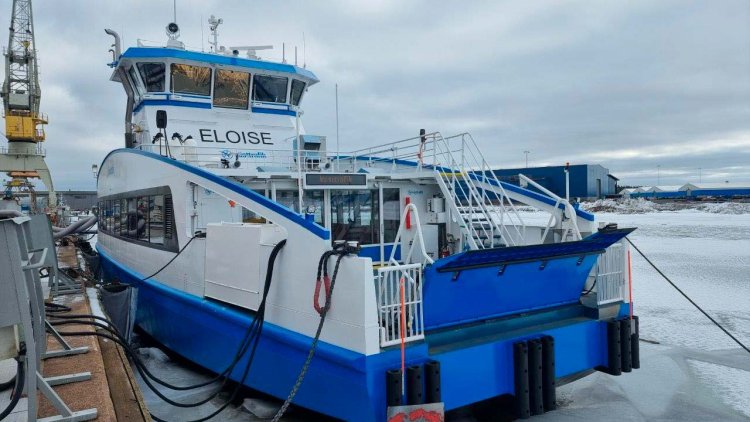
EST-Floattech powers Vasttrafik’s new ferry Eloise with complete battery system

0

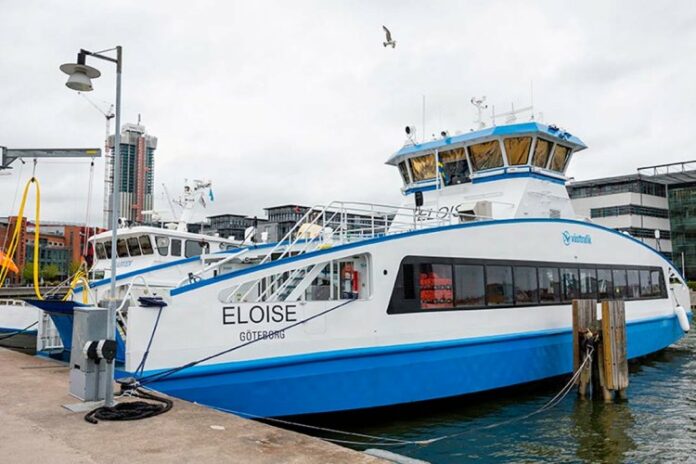
Västtrafik, the organisation responsible for public transport in the Västra Götaland region, Sweden, has taken delivery of a fourth electric hybrid ferry powered by an EST-Floattech battery system. 

Built by Työvene in Finland, the Eloise is a 33-metre, double-ended commuter ferry designed to carry up to 298 passengers and 80 bicycles at speeds of up to 11 knots.

The EST-Floattech installation is based on their flagship Green Orca 1050 High Energy Battery System (or ESS: Energy Storage System). This uses Lithium Polymer NMC cells which deliver exceptional cycle life and thermal performance together with a high discharge rate capability. EST-Floattech’s in-house battery management system (BMS) forms the basis of the Green Orca High Energy Module, a technology which has proven itself for more than a decade. 

Juha Granqvist, CEO of Uudenkaupungin Työvene Oy, commented:

“We are all proud to have been able to contribute to a greener Gothenburg.”

Antti Vikainen, project manager at Uudenkaupungin Työvene OY and overseeing the build, added:

”We are happy to have partnered with EST-Floattech as a supplier of one of the key components for Eloise. The support we received in addition to the delivery and commissioning of the battery system proved valuable, particularly  when determining the safety requirements for the battery installation. 

The vessel itself is already a proven design that has evolved from a diesel-electric powered ferry into a battery hybrid that is able to operate almost exclusively on stored electric power for its designed application.”

The battery management system is essential for safe and optimal ESS performance. EST- Floattech’s current version is the result of ten years of continuous development. Multiple safety layers in the mechanical design and software ensure that it meets strict DNV and NMA class requirements.

This commitment to continuous development means that the battery capacity of the Eloise is 25% higher than that of its sister ship the Elvy, which was delivered in 2019. With an installed capacity of 1260 kWh, the Eloise is capable of six hours continuous electric operation. Recharging takes place using either shore power or the onboard diesel generator. 

Shipbuilder Työvene specialises in the design and build of small and medium-sized vessels for commercial operations. Their delivery of the Eloise to Västtrafik represents a significant step in the latter’s goal of having Gothenburg’s public transportation system fully electrified by 2030.

Over 200 EST-Floattech energy storage solutions are in operation in a wide range of maritime applications. Notably, there are workboats sailing today on the exact same battery pack as was originally installed 10 years ago.

Saipem Subsea drone for inspection of Shell and Petrobras fields in Brazil

0

Saipem has been awarded a contract by Shell and Petrobras for the utilisation of its FlatFish subsea drone in two pilot projects encompassing the inspection campaigns of two ultra-deepwater fields offshore Brazil, operated respectively by the two energy companies.

These two projects with Shell and Petrobras are pilots and fall within the framework of the research and development programme of ANP, the Brazilian National Agency of Petroleum, Natural Gas and Biofuels. The target is to qualify the drone to execute unmanned, vessel-free inspections to support the monitoring and maintenance campaigns of the subsea infrastructures.

In particular, Saipem implemented the FlatFish drone through the industrialization phase with the ultimate objective of unlocking deepwater operations, in over 2,000-meter depth for this particular contract, enhancing its artificial intelligence-based features as well as its navigation and monitoring capabilities.

The activities will be led by Sonsub, Saipem’s centre of excellence for underwater technologies and robotics, over a timeframe of approximately 12 months: during the first phase intermediate tests in shallow water will be executed at Saipem’s base in Trieste, Italy, with the support of Sonsub’s engineering department in Brazil; the second phase will see the drone’s deployment within Brazilian waters in the third quarter of 2022.

This contract award confirms Saipem’s drive for technological development in subsea robotics and advanced automation and is an important cornerstone of its constant search for low-carbon, competitive and cost-effective solutions, which exemplify Saipem’s commitment to sustainability.

FlatFish is a remotely-controlled subsea-resident autonomous underwater drone able to perform complex inspection tasks of a wide range of underwater assets. Since 2018, Shell has entrusted Saipem with the license to develop the FlatFish Technology.

The technology was previously developed by SENAI CIMATEC, a Brazilian research institute, in partnership with DFKI, the German Research Center for Artificial Intelligence, and funded by the R&D program of ANP (Brazilian National Agency of Petroleum, Natural Gas and Biofuels) and EMBRAPII (Brazilian Company of Research and Industrial Innovation).

Satellite images appear to show Russia stealing Ukraine’s grain

0

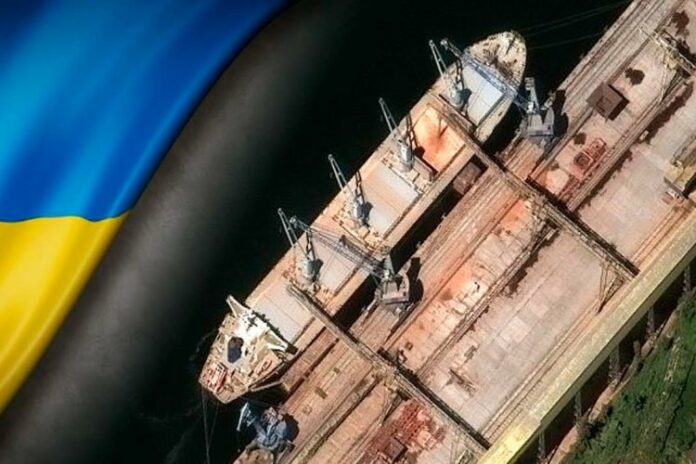
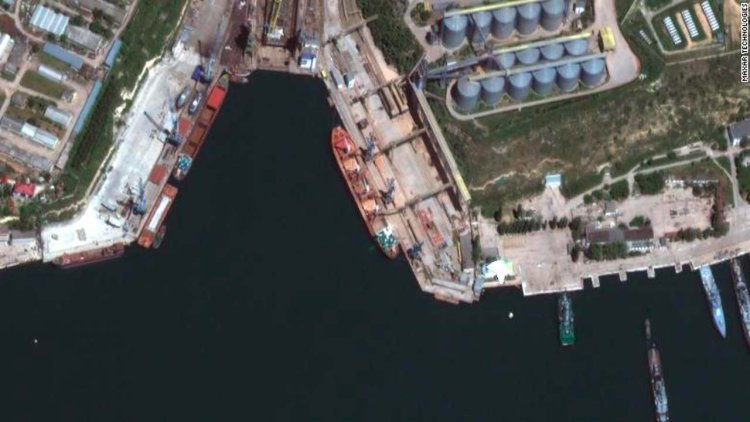
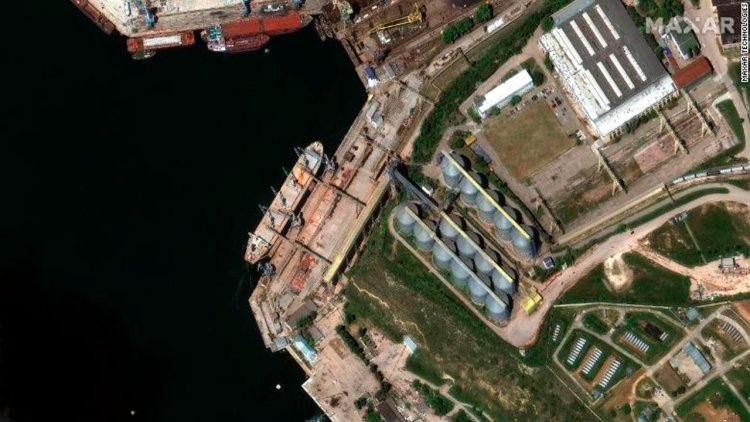
Two Russia-flagged bulk carrier ships are shown docking and loading up with what is believed to be stolen Ukrainian grain in the images. Ukraine’s President Volodymyr Zelensky has accused Russia of “gradually stealing” Ukrainian food products and trying to sell them.

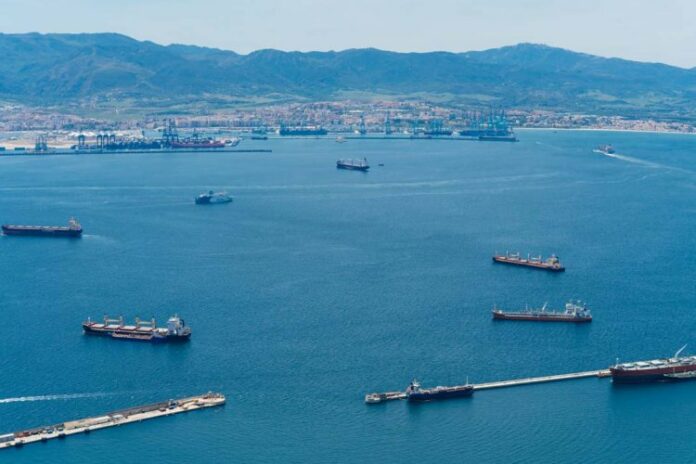
The new images from Maxar Technologies, dated May 19 and 21, show the ships — the Matros Pozynich and the Matros Koshka — docked next to what appear to be grain silos with grain pouring off of a belt into an open hold. Both ships have now left the port, according to the ship tracking site MarineTraffic.com, with the Matros Pozynich sailing through the Aegean Sea claiming to be on its way to Beirut and the Matros Koshka still in the Black Sea.

It’s difficult to know for certain whether the ship is being loaded with stolen Ukrainian grain, but Russia-annexed Crimea produces little grain itself, unlike the agriculturally rich Ukrainian regions of Kherson and Zaporizhzhia immediately to the north. Ukrainian officials and industry sources have told CNN that Russian forces in occupied areas have emptied several silos and trucked the grain south.

Earlier this month, the Matros Pozynich carried out a similar mission: loading up with grain and setting sail out of the Black Sea and into the Mediterranean. It was initially bound for Egypt with its cargo, but it was turned away from Alexandria after a warning from Ukrainian officials, according to the country’s government. It was also barred entry to Beirut, eventually docking in Latakia, in Syria, where Russia has for years been propping up the regime of Bashar al-Assad.

At the same time, Russia has been blocking Ukraine from exporting goods from its ports, fueling fears of a global food crisis.
Zelensky said Saturday:

“The world community must help Ukraine unblock seaports, otherwise the energy crisis will be followed by a food crisis and many more countries will face it. Russia has blocked almost all ports and all, so to speak, maritime opportunities to export food — our grain, barley, sunflower and more. A lot of things.”

Before the war, wheat supplies from Russia and Ukraine accounted for almost 30% of global trade, and Ukraine is the world’s fourth-largest exporter of corn and the fifth-largest exporter of wheat, according to the US State Department. The United Nations World Food Program — which helps combat global food insecurity — buys about half of its wheat from Ukraine each year and has warned of dire consequences if Ukrainian ports are not opened up.

The ships have capacities of 30,000 metric tons and earlier this month Ukraine’s Defense Ministry estimated that some 400,000 tons had been stolen and taken out of Ukraine since Russia’s invasion.
Mykola Solsky, Ukraine’s minister of Agrarian Policy and Food, said it is “sent in an organized manner in the direction of Crimea. This is a big business that is supervised by people of the highest level.”

Russia annexed Crimea in 2014, taking with it the key Black Sea port of Sevastopol. Since launching a renewed invasion in February, Russia has deprived Ukraine access to two key ports: capturing Mariupol, on the Sea of Azov, and targeting and blocking Odesa, also on the Black Sea. Ukraine’s inability to export from those ports is not only impacting food levels worldwide but having a devastating impact on the country’s economy.

There are an estimated 22 million tons of grain sitting in Ukrainian silos, US Secretary of State Antony Blinken said last week.

“The Russian Federation claims falsely that the international community’s sanctions are to blame for worsening the global food crisis. Sanctions are not blocking Black Sea ports, trapping ships filled with food, and destroying Ukrainian roads and railways,” Blinken said. “Russia is.”

Source: CNN