2.7 C
New York
Home Blog Page 440

Bureau Veritas certifies METIS Cyberspace Technology SA on Cyber Resilience

0

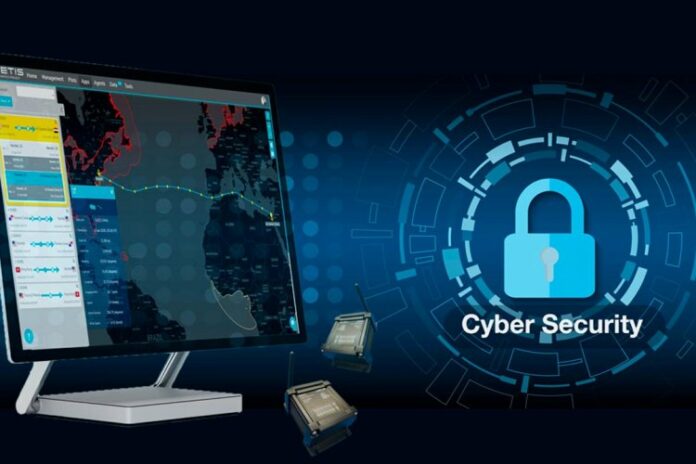
This solution is a combination of two services, ‘METIS SHIP CONNECT’ & ‘METIS SPACE’. It offers data acquisition and analysis through a highly sophisticated AI-based system.

METIS Cyberspace Technology SA specializes in Data Acquisition, Real-time Performance Monitoring and Intelligent Analytics for the Maritime Industry, using Machine Learning and Artificial Intelligence. Its secure digital tools help shipping companies to enhance vessel performance and quantify gains in areas as diverse as route cost optimisation, energy efficiency, fuel efficiency, total emissions management and fulfilment of charter party agreements.

To obtain the type approval certification, METIS has demonstrated to BV cyber security experts that its system ensures the integrity, confidentiality and availability of data collected within a fully secure architecture. The approval follows a series of meetings between METIS and BV experts to verify compliance with all requirements set out in BV Rule Note NR 659. It is based on a review of the METIS system schematics, detailed documentation, security functions and services. BV experts also acknowledged the high level of cyber security practices implemented in the solution examined.

Paillette Palaiologou, Vice President for Southeast Europe, Black Sea & Adriatic Zone at Bureau Veritas Marine & Offshore, commented:

“It is always a great pleasure when BV cyber security experts can collaborate effectively with their counterparts at equipment suppliers. The high level of technical expertise that METIS teams have been able to demonstrate shows that some equipment suppliers in the maritime industry have already understood and are even anticipating the formidable challenges brought about by the new IACS URE27 that will come into force on January 1, 2024. We can only be satisfied and proud of that.”

Serafeim Katsikas, CTO, METIS, said:

“Today, data itself is a resource but its value depends on the techniques used for acquisition, monitoring and analytics to ensure its cleanliness, security and relevance. Securing BV Type Approval Certification for cyber resilience is a significant milestone for METIS and a key vindication of our approach, expertise and technological competence.”
Svitzer unveils strategy to become fully carbon neutral by 2040

0

The strategy will see Svitzer decarbonise in two phases. Firstly, Svitzer is aiming to reduce the CO2 intensity of its entire fleet by 50% by 2030. This will pave the way for fully carbon neutral operations just ten years’ later in 2040, which is in line with A.P. Moller-Maersk’s ambition.  

As part of the strategy, Svitzer will invest time and capital to embed sustainability throughout its business, in day-to-day operations, in people and how they do their jobs, in its fleet and through the types of fuel used by its vessels. 

Svitzer will measure progress against a 2020 baseline, which saw the company’s fleet of approximately 400 vessels emit 280,000 tonnes of CO2, or the same amount as 110,000 cars.  

Svitzer has already implemented process changes to help spur improved efficiency across its fleet. For example, the company’s ‘Aim for 8’ initiative – which asks crew to optimise their speed during tug mobilisation and demobilisation – has saved over 255 tonnes of Marine Gas Oil (Diesel) in the UK alone. Initiatives like these which influence the behaviour of our staff, combined with improved vessel connectivity, integrated performance monitoring across Svitzer’s fleet and improvements to scheduling optimisation, will help drive down emissions in the short term.  

Svitzer will also focus on changing the fuel mix of its fleet. The success of the organisation’s EcoTow project, which has seen Svitzer’s entire fleets in London, Felixstowe, and Southampton switch to low carbon biofuels, is currently being replicated more widely across ports in the UK and to the company’s global operations. Svitzer will also begin to explore methanol as a fuel for towage and, in the long-term, take required steps to retrofit and renew its fleet in order to operate on low carbon fuel solutions.  

Finally, Svitzer will focus on improving the efficiency of its fleet from a design perspective. As part of this, the company will launch its new and innovative TRAnsverse Tug design, which can generate higher steering forces than most designs of similar dimensions in a smaller, more nimble package with a reduced environmental footprint. The Robert Allan design will come into operation from Q3 2023.   

Commenting on the decarbonisation strategy, Kasper Nilaus, CEO, Svitzer, said:

“We are proud to unveil our strategy to become fully carbon neutral by 2040. We are not committing to these ambitions lightly and understand that it will require leadership and collaboration with our customers, suppliers, industry peers, and ports around the world to ensure success. Widespread changes and investment into the way we work, the fuel we burn, and the composition of our fleet will be required.  

“The work has already started, and the whole team at Svitzer is invigorated by the opportunity to contribute to solving this truly global challenge. We hope that by leading the way for towage we will be able to generate the cleaner, greener future that our children, our industry, ports around the globe and our oceans deserve.  

“We recognise that we can’t do this alone. Collaboration and partnerships with our customers and suppliers will be key, and we look forward to taking the industry along with us in our journey to become carbon neutral by 2040.” 

Gareth Prowse, Head of Decarbonisation, Svitzer, added:

“The decarbonisation strategy we are launching today is ambitious and sets a clear roadmap for Svitzer but, most importantly, it is absolutely achievable if we focus on the right areas to generate real progress. That is why we have split our strategy into three pillars: behaviour, equipment, and fuel, and we will focus on each of these in a step change fashion to bring about carbon neutrality in a way that works for our customers and maintains the high level of service Svitzer is known for.”  

ONE signs contracts for ten very large container ships

0

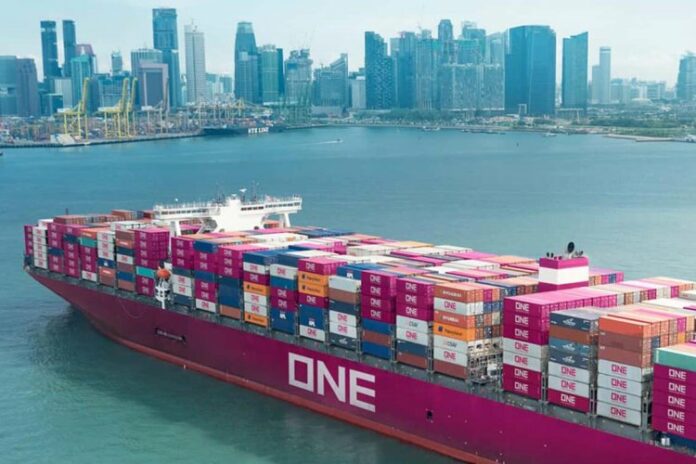
Ocean Network Express Pte. Ltd. has signed ship building contracts with both Hyundai Heavy Industries Co. Ltd. and Nihon Shipyard Co., Ltd. to construct 5 vessels each, adding a total of ten modern Very Large Container Ships (VLCS) to ONE’s fleet.

These ships have a nominal capacity of more than 13,700TEU and are to be delivered in 2025. This investment embodies ONE’s Midterm Strategy announced in March, to safeguard a sustainable supply chain for the future and underscore ONE’s green strategy and decarbonization plan.

The vessels are designed with the highest efficiency standards as well as a variety of cutting-edge technology to reduce navigational impacts to the environment and are planned for the “Ready notation” or “AiP (Approval in Principle)” of Ammonia and Methanol as fuel, Carbon Capture and Storage. Moreover, this fleet will enable ONE to broaden the exploration of long-term alternative fuels and decarbonization technologies in the future.

Wärtsilä and Anglo-Eastern reach major milestone in their joint project

0

Wärtsilä Voyage, part of the technology group Wärtsilä, and ship manager Anglo-Eastern are proud to announce a significant milestone in their joint project to improve safety and environmental sustainability at sea. 

As of April 2022, more than 500 vessels in Anglo-Eastern’s fleet have been fitted with Wärtsilä Voyage’s Fleet Optimisation Solutions (FOS), a cutting-edge decision support software platform for voyage planning, charter-party compliance, fuel efficiency, and fleet performance management.

Bjorn Hojgaard, CEO, Anglo-Eastern, said:

“Wärtsilä Voyage has invested heavily in new digitally enabled strategies, and by partnering with them, we gain capabilities that assist us and our shipowner clients to be the leaders in digitalisation, safety, and sustainability. Wärtsilä Voyage is leading in the digital journey of the maritime industry, which makes them the ideal partner for us and our own digital journey.” 

Capt. Pradeep Chawla, Managing Director of Group QHSE and Training, Anglo-Eastern, commented:

“By working in close cooperation, Anglo-Eastern and Wärtsilä have been able to create a valuable and much needed software solution that greatly benefits merchant fleet operations. With our input incorporated in product development, the result is a fantastic, holistic solution that helps us with every aspect of fleet management.” 

Wärtsilä Voyage’s FOS is a shared digital platform that helps to monitor, manage and optimise everyday processes on board and onshore. By combining cloud-based analytics and artificial intelligence, FOS reduces workload and provides all stakeholders with a clear overview of their fleet’s performance.

Sean Fernback, President, Wärtsilä Voyage, and Executive Vice President, Wärtsilä, said:

“One of the key advantages of our FOS platform is that it’s flexible and scalable, remaining responsive to the maturity of each shipping company’s own digital journey. We believe in digitalisation as the path towards decarbonisation, and that means delivering a solution that can future-proof a fleet and optimise not just the ‘right now’, but also the long-term. Passing the 500 installations milestone with Anglo-Eastern is an important step in the mission of both companies to drive sustainability through cutting-edge technology. We look forward to continuing to steer industry transformation in collaboration with Anglo-Eastern.”

The original order for the FOS deliveries was placed in October 2019 and was reported to be the maritime industry’s largest software contract ever at the time.

Fugro aids safe delivery of development assets for Jumbo in US Gulf of Mexico

0

Jumbo Maritime has awarded Fugro a positioning and metocean services contract to help guide the safe transport and installation of a new floating production system (FPS) for Vito, a deepwater development in the US Gulf of Mexico.

Fugro services will support both inshore and offshore towing of the 24,000-ton structure as it leaves the coast of Texas and travels 800 km to the Vito field for final positioning and hook-up. The project is expected to be executed in summer 2022.

Asset positioning will be accomplished using a remotely enabled Fugro Starfix® solution. The approach will provide real-time knowledge of all vessel locations, both in relation to each other and the FPS, while limiting the number of surveyors required in the field. Given the number of assets required for the project— eight inshore and offshore towing vessels, two anchor handling vessels and the FPS— the remote technology will significantly reduce health and safety exposure, as well as carbon emissions. During installation, positioning data will be complemented by real-time current monitoring information to support situational awareness and safe working conditions.

Dan Matthews, Fugro’s Commercial Director for Asset Integrity in the Americas stated:

“As a long-time global contractor to Jumbo, Fugro is pleased to support the tow-out and hook-up of the new Vito FPS. Working in partnership with Jumbo, we’ve designed a highly technical solution that will help to ensure a safe project outcome and support efficient operations in the field.”

NAPA Voyage Optimization software integrated into Furuno Planning Station

0

Maritime electronics equipment provider FURUNO will incorporate NAPA Voyage Optimization, a solution developed by NAPA, the leading maritime software, services, and data analysis provider, into its new Planning Station PS-100, a voyage planning, monitoring and briefing system that is currently under development.

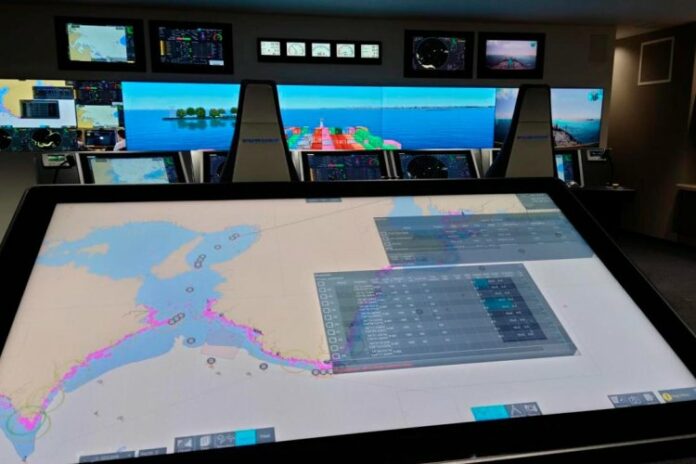
The Planning Station PS-100 will be the first FURUNO product to integrate NAPA Voyage Optimization software. The Planning Station PS-100, which is being developed as part of Furuno’s marine digitalization efforts, aims to improve the efficiency and safety of ship operations and the productivity of crew members by performing multiple tasks such as voyage planning, monitoring, and briefing, which were previously carried out using paper charts, on electronic charts displayed on a touch panel interface.

The introduction of NAPA Voyage Optimization into this system will enable optimal route selection and speed allocation when creating and editing voyage plans, thereby contributing to reducing fuel costs and CO2 emissions and enabling safe and efficient navigation. NAPA Voyage Optimization uses NAPA’s proprietary performance models to optimize voyage planning (route and speed distribution) to improve operational safety and reduce fuel consumption and GHG emissions.

Pekka Pakkanen, Executive Vice President at NAPA Shipping Solutions, commented:

“This is a fantastic example of how better connectivity, powerful 3D modeling capabilities and innovative hardware can come together to take voyage optimization to a new level. By combining Furuno’s navigation equipment and services with NAPA’s operational performance optimization solutions, we will help shipping, ship management, and ship owning companies to improve the efficiency of their operations, reduce fuel costs and CO2 emissions, improve crew productivity, and optimize ship management from shore.”

Kazuma Waimatsu, Senior Executive Officer, FURUNO commented:

“This development is the latest step of a long-term collaboration agreement between FURUNO and NAPA, signed in September 2016, to support the digitalization of ship operations. By combining the domain expertise of the NAPA Group with FURUNO’s demonstrated leadership in the maritime industry, we intend to generate new advantages and significant benefits for customers through innovative technologies.”

The Planning Station PS-100 can consolidate and display necessary information for voyage planning, monitoring and management, including vessel navigation data, radar echoes, TT target information, AIS target information, weather information, routes, and user charts. Furthermore, in the future, FURUNO plans to develop a function to acquire, monitor, and display information on managed vessels from shore via the internet, thus contributing to the optimization of vessel management operations from shore.

Saipem and Havfram to evaluate a potential cooperation in the offshore wind business

0

Saipem SpA, Havfram Holding AS and HVAS Invest Kappa AS (a holding company controlled by HitecVision) have signed a non-binding agreement to evaluate a potential collaboration in the development and construction of offshore windfarms

The parties share the common objective to create a wider value proposition by integrating a range of construction and operational services, based on the parties’ respective competences and expertise.

In this context, the cooperation between the HitecVision-controlled Havfram and Saipem would build upon Havfram’s agile business model and consolidated expertise in installation of offshore facilities on one side, and Saipem’s offshore wind EPCI capabilities, competences and assets on the other side.

The initiative is consistent with Saipem’s 2022-25 Strategic Plan in that it aims at strengthening its value proposition for the offshore wind market identifying new and more profitable ways of execution, organizational and management models, also through the integration of the latest generation installation assets such as jackups.

The agreement also corresponds to Havfram’s objective to accelerate growth in its EPCI and service-oriented offering towards offshore wind.

The parties will set up a joint team to study and develop the technical, organizational, financial and valuation aspects of the possible collaboration, targeting, if the conditions will be met, to reach a detailed definition of the business model and a final agreement by end of third quarter of 2022.


Subsea 7 awarded contract offshore Brazil

0

Subsea 7 has announced the award of a major contract by Petrobras for the development of the Búzios 8 field located approximately 180 kilometres off the coast of Rio de Janeiro at 2,000 metres water depth in the pre-salt Santos basin.

The contract scope includes engineering, procurement, fabrication, installation and pre-commissioning (EPCI) of approximately 126 kilometres of rigid risers and flowlines, 98 kilometres of flexible lines and 88 kilometres of umbilicals and associated infrastructure, as well as installation of FPSO mooring lines and hook-up.

Project management and engineering will commence immediately at Subsea 7’s offices in Rio de Janeiro and Paris. Fabrication of the pipelines will take place at Subsea 7’s spoolbase at Ubu, Brazil and offshore operations are scheduled to be executed in 2024 and 2025 using one of Subsea 7’s fleet of rigid-reeled pipelay vessels.

Daniel Hiller, Vice-President Brazil said:

“We are delighted to have been awarded this contract by Petrobras and we look forward to reinforcing our strong, collaborative relationship as we deliver Búzios 8.”

Damen to supply second Combi Freighter to Elbe-Ems

0

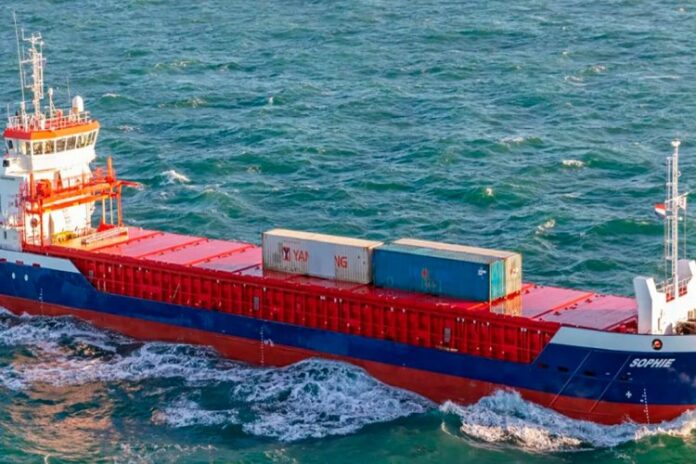
Shipping company Elbe-Ems has ordered a second Combi Freighter 3850 (CF 3850) from Damen Shipyards, following very positive experience with the vessel of the same type that they ordered before. The first, motor vessel Sophie is operating in European waters since September last year. The second, MV Jan Laurenz will be delivered in the fourth quarter of this year.

The contract for the second CF 3850 for Elbe-Ems was signed on 29 September at the Hamburg office of the ship operating company, which is a co-operation of ship owners Uniatlantico and Held Shipping. The new vessel will feature the same improved hull design and engine room configuration as MV Sophie. The CF 3850 standard design offers proven quality of construction, optimised hull form for impressive fuel economy at convincing performance as well as competitive pricing. This can be achieved thanks to building in series at the Damen Yichang Shipyard.

Elbe-Ems decided to order the second CF 3850 upon analysing the performance of MV Sophie after her maiden voyage from Shanghai, China to Hamburg. With the contract for this vessel signed on 18 May, Damen was able to deliver it from stock on 2 September the same year.

Elbe-Ems CEO Andreas Bergmann, who is also a partner in Uniatlantico, says:

“We are very happy with the performance of the CF 3850, MV Sophie. The quality of the vessel and the fuel economy have convinced us to order another vessel of the same type. The cooperation with Damen has been quite pleasant during the whole process from order to delivery.” 

The contract for MV Jan Laurenz was signed on 29 September last year.

The vessel is built along with other vessels of the same design, in series at the Damen Yichang Shipyard. Standardisation and construction in series is a unique proposition by Damen. Quality of construction is guaranteed, while hull form, installed power and hold capacity have proven to deliver efficient performance. Series construction allows for competitive pricing of new-built vessels. The Damen Shipyard Group in the Netherlands is the contracting party. All arrangements for the construction as well as delivery, warranties and services are handled from the Dutch establishments of the shipyard group.

Equinor: New oil discovery close to Barents Sea Johan Castberg field

0

The well was drilled five kilometres south-southeast of discovery well 7220/8-1, which is in the Johan Castberg field, and 210 kilometres northwest of Hammerfest.

Equinor is the operator of production licence (PL) 532. Preliminary calculations of the size of the discovery indicate between 37 and 50 million barrels of recoverable oil. Together with the other licensees, Vår Energi and Petoro, Equinor will consider tying the discovery to the Johan Castberg field.

Kristin Westvik, Equinor’s senior vice president for exploration and production north, says:

“Snøfonn Nord is an exciting discovery in the vicinity of the Johan Castberg development and can add valuable volumes to the installation in the future. In cooperation with the licence partners we will consider a possible development.”

The Snøfonn Nord discovery was made exactly one year after the Isflak discovery in the same area, but is probably somewhat bigger.

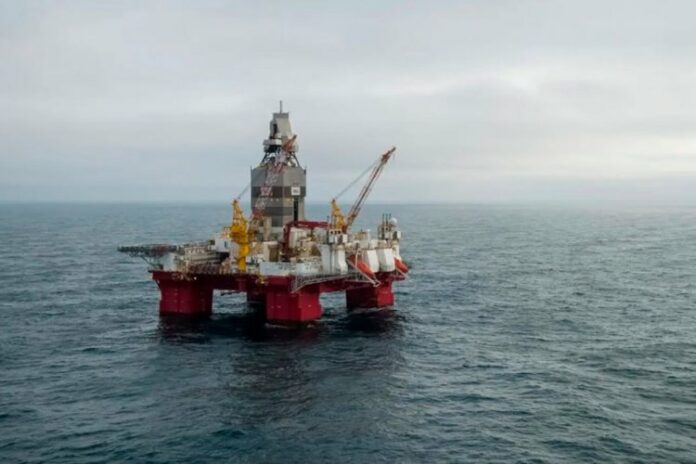
Drilling of the well was carried out by the Transocean Enabler rig and is now completed. Transocean Enabler will move 800 metres further west in PL 532 to drill a new exploration well.

Snøfonn Nord is the 10th discovery in the Castberg licence and the 12th exploration well to be drilled in PL 532.

The production licence was awarded in the 20th licencing round in 2009.