-4.6 C
New York
Home Blog Page 436

LR certifies SHI’s digitalised electronic logbook system

0

LR has granted Software Conformity Certification to Samsung Heavy Industries (SHI) for its electronic data recording and management solution, SVESSEL® eLogbook system, a key result of a Joint Development Project (JDP) formed earlier this year. 

This is the first time SHI has been awarded classification society approval for its digitalised electronic logbook software application.

As part of the JDP, SHI created an electronic data recording and management solution that replaces the existing paper navigation log. By automatically entering the data of the voyage log in conjunction with the SVESSEL® BIG solution, the reliability of the data is enhanced.

The SVESSEL® eLogbook software was assembled based on IMO MARPOL Annexes and the IMO Technical Code on Control of Emission of Nitrogen Oxides from Marine Diesel Engines (NOx Technical Code) and was developed by the marine research institute of SHI. The purpose of the eLogbook is based on the ship condition database, logbook management database and other management functions.

This solution will also reduce the workload of crew members by simplifying and automating complex and repetitive voyage log jobs. By transforming existing onboard documents into digital documents using SVESSEL® eLogbook, SHI plan to not only reduce the crew of smart ships, but also build a foundation for autonomous navigation.

As the only classification society involved in the project, LR’s role was to deliver assurance on the correctness, safety and performance of SHI’s digitalised software technology. To do this, LR experts conducted a Software Conformity Assessment, which consisted of a developer capability assessment and an evaluation of SHI’s systems engineering approach, including its software engineering practices relevant to the development and sustainment of a digitalised electronic logbook. This led to the Software Conformity Certification being awarded.

Nick Brown, LR Group CEO, said:

“This is a significant step in our industry’s journey towards digitalisation and we are honoured to support Samsung Heavy Industries with its digital ambitions as it helps shipowners and operators optimise efficiencies, costs and safety with digital solutions.”

Jin-Taek Jung, SHI’s President & CEO said:

“It is hoped that SHI’s SVESSEL® eLogbook can replace the current paper document system in use onboard ships and realize more efficient and precise operation of ships. The eLogbook can reduce the routine works of crews in generating lots of documents, and also more importantly precise digital data can be shared between crews onboard and management offices onshore. The strength of our eLogbook comes from the combined solution with the digital data platform SVESSEL® through automatic filling of data. This is a start to unify all the precise information onboard in a digital form for the next step towards a remote controlled/unmanned ship. The hard works by the expertise in LR and SHI are highly appreciated for this project.”

PTTEP initiates Thailand’s first CCS project

0

PTTEP is gearing up to develop Thailand’s first Carbon Capture and Storage (CCS) project at Arthit offshore gas field, paving the way towards the company’s Net Zero Greenhouse Gas (GHG) Emissions target. 

The company has also initiated CCS feasibility studies in other areas of Thailand to support the country’s commitment to reducing carbon emissions into the atmosphere.  

Mr. Montri Rawanchaikul, Chief Executive Officer of PTT Exploration and Production Public Company Limited or PTTEP, revealed that regarding Thailand’s commitment to the UN Climate Change Conference of the Parties (COP26) to achieve carbon neutrality in 2050 and Net Zero GHG Emissions in 2065, PTTEP is determined to take part in managing GHG emissions and tackling global warming issues.

Therefore, the company has set forth an ambitious emissions reduction target – Net Zero GHG Emissions by 2050 via the EP Net Zero 2050 concept. One of PTTEP’s key strategic enablers to reduce carbon dioxide emitted from the company’s petroleum production process is the adoption of CCS technology, a preferable pathway that several countries have considered as the main approach to effectively reduce carbon dioxide emissions at scale.

Launched in 2021, the feasibility study of PTTEP’s pioneer CCS project at Arthit gas field has recently concluded, marking the first initiative of its kind in the country. The study covers several aspects including the preliminary assessment of carbon storage capacity of targeted geological storage formations and corresponding conceptual development plan. The project is currently in the process of preliminary front-end engineering and design (Pre-FEED) study and is expected to commence the CCS operations by 2026.

Mr. Montri said:

“Apart from Thailand’s first CCS initiative at the Arthit gas field, PTTEP has collaborated with partners who have experience in CCS technology in Japan to evaluate the potential of CCS development in other parts of Thailand that will eventually provide support to other domestic industries in decarbonization. Moreover, we have recently joined forces with companies in PTT Group to apply CCS under the concept of CCS Hub Model to reduce GHG emissions from PTT Group’s operations and other industries in the adjacent operational areas. These ongoing projects are expected to effectively support the country’s road to net zero GHG reduction goal.  

However, several key factors including CCS policy and regulations, investment promotion mechanisms, as well as cultivation of knowledge and understanding among the public are needed for the successful execution of the CCS project in Thailand. These will require collective support from government agencies and relevant parties in driving and promoting CCS technology adoption in Thailand in order to ensure that we can truly achieve our emissions reduction goals.” 

CCS is one of PTTEP’s strategic pathways amidst the energy transition movement to become a low-carbon organization with sustainable growth. In addition to CCS, PTTEP is exploring additional opportunities in renewable energy, Hydrogen, and Carbon Capture and Utilization (CCU).

Port of Gothenburg first in the world to provide shoreside power for tankers

0

As part of an innovative plan to provide shoreside power for tankers berthed at the Energy Terminal, the Gothenburg Port Authority has created a completely new and unique concept that makes the system safe, environmentally friendly, and cost-effective. 

The port has teamed up with shipping companies on the island of Donsö, national and European ports, classification societies, local oil companies, and the Swedish Transport Agency. The aim is to set a new global standard for shoreside power for tankers berthed in a hazardous environment.

Jörgen Wrennfors, Gothenburg Port Authority production engineer at the Energy Terminal, said:

“The greatest challenge is to ensure that tankers that are scheduled to be built are fitted with shoreside power connectors that adhere to a common standard applied at all ports. A further challenge is the constant risk of an explosion when the vessel is berthed at an energy terminal as the combustible and flammable products being pumped could easily be ignited by a spark from the electrical equipment. These challenges have become an intrinsic part of our planning strategy.” 

Supplying power to vessels at the quayside is nothing new. Back in the 1980s, the Stena Line vessels at Majnabbe were provided with shoreside power and since then a whole series of utility supply facilities have been created throughout the Port of Gothenburg. The most recent example is quay 712 at the Ro-Ro Terminal, where vessels are now being supplied with green power by cable, allowing them to shut down their diesel engines during loading and discharge. Despite this, finding a solution where new tankers at the Energy Terminal can be offered the same shoreside power supply has not been an easy task.

When tankers are at sea their classification specifies that a power supply point can only be located aft of the bridge. Vessel designers have used this as a starting point when designing new vessels fitted with shoreside power connectors. However, this classification does not apply when the tanker arrives at an energy terminal. In the majority of cases it is superseded by the port’s classification, which means the entire vessel is deemed to be an explosive atmosphere, including the aft.” 

The downside of having a power supply point at the aft is that the length of a vessel can vary considerably. In many cases vessels are more than 150 metres long and the quays are considerably shorter. Locating a power connector at the aft would require the ports to build connection cranes at the quayside to reach the connector. Likewise, extremely long cables would be required together with complicated and expensive cranes to lift the cables. Instead of each port needing to adapt, the Port of Gothenburg has applied reverse thinking.

Jörgen Wrennfors said:

“The standard we are proposing puts the power connection point in the centre of the vessel and we are in the process of formulating a technical requirement specification for shipbuilders to implement this novel approach. As all tankers have their loading crane in the centre of the vessel this would be the optimal solution for lifting the power cable on board. As a result, the length of the vessel would no longer be an issue and the direction in which she docks is irrelevant. We regard this as the best technical solution and it offers substantial cost savings at each berth.”

Even if the location of the power connector is agreed, the fact remains that power still needs to be supplied in an explosive atmosphere.

Jörgen Wrennfors said:

“Volatile and highly combustible gases that are present during bunkering and the risk of sparks during connection is a dangerous combination. We have now resolved the problem by working with overpressure in the spaces where the cable is housed and connected. This solution will shut out any explosive gases, making the facility safe.”

Work on the home front may have gone smoothly but persuading the international shipping community to recognise the underlying benefits of the new standard that is being advocated and opt for the Port of Gothenburg solution is not quite as straightforward.

Bringing about a change in underlying assumptions is essential. It is vital that major ports, oil companies, public authorities, and classification societies are included to ensure we have a new standard in place that everyone adheres to. A solution is currently being produced here at the Port of Gothenburg and we are leading by example. It is our hope that this will be noted and incorporated into international standardisation procedures in the future.”

MSC Cruises’ entire fleet back in operation

0

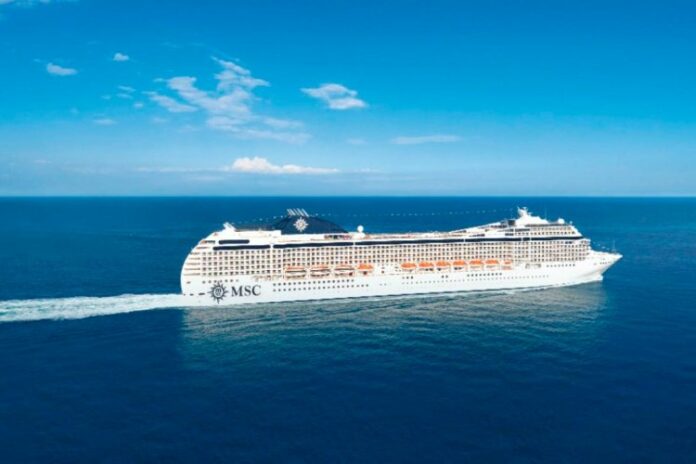
MSC Cruises’ entire fleet of 19 ships is now back at sea following MSC Musica’s return to water yesterday at the start of her summer season from Monfalcone/Venice in Italy.

MSC Musica set sail for the first of her planned 23 seven-night summer 2022 voyages to Katakolon in Greece, the traditional birthplace of the Olympic Games, the Greek islands of both Crete and Santorini, plus Bari in Italy, before she returns next weekend to her seasonal homeport.  

Following the global cruise industry’s voluntary shutdown in March 2020 as a result of the pandemic ashore, MSC Grandiosa became the first ship of any major cruise line to return to sea in August 2020 under MSC Cruises’ pioneering health and safety protocol designed for the wellbeing of the line’s guests and crew.

MSC Cruises continued throughout the pandemic to stick to its ambitious expansion programme and in 2021 it introduced two new vessels to its fleet, MSC Virtuosa and MSC Seashore. 

The brand will welcome two more ships at the end of 2022 – MSC Seascape and its first liquefied natural gas-powered vessel, MSC World Europa.  Sales for both ships are already open.

CSM takes fully digitised jack-up barge

0

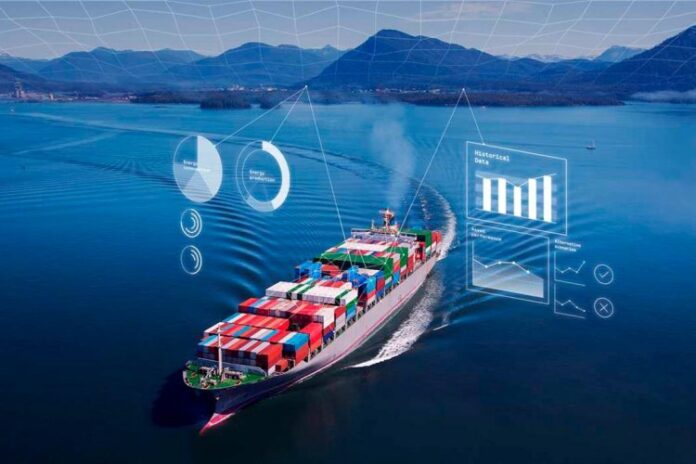
Columbia Ship Management (CSM) has once again pushed industry boundaries by creating a totally SMART and fully digitised jack-up barge under its management as part of a digital twinning process designed to massively optimise vessel performance.

The process, which takes digital vessel twinning to a new level, was undertaken by the team at Columbia’s Performance Optimisation Control Room (POCR) headed up by Captain Pankaj Sharma.

Using non-invasive next generation Internet of Things technology through a wireless eco-system packed with full machine learning capability, the connected vessel benefited from machinery health monitoring as well as enhanced engine diagnostics.

Transforming the SMART vessels into an effective digital twin, the process was one step ahead of pre-existing often fragmented ship-to-shore connectivity solutions.

According to Capt Sharma, it is as much about maximising IoT technology and minimising human input as it is about focusing on Artificial intelligence for predictive applications:

“The vessel is fully digitised and digitalised in a totally cyber secure environment. SMART cameras onboard the ship take analogue images of the systems which are then digitised.

“By combining and analysing data from the sensors, the crew and the onshore technical department have direct access to all information about the health of specific items of equipment. The smart vessel solution capitalises on the machine learning, self-correcting and early warning systems for asset preservation and the solutions are scalable, modular and OEM agnostic.”

With sensor technology and data processing, the vessel uses advanced analytic techniques to identify data trends and anomalies, providing early indicators to avoid potential failures or downtime and help with decision making for crew and shoreside personnel. By using non-invasive sensors, the smart system on the vessel looks for any anomalies while monitoring the vessel’s diagnostics and predictive warning systems.

The mix of technologies onboard the vessel has a proven track record in the aviation, wind energy and marine industries.

Optimising engine and vessel performance through the ingenuity of the POCR can help to reduce emissions as well as increase the life of equipment onboard ship, boosting the return on investment for the owner as well as providing accurate equipment maintenance and condition records which can help to boost a vessel’s resale value. It can also reduce fuel consumption by between 2% and 5% as well as generate a basket of other benefits such as reduced dry dock costs; improved insurance rates and the potential for near zero down time of the vessel. Optimising lubrication can also reduce vessel by vessel lubrication costs by up to 45%.

Capt Sharma again:

“While vibration and temperature monitoring have been used successfully on ships for many years to reduce breakdowns and improve equipment functionality and reliability, our vessel links sensor data to an onboard server from which the crew can immediately spot any abnormalities or problems.

“The generator condition monitoring technology installed onboard, for instance, constantly takes measurements and can recognise abnormalities in the generators as well as the engines and gearboxes.”

Mark O’Neil, President and CEO of Columbia Shipmanagement, said:

“Our POCR optimises all areas of vessel operation, maintenance, bunker and lube oil purchase/consumption.  This is monitoring and performance optimisation at scales never before seen in our industry.”

Bureau Veritas and Danaos pilot CII REAL TIME notation

0

Bureau Veritas (BV) has announced the development of a new notation, CII REAL TIME. 

Shipowners have less than a year to prepare their vessels to comply before the new EEXI and CII regulations come into effect, on 1st January 2023.

Monitoring the evolution of the CII during the year is essential to avoid any surprises with the ship’s energy rating and to make early and informed decisions on operational measures. Danaos Management Consultants S.A. has developed digital solutions to efficiently manage such monitoring and to facilitate Engine Performance Optimization.

Bureau Veritas is teaming up with Danaos to develop a CII REAL TIME notation. This new notation will recognise the implementation of a digital process that helps to collect DCS data and compute the CII data on a regular basis. The notation process will cover the data collection from ship as well as the ship to shore transfer data onto Bureau Veritas servers. The software package “DANAOS WEB ENTERPRISE EDITION“ is used as the pilot for the development of the notation.

The notation will guarantee that the DCS data, as well as the CII, are reliable, consistent and available for the Administration  at the 1st of January of the year N+1. The CII data, hosted by BV as independent third party, could be made public to any interested 3rd party  upon request and agreement of the owner.

Paillette Palaiologou, Vice President for Southeast Europe, Black Sea & Adriatic Zone, Bureau Veritas Marine & Offshore, said:

“Given the CII timeline, shipping companies must act now if they want to make reliable predictions of their vessel’s CII and rating. They must also consider ship performance on a long-term basis, as the trend towards decarbonisation will continue beyond that. Shipowners need to make the right decisions and implement continuous performance monitoring processes today. This new notation is one of the options to enable them to monitor, access and share reliable data with the relevant stakeholders.”

Dimitris Theodossiou, Managing Director at Danaos Management Consultants, commented:

“As maritime technology experts, we are honoured to partner with BV in the implementation of the CII notation. Capitalizing on our extensive experience in implementing similar systems that ensure not only compliance monitoring but active management of Decarbonisation and Energy-Efficiency initiatives (such as optimal weather routing and vessel performance optimization), we are confident that the cooperation with BV will provide tangible and immediate benefits to the Shipping Industry.”

LR and Samsung Heavy Industries pen MOU for Samsung Autonomous Ship

0

LR and Samsung Heavy Industries (SHI) have signed a Memorandum of Understanding (MOU) to develop an autonomous ready ship design to support maritime digitalisation and the growing demand for operational benefits of increased autonomy.

SAS (Samsung Autonomous Ship) is an autonomous navigation system which integrates current navigation equipment, such as ECDIS with TCS (Track Control System), RADAR, CONNING, and remote controlled BMS, with SHI’s new SVISION® system, using technology to eliminate human error which accounts for the majority of maritime accidents. SAS can be installed easily onto a ships system next to other software and evaluates collision risks around a vessel, whilst controlling the direction and speed of a ship in order to avoid objects.

Along with the MOU, LR will certify SHI’s SAS with new SVISION® system used as part of the Autonomous ready ship design. SHI’s SVESSEL® CBM (Condition Based Maintenance) which performs measurement and diagnosis tasks automatically on vessels, will also be certified as part of the Joint Development Project. This will support maintenance by providing remote fault detection of machinery.

LR’s role as part of the MOU will be to perform cooperative studies on autonomous systems in navigational autonomy, including commissioning procedures, guidelines for autonomous systems, verification, and validation activities. This will support SHI with the successful development and implementation of its autonomous system.

LR has also announced the certification of SHI’s digitised electronic logbook system SVESSEL® eLogbook at Posidonia 2022, replacing paper navigation logs with automated data entry from voyage, along with a Statement of Fact for SHI’s SVESSEL® CII Solution that features real-time monitoring and reporting of CII in response to IMO (International Maritime Organisation) greenhouse gas regulations.

Nick Brown, LR Group CEO, said:

“Leading our industry’s transformation starts with partnerships like this that support the growing demand for operational benefits, such as improved efficiency, reduced workloads for crew and higher safety performance via increased autonomy. We are proud to work with Samsung Heavy Industries on the development and implementation of their autonomous capability.”

Jin-Taek Jung, President & CEO, Shipbuilding Sales Engineering Team, SHI, said:

“We’re pleased to collaborate with Lloyd’s Register on the development of Autonomous Ready Technologies. This long and good partnership from early Digital Transformation to the Autonomous Ready Technology is concrete and expected to be a major key to the evolution of maritime industries.”

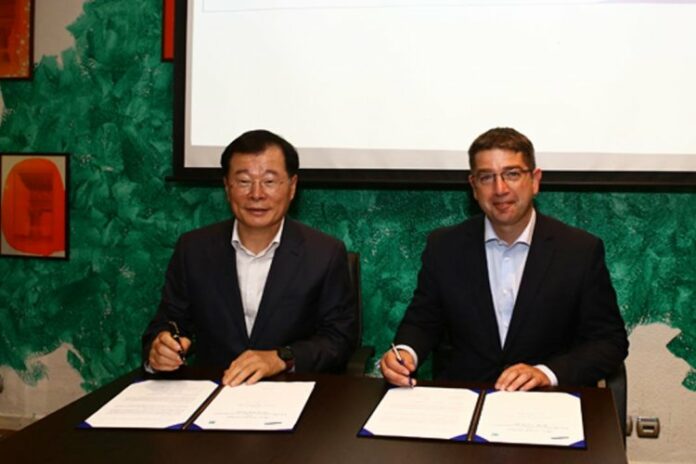
The certification was awarded on 7 June 2022 at Posidonia in Athens, Greece, in the presence of Jin-Taek Jung, SHI’s President & CEO and Nick Brown, LR Group CEO.

Kongsberg to integrate METIS to Kognifai Marketplace

0

By adding the METIS data analysis platform to the Kognifai Marketplace, fleet operators can monitor operations in real time and optimize vessel performance reducing emissions and costs.

METIS is a cloud-based, data analysis platform which offers real-time monitoring, performance analysis and evaluation as well as predictive insights for the whole fleet. The METIS platform will also be available through Kongsberg Digital´s vessel-to-cloud data infrastructure Vessel Insight, and the Kognifai Marketplace where customers have access to a wide range of powerful applications to meet their specific needs of data analysis, reporting and monitoring to optimize operations. 

The architecture of the METIS platform allows clients to integrate data from all available sources and select from the extensive METIS portfolio of digital ship performance solutions the ones that fit best to their needs. There is no need to install additional hardware on board.

All applications on the Kognifai Marketplace are supported by Kongsberg Digital’s Vessel Insight secure data infrastructure. Vessel Insight is delivered as a subscription-based service, which means there is no need for large up-front investments and costly updates and is a non-stop shop for digitalization of the maritime sector.

Kim Evanger, Vice President Maritime Partnerships at Kongsberg Digital, says:

“We are very happy to announce this new partnership with Metis Cyberspace Technology. The company uses advanced technology and high-end expertise to innovate and digitalize the maritime industries, and with METIS as part of the Kognifai Marketplace, customers now have an even greater choice to find the best suited solution to unlock value from their data.”

Using real time analytics based on artificial intelligence, METIS continuously analyses fuel consumption, hull fouling, emissions and route costs, and offers voyage analyses to match performance against the requirements of regulators, charter parties or even investors while at the same time reducing operational costs. 

Andreas Symeonidis, Marketing and Partner Relations Manager at METIS Cyberspace Technology, says:

“This is an exciting new partnership which brings together two innovators committed to reaping the full rewards which digitalization and artificial intelligence offer shipping. Working with the data gathered by KDI, METIS offers clients the actionable solutions they need to achieve higher performance and lower carbon emissions, in a hassle-free, safe and certified way.”

ABS, HHI, and RMI to develop world’s largest liquified CO2 carrier

0

A next generation ultra large, liquefied carbon dioxide (LCO2) carrier is to be developed in a groundbreaking project between ABS, Hyundai Heavy Industries Group (HHI), and the Republic of the Marshall Islands (RMI) Maritime Administrator.

The 74,000cm3 design – presently the world’s largest LCO2 capacity – builds on the 40,000cm3 “super gap” technology developed in 2021 by HHI – which includes Hyundai Glovis, G-Marine service, and Korea Shipbuilding & Offshore Engineering Co., Ltd.

ABS will verify the design, leading to basic design approval, with the RMI Maritime Administrator involved where design acceptance and equivalent arrangements are required..

The announcement follows the recent pioneering joint development project to advance carbon capture technologies between ABS and HHI.  ABS has awarded Approval in Principle (AIP) to the carbon dioxide injection platform developed by HHI Group to store carbon dioxide that has been captured on land, liquefied at high pressure, and transported to the sea through a carrier or pipeline. HHI Group has developed this platform with the goal of storing annually 400,000 tons of carbon dioxide underground in Korea’s East Sea gas field starting in 2025. 

Christopher J. Wiernicki, ABS Chairman, President and CEO, said:

“ABS has been working across the technology needed to enable the carbon value chain with HHI and now, following the advances on the carbon capture platform, we are working on the vessels which will play such a critical role in the development of any carbon capture economy. We are proud to be able to support the development of this game-changing technology that has the potential to make a significant contribution to emissions reduction ambitions.” 

Joo Won-ho, HHI Senior Executive Vice President & Chief Technical Officer said:

“The carbon capture/storage market is expected to grow continually and interest in ultra-large, liquefied carbon dioxide carriers is increasing. Through this development, we hope to contribute to global efforts to achieve carbon neutrality based on the advanced technology of Hyundai Heavy Industries Group.

“Hyundai Heavy Industries Group will continue to focus on creating new values to maximize customers’ profits along with achieving the goal of carbon neutrality.”

Kim Tae-woo, Senior Vice President and Head of Shipping Division of Hyundai Glovis, said:

“In order to achieve Korea’s national greenhouse gas reduction target (NDC) and global net zero, carbon capture and storage is essential. By developing the world’s largest liquefied carbon dioxide carrier, we will preemptively enter the relevant market and play a key role for direct and practical carbon emissions.”

Thomas Blenk, Deputy Commissioner of Maritime Affairs, Republic of the Marshall Islands Maritime Administrator, said:

“The Republic of Marshall Islands Maritime Administrator is committed to addressing global decarbonization and sustainability targets through participation in joint projects like this that allow for collaboration. We are pleased to participate in this innovative development project at the ground level and support the review and design of technology that will provide solutions to the entire industry during this period of energy transition.” 

Oil tankers make rare mid-Atlantic switch of Russian crude cargo

0

Shippers of Russian crude are turning to unusual methods to move cargoes displaced from Europe over much longer distances to new customers. The most recent example is a ship-to-ship transfer in the middle of the Atlantic Ocean.

The Aframax tanker Zhen I discharged its cargo into the supertanker Lauren II in waters 300 miles west of the island of Madeira, according to ship-tracking data monitored by Bloomberg. The transfer took place May 26 to 27.

Moving cargoes onto larger vessels is not unusual, but what is far less common is the location where it happened. Most transfers take place in sheltered waters, where the risks of oil spills are greatly reduced. Russian cargoes have been transferred to bigger ships off Skaw in Denmark, in the western Mediterranean off the Spanish North African town of Ceuta, and even in the North Sea off Rotterdam. This is the first transfer seen on the high seas.

The Zhen I has now returned to the Baltic Sea, where it’s due to load its next cargo from Primorsk, Russia, in mid-June, according to a loading program seen by Bloomberg. The Lauren II is drifting in the mid-Atlantic, possibly awaiting the transfer of another cargo. A ship as large as the Lauren II can hold as many as three cargoes of the size typically carried by a vessel like the Zhen I. That makes them a much more economic option for carrying crude over very long distances.

Self-sanctioning of Russian crude by some European refiners is already forcing greater volumes to be moved much longer distances to buyers, particularly in India. As European Union sanctions begin to bite deeper into flows to Europe, we can expect to see more Russian crude being shipped further, with the country seeking new markets for its oil. Mid-ocean cargo transfers may become more common, if buyers and sellers start to try masking the destinations of Russia’s oil exports.

Source: Bloomberg