-4.6 C
New York
Home Blog Page 435

ClassNK issues AiP for ammonia-ready Mitsubishi’s ammonia-ready VLGC

0

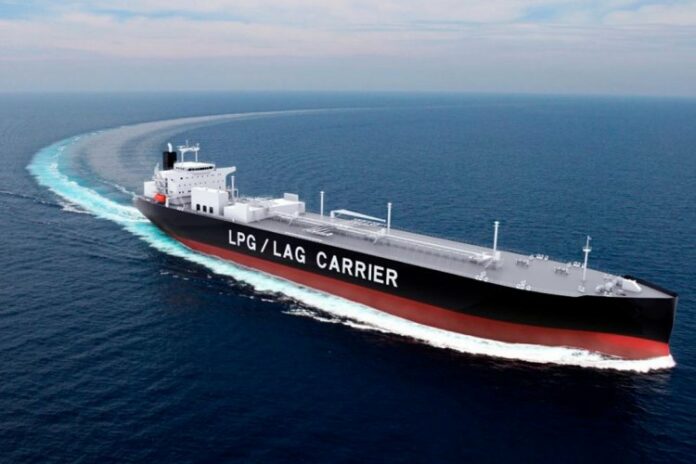
Leading Classification Society ClassNK has issued an Approval in Principle (AiP) for the conceptual design of an ammonia-ready VLGC developed by Mitsubishi Shipbuilding Co.,Ltd. of the Mitsubishi Heavy Industries Group. 

Ammonia is expected to be used as ship fuel for decarbonization since it does not emit CO2 when burned. Meanwhile, taking adequate safety measures are imperative due to its characteristics of being toxic to humans and corrosive against materials, and ClassNK has worked on development of standards and certification. 

In 2021, ClassNK published its “Guidelines for Ships Using Alternative Fuels” to minimize the risks related to ammonia-fueled ships for the ships, crew, and environment by stipulating requirements for installation, controls, and safety devices. 

For Mitsubishi Shipbuilding’s conceptual design converting LPG-fueled VLGC’s main fuel to ammonia, ClassNK reviewed it based on Concept Design category of its “Guidelines for Ships Using Alternative Fuels” Annex 1. Having verified the conformity to their requirements as a future ammonia-fueled ship, ClassNK has issued an Approval in Principle (AiP) as an ammonia-ready VLGC.

Høglund helps to power world’s largest ethane carrier

0

The leading global marine solutions and integrated automation systems expert – designed an integrated automation system with ship performance monitor and a customised control system.

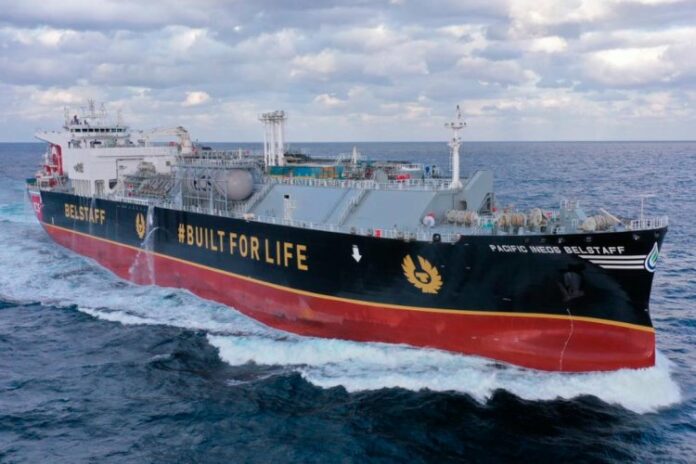
The technology for this project, completed in just 18 months, was created to support Babcock LGE’s cargo handling system (CHS) and fuel gas supply system (FGSS) for the vessel, which is owned by Pacific Gas, the Chinese very large gas carrier.

Duy Chau Do, Høglund Senior Project Manager, said:

“We are proud to have been part of this amazing project and to have contributed with our most complete integrated automation and control system ever, further improving the operational performance of this impressive vessel.”

Høglund’s priority was to develop a good interface and integration logic, to handle the complex gas handling operations designed by Babcock LGE in a safe and reliable manner.

Duy Chau Do said:

“Most of the groundwork was laid in early 2021 with an early design of an overarching integrated automation and power management system. The owner, Pacific Gas, was proactively involved in the project, and we had vibrant communication over several months discussing all the details.

“When it came to cargo handling, we relied on Babcock LGE and their tremendous engineering capabilities. We had our most senior engineers work throughout the summer on translating the gas safety and alarm matrix from Babcock LGE into Høglund software logic and to ensure that all signals were treated correctly.”

Duy Chau Do added that effectively integrating automation and gas handling systems on gas newbuilds is a major challenge.

He said:

“Without properly considering automation and integration, the vessel is at risk of becoming too difficult to operate and maintain. A smooth and solid collaboration between the Jiangnan shipyard, shipowner Pacific Gas, Babcock LGE and Høglund was vital to achieving success for a project of this scope and complexity.”

Babcock LGE played a leading role in the project, overseeing the complete design, supply and advisory supervision/commissioning of the CHS and FGSS.

The Pacific Ineos Belstaff was featured in Royal Institute of Naval Architect’s ‘Significant Ships of 2021’ list – a testament to the hard work and market-leading technological expertise of all involved in the project.

Equinor signs long-term LNG purchase agreement with Cheniere

0

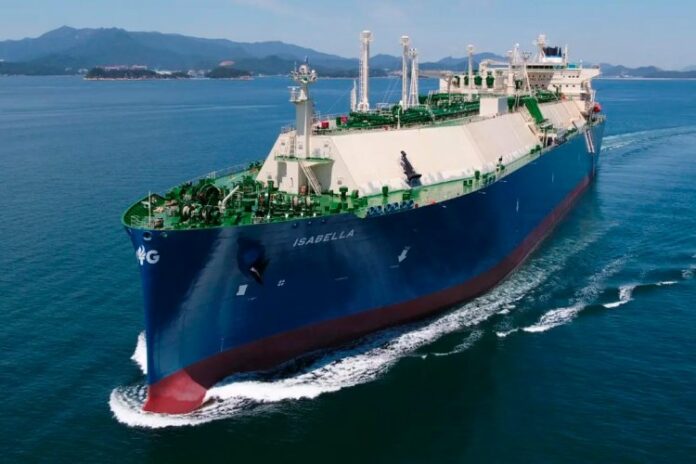
This new Sales and Purchase Agreement (SPA) will add new volumes to Equinor’s already significant gas portfolio of pipeline gas and LNG.

With global energy demand growing and increased focus on energy security, the LNG market is expected to grow significantly. US LNG can supply the European markets as well as cover demand in other markets.

Helge Haugane, Equinor’s senior vice president Gas & Power, said:

“I am very pleased that we have entered into a long-term agreement with Cheniere, the US’ largest producer of LNG. Based on our production in Norway, Equinor is the second largest supplier of pipeline gas to Europe. The new LNG agreement is a major building block in Equinor’s ambition to further strengthen our global gas position by adding more LNG to the portfolio. LNG will play a crucial role in providing energy security. By increasing our position in this segment, we will be even better positioned as a long-term reliable supplier of energy.”

Under the SPA, Equinor has agreed to purchase approximately 1.75 million tonnes per annum (“mtpa”) of LNG from Cheniere Marketing on a free-on-board basis for a term of approximately 15 years.

The deliveries under the SPA will start in the second half of 2026 and reach the full 1.75 mtpa in the second half of 2027. Half of the volume, or approximately 0.9 mtpa, is subject to Cheniere making a positive final investment decision (“FID”) to construct additional liquefaction capacity at the Corpus Christi LNG Terminal beyond the seven-train Corpus Christi Stage III Project.

Damen builds a series of harbour tugs for Swedish FMV

0

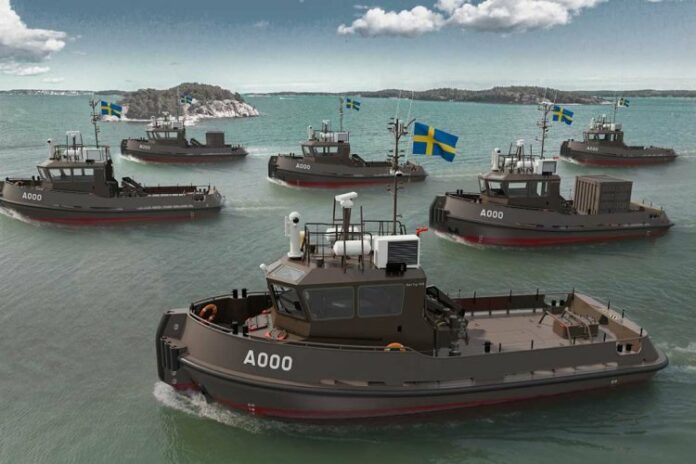
The Defence Materiel Administration of Sweden ordered four ice-class tugs from Damen Shipyards with options four two extra, that will be equipped with numerous options. 

A heavy duty crane, bow thrusters, an extra strong aft winch and more will be installed on the vessels of the Damen Stan Tug 1606 design, which is extended to 17 meters length over all to fit all the options. Engines comply to IMO Tier III emission regulations.

The tender that FMV (Försvarets Materielverk, the organisation that acquires all necessary equipment for the Swedish armed forces) wrote for ice class tenders was won by Damen. A trusted partner was needed that could deliver vessels of proven performance. Standardised designs by Damen ensure this reliability and allow for the extensive range of optional equipment that the operators in the naval harbours require.

Along with the options mentioned, heating and airconditioning, a galley with settee and toilet will complete crew safety and comfort aboard. The twin screw tug will be powered by two Volvo D13 MH engines. Exhaust silencing, SCR (selective catalyc reduction – to remove nitrogen dioxide from exhaust gasses) and soot filters will ensure IMO Tier III compliance. An auxiliary generator delivers extra electric power needed for crane handling. Bilge cooling ducts transfer engine heat into the waters from a closed loop system, without take-in of surface water in which ice particles could block the engine cooling system. The push knee on the tugs’ bows will be adapted to navigating in ice.

Mr Patric Hjorth, Director Naval Division, said:

“This is the second order FMV placed with Damen Shipyards. This series of new harbour tugs is part of our fleet renewal program. Damen has proven to be the right partner for this project. Their experience with state of the art tug boats as well the ability to maintain the vessel during their lifetime and deliver excellent service from their local yard in Sweden has positioned them well to support and advise us in our mission to provide the Swedish Navy with reliable and smooth sailing vessels.”

Martin Verstraaten, Damen Sales Manager, said:

“Throughout the tender process, the collaboration between all parties has been excellent. Implementing FMV’s special demands in our proven design and combining our operational knowledge and shipbuilding experience has resulted in a compliant solution that offers real value for money.”

The four vessels will be built at the Albwardy Damen yard in Dubai. This yard recently completed construction of six Stan Tug 1606 vessels. The lengthened design for FMV will profit from the building experience at the yard. FMV previously ordered two Damen ASD 3010 ice class tugs, positive experience with these vessels as well as the cooperation with Damen played a role in their choice to select Damen for the construction of these four STu 1706 ICE tugs. The lengthened tugs for FMV get their own type name. The vessels are to operate in the Stockholm harbour (2x) and in Karlskrona (2x). Two more ice class tugs of the same design are on option, these are to operate in the western parts of Sweden. The Damen Oskarshamnsvarvet in the south-east of Sweden will act as a service hub for the FMV tugs.

Port of Long Beach joins the Green Shipping Corridor

0

The Port of Long Beach has signed on to the Shanghai-Los Angeles Green Shipping Corridor, a partnership of C40 Cities, ports, shipping companies and cargo owners convened to create a zero-emissions trans-Pacific trade route.

First announced in January by C40 Cities, the ports of Shanghai and Los Angeles, and key maritime stakeholders, this Green Shipping Corridor will be a big step toward decarbonizing shipping between the busiest ports in China and the United States. C40 Cities is a network of the world’s leading cities that are working to deliver the urgent action needed to confront the climate crisis and create a future where everyone, everywhere can thrive.

The partnership intends to work together to achieve these goals by developing a “Green Shipping Corridor Implementation Plan” by the end of 2022 that will include deliverables, goals and interim milestones, and roles for participants.

Port of Long Beach Executive Director Mario Cordero said:

“This initiative builds on important efforts our Port participates in, including the World Ports Climate Action Program, an international commitment to develop projects to address global warming and meet the goals outlined in the Paris Agreement. It also complements the Clean Air Action Plan, and supports our shared goals to reduce carbon emissions and advance technologies, especially for vessels, which are our largest source of emissions.”

C40 Executive Director Mark Watts said:

“Accelerating efforts to decarbonize the shipping sector is urgent if we are to limit global heating to 1.5 degrees Celsius. By convening a powerful coalition that includes the San Pedro Bay ports complex, the Port of Shanghai and key maritime industry stakeholders, we hope to be an important catalyst in decarbonizing supply chains of all kinds around the world, while also creating a replicable model for other port cities to follow.”

Long Beach Harbor Commission President Steven Neal said:

“The Port of Long Beach has an arsenal of environmental initiatives, with an ultimate goal of reaching zero-emission terminal operations by 2030 and truck operations by 2035. Joining the Green Shipping Corridor extends our influence outside of our own city, seeks to decarbonize shipping operations, and reinforces our commitment to balancing economic activity with sustainability.”

Key decarbonization goals for the Green Shipping Corridor partnership include:

  • The phasing in of low, ultra-low, and zero-carbon fueled ships through the 2020s with the world’s first zero-carbon trans-Pacific container ships introduced by 2030 by qualified and willing shipping lines.
  • The development of best management practices to help reduce emissions and improve efficiency for all ships using this international trade corridor.
  • Reducing supply chain emissions from port operations, and improving air quality in the ports of Shanghai, Los Angeles and Long Beach, and adjacent communities.

Accelleron and Danelec Marine partner to offer new digital service

0

Accelleron, the new face of ABB Turbocharging, and Danelec Marine, a leading Voyage Data Recorder (VDR) manufacturer and maritime Internet of Things (IoT) infrastructure provider, have signed a partnership agreement to offer a comprehensive digital service that combines onboard data collection with dedicated engine and vessel analytics.

The joint solution delivers real time operating data through the combined utilization of Accelleron’s Tekomar XPERT marine solution and Danelec’s intelligent DanelecConnect maritime IoT infrastructure. Tekomar XPERT marine is a comprehensive digital suite that provides emissions monitoring and powerful insights into vessel performance, while DanelecConnect delivers economic and operational benefits from the advanced use of ship data.

The fast availability of data from a vessel’s systems, including the automation system, the voyage data recorder, GPS, electronic chart display and information system (ECDIS), the gyro compass, the engine, propeller, automatic identification system (AIS), and individual sensors, delivered in a standardized and cyber-secure manner, will be analyzed via Tekomar XPERT thereby enabling actionable insights leading to efficiency improvements and cutting additional downtime for maintenance or repairs in port. No further onboard IoT infrastructure is required, and no manual collection of data from the systems is needed.

Caspar Jensen, CEO of Danelec, said:

“Managing maritime assets when they are continuously moving, such as large cargo vessels or tankers, has always been a challenge and having them dock in harbor for extensive periods is very expensive. The partnership between Accelleron and Danelec allows ship owners to leverage the benefits of automating data collection and delivering that data to shore for more efficient utilization, while also enabling optimized performance to keep ships moving and reducing their lifecycle operating costs.”

Owners and operators will retain full control over their vessels’ data and will be able to share operational signals via a secured and cost-efficient gateway through the Accelleron and Danelec partnership.

Mauro De Micheli, Head of Sales, Marketing and Partnerships for Digital solutions, Accelleron, said:

“By combining Danelec’s high quality data collection capabilities with Accelleron’s state-of-the-art analytics software, we are providing seafarers with a higher level of data-enabled services. This is an important step forward as the maritime sector focuses on achieving greater efficiencies and operational optimization.”

BHP and NYK strengthen partnership to progress shipping decarbonisation

0

BHP and NYK have signed a Memorandum of Understanding (MoU) to expand and deepen their existing business relationship and to support the decarbonisation of ocean transportation across their shared supply chain.

BHP and NYK will jointly study the next-generation of zero-GHG emission ships fuelled by green or blue ammonia. If feasible, this could potentially support both organisations in their ongoing efforts to achieve their respective long-term GHG emission reduction targets for shipping and present a further decarbonisation option for the shipping industry.

BHP and NYK also aim to promote the use of GHG emission reduction measures such as energy-saving innovations and technologies, and alternative lower- and zero-GHG emission marine fuels.

BHP’s Vice President of Maritime & Supply Chain Excellence, Rashpal Singh Bhatti, said:

“Signing this MOU with NYK, one of our long-term strategic partners, lets us leverage their reach and depth of expertise in shipping and decarbonisation – including the future fuel transition the industry must make – in support of BHP’s decarbonisation ambitions for net zero Scope 3 GHG emissions from shipping of BHP’s sold products by 2050.”

Nobuhiro Kashima, Managing Executive Officer-Chief Executive of Dry Bulk Division, NYK, said:

“NYK is very pleased to expand our strategic partnership with BHP with a specific aim and focus on decarbonisation and we look forward to developing decarbonisation solutions for our shared supply chain. This deepens our relationship as strategic business partners. Going forward, NYK will continue to make full use of our knowledge, innovation and technologies as one of the world’s leading shipping companies to support our decarbonisation of shipping in cooperation with customers.”

New discovery near the Johan Castberg field in the Barents Sea

0

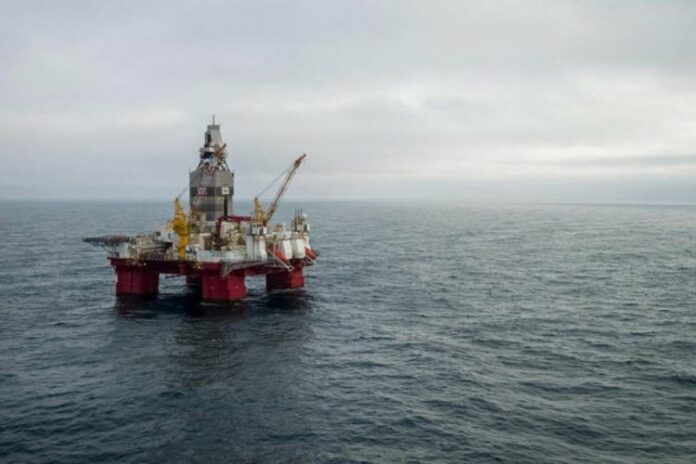
The well was drilled five kilometres south-southeast of discovery well 7220/8-1 on the Johan Castberg field, 210 kilometres northwest of Hammerfest.

Equinor is the operator of production licence 532. The size of the discovery is preliminarily estimated at between 5-10 million barrels of recoverable oil equivalent. Together with the other licensees, Vår Energi and Petoro, Equinor will consider tying the discovery into the Johan Castberg field.

Kristin Westvik, Equinor’s senior vice president for exploration and production north, says:

“The drilling operation was safely and efficiently performed. The new discovery and information will be viewed in the light of other discoveries in the area, and together with our partners we will consider further development of the area.”

The news about the Snøfonn North oil discovery was published on 25 May this year, about one year after the Isflak discovery in the same area.

Skavl Stø will be further matured together with Snøfonn North and the previous discoveries Skavl (2014) and Isflak (2021).

The well was drilled by Transocean Enabler.

Skavl Stø is the thirteenth exploration well in the Castberg licence. The production licence was awarded in the 20th licensing round in 2009.

Port of Valencia to build two electrical substations to support zero emissions goal

0

The first substation, which is already under construction, will be installed in the southern area and is expected to be active to serve the new passenger terminal. The second substation will be in the northern part of the port area.

The president of the Port Authority of Valencia (PAV), Aurelio Martínez, stressed that “the substations are an essential part of our real commitment to a sustainable port by 2030”.

The two electrical substations of the Port of Valencia, with a power of 90 megawatts each, will enable the auxiliary engines of the ships to be connected to electricity while they are berthed in the port area, thus guaranteeing a reduction in CO2 emissions. This is one of the actions that the Port Authority of Valencia (PAV) is carrying out as part of its Valenciaport 2030, zero emissions objective, a joint strategy with the port community that can be seen in the exhibition ‘One land’.

The president of the Port Authority of Valencia, Aurelio Martínez, emphasised that “the substations are the essential piece to be able to electrify the port, an initiative which is part of our real commitment to a sustainable port in 2030”. For the head of the PAV, “these two substations are necessary because we want to provide the Port with connection points so that all the ships can connect to the grid when they dock at the site”.

He said:

“The substation in the northern area will be connected to the Aqua substation, while the one already under construction will be linked to the La Punta substation. The latter, the one in the southern area, will be operational when the new passenger terminal is up and running to meet the capacity demanded.”

Yinson-Sumitomo holds Naming Ceremony for FPSO Anna Nery

0

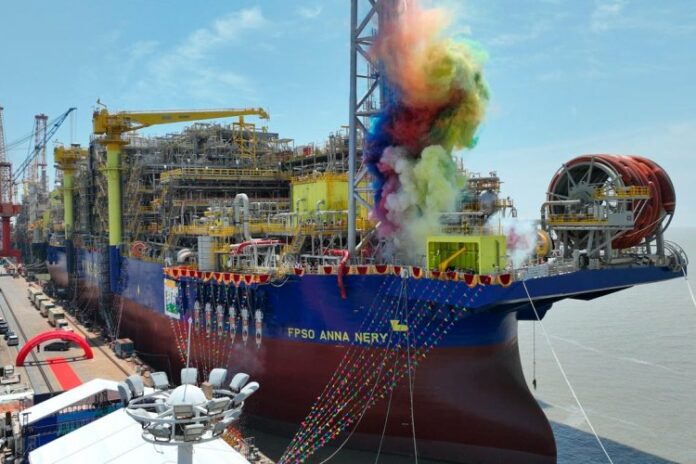
Yinson together with the project partner Sumitomo Corporation (“Sumitomo”) officially named the newest asset, FPSO Anna Nery, during a grand naming ceremony held concurrently in Jiangsu, China and Kuala Lumpur, Malaysia. 

FPSO Anna Nery is currently undergoing final conversion works and is going to set sail for Brazil in Q3, where it will be deployed at the Marlim Field located in the eastern part of the Campos Basin, about 150km offshore Rio de Janeiro. The asset will be stopping for a few days in Singapore and Mauritius for crew change and fresh supplies.

By building resilience through collective efforts, construction progress on the FPSO Anna Nery project remained relatively unimpacted by the various challenges brought about by the pandemic and stringent movement restrictions in China. Safety-wise, the project maintained Zero LTI over 7-million-man hours – an excellent achievement by any standard, and even more so given the volatile external environment. 

Yinson Production Chief Executive Officer Flemming Grønnegaard said:

“This milestone provides confidence that Yinson has the ability to continue delivering responsible solutions to meet the world’s increasing energy demands, even in challenging circumstances. FPSO Anna Nery is our maiden asset in Brazil, and the first of three Brazil-bound offshore production projects that Yinson is currently undertaking.”

Project Manager Scott Bendiksen said:

“This naming ceremony is truly a celebration of adaptability, tenacity and teamwork between Yinson, our partner Sumitomo and our client Petrobras, together with our key bankers, vendors and subcontractors. With the construction phase in Cosco now almost completed, and ongoing commissioning works we will endeavour to achieving first oil as per the original contract schedule.”

Sumitomo Corporation General Manager of Energy Department Wataru Sato commented:

“Sumitomo is honoured to be part of this landmark first FPSO in Brazil by Yinson and we would like to express our sincere appreciation to all contributors for their dedication and hardwork. We are confident that FPSO Anna Nery will perform well in the Marlim field.”

Petrobras General Manager of FPSO Projects Marcio Mattoso commented:

“Petrobras congrats Yinson and all the parties involved in the achievement of such important milestone. Petrobras highlights that the FPSO Anna Nery will boost the production of Marlim Field, which is the first Petrobras Revitalization Project, and the unit is planned to commence its operation in the first quarter of 2023.”