-3.4 C
New York
Home Blog Page 433

SEA-KIT unveils new H-class USV for ocean survey

0

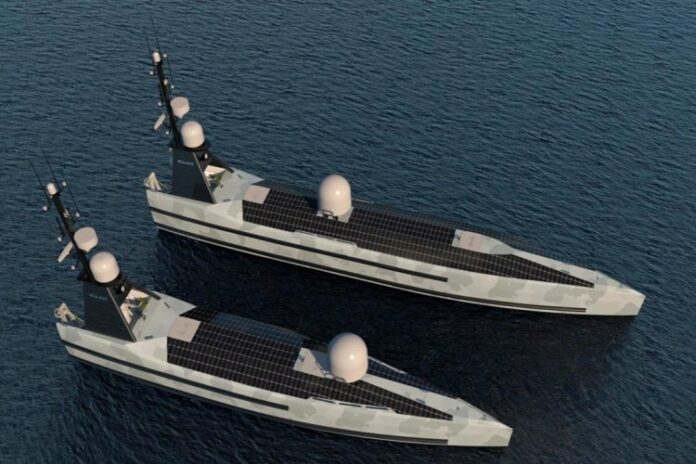
Essex-based SEA-KIT International, a leading provider of low-carbon uncrewed surface vessel (USV) solutions in active operation across the globe, has revealed a new USV design that focuses on hydrography and environmental data collection.

The SEA-KIT H-class USV, with its retractable gondola and dual sensor deployment options, is a highly configurable design based on a wealth of operational data and feedback collected from the company’s established X-class USVs. Several of these 12m vessels are currently operational in the Indian Ocean, North Sea, Red Sea and the Pacific.

The H-class features a composite hull for higher transit speeds, giving it greater range and endurance, as well as active stabilisers to minimise roll. The new design has 12m and 15m variants, with the 12m version transportable in a standard shipping container for rapid, low-cost deployment. Both variants can be davit launched. 

Ben Simpson, SEA-KIT CEO, said:

“Although many of the H-class USV’s features directly benefit hydrographic survey missions, this is a design that can perform many different tasks due to its large gondola and ability to dip cages and tow sensors. The fuel-saving, speed and endurance benefits of the composite hull add to the value of these USVs as low-carbon, cost-efficient solutions for a wide range of maritime operations. This design is the next step towards our goal of zero emission vessels.”

The H-class USV can accommodate a range of sensors as well as deploy a tow cage, SVP, MAPR, CTD and side scan sonar for deep-water and nearshore bathymetric and hydrographic survey missions. The vessel includes a Multibeam Echo Sounder (MBES), station holding and winch-deployed sensor payloads for versatile ocean survey capability.

SEA-KIT’s H-class USV is designed to MCA Category 0 for extended, over-the-horizon capability and will hold Unmanned Marine Systems (UMS) certification from Lloyd’s Register as well as Lloyd’s Register approval for design and hull construction.
Acta Marine orders two next generation methanol powered CSOVs

0

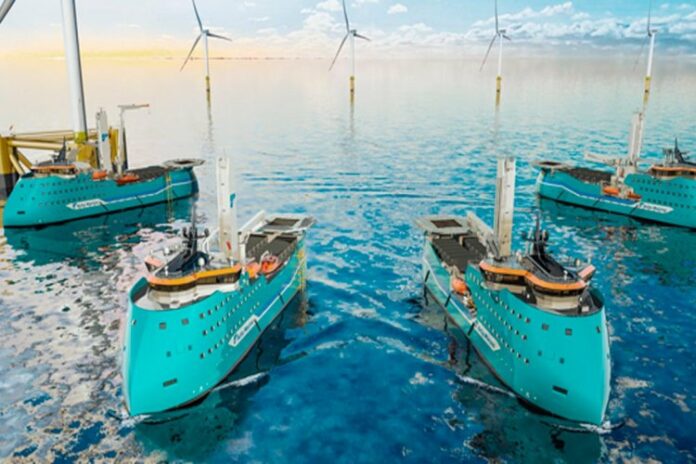
Acta Marine has signed a contract for the construction of two next generation Methanol MDO/HVO powered DP2 Construction Service Operating Vessels (CSOVs) at Turkish shipyard Tersan with two optional vessels for delivery at a later stage. 

The vessels are primarily aimed at the offshore wind construction market and carry the new SX-216 TWIN-X Stern design from Ulstein Design & Solutions AS that was exclusively designed for and in cooperation with Acta Marine.

Rob Boer, Managing Director at Acta Marine, says:

“Acta Marine is growing along with the offshore wind construction market by ordering these two vessels while remaining one of the leaders in this field. The dedicated SX-216 design with a TWIN-X stern, an integrated walk-to-work gangway system and 3D crane and its hotel style accommodation represents a next step in responding to the market needs. A first in offshore wind this vessel will be capable of operating on dual fuel methanol and MDO/HVO enabling a strong carbon footprint reduction in the near future in combination with a battery power system. Furthermore, we are very excited that we have been able to sign an agreement with Tersan Shipyard that is well known for its quality and professionalism.”

In-field agility, high operability and workability, safe transfer of people and cargo, optimized on-board logistics, high productivity and high comfort for charterers’ crews are of eminent value throughout the design of this vessel. With a strong ESG and sustainability focus Acta Marine sees methanol as one of the most viable alternatives to minimize her carbon footprint in the marine space and more specifically for offshore vessels. 

Simon Anink, General Manager at Acta Marine, states:

“Dual fuel methanol driven propulsion trains score high in terms of technology readiness and are eligible for further enhancement to a single fuel methanol upgrade at a later stage. This will allow early application of significant CO2 reduction measures now, while still allowing net-zero operations over the life of the ship.”

The CSOV measures 89 metres in length, 19 metres in width and accommodates up to 135 people in 85 cabins. It will be equipped with an SMST provided Motion Compensated Gangway system, mounted on an integrated tower with height adjustment and a personnel/cargo lift. Additionally, the vessel features an SMST 3D-motion compensated crane with 6t lifting capacity. Cargo area is 500 square metres indoors, and 500 square metres outdoors. The vessel shall provide for walk-to-work transfer of personnel and cargo, efficient and safe in significant wave-heights (Hs) up to 3.0 metres.

Sakir Erdogan BD Director at Tersan Shipyard comments:

“We are very pleased that Acta Marine has chosen Tersan for this project. We are looking forward to the cooperation and to deliver the new vessels to the growing renewables industry.” 

Acta Marine’s new CSOVs can take on assignments in commissioning and construction of offshore wind farm installation phase and perform maintenance tasks on completed wind farms. The first two vessels are scheduled for delivery Q2 and Q3 2024.

Yang Ming to add 11,000 TEU vessel

0

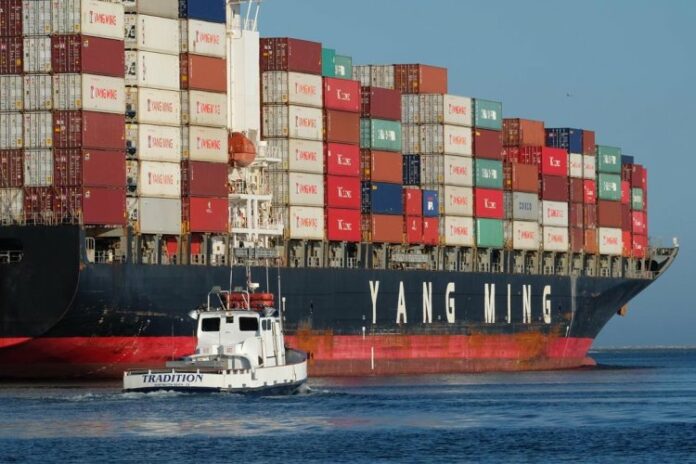
This vessel was chartered from Shoei Kisen Kaisha, Ltd., built by Imabari Shipbuilding Co., Ltd., and named at a ceremony held at Imabari Marugame Shipyard today (14th). Yang Ming’s attendees participated in the ceremony virtually at their Taipei office. Mr. June-Pong Tseng, Chairman of King-Freight Group was invited to officially name the ship, and Mrs. Ling-Chu Liao, wife of the Chairman, performed the ceremonial cord-cutting to wish the ship and its crew the best of luck on their future voyages.

To optimize Yang Ming’s mid- to long-term operational efficiency, the Company ordered a total of fourteen 11,000 TEU newbuildings through long-term charter agreements with ship owners. YM Tranquility is the eleventh in the series and will be delivered on June 22nd. This type of vessel has a nominal capacity of 11,860 TEU and is equipped with 1,000 plugs for reefer containers. With a length of 333.9 meters, a width of 48.4 meters, a draft of 16 meters, these vessels are designed to cruise at a speed of up to 23 knots. Given stricter environmental regulations, the ship is equipped with various environmental features including scrubbers, Water Ballast Treatment Plant and Alternative Marine Power system.

In addition, the ship’s twin-island design can increase loading capacity and navigational visibility to ensure more efficiency and safety. The ship hull form optimization is conducive to energy saving and overall emission reduction. Moreover, with shorter length and beam, the ship can smoothly maneuver during berthing or departure at major ports worldwide and pass through the new Panama Canal with ease. As such, these new ships will bring greater flexibility in Yang Ming’s vessel deployment.

A total of ten newbuildings from the series have been delivered and join Yang Ming fleet. These vessels will rejuvenate the Company’s global fleet, reduce unit cost, and improve energy efficiency. The optimization will also diversify Yang Ming’s fleet. YM Tranquility will be deployed on Yang Ming’s Trans-Pacific service PN3 after delivery. Considering the upcoming peak season, the deployment will not only meet customer needs, but also maximize capacity utilization, while increasing Yang Ming’s competitiveness. 

Looking forward, the new vessel will enhance Yang Ming’s global fleet and service network. The port rotation of PN3 is Hong Kong – Yantian – Shanghai – Pusan – Vancouver – Tacoma/Seattle – Pusan – Kaohsiung – Hong Kong.

Aurus and CSM join forces as CASM India

0

Aurus Ship Management, has signed an agreement with Columbia Shipmanagement (CSM) to explore various ship management opportunities in the Indian market.

As part of the agreement, Aurus Ship Management will be renamed Columbia Aurus Ship Management (CASM) and will work to become the leading provider of maritime services in the Indian market.

Services offered by the newly renamed entity will fall within the scope of the traditional business of Aurus Ship Management including recruitment of crew, purchasing, payroll management and technical services. With a particular focus on attracting, training, and retaining experienced and qualified crew, it is the aim of the rebranded set-up to become synonymous with maritime excellence throughout India. Combining CSM’s advanced development of in-house and external training resources, CASM will capitalise on the immense wealth of experience in the local and national Indian crewing market.

The move, which will ensure the supply of highly qualified crewmembers from India and is seen as a way for CSM to increase its footprint in this very important market. By the implementation of a CSM Cadet Program in close collaboration with Aurus and Indian Academies, both parties will attract young talent, contribute to the further enhancement of the seafarer skillset and secure long term employment.

Drawing on a combined total of over 45 years of experience, both CSM and Aurus are convinced of the mutual benefits a partnership in this form will bring. CASM will leverage the existing local expertise of the well-established Aurus name in India and the international knowhow and size of the CSM name to become a true force in the Indian maritime ecosystem. Looking to capitalise on the advent of future green technologies and changes in the maritime space, the new company will be forward-looking, flexible and innovative in its approach. 

Prakash Agarwal, CEO of  AURUS said:

“It is our immense pleasure to be chosen as the Indian partner of Columbia Shipmanagement in India and we very much look forward to working with them in partnership. We believe it recognises the professionalism of our team of shore based employees and the values of the company that has seen exponential growth in its business activities.”

Mark O’Neil, CEO of CSM, said:

“When forming a partnership with another company it is vital that the two cultures of their businesses are aligned. In Aurus we have found this partner. A leader in the Indian crew recruitment space, Aurus, like CSM, prioritises the needs of seafarers and its workforce. Crucially, both companies believe in operating in the most environmentally and socially conscious way whilst making informed and ambitious commercial decisions.”

WinGD and HHI collaborate on ammonia two-stroke engine development

0

WinGD and Hyundai Heavy Industries’ Engine Machinery Division (EMD) are to collaborate on delivering the first WinGD engine capable of running on ammonia, providing a vital step in shipping’s progress towards decarbonisation.

Under an MOU (Memo of Understanding) signed during the Posidonia exhibition on the 7th of  June, the two parties will aim to deliver a first engine by 2025, in line with WinGD’s previously announced timeframe for bringing ammonia engines to market. The project will explore ammonia concepts for both diesel-fuelled WinGD X-type engines and dual-fuel LNG X-DF engines.
 
Dominik Schneiter, VP R&D, WinGD said:

“This project will give WinGD and HHI an important advantage in the development of ammonia-fuelled marine engines. It will set the path for a new generation of two-stroke engine technology applicable to a wide range of cargo vessels in the coming decades.”

Kwang-Hean An, President COO, EMD said:

“There is strong market demand for commercialised ammonia-powered vessels in the near future. This collaboration with WinGD will ensure that EMD is ready to support that demand with the required engine technologies.”

The project will include developing relevant safety, emissions abatement and fuel supply solutions for ammonia engines targeting the local market. 

WA designed offshore inspection system pushes frontier of robotics

0

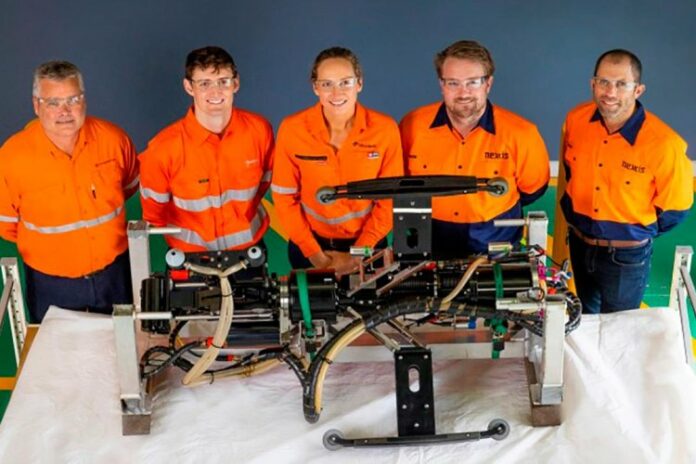
Woodside has collaborated with industry to create a state-of-the-art offshore caisson cleaning and inspection tool (CCAIT system) that allows safe and cost-effective remote inspection of critical equipment on its offshore platforms.

The one-of-a-kind system was designed, developed and deployed in less than 12 months via a collaboration led by Woodside Energy (Woodside) and incorporating Perth-based expertise from Nexxis, Monadelphous, WOMA, and Fugro.

The CCAIT system incorporates a human-sized robot, designed to inspect the inside of caissons – vertical carbon steel pipes up to 70 metres long and up to 1.2 metres wide. These structures are used on offshore platforms to house critical equipment such as firewater and seawater lift pumps.

In response to possible COVID-related supply chain risks, a local solution was sought, inspiring the collaboration.

The CCAIT system is remotely controlled from a safe location on an offshore platform by skilled technicians. The tool is lowered inside the caisson via a tether and winch arrangement. Wheels are then extended to centralise the tool within the caisson, and probe arms extend to enable ultrasound inspection. A series of high-definition cameras stream video back to the technicians, with the data used by the asset team to define the forward plan.

Woodside Executive Vice President Technical Services Daniel Kalms said: 

“The CCAIT system removes the costs of mobilising tools from international locations, including the cost of delay in fractured supply chains. These can represent up to 50% of the total cost of an inspection campaign.

It was incredible to see the team, including Woodside graduate robotics engineers, write software to dramatically improve the performance and usability of the tool. The project team was made up of people from local companies who came together and designed, procured, fabricated, tested, and validated a robotic solution during the height of a pandemic in under a year.”

Chris Heron, a coatings subject matter expert from Woodside’s major maintenance partner Monadelphous, said: “Building a bespoke Ultra High-Pressure cleaning solution that can quickly remove marine growth to allow inspection without damaging the protective coatings was challenging and rewarding. We drew from our local supplier expertise and relationships to test the latest technology onshore and successfully lead the offshore deployment.”

Nexxis Technology CEO (Chief Executive Officer) Jason de Silveira said Woodside’s decision to partner with a local company demonstrated the strong sovereign capability of Australia’s advanced manufacturing sector to develop and deploy cutting-edge robotic technology. 

He said:

“This collaboration highlights local capability and supports small to medium enterprises, creating jobs in the advanced manufacturing sector and pushing the frontier of robotics globally.”

Saipem signs MoU with Trevi for foundation drilling solutions for offshore projects

0

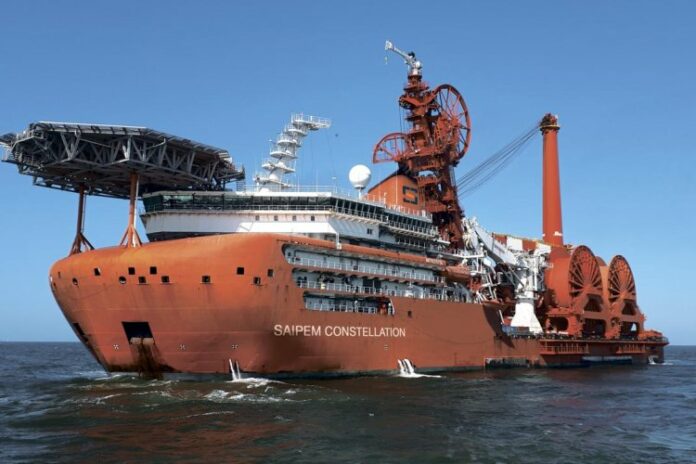
Saipem SpA and Trevi SpA have signed a Memorandum of Understanding to cooperate to jointly develop a design of two drilling systems for large diameter foundation holes for wind farms.

Efficiently drilling large diameter holes to host foundation piles represents an essential skill to ensure the successful installation of offshore wind farms.

Trevi and Saipem will develop a design that can cope with site specific geotechnical and geophysical data pertaining to the locations to be drilled, to identify the most appropriate drilling strategy and consequently the most appropriate technology.

The agreement with Trevi also covers the possibility to jointly develop such drilling equipment that should then be operated by Saipem, leveraging on Trevi expertise and knowhow on foundation, in executing wind farm projects

This MoU, which follows the non-binding agreement with Havfram to evaluate a potential cooperation in the offshore wind business, is consistent with Saipem’s 2022-25 Strategic Plan, since it aims at strengthening Saipem’s value proposition for the offshore wind, a sizeable market which is expected to grow by over 30% in the Strategic Plan horizon.

The agreement with Trevi will support Saipem’s goal of identifying new and more profitable ways of execution also through designing and developing new technical solutions.


Chinese offshore salmon farm makes first commercial harvest

0

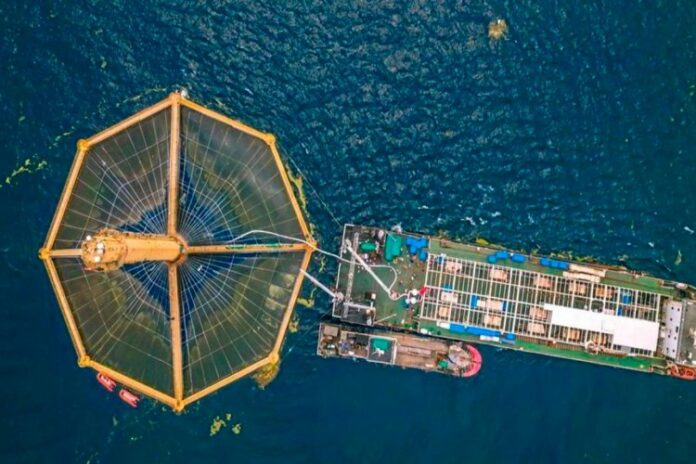
A Chinese offshore Atlantic salmon farm has harvested 15,000 fish from its site off the coast of Qingdao, on the country’s northeast coast, Xinhua news agency reports.

Shenlan 1 is growing a total of 100,000 Atlantic salmon and the harvest marks the first for a Chinese deep-sea salmon farm, according to government official Guo Peng.

The farm was jointly launched by Shandong Marine Group, Wanzefeng Group, and Qingdao Ocean Investment Group.

Shenlan 1 is constantly being renovated and upgraded, Tang Qingkai, who is in charge of the promotion platform, told Xinhua.

The farm can be directly managed from land 100 nautical miles away thanks to a newly added biomass monitoring system, optimized breeding monitoring system and remote information transmission system, according to Tang.

He added the biomass monitoring system enables real-time monitoring of fish’s living conditions, feeding conditions, and fish’s shape and size, so staff members can accurately adjust feeding at any time according to information provided.

The experiment zone is located in a zone of deep cold water in the Yellow Sea, with the temperature remaining under 12 degrees Celsius all year round, which is suitable for the growth of salmon and other high value-added coldwater fish.

With China’s spending power growing, the market demand for salmon has been gradually increasing, Zhu Danpeng, a veteran food industry observer told the Global Times, adding that the nation’s dependence on imported salmon will continue to lessen as domestic farming increases.

Source: IntraFish

Hydrogen to power tanker ships with new retrofitting concept

0

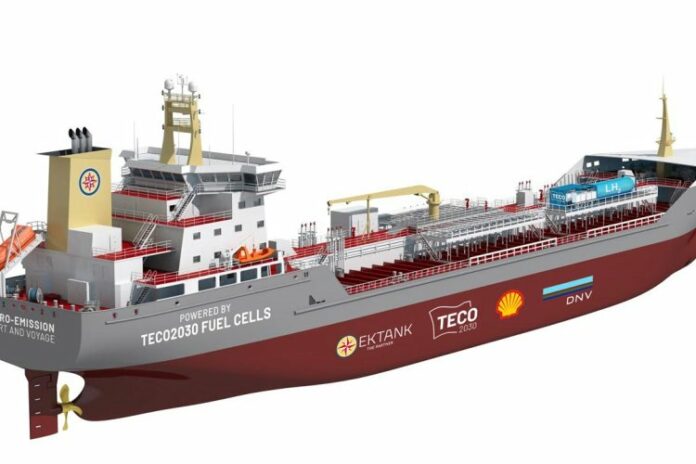
The hydrogen powered tanker will allow zero emission at berth, and up to 100% reduction of GHG emissions during voyage.

This pioneering concept could become a first mover in this maritime shipping segment and contribute to the developments of achieving the ambitious climate targets committed by the European Union. As part of the European Green Deal, the EU has committed to reducing GHG emissions by 55% by 2030, and a binding target of achieving climate neutrality by 2050. Under the ‘Fit for 55 package’ the EU is currently developing its climate, energy and transport-related legislation to align current laws with the 2030 and 2050 ambitions.

It is therefore a great and ever-increasing need for technological innovation in zero-emission solutions developed for maritime transport, in particular for retrofitting of existing ships. Switching from traditional petroleum-based marine fuels to zero-carbon alternatives such as hydrogen can drastically shrink shipping’s climate impact.

Jörgen Johnsson, CEO Ektank AB, says:

“We are pleased to contribute with our high-quality and energy-efficient vessels towards the development of zero-emission technologies to meet environmental demands and regulations. We are delighted with how suitable our vessels fit into the concept of Hy-Ekotank which is aligned perfectly with our Company’s environmental strategy.”

Stephen Brown, Technology Manager, Shell Shipping and Maritime, says:

“We’re working with our customers and across sectors to accelerate the transition to Net-Zero Emissions. We will contribute to a Net-Zero world, where society stops adding to the total amount of greenhouse gas emissions in the atmosphere. That’s why we’ve set a target to become a Net-Zero Emissions energy business by 2050. We’re partnering with customers, businesses, and others to address emissions. This pioneering fuel cell concept will reduce carbon emissions in the maritime sector. We’ll continue to drive innovation to provide the cleaner energy that our customers need.” 

Tore Enger, Group CEO, TECO 2030, says:

“We are humble to work on Hy-Ekotank with Ektank, Shell and DNV, as we believe these partners are a perfect match. With a cargo owner, shipowner, classification society, and a fuel cell provider, we will show the world what hydrogen is capable of doing for the maritime shipping industry. Remember it is all about eliminating emissions, and increasing value-adding activities.” 

Ship carrying Ukrainian corn arrives at port in northwestern Spain, officials say

0

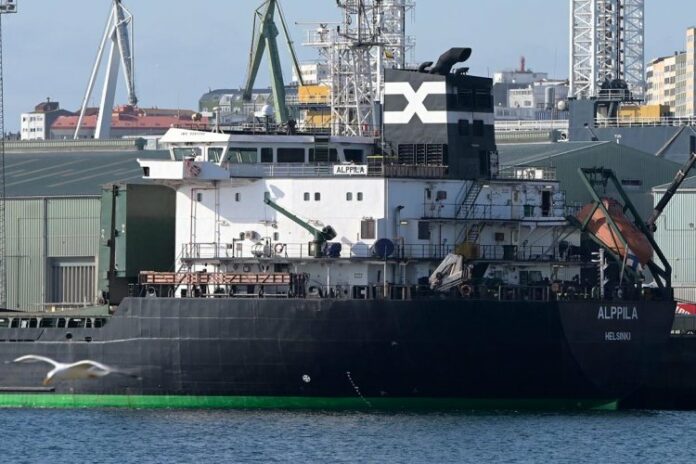
The cargo ship Alppila, carrying the corn, arrived at Spain’s port of A Coruña before dawn on Monday and is due to be unloaded by Tuesday, the port’s press office told CNN.

It’s the first shipment of Ukrainian grain to reach northwestern Spain by sea, using “a new maritime route opened in the Baltic Sea to avoid the Russian navy’s blockade of Ukraine’s ports on the Black Sea since the start of the war” last February, the animal feed producers group, called Agafac, said in a statement.

Some background: Russia’s war in Ukraine could push up to 49 million people into famine or famine-like conditions because of its devastating impact on global food supply and prices, and countries are scrambling to find a way around the blockade. On Sunday, a Ukrainian government official told Reuters Ukraine has identified alternate routes to export grain stores. 

Deputy Foreign Minister and Chief Digital Transformation Officer Dmytro Senik said Ukraine was attempting to establish new routes with Romania, Poland and the Baltic States to allow 22 million tons of grain stuck in Ukraine’s seaports to “reach their destination.” 

“It’s just a small amount of corn but it recovers the possibility to import whatever’s possible from Ukraine,” Agafac director Bruno Beade told CNN by phone.

He said Agafac, the Galicia regional animal feed producers group, typically imports 40% of its corn from Ukraine between January and June each year, which is part of the total 1 million tons of corn it imports for livestock feed annually.

The Agafac statement said that “small quantities of corn have left western Ukraine in trucks for Poland and Romania” and that the corn which arrived in Spain was loaded onto a ship at Poland’s Baltic Sea port of Swinoujscie.

The Alppila is a Finnish-flagged cargo ship that was in Swinoujscie in late May before making stops at two German ports and then arriving at A Coruña port on Monday, according to vesselfinder.com.

Beade said he didn’t know if Ukrainian corn had arrived at any other Spanish ports since Russia’s invasion of Ukraine began in late February.

Source: CNN