-1.6 C
New York
Home Blog Page 431

RWE and ArcelorMittal sign MoU to jointly build and operate offshore wind farms

0

Energy company RWE and steel producer ArcelorMittal have signed a memorandum of understanding to work together to develop, build and operate offshore wind farms and hydrogen facilities that will supply the renewable energy and green hydrogen required to produce low-emissions steel in Germany. 

The partnership centres on driving forward the production of carbon-neutral steel, with a plan to replace coal with wind power and green hydrogen as the main source of energy in steel production at ArcelorMittal’s steelmaking sites in Germany.

To decarbonise its production sites in Bremen, Hamburg, Eisenhüttenstadt and Duisburg as planned, ArcelorMittal Germany needs renewable energy on a large scale.

RWE and ArcelorMittal are assessing options for joint participation in tenders for offshore wind farm sites in the North Sea. The amendment of the “Wind Energy at Sea Act” (WindSeeG) currently under way is crucial for success, as it will permanently shape the cost structure in the German offshore wind sector. If the law were to establish “negative bids” in offshore wind tenders, financing wind farms would be more challenging and send the wrong pricing signals to the market by making wind power unnecessarily expensive. 

Competitive electricity prices are absolutely necessary, if energy-intensive industries such as the steel industry, which operates in a competitive global environment, are to have a future in Germany. RWE and ArcelorMittal strongly believe that with the right steer, green steel from Germany can become a benchmark worldwide for low-carbon emissions steel production.

RWE and ArcelorMittal also want to work together on the development of green hydrogen, by jointly looking for areas where electrolysis plants can be built to supply the steel production sites in Bremen and Eisenhüttenstadt, starting with a 70 MW pilot plant by 2026 with the clear intention to increase to Gigawatt-scale projects in the long term – subject to approval of public funding.

With the combination of RWE’s expertise in offshore wind farms and electrolysers, and ArcelorMittal as a guaranteed buyer of the green electricity and hydrogen, the two companies believe they have excellent opportunities for a viable partnership arrangement. RWE and ArcelorMittal intend to conclude long-term purchase agreements for both wind power and green hydrogen.

Sven Utermöhlen, CEO Offshore Wind, RWE Renewables:

“Electricity from renewable energies and green hydrogen must become the hallmark of industrial production in Germany. Industry needs both in large quantities as soon as possible in order to achieve its climate targets. That is why we are planning one of the most ambitious expansion projects for offshore wind farms and electrolysers in Germany, together with ArcelorMittal. If the regulatory framework is right, we want to be successful together in the bidding for offshore areas.”

Reiner Blaschek, CEO ArcelorMittal Germany, comments:

“ArcelorMittal Germany is embarking on a radical transition to ensure we reach our CO2 emissions reduction targets, meaning that the energy used to make steel will need to be clean energy. The partnership we have announced with RWE today is significant for a number of reasons: it will provide us with the renewable, affordable electricity and green hydrogen that we need to produce low-emissions steel while remaining competitive in a global market. It also offers vital security in the supply chain, by integrating the supply of energy and hydrogen into our business.”
ABS AIP for Project Sabre ammonia-fueled, ammonia bunker vessel

0

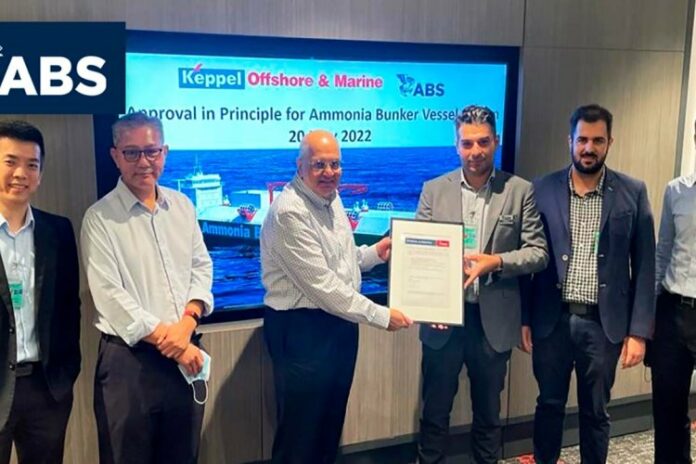
ABS has issued approval in principle (AIP) to Keppel Offshore & Marine for the ammonia-fueled ammonia bunker vessel at the heart of Project Sabre, an initiative from a consortium of leading maritime organizations to develop an ammonia bunker supply chain in Singapore.

As well as ABS, the consortium includes A.P. Moller – Maersk, Fleet Management Limited, Keppel Offshore & Marine, Maersk Mc-Kinney Møller Center for Zero Carbon Shipping, Sumitomo Corporation, Kawasaki Kisen Kaisha, Ltd. and the Maritime & Port Authority of Singapore.

The 188-meter-long, 33,000 m3 ammonia bunker vessel design, which is intended to carry liquid ammonia as a carrier as well as bunker fuel for a wide variety of receiving vessels, has been reviewed by ABS against the requirements outlined in the ABS Guide for Ammonia Fueled Vessels.  The design would receive the ABS Notation ✠A1, Liquefied Gas Carrier with Independent Tanks.

Awarding of ABS AIP is the latest phase of Project Sabre, which began with an agreement in 2021 to conduct a feasibility study to assess the technical, commercial and regulatory viability of establishing an end-to-end supply chain to enable ammonia ship-to-ship bunkering in Singapore.

Marlink and BV to promote digital integration and connectivity for Class operations

0

Partners sign a memorandum of understanding (MOU) to enable the fast-tracking of vessel data collection to support compliance and performance in areas such as cyber security, carbon emissions and safety.

The agreement links Marlink’s smart hybrid connectivity with the remote digital and safety services provided by BV. Having identified crossovers in their mutual customer base, the partners will collaborate to enable maritime stakeholders to more easily adopt cyber-strengthened digital tools and applications using the Marlink network.

The partners have put in place a working group to support shipowners around improving the cyber-security of vessel data collection and facilitating compliance with regulation. This will support remote and digital operation modes on a journey to smarter, remote and, ultimately, autonomous ships with zero-emission.

Through their experience, Marlink and Bureau Veritas identified the need for dedicated channels of co-operation, recognising a common interest in removing the barriers to smarter, cleaner vessel operations. The two organisations will seize opportunities to work outside the silos that have held back the industry from accessing data that can lower operating costs, save fuel and drive compliance.

The partner program will be expanded over time, with a proactive approach towards new areas of collaboration bringing in new initiatives where possible, ultimately leading the industry into new eras around smart shipping, unmanned and autonomous vessels. As well as simplifying implementation of cyber security standards for shipyards, the agreement is ‘open source’, enabling third party application providers, start-ups and software developers to participate where appropriate.

Matthieu de Tugny, President, Bureau Veritas Marine & Offshore, said:

“This is a partnership with real purpose whose foremost point is to take action to integrate digital tools and services that can bring value for shipowners and encourage and further develop cyber-secure, innovative Class operations. BV is dedicated to helping our clients understand and manage the challenges of decarbonisation and adopt the digital tools that can support the transition.

Tore Morten Olsen, President, Maritime, Marlink, said:

“Shipowners face huge efficiency and compliance challenges over the next decade and these need to be considered now to create a future-proof path that can integrate core operational components onboard and ashore. Digitalisation is critical to improving voyage optimisation and vessel performance, achieving regulatory compliance and meeting ESG goals, but shipowners shouldn’t have to act as project managers – this partnership means they can streamline and simplify their digital journey based on Class guidelines and recommendations.”

RMD unveils first green crew transfer vessel design for offshore market

0

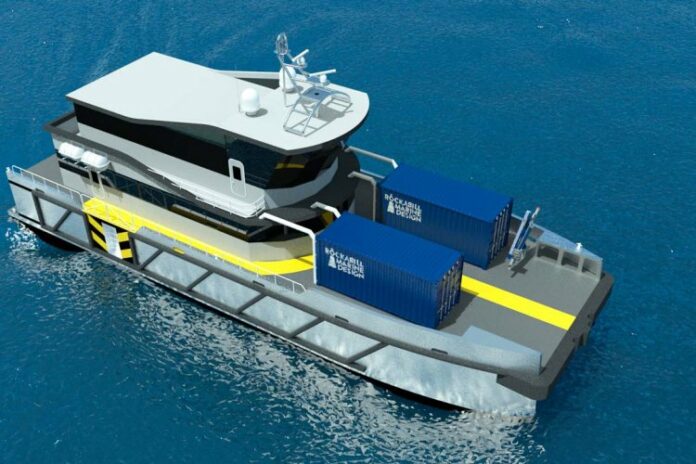
Rockabill Marine Design (RMD), a newly established vessel design house, and part of the CSO Marine Group, has unveiled the company’s first green crew transfer vessel (CTV) design. 

Designed to meet the growing and evolving needs of the offshore renewables sector, and the increased focus on emission reductions worldwide, the 32m vessel combines fuel efficiencies with high-speed capabilities and significant capacity and comfort for both crew and passengers.

Following consultation with stakeholders from across the offshore wind industry, the demand for a CTV utilising innovative technologies to reduce CO2 emissions was clear. The RMD vessel achieves this through a series hybrid system running highspeed quad pod drives, with diesel generators located within the hull compartment. In addition, each generator has the capability to be converted to an alternative fuel source with minimal downtime.

The design pays particular attention to technician and crew health, safety and comfort, delivering the workforce in the best possible work-ready condition, resulting in increased operation days offshore for O&M and construction activities. The vessel boasts seating for up to 30 passengers.

Ruairi Grimes, Managing Director of Rockabill Marine Design, said:

“We are delighted to release to the market the initial concept for what will be an industry leading green CTV. The concept is the result of many years’ experience within the offshore energy industry, and truly
understanding operators’ and charterers’ ‘must-haves’, whilst avoiding the pitfalls many other designers have encountered when trialling cutting-edge emissions reduction technology.”

The aluminium catamaran features above deck accommodation for six crew, providing a low cost, low carbon alternative to SOVs. Each cabin has ample storage space, with adjoining washroom equipped with private shower and toilet.

Each vessel features generous foredecks with a large area accommodating four x 10ft or two x 20ft containers, deck crane, anchor winch, fuel, and high-pressure water supplier reels.

ExxonMobil and QatarEnergy to expand LNG production

0

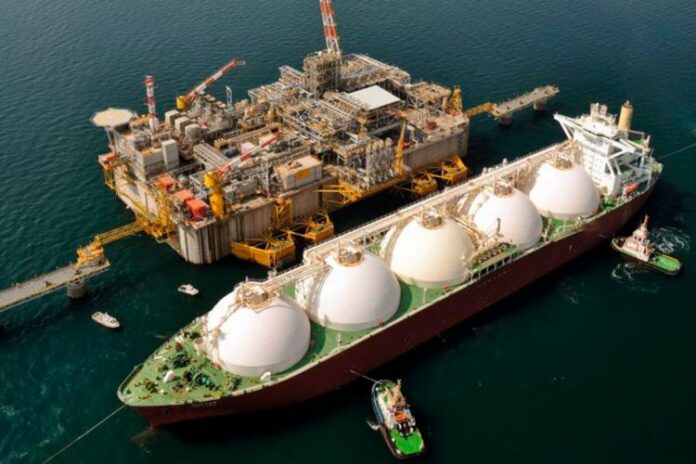
ExxonMobil and QatarEnergy have signed an agreement to further develop Qatar’s North Field East project, which will expand Qatar’s annual LNG capacity from 77 million tons to 110 million tons by 2026. The deal was announced at QatarEnergy’s headquarters in Doha.

Darren Woods, chairman and chief executive officer for ExxonMobil, said:

“We are collaborating with QatarEnergy on North Field East to accelerate the production of secure, affordable and cleaner energy our world needs. ExxonMobil has a long history of working in Qatar, responsibly producing energy, and we look forward to continuing our relationship for the benefit of all of our stakeholders.” 

His Excellency Mr. Saad Sherida Al-Kaabi, president and chief executive officer of QatarEnergy, said:

“Today, we are signing a partnership agreement with ExxonMobil, our strategic and long-term partner, with whom we have enjoyed successful and fruitful relations in Qatar and across the globe. This is primarily due to the mutual trust and confidence between both parties, and to the State of Qatar’s safe and stable investment climate. We look forward to working closely with ExxonMobil to implement this world-scale project, and to live up to our commitment to power lives with cleaner energy in every corner of the world for a better tomorrow for all.” 

With North Field East, ExxonMobil’s participation in Qatar LNG volumes is expected to increase total capacity from 52 to 60 million tons per year. Under the terms of the agreement, QatarEnergy and ExxonMobil will become partners in a new joint venture company (JV), in which QatarEnergy will hold a 75% interest with ExxonMobil holding the remaining 25% interest. The JV will own 25% of the entire North Field East project, including four LNG trains with a combined nameplate capacity of 32 million tons per year. 

The expansion of North Field East and increased LNG export capacity is one of Qatar’s key energy objectives. QatarEnergy is the operator and commenced the North Field East project in 2019. First LNG from North Field East is expected in 2026.

Terms of the agreement are confidential.

Wärtsilä and Stena to build the world’s largest hybrid vessels

0

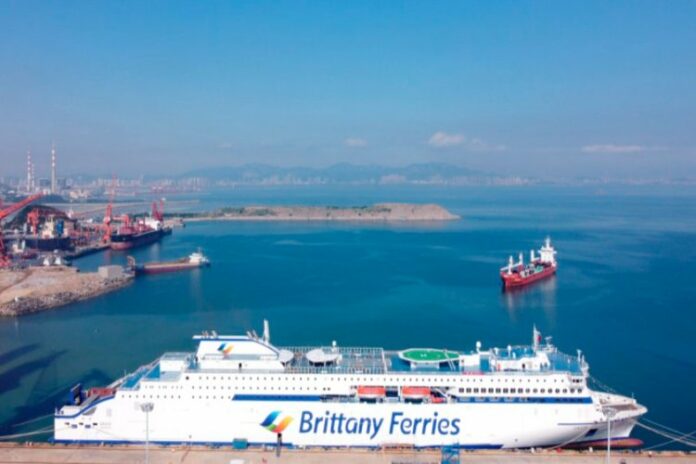
Two of the ferries will have a battery capacity of 11.5 MWh, making them the marine industry’s largest hybrid vessels to date. This battery power is approximately double that typically being used currently for hybrid propulsion. The order was placed in May 2022.

The ships have been designed and developed by Stena RoRo and Brittany Ferries and they will be long term chartered to Brittany Ferries for operation between Portsmouth in the UK and French ports of St Malo and Caen. Wärtsilä had already earlier been contracted to supply a broad range of solutions for the vessels, including the main and auxiliary engines, gearboxes, controllable pitch propellers (CPPs), thrusters, the fuel gas supply system, Nacos navigation and automation as well as integrated control alarm and monitoring system. The ships will be capable of operating with either LNG fuel or batteries.

The vessels will be equipped with the latest generation Leclanché energy storage system – the Navius MRS-3 – which has both a size and weight advantage versus comparable marine batteries.

Per Westling, Managing Director, Stena RoRo, says:

“Stena wants to be a frontrunner in decarbonising our fleet and, together with our partners, pushing developments towards zero emission operations. Hybridisation allows our vessels to be highly flexible as we adapt to future technology developments, including green fuels, fuel cells, bigger batteries, and solar or wind supported propulsion.”

Christophe Mathieu Brittany Ferries CEO added:

“Brittany Ferries is proud to be taking a lead in sustainable shipping, working with our partners to bring cleaner vessels to the regions in which we operate. Hybrid technology continues to move our fleet renewal programme forward and will follow the introduction of two LNG-powered ships. From day one of operation, ports like St Malo in France and Portsmouth in the UK will benefit from these cleaner hybrid vessels. Shore-side power capability means further benefits will be realised, as investment by ports in plug-in infrastructure allows.”

Håkan Agnevall, President & CEO, Wärtsilä, comments:

“Hybridisation is one way of shaping decarbonisation of the marine industry. This order further strengthens Wärtsilä’s leadership in the hybrid segment. The extensive battery size will allow the vessels to operate with full power, using both propellers and all thrusters to manoeuvre emissions-free in and out of ports, even in bad weather. The built-in shore power solution will charge the batteries while berthed. Wärtsilä’s unique Energy Management System will optimise the total hybrid propulsion system.”

Important elements of hybrid vessels include the ability to integrate multiple vessel systems and real-time optimisation of the on-board energy system. Wärtsilä combines a wide range of system expertise across a broad range of ship power and propulsion machinery. Combining the benefits of the hybrid propulsion system and shore power leads up to 15% GHG emissions saving to a conventional diesel mechanical propulsion system.

The vessels are being built at the China Merchants Jinling (Weihai) Shipyard. Delivery of the ferries is expected to take place in 2024 and 2025.

Melting Arctic ice could transform international shipping routes, study finds

0

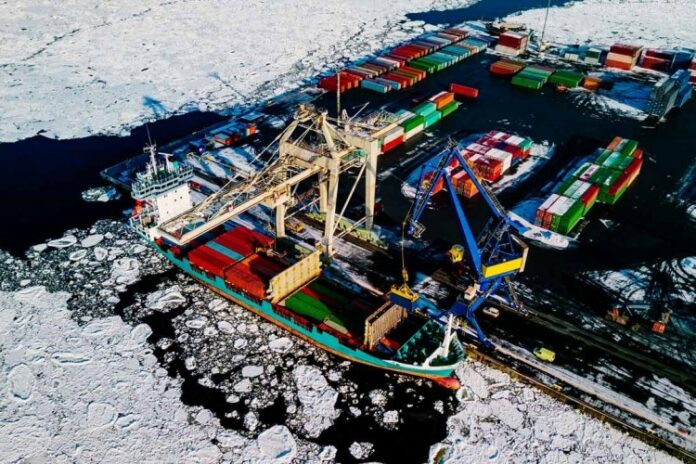
With climate change rapidly warming the world’s oceans, the future of the Arctic Ocean looks grim. Climate models show that parts of the Arctic that were once covered in ice year-round are warming so quickly that they will be reliably ice-free for months on end in as few as two decades. The Arctic’s changing climate will endanger countless species that thrive in sub-zero temperatures, scientists say.

Another critical consequence of melting ice in the Arctic? The potential for shorter, more eco-friendly maritime trade routes that bypass the Russian-controlled Northern Sea Route.

In a new study, a pair of climate scientists at Brown University worked with a legal scholar at the University of Maine School of Law to predict how Arctic Ocean ice melt could affect the regulation of shipping routes over the next few decades. They projected that by 2065, the Arctic’s navigability will increase so greatly that it could yield new trade routes in international waters—not only reducing the shipping industry’s carbon footprint but also weakening Russia’s control over trade in the Arctic.

The study was published in the Proceedings of the National Academy of Sciences.

Amanda Lynch, the study’s lead author and a professor of Earth, environmental and planetary sciences at Brown, said:

“There’s no scenario in which melting ice in the Arctic is good news. But the unfortunate reality is that the ice is already retreating, these routes are opening up, and we need to start thinking critically about the legal, environmental and geopolitical implications.”

Lynch, who has studied climate change in the Arctic for nearly 30 years, said that as a first step, she worked with Xueke Li, a postdoctoral research associate at the Institute at Brown for Environment and Society, to model four navigation scenarios based on four likely outcomes of global actions to halt climate change in the coming years. Their projections showed that unless global leaders successfully constrain warming to 1.5 degrees Celsius over the next 43 years, climate change will likely open up several new routes through international waters by the middle of this century.

According to Charles Norchi—director of the Center for Oceans and Coastal Law at Maine Law, a visiting scholar at Brown’s Watson Institute for International and Public Affairs, and one of the study’s co-authors—those changes could have major implications for world trade and global politics.

Norchi explained that since 1982, the United Nations Convention on the Law of the Sea has given Arctic coastal states enhanced authority over primary shipping routes. Article 234 of the convention states that in the name of “the prevention, reduction and control of marine pollution from vessels,” countries whose coastlines are near Arctic shipping routes have the ability to regulate the route’s maritime traffic, so long as the area remains ice-covered for the majority of the year.

Norchi said that for decades, Russia has used Article 234 for its own economic and geopolitical interests. One Russian law requires all vessels passing through the Northern Sea Route to be piloted by Russians. The country also requires that passing vessels pay tolls and provide advance notice of their plans to use the route. The heavy regulation is one among many reasons why major shipping companies often bypass the route’s heavy regulations and high costs and instead use the Suez and Panama canals—longer, but cheaper and easier, trade routes.

But as the ice near Russia’s northern coast begins to melt, Norchi said, so will the country’s grip on shipping through the Arctic Ocean.

Norchi said:

“The Russians will, I’m sure, continue to invoke Article 234, which they will attempt to back up with their might. But they will be challenged by the international community, because Article 234 will cease to be applicable if there’s no ice covered-area for most of the year. Not only that, but with melting ice, shipping will move out of Russian territorial waters and into international waters. If that happens, Russia can’t do much, because the outcome is driven by climate change and shipping economics.”

According to Lynch, previous studies have shown that Arctic routes are 30% to 50% shorter than the Suez Canal and Panama Canal routes, with transit time reduced by an estimated 14 to 20 days. That means that if international Arctic waters warm enough to open up new pathways, shipping companies could reduce their greenhouse gas emissions by about 24% while also saving money and time.

Lynch said:

“These potential new Arctic routes are a useful thing to consider when you recall the moment when the Ever Given ship was stranded in the Suez Canal, blocking an important shipping route for several weeks. Diversifying trade routes—especially considering new routes that can’t be blocked, because they’re not canals—gives the global shipping infrastructure a lot more resiliency.”

And it’s better to ask questions about the future of shipping now, Lynch said, rather than later, given how long it can take to establish international laws. (For context, she said, it took 10 years for world governments to negotiate the Convention on the Law of the Sea.) Lynch hopes that kicking off the conversation on the Arctic’s trade future with well-researched scholarship might help world leaders make informed decisions about protecting the Earth’s climate from future harm.

Lynch said:

“Flagging these coming changes now could help prevent them from emerging as a crisis that has to be resolved rapidly, which almost never turns out well. To actually craft international agreements with some forethought and deliberation is certainly a better way to go.”

DP World and Saudi Ports Authority sign 30-year agreement

0

New facility offers an in-land container depot with handling capacity of 250,000 TEU and warehouse space of 100,000 square metres.

Integrated with the recently awarded 30-year concession for the South Container Terminal, the state-of-the-art Logistics Park will bolster trade to enable Saudi Arabia’s strategy to become an economic powerhouse by 2030.

DP World and the Saudi Ports Authority (Mawani) today announced the signing of a 30-year agreement with an investment value of more than SAR 500 million ($133.33 million) to build a state-of-the-art, port-centric Logistics Park at the Jeddah Islamic Port.

The agreement aims to establish a logistics park which spans over 415,000 square metres, with an in-land container depot capacity of approximately 250,000 TEU and warehousing storage space of 100,000 square metres. Future expansions could increase the storage space to 200,000 square metres.

The 415,000 square metre purpose-built facility will bolster DP World’s footprint in the region and will bring pioneering multi-modal logistics solutions to the Kingdom of Saudi Arabia.

The port-centric Logistics Park will boost Jeddah Islamic Port’s re-export activities, reducing the time and cost of logistics for importers and exporters, alike. It will provide an integrated platform of services that link port-operations with last-mile activities, providing temperature-controlled storage for cargo, in addition to its processing, labelling, fulfilment, consolidation and de-consolidation.

Commenting on the announcement, His Excellency Omar Hariri, The President of The Saudi Ports Authority, said:

“The park will provide advanced and eco-friendly e-services by integrating the operations of south container terminal with the new logistics park, in a move from the Authority to offer holistic logistics parks which will enhance the competitiveness of Jeddah Islamic Port. It will also contribute to raising the quantities of trans-shipped goods, in line with the national strategy for transport and logistics services.” 

“This partnership will connect the port’s operations to the new logistics park to offer end-to-end logistics services with high efficiency. It will also help us expand our joint collaboration further with major logistics service providers, enhance the re-export operations and cut costs of the logistics services in order to provide the best-in-class services to stakeholders and investors.”

DP World signed a new concession agreement with Mawani in April 2020 to continue operating and managing the South Container Terminal at the Jeddah Islamic Port for the next 30 years, committing to invest a total of more than SAR 3 billion ($800 million) to expand and modernise the terminal. The overhaul project, which will take place over four phases and is set to be completed by 2024, will see infrastructural upgrades, including the broadening of draft depth and quay, and the installation of advanced equipment and technologies, automation and digitalisation programmes, in addition to decarbonisation initiatives.

When complete, the revamped terminal will double Jeddah Islamic Port’s container handling capacity from 2.5 million TEUs currently to 4 million TEUs and solidify Jeddah Islamic Port standing as a major trade and logistics centre on the Red Sea coast.

Asia imports more seaborne Russian oil than Europe, research says

0

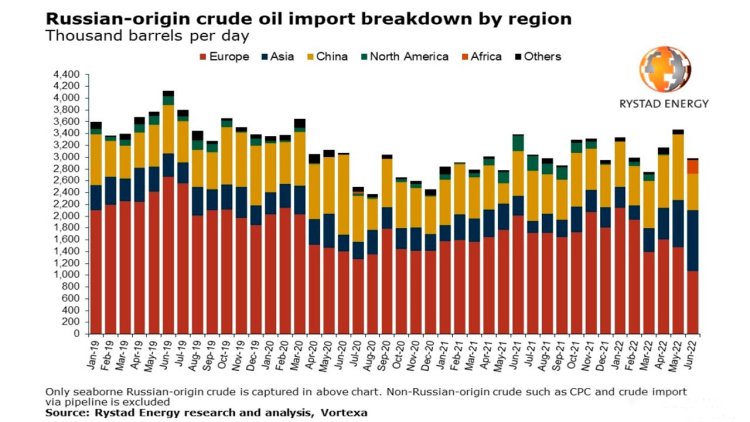
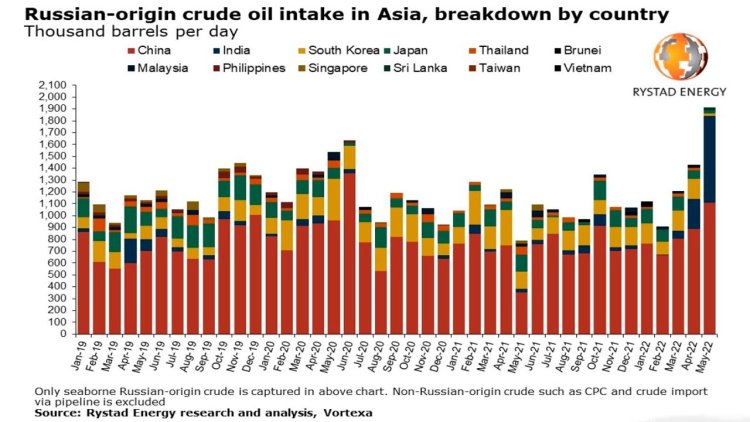
Since the start of the war, based on the average of March to May 2022, Indian imports of Urals crude have picked up by 658% compared to 2021 levels, while for China the increase is 205% and for Asia as a whole 347%, Rystad Energy research shows.  

India has emerged as the significant Urals importer in the region, prompted by the crude’s attractive margin in relation to Middle Eastern grades, which have traditionally been the country’s staple. With Urals having a similar profile to Middle Eastern oil grades and an advantageous lower sulfur content, Indian refiners have swapped Middle Eastern crudes in favor of Urals for their refinery processing. So long as the Urals discount is maintained, it will have a huge margin advantage over alternative crude grades, meaning Indian refiners are likely to maximize Urals imports. 

Since European refiners started shunning Russian oil in late February, Russian crude oil imports to Europe saw a drop of 554,000 barrels per day (bpd) from 2.04 million bpd to 1.49 million bpd between March and May. Russian-origin oil imports by Asian refiners (including China) saw a corresponding 503,000-bpd increase from the January-February 2022 average of 1.14 million bpd to a March-May average of 1.517 million bpd.

The expectation that Russian crude would cease to be traded on international markets has not transpired, and instead the steep discount on Russian crude has seen vessels redirected to alternative markets. While the cost of financing these vessels and trades has increased significantly due to be freezing out of the Western financial system, the discount on Urals is too attractive for some refiners to ignore. As with Iranian oil in the past, once Russian crude is refined, it will become almost impossible to distinguish between those barrels and others as they re-enter the international market.

Wei Cheong Ho, vice president, downstream at Rystad Energy, says:

“Historically, India has taken very little Russian oil but the war in Ukraine and Russian-origin oil embargoes by the Europe Union (EU) have led to a rebalancing in oil trade flows, with Russian-origin crude oil being diverted away from Europe towards India and China instead. Discounts of Russian-origin crude oil have to remain high to provide a compelling refining margin on top of offsetting the high insurance and freight costs associated with purchasing and shipping Russian-origin crude oil.

For now, it is just pure economics that Indian and Chinese refiners are importing more Russian-origin crude oil for processing as such oil is cheap and offers one of the highest crude refining margins compared to other crude grades. Tracking what happens to Russian crude will be a challenge – Europe may end up importing petrol, diesel and other products from India that are blended with Russian Urals.” 

The EU on 31 May reached a consensus to ban seaborne imports of Russian-origin oil into Europe. The market is now waiting to see if Russia will have to cut its oil production or if the trend towards Asia-directed exports will increase. 

BMT commissions hybrid vessel for the Maritime Port Authority of Singapore

0

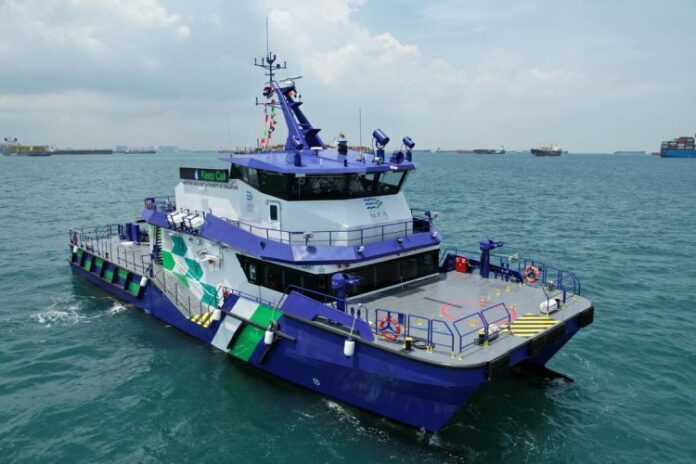
Developed in collaboration with Penguin Shipyard International, the advanced hybrid-electric aluminium catamaran, christened “MPA Guardian”, is a 35 metre patrol boat designed to conduct patrolling activities, search and rescue, oil spill response, drone operations and salvage support. It will also be used as the government’s test bed for new technologies and equipment.

With accommodation for up to 24 survivors and a state-of-the-art wheelhouse designed specifically to suit MPA’s operational requirements, the vessel will be deployed in a command-and-control role during multi-vessel operations, and as first responder in a wide variety of missions.

Further extending the vessel’s rescue capabilities is a 7m fast rigid-inflatable rescue boat, mated with a unique Launch And Recovery System (LARS) that was jointly developed by BMT and Penguin.

The vessel propulsion system is an advanced hybrid-electric system based on a combination of electric and diesel mechanical propulsion. To best fulfil its operating duty the vessel can operate in different mode. In full-electric, zero-emission mode, MPA Guardian can cruise silently at 6 knots for up to three hours.

The vessel can also operate in a diesel-electric mode to achieve continuous medium speed operation. In this mode, power is drawn from one of the two main engines to propel both shafts while recharging the batteries. This mode offers a significant advantage by way of emissions reduction and reduced wear and tear on the engines.

In her conventional diesel mechanical mode, MPA Guardian can run at a top speed of close to 27 knots. In this mode the electric generation capability offered by the hybrid system also removes the need for diesel generators sets onboard.

These features, combined with a highly efficient hull form optimised for minimal resistance across the entire operating speed range, give rise to a low-emission, future-proofed vessel that will contribute to reducing the carbon footprint of the Port of Singapore.

In a recent christening ceremony, MPA’s Chief Executive Ms Quah Ley Hoon said:

“The new enhanced patrol craft will strengthen our fleet of patrol craft enforcement and emergency response capabilities as it has higher endurance and the necessary sea-keeping capabilities for operations in all weather conditions. As we work towards a sustainable Maritime Singapore, reducing emissions from the domestic harbour craft fleet is an important focus area. Developing a hybrid diesel-electric vessel with electric propulsion, we made sure that our new enhanced patrol craft would be ready for a greener future.”

Penguin’s Managing Director James Tham added:

“This project builds on our good working relationship with BMT and demonstrates our commitment to new technologies applied to real-life operations. Penguin, together with BMT, have set a new standard for high-speed hybrid-electric vessels.”

Andy Holdcroft, Managing Director Specialised Ship Design at BMT commented:

“This new design, developed collaboratively with Penguin, incorporates advanced hybrid propulsion technologies optimised specifically to the requirements of MPA. For years to come this will allow MPA to operate with reduced emissions of Greenhouse Gas making the port of Singapore more sustainable with the added benefit of reducing maintenance and operational costs.”