-0.2 C
New York
Home Blog Page 430

Innovez One to advance digitalisation of major Malaysian port

0

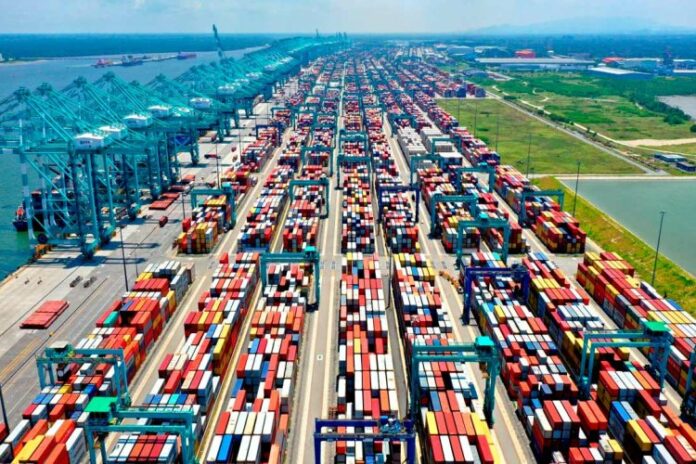
Innovez One will supply its MarineM solution to the Malaysian Port of Tanjung Pelepas (PTP), improving efficiency and enabling this major global port to enter the next stage of its digitalisation journey.

Innovez One’s MarineM will provide a user-friendly interface where agents can register their vessels and order services to support arrivals, such as supplies, logistics and marine services. Using algorithms powered by artificial intelligence (AI) and machine learning, MarineM’s planning module will automatically manage schedules and dispatch resources – assigning pilots and tug boats to the various jobs in the most optimal way, and handling the logistics required to transport pilots to boarding grounds.

As opposed to manual planning, the AI-powered system is able to instantly reallocate resources if a vessel’s ETA changes, thereby limiting waiting times and making the Port of Tanjung Pelepas more resilient in the face of congestion, as increasingly experienced by ports across the world.

MarineM will also enable agents to monitor the status of their orders in real time and will automate the billing process. It also includes a live map where port managers will be able to view the movements of each vessel.

David Yeo, CEO and founder of Innovez One, said:

“This significant technological milestone will unlock new efficiencies at the Port of Tanjung Pelepas and ensure that all pieces fall into place seamlessly to support ships’ arrivals and departures. As recent months have demonstrated, the so-called first and last mile of the journey at sea is critical. Digitalisation is now more important than ever, in order to make ports more resilient to disruptions and avoid the multiplication of seemingly minor delays that can exacerbate port congestion. We are delighted to support the Port of Tanjung Pelepas as it joins the growing ranks of the fully-digitised ports of tomorrow.”

Marco Neelsen, Chief Executive Officer of Port of Tanjung Pelepas said:

“The transition of digitalization and automation is speeding up in the entire maritime industry. To secure efficient, sustainable operation and business competitiveness, PTP has proactively invested in its assets and infrastructure. PTP is committed to continue with the journey and further create values to our customers, shareholders and other stakeholders.”   

Joe Schofield, Chief Operating Officer at the Port of Tanjung Pelepas said:

“Digitalisation is absolutely vital for ports like ours and is the way of the future, as shipping transports the world’s economy and is expected to grow even further in decades to come. Thanks to artificial intelligence and machine learning, we will reach new heights in terms of efficiency, which will help us become even more competitive on the global stage. Most importantly, this will translate into a better and faster service for our clients and visiting vessels, and a more modern work environment for our employees.”

The MarineM system will be in place by early 3rd quarter of 2022. This is a major contract win for Innovez One, marking the company’s entry on the key Malaysian market. The company has already provided port management information systems to major global players, including the Port of Tanjung Priok, in Indonesia, the Port of Portsmouth, in the United Kingdom, and several small to medium sized ports in South East Asia. At the Port of Singapore, Innovez One delivered mobile applications for use for its pilots, tugboats and pilots boats that run on marineM’s job dispatch messaging platform.
Partners to develop hybrid Heavy Transport Vessel for offshore wind farms

0

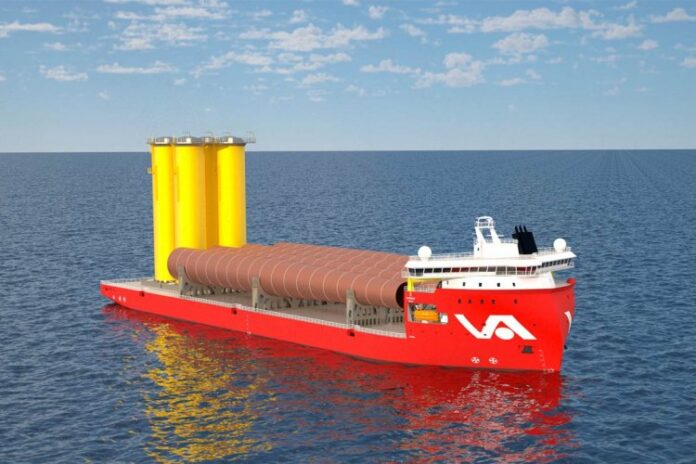
Vallianz Holdings Limited has joined forces with Ulstein Design & Solutions B.V., Shift Clean Energy and Bureau Veritas to collaborate on the design and construction of a heavy transport vessel (“HTV”) that will be the first of its kind in the global offshore wind industry.

Designed for worldwide operations, the HTV will be deployed for transportation of structures such as monopiles, jackets, transition pieces and turbine blades to support offshore wind farm projects, as well as heavy structure modules for LNG and carry out floatover operations of offshore structures. 

Featuring zero emission capability, the DP-2 vessel will be the first of its kind, as it will be driven by a hybrid power system consisting of alternative dual fuelled engines and a fully-classed battery energy storage system. In addition, the HTV features the proven ULSTEIN X-BOW®, which contributes to reduced energy consumption and provides more comfortable and safer operations when sailing through waves.

Measuring an overall length of 173.6 meters, the customised ULSTEIN HX120 design will have a free deck length of 145 meters. With her large deck area of more than 6,000 square meters and deck strength of 25 tonnes per square meter, the new HTV can carry cargoes of up to 32,000 metric tonnes. This includes very large structures and modules, such as monopiles, transition pieces and jacket foundations.

The design of the HTV is developed by the Dutch design office of Ulstein Group which is headquartered in Norway. The HTV’s electric battery system is to be provided by Canadian-based Shift, while the vessel will be classed by Bureau Veritas.

Construction is expected to take up to 26 months with planned completion by the end of 2024, and is not expected to have any material impact on the net tangible assets or earnings per share of the Group for the current financial year ending 31 March 2023.

To mark the collaboration, representatives from Vallianz, Ulstein, Shift and Bureau Veritas attended a signing ceremony held at Ulstein’s office in Rotterdam, the Netherlands.

Said Mr Osman Ibrahim, Chairman of Vallianz, said:

“This collaboration is a key development in the Group’s strategy to build a stronger presence in the global offshore wind farm industry. It follows closely on the heels of another strategic project that we embarked on for the construction of a next generation Service Operation Vessel (“SOV”) to support the operations and maintenance of offshore wind farms.

According to the Global Wind Report 2022 by the Global Wind Energy Council (“GWEC”), the offshore wind market had its best ever year in 2021 with 21.1 GW commissioned, more than three times in 2020. GWEC expects more than 90 GW of offshore capacity to be added worldwide from 2022 to 2026.

In view of the anticipated increase in the size of monopiles and other components for offshore wind farms over the coming years, we believe there will be growing demand for newer generation vessels like our HTV which can help to facilitate faster installation speed, better project economics and reduction of carbon footprint. The addition of this HTV will also complement and expand on the Group’s existing “Holmen” fleet of heavy lift transport vessels.”

As the size of offshore wind turbines increases, the component parts will have to be larger. Together with the considerable global growth of the offshore wind market, this means much larger vessels will become the preferred mode of transportation while the sheer number of forecasted foundations will also require more of such vessels. This is one of the main reasons a recent analyst report on the HTV market concludes that the current supply of HTVs worldwide will be insufficient to cater to the expected demand for such vessels in the next few years.

Wärtsilä accelerates Zanzibar port digitalisation project

0

Wärtsilä Voyage, part of the technology group Wärtsilä, has signed a contract with Fortris Company Ltd to implement its pioneering Vessel Traffic Services (VTS) system and VTEK Technology’s Terminal Operating System (TOS) at Malindi Port in Zanzibar (Tanzania) for Zanzibar Ports Corporation (ZPC). 

The project will significantly improve efficiency and transparency at the shipping and port hubs. The digitalisation of the port will enable ZPC to better manage operations amidst the rapid growth of the global supply chain. It will also help ZPC rise to the challenge of increased competition from Eastern African ports. The order was booked on 5 May 2022.

The Malindi port was built in 1920 and has one berth capable of receiving a 130-metre ship. The manual, paper-based systems currently in use have caused delays as trading activity in the region grows. Local company Fortris Company Limited, in partnership with Wärtsilä Voyage, is implementing the digitalisation project. The port’s revenue is expected to double as a result of implementing the systems.

Mather Al-Ali, Head of Sales – MEAI Region at Wärtsilä Voyage, said:

“Zanzibar’s strategic geographical position gives it a comparative advantage in harnessing the benefits of the sea-based economy. Zanzibar has a strong history in maritime trade with an increased focus in the past two decades where it has had a major contribution to the economy. Developing and modernizing the Port infrastructure will be a key contributor of sustainable economic growth. We are delighted to have been selected as the ZPC & Fortris partners in this digital transformation program.”

Wärtsilä Voyage’s dynamic Port and Traffic Management solutions provide intelligent tools and digital technologies for coordinating vessel traffic and conducting efficient port operations. Wärtsilä Voyage’s scope of delivery will see the installation of a suite of its latest technologies including the company’s Advanced Intelligent Manoeuvring, Navi-Port, 3D, PilotPro Units and VTS Simulator modules, as well as a web version of Navi-Harbour.

Navi-Port facilitates the exchange of accurate arrival times between ports and ships, enabling vessels to automatically adjust speed to achieve just-in-time arrivals. Dynamic, real-time data sharing improves coordination, allowing for modifications to course and speed should conditions at port change during a voyage. Overall, Navi-Port enables more efficient operations planning to reduce congestion. VTEK’s Terminal Operating System will be integrated with Wärtsilä Voyage’s Navi-Port to allow for coordination of just-in-time arrivals and to optimise the flow of operations and cargo movements.

Meanwhile, Wärtsilä Voyage’s Navi-Harbour WebVTS will enable real-time vessel traffic data sharing for full situational awareness through a standard Internet browser. WebVTS supports navigational maps, traffic management tools, ship history, and works in various languages.

Bruce Mills, Business Development Manager for Ship Traffic Control at Wärtsilä Voyage, said:

“As the economic and environmental benefits of just-in-time operations become increasingly clear to the maritime community, Wärtsilä Voyage will continue to invest in developing solutions which also help to support the IMO’s decarbonization and greenhouse gas reduction strategies, effectively futureproofing the port and shipping industry. Our smart port solutions enable seamless interactions between port authorities, pilots, and ship traffic. This real-time information sharing among all interested stakeholders in the port environment will improve the quality of port services and help boost customer satisfaction, while making operations in confined port waters safer, easier, and more efficient. Ultimately, this also leads to lower freight costs and reduced CO2 emissions.” 

WinGD X-EL Energy Solutions brings engine expertise to energy system integration

0

By integrating two-stroke marine engine control into the electrified vessel power system for the first time, X-EL Energy Solutions aims to widen the range of vessels that can benefit from electrification as shipping seeks to improve efficiency and reduce emissions.

With X-EL Energy Solutions, WinGD has developed proprietary expertise and digital tools to simulate, design and deploy the entire vessel powertrain, incorporating in-line shaft generators, frequency converters, thrusters and, whenever required, battery systems, integrated with the main engine. The overall power configuration is controlled by a holistic energy management system that offers dynamic optimisation to real-time vessel operating conditions.

Stefan Goranov, General Manager Sustainability Solutions at WinGD, said:

“Electrification will be crucial both to reduce emissions and to reduce consumption of expensive fuels. Our holistic approach to designing power arrangements involves the entire energy system, not merely the main engine or any other individual component or a sub-system. The X-EL solutions are in complete alignment with the maritime industry’s ongoing energy transition by enabling greater efficiency.”

As the most efficient energy provider on big merchant vessels, the two-stroke engine plays a central role in the overall power system, offering far greater fuel efficiency and lower operating costs than auxiliary generating sets when used to generate electricity, especially on partial loads. WinGD’s engine design expertise gives it unique insight into how engines need to interface with other components of the energy system to maximise energy efficiency.

WinGD’s proprietary energy management system ensures that the vessel has the right power delivered in the most fuel-efficient way at all times. It combines simulation of the energy system with real-time monitoring to identify the most suitable mode of operation for current conditions as well as improving reliability and load response across the integrated power system.

The launch of X-EL Energy Solutions follows WinGD’s first contract to deliver hybrid system integration and energy management, for four LNG-fueled pure car and truck carriers due to enter service in 2023. The vessels will be powered by X-DF2.1 dual-fuel engines as part of a battery-hybrid system developed by X-EL Energy Solutions.

Goranov explained:

“By integrating electric hybrid technologies that are customised for the individual vessel’s characteristics and operating profiles, along with our proprietary energy management system, we can ensure lifecycle capabilities for meeting operational and regulatory challenges.”

Bureau Veritas delivers AiP to the MANTA, an innovative clean up vessel

0

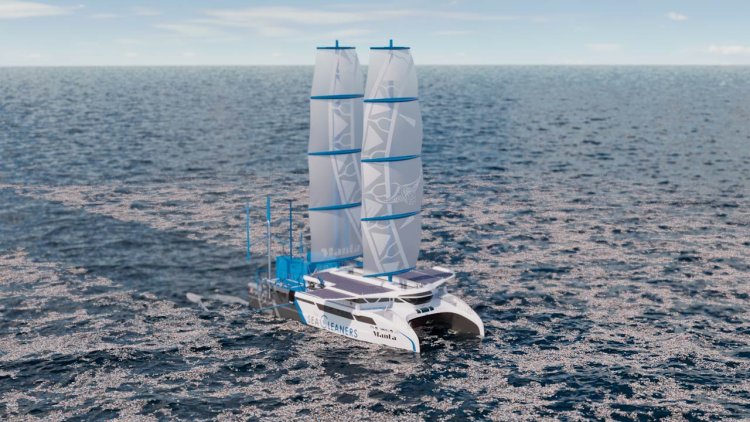
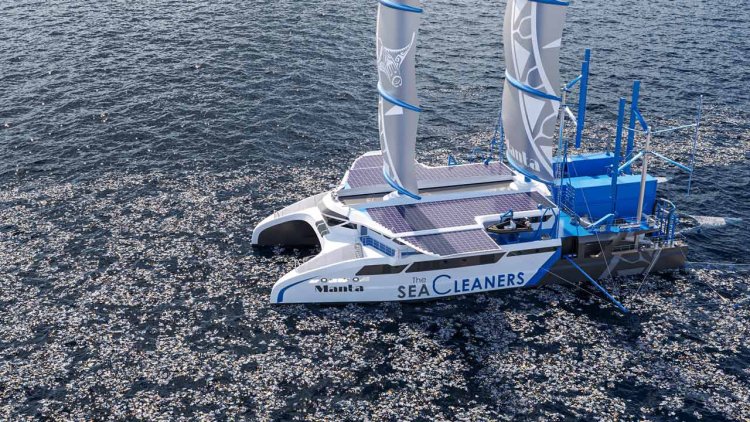
Bureau Veritas has awarded an Approval in Principle (AiP) to the MANTA, a pioneering vessel offering solutions for collecting and repurposing floating plastic waste in areas of high marine litter concentration, in the coastal waters of most affected countries and near the estuaries of major rivers.

This unique vessel, due to set sail at the end of 2025, was developed by MANTA INNOVATION, the integrated engineering design office of the NGO The SeaCleaners, with the support of naval architects at SHIP-ST and LMG MARIN.

A 56m long, 26m wide and 62m high sailing ship, the MANTA will be equipped with an on-board factory including a waste-to-energy conversion unit. The vessel will be the first concentrated ecology and technology factory ship capable of collecting and processing floating ocean waste en masse before it gets fragmented, starts to drift and penetrates the marine ecosystem in the long term.

A beacon of Smart and Green Ship, the MANTA will be powered by a combination of renewable energy technologies to minimise its carbon footprint and achieve 50 to 75% energy autonomy. It will also serve as a state-of-the-art scientific laboratory for the observation, analysis and understanding of ocean plastic pollution and as an educational platform open to the public.

Bureau Veritas reviewed the overall structure, stability and security plans of the MANTA, based on risk mitigation around new technologies and requirements.

Yvan Bourgnon, President & Founder, The SeaCleaners, commented:

“Marine plastic pollution is a global ecological disaster which requires urgent action now both on land and at sea. We are grateful that the MANTA was awarded the AiP from Bureau Veritas Marine & Offshore. This represents a major milestone for us and shows the solidity of our approach to tackle plastic pollution as we are about to enter a new development phase of the MANTA with the upcoming launch of the Call for Tenders to shipyards. More than 45,000 hours of study & development, involving 60+ engineers, technicians and researchers have led to this endorsement. It gives ourselves and our current and future partners confidence to look at the next steps.”

Laurent Leblanc,  Senior Vice President Technical & Operations, Bureau Veritas Marine & Offshore, said:

“At Bureau Veritas Marine & Offshore, we share a drive to leave the maritime world in a better place than we found it. Bringing our expertise to pioneering projects, such as the Manta, is at the core of who we are and what we do. We help our clients to navigate challenges, providing practical advice. We look forward to the next phase of the Manta.” 

SeaShuttle autonomous containership project set to move ahead

0

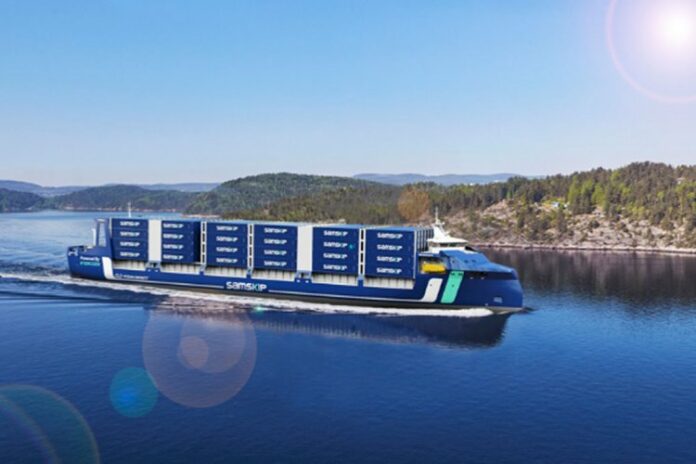
SeaShuttle, the project to build two hydrogen-powered, remotely controlled and autonomous-ready containerships for delivery by 2025 has secured NOK150 million (€15M) in funding from Norwegian state enterprise ENOVA.

The scheme, led by multimodal transport and logistics group Samskip and marine robotics specialist Ocean Infinity, envisages two SeaShuttle ships operating emissions-free between Oslo Fjord and Rotterdam, with each powered by a 3.2MW hydrogen fuel cell.

ENOVA, which operates under Norway’s Ministry of Climate and Environment, promotes a shift towards more environmentally friendly energy consumption and production, as well as technologies based on sustainable energy.

Originally announced at Nor-Shipping 2022, Oslo, in April, the Samskip-Ocean Infinity partnership covers both the construction and operation of the ships, in a collaboration seeking to push forward towards zero-emission, efficient and safe, multimodal logistics.

Are Gråthen, CEO, Samskip Norway, said:

“Samskip is very proud to take the lead role in pioneering the SeaShuttle initiative, as part of its ‘making green logistics easy’ strategy. Securing this funding provides a platform to make emissions-free container shipping a reality. Together, Samskip and Ocean Infinity will also accelerate their plans to advance autonomous ship technologies, and remote operation of ships and cargo handling equipment. These ships are the first part of an exciting collaboration with Ocean Infinity.”

In line with commitments given at COP26 Clydebank Declaration, SeaShuttle would create what amounted to one of Europe’s first zero-emission ‘green corridors’, Gråthen added.

Christoffer Jorgenvag, CCO, Ocean Infinity, commented:

“Ocean Infinity’s enabling technologies can facilitate green corridors but also the broader decarbonisation and transformation of maritime operations. The emphasis today is on the SeaShuttle vessels, which are just part of Ocean Infinity’s overall strategy of unlocking innovation to deliver truly sustainable maritime operations.”

The funding means the partners can move forward to contract two new 500TEU ships installed with a main propulsion solution that can be adapted to run on hydrogen fuel. Diesel electric propulsion plant will be on board as back up, although Gråthen emphasized:

“We have faith that green hydrogen will be affordable and available in Norway”.

Kari-Pekka Laaksonen, Group CEO, Samskip commented: “For Samskip, sustainability is one of the fundamentals of doing business. The SeaShuttle project is a substantial step in Samskip’s journey towards zero emission logistics. Its combination of fuel, technology and operational best practice is expected to make emissions-free shortsea shipping cost competitive with existing solutions.
 

MacGregor to supply RoRo equipment to another four innovative PCTCs

0

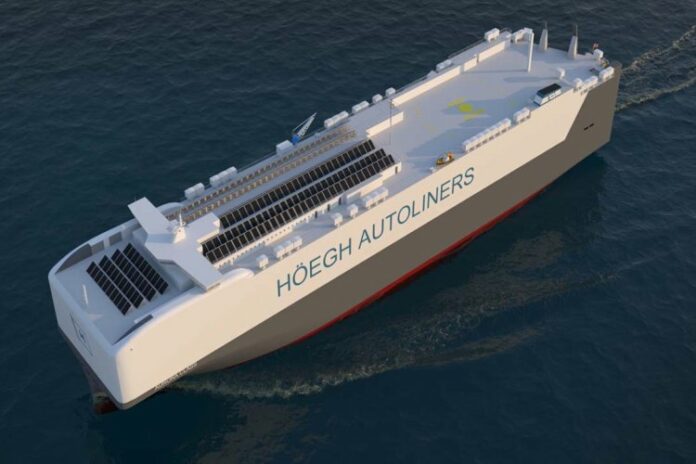
MacGregor, part of Cargotec, has been selected to supply comprehensive packages of RoRo equipment for an additional four multi-fuel and zero-carbon ready Aurora class Pure Car and Truck Carriers (PCTCs). This will extend Höegh Autoliners’ Aurora class newbuilding programme to eight vessels, all of which will be built by China Merchant Heavy Industries (Jiangsu) Co., Ltd.

The order, with a value of more than USD 15 million, was booked into Cargotec’s 2022 second quarter orders received. Vessels five and six will be delivered during the second half of 2025 and vessels seven and eight in the first half of 2026.

Designed by the China Merchants Industries owned ship designer, Deltamarin, the Aurora class  can transport up to 9,100 cars and will be the world’s largest and most sustainable car carrier. The class will have DNV’s ammonia and methanol ready notation.

MacGregor’s scope of supply encompasses design, supply and installation support for a large stern quarter ramp and door, a side ramp and door, internal ramp systems, and liftable car decks on all four vessels.

The vessels’ strengthened decks and internal ramp systems will enable electric vehicles to be carried on all decks, with the MacGregor patented Load Monitoring System boosting the load capacity of the ramp and providing more flexibility for heavier project cargo.

Magnus Sjöberg, Senior Vice President, Merchant Solutions, MacGregor, says:

“We are very honoured to support Höegh Autoliners with the additional four Aurora class vessels as well as their strive towards a more sustainable future”.

Andreas Enger, CEO of Höegh Autoliners, says:

“At Höegh Autoliners we want to be the preferred green partner in deep-sea shipping, and we are committed to building a more sustainable future in close collaboration with our partners and customers. Our Aurora newbuilding programme is a definitive step in our commitment to a net-zero emissions future by 2040, and we are pleased to continue the relationship with MacGregor to build our Aurora class vessels. MacGregor’s world-leading technology and expertise will ensure our vessels are built to the highest standards.” 

ABS and Texas A&M Qatar agree on landmark carbon capture joint study

0

The project will research the potential of carbon capture technology at sea. It will explore CO2 reduction strategies as well as emerging onshore CO2 reduction technology and establish a model for effective CO2 capture on an LNG vessel. 

The study will also examine the effect of the energy transition toward a hydrogen-based economy on processing, emissions and shipping across Qatar as an energy exporter.

Pantelis Skinitis, ABS Director, Qatar Business Development, said:

“Carbon capture is a technology with significant potential to contribute toward the marine and offshore industries’ sustainability goals. ABS is committed to supporting its safe adoption by the industry. This work with leading research universities in Texas and Qatar is an important step toward making this technology a viable strategy for operators.” 

Dr. César Octavio Malavé, dean of TAMUQ, said:

“Texas A&M is proud to partner with local, regional and international collaborators from various industries and sectors to help realize sustainable solutions to real-world challenges in Qatar and around the world. These interdisciplinary collaborations are vital and allow us to innovate to meet emerging needs and grand challenges, and we are grateful to our friends at ABS for working with us on this important project.”

The project capitalizes on research performed in the Chemical Engineering Program at TAMUQ over the past decade and is led by Dr. Mamoun Al-Rawashdeh, Dr. Dhabia Al-Mohannadi and Dr. Patrick Linke. The project advisory board will be chaired by His Excellency Dr. Mohammed bin Saleh Al-Sada. 

Greek Intrakat and Parkwind to jointly develop offshore wind in Greece

0

Bringing offshore development experience and a deep knowledge, the two companies bring forward complementary competences in offshore development and local infrastructure experience.

With headquarters in Greece and a significant international presence, the Intrakat Group, key member of Intracom Holdings, is a leading player in the country’s construction sector and delivers high end products in an integrated portfolio of activities, including Infrastructure Public Projects, PPPs – Concessions, RES – environmental & Real Estate development projects.

Intrakat Group, having significantly enhanced its activity in renewable energy within 2021, currently has a portfolio with total capacity of over 1 GW. At the same time, Intrakat Group expands its activity to the electricity storage stations with the development of 9 licenses.

Parkwind is an independent green energy company that develops, finances and operates offshore wind farms. With four wind farms under operational management in the Belgian North Sea and a fifth currently being installed in Germany, Parkwind will soon have over 1 GW of capacity under its management. This agreement comes in scope of Parkwind’s international expansion strategy and an increased call for significantly more offshore wind development throughout Europe.

François Van Leeuw, Parkwind’s co-CEO, commented:

“With a partner like Intrakat, we know that we have what it takes to offer Greece the best of offshore wind. The complementary nature of our partnership is the key to developing a value proposition that can kick-start offshore wind in Greece. We are grateful to have a chance to start working together in an environment that is open and productive.”

Petros Souretis, Intrakat’s CEO & Loukas Lazarakis, Inkat Energy’s CEO, commented:

“As part of Intrakat’s Group growth and investment strategy in renewable energy, we are moving into an important and extremely dynamic, I believe, strategic partnership with Parkwind, an innovative company with a leading position in the field of offshore wind farms. Greece, within the next years will develop this type of wind farms, which has obvious, multiple benefits, on a large scale”.

Alewijnse completes electrical fit-out of innovative TSHD Krakesandt

0

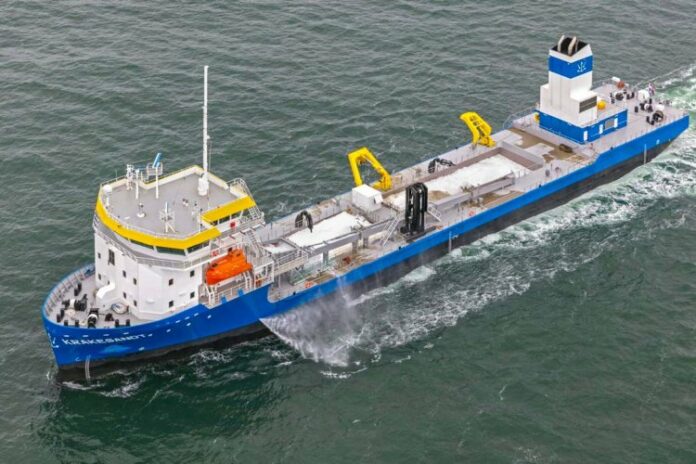
The innovative vessel is one of the only diesel-electric TSHDs that specializes in sand and gravel extraction at sea.

The Krakesandt is the second advanced dredging project that Alewijnse has undertaken for Thecla Bodewes Shipyards for its client construction supplier De Hoop Terneuzen. The first was the Krakesandt’s sister vessel, Anchorage. 

Once again, Alewijnse was responsible for the design, building, installation and commissioning of the switchboards, consoles and the dedicated alarm, monitoring and control systems. It also undertook the design, engineering, supply and commissioning of the dredging automation system, including visualisation, monitoring and process control.

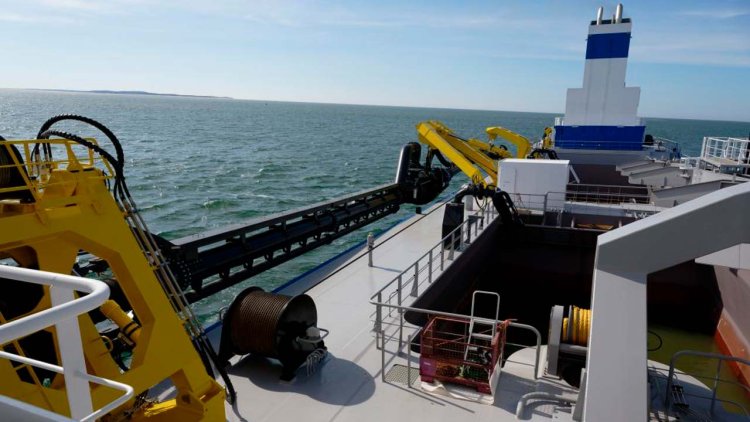
The Krakesandt, named after a sandbank off the coast of Cadzand first mentioned in the 14th century, has been built entirely in the Netherlands. The vessel has a length of 105.90 meters, is 15.85 meters wide and has a draught of 6.94 meters. Designed to dredge sand and gravel aggregates from the seabed, the energy efficient vessel has a single suction arm and a storage capacity of 3000m3. In addition to enabling smart power management, the use of electric propulsion increases propeller efficiency during dredging, sailing and maneuvering, which in turn optimizes energy and fuel consumption and reduces emissions.

For the control and monitoring of the dredging process, Barkmeijer Shipyards, part of Thecla Bodewes, has collaborated with Alewijnse to develop an intelligent and integrated bus-driven system. In addition to delivering high dredging performance, its capabilities mean that a crew of just 7 or 8 is all that is required to manage, load and unload the vessel. This ground-breaking system is now being made available to other clients via Alewijnse. Elsewhere on board, the diesel-electric power plants, delivered by D&A Electric, significantly reduce energy consumption and emissions.

Several other advanced automation systems are also being integrated on board. These include an alarm and monitoring system (AMS) for fire door monitoring and remote tank sounding, and a bridge operating system (BOS) for the control and monitoring of the lighting systems. Also being fitted is a dredge control system (DCS) for the control and monitoring of the remote controlled dredging valves, position indication and control of the swell compensator, overflow, pumps, screen/hopper loading system and the onboard hydraulics. A ship system control (SSC) has also been specified for control and monitoring of the trim valves.

Alewijnse is also installing its in-house draught and loading system (ADLS) for continuous measurement of the equipment’s depth and the calculation of the actual load, trim and list. The Alewijnse suction tube system (ASTS) combines software and hardware for the measurement, calculation, visualisation and monitoring of the hopper dredger’s suction tube position under water.