-0.2 C
New York
Home Blog Page 429

Bureau Veritas completes new study on ammonia as fuel

0

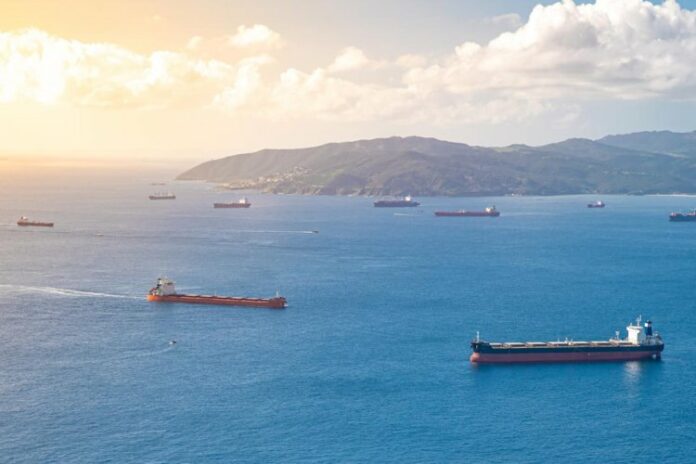
The joint preliminary study has evaluated the health and safety risks from ammonia leaks for crew and passengers and pinpointed key safety criteria, broadening the shipping industry’s understanding of ammonia as a marine fuel.

So far, the study has examined different leak scenarios for single-wall and double-wall containment, as well as during bunkering operations – also providing key insights on the efficiency of ventilation and vapor processing systems, the size of safety zones needed, and the health risks to people exposed to leaks.

Ammonia is one of the main zero-carbon fuel options currently envisioned by shipping as the industry seeks to decarbonise. Because it burns without emitting CO2 and is zero-carbon “well-to-wake” when produced from renewable energy, it is a top contender among potential alternative fuels. However, ammonia presents several safety challenges, which must be addressed before it can be used on board ships. Ammonia is toxic to humans, and exposure beyond certain levels and durations can have serious health consequences for crew members and other people onboard. For ship owners and designers, therefore, a key challenge is to prevent accidental ammonia leaks during ship operations and bunkering.

To help de-risk ammonia as fuel, Bureau Veritas is building on a tried-and-tested approach that was used in the last decade to propel the development of LNG as fuel. BV’s Rule Note NR 671 was also used as a guideline, given its focus on preventing ammonia leaks and requirements for onboard vapor processing systems.

As ammonia-powered engines and propulsion systems are still being developed, Bureau Veritas and TotalEnergies began by assessing what concentrations of ammonia in the air would be problematic, and compared those levels to LNG. The LNG-fueled tanker served as the model for the comparison, showing a stark contrast between the two fuels. LNG becomes dangerous at around 50,000 parts per million (ppm), while ammonia starts to have health effects above 30 ppm when permanently exposed, or around 300 ppm when exposed for one hour.

Based on this, Bureau Veritas noted that unless modifications are made to design, safety distances should be much greater for ammonia than LNG. This confirmed the approach outlined in BV’s NR 671, which includes more stringent leak management on-board and vapor gas processing to avoid even small leaks reaching manned areas.

Laurent Leblanc, Senior Vice President Technical & Operations at Bureau Veritas Marine & Offshore, commented:

“While further experimentation and analysis are required to reach definitive conclusions, this preliminary study helped identify future areas to explore for de-risking ammonia as fuel. Additional tests could be performed for leak design scenarios, bunkering safety zones, bunkering arrangements, and the effect of weather conditions, for example.

“Until technology developments can eliminate ammonia leaks completely, leak mitigation and treatment remain the best course of action for ship owners and designers. Our preliminary study with TotalEnergies forms a strong basis for future industry collaboration. By pairing the right questions with the right tests, marine stakeholders can begin the journey to de-risking ammonia as fuel, as they did for LNG.”
Shell tanker fitted with SOL-X safety management solution

0

Shell International Trading and Shipping has partnered with SOL-X to trial its safety solution, SAFEVUE.ai, on one of Shell’s LNG tankers to further enhance crew safety management practice.

Shell has been increasing its use of technology to prevent accidents and reduce exposure to potential incidents onboard its ships. High hazard environments such as enclosed spaces, hot work areas, and mooring areas are often the cause of incidents onboard, while health related issues such as heat stress exposure, coronary stress and work rest hours are also common.

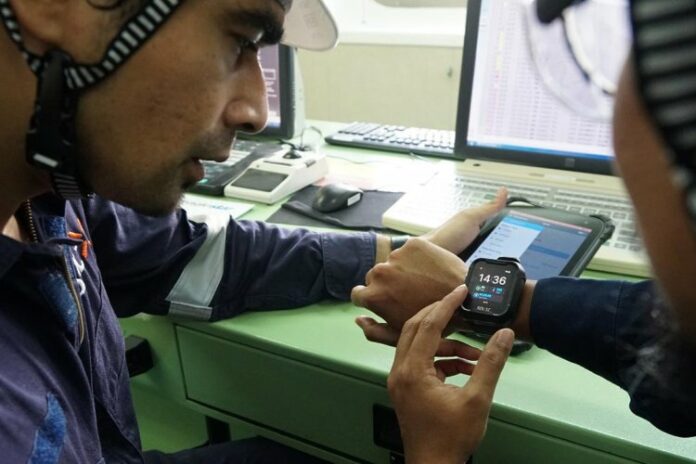
SOL-X’s turnkey solution connects the crew via a safe wearable technology (SOLX SmartWatch) to enhance operational visibility, control work management, and improve a crew member’s situational awareness of their personal wellbeing and safety in the line of fire.

The SAFEVUE.ai 4.0 platform improves human reliability, operational excellence, and safety outcomes. SAFEVUE.ai Control of Work helps customers automate workflows, improve productivity and operational excellence. It also provides assurance of safety and compliance by promoting positive crew behavior change.

During the trial with Shell, the system was adopted by the ship’s staff who were able to tailor the functionality to meet their specific needs. Some of its highlighted features include virtual barrier management and the ability to account for crew faster before the release of CO2 and during emergency drill mustering.

Toxic gas leak at Jordan’s Aqaba port kills 13, injures hundreds

0

Authorities said a chemical storage container fell while being transported as a result of a crane malfunction.

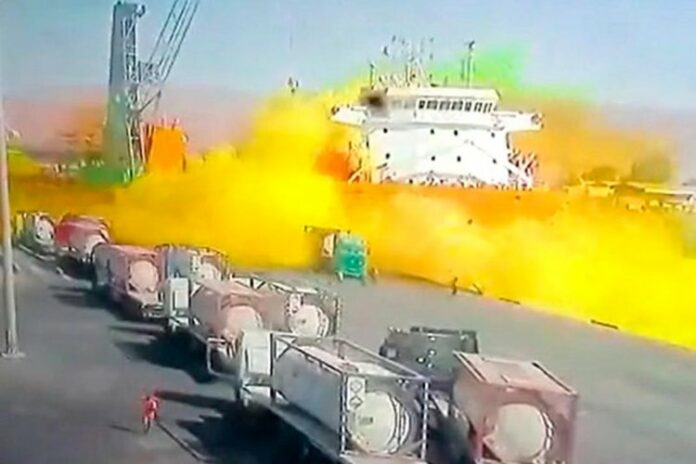
CCTV footage showed the container being hoisted into the air and then suddenly dropping on to a ship and exploding.

A large cloud of bright yellow gas is seen spreading across the ground, sending people running for safety.

State media said on Monday night that 123 of the injured were still being treated at local hospitals for chemical exposure. Some were reportedly in a critical condition.

Chlorine is a chemical used in industry and in household cleaning products. It is a yellow-green gas at normal temperature and pressure, but is usually pressurised and cooled for storage and shipment.

When chlorine is inhaled, swallowed or comes into contact with skin, it reacts with water to produce acids that damage cells in the body. Inhaling high levels of chlorine causes fluid to build up in the lungs – a life-threatening condition known as pulmonary oedema.

Residents of Aqaba city, which is 16km (10 miles) north of the port, were advised to stay inside and close windows and doors following the leak, which happened at 15:15 (12:15 GMT) on Monday.

Aqaba’s southern beach, which is only 7km away and is a popular tourist destination, was also evacuated as a precaution, AFP news agency reported.

After several hours Minister of State for Media Affairs Faisal Shboul declared that there was no longer any risk to the city and its residents.

The Civil Defence Department sent specialist teams to the port to deal with the leak and clean-up operation.

Prime Minister Bisher al-Khasawneh flew to Aqaba and visited a hospital that was treating some of the injured.

He ordered Interior Minister Mazen Faraya to oversee a transparent investigation into the “regrettable” tragedy and to guarantee “all resources to ensure the total security of workers at the ports and all necessary precautions in relation to hazardous materials”.

The deputy director of Aqaba’s port told AlMamlaka TV that an “iron rope” carrying the container “broke” while it was being loaded on to a vessel.

The container was filled with between 25 and 30 tonnes of chlorine and was being exported to Djibouti.

Source: BBC

DOP Dredger 200 delivered to EMODRAGA in Mozambique

0

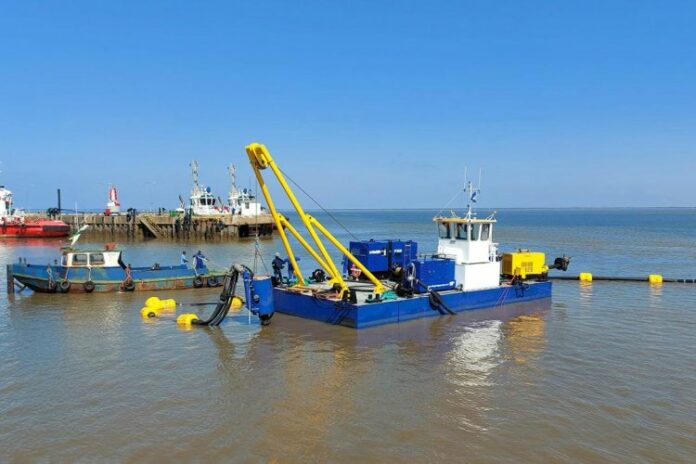
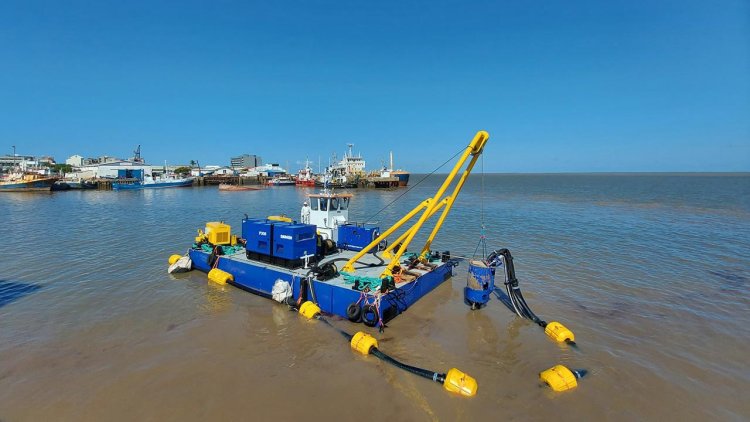
On June 20th, the dredger named Estoril, was handed over to its owner in a special ceremony. Fitted out with a renowned Damen submersible DOP dredge pump, the modular dredger will be located at the Port of Beira, where it will be performing maintenance dredging duties to ensure accessibility for larger vessels.

Damen designed and built the dredger to EMODRAGA’s specifications. At 15 m long and 7 m wide, the DOP Dredger can be dismounted and easily transported by trucks, even to remote locations. Additionally, reassembly can be done swiftly due to its plug ‘n play design and the limited unit weight.

Equipped with a jet water-assisted suction head, the submersible dredge pump will be able to reach high mixture concentrations during its maintenance dredging activities, pumping some 800 m3/h. The dredger also has a very limited draught to guarantee access to the entire port.

Christopher Huvers, Regional Director Africa at Damen Shipyards, emphasises, said:

“As the second largest port of Mozambique, Beira is a very busy port. And it has quite a challenge in that two rivers, the Buzi and the Pungwe, flow through the port. They take quite a lot of sediment with them, which deposits in the port. This sedimentation requires continuous maintenance dredging. At present, there are severe draught limitations at low tide throughout the port. The new Damen dredger will ensure accessibility for the local fishing fleet and will make sure the 12 berths of the port are kept at the required depth. Estoril will also be used to dredge other rivers throughout the country.”

Once tested in the Netherlands, the modular dredger was disassembled and transported to the Port of Beira, where it was reassembled in only six days. Then Damen’s expert field service engineers trained the crew on the spot. 

 Mr Huvers said:

“This new dredger will certainly reinforce the local dredging operations, and improve the accessibility of the Port of Beira.”

UNEP and EIB join forces to reduce pollution in the marine environment

0

The UN Environment Programme (UNEP) and the European Investment Bank (EIB) today launched the Global Environment Facility (GEF) Mediterranean Pollution Hot Spots Technical Assistance initiative, which aims to reduce pollution in the Mediterranean marine and coastal environment.

As part of the USD 4 million Hot Spots Pollution project, the initiative aims to promote adequate and sound water, wastewater, solid waste and industrial emissions management in the Southern Mediterranean region, thereby reducing health risks and enhancing access to safe drinking water and sanitation services.

The initiative was launched on the sidelines of the UN Oceans Conference in Lisbon by Vice President of the EIB, Ricardo Mourinho Félix, and Susan Gardner, Director of UNEP’s Ecosystems Division. The two agreed to support preparation of priority investment projects to reduce pollution in the marine and coastal environments of the three Southern Mediterranean countries, namely Egypt, Lebanon and Tunisia.

Susan Gardner said:

“Untreated discharges of wastewater represent a major problem for Mediterranean ecosystems and the health of the population living in the region. Many large coastal cities still lack a wastewater treatment system, and many existing systems are based on outdated and inefficient technologies. This joint GEF-EIB-UNEP project will pool resources to decrease pollution and improve the marine ecosystems and the health of people living in the Mediterranean region.”

According to the 2021 State of Finance for Nature report, in order for the world to meet its climate change, biodiversity and land degradation targets, a total of USD 8.1 trillion is required between now and 2050. The Technical Assistance initiative is a step forward toward bridging this gap.

The Mediterranean Basin is one of the most highly valued seas in the world. The region comprises a vast set of coastal and marine ecosystems that deliver valuable benefits to all its 250 million coastal inhabitants. But the Mediterranean Sea is facing multiple pressures caused by human activities, including chemical contamination, eutrophication, pollution by marine litter and over-exploitation.

The technical assistance provided under the Mediterranean Hot Spots Investment Programme (MeHSIP) will be geared towards helping promoters accelerate the preparation of financeable projects in the water and environment sectors that will tackle these pressures.

Ricardo Mourinho Félix, Vice-President of the European Investment Bank said:

“The state of the Mediterranean Sea is crucial for biodiversity conservation, the availability of clean water resources and to sustain jobs that rely on it. The EIB is one of the largest lenders to the global water sector. I am very pleased to intensify our long-standing cooperation with UNEP to support the depollution of the Mediterranean. It will contribute to the objectives of the Clean Ocean Initiative set up to improve the health of the oceans globally.”

The USD 4 million Mediterranean Pollution Hot Spots Investment Project is one of the, USD 42 million, GEF-funded MedProgramme’s child projects implemented by UNEP Mediterranean Action Plan – Barcelona Convention.

Port of Amsterdam and Duisport developing green hydrogen value chain

0

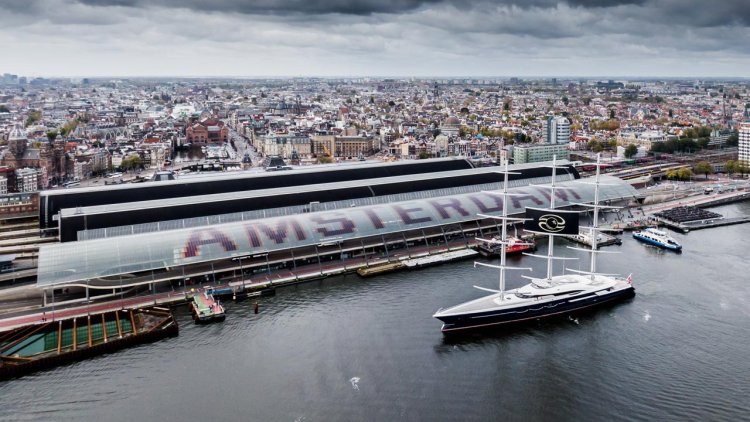
Port of Amsterdam and duisport will expand their long-lasting cooperation, as Markus Bangen, CEO at duisport, and Koen Overtoom, CEO at Port of Amsterdam, have announced that the ports will jointly develop the hydrogen value chain and their hinterland network. 

The CEOs have signed a Memorandum of Understanding to underline the commitment of their organizations to these shared goals.

The ports of Amsterdam and Duisburg are directly connected via the river Rhine and multiple land routes and fulfil important roles as logistical hubs for the European hinterland. Historically, these ports have been partners in facilitating important trade flows between Germany and the Netherlands. The existing long-term partnership is reflected by their joint participation company, Hafen Duisburg / Amsterdam Beteiligungsgesellschaft mbH, and will now enter a new phase.

Koen Overtoom, CEO of Port of Amsterdam:

“I am very pleased to announce the partnership between duisport and Port of Amsterdam. Both ports recognize the great value of joining forces in developing new corridors for sustainable energy carriers, with the aim of decarbonization of international supply chains. This partnership strengthens our strategic initiatives, aimed at taking the lead in facilitating the energy transition, and complements our strong collaborations with our trusted partners.”

Both ports have strong ambitions in the field of energy and want to be at the forefront of the transition toward sustainable and renewable energy sources. Port of Amsterdam and duisport will therefore jointly explore the potential of several hydrogen carrier technologies, with the aim of establishing an international supply chain for hydrogen on a commercial scale. The import, storage and distribution of green hydrogen carriers play an instrumental role in enabling the energy transition in the industrial and maritime sectors.

Port of Amsterdam is part of the H2A consortium, which aims for the import of one million tonnes of green hydrogen to the port of Amsterdam and includes multiple significant players in the hydrogen industry. The H2A project forms a unique platform that can now be connected to duisport, allowing for the establishment of an end-to-end value chain for green hydrogen carriers between both ports.

Markus Bangen, CEO of duisport:

“By expanding our trusting partnership with the Port of Amsterdam, we are sending an important signal across national borders: only together will we be able to overcome global challenges such as the energy transition. I am therefore looking forward to further close cooperation in order to rapidly advance the development of a Europe-wide hydrogen network and to strengthen our function as central logistics hubs for Europe.”

In addition to the development of the green hydrogen value chain, duisport and Port of Amsterdam will set up joint commercial projects to further develop their hinterland networks. Amsterdam and Duisburg are well connected by inland shipping, land and rail corridors and are centrally located within the extensive European network. In addition to the existing daily barge connections, an Amsterdam – Duisburg rail shuttle was launched in 2019. This shuttle forms an important corridor, which directly links the short sea and intermodal networks of both ports.

Observing Arctic marine life — from the seabed to space

0

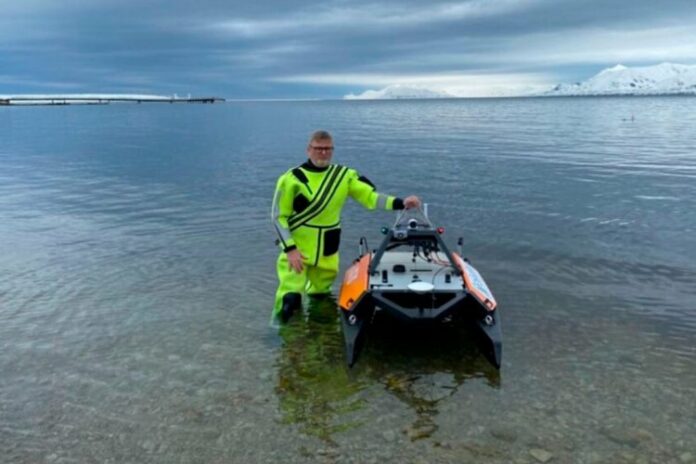
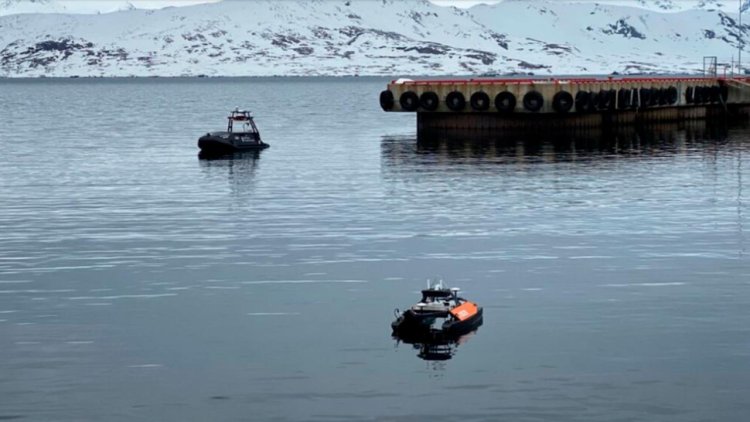
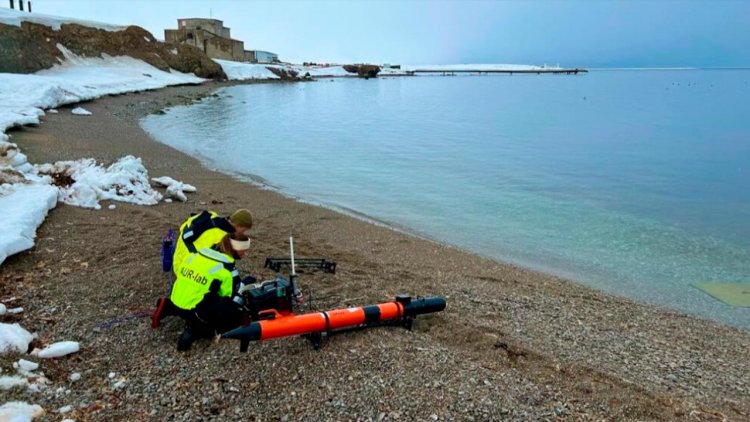
In late May, NTNU researchers and students used a small satellite, an unmanned aerial vehicle, two unmanned boats and subsea robots to survey the same area simultaneously. This is an approach called an observational pyramid.

The Arctic is both an interesting and important area from which to observe climate change. At this latitude, temperature and ecosystem changes are evident sooner and clearer than in more temperate areas. For Professor Geir Johnsen, one of the critical questions to ask — and answer — is what is happening to phytoplankton, which form the base of the food web.

The approach the researchers have used, the observational pyramid,  can be used to survey normal and harmful algal blooms and the kinds of changes global warming is causing in the ocean in a more continuous way.

Asgeir J. Sørensen, a professor of marine cybernetics and Director of NTNU AMOS, says:

“This concept can be developed and streamlined, especially when it comes to faster data interpretation. We have worked with biologists to customize this approach, according to what they need, but it can be used for other purposes as well.” 

One driver for this development is the long collaboration with Equinor to develop methods and technologies to monitor the offshore oil and gas environment, as well as offshore renewable energy systems.

Sørensen pointed out that the aquaculture industry can also benefit from more effective and automated ways of monitoring and surveying fish welfare conditions, and the environment near the fish pens.

This technology can also be used to learn more about freshwater systems in Norway, such as the national efforts to monitor the environmental health of Mjøsa Lake, Norway’s largest.

Imagine an automated coast guard beneath the ocean surface that monitors ocean health and traffic in the ocean space. That’s essentially what this approach offers, the researchers say.

Hyperspectral maps and aerial drones combined with unmanned surface vehicles and subsea drones can be used at the same time to collect more data over a shorter time frame.

Sørensen says:

“This will give us more knowledge and a better understanding of what is going on in the ocean.”

A number of master’s students, PhD candidates and postdocs participated in the experiment.

Sørensen says:

“This could lead to new industries, value creation and new workplaces in Norway in the near future.”

The first test of the observational pyramid was done in close collaboration between the University of Tromsø and UNIS –the University Centre in Svalbard and several departments at NTNU. This research is also part of the Nansen Legacy project. Researchers from both the US and Australia came to Ny-Ålesund to see the observational pyramid in action.

EIB to co-finance three floating offshore wind farms in France

0

The European Investment Bank (EIB) announces the conclusion of three financing agreements, with the support of the European Commission, for installing and commissioning three floating offshore wind farms off the French Mediterranean coast. 

These projects will help accelerate the energy transition in France and foster the emergence of a new generation of floating offshore wind platforms. Each project is based on a different innovative technology, and all of the floating wind turbines are anchored to the seabed by means of underwater cables. This innovation means that the turbines can be installed further away from the coast in areas where wind exposure is optimal, and also limits the ecological footprint of the projects. These three technological demonstrators, initiated by ADEME and co-financed by the EIB, have already provided crucial feedback for the future of the floating offshore wind industry, placing France at the forefront of this technology’s development.

The first, and easternmost, project is being carried out by Parc Eolien Offshore de Provence Grand Large, a subsidiary of EDF Renouvelables, and Enbridge Eolien France 2 S.à.r.l (EEF2), a subsidiary of Enbridge Inc. and CPP Investments. The EIB’s €50 million loan contributes to the design, development, construction, commissioning, operation, maintenance and dismantling of a floating offshore wind project consisting of three Siemens Gamesa turbines with a total capacity of around 25 MW. They are installed on tensioned line floats designed by SBM Offshore and IFP Energies Nouvelles. Located 40 km west of Marseille and 17 km off the coast of Port Saint Louis du Rhône in waters around 100 metres deep, the project is scheduled to come on stream in 2023. This floating offshore wind project, a technological first, is supported by InnovFin EDP facility NER 300, the Commission’s Regional Development Fund and the Southern Region. Under previous agreements signed in 2020 and 2021, the EIB is already working with these partners to finance offshore wind farms in the Normandy region in Fécamp (71 wind turbines with a capacity of 497 MW) and Courseulles-sur-Mer (64 wind turbines with a capacity of 448 MW).

Eolmed, the second project, is developed by independent electricity producer Qair and will be installed more than 18 km off the coast of Narbonne in the Aude department in the Occitanie region. It is being financed to the tune of €85 million by the EIB, with a guarantee by the European Commission’s European Fund for Strategic Investments (EFSI), and construction will start in the autumn of 2022 for commissioning in mid-2024. This pilot farm will consist of three 10 MW Vestas wind turbines installed on semi-submersible barge floats. The turbines will be connected to the electricity transmission system by a submarine cable.

Finally, the westernmost project is the Eoliennes Flottantes du Golfe du Lion project. It is led by its two co-shareholders: Ocean Winds (a joint venture between EDP Renewables and Engie) and Banque des Territoires (part of the Caisse des Dépôts Group, or CDC). The project consists of three 10 MW Vestas wind turbines installed on floats. It uses the WindFloat technology developed by Principle Power which is already deployed on the EIB-funded WindFloat Atlantic project in Portugal. Located more than 16 km off the coast of Leucate (Aude) and Le Barcarès (Pyrénées-Orientales) at a depth of 70 metres, this floating wind farm has secured €75 million in EIB financing and is also guaranteed by EFSI. Its launch is scheduled for the end of 2023.

EIB Vice President Ambroise Fayolle said:

“These three loans for the first floating offshore wind farms in France are fully in line with the EIB’s strategy of providing massive support for the development of renewable energy and the energy transition in Europe.”

European Commissioner for the Economy Paolo Gentiloni said:

“Thanks to this investment, three floating offshore wind farms will help provide people and businesses with clean energy. This is more important than ever, as we are working to diversify our energy sources and accelerate the clean energy transition.”

Boskalis vessels switch to green shore power facility in Rotterdam

0

The shore-based power installation will be built on the Boskalis site in the Waalhaven, Rotterdam. There are two berths on the quay at this location, which are both frequently used. Vessels come to the Boskalis Waalhaven location for maintenance and to be mobilized for offshore projects.

The intended completion date of the green shore power installation is 1 June 2023, and it will supply 2 GWh of green electricity per year. This will reduce CO2 emissions by 1.6 kiloton per year. With this project Boskalis is demonstrating ‘green leadership’, which is good for the port, for the climate and for local residents.

Shore power is an important part of the energy transition and this project fits in with the joint shore power strategy of the Port of Rotterdam Authority and the City of Rotterdam, and with Eneco’s One Planet strategy, which aims to achieve climate neutrality by 2035. At present, moored vessels often run on generators to provide the necessary power on board thereby creating emissions. Green shore power offers the opportunity to reduce these emissions by up to 90% by providing vessels with a clean source of energy and switching off generators also helps to reduce noise.

After the shore power electricity installation on the Rozenburg peninsula and the Hoek van Holland ferry terminal in Rotterdam, the Boskalis location in the Waalhaven will be the third quayside electricity installation for seagoing vessels in the Port of Rotterdam.

Eneco and the Port of Rotterdam Authority are implementing this project through the Joint Venture Rotterdam Shore Power. They own the shore power installation and offer the green shore power ‘as a service’. Boskalis is realizing the grid connection under its own management. Eneco is supplying the green power to Boskalis, which comes from Dutch Eneco wind & solar sources. The project is co-financed by the City of Rotterdam and the European Union through the European Regional Development Fund.

Crowley and ESVAGT strengthen venture for U.S. offshore wind vessels

0

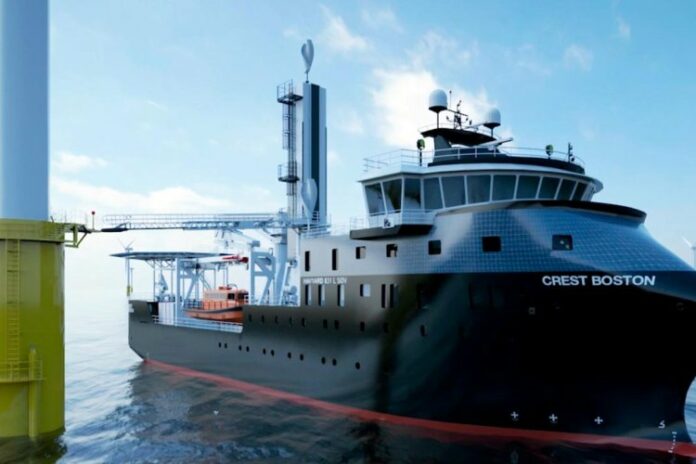
The new agreements, which follow the original agreement between the companies in 2021, will support their joint efforts for service operation vessels (SOVs). The latest additions focus on the financial and development efficiencies in the vessel development process between the companies.

The venture was created to develop a best-in-class design and deliver wind-dedicated, U.S flag SOV vessels. Crowley will own and operate the vessels crewed with U.S. mariners, while Crowley and ESVAGT will share in the financials of the venture.

Jeff Andreini, vice president, Crowley Wind Services, said:

“The enhancement of this venture will help bring these important service operation vessels to the U.S. offshore wind market to meet the nation’s clean, sustainable energy demands. As we increase our organizations’ shared capabilities, we will help propel the continued growth of maritime and logistics solutions to help solve the nation’s vessel capacity demands in a responsible and sustainable way.”

A pioneer in the SOV concept in Europe, ESVAGT possesses an unparalleled experience in safely transferring people to offshore wind farm installations from a fleet of innovative and specialized vessels operated by highly qualified crew: annually, ESVAGT safely transfers more than 250,000 personnel members from SOV to offshore wind farm installations.

Peter Lytzen, CEO, ESVAGT, says:

“ESVAGT is proud to be an active player supporting our customers in the green transition. Crowley and ESVAGT share an ambition for a sustainable future, and we’re committed to take the lead in decarbonizing the maritime industry. We’re delighted and proud to be a first mover of emission-free SOV’s and have ordered the world’s first e-Methanol driven SOV to be delivered in 2024. Only through innovative solutions and commercial courage it is possible to overcome the threatening climate change”.

Through its commitment to sustainability and net-zero emissions, Crowley expanded capabilities across the clean energy sectors. This includes announced plans to develop and operate a wind services terminal in Salem, Massachusetts to serve the Commonwealth Wind offshore installation and other industry services.

Crowley has developed a network of certified offshore wind training programs in the U.S. The company is building the first U.S. all-electric, zero-emissions harbor tug and developing sister platforms.